

4 Mushroom Coffee Recipes Without the Dirt Taste
Make mushroom coffee that tastes good with these four recipes using cacao, spices, and the right milk to cover the earthy flavor.
Read MoreAdaptogen drink recipes with lion's mane, ashwagandha, reishi, matcha, and turmeric, blended so the powder actually disappears into the drink.
10 recipes
Make mushroom coffee that tastes good with these four recipes using cacao, spices, and the right milk to cover the earthy flavor.
Read More
An at-home matcha bar setup with matcha, glasses, milk, syrup, ice, tools, storage, and small-space ideas that make weekday drinks easier.
Read More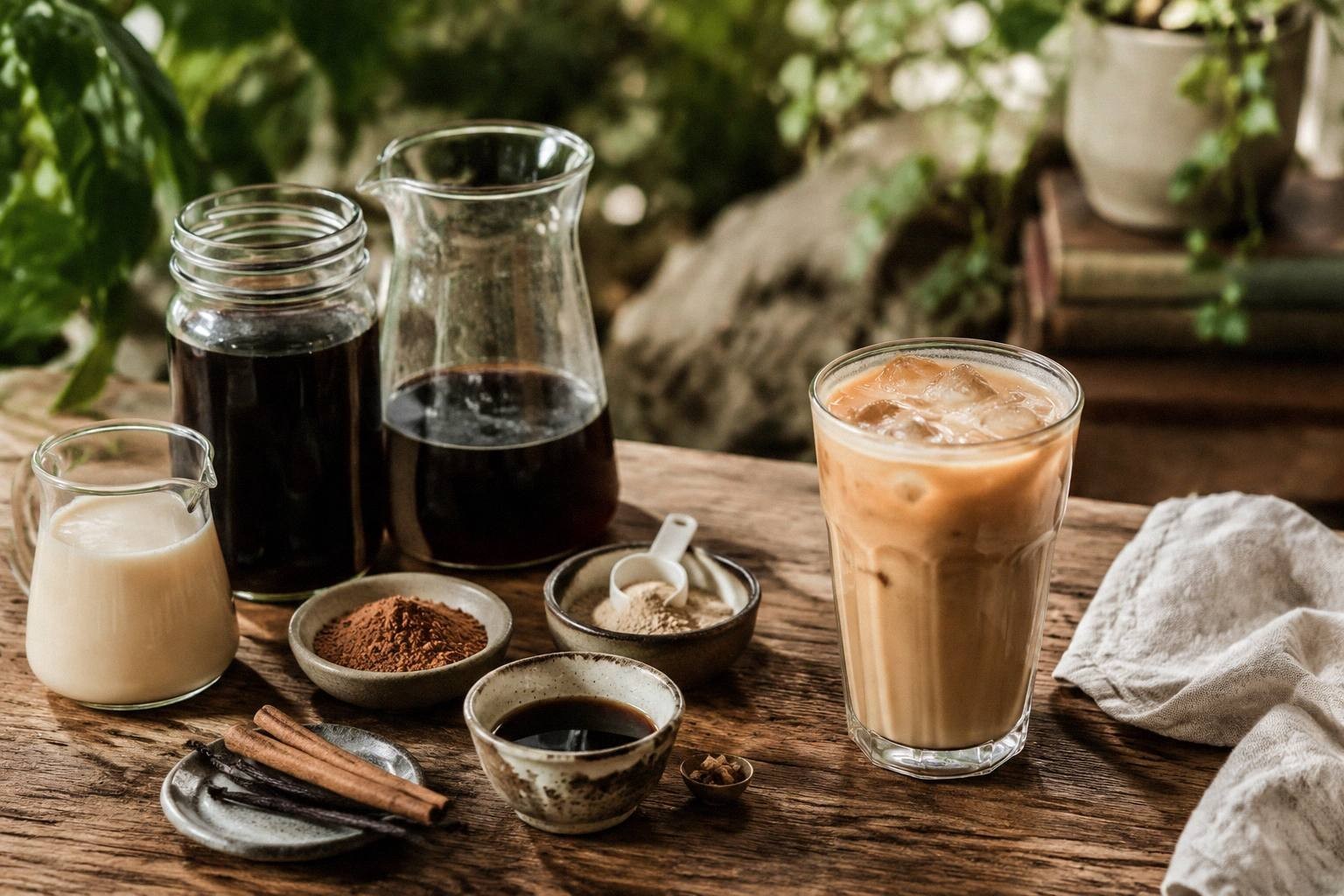
Adaptogen coffee drinks that still taste like coffee, with mushroom coffee, cacao, cinnamon, vanilla, cold brew, milk, ratios, and flavor balance …
Read More
Three botanical drink recipes with measured ingredients: warmly spiced ashwagandha moon milk, a pot of reishi mushroom chai and a chilled strawberry …
Read More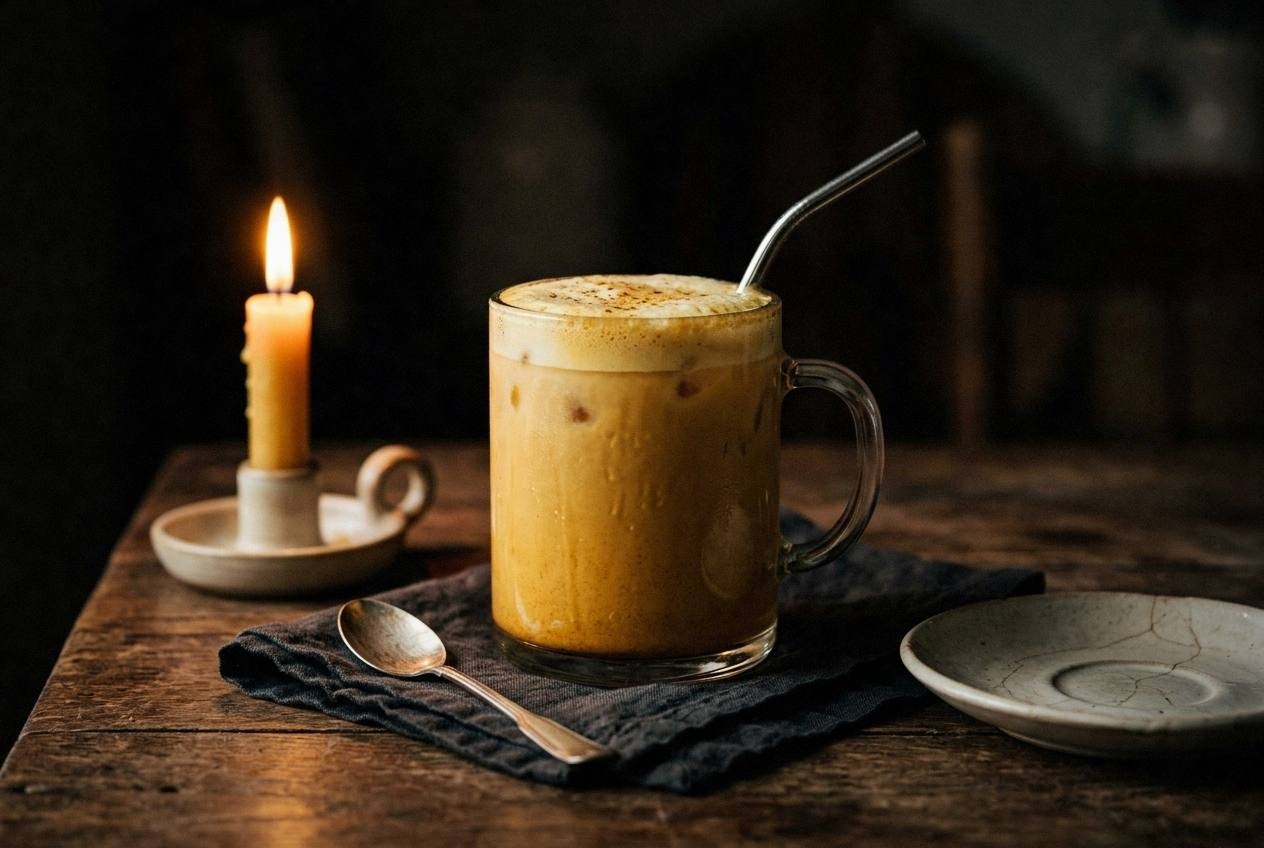
Iced turmeric latte with ground turmeric, ginger, cinnamon, black pepper and maple syrup stirred into cold nondairy milk over ice. Turmeric milk for …
Read More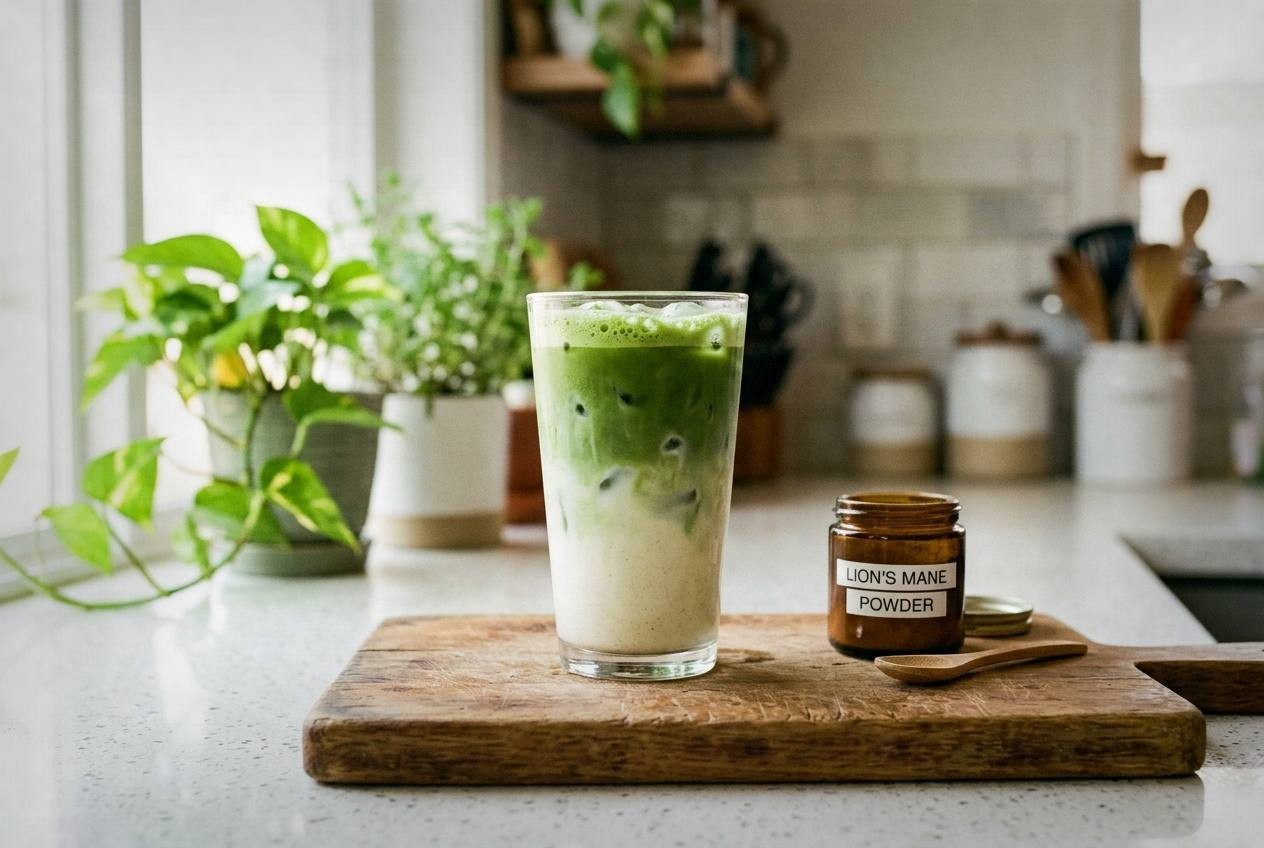
Lion's mane matcha latte with honey, vanilla and milk. Earthy, grassy, creamy, and the mushroom disappears into it. Five minutes, one mug, warm for …
Read More
Make mushroom coffee at home with lion's mane powder, espresso, dairy-free milk and a little maple syrup. A frothy 5-minute mushroom latte that tastes …
Read More
Whisk matcha in a little hot water, then stir into cold milk over ice. Exact quantities for one iced matcha latte.
Read More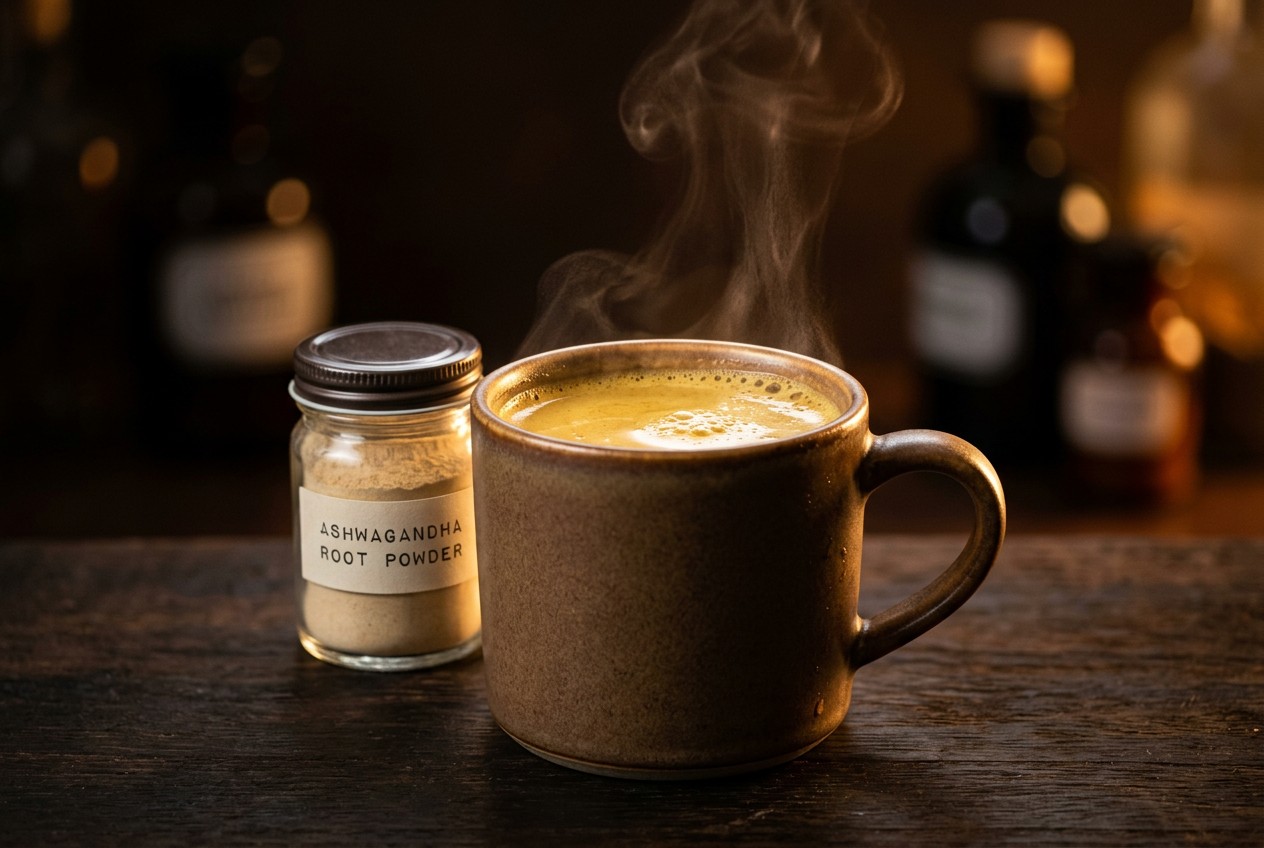
Make warm ashwagandha moon milk with cinnamon, turmeric and honey. Read the herb's safety considerations before choosing to use it.
Read More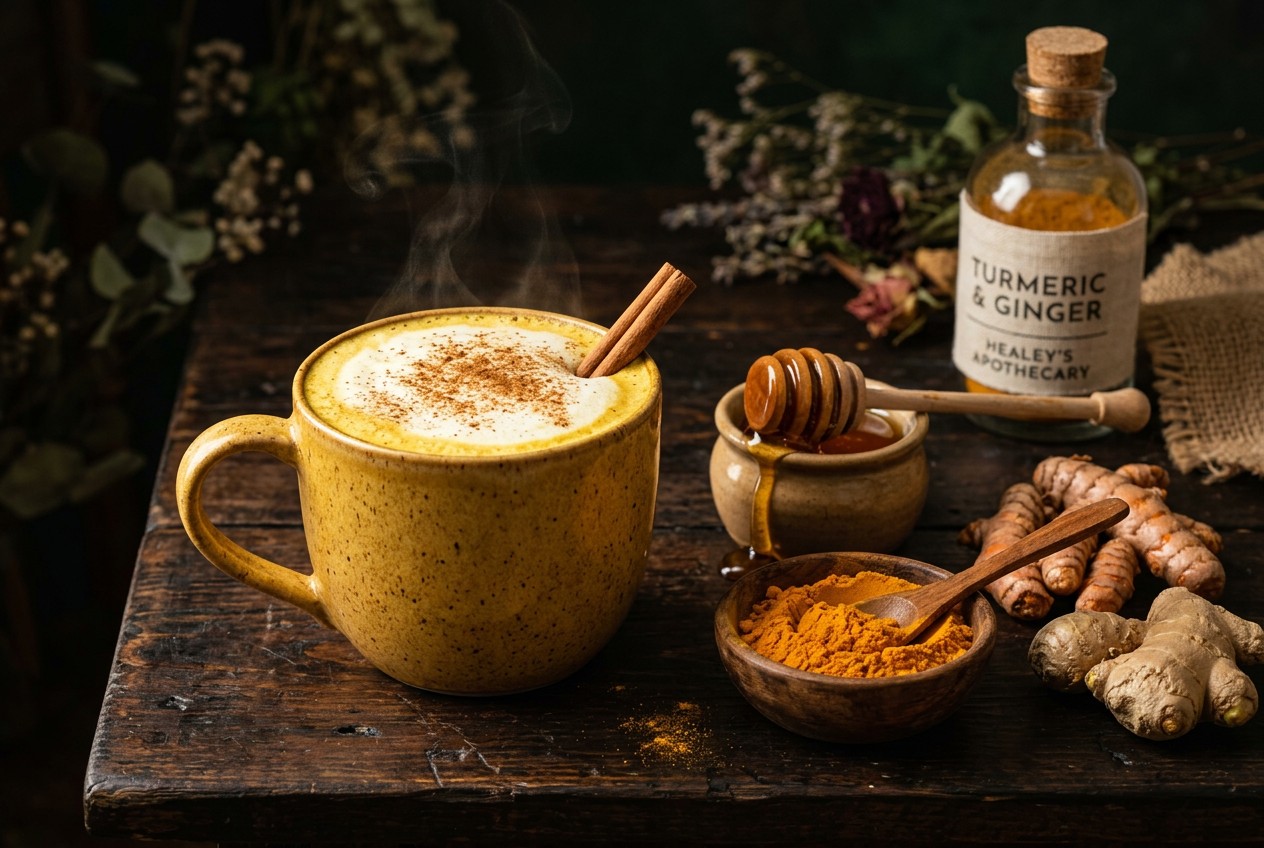
Simmer turmeric, fresh ginger, cinnamon and honey in coconut or almond milk, then strain into two warm mugs.
Read MoreThe problem with most functional drinks is not the ingredient, it is the texture. Mushroom powder clumps. Ashwagandha is bitter enough to ruin a whole glass. Turmeric stains and settles. These recipes are built around hiding the powder properly, which mostly means blending it into fat and a little sweetener before anything cold touches it.
Lion’s mane, reishi, ashwagandha, matcha, turmeric, and mushroom coffee, in drinks you would make again because they taste good, not because they are supposed to be good for you.
Adaptogens are plants and fungi used in traditional herbal systems to help the body handle stress. Ashwagandha, reishi, lion’s mane, rhodiola, and holy basil are the common ones. The research is genuinely early and mixed. These are drinks, not treatments, and nothing here is a substitute for medical advice.
Because it is hydrophobic and you added it to cold liquid. Whisk the powder into a small amount of warm liquid or a spoonful of something fatty like oat milk or nut butter first, until it forms a smooth paste, then build the rest of the drink on top. A frother or a blender fixes almost any clumping in about ten seconds.
Not in the strict sense, no. Matcha is green tea, and its effect comes from caffeine paired with L-theanine rather than from adaptogenic activity. It sits in this collection because it does the same job in practice: a steady lift without the spike, made the same way, and usually reached for by the same person.
Yes, unless you build against it. Ashwagandha is bitter and slightly musty. Cocoa, cinnamon, maple, and dates all cover it well; citrus does not. Start with half the dose you think you want and work up, because the bitterness scales faster than the benefit.
Match the ingredient to the time of day. Lion’s mane and matcha suit morning and early afternoon. Reishi and ashwagandha are traditionally evening drinks. If a recipe contains coffee or matcha, treat it as caffeinated and give yourself the usual runway before bed.