
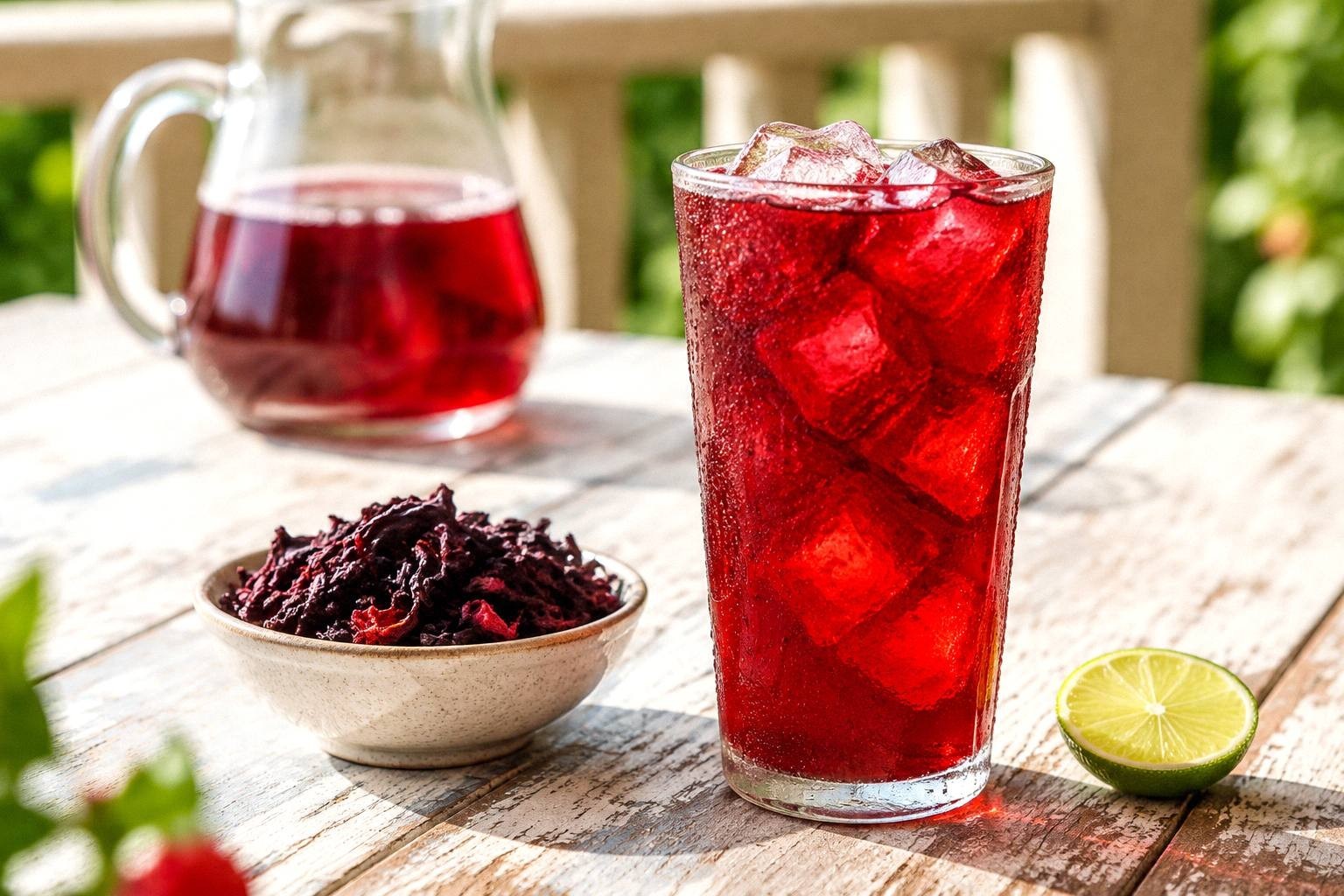
Iced Hibiscus Tea That Actually Tastes Good in the Heat
A tart iced hibiscus tea recipe for hot days with steeping time, citrus, honey, chilling tips, pitcher notes, and mocktail variations.
Read MoreIced tea recipes and cold brew tea blends with steeping times and ratios that keep the tea from turning bitter or cloudy over ice.
6 recipes
A tart iced hibiscus tea recipe for hot days with steeping time, citrus, honey, chilling tips, pitcher notes, and mocktail variations.
Read More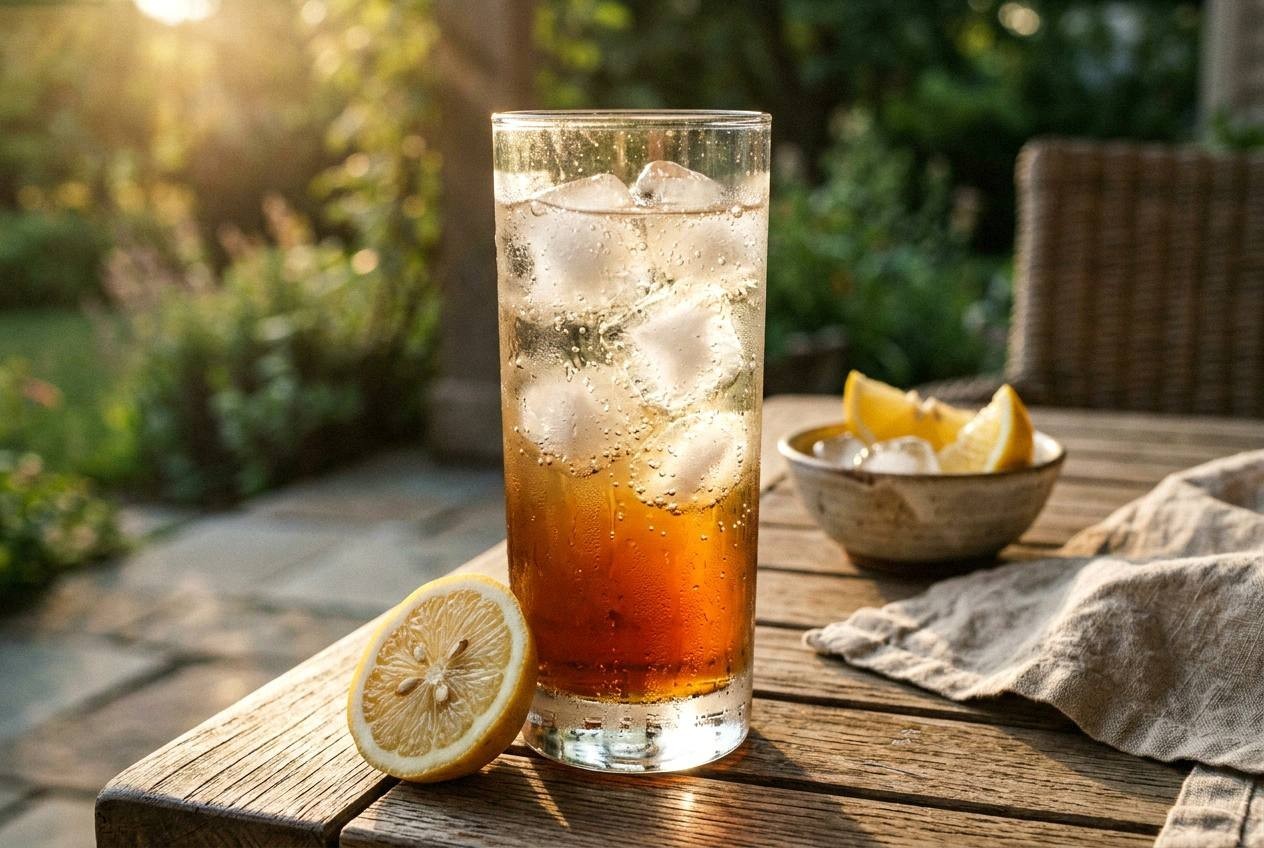
Three sparkling iced tea mocktails for summer: Earl Grey lemon fizz, jasmine raspberry spritzer, and hibiscus lime cooler. Brew temps and fizz tips …
Read More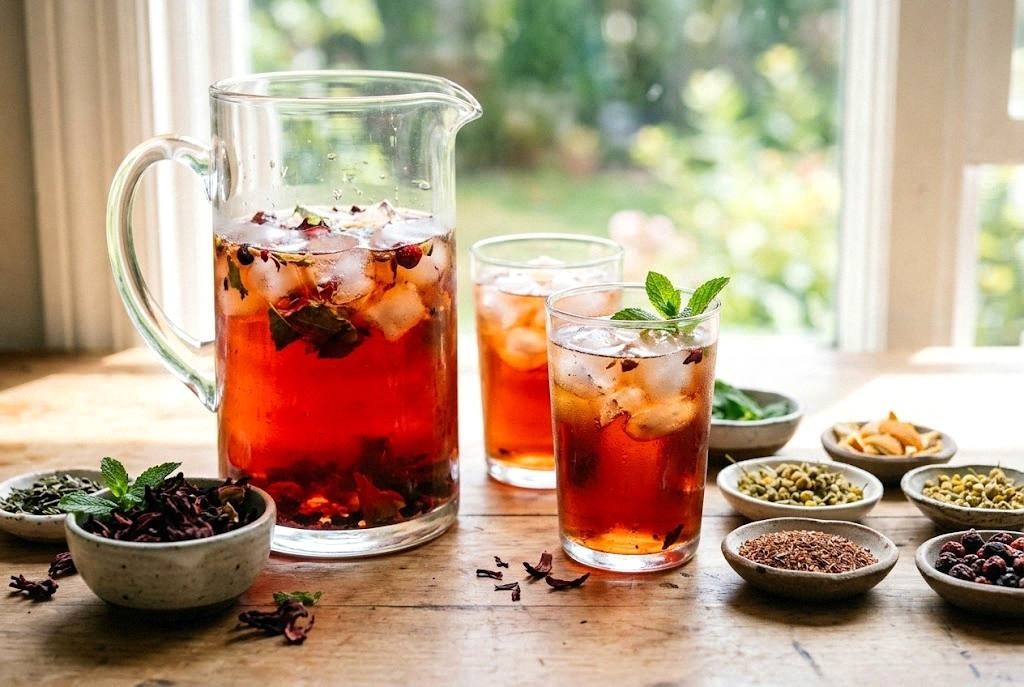
Cold brew loose leaf tea blends for summer, with green tea, hibiscus, mint, chamomile, rooibos, and fruit-forward ratios for iced tea.
Read More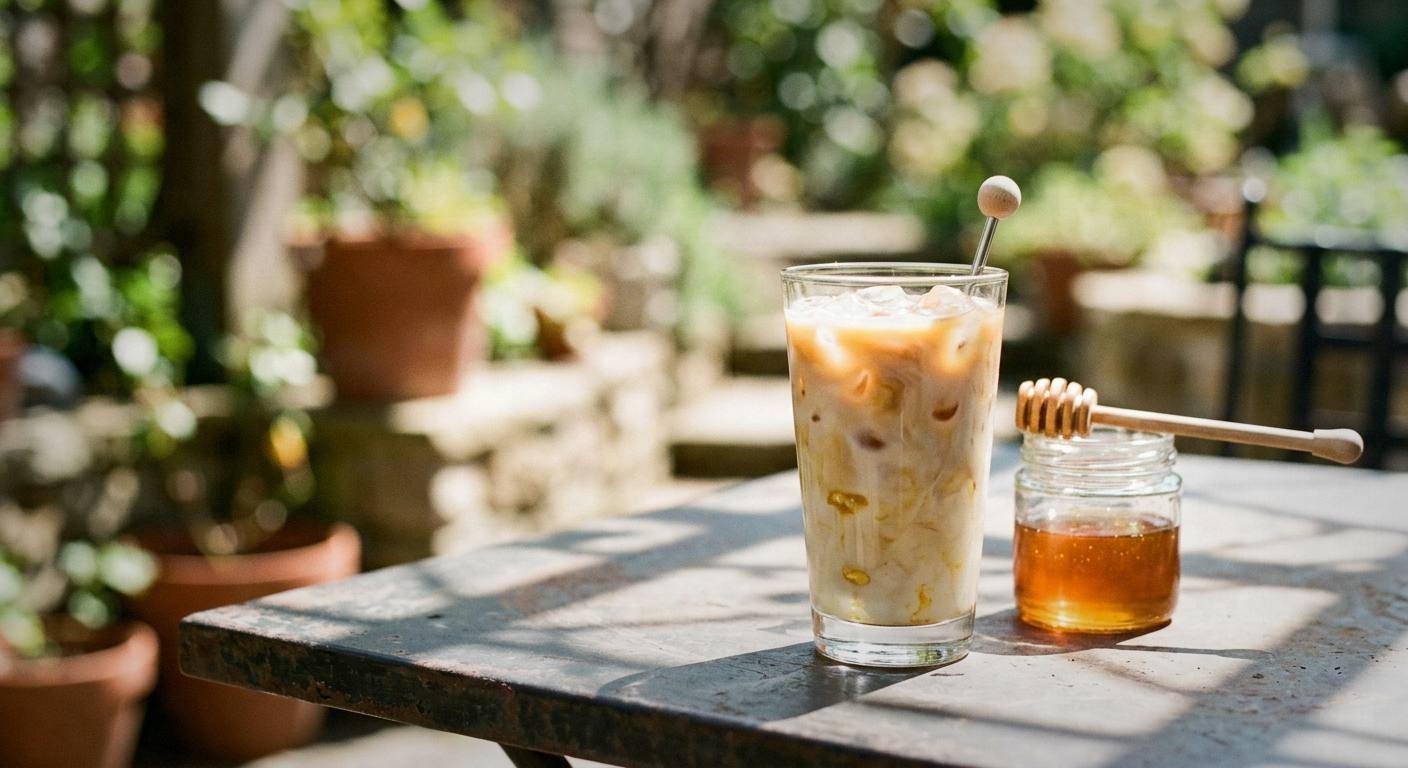
A caffeine-free iced chamomile honey latte with strong-brewed chamomile tea, raw honey, and cold oat milk over ice. Calming afternoon recipe.
Read More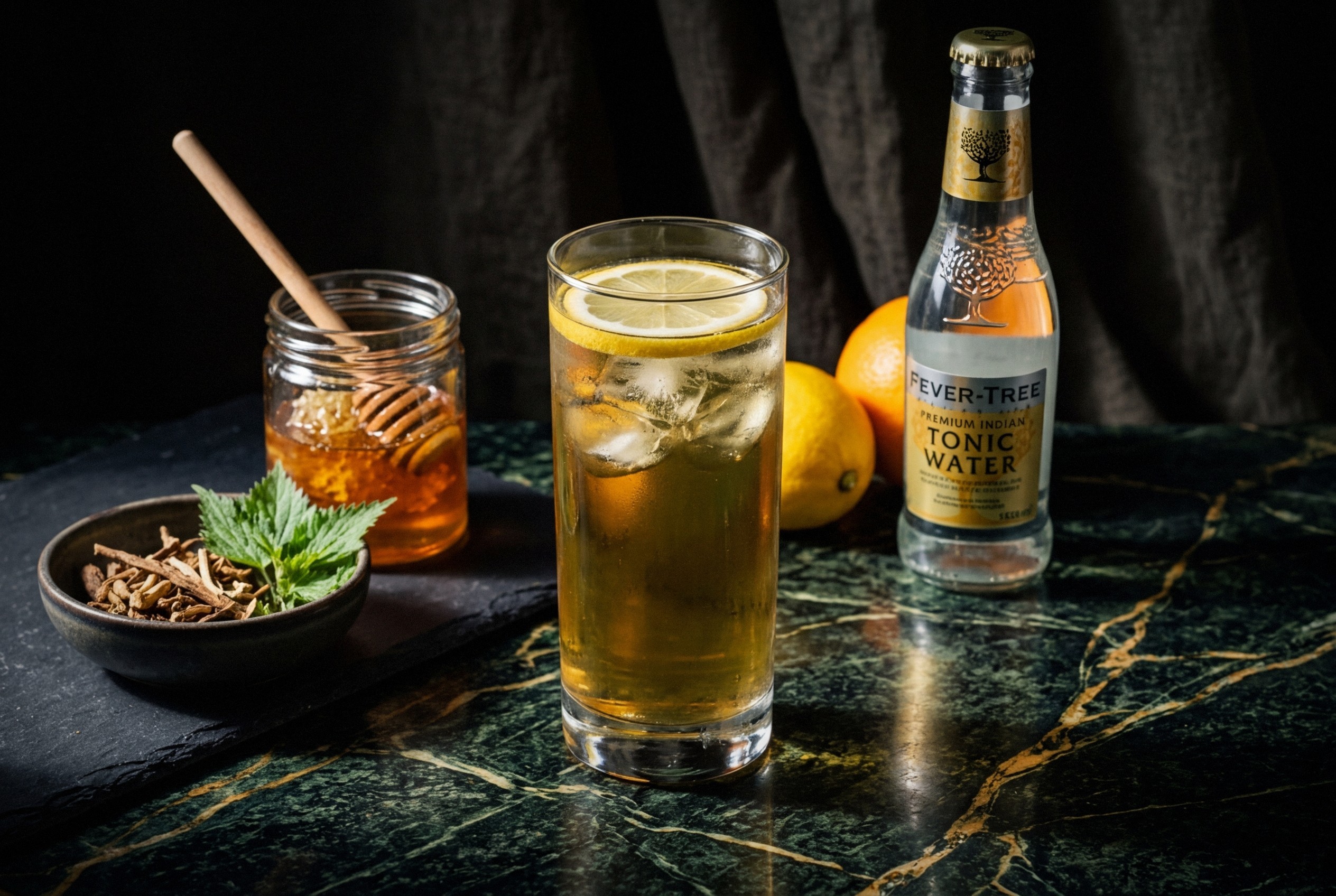
The original dried dandelion and nettle cold-steep formula is on hold pending a validated brewing process. Read the preparation and safety limits.
Read More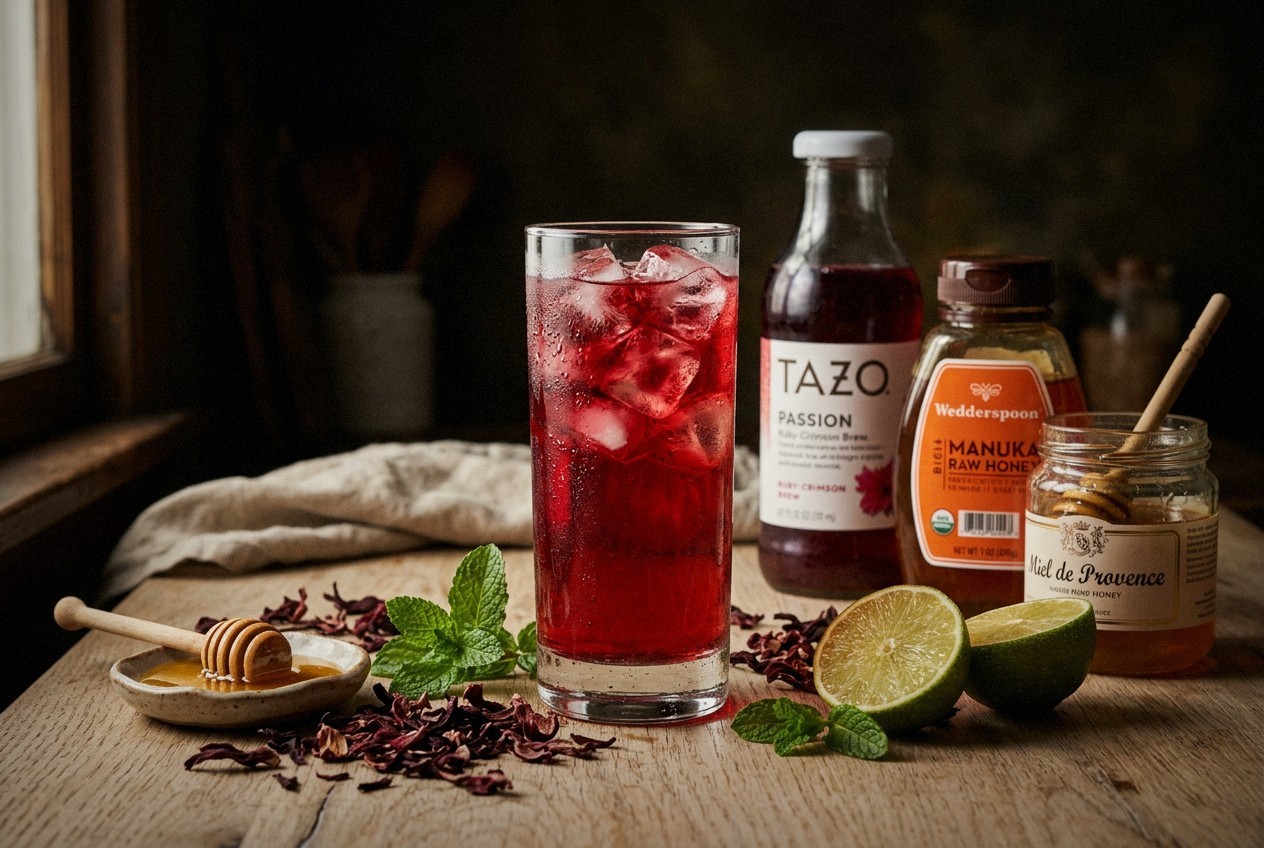
Seven herbal iced tea flavor builds with hot infusion, measured fruit additions and prompt chilling. Includes hibiscus, mint, rooibos and tea product …
Read MoreHot-brewed tea poured over ice is a different drink from tea brewed cold, and both go wrong in their own way. Hot brewing pulls tannins fast, so it turns bitter and clouds as it chills. Cold brewing takes hours but comes out smooth and clear, with more of the floral top notes intact. These recipes tell you which method a given tea wants.
Hibiscus, loose leaf blends, herbal tisanes, and sparkling iced tea for a crowd, all built for warm weather and all keeping several days in the fridge.
Cloudiness comes from tannins and caffeine binding together as hot tea cools quickly. It is harmless and mostly cosmetic. To avoid it, either cold brew instead, or let hot-brewed tea cool to room temperature on the counter before it goes in the refrigerator. A splash of boiling water usually clears an already-cloudy pitcher.
Six to eight hours for most herbal and green teas, up to twelve for black tea and heavier blends. There is a wide margin for error, which is the appeal: cold water extracts tannins so slowly that an extra couple of hours will not make it bitter the way hot brewing would.
Three to four days in a sealed pitcher. Anything with fresh fruit or citrus in it drops to about two. Sweetened tea goes off faster than unsweetened. If it tastes flat or smells sour, make a fresh batch.
Hot, if you are using granulated sugar, because it will not dissolve properly in cold liquid and you end up with a sweet last inch. Simple syrup and honey syrup mix in cold with no problem, which is why they are worth keeping made. Add sweetener after tasting the chilled tea, since cold mutes sweetness and you will overshoot if you judge it warm.
Hibiscus, mint, green tea, rooibos, and citrus-forward blends all hold up well cold. Delicate white teas tend to disappear over ice. Strongly astringent black teas need either a shorter steep or the cold brew method, otherwise the tannin dominates once it is chilled.