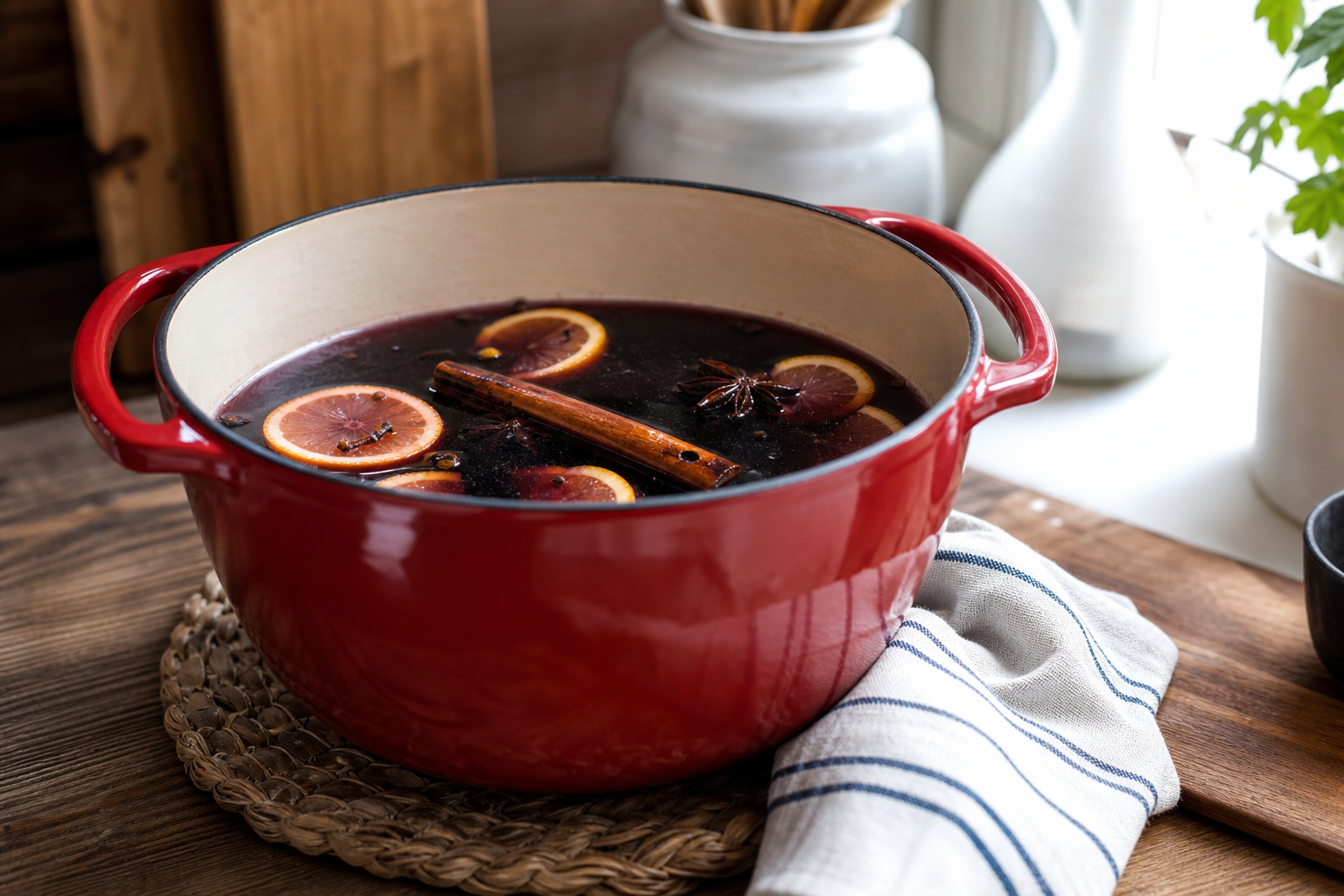
The Short Answer
Buy a dry red with obvious fruit, no heavy oak, and a price you would not think twice about. Merlot, Zinfandel, Grenache, and a softer Cabernet Sauvignon all work. So does a cheap Côtes du Rhône or a young Spanish Garnacha.
Skip the bottle you were saving. Heat and whole spices flatten the details you paid extra for, and a tannic, oaky wine gets sharper on the stove rather than rounder.
The full method lives in the mulled wine recipe for Christmas . This guide is only about what goes in the pot.
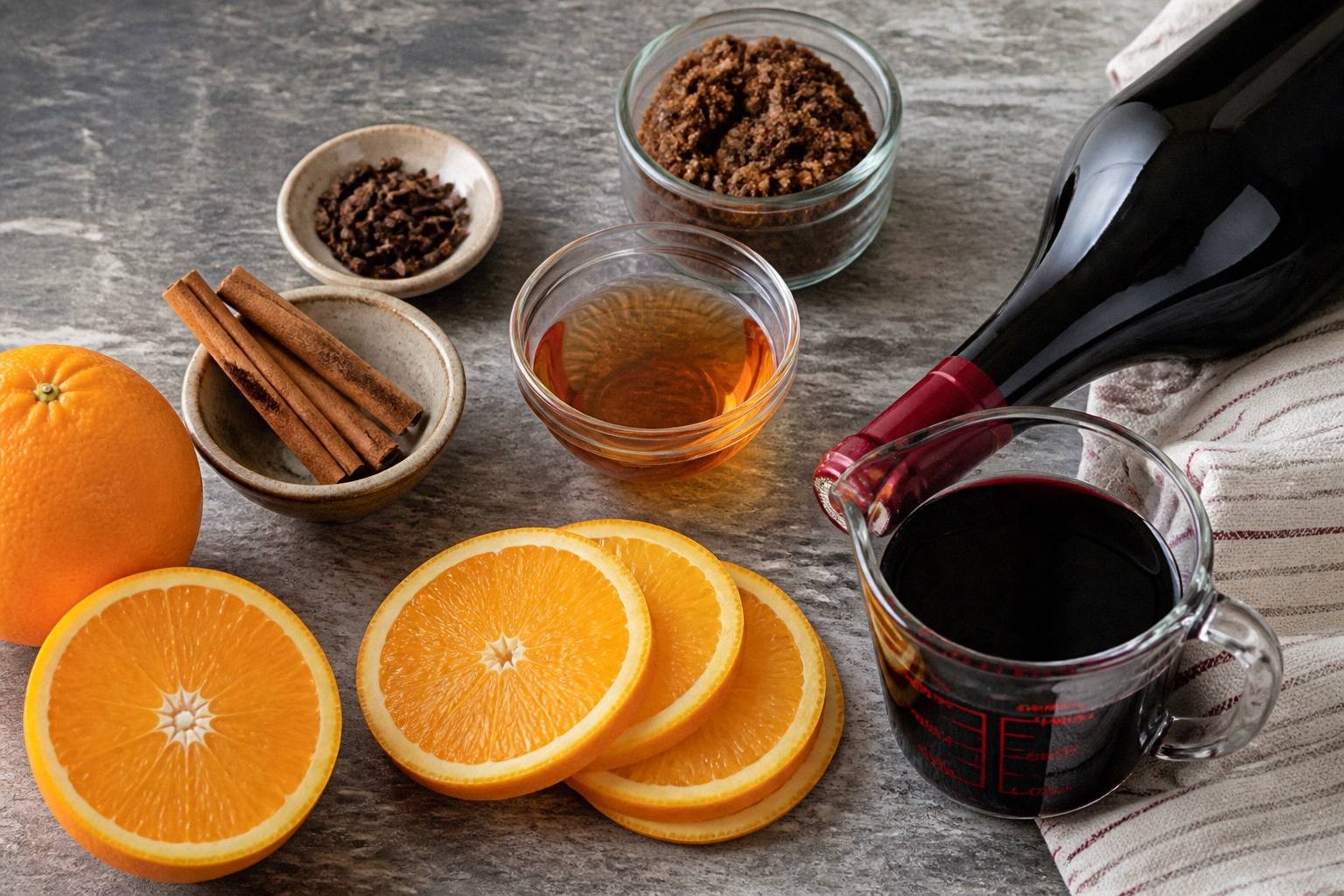
Quick Pick Table
| Wine | Why It Works | Watch For |
|---|---|---|
| Merlot | Soft tannin, plum fruit, forgiving | Very oaky bottlings taste woody hot |
| Zinfandel | Ripe berry, natural sweetness, spice notes | High alcohol can read hot |
| Grenache or Garnacha | Red fruit, low tannin, cheap | Nothing much, this is the safe pick |
| Côtes du Rhône blend | Peppery, fruity, made for food | Older bottles lose their fruit |
| Cabernet Sauvignon | Structure, dark fruit | Choose a soft one, not a tannic monster |
| Malbec | Dark, plummy, inexpensive | Can go inky if you overcook it |
| Beaujolais or Gamay | Bright, light, fruity | Gets thin under a long steep |
What Heat Actually Does to Wine
Three things change once the pot warms up.
The fruit aromatics lift and then leave. That is why the kitchen smells so good and why the drink tastes less fruity than the bottle did cold. A wine with plenty of fruit to spare survives this. A subtle wine does not.
Tannin gets more noticeable. The soft grip you barely register in a cold glass reads as drying and bitter once the wine is hot and the sugar has not caught up yet. Low-tannin grapes are the easy answer.
Oak gets louder. Vanilla and toast are pleasant in a cold glass and strange next to clove and cinnamon. If the label says barrel aged, or the wine tastes like vanilla, leave it for another night.
The Grapes That Work Best
Merlot is the default recommendation for a reason. The tannin is soft, the fruit is plummy, and it takes cinnamon and orange without arguing.
Zinfandel brings a jammy, brambly fruit and a peppery edge that already tastes a little mulled. It runs high in alcohol, so taste before you add extra brandy.
Grenache, sold as Garnacha in Spain, is the cheapest reliable option on most shelves. Low tannin, red berry fruit, and it almost never turns harsh.
Côtes du Rhône and other southern French blends are built around Grenache and Syrah, which is close to a purpose-built mulling wine at a supermarket price.
Cabernet Sauvignon works if you pick a soft, fruit-forward one. A serious structured Cabernet has more tannin than the sugar can balance.
Malbec is dark, plummy, and cheap, which makes it a good choice when you want a deeper color in the mug.
Wines to Skip
- Heavily oaked reds. Vanilla and toasted wood fight the spices instead of joining them.
- Big tannic reds. Young Bordeaux, Nebbiolo, and anything described as firm or structured turns astringent over heat. If yours already tastes drying, read why mulled wine turns bitter before you commit a whole bottle.
- Pinot Noir and other delicate reds. The perfume you are paying for is the first thing the pot takes away.
- Sweet reds and red blends labeled sweet. You add sweetener yourself, and starting sweet leaves no room to adjust.
- Sparkling wine. The bubbles are gone the moment it warms, and you have paid for them.
- Wine you would not drink cold. Heat does not fix a fault. It concentrates it.
How Much to Spend
We buy in the everyday drinking band, roughly a ten to fifteen dollar bottle, and we have never once wished we had spent more. The spices, the citrus, the sweetener, and the brandy are all doing loud work. There is nothing left for subtlety to say.
Below that band, quality gets unpredictable rather than simply cheap. A very thin wine goes watery once you add juice and sweetener, and no amount of cinnamon rescues it.
Box wine is genuinely fine here. A three-liter box of a fruity red is often better value than three bottles, it keeps for weeks after opening, and nobody can taste the box once the cinnamon is in.
Dry Beats Sweet, Every Time
Sweetener is the one variable you control after tasting. If the wine arrives sweet, you have lost that control before you start.
Buy dry, add sugar in stages, and taste after each addition. A wine with ripe fruit needs less sweetener than a lean one, which is another argument for the fruity end of the shelf.
White Wine and Rosé
Mulled white is a real drink, not a compromise. A dry Riesling, Pinot Grigio, or Sauvignon Blanc heated with citrus, ginger, and a lighter hand on the clove gives you something brighter and more floral. Rosé sits between the two and suits a lighter spice load.
They behave differently from red. White and rosé have almost no tannin to soften, so bitterness is rarely the problem. The risk is thinness instead, which means less water, less dilution, and a shorter steep.
If You Do Not Want Wine at All
Plenty of people at a holiday table are not drinking. Rather than watering down the real pot, make the non-alcoholic mulled wine separately. It is built on pomegranate and cranberry juice instead of wine, so it tastes like its own drink rather than a subtraction.
Mulled apple cider is the other easy second pot, and it suits a mixed crowd because you can spike individual mugs at the end.
Matching the Wine to the Rest of the Pot
The wine choice and the spice load should move together.
A light Grenache under a heavy clove hand tastes like clove. A dark Malbec can carry more spice and more orange without disappearing. If you are working from a spice-forward recipe, lean toward the deeper grapes.
The same logic applies to fortified wine. Wassail uses port and sherry over a cider base, and those fortified wines bring their own sweetness and body, so the sugar comes down accordingly.
Buying for a Crowd
Work out the total volume first, then buy one grape rather than a mix. A pot blended from four leftover bottles tastes muddled, and you cannot repeat it next year.
If you are cooking ahead, the wine matters even more. A fruity, low-tannin red holds its shape over a day in the fridge, while a tannic one keeps getting sharper. There is more on that in making mulled wine ahead of time .
Common Questions
What is the best red wine for mulled wine?
A dry, fruity, low-tannin red in the everyday price range. Merlot, Zinfandel, Grenache, Malbec, and southern French blends are all reliable. Avoid oaky and tannic bottles.
Can I use cheap wine for mulled wine?
Yes, and you should. Spices, citrus, and sweetener cover the detail that expensive wine charges you for. Just avoid wine that is thin or faulty, because heat makes both worse.
Does the alcohol cook off?
Some of it leaves, and how much depends on how hot the pot gets and how long it sits there. Idaho State University publishes the standard alcohol retention figures , which put a mixture simmered for 15 minutes at roughly 40 percent of the alcohol retained. Keeping the pot below a simmer keeps more of it, and more of the aroma with it.
Can I use boxed wine for mulled wine?
Yes. Boxed reds are usually fruity, soft, and dry, which is exactly the profile you want. The box also keeps the rest fresh for the next batch.
Should the wine be dry or sweet?
Dry. You control sweetness with sugar or honey after tasting, and a sweet wine takes that control away before the spices have even gone in.
Can I use white wine instead of red?
Yes. Use a dry white, go lighter on clove, lean on citrus and ginger, and keep the steep shorter. The result is brighter and more floral than the red version.