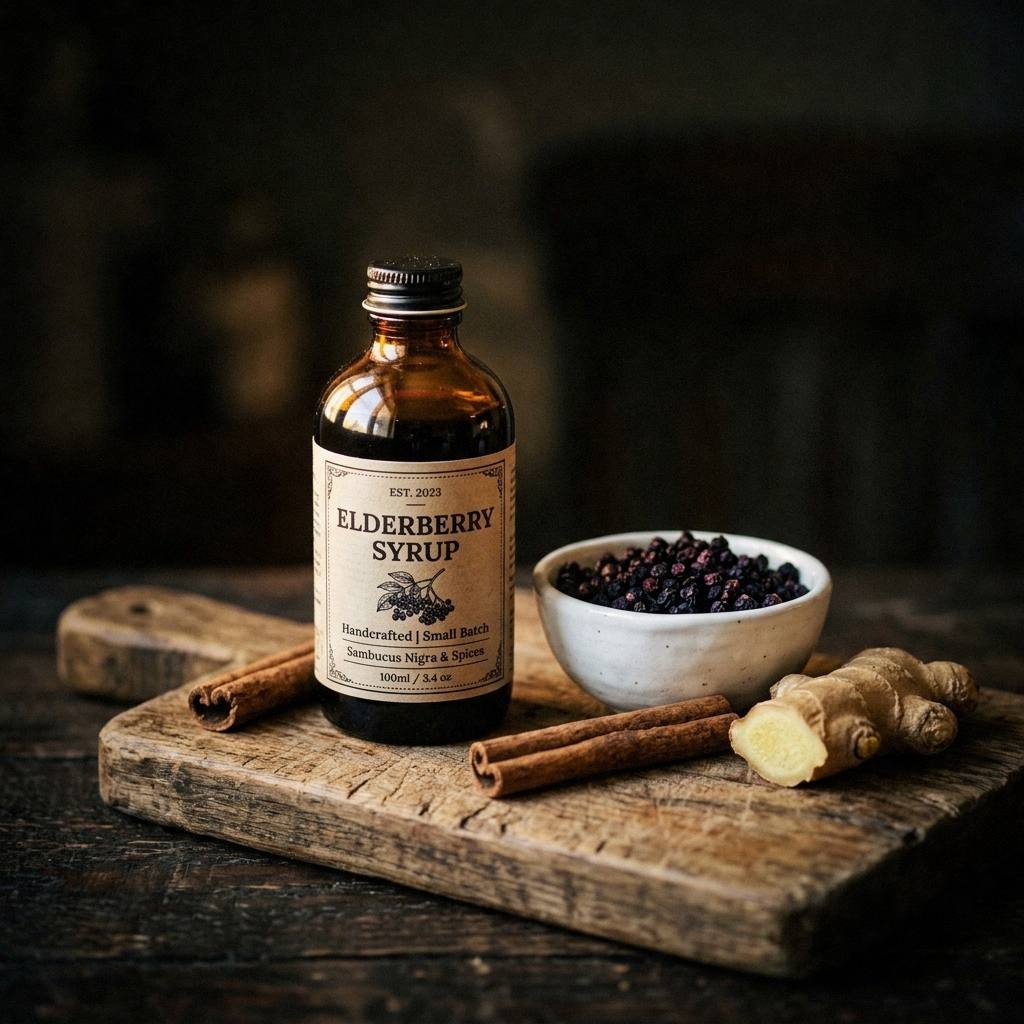
Can You Freeze Elderberry Syrup?
Freezing can preserve a syrup that was safe when it entered the freezer. It does not make raw, incorrectly prepared, contaminated or poorly stored elderberry material safe. This page supplies general handling context, not an elderberry cooking process, medical dose or formula-specific shelf life. Follow a commercial product’s label, including whether freezing is permitted.
NCCIH elderberry safety information warns about raw or unripe berries and other plant parts. Freezing is not evidence that those hazards have been resolved. The linked TFA syrup recipe has its own review history and unresolved shelf-life limits; a link here does not validate its preparation or authorize use of an uncertain batch.
General Freezer Handling, Conditional on a Safe Starting Product
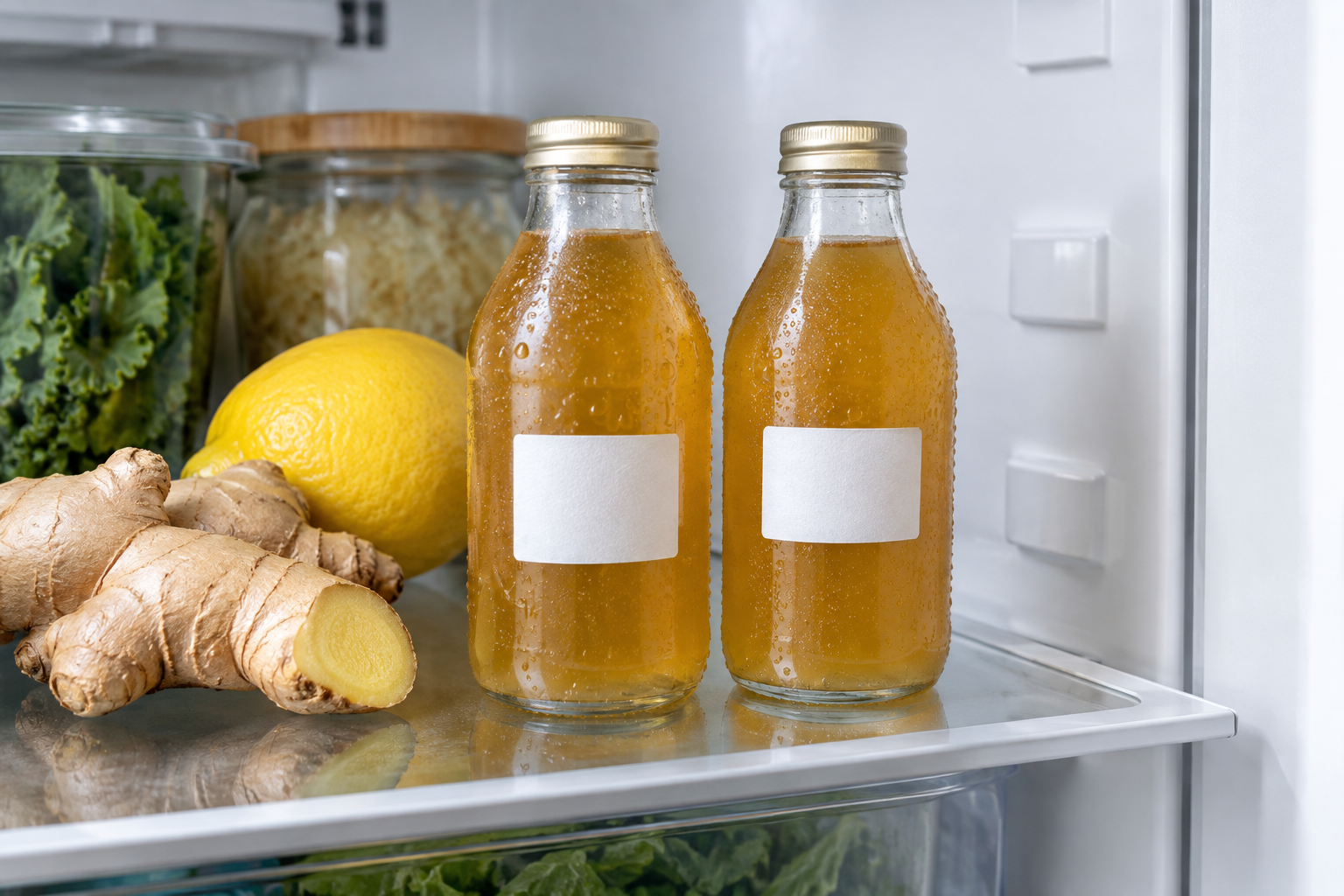
Use clean freezer-rated food containers, not decorative bottles. Cool a hot food promptly in smaller containers or an ice-water bath and refrigerate promptly rather than waiting until completely cool on the counter. USDA handling guidance supports prompt cooling; a large warm jar is not a controlled cooling method.
Small covered portions can reduce repeated thawing. Tray cavities are not standardized doses: measure the capacity of your own tray if volume matters, and label the product and freezing date. No treatment serving size is supplied here.
Headspace Depends on the Pack
NCHFP’s headspace table distinguishes liquid fruit packs from juices. For liquid fruit packs it gives 1/2 inch for wide-opening pints and 1 inch for wide-opening quarts; for narrow-opening pints, 3/4 inch, and quarts, 1 1/2 inches. Its juice row gives 1 1/2 inches for both narrow-opening pints and quarts. Those categories are not a validated elderberry-syrup specification. Use the container manufacturer’s expansion and freezer instructions and avoid narrow-necked glass bottles.
Temperature and Quality Limits
NCHFP frozen-food storage guidance recommends 0 F (-18 C) or below. Its eight-to-twelve-month fruit and vegetable quality range is not an elderberry-syrup quality or safety test. No exact frozen lifetime is established for the linked TFA syrup.
Freezing inhibits microbial growth, but microbes can survive and grow again after thawing. It does not erase prior temperature abuse, spoilage or plant toxins. Syrup sugar levels vary; a syrup may not become a firm cube. Freezer quality also depends on the formulation and packaging.
Thawing and Refreezing
For a safe starting food, thaw covered in the refrigerator at 40 F (4 C) or below; do not use the counter as a thawing method. NCHFP thawing guidance discusses controlled thawing methods. An overnight interval is not a guarantee that every jar has thawed.
The former hot-tea, lemon-water, sparkling-water, oatmeal and smoothie consumption suggestions are withdrawn for unverified homemade syrup. Heat from a mug or a frozen state cannot certify an uncertain elderberry process. No active tasting or consumption procedure for an unresolved batch is provided.
The categorical no-refreezing safety implication is removed: USDA guidance allows refreezing food thawed under appropriate refrigeration, though quality may decline. That does not extend a homemade syrup’s unestablished post-thaw life. Use product-specific instructions; discard uncertain or temperature-abused food.
Fresh Berries Are a Separate Process
Fresh berry freezing, thawing and later cooking require correct species, plant part and a suitable complete process. The former advice to keep thawed elderberries for several weeks is withdrawn. Freezing raw berries does not validate them for consumption. No berry-to-syrup recipe is supplied here.
Normal separation or a thinner texture may be a quality change, but cannot prove safety. Do not taste a syrup to clear it for use. Visible growth, suspect fermentation or an uncertain storage history warrants disposal. Honey-containing syrup is not for infants under 12 months.