The Short Answer
Yes. Eggnog is one of the few party drinks that genuinely wants to be made in advance. A batch mixed and poured in the same ten minutes tastes raw and sharp. A batch that has sat cold overnight tastes like one thing instead of five.
Utah State University Extension’s own holiday eggnog recipe builds this into the method, calling for the finished mixture to be covered and chilled 4 to 24 hours before it is served.
The outer limit is not a matter of taste. The FoodSafety.gov cold food storage chart gives homemade eggnog 2 to 4 days in the refrigerator. Plan inside that and you have plenty of room.
Start from the classic cooked eggnog recipe and use the timeline below to spread it out. Its base uses whole eggs cooked to 160 F (71 C), not a raw yolk base or a reserved raw-white finish. Use pasteurized eggs for any uncooked-egg version; alcohol does not make untreated raw eggs safe.
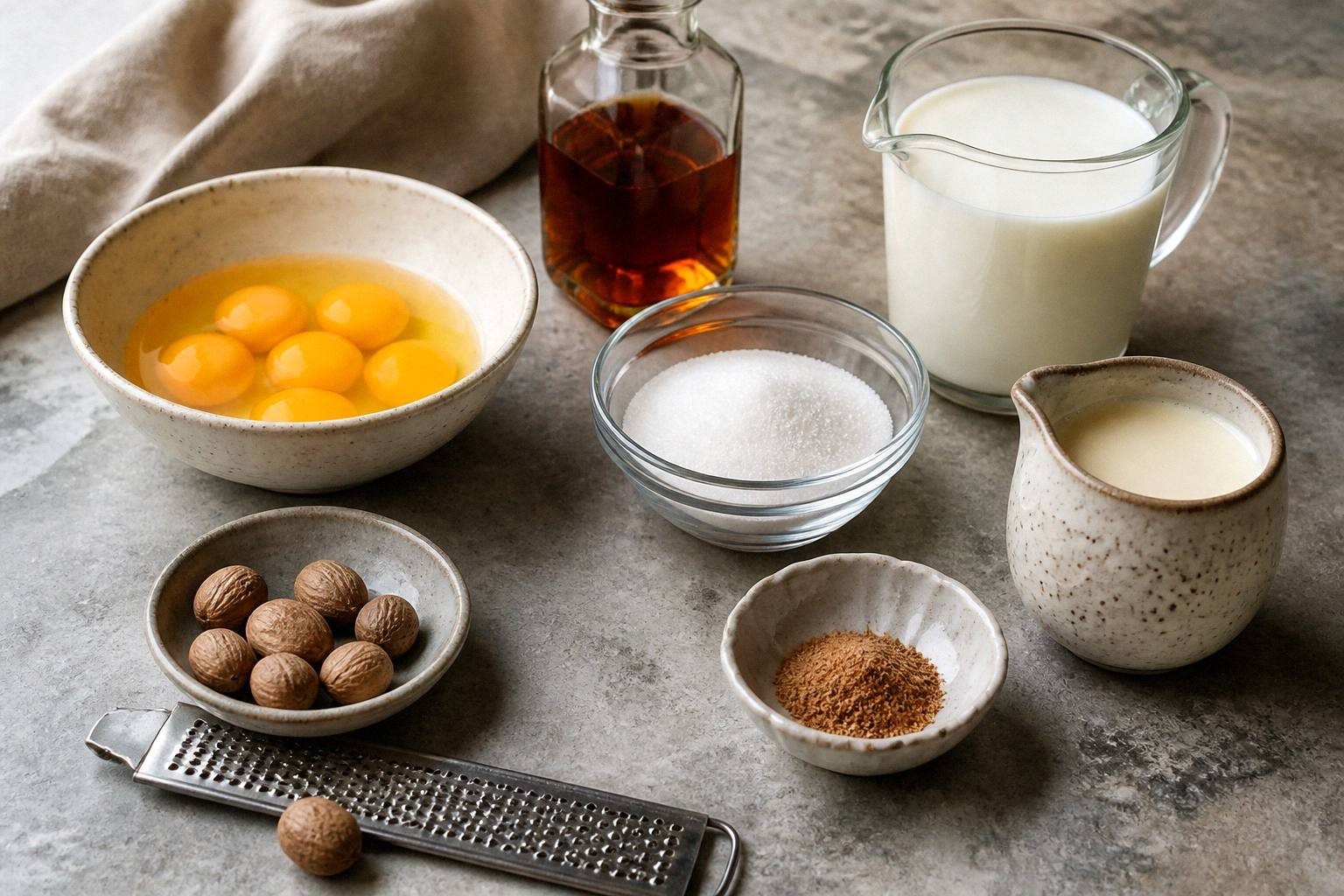
The Host Timeline
| When | What You Do | Why Then |
|---|---|---|
| 3 days out | Shop, chill the dairy | Cold ingredients mix smoother |
| 1 to 2 days out | Make and chill the base | Flavors settle, sharpness fades |
| Serving day, morning | Taste and adjust sweetness | Cold dulls sugar, check it cold |
| 30 minutes before | Whip optional cream; keep it chilled | Foam does not survive overnight |
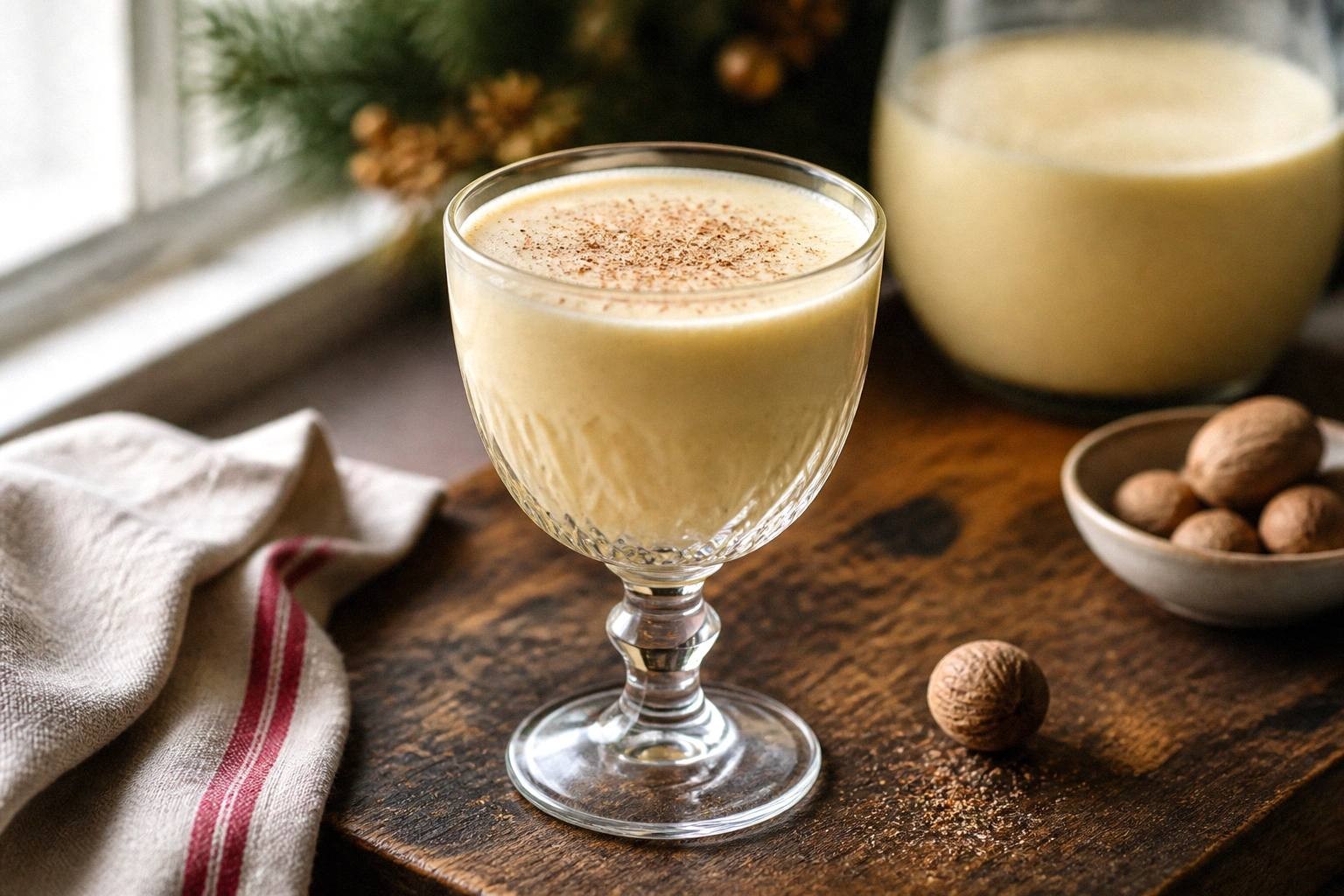
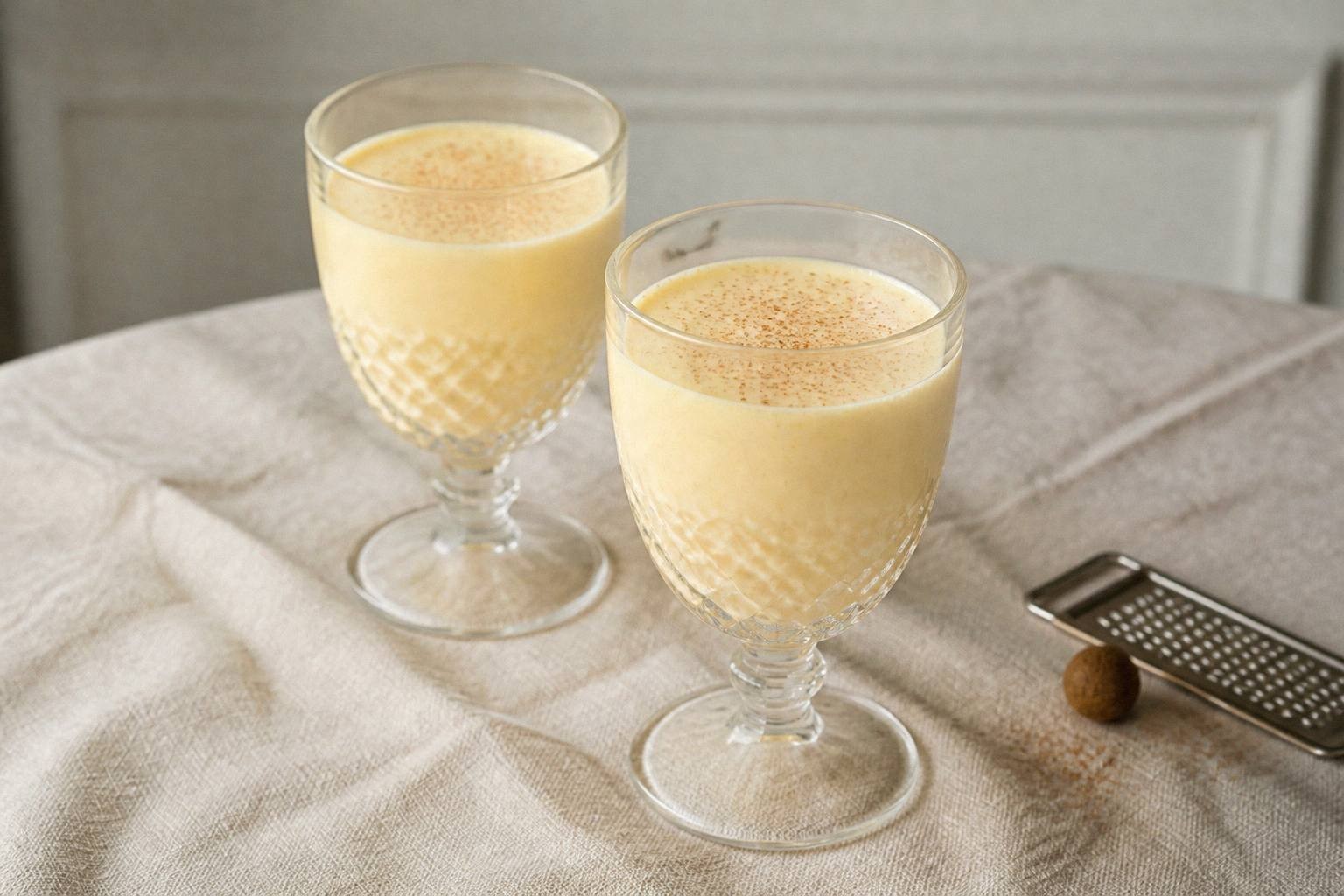
| At the table | Grate nutmeg over each pour | Ground ahead tastes flat |
Why Resting Helps
Chilling gives the cooked eggnog base time for its dairy, sugar and spices to blend.
A night in the fridge changes that. The dairy takes on the spice, and the sugar stops reading as a separate sweet layer. The texture also settles, because the yolks have had hours to hydrate fully rather than minutes.
This is why Utah State’s recipe has a chilling step written into it rather than left as a suggestion. The rest is part of the method, not a convenience.
What to Make Early
Almost everything, as it turns out.
- The cooked egg, sugar, milk, and cream base
- The full spice measurement
- Measure adult spirits separately for adding per glass on serving day
- Chilling the serving glasses or punch bowl
- Grating a small dish of nutmeg, if you must, though fresh at the table is better
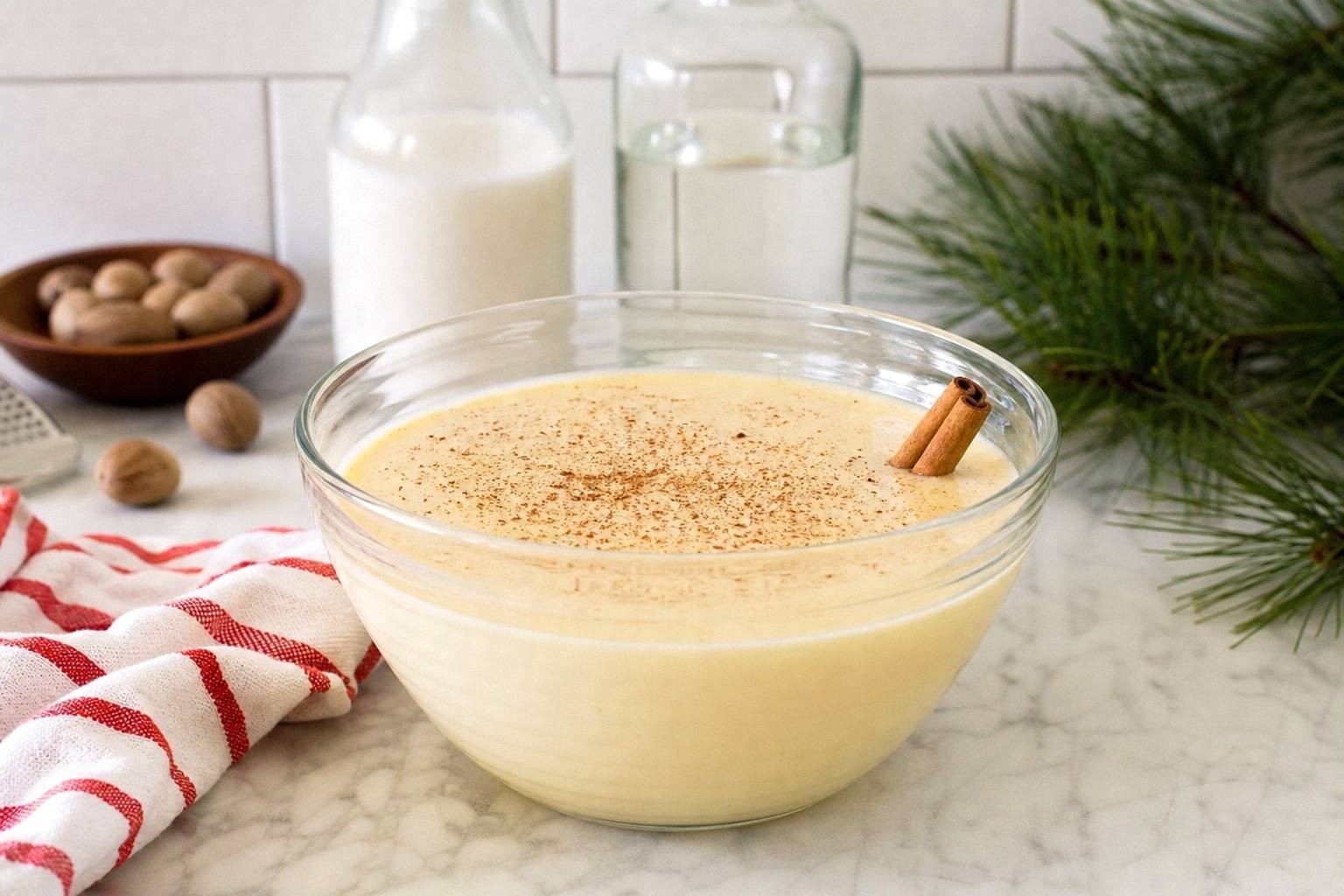
Cool the cooked base promptly in shallow clean containers or an ice-water bath, then refrigerate within 2 hours, or 1 hour above 90 F (32 C). Keep at 40 F (4 C) or below. Store the cold finished base in a sealed container on a refrigerator shelf rather than in the door. Give it a shake or a stir each day, since a base that sits still will separate. That separation is normal and stirs back in.
What to Save for Serving Day
Two things, and they are the two that make the drink look impressive.
Optional foam. The linked cooked whole-egg classic does not reserve whites for folding in. A different complete recipe that uses uncooked whipped whites must specify pasteurized eggs; do not add untreated raw whites to the cooked base.
Whipped cream. If your chosen version folds in cream at the end, whip it on serving day and keep it chilled until use.
If you are using raw whites for that fold, note that Utah State recommends pasteurized eggs for that step specifically, since raw whites are not proven free of Salmonella. Eggnog without raw eggs covers the substitutions.
Where the Alcohol Fits
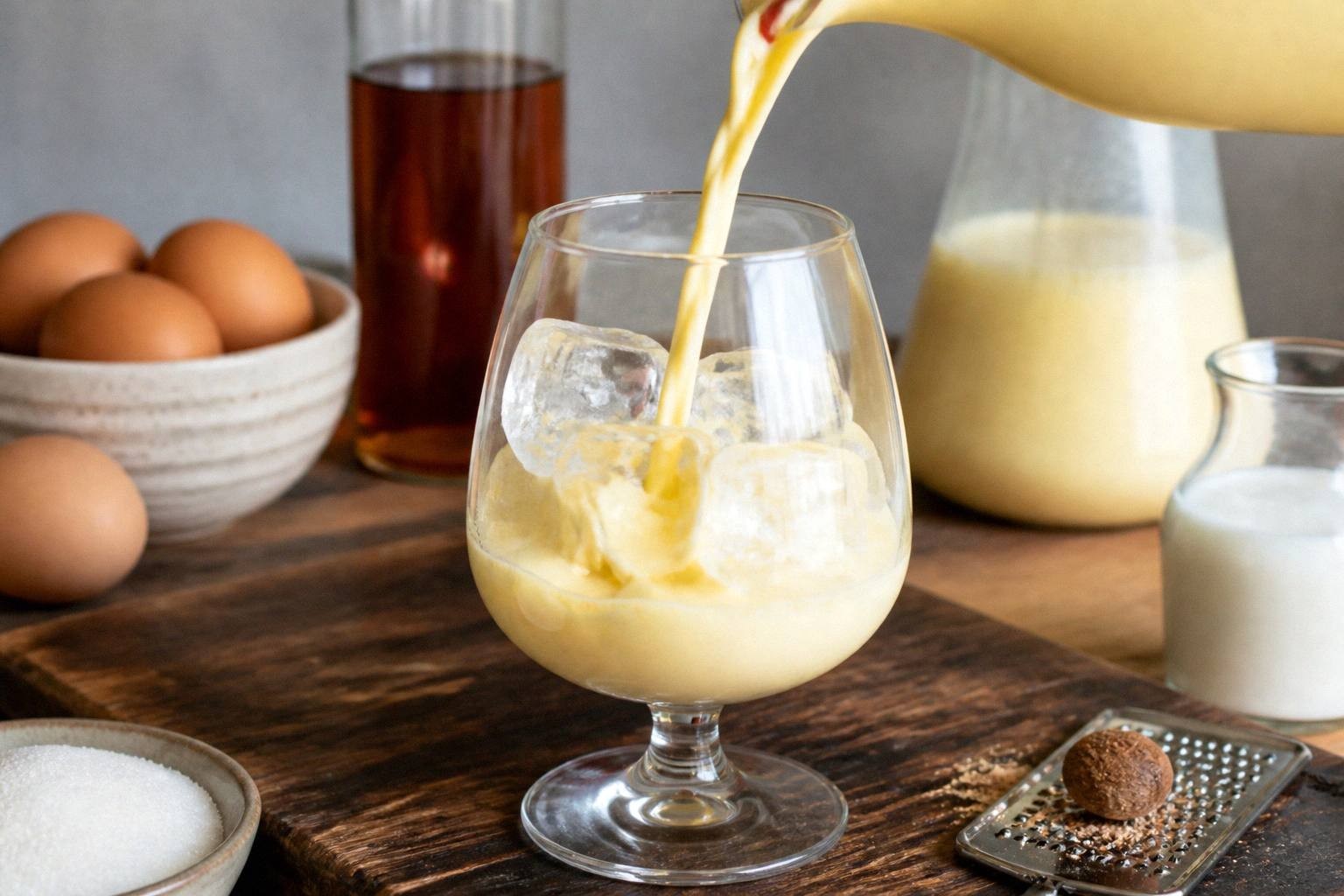
The linked classic keeps its cooked base alcohol-free and adds optional adult spirits per glass when serving. Follow that method rather than adding spirits to the stored family batch.
Pour the spirits in slowly with the whisk running, into a base that has already cooled. A fast pour into a warm base is one of the reliable ways to break a batch, which why eggnog curdles goes into.
Keep the shared base alcohol-free when serving both versions, and add spirits only to the intended adult glasses.
Making a Bigger Batch
Scaling up is where make-ahead planning earns its keep, because the last-minute work does not scale gracefully.
Scale the complete cooked-base recipe proportionally for the crowd. Optional whipped cream can be prepared shortly before service and kept chilled; the linked classic has no reserved-white step.
Watch your container sizes too. A doubled batch needs a container that actually fits on a refrigerator shelf, and eggnog left in a bowl covered with plastic wrap picks up whatever else is in the fridge.
Serving Day Handling
Keep the batch cold and pour from a smaller vessel. Set out a pitcher of what you are serving now and leave the rest in the fridge, then refill.
Keep the serving vessel at 40 F (4 C) or below over ice and replace it with a fresh chilled vessel rather than topping up a warm one. Discard after a cumulative 2 hours without refrigeration, or 1 hour above 90 F (32 C). Returning it to the refrigerator does not reset that clock.
When Make-Ahead Turns Into Aging
There is a separate tradition where eggnog is deliberately held for weeks or months rather than days. That is a different practice with different requirements, and it is not simply the make-ahead plan extended. How long to age eggnog covers what it involves and what the food safety guidance actually supports.
For a party next weekend, stay in the make-ahead lane. For the storage window itself, how long homemade eggnog lasts has the chart.
Common Questions
How far ahead can I make eggnog?
Utah State Extension’s recipe calls for 4 to 24 hours of chilling before serving. The outer limit for a homemade batch is the FoodSafety.gov figure of 2 to 4 days refrigerated. One to two days ahead is the sweet spot for flavor and timing.
Can I make eggnog a week before a party?
Not a homemade one. The published refrigerator window for homemade eggnog is 2 to 4 days. Commercial eggnog gets 3 to 5 days on the same chart, not a general week-long window. Follow the carton label and do not assume it can be opened a week early.
Can I freeze eggnog to make it further ahead?
The storage chart lists homemade eggnog as do not freeze. Commercial eggnog is given 6 months in the freezer.
Should I add the nutmeg ahead or at the table?
At the table. Freshly grated nutmeg is sharp and aromatic, and it fades within hours of grating. Grate over each glass as you pour.
Will it taste different after a day in the fridge?
Yes, and that is the point. The alcohol mellows, the spice spreads through the dairy, and the sweetness stops sitting on top. Taste it cold before serving and adjust sugar then, since cold blunts sweetness.