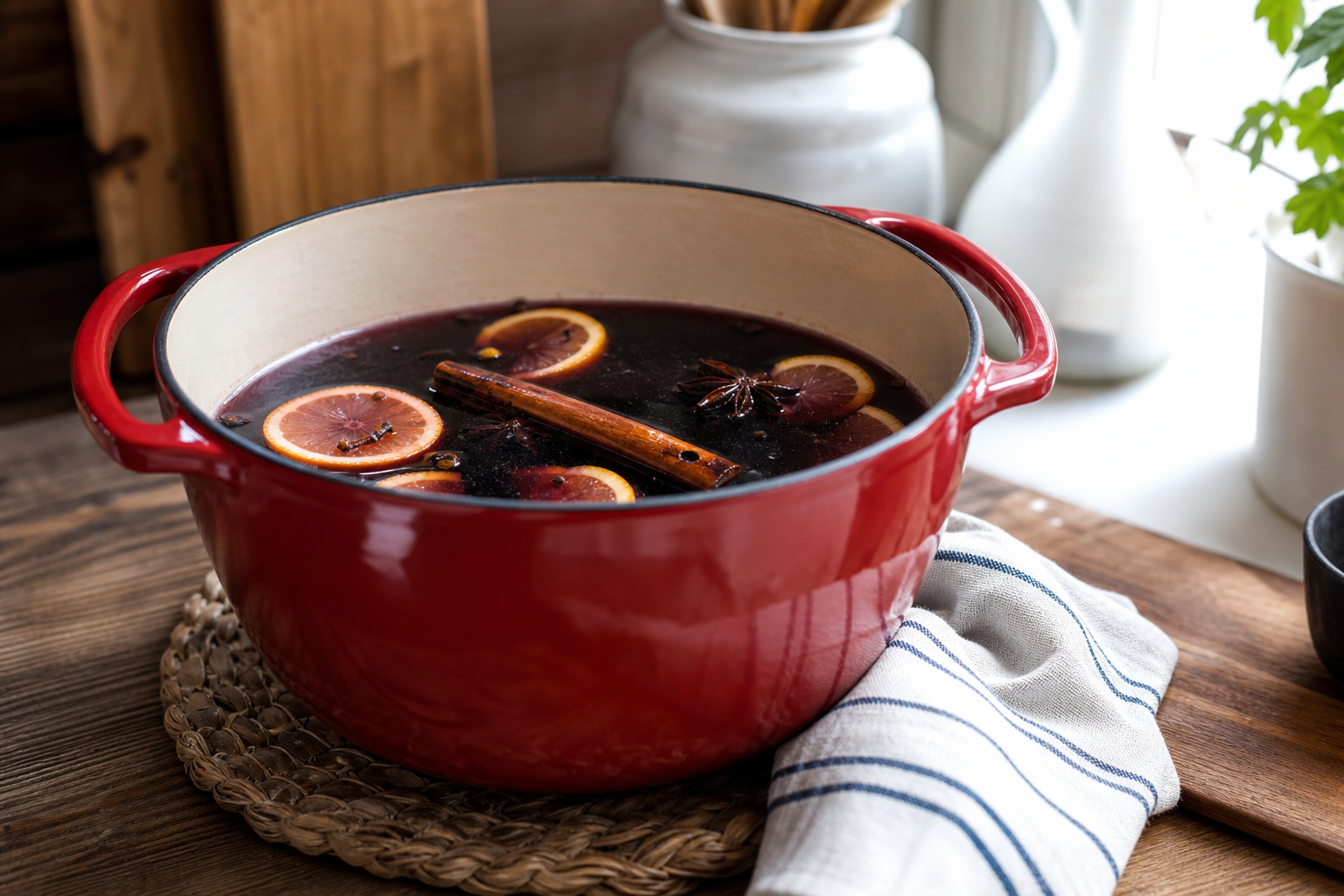
The Short Answer
Yes, mulled wine reheats well. Do it on the stove, over low heat, until it steams and smells fragrant. Stop there.
What ruins a reheat is heat, not the reheating. A pot brought back to a bubble loses aroma and alcohol and turns sharper every time it happens. A pot brought back to steaming tastes very close to the day you made it.
The batch this is written against is the mulled wine recipe for Christmas , whose own instructions call for reheating gently on the stove and never in the microwave.
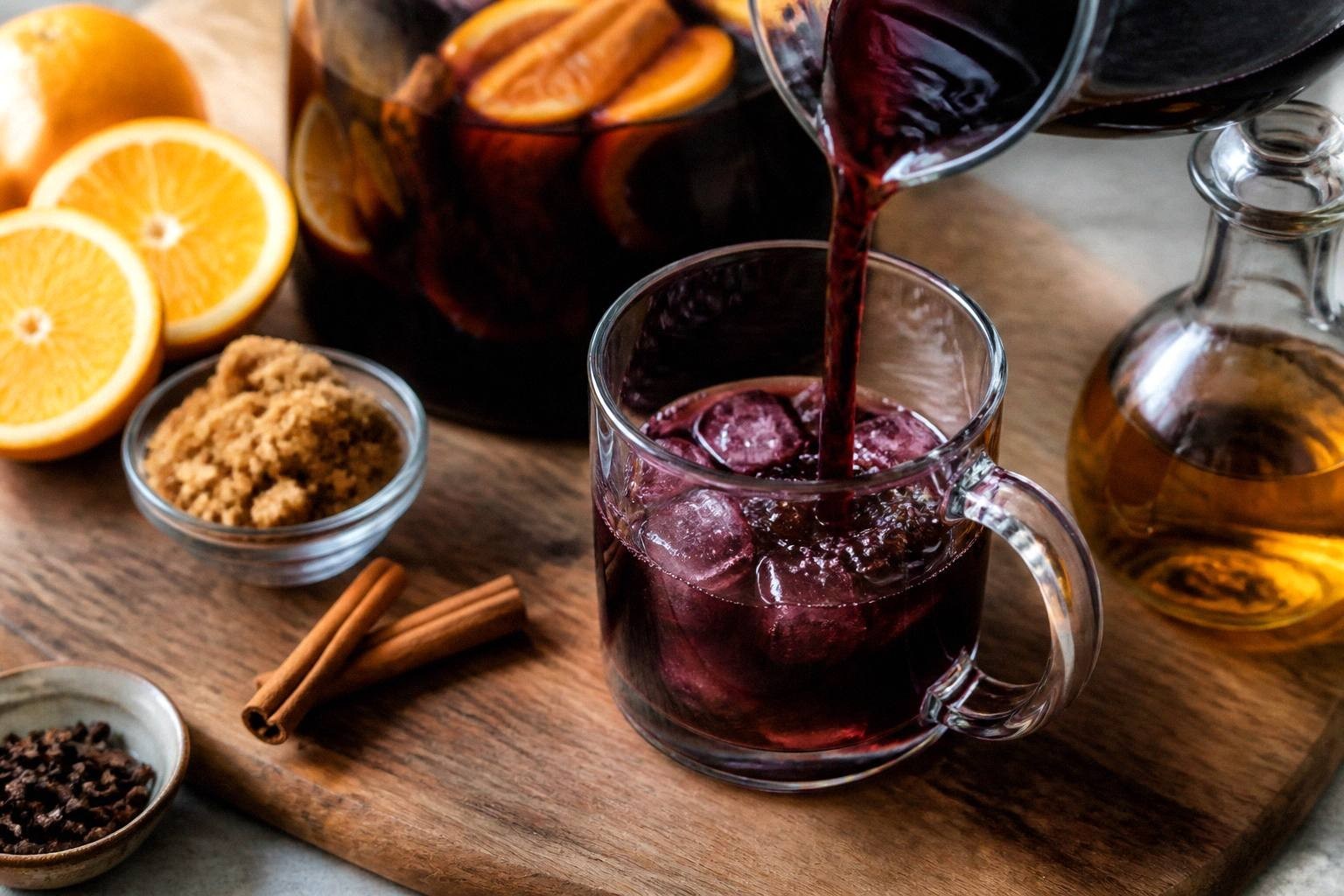
Reheating Methods Compared
| Method | Good For | Risk |
|---|---|---|
| Stovetop, low heat | Any amount, best control | Walking away and letting it boil |
| Slow cooker on warm | Holding a batch through a party | Using low instead of warm |
| Slow cooker on low | Nothing, really | Reaches a simmer within an hour or two |
| Microwave | A single mug in a hurry | Heats unevenly, scorches sugar, boils the middle |
| Electric kettle or urn | Large crowds, if it has a warm setting | Most run far too hot |
Stovetop Is the Default
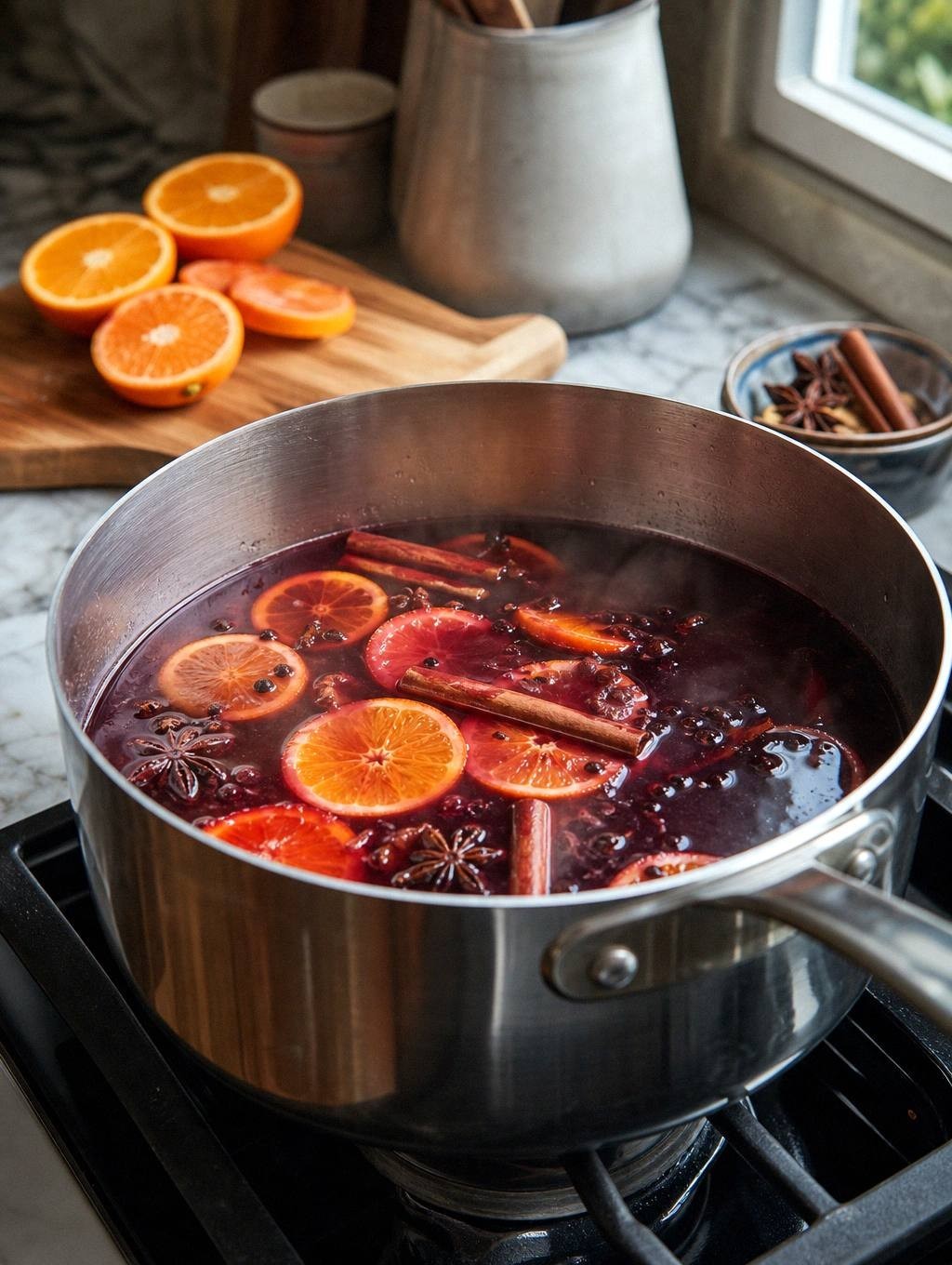
Pour what you want into a nonreactive saucepan. Set the heat low. Stir once or twice so the sugar at the bottom does not sit in one hot spot.
Watch for the first thin wisps of steam and the smell coming up. That is done. If you see a ring of small bubbles forming at the edge of the pan, pull it off the heat immediately, because that is the point where it starts costing you something.
Only reheat what you plan to pour. Warming the whole container to serve two mugs charges the whole batch for two servings.
Slow Cooker for Holding, Not Heating
A slow cooker is the right tool for keeping mulled wine at drinking temperature across an evening, and the wrong tool for bringing cold wine back up.
Use the warm setting. Low is not a gentle setting on most cookers, it is a slow route to a simmer, and after an hour or two on low you have a syrupy, alcohol-thin pot.
If you are starting from a cold container, warm it on the stove first and then transfer it to the cooker to hold. Bringing several quarts of cold liquid up to temperature on the warm setting takes long enough that it also spends a long stretch in the range food safety guidance tells you to move through promptly.
Holding It at a Safe Serving Temperature
The University of Minnesota Extension advises holding hot food at 135 degrees Fahrenheit or above, and defines the temperature danger zone as the range between 41 and 135 degrees Fahrenheit.
For a party pot that gives you a useful narrow target: hot enough to steam and stay steaming, never hot enough to bubble. A cheap instant-read thermometer takes the guesswork out, and it is the same thermometer you would use for the roast.
Whatever is left when the party ends goes in the fridge, not back on the counter. Timings are in how long does mulled wine last .
Why the Microwave Is the Worst Option
A microwave heats unevenly by design. You get a boiling core, a lukewarm rim, and scorched sugar wherever the energy concentrated. In a drink whose whole appeal is aroma, boiling any part of it is a real loss.
If the microwave is genuinely your only option, use short bursts at reduced power, stir between each one, and stop while it is still only warm. It will still be worse than the stove.
What Each Reheat Costs You
Every heating cycle takes a little more of the volatile aromatics, which is most of what you are tasting. It also takes a little more alcohol. Idaho State University publishes the standard alcohol retention figures , showing retention falling as cooking time rises: roughly 40 percent retained at 15 minutes and about 25 percent at an hour.
That is cumulative across reheats, not reset each time. Two gentle reheats are fine. A pot that has been heated, held on low all evening, refrigerated, and heated twice more is a different drink.
Reheating With the Spices Still In
Do not. If the cloves and orange are still floating in the container, strain them out before you reheat, or you are giving them a second full extraction on top of the first.
That second extraction is where a lot of harsh, medicinal batches come from. More on the causes in why mulled wine turns bitter .
Reheating a Batch You Made on Purpose
If you made the batch a day or two early rather than having leftovers, the reheat is the whole plan and it deserves a little more care: strain before storing, reheat gently, and add fresh garnish at the end so the citrus smells new. The full timing is in making mulled wine ahead of time .
The Non-Alcoholic and Cider Versions
Non-alcoholic mulled wine and mulled apple cider both reheat more forgivingly, because there is no alcohol to lose and no tannin to sharpen. They still lose aroma if you boil them, and juice scorches even more readily than wine, so keep the heat just as low.
If you are running two pots at a party, the juice pot is the one that can safely sit on the warm setting longer.
Common Questions
Can you reheat mulled wine more than once?
Twice is fine if both reheats are gentle. Each cycle costs aroma and a little alcohol, so heat single servings rather than the whole container when you can.
Can you reheat mulled wine in the microwave?
You can, but it is the worst method. Microwaves boil the middle while the edges stay cool and they scorch the sugar. Use short low-power bursts and stir if you have no other option.
Will reheating cook off the alcohol?
Some, and it adds up across reheats. Retention drops as cooking time rises, so keeping every reheat short and below a simmer is what protects it.
What slow cooker setting should I use for mulled wine?
Warm, not low. Low reaches a simmer within an hour or two on most cookers, which drives off alcohol and turns the drink syrupy.
How hot should mulled wine be served?
Hot enough to steam and hold steaming, and never bubbling. Food safety guidance puts the safe hot-holding line at 135 degrees Fahrenheit and above.
Should I strain the spices before reheating?
Yes. Spices left in keep extracting through storage and through the reheat, which is the fastest route to a bitter, medicinal batch.