The Short Answer
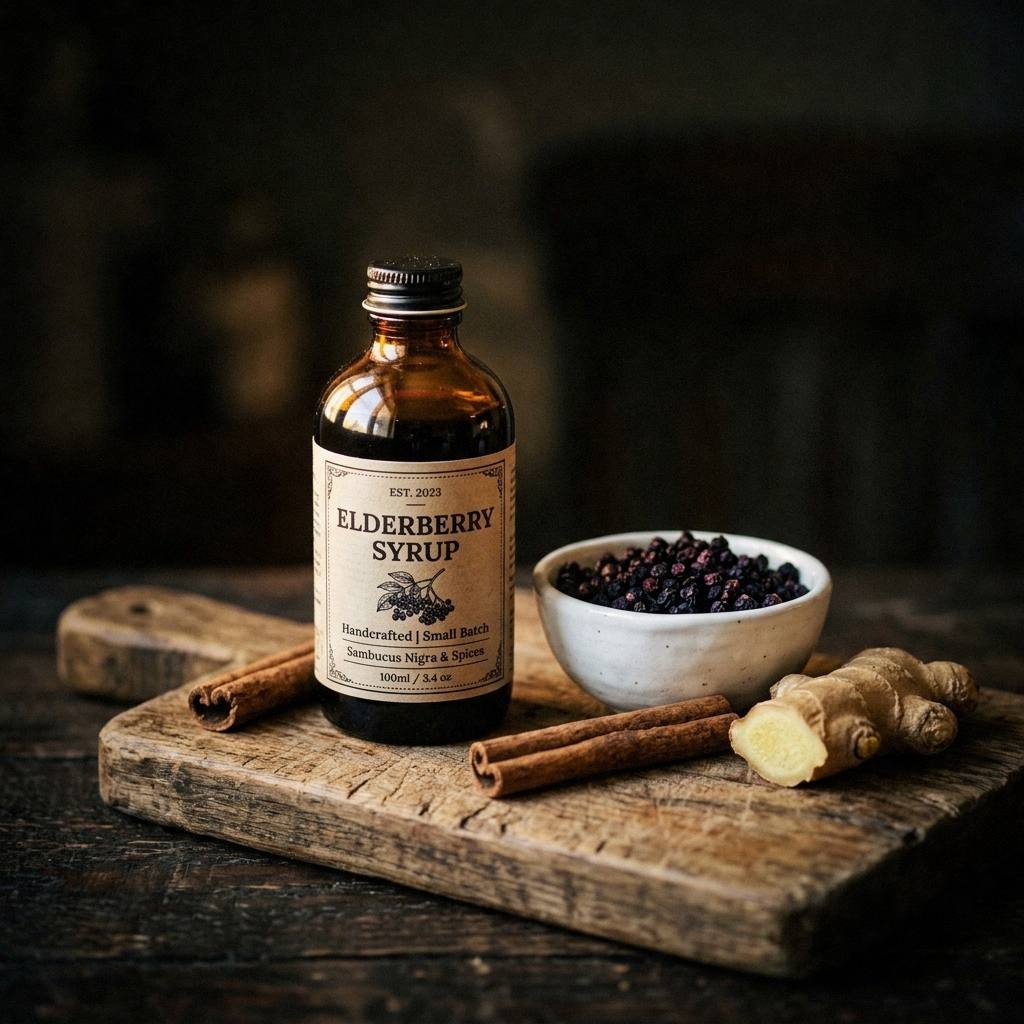
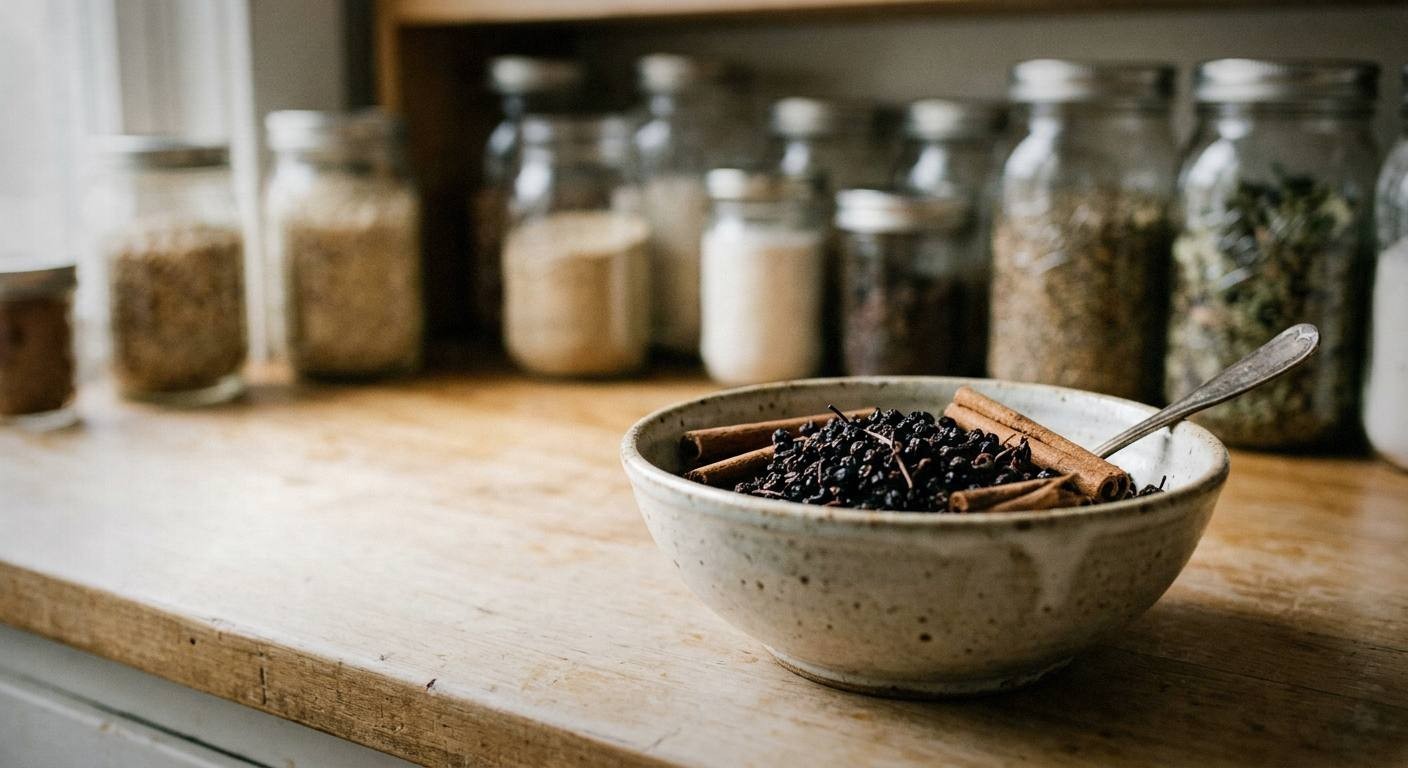
Dried is the practical default and it is what most elderberry syrup gets made from. Dried berries keep in a sealed jar, they ship anywhere, they arrive already destemmed, and they carry far less water into the pot.
Fresh is worth using when you actually have fresh fruit, which for most people means a bush in the yard or a farmers market in late summer. The flavor is brighter and slightly more floral, and the color is spectacular.
Neither one gets eaten raw. That part does not change. The preparation directions and fresh-fruit swap on our elderberry syrup page are withdrawn pending resolution of its process limits. This guide does not reinstate them.
What Changes When You Use Dried
Water. This is the big one. Dried berries rehydrate in the pot, so you control the water yourself instead of inheriting whatever the fruit brought with it. That makes the reduction predictable.
Availability. A bag of dried berries in the cupboard in January is a different proposition from waiting for a bush to fruit in August.
Prep. Almost none. Reputable suppliers sell them destemmed and sorted.
Flavor. Deeper and more raisin-like, a little less bright. Drying concentrates and slightly cooks the fruit, which suits a spiced winter syrup well.
What Changes When You Use Fresh
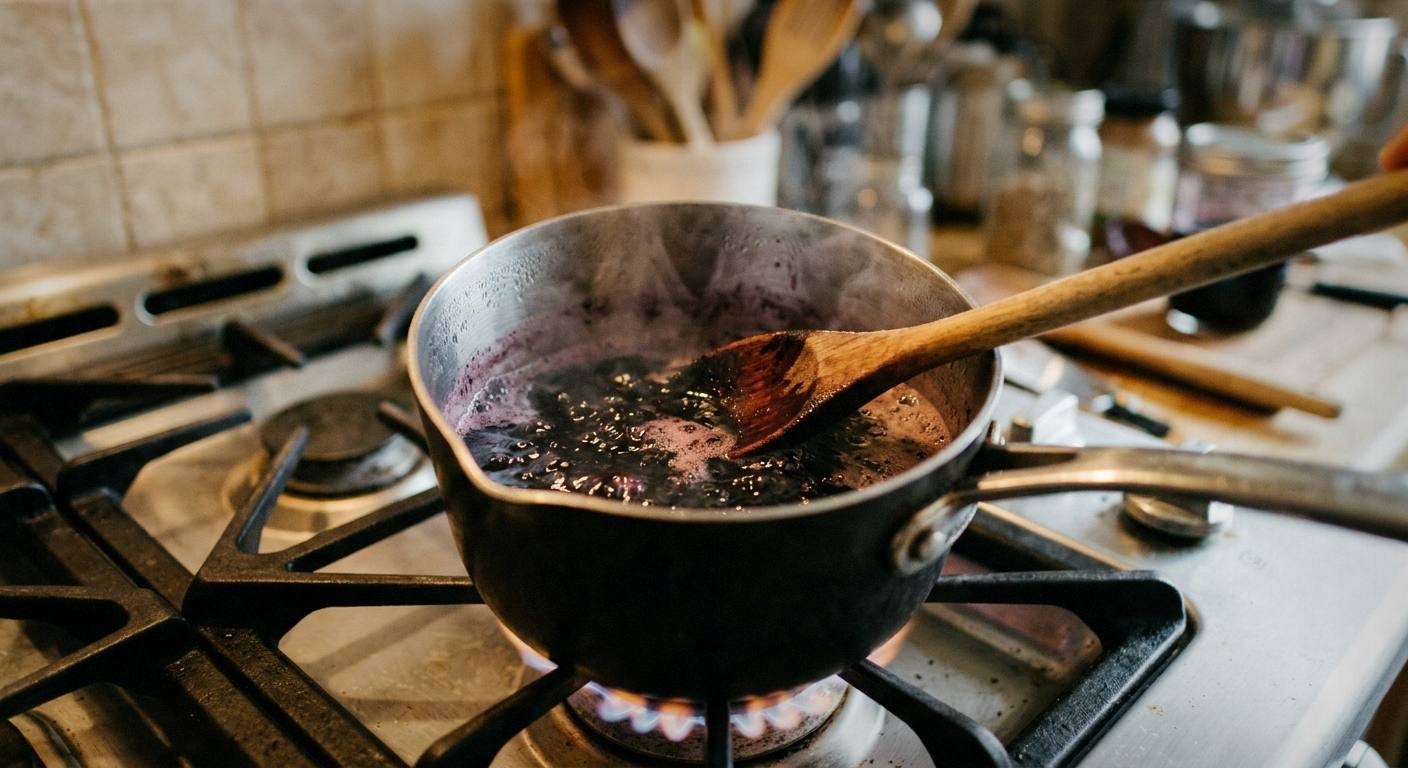
Water. A lot more of it. Fresh fruit thins the pot, which is why a fresh batch usually needs a longer reduction to land in the same place. If yours came out runny, that is the first thing to look at in why elderberry syrup will not thicken .
Prep. Real work. Elderberries grow in umbels, dozens of tiny berries on a fine branching structure, and the stems have to come off. The freezer trick helps: freeze the whole cluster solid, then rake the berries off with a fork or shake them loose in a bag. Frozen berries release far more willingly than fresh ones.
Flavor. Brighter and more floral, with more acidity.
Timing. A short window in late summer, and then it is gone.
Both of Them Get Cooked
This is not a preference. It is the rule that makes elderberry safe to eat at all.
The National Center for Complementary and Integrative Health states that raw or unripe elderberries and other parts of the elder tree, such as the leaves and stem, contain poisonous cyanide-producing substances that can cause nausea, vomiting, and severe diarrhea; cooking eliminates this toxin . Penn State Extension is blunter still: elderberries must not be consumed raw .
Dried does not mean pre-treated. University of Minnesota Extension notes that dehydrated berries should still be heat-treated before consumption to destroy toxins , and recommends boiling elderberries for at least ten minutes. Drying removes water. It does not do the job cooking does.
The whole picture is in are elderberries poisonous raw .
Ripeness Is the Part People Get Wrong With Fresh
Elderberries ripen unevenly across a cluster, and unripe fruit is not just sour, it carries more of the compounds you are cooking off. University of Minnesota Extension advises removing all stems, leaves and unripe berries before processing.
Penn State Extension gives the color rule and a warning worth reading twice: process only the deep purple fully-ripe berries , and never eat the poisonous red berries from ornamental Sambucus racemosa cultivars. Deep purple, almost black, and soft. Red is a different plant and a different answer.
If a cluster is half red and half purple, leave it on the bush for a few more days.
Stems Are the Real Chore
Fine stems are the part people are tempted to leave in, because getting every last one out is tedious. They are also the part with the most of what you do not want. A study of cyanogenic content in American elderberry published on PubMed Central found the highest average amounts in the stems and in whole green berries, with ripe berries at the low end of the range.
So the stems are worth the tedium. Freezing can help release berries from stems, but inspect and remove stems, leaves and unripe fruit before processing. Floating and skimming are not reliable substitutes for that sorting.
Buying dried skips this entire section, which is the honest argument for dried.
Where to Buy Dried Elderberries
Look for bulk herb suppliers rather than a grocery aisle. The bag should name the species, ideally Sambucus nigra for the European berry, and say where it came from. Mountain Rose Herbs and Frontier Co-op are the two that come up most, and both sell organic dried elderberries by the pound.
What to check before you buy:
- Species named on the label
- A harvest or best-by date
- Whole berries rather than powder, unless you specifically want powder
- No added sweetener or anything else in the ingredients
How to Store Dried Elderberries
Airtight, dark, cool, dry. A glass jar with a good seal in a cupboard beats the original bag, which is usually not resealable in any serious way.
Light and warmth are what fade the color and dull the flavor. A jar on a sunny windowsill looks lovely and costs you a good bit of what you paid for.
Fresh Berries You Cannot Use Yet
Freeze them. Penn State Extension notes that elderberries can be safely frozen and then thawed and cooked later , and that once thawed you should refrigerate them and use within a few weeks.
Freezing also makes destemming vastly easier, so it is worth doing even if you plan to cook the same week. It is not a substitute for cooking. The same rules apply to a thawed berry as to a fresh one. Freezing a finished batch is a separate topic, covered in can you freeze elderberry syrup .
Which One I Reach For
Dried, most of the time, and without much agonizing. The syrup gets made in October and November when there is no fresh fruit anywhere, the reduction behaves the same way every batch, and the prep is opening a jar.
Fresh gets used when someone hands me a bag of clusters in late August, and then it is a whole afternoon and worth it. The syrup is a little brighter and the color is unreasonable.
If you have never made it, start dried. Learn what the reduction is supposed to look like on a predictable batch, then complicate it later.
Common Questions
Can I substitute fresh elderberries for dried?
Use a complete species-appropriate preparation that explicitly supplies the substitution. The fresh-fruit swap on our elderberry syrup page is withdrawn; extending a reduction by eye does not validate it.
Are dried elderberries safe to eat straight from the bag?
No. University of Minnesota Extension says dehydrated berries should still be heat-treated before consumption.
Which has more flavor, dried or fresh?
Different flavor rather than more. Dried reads deeper and more raisin-like. Fresh reads brighter and more floral, with more acidity.
What is the difference between Sambucus nigra and Sambucus canadensis?
European elder and American elder. Their preservation requirements are not universally interchangeable; Oregon State distinguishes species and acid content in its elderberry preservation guidance . What matters far more is that the berries are fully ripe and cooked, and that you are not looking at Sambucus racemosa, the red-berried ornamental Penn State Extension warns against eating.
Do I have to remove every single stem?
Remove stems, leaves and unripe berries before processing, as Extension guidance requires; the stems are where cyanogenic content runs highest.
Can I use elderberry powder instead?
You can, but you lose the straining step that makes a clean syrup, and the result is gritty. Whole berries are the better buy for syrup.
How long do dried elderberries keep?
Longer than most people need if they are sealed, dark, cool and dry. Judge by color and smell. Faded, dusty berries with no aroma have given up whatever they had.