The Short Answer
A batch that tastes too pungent can often be adjusted. If it has mold, bubbling, unexpected cloudiness or slime, discard it instead of trying to rescue it.
The published fix is simple and it comes from Oregon State University Extension’s sheet on flavored vinegars : if the flavor seems too strong, dilute it by adding more of the base vinegar. For fire cider the base is plain apple cider vinegar, so you stir that in until the batch lands where you want it.
Then there is the glass, which is where most of the real fixing happens. And there is next time, which is where you stop it happening again.
The full method is on the fire cider recipe page if you want to see what went where.
Where the Heat Actually Comes From
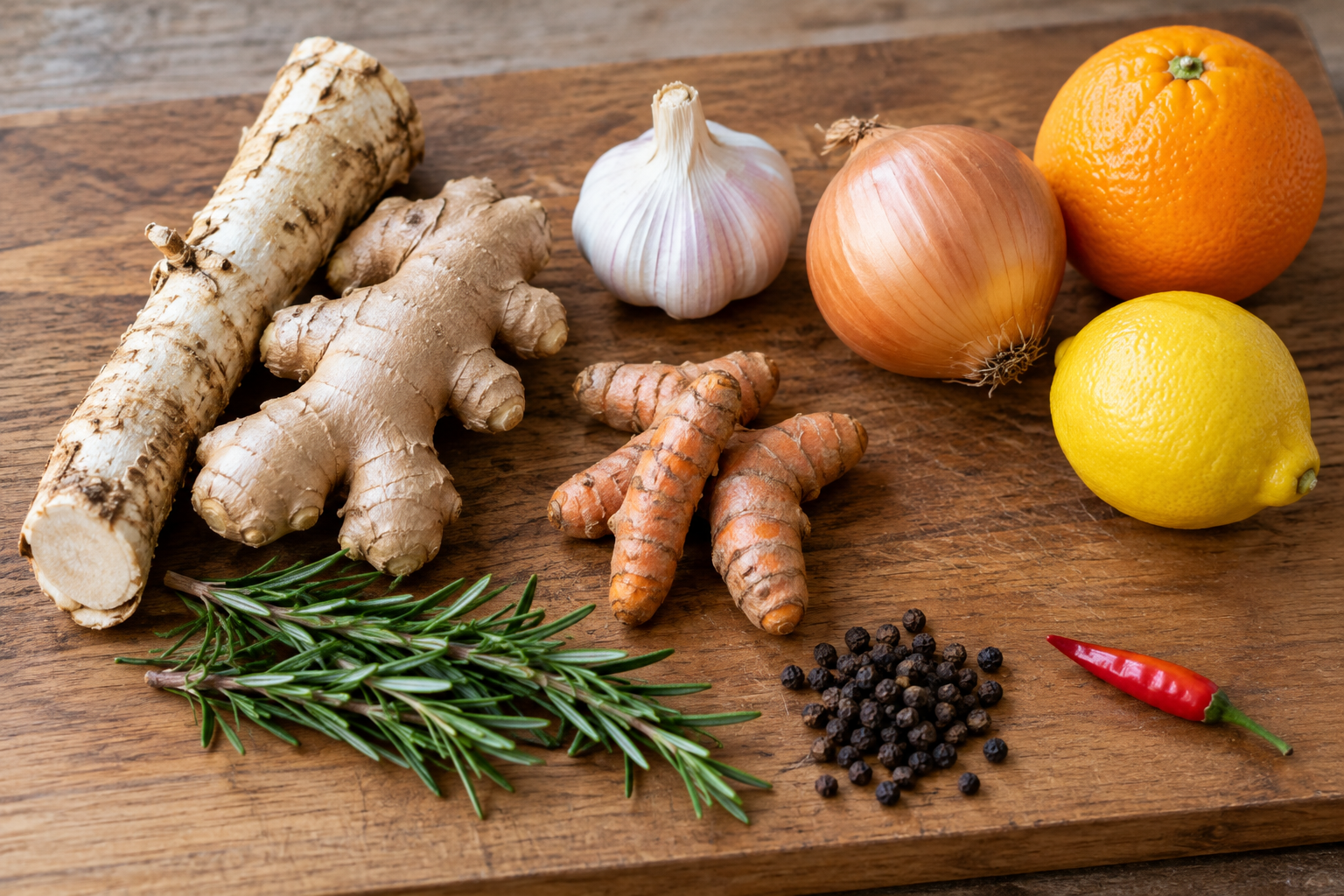
People assume cayenne. Cayenne is usually the smallest part of it.
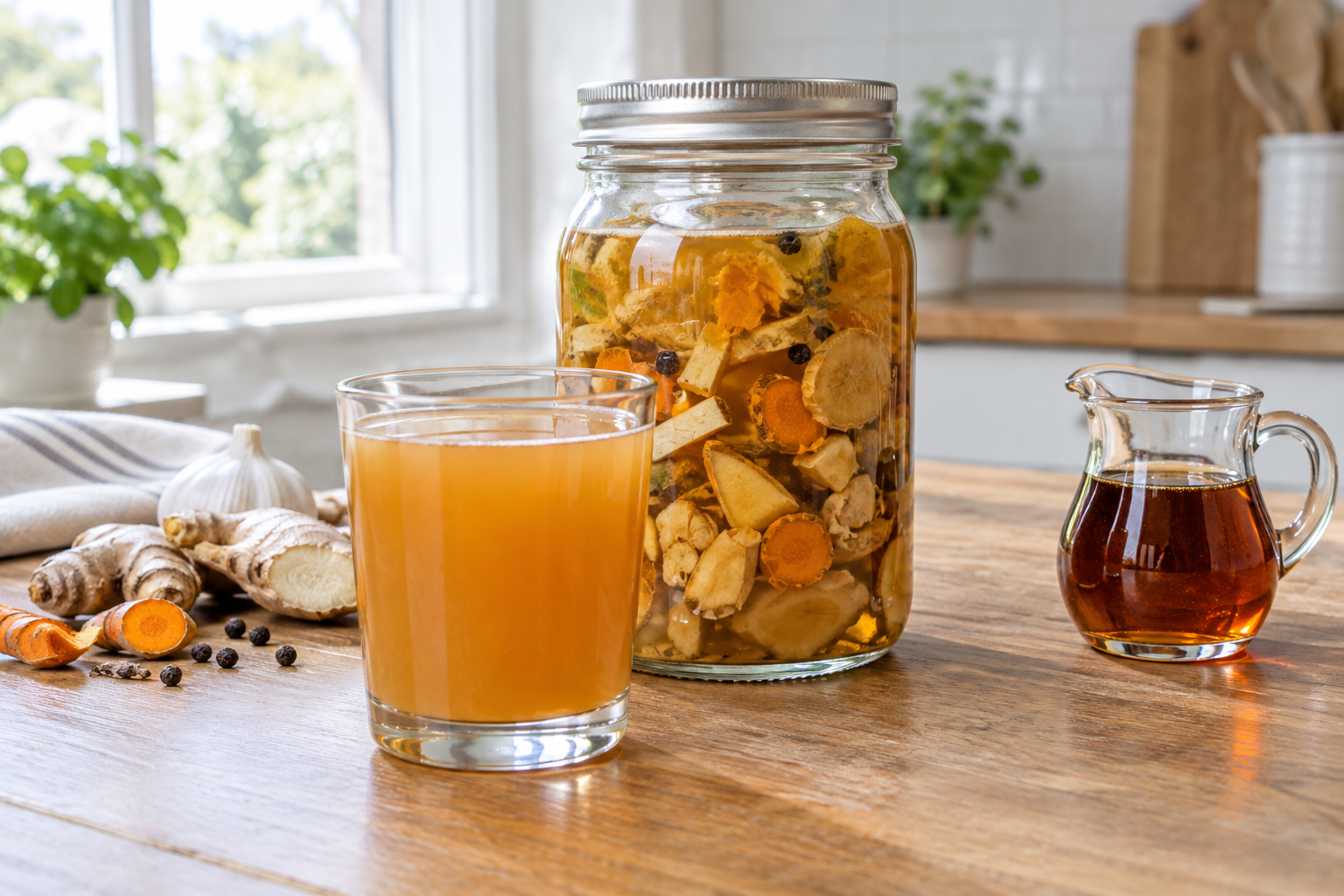
Horseradish is the main culprit and the one that surprises people. Its bite is volatile and goes upward, into your sinuses, rather than sitting on your tongue like chili heat. Fresh grated horseradish is dramatically stronger than the jarred kind, and a root that was fresh and large will hand you a fierce batch on its own.
Cayenne is the heat you expected: it lands on the tongue and stays. It builds over the infusion, so a jar that tasted fine at week two can be noticeably hotter at week four.
Garlic and onion do not read as heat exactly, but they add a raw pungency that stacks on top of it. A long infusion keeps pulling garlic out, and past four weeks it can start to dominate.
The vinegar itself contributes a sharpness that people mistake for spice. If the batch feels like it is burning rather than warming, that may be acid rather than heat, and the fix is different.
Fix One: Dilute the Batch
The extension fix, and the one to try first.
Pour some of the batch into a jug, stir in plain apple cider vinegar a little at a time, and taste as you go. Use the same kind of vinegar you started with so you are diluting the intensity without changing the character.
Two things matter here. Work on part of the batch rather than all of it, so you can still blend back toward strong if you overshoot. And dilute with vinegar rather than water. Water thins the base the whole preparation is built on, and the extension guidance is specific about adding more base vinegar. Save the water for the glass.
Fix Two: Cut It in the Glass
Honestly, this fixes more batches than anything done to the bottle.
Fire cider is rarely drunk neat. Cutting each pour is normal practice, not a compromise, and it gives you control the bottle cannot:
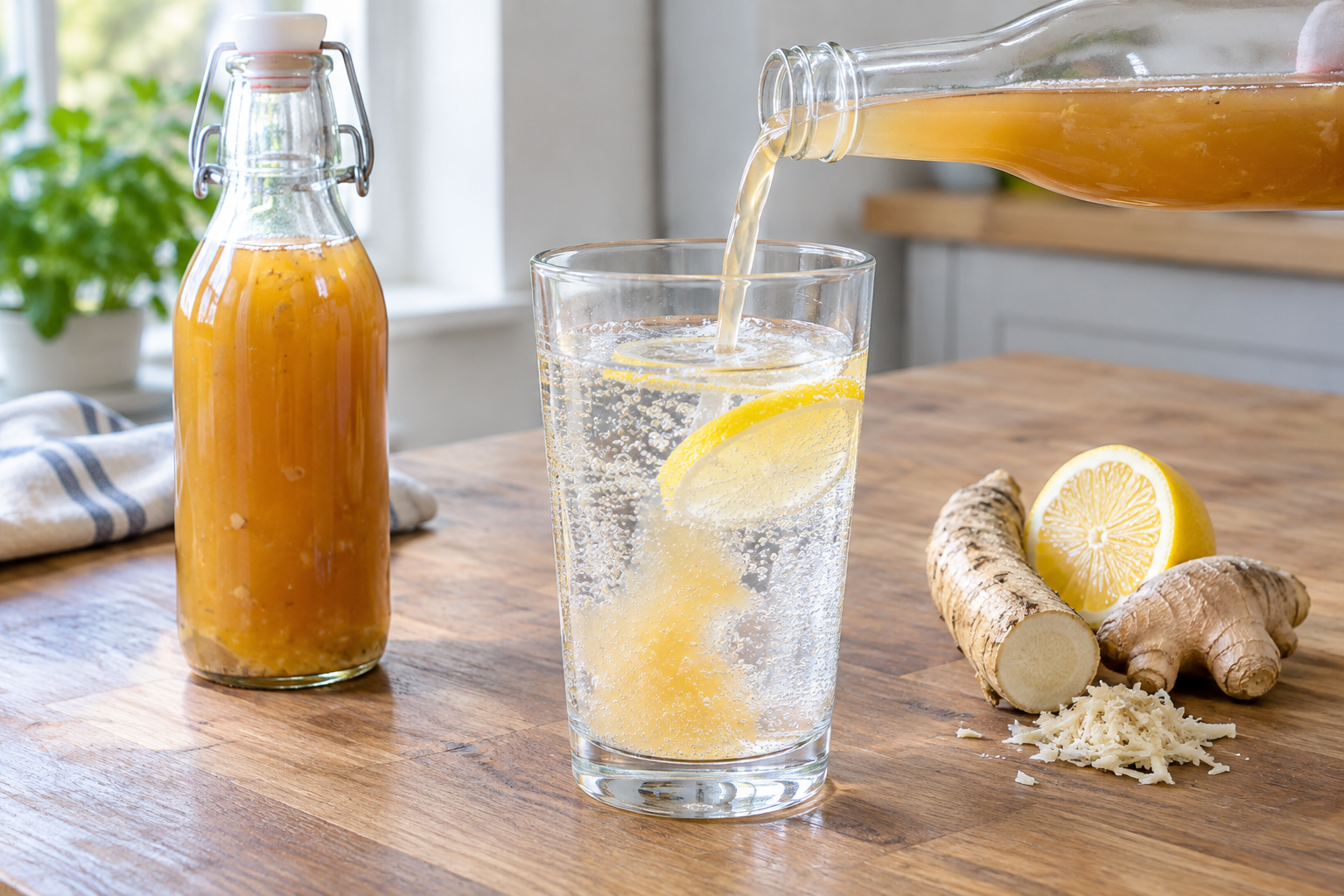
- Warm water with a slice of lemon, which dilutes each sip
- Sparkling water over ice with a squeeze of lime
- Tomato or vegetable juice, where the sharpness works in your favor
- Apple juice or cider, which handles the vinegar edge better than most things
- Orange juice, if the citrus in your batch faded
Choose the mixer you enjoy. The amount of dilution matters more than whether the water is warm or cold. Add water only to the glass you plan to drink, not to the storage bottle.
Fix Three: Add More Sweetener
Sweetness masks heat rather than removing it, but masking is often exactly what you want.
Stir sweetener into only the diluted serving you will use immediately. The current fire-cider recipe keeps the refrigerated storage bottle unsweetened; changing its sweetener or water content does not inherit its storage limit. The options are in fire cider without honey .
Do not lean on this alone. A batch that is genuinely too hot and heavily sweetened becomes cloying and still burns. Dilute first, sweeten second.
Fix Four: Give It Time
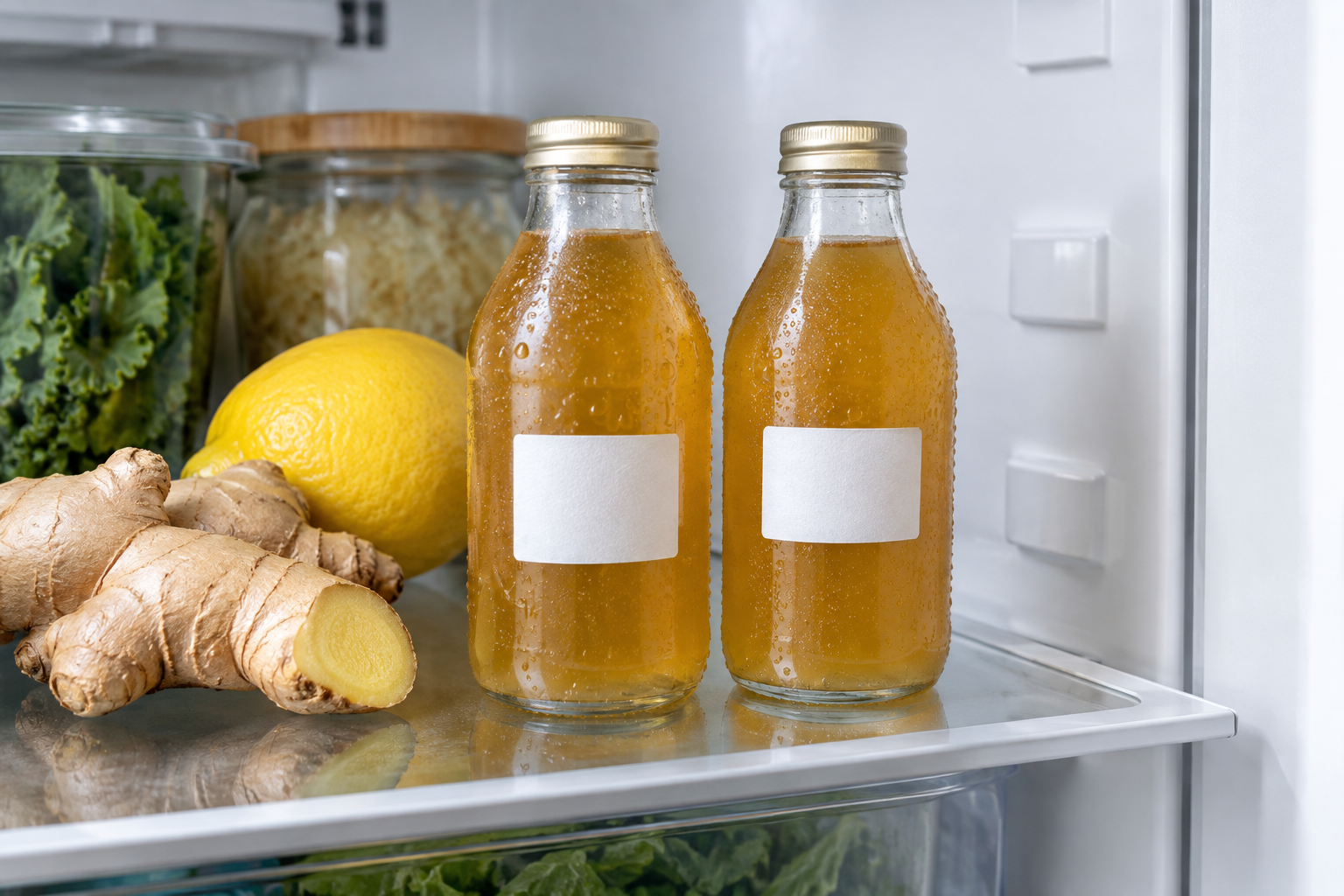
A freshly strained batch is at its most aggressive. The heat settles as the bottle sits in the fridge.
Some sharp aromas may soften during refrigerated storage, but there is no reliable timetable for a specific batch. If it is already too harsh, use one of the dilution options now instead of waiting for it to change.
Follow the complete recipe’s refrigerated storage instructions and original strain date. The current site blend uses a 1-month house target after straining, not a validated shelf life. Oregon State’s generic 4-to-6-month flavored-vinegar quality window is not demonstrated for this mixed formula; blending does not reset its date. Storage detail is in how long does fire cider last .
Fix Five: Blend It Into a Milder Batch
If you make fire cider regularly, keep a deliberately mild jar going and use it as a blending stock.
A gentle batch, made with less horseradish and no cayenne, is the perfect thing to cut a fierce one with. You lose nothing, you change nothing about the character, and you end up with two bottles you will actually finish.
Strain Earlier Next Time
The single biggest lever, and it costs nothing.
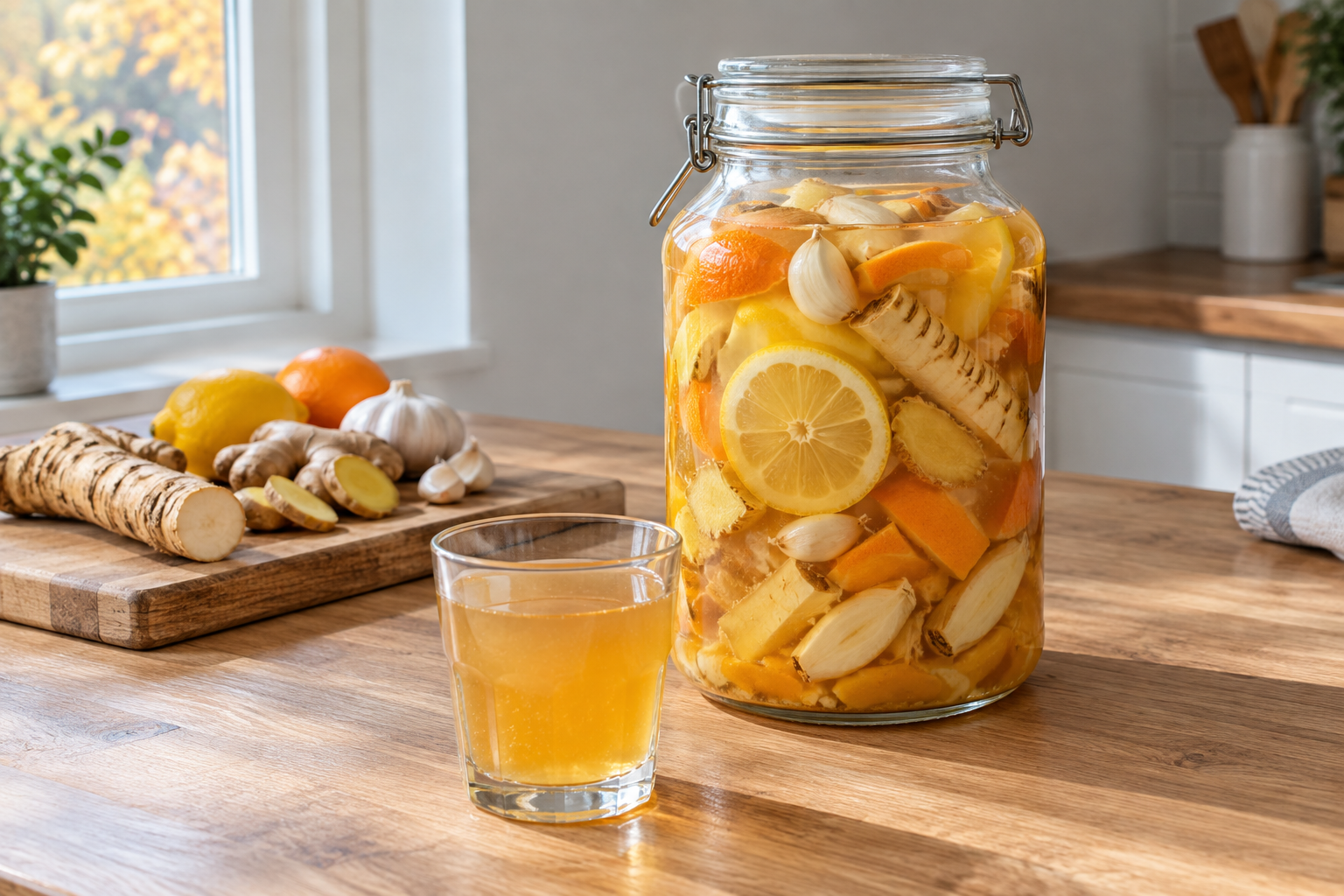
A shorter infusion gives you a milder bottle. Oregon State puts most flavor development at ten days minimum with optimum flavor around 3 to 4 weeks, which means a two week strain is a legitimate choice rather than a mistake. You get brighter citrus, softer garlic, and considerably less horseradish.
Start tasting early instead of waiting out the calendar. The tasting method, including the trick for reading a vinegar without wrecking your palate, is in when to strain fire cider .
Building a Gentler Batch From the Start
For the next jar:
- Use less horseradish, and grate it coarsely rather than finely. Less surface area, slower extraction.
- Leave the cayenne out entirely and add heat later if you miss it.
- Slice the garlic instead of chopping it, for the same reason.
- Add more citrus, which brings sweetness and aroma to push against the heat.
- Taste from week two and strain the moment you like it.
- Make a smaller jar. It is much easier to accept a mild batch you can finish than to nurse a fierce one for a year.
Turning a Harsh Batch Into Something Else
Some batches are simply better in the kitchen than in a glass, and that is not a failure. Fierce fire cider is a genuinely good cooking ingredient:
- The acid in a vinaigrette for a heavy winter salad
- A marinade for pork, chicken thighs, or brisket
- Splashed into braised greens or a pot of beans at the end
- Deglazing the pan after searing something fatty
- Whisked into a barbecue sauce or a glaze for roast roots
- Stirred into a bloody mary mix, where the horseradish belongs anyway
A bottle that was too hot to sip can be the best thing in your fridge for exactly these jobs.
Common Questions
Why is my fire cider so spicy?
Usually fresh horseradish, which is far stronger than the jarred kind, sometimes stacked with cayenne and a long infusion. Garlic and onion add pungency that reads as heat without being heat.
Can I water down fire cider?
Dilute the bottle with more apple cider vinegar rather than water, which is the extension guidance for a flavored vinegar that came out too strong. Water is for the glass you are about to drink.
Will fire cider get less spicy over time?
It may taste less pungent after storage, but the timing varies. More base vinegar can soften a concentrated root flavor while leaving the liquid acidic; water or juice in the serving glass dilutes both flavor and acidity.
Does adding vinegar make fire cider less acidic?
No. Plain apple cider vinegar can spread the root and pepper flavors across more liquid, but it does not lower the acid concentration. To make a serving less acidic, dilute it in the glass with water or another drink; do not dilute the storage bottle.
Can I take the horseradish out mid-infusion?
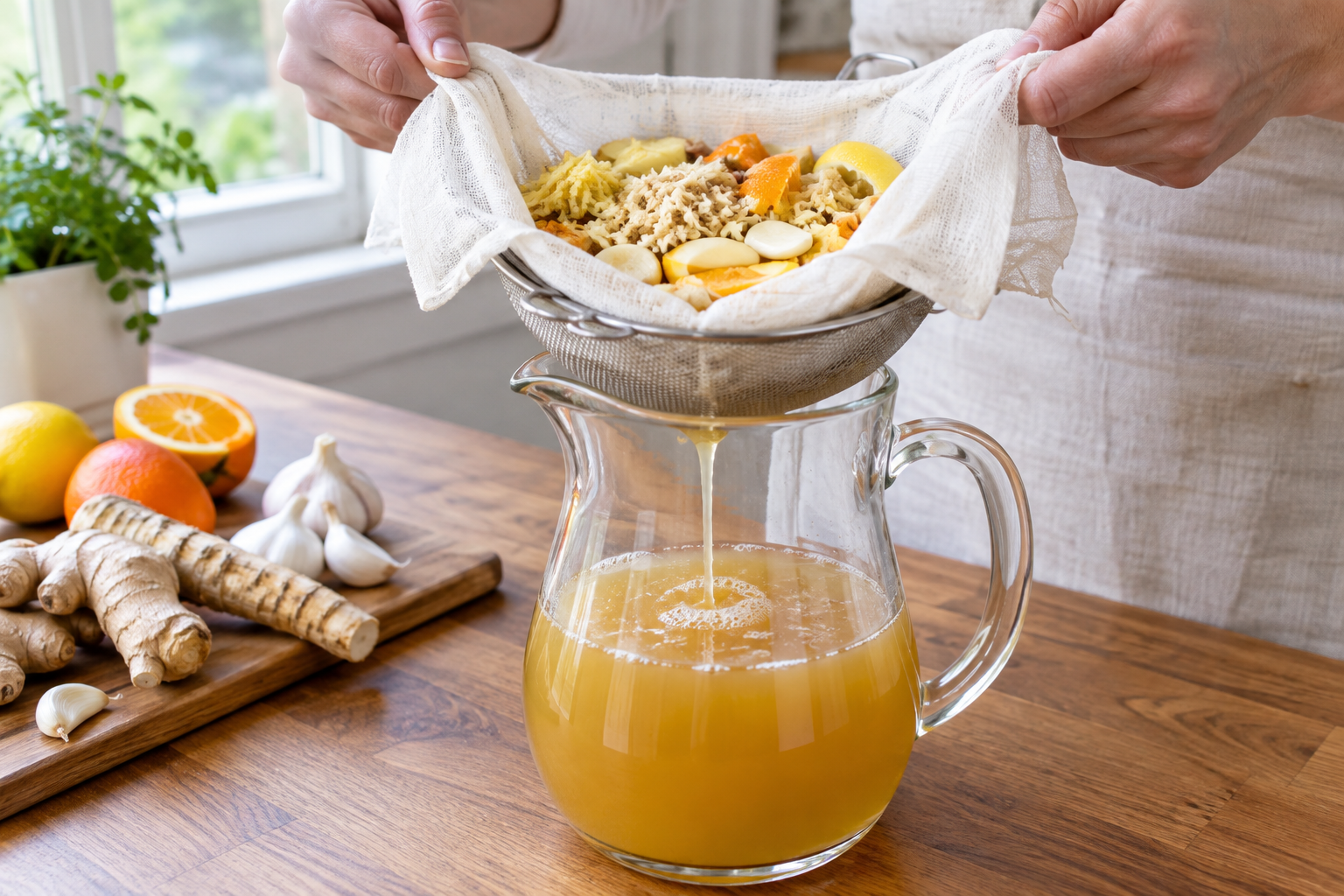
You can. Straining the whole jar removes the other solids too. Follow the complete recipe’s handling and refrigeration directions; straining is not a safety treatment.
I already strained and bottled it. Is it too late?
Not at all. Diluting with base vinegar or blending an otherwise correctly prepared batch can adjust flavor. Add water, juice and sweetener only to an immediate serving; retain the older batch’s storage date.