The Short Answer
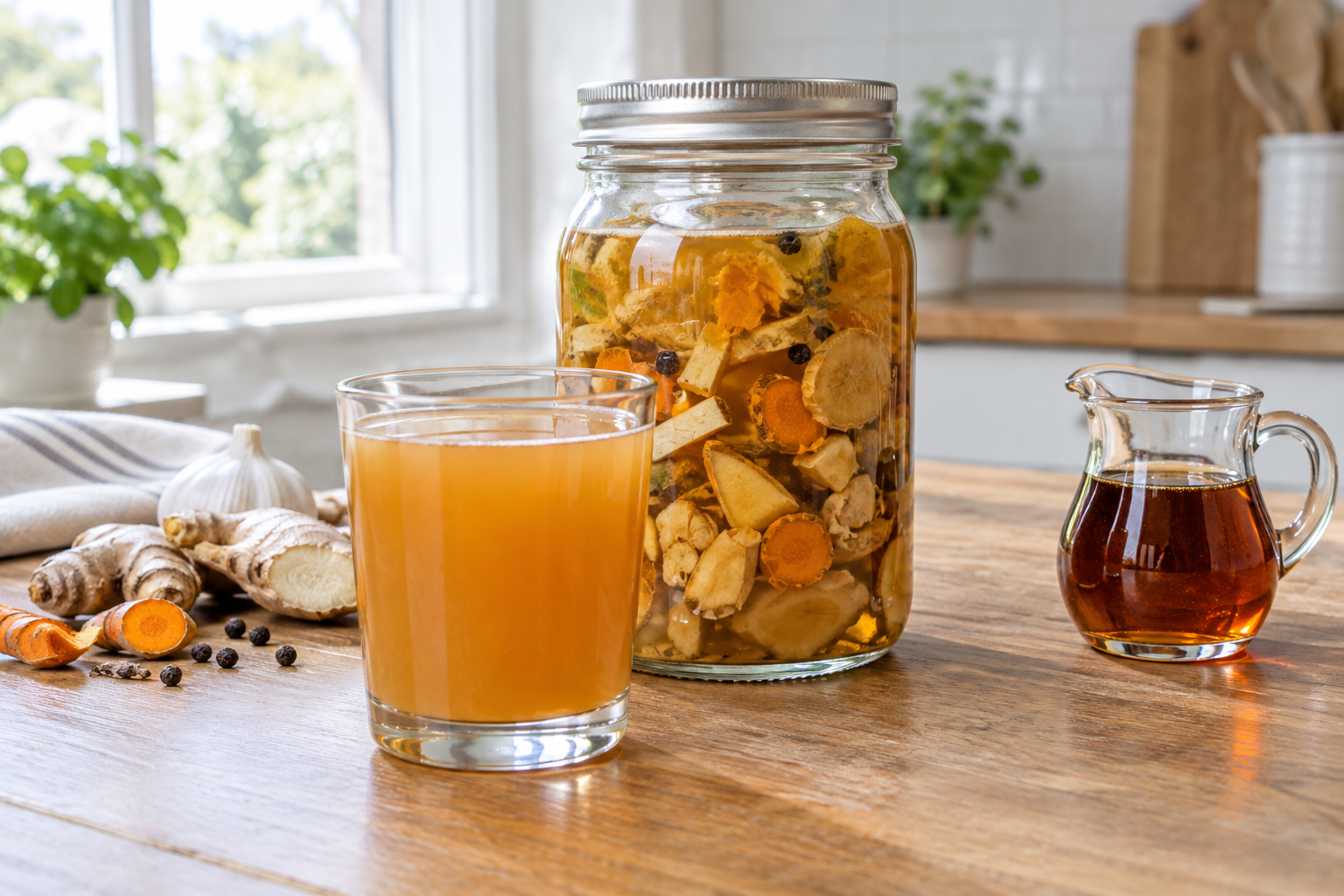
The current site recipe stores the strained vinegar unsweetened. Choose a sweetener for an immediate diluted serving rather than changing the storage bottle; the infusion itself stays unchanged.
Maple syrup is the swap I reach for most: it dissolves into cold vinegar without fuss and its caramel notes sit well against horseradish. Agave is the neutral option when you want the roots to stay the loudest thing in the bottle. Leaving it out entirely gives you a sharper, thinner pour that behaves more like a cooking vinegar than a sipping one.
Follow the fire cider recipe for the unchanged unsweetened refrigerated base. Sweetener choices below apply to an immediate serving, not a stored sweetened bottle.
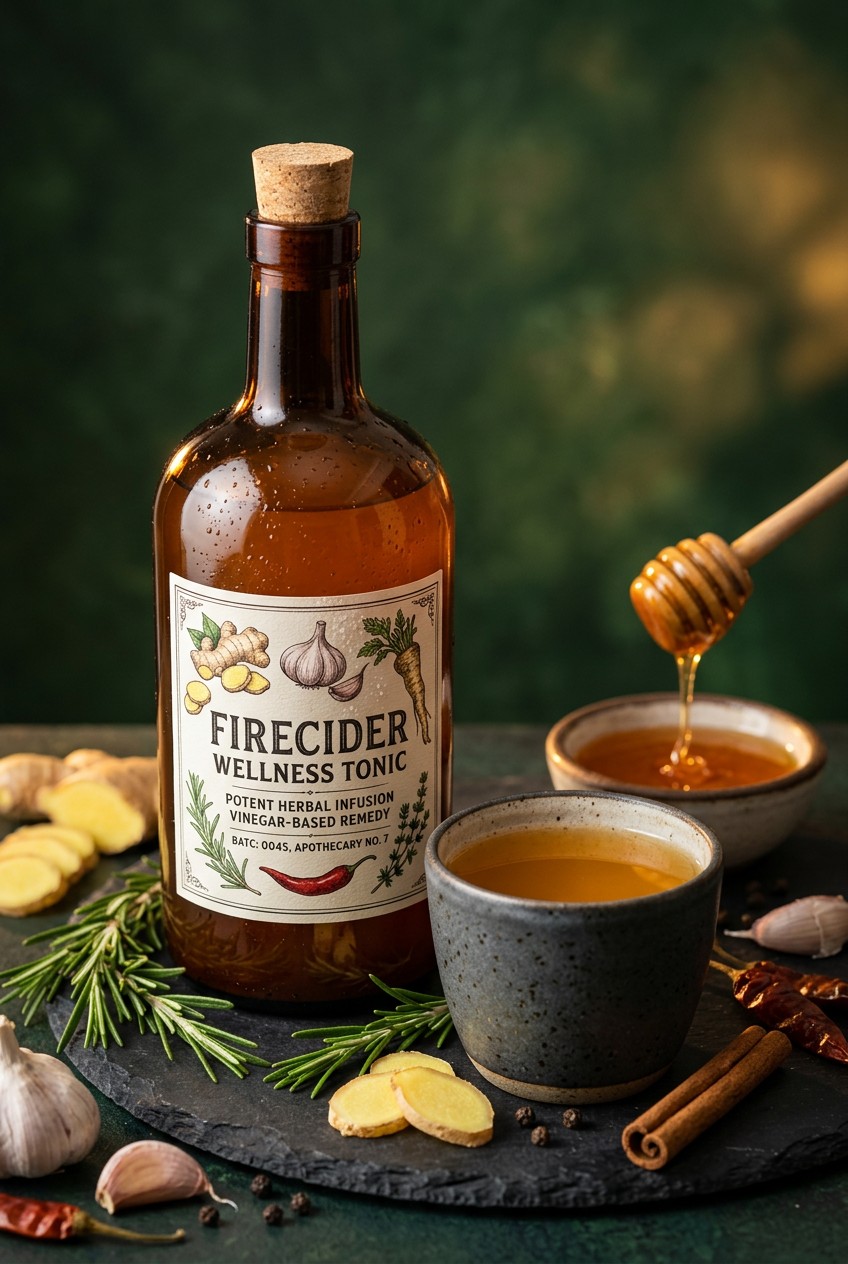
Why Honey Is in the Recipe at All
Two reasons, and neither is structural.
The first is balance. Fire cider is acid plus heat plus allium, and all three of those push in the same direction. A little sweetness pulls the other way and stops the whole thing from reading as one flat wall of sharp.
The second is body. Honey is thick, and stirring it into strained vinegar gives the finished bottle a rounder, slightly syrupy pour that coats a spoon. Take it out and the liquid runs thin.
Honey is also the traditional finish, which is a real reason to keep it if tradition is part of why you are making this. It is not a reason it has to be there.
Sweetener Swaps at a Glance
| Swap | Taste | Body | Notes |
|---|---|---|---|
| Honey | Floral, rounded | Thick | The traditional finish |
| Maple syrup | Caramel, woody | Medium | Best all-round substitute |
| Agave | Clean, near neutral | Thin to medium | Dissolves easily in cold liquid |
| Date syrup | Deep, almost molasses | Thick | Dominant, use a light hand |
| Brown sugar | Straightforward sweet | Grainy unless dissolved | Best added to a serving, not the storage bottle |
| Nothing | Sharp, direct | Thin | Reads as a cooking vinegar |
Maple Syrup
The strongest substitute, and not just because it is the obvious vegan answer.
Maple carries wood and caramel that meet horseradish halfway. Where honey rounds a batch off, maple gives it a slightly darker, autumnal edge that suits a jar built on roots. It also stirs into cold vinegar readily, which is not true of every sweetener.
Use real maple, not pancake syrup. The corn-syrup imitations bring sweetness and nothing else, and in a bottle this assertive that is a wasted ingredient. Grade A dark works better here than the delicate light amber, since you want the flavor to survive alongside garlic.
Agave
Agave is the choice when you want to sweeten without adding a personality.
It is thinner than honey and considerably more neutral than maple, so the roots and citrus stay in the foreground. It also dissolves into cold liquid with almost no stirring, which makes it the least annoying option on straining day.
The trade-off is body. An agave batch pours like water compared with a honey batch. If you liked that syrupy coating, this is not your swap.
Other Swaps Worth Trying
Date syrup is excellent if you want the batch to go darker and rounder. It is assertive enough to compete with the garlic, so start with less than you think and taste.
Brown sugar or demerara works in a serving glass. Dissolve it in your drinking water first; avoid adding sugar syrup made with water to the storage bottle because it dilutes the vinegar base.
Molasses is a specialist choice. It will dominate. Some people love the result with the onion and turmeric, and it is worth trying in a small jar before you commit a whole batch.
Apple juice concentrate brings sweetness plus fruit, which softens the vinegar edge more than any of the above. It also thins the batch noticeably.
Leaving It Unsweetened
Perfectly reasonable, and worth doing on purpose rather than by omission.
An unsweetened batch is sharper and more linear. The heat arrives faster because nothing is buffering it. It is harder to take neat and much better in the kitchen, where you are usually adding acid to a dish that already has fat and sweetness in it.
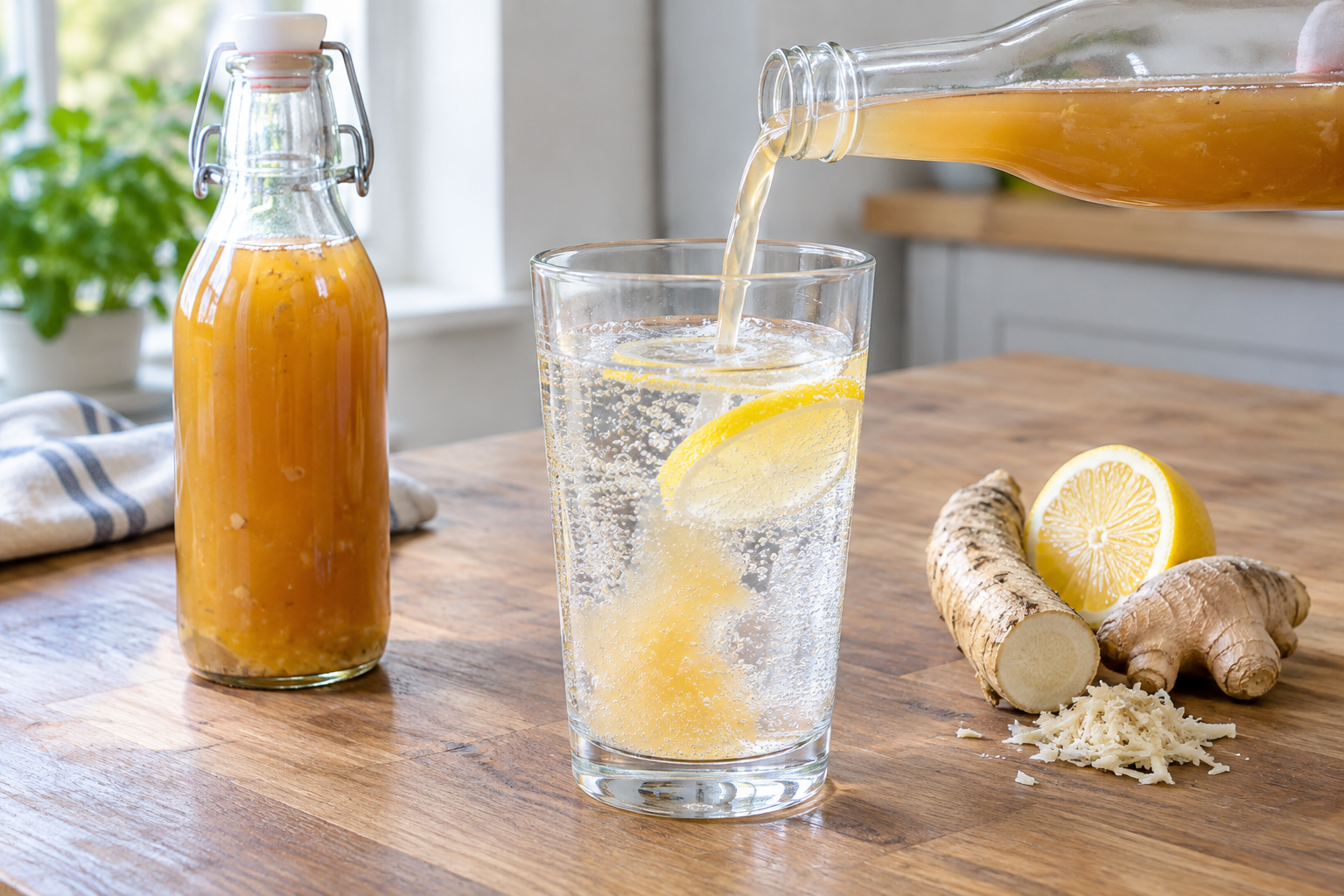
If you go this way, plan for the sharpness rather than fighting it. Cut each pour with something at the point of use: sparkling water, apple juice, tomato juice, or hot water with a slice of lemon. You get the same bottle and a gentler glass.
Does Skipping Honey Change How It Keeps?
Do not assume different sweetener ratios have identical preservation. Keep the stored base unsweetened and adjust only an immediate serving.
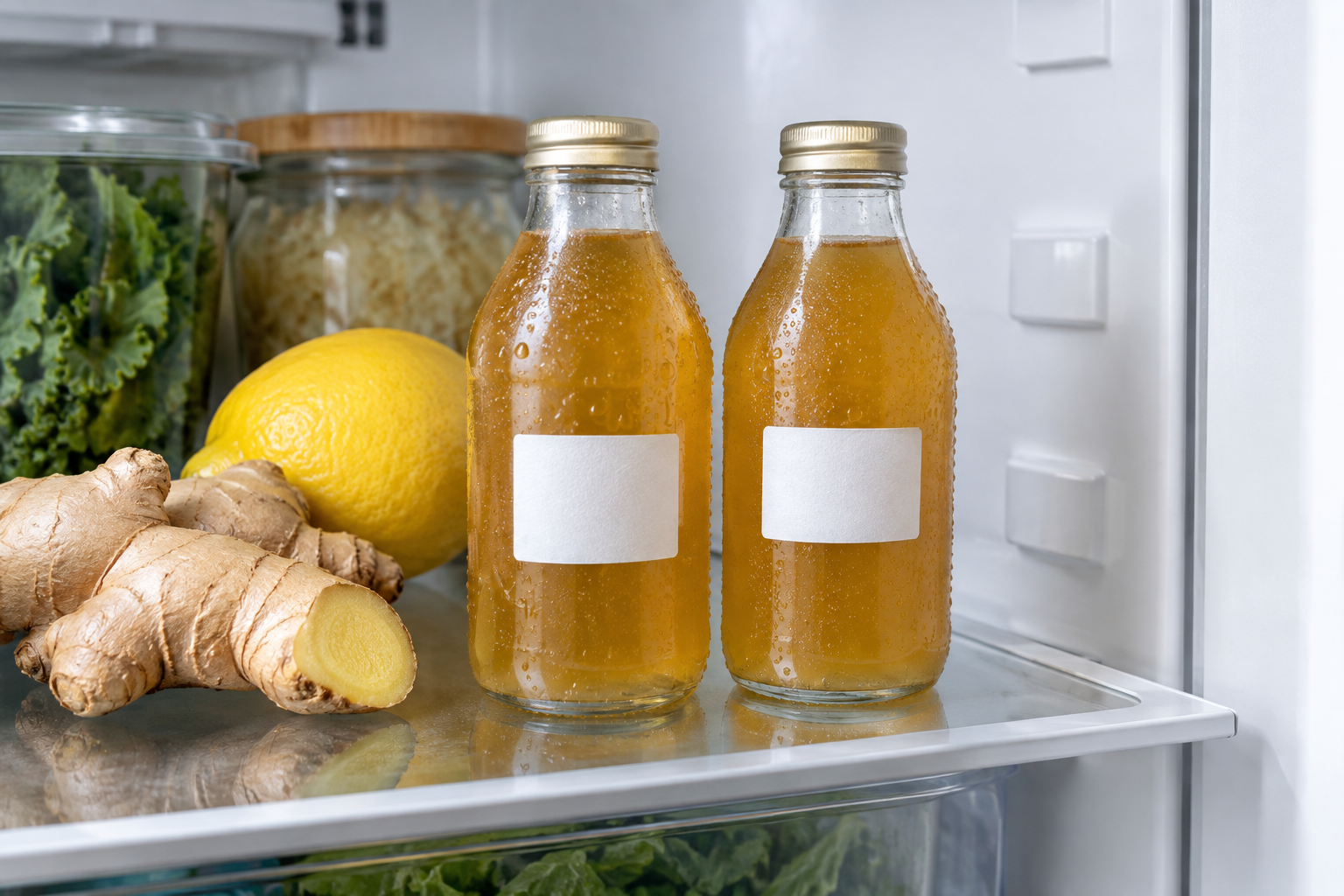
The bottle goes in the fridge either way. Oregon State University Extension’s flavored vinegar guidance recommends clean, tightly sealed bottles and refrigeration. Its generic 4-to-6-month quality window is not demonstrated for the current mixed recipe or changed sweetener ratios. Follow the site recipe’s 1-month refrigerated house target after straining, subject to shorter ingredient limits; this is not a validated shelf life. For the simplest storage plan, keep the bottle unsweetened and sweeten each serving. Discard if mold, bubbling, unexpected cloudiness or slime develops.
Full storage detail is in how long does fire cider last .
Sweeten the Bottle or Sweeten the Glass?
There is a third option that people forget: leave the whole batch unsweetened and sweeten each pour.
This is what I do now. It means one bottle serves everyone, including anyone in the house avoiding honey, and it lets you tune each glass to what you are mixing it with. A pour going into a vinaigrette wants nothing. A pour going into hot water on a cold morning wants something.
The only cost is that you lose the rounded body a stirred-in sweetener gives the bottle.
What Not to Use
Skip anything that will not dissolve or will not hold up.
Powdered sweeteners that clump in cold acid are a nuisance. Anything with dairy in it does not belong near vinegar. Flavored syrups built for coffee bring vanilla and hazelnut notes that fight everything in the jar.
And if a batch has come out too fierce, do not try to fix it with sweetener alone. Sweetness masks heat, it does not remove it, and you will end up with something cloying that still burns. The actual fixes are in fire cider too spicy .
When to Add It
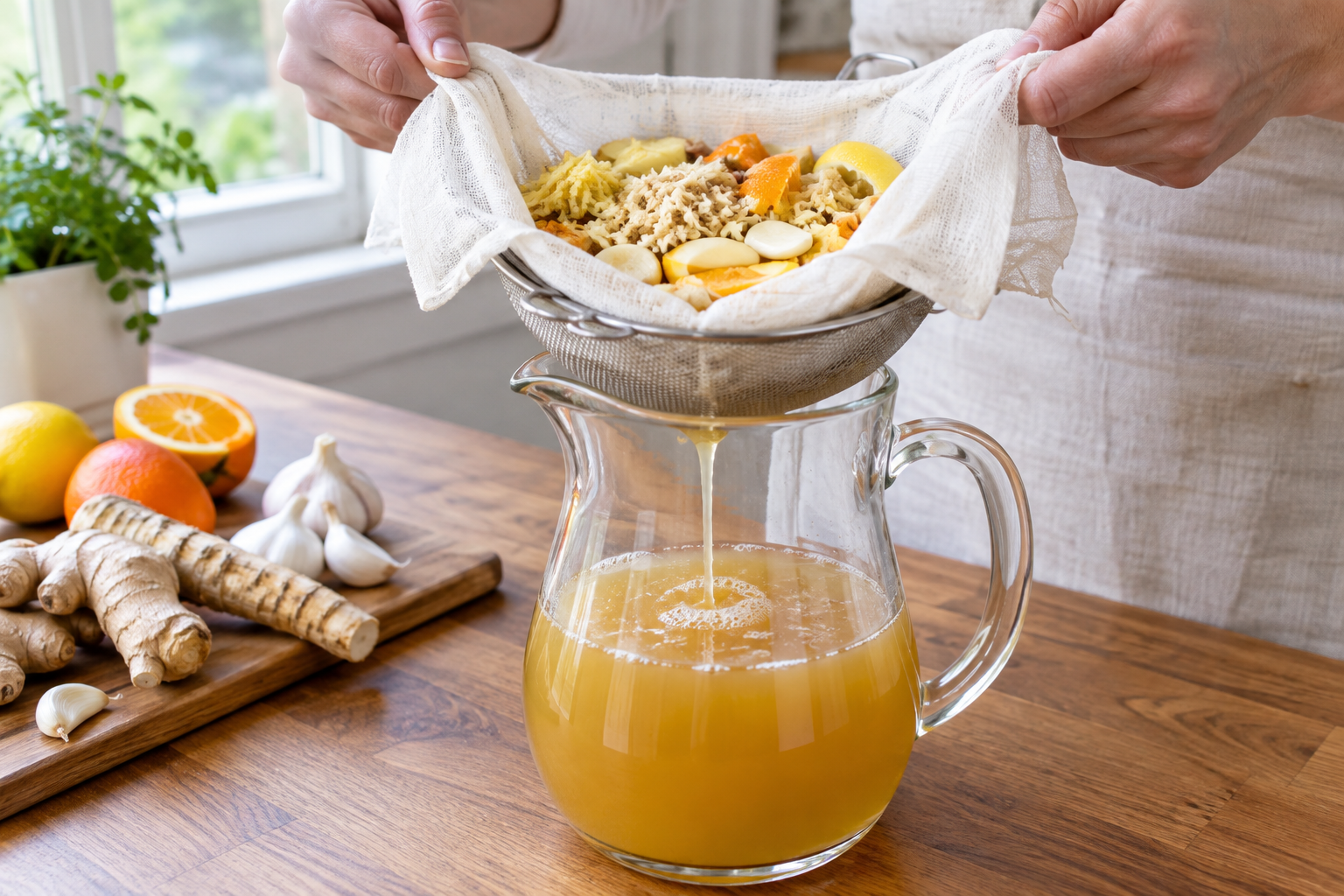
After straining, always. The sweetener meets the finished liquid, not the roots.
If you are still working out whether your jar is ready to strain, the timing signals are in when to strain fire cider . Stir the sweetener into a diluted serving until it fully dissolves, then use immediately. Do not bottle the sweetened or diluted serving for storage.
Common Questions
Is fire cider without honey still fire cider?
Yes. The character of the drink comes from the roots and the vinegar, all of which happen weeks before any sweetener appears. Plenty of makers have never used honey.
What is the best vegan sweetener for fire cider?
Maple syrup, for flavor. Agave, if you want the sweetness without a new taste in the bottle. Both dissolve into cold vinegar without extra steps.
Can I use maple syrup in the same amount as honey?
Start with the same amount, then taste and adjust. Maple is thinner and reads slightly less sweet than honey, so some people add a little more.
Can I add the sweetener later, after bottling?
Sweeten a diluted serving at the point of use. Do not transfer a sweetened portion to another bottle and assume the unsweetened base’s storage limit still applies.
Does honey make fire cider taste better?
It makes it rounder and thicker. Whether that is better depends on what you are doing with the bottle. For sipping, most people prefer it sweetened. For cooking, unsweetened is more useful.