The Short Answer

Once you have strained it, fire cider belongs in a tightly sealed bottle in the fridge. That is the whole storage plan.

For the timing, the most useful published guidance I have found is Oregon State University Extension’s sheet on flavored vinegars, which is the food category fire cider actually falls into. It says to keep flavored vinegars in tightly sealed bottles, that refrigeration is best for retention of freshness and flavors, and to use them within 4 to 6 months for best quality. After six months it asks you to taste before using, even when nothing looks wrong.

That is a quality window rather than a cliff edge. Your jar does not expire on a date.

If you have not made a batch yet, the method is on the fire cider recipe page.

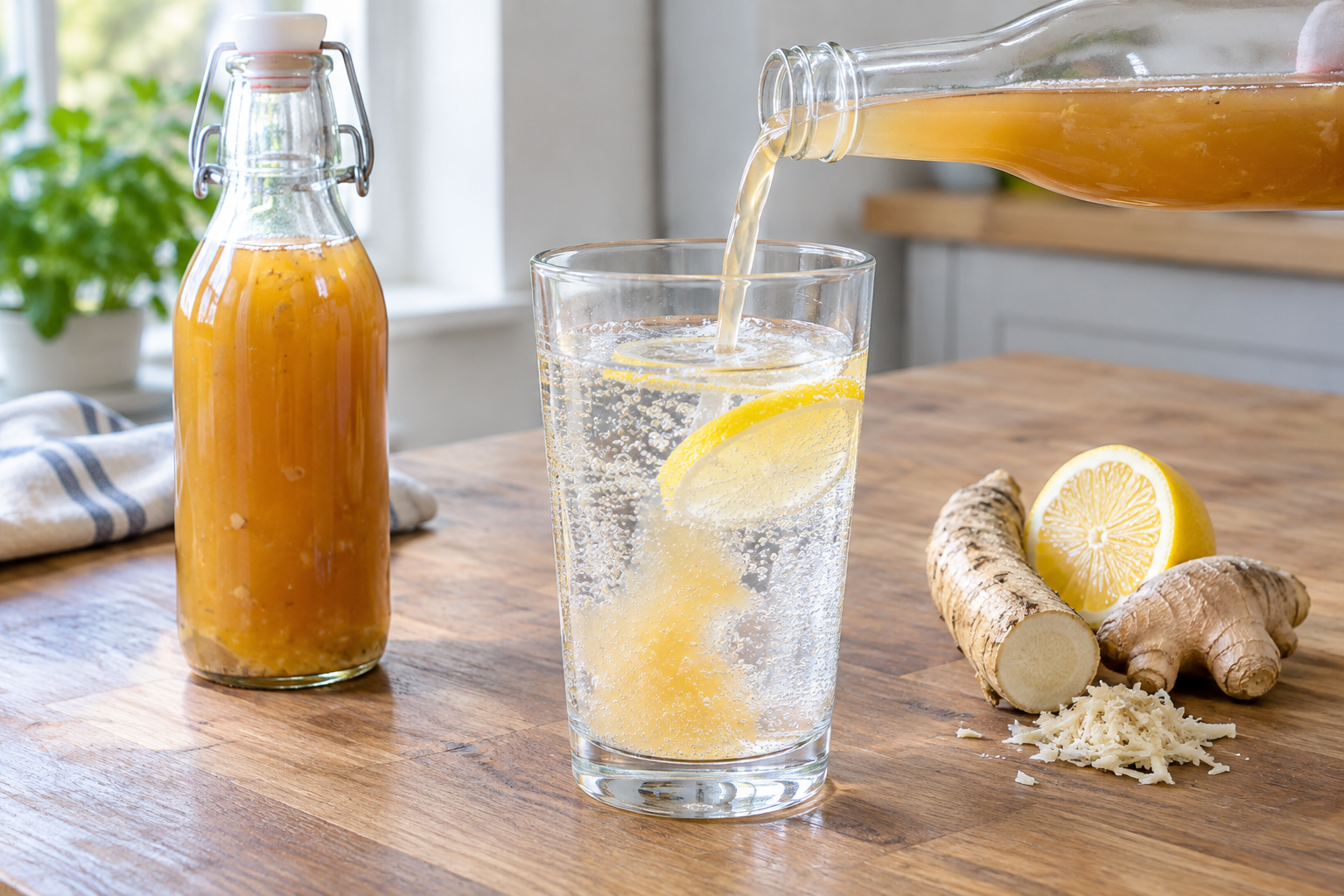
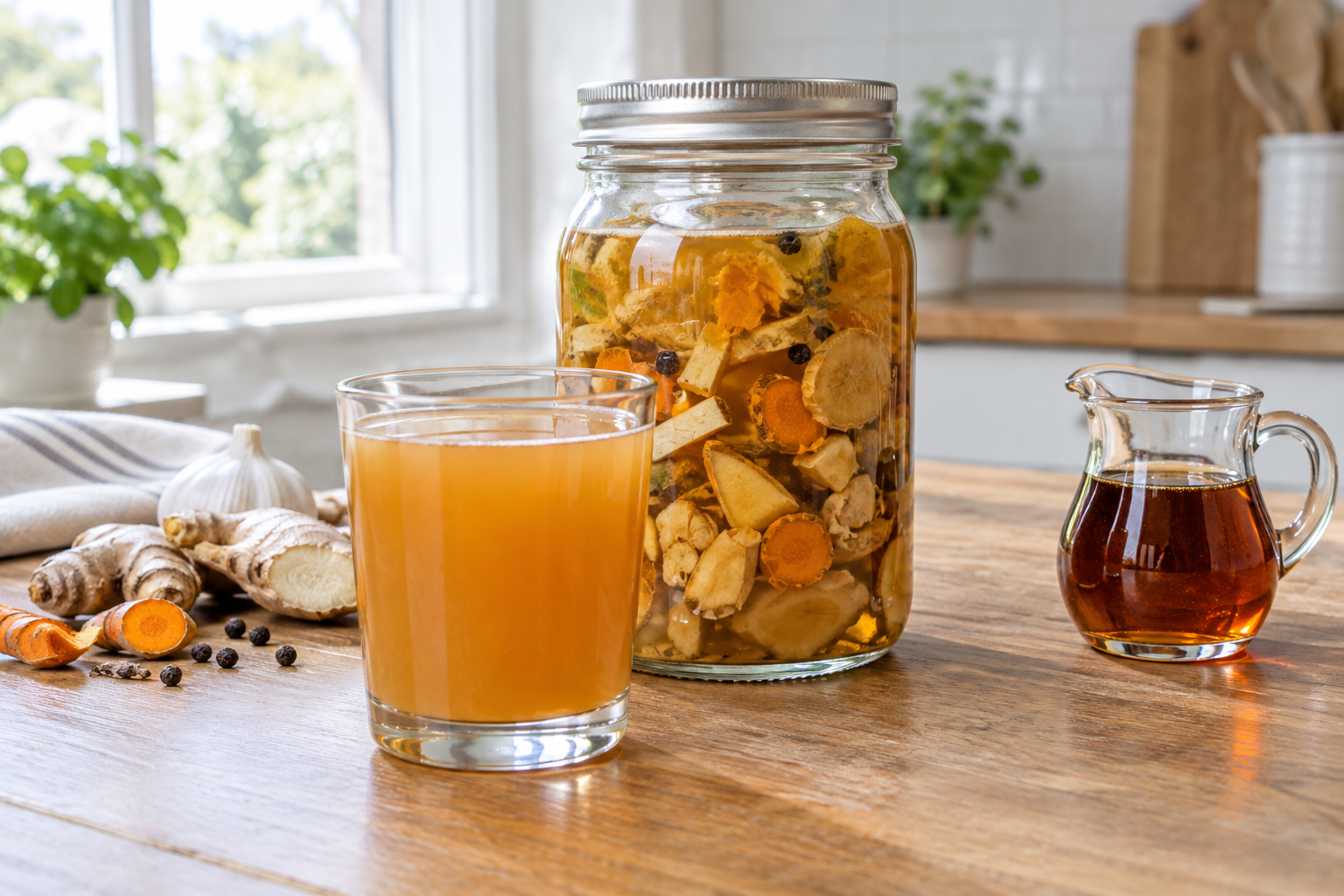
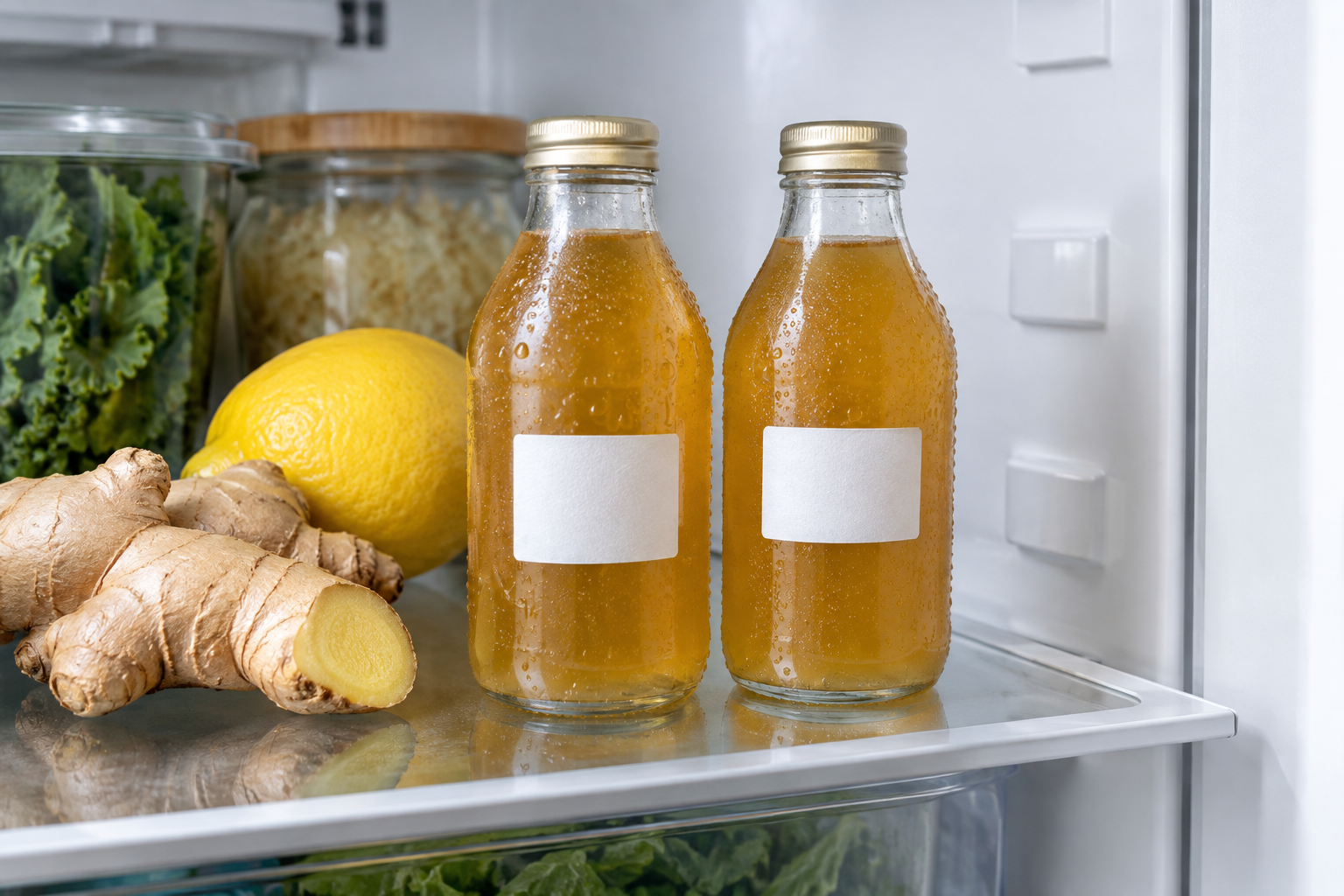
Finished amber fire cider in a sealed glass bottle beside fresh ginger and citrus
A sealed bottle, a label with the strain date, and a shelf in the fridge. That is the entire storage system.

Fire Cider Storage at a Glance

StageWhere It SitsHow LongWhat Happens
Infusing, unstrainedCool, dark cupboard3 to 4 weeksFlavor builds, roots soften
Strained, sealedRefrigerator4 to 6 months best qualitySlow flavor fade
Strained, sealedCool, dark pantryShorter than the fridgeFaster flavor loss
Past six monthsRefrigeratorTaste it firstMay be fine, may be flat
Mold, bubbling, cloudiness, slimeAnywhereStopDiscard without tasting

Why the Fridge Beats the Pantry

Both extension services I trust on this point the same way. Penn State Extension’s page on flavored vinegars puts it plainly: store flavored vinegar in the refrigerator for best retention of flavor and freshness.

Cold does not stop change. It slows it. A bottle on a sunny windowsill loses the bright citrus notes first, then the ginger, and eventually you are pouring hot vinegar with a memory of oranges in it. Penn State is blunt about that scenario too, calling a vinegar left out on a shelf for more than a few weeks a permanent decoration rather than something to use in food.

What Actually Changes Over Time

Nothing dramatic. The heat mellows a little. The citrus goes first, because those oils are the most volatile thing in the bottle. Horseradish, which is the loudest ingredient on strain day, gets quieter month by month.

If your batch tasted balanced in October and tastes flat in March, nothing went wrong. It aged. Make a smaller jar next time and turn it over faster.

Signs Fire Cider Should Go Down the Drain

Both extension sources give the same short list, and it is worth memorizing:

  • Mold of any color
  • Bubbling or fizzing in a bottle that was still
  • New cloudiness in a bottle that had been clear
  • Sliminess or a ropy pour
  • A smell that reads as rotten rather than sharp

Penn State’s instruction is to throw the flavored vinegar away without using or tasting it. Oregon State says the same about mold or signs of fermentation. Do not skim the top and keep the rest.

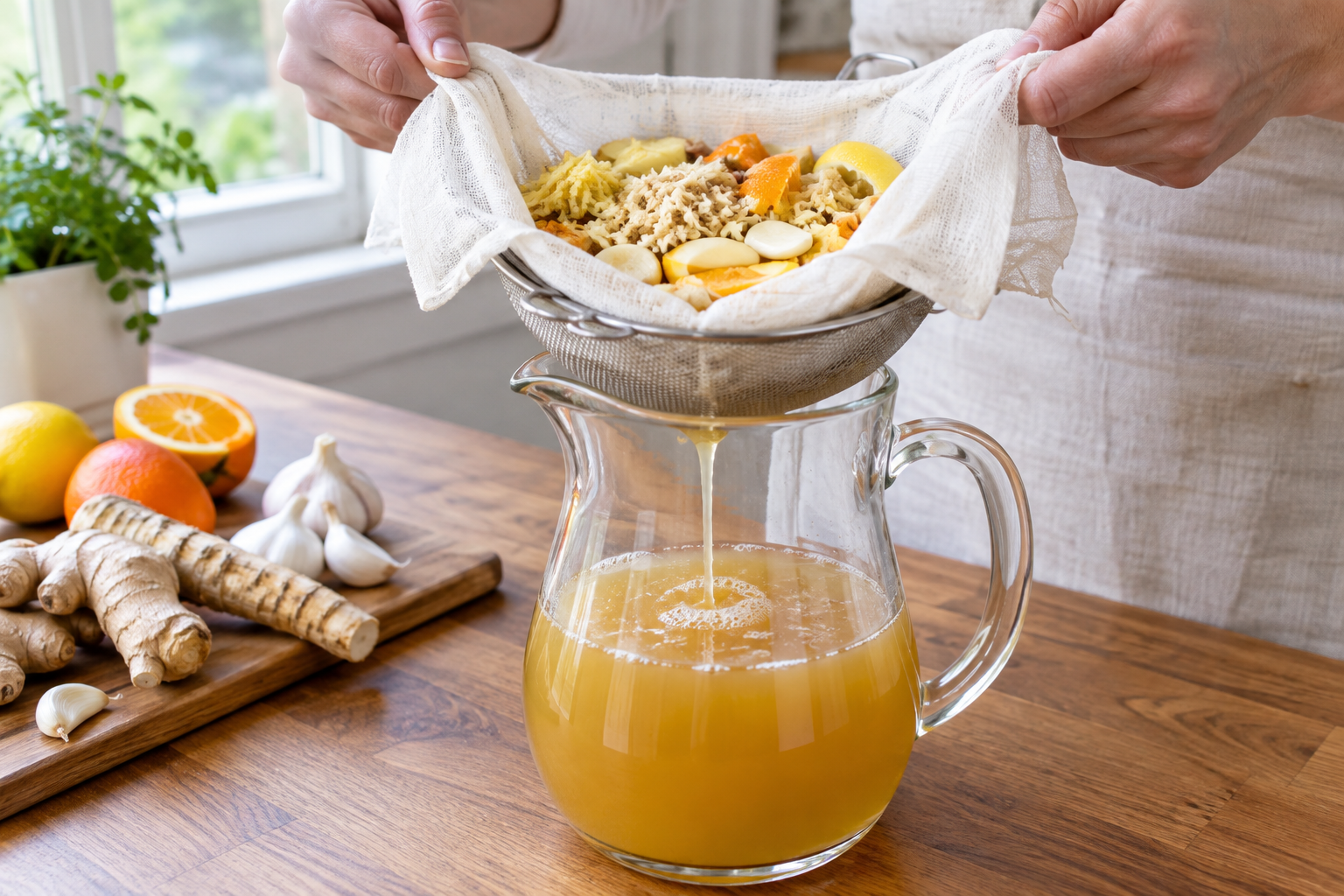
A little sediment settling out is a different thing. Fine grit at the bottom of a bottle you strained through cheesecloth is normal, and a swirl before pouring handles it.

The Unstrained Jar Is a Different Question

While the roots are still in the vinegar you are not storing anything yet. You are infusing. That jar lives in a cool dark cupboard, gets shaken when you walk past it, and comes out on strain day.

The clock in this article starts when you strain. If you are still counting weeks, the timing signals are in when to strain fire cider.

The one thing that matters during infusion is keeping everything under the vinegar. Anything poking out above the liquid line is the part that grows something fuzzy. Push it down or top the jar up.

Does the Sweetener Change How Long It Keeps?

Honey, maple, agave, or nothing at all: none of these turn a fridge bottle into a pantry bottle, and none of them cut a fridge bottle down to a week. Treat the storage plan as identical either way.

What the sweetener does change is texture and taste, which is a real decision worth making on purpose. That side of it is in fire cider without honey.

Label the Bottle, Not the Lid

Oregon State makes a point about labeling that sounds fussy until the first time you have three amber bottles in one fridge door. Write down the base vinegar, the flavoring, and the date.

Lids get swapped. Write on the bottle, or on tape stuck to the bottle. I put the strain date on mine rather than the start date, because the strain date is the one the storage window runs from.

What to Do With a Batch Past Its Best

A jar that smells clean and simply tastes tired is not a failure. It is vinegar with opinions, and it does good work outside a drinking glass:

  • Whisk it into a vinaigrette with olive oil and a little of your sweetener
  • Use it as the acid in a marinade for pork or chicken
  • Splash it into a pot of braised greens near the end
  • Deglaze a pan with it after searing something fatty
  • Stir a spoonful into a bloody mary mix

If it smells wrong, none of the above. That batch goes in the sink and the bottle goes into hot soapy water.

Making It Last Better Next Time

Small changes that pay off:

  1. Strain into sterilized bottles rather than back into the jar it infused in.
  2. Cap tightly with a non-corroding lid, or put parchment between a metal lid and the glass.
  3. Fill bottles closer to full so there is less air sitting on top.
  4. Keep one small bottle in the fridge door and the rest at the back, where it is coldest.
  5. Make a jar you will finish in a season rather than one you will nurse for a year.

If the batch came out so sharp that you are avoiding the bottle, that is a fixable problem rather than a storage one. Start with fire cider too spicy.

Common Questions

Does fire cider need to be refrigerated?

Both Oregon State and Penn State Extension recommend refrigeration for flavored vinegars, for freshness and flavor retention. A cool dark cupboard is the fallback, but the fridge is the better answer.

How can I tell if fire cider has gone bad?

Look for mold, new bubbling, new cloudiness, or sliminess, and smell it. Extension guidance is to discard the bottle without tasting when any of those show up.

Can you freeze fire cider?

You can, and an ice cube tray is the easiest format, but there is little reason to. A properly bottled batch already keeps for months in the fridge, and freezing dulls the aromatics you spent a month building.

Why did my fire cider go cloudy?

Fine sediment from pressing the solids on strain day settles out and is normal. Cloudiness that appears later, in a bottle that had been clear, is on the discard list.

How long does the jar keep before I strain it?

The infusion window is short compared with the storage window. Oregon State’s flavored vinegar sheet has the vinegar conditioning for 3 to 4 weeks to develop flavor, which is the same window the fire cider recipe uses.