The Short Answer
FoodSafety.gov lists homemade eggnog at 2 to 4 days refrigerated at 40 F (4 C) or below. Start with a properly cooked egg base or pasteurized ingredients. A storage window does not make untreated raw eggs safe. Use any earlier ingredient/package deadline, and discard if handling was outside the cold-holding limits.
What the Federal Chart Says
| Product | Refrigerator at 40 F or below | Freezer guidance |
|---|---|---|
| Homemade eggnog | 2 to 4 days | Do not freeze |
| Commercial eggnog | 3 to 5 days | 6 months |
| Raw eggs in shell | 3 to 5 weeks | Do not freeze in shell |
| Raw egg whites/yolks | 2 to 4 days | 12 months; yolks do not freeze well |
These rows are separate guidance, not a causal experiment. The identical windows for loose eggs and homemade nog do not prove that raw yolks determine the drink’s shelf life. Commercial processing, formulation and packaging differ. Pasteurized eggs alone do not grant a longer home storage life. Follow the commercial carton’s instructions, including any shorter after-opening time.
Prepare Before You Store
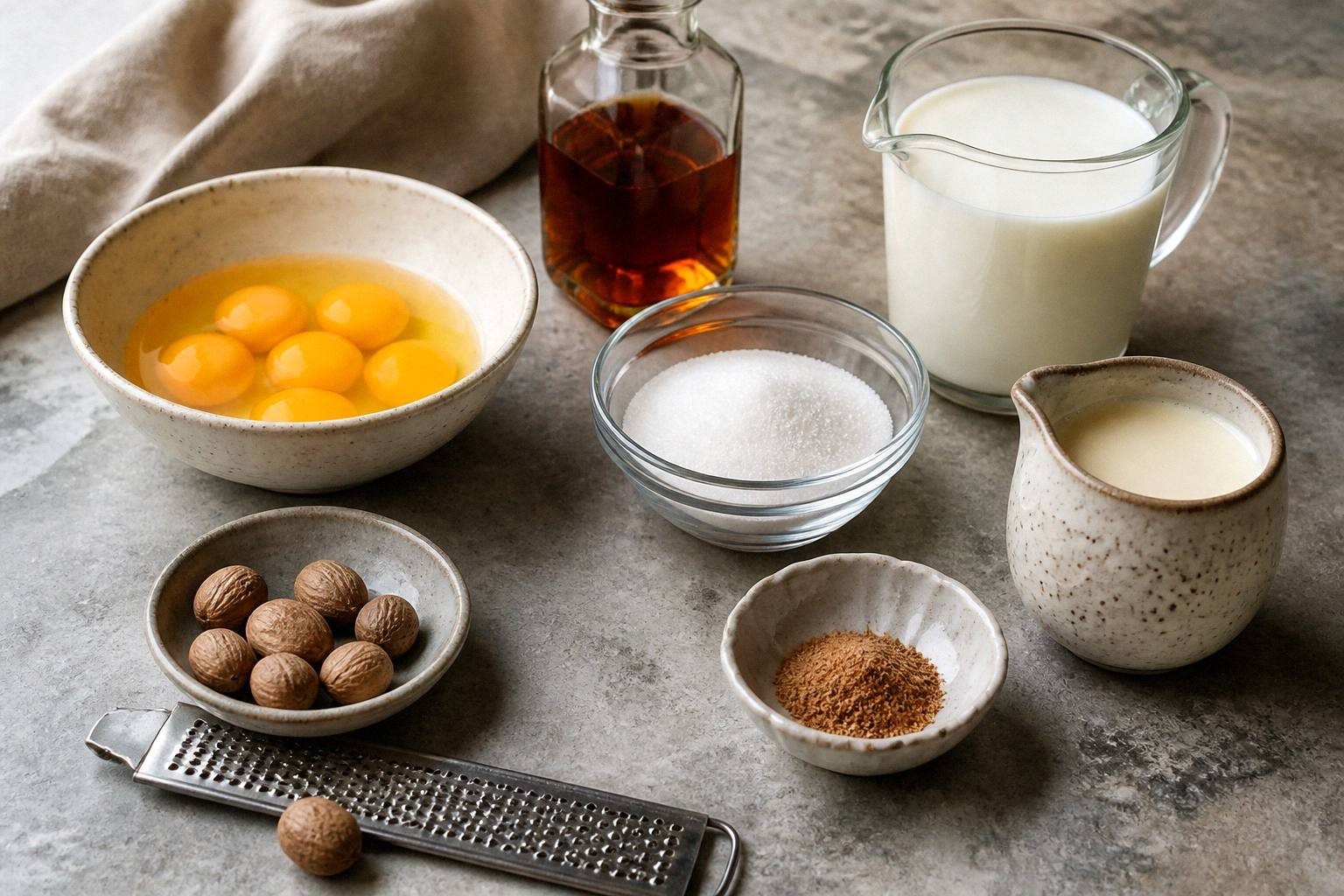
Use a complete cooked-base recipe with the egg-liquid mixture heated to 160 F (71 C) and measured with a thermometer, or use appropriately labeled pasteurized egg ingredients. Untreated whites folded in after cooking reintroduce a raw-egg hazard. Utah State recommends pasteurized whites for that use. Commercial eggnog is another option. FDA notes that clean uncracked eggs can still contain Salmonella.
Cool and Hold the Batch
Cool a cooked base promptly in shallow clean containers or over an ice-water bath and refrigerate; do not leave a large hot pitcher on the counter until cold. Label the preparation date and keep the container covered on a cold refrigerator shelf. Check the refrigerator with a thermometer. Serve small quantities in clean dishes held over ice at 40 F or below, and replace them rather than topping up warm remnants.
Discard after more than two cumulative hours without cold holding, or one hour when ambient temperature exceeds 90 F (32 C). Count preparation and service time together. Refrigerating it later does not reset that clock. The 2-to-4-day window assumes proper preparation and continuous cold storage; it is not guaranteed survival through a warm party.
Alcohol Does Not Extend the Published Window
Utah State explicitly says added alcohol cannot be relied upon to kill bacteria. It gives no second-week allowance for a stronger batch. Amount, dilution and process matter; a heavier pour is not a home preservation method. Use the same published planning window for a spiked homemade batch.
Smell, Separation and Spoilage
Discard mold, an off odor, unexpected fizz, slime or an uncertain batch. Do not taste it to decide. A normal smell and color do not prove absence of pathogens. Light separation can occur during cold storage; stir only a batch still within its preparation, time and temperature limits. Being able to whisk lumps away is not a safety test, and persistent lumps alone cannot identify their cause.
Freezing and Planning
For this guidance, follow the chart’s do-not-freeze recommendation for homemade eggnog and make a smaller batch. The chart lists commercial eggnog at six months frozen, subject to the product’s directions. It does not explain every formulation or establish that freezing sterilizes either kind. Do not invent a raw-yolk mechanism as the reason for its recommendation.
Plan a properly prepared batch for the day before or day of the gathering, chill fully, and keep the labeled date through leftover storage. Higher-risk guests should receive an appropriate cooked, pasteurized or commercial alcohol-free preparation rather than untreated raw eggs. This article adds no aging schedule.
Common Questions
My eggnog separated. Is it safe?
Separation alone cannot answer that. Check the preparation, ingredient dates, refrigeration and elapsed holding time; discard an uncertain or mishandled batch even if it stirs smooth.
Is the refrigerator window an aging allowance?
No. It is short-term cold-storage guidance. Neither spirits nor pasteurized eggs authorize weeks or months of home aging.
Can I follow the same chart for every egg-free substitute?
The chart does not assess every cashew, coconut or pudding formulation. Follow the complete recipe or labeled product’s handling guidance. The house egg-free versions in this batch use same-day handling rather than a claimed extended shelf life.