Keep strained mulled wine cold promptly and use a conservative 3- to 4-day refrigerated limit. This is a house application of general cooked-leftover guidance, not a mulled-wine-specific shelf-life study.
Storage Timeline
| Situation | Handling |
|---|---|
| Hot service | Measure at least 140 F / 60 C; appliance setting or steam is not proof |
| Cooling | Divide into shallow heat-safe containers and refrigerate promptly |
| Refrigerated leftovers | 40 F / 4 C or below; use within 3 to 4 days of original preparation, or an earlier ingredient limit |
| Freezer | 0 F / -18 C or below; aim for 1 month for house flavor quality |
| Warm without temperature control | Discard after 2 cumulative hours, or 1 hour above 90 F / 32 C |
Holding Warm and Refrigerating
Use a food thermometer to check the actual liquid. Slow-cooker warm and low settings vary; neither guarantees safe holding or prevents simmering. Hold at 140 F / 60 C or above using the lowest setting that achieves that temperature. Do not rely on steaming, taste or a fixed party duration. Avoid prolonged boiling for quality.
Strain spices and citrus for flavor, then divide the liquid into shallow heat-safe containers and refrigerate promptly, even while warm. An ice-water bath with stirring can accelerate cooling. Do not wait on the counter for a deep pot to lose all its steam. Refrigerate within 2 hours, or 1 hour above 90 F / 32 C; label the original preparation date. Once cold, cover tightly. Repeated reheating does not reset that date. Save only portions handled hygienically and kept under time/temperature control.
Alcohol and Reheating
Alcohol is not a reliable preservation control in this diluted drink. Heating does not establish alcohol absence; the Idaho State discussion explains that retention varies with method and ingredients. Its 15-minute percentage for studied cooked dishes is not a measurement of your mulled wine.
Reheat only the portion needed in a saucepan, stirring and checking that it reaches 165 F / 74 C for 15 seconds within 2 hours as a conservative leftover reheating target, then serve or hold at 140 F / 60 C or above. Cooling and storage history still matter. Do not serve an alcoholic wine as alcohol-free merely because it was heated.
Freezing and Thawing
Freeze promptly in freezer-safe containers, leaving the headspace recommended for that container. Small measured portions or cubes are convenient. Keep at 0 F / -18 C; alcohol and sugar may leave the mixture slushy. Use within 1 month for house flavor quality, not as a tested expiration date. Thaw in the refrigerator and use promptly within the remaining original refrigerated window. For cubes, measure 1/4 cup thawed wine per addition to a new pot and count that volume in the batch. Avoid repeated freeze/thaw cycles. Freezing does not make poorly handled wine safe.
Flavor and Discard Decisions
Spices continue extracting until removed; citrus, clove and wine change with the recipe, so there is no universal day-by-day taste schedule. Straining improves flavor, not microbial safety. Discard visible mold, unexpected gas or off odors, damaged containers and anything whose handling history is uncertain. Do not taste suspect wine. A normal appearance or smell cannot override the temperature/time limit.
Juice-Based Versions and Related Recipes
Use the same conservative cold chain and short house window for juice-based nonalcoholic mulled drinks and apple cider, following earlier package limits. Select ingredients labeled for alcohol avoidance if needed. For complete quantities use the linked mulled wine recipe , juice-based mulled drink or mulled cider . Those separate recipes are not audited by this storage guide.
Sources and Review Limits
FDA Food Code 2022 , reheating cooked and cooled food for hot holding; this guide applies that target conservatively to wine.
FDA buffet guidance : Produce washing, thermometer-based cold/hot holding, small fresh service portions, 2-hour/1-hour disposal and shallow cooling; general guidance, not shelf-life validation.
UMN refrigerated storage tables : General cooked-food 3-4-day examples at 40 F; no mulled wine-specific shelf life. House conservative extrapolation stated.
Idaho State alcohol retention discussion : Heating does not establish zero alcohol; retained amount depends on time, pan and ingredients, not fixed wine estimate.
These are source and measurement checks, not kitchen testing. House variations and short quality windows below have not been shelf-life tested.
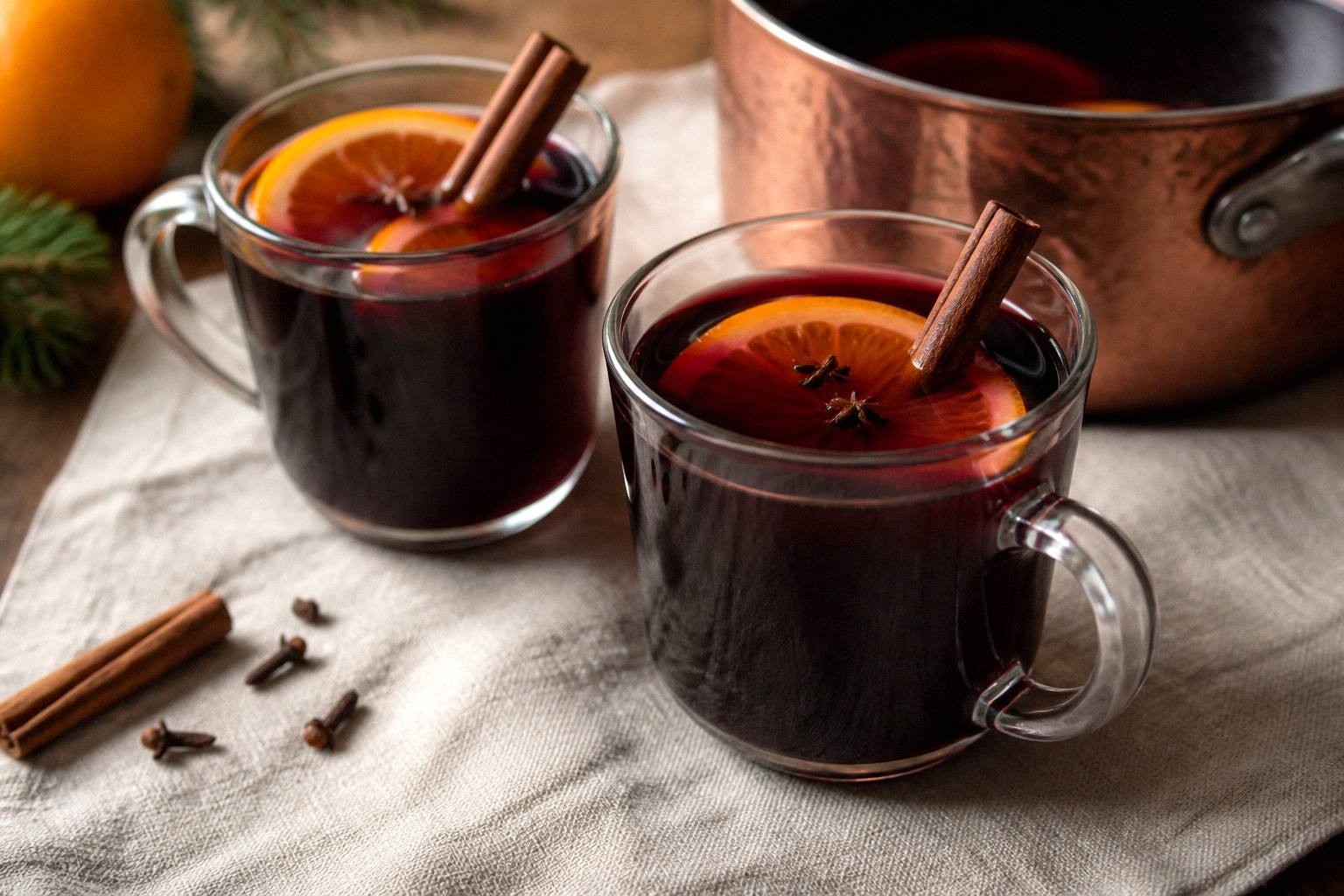
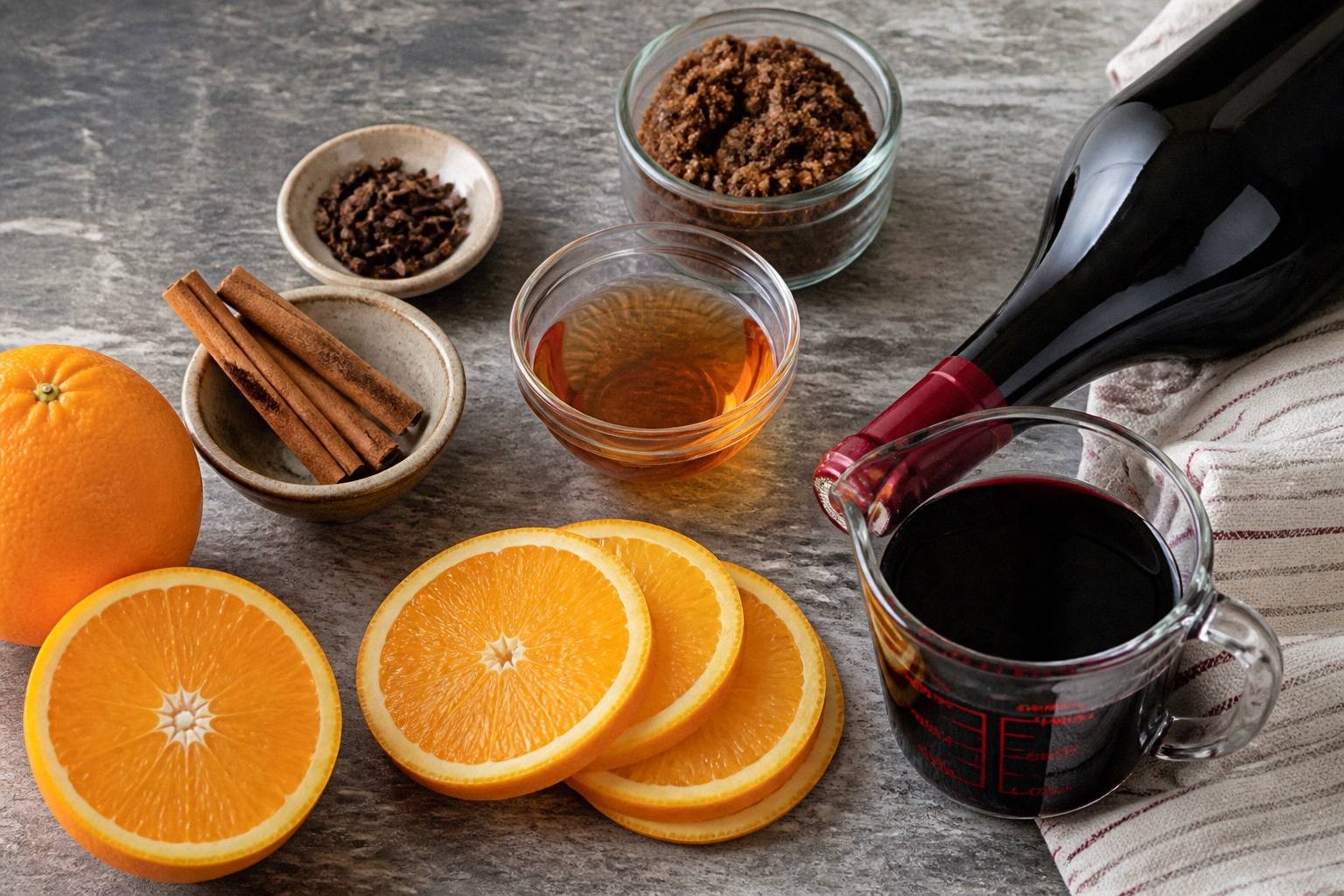
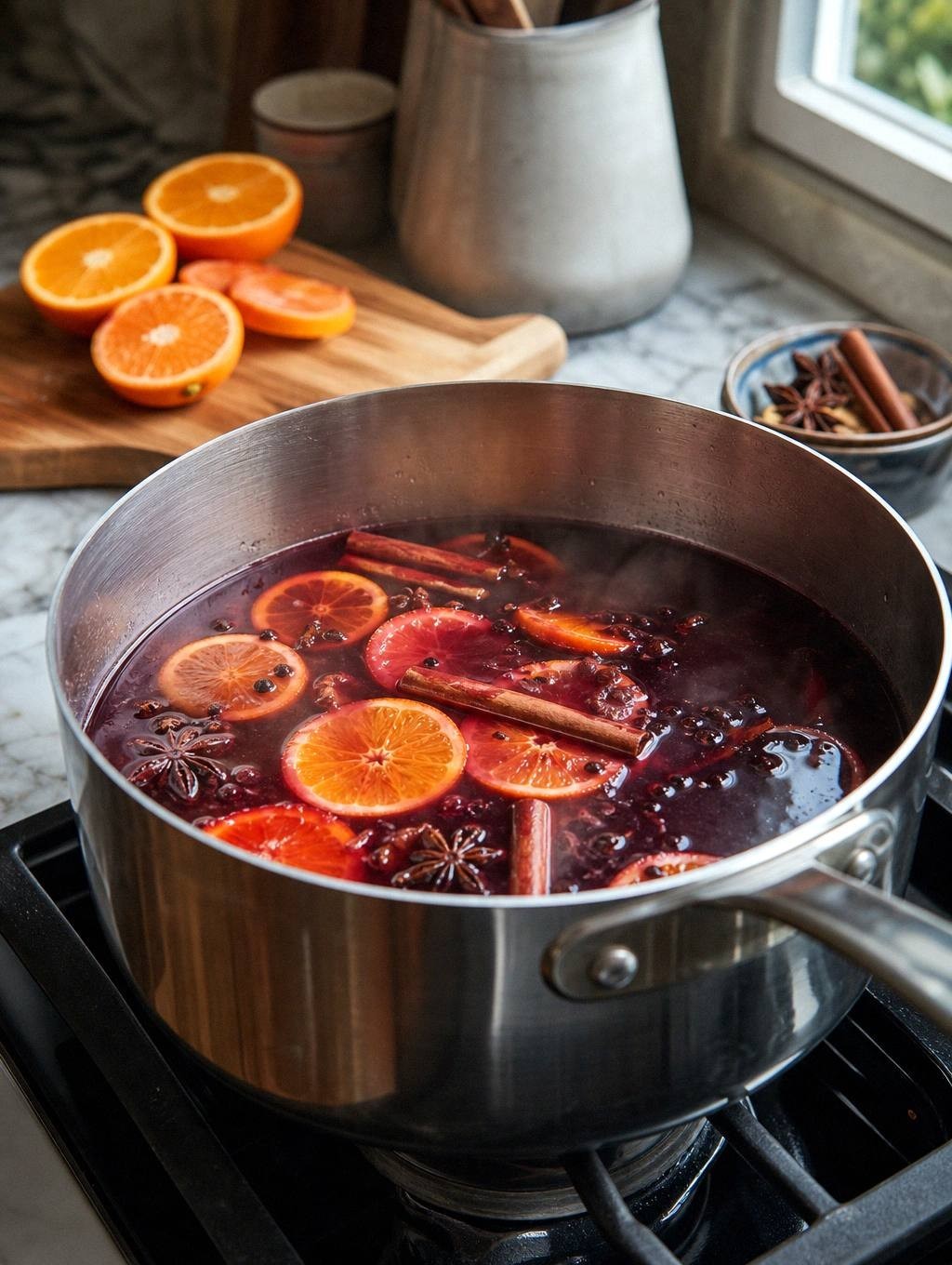
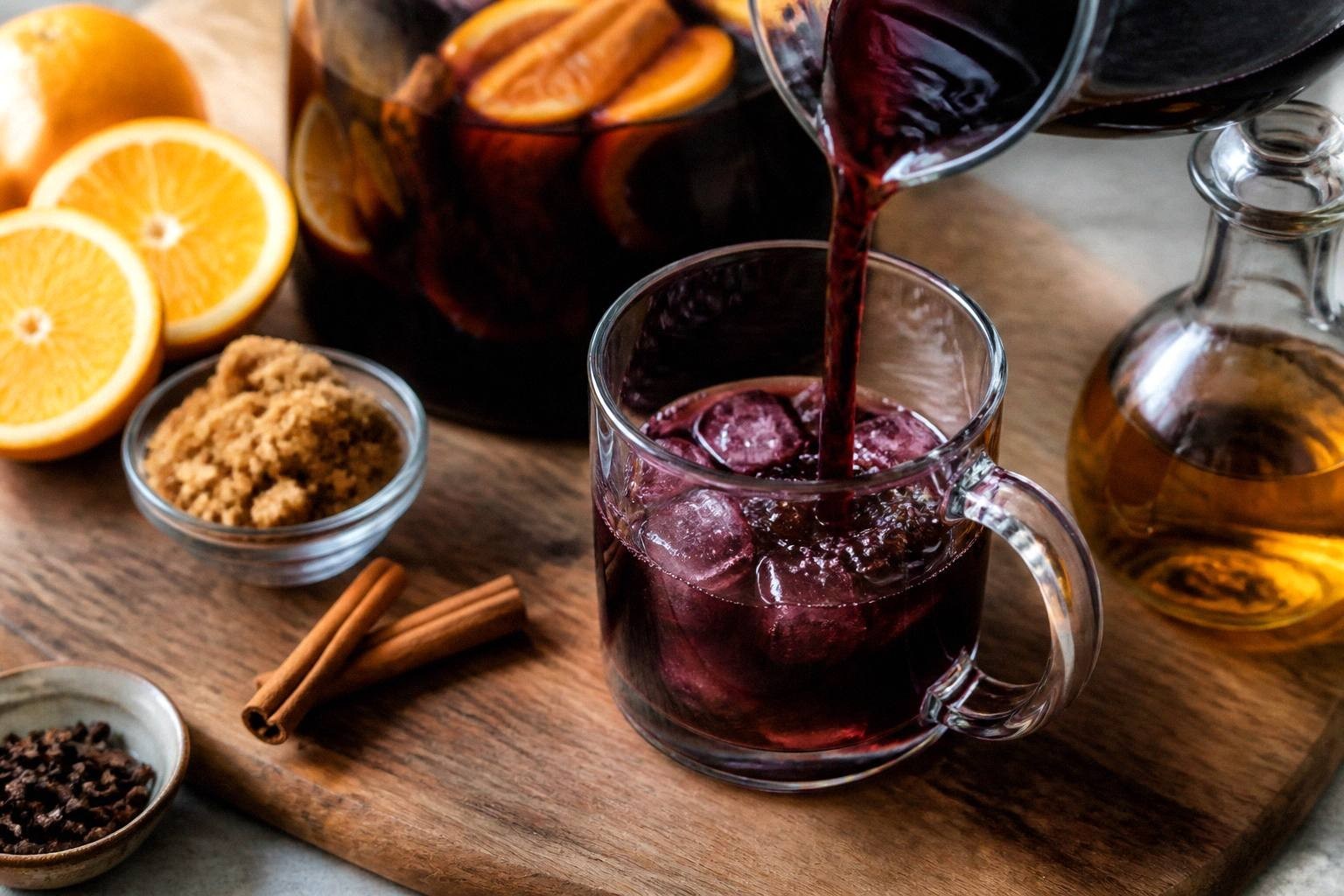
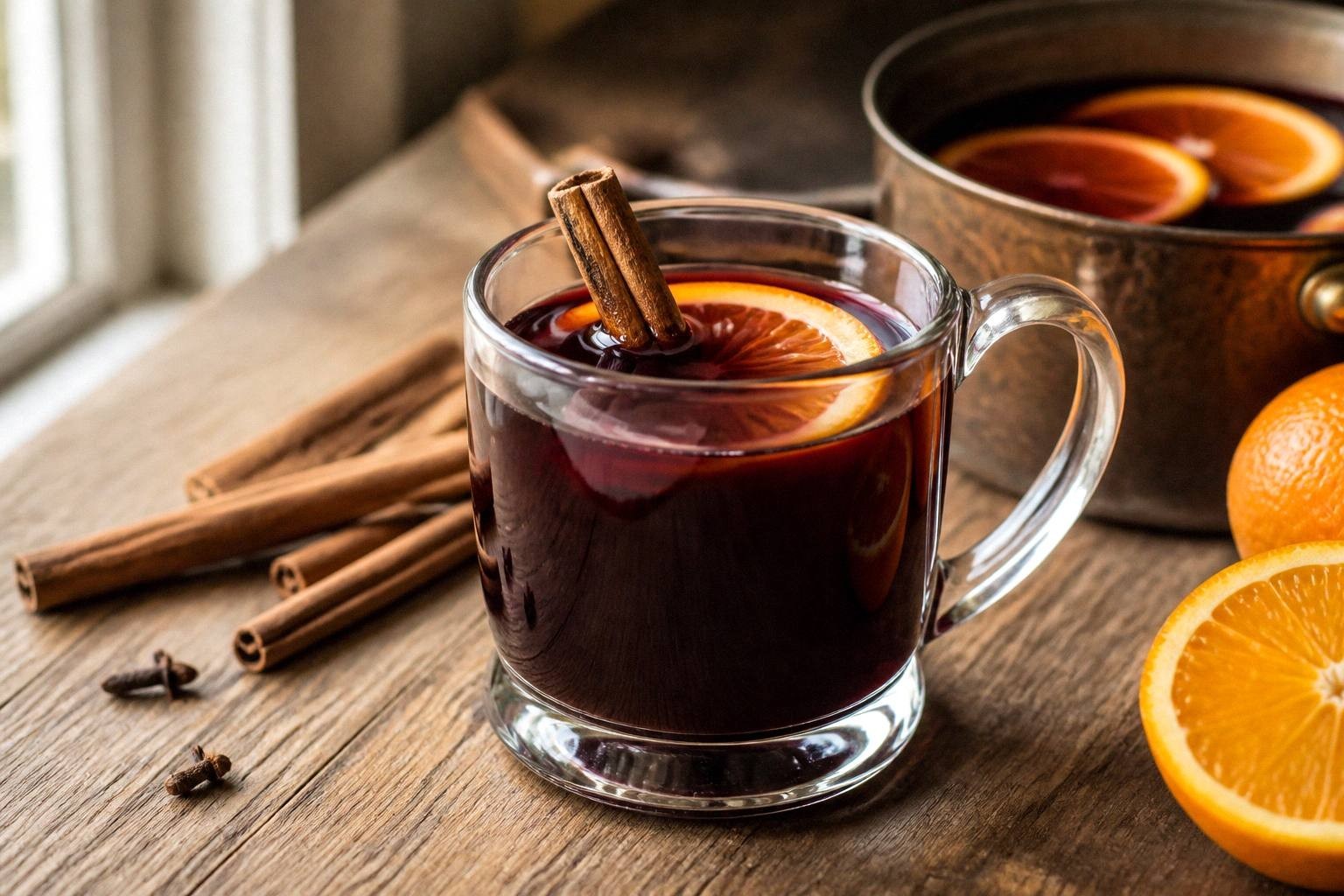
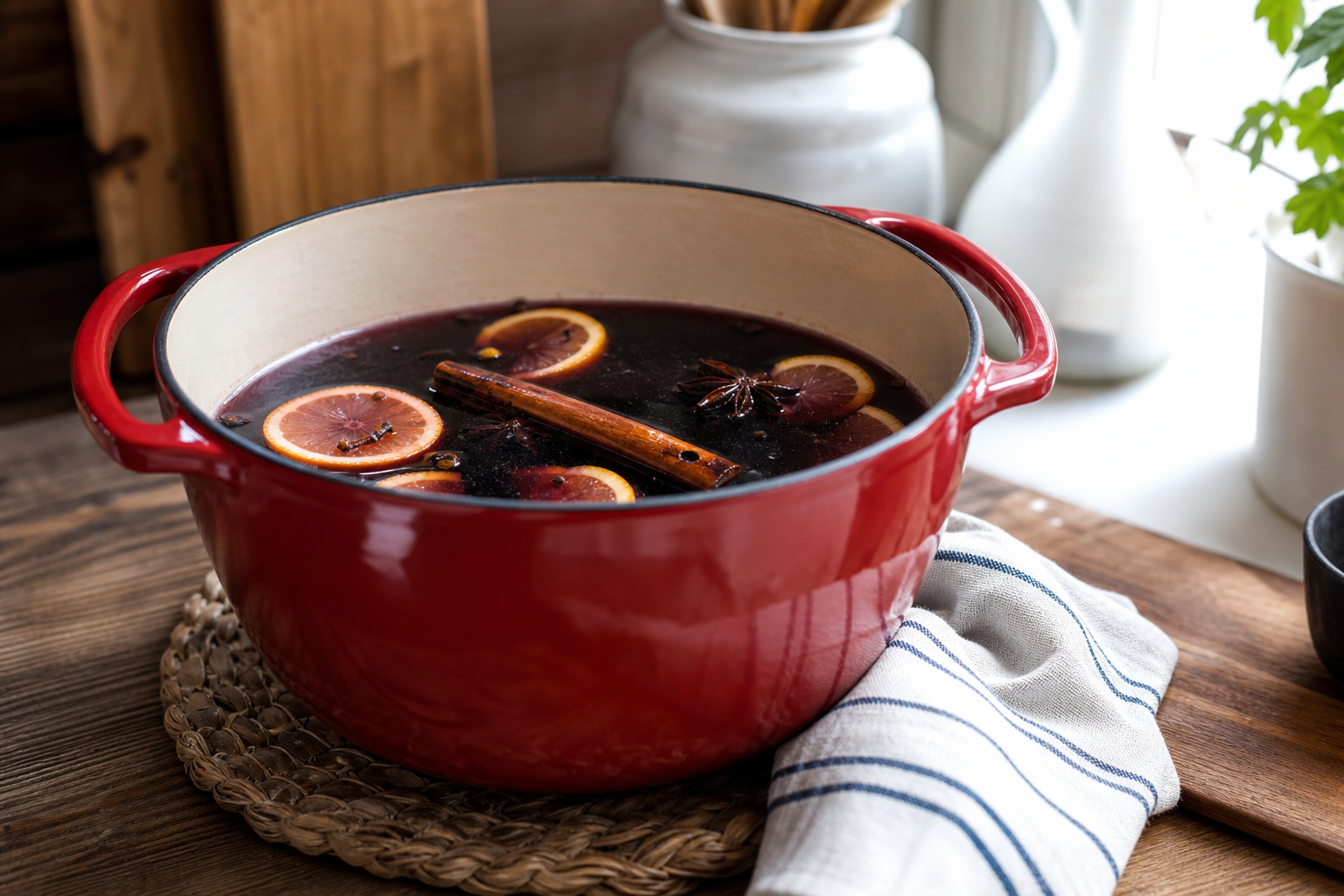
Existing Styling Photos
The existing photos illustrate styling. Use the quantities, handling and serving method above. Bottles in photos do not provide fermentation instructions.