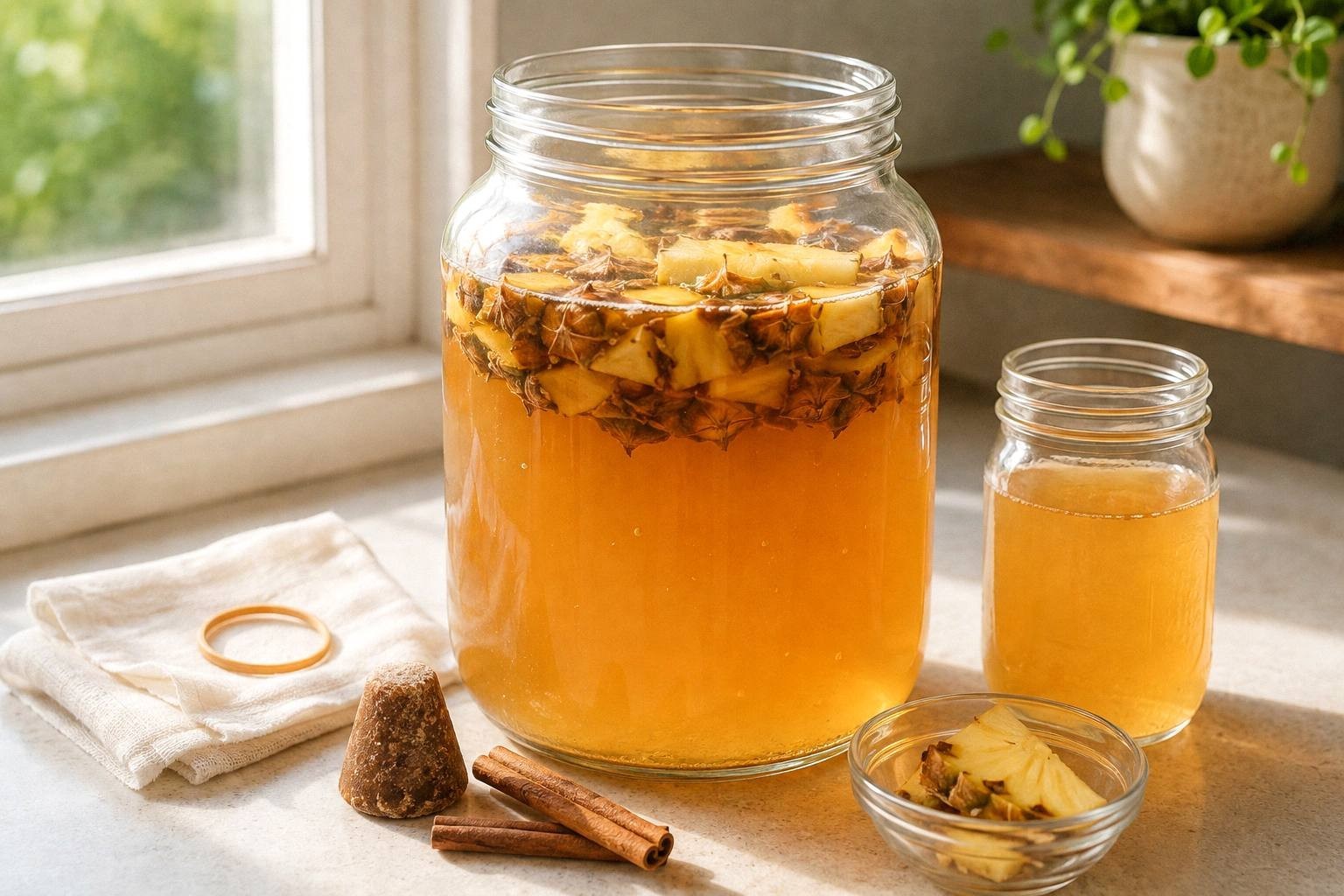

Some recipes suggest drinking refrigerated tepache within a week for flavor. That is not a validated food-safety deadline. We did not identify a verified tepache-specific preparation method or universal tested refrigerator life. Ask your local Extension food-safety office for guidance. If you’re unsure about a batch, discard it without tasting.
Cold slows fermentation but may not stop it. Flavor can change, and a sealed bottle can continue building pressure in the fridge. Virginia Tech Extension explains why following a tested fermentation process matters.
Tepache Storage at a Glance
| Stage | Where it sits | What to know |
|---|---|---|
| Fermenting, fruit still in | Ask your local Extension office for guidance | Time, bubbles and taste do not establish safety |
| Strained | Clean container in the fridge at 40°F or below | A flavor recommendation is not a validated safety window |
| Sealed bottles | Fridge | Pressure can continue building even when cold |
| Mold, slime, a spoiled smell or an uncertain batch | The trash | Discard without tasting |
Changes in flavor and appearance alone cannot confirm safety.
Does Tepache Need to Be Refrigerated?
Yes. Refrigerate the prepared drink promptly. Set the refrigerator to 40°F or below, as recommended by University of Minnesota Extension . Refrigeration slows changes but does not establish a safe shelf life or eliminate pressure buildup.
How to Store Tepache
- Use clean, food-safe containers and equipment. Ask Extension for guidance on preparation and bottling.
- Chill it promptly. Keep the refrigerator at 40°F or below.
- Write the date on it. A label helps you track storage, but a date alone does not establish safety.
Why Sealed Bottles Build Pressure
Fermentation can produce gas in a sealed container. Pressure may build even under refrigeration, and a bottle can burst. Colorado State University Extension describes this hazard for bottled kombucha; its kombucha instructions are not a tested tepache storage schedule.
A few precautions help when handling a bottle:
- Keep sealed bottles in the fridge, not on the counter.
- Chill a bottle before opening it.
- Open it over the sink, pointed away from your face, and ease the cap off slowly.
No bottle or storage interval guarantees pressure cannot build. Ask your local Extension office for bottling guidance.
Signs Tepache Has Gone Bad
Throw it out, without tasting, if you notice:
- Fuzzy, raised or cottony spots of any color, including white
- Green, blue, black, gray or pink patches
- A slimy or stringy pour
- A rotten or spoiled smell instead of pineapple and yeast
Don’t scoop mold off and pour what’s underneath, and don’t sniff suspected mold up close. A normal appearance or smell does not prove a batch safe. FDA notes that harmful contamination cannot always be detected by sight, smell or taste. Don’t assume a sour batch has become safe vinegar; discard it if its safety is uncertain.
If there’s an unexpected white film, discard the batch rather than trying to identify it by appearance. Our tepache mold vs kahm yeast guide explains why.
Common Questions
How long does tepache last in the fridge?
We did not find a validated universal safe refrigerator life for homemade tepache. Some recipes suggest about a week for flavor, not as proof of safety. Keep it at 40°F or below and ask your local Extension office for guidance.
How long does tepache last at room temperature?
Fermentation can continue at room temperature. Refrigerate the prepared drink promptly and ask your local Extension office for guidance; a flavor change cannot establish safety.
Can you freeze tepache?
We did not identify a tested freezing method or safe freezer life specifically for homemade tepache. The National Center for Home Food Preservation notes that freezing does not kill all bacteria, yeasts and molds. Do not rely on freezing to make a questionable batch safe; discard it without tasting. Ask your local Extension food-safety office for guidance.
Can you drink week-old tepache?
Its age and appearance cannot establish whether it is safe. Ask your local Extension office for guidance, and discard it without tasting if you are uncertain. A sealed bottle may also be under pressure.
How do I know if my tepache is ready to drink?
We did not identify a verified tepache-specific process. Ask your local Extension office for guidance. Fruity or tangy flavor, fizz and elapsed time do not by themselves establish that a batch is safe.
Does tepache have alcohol?
Homemade tepache can contain alcohol, and the amount in an untested batch is unknown. Anyone who needs to avoid alcohol should avoid it.
Who should not drink tepache?
Anyone who needs to avoid alcohol completely, since a homemade batch has an unknown amount in it.
Why did my tepache stop being fizzy in the fridge?
Fizz can fade as gas escapes. A sealed bottle may retain fizz but can build pressure, even in the fridge. Bubbles, or their absence, do not prove a batch is safe.
An Optional Fridge Thermometer
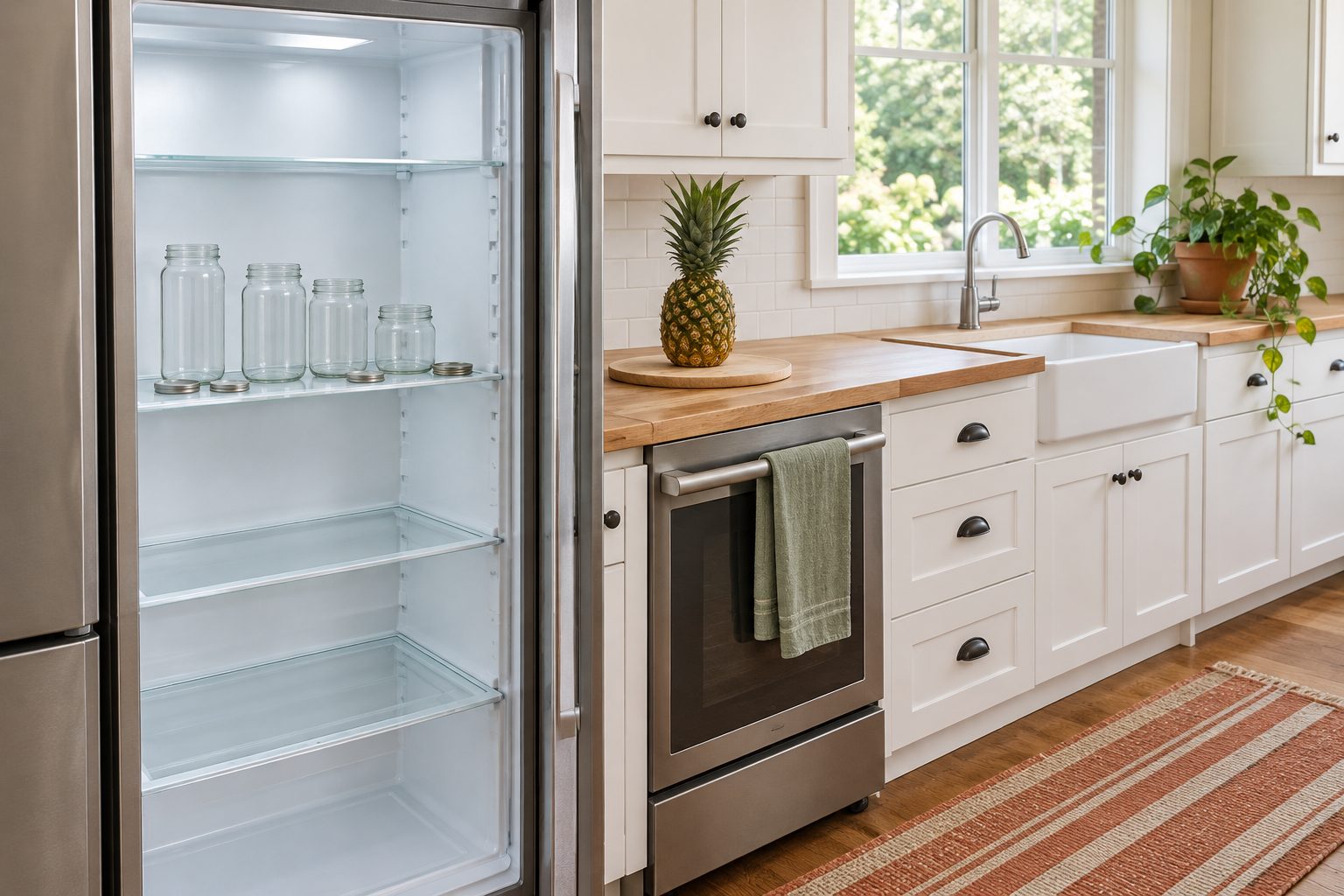
A refrigerator thermometer can help you monitor the temperature inside your fridge. It cannot establish whether a batch of tepache is safe or determine its shelf life.
This recommendation contains an affiliate link. We may earn a commission at no extra cost to you.