The Short Answer
The sources reviewed here do not supply a validated weeks-or-months home aging process. FoodSafety.gov’s homemade eggnog guidance is 2 to 4 days refrigerated, and Utah State says alcohol cannot be relied upon to kill bacteria. This page gives no prolonged aging or consumption schedule.
Flavor Tradition Is Not a Process Limit
Aged eggnog is a culinary tradition. Reports about softened spirit flavor, spice integration or thicker texture do not prove safety. Color and viscosity depend on ingredients and storage and are not required signs of successful aging. The earlier claim that aged batches necessarily become caramel-colored and thicker has been removed.
This is not a claim to have searched every agency, laboratory or recipe ever published. It is a statement about the evidence reviewed for this guide. A reliable home aging process would need defined formulation, controls and a relevant assessment of its actual conditions; this page has none to offer.
What the Rockefeller Demonstration Found
Rockefeller University’s 2008 account describes a lab demonstration commissioned by a radio program. When the researchers deliberately added a high Salmonella load, the 24-hour result was inconclusive. The researcher said more realistic conditions and further work were needed to make an authoritative safety judgment.
That account is neither the origin of the much older aging tradition nor a validated home protocol. Do not turn its alcohol description into a universal dose, waiting period or clearance for an existing batch.
A Short Rest Within Published Guidance
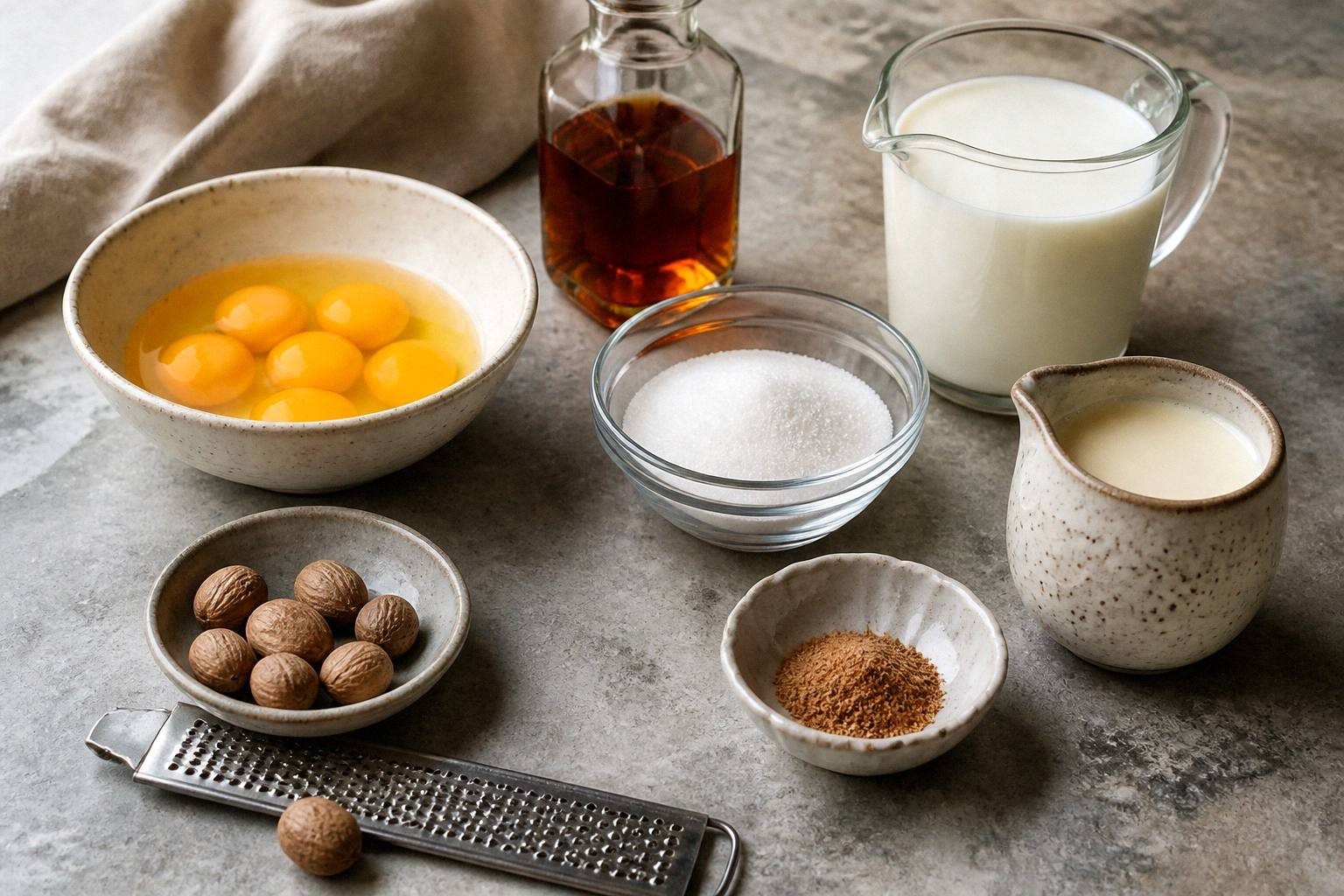
Use a complete cooked-base recipe such as Utah State’s linked Holiday Eggnog, or a recipe designed around suitable pasteurized egg ingredients. The cooking route measures 160 F (71 C) in the egg-liquid mixture while stirring. Untreated raw whites cannot be folded in afterward. Cool promptly in an ice-water bath or small shallow containers and refrigerate.
Utah State’s own recipe calls for 4 to 24 hours of covered refrigerator chilling before finishing and serving. That is a source-specific chill, not an aging validation or a guaranteed flavor transformation. Keep the batch at 40 F (4 C) or below and plan within the federal 2-to-4-day homemade storage window, or any shorter ingredient limit. Cooking and pasteurization do not remove the need for cold handling.
For flavor without prolonged aging, use the vanilla and nutmeg amounts in your selected complete recipe. If that recipe includes spirits, choose its prescribed spirit and amount. Aged rum or brandy is an ingredient choice, not a preservative. No extra whole-spice steep or heavier spirit dose is instructed here. Omit foam only if your recipe allows it; a denser texture does not prove age or safety.
Serving and Storage
Keep the dated batch covered in the refrigerator, serve small quantities, and check any ice-bath serving dish remains at 40 F or below. Discard after more than two cumulative hours without cold holding, or one hour above 90 F (32 C). Discard spoilage or uncertain handling, and never taste an uncertain batch. Normal smell is not clearance.
For guests avoiding alcohol, including children, use an alcohol-free cooked, pasteurized or suitable commercial version. FDA’s higher-risk guidance concerns raw eggs; it does not prohibit every properly prepared eggnog for every higher-risk guest. Ingredient allergies and alcohol needs still matter.
Common Questions
Can pasteurized eggs make a long aging batch safe?
They reduce the untreated-egg hazard but do not validate the other ingredients, handling or a long home aging process. They do not extend the published homemade storage window.
Does this guide hold ordinary cooked eggnog?
No. Complete cooked or pasteurized recipes with short cold storage remain available from the cited institutions. Only the unsupported prolonged home aging procedure is absent.
Can a commercial carton be aged?
Follow its instructions. FoodSafety.gov lists 3 to 5 days refrigerated and six months frozen for commercial eggnog. Those are storage recommendations, not an aging method.