Most tepache ferments in 2 to 4 days at room temperature. Our tepache recipe calls for 68 to 75°F, out of direct sun, with a stir once a day. Start tasting on day 2 and stop when it tastes sweet and tangy with a gentle fizz.
The calendar is only a rough guide. A warm kitchen gets there sooner and a cool one takes longer, so your taste buds decide the finish line.
What Each Day Looks Like
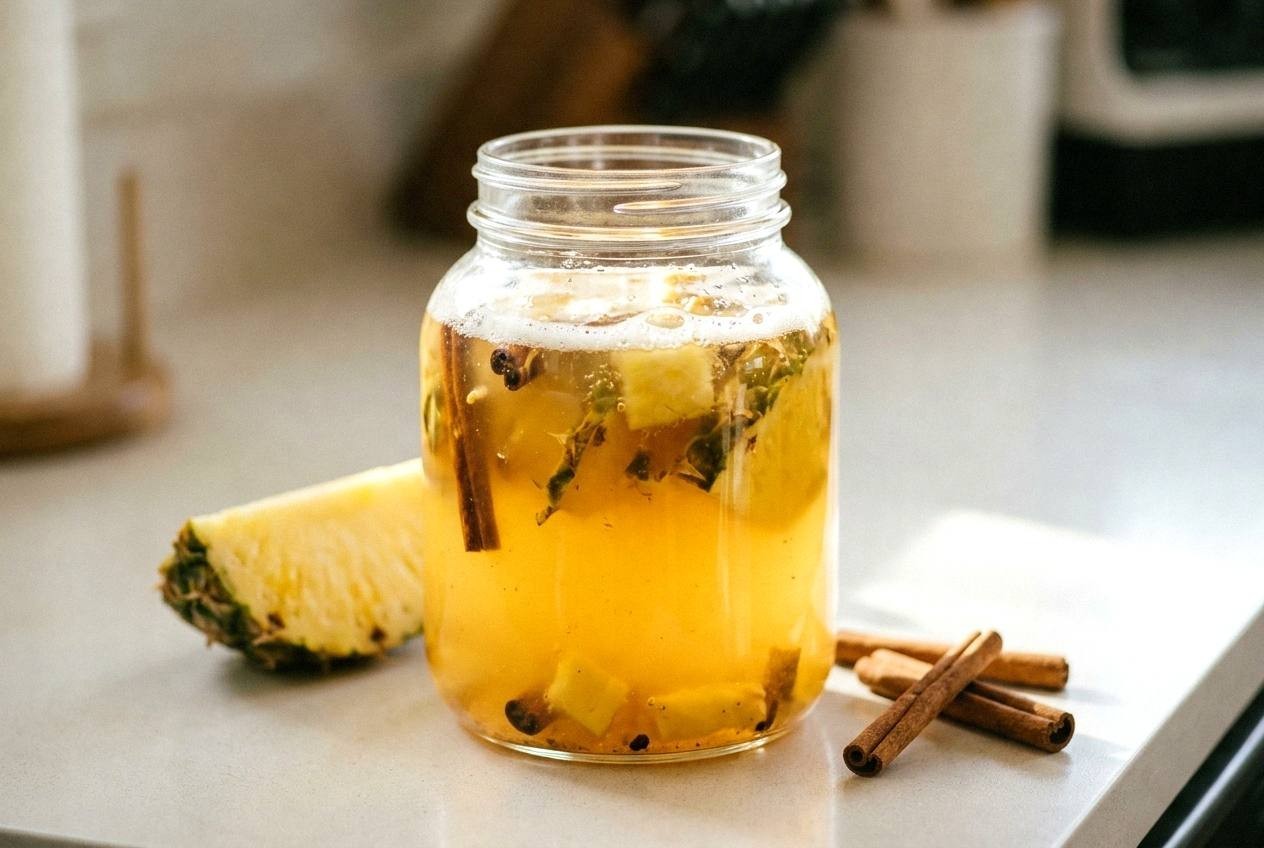
This follows our recipe card: pineapple rinds and core, filtered water, piloncillo, cinnamon and cloves, under a cloth cover.
| When | What you’ll notice | What to do |
|---|---|---|
| Day 0 | Rinds, piloncillo and spices under the water | Stir to start dissolving the piloncillo, then cover with cloth, not a sealed lid |
| After 24 hours | Tiny bubbles forming | Stir once a day and keep everything under the water |
| Days 2 to 3 | A fruity, slightly yeasty smell | Taste it each day |
| Usually by day 4 | Sweet and tangy with gentle fizz | Strain, bottle and refrigerate |
How Long Other Recipes Ferment Tepache
Published recipes agree on a few days, with a wider range when the room is cool.
| Recipe | Where it ferments | How long |
|---|---|---|
| Our recipe card | Room temperature, 68 to 75°F | 2 to 4 days |
| Bon Appétit | Warm, draft-free spot, about 75°F | 2 to 3 days, checked after day 2 |
| Allrecipes | A warm place | 2 days |
| Rick Bayless | Warm room temperature | 24 hours to a week, depending on how warm the kitchen is |
Food & Wine sums it up the same way: a few days, and longer if the temperature drops. The recipes also differ in method. Bon Appétit and Allrecipes ferment under a lid, while ours and Rick Bayless’s use cloth so the jar can breathe.
What Temperature Does
Warmth speeds tepache up and cool air slows it down. That’s the reason Rick Bayless’s range runs from one day to a full week.
- Warm kitchen: check early. It can go from sweet to sour faster than you expect.
- Cool kitchen: give it more days and keep stirring.
- Sunny windowsill: skip it. Our recipe keeps the jar out of direct sunlight.
None of these sources gives exact hours for each temperature, so we don’t either. Taste is the check that works in every kitchen.
How to Tell Tepache Is Ready
- Smell: fruity and slightly yeasty, like pineapple with a little funk
- Look: bubbles around the fruit. Rick Bayless waits for a layer of white foamy bubbles on top before he tastes.
- Taste: sweet and tangy with gentle fizz, not syrupy and not sharp
Food & Wine quotes a tepache brewer with a simple rule. If it’s too sweet, let it go longer. If it’s starting to sour, stop.
When to Strain and Chill
Strain it as soon as it tastes right. Pour it through a fine-mesh strainer, compost the spent rinds, bottle it and put it in the fridge.
The fridge doesn’t stop it completely. Rick Bayless notes it keeps fermenting there, just more slowly. That’s why our tepache storage guide says to drink it within about a week and to open sealed bottles carefully.
Can Tepache Ferment Too Long?
Yes. Left too long it turns sour and thin, and Food & Wine says it will eventually become vinegar. If it has no mold or slime and doesn’t smell rotten, that pineapple vinegar still works in salad dressings and marinades.
Mold is a different problem. Fuzzy or colored growth means the batch goes in the trash. If you’re looking at a white film and can’t tell what it is, use the table in tepache mold vs kahm yeast .
Is Tepache Alcoholic?
A little, yes. Food & Wine puts typical tepache at around 2 to 3 percent alcohol, sometimes more or less, depending on how long it ferments and how much sugar the fruit had.
A home batch is never measured, so you can’t know the exact number. Treat it as a drink with some alcohol in it, and skip it if you need to avoid alcohol completely.
Common Questions
How do I know when my tepache is ready?
Taste it from day 2. It’s ready when it smells fruity and slightly yeasty and tastes sweet and tangy with a gentle fizz. If it’s still sugary, give it another day.
Can I drink tepache every day?
That’s your call. Keep in mind it’s a sweetened drink with some alcohol in it, so it’s closer to a treat than to water. For why people drink it at all, see tepache benefits .
What is the shelf life of tepache?
Once strained and refrigerated, it’s best within about a week. Rick Bayless gives his up to about two weeks. The full breakdown is in how long does tepache last .
Should tepache be covered or sealed while it ferments?
Our recipe covers the jar with cheesecloth or a clean towel held on with a rubber band, so air can move. A sealed jar traps the gas as it builds.
How often should I stir tepache?
Once a day, with a clean spoon. Our recipe and Rick Bayless’s both stir daily.
Why is my tepache not bubbling after a day?
A cool room, chlorinated tap water or a pineapple with few wild yeasts left on the skin can all slow it down. Work through tepache not bubbling before you start over. If you cut back the sugar, tepache without sugar explains why that slows the ferment.