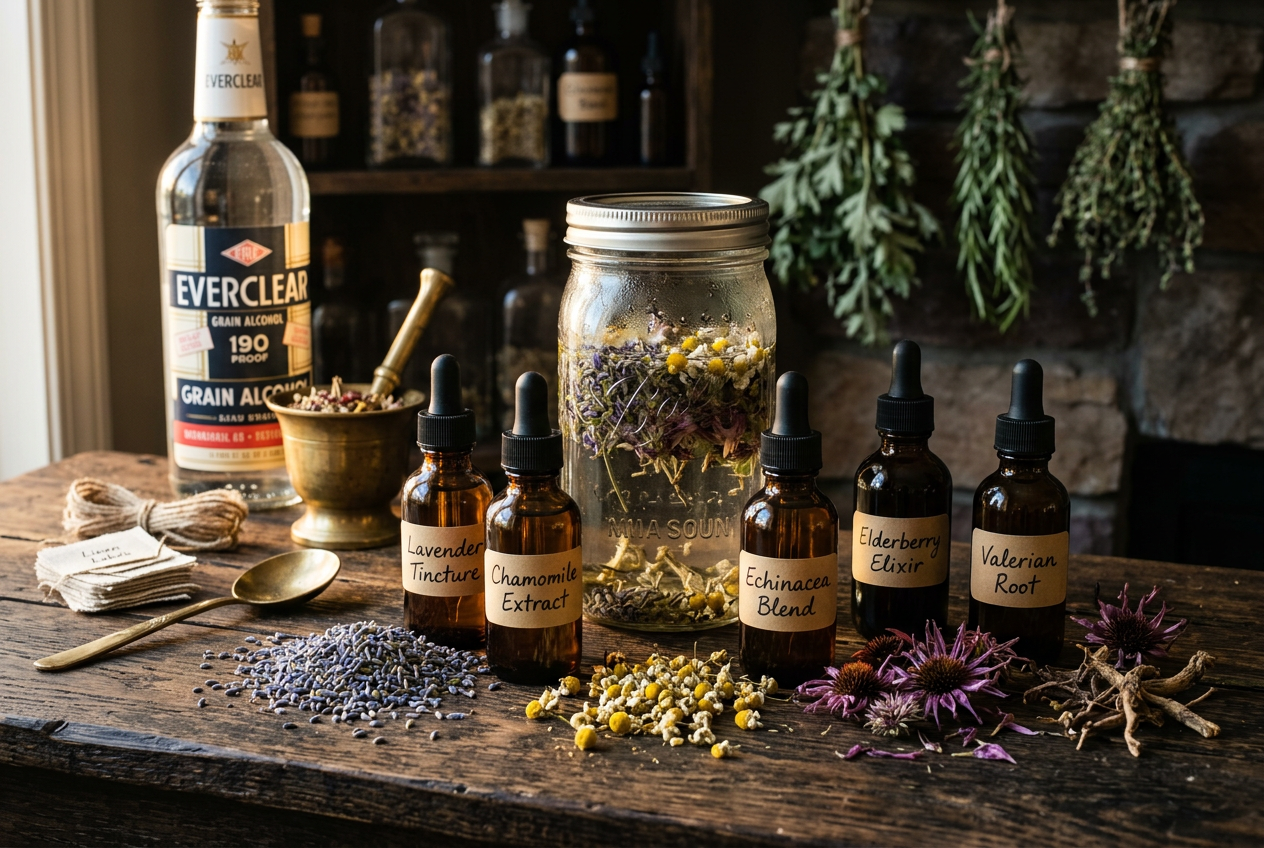
To make an herbal tincture, cover dried or fresh herbs with alcohol in a clean glass jar, seal it, and leave it in a cool, dark cupboard for at least a month, shaking it often. Then strain out the herbs, squeeze them, and bottle the liquid in amber glass with a label. You can eyeball the jar (the folk method) or weigh the herbs and measure the alcohol for a set ratio.
What a Tincture Is
A tincture is an herb steeped in alcohol until the alcohol has pulled out its flavor, color and aroma. The herbs come out at the end, and you keep the liquid. It’s the same idea as homemade cocktail bitters , just usually with a single herb or a short blend instead of a bar recipe.
Swap the alcohol for food-grade glycerin and you get a glycerite. Use vinegar and you get a vinegar extract, which is how fire cider is made.
What You Need
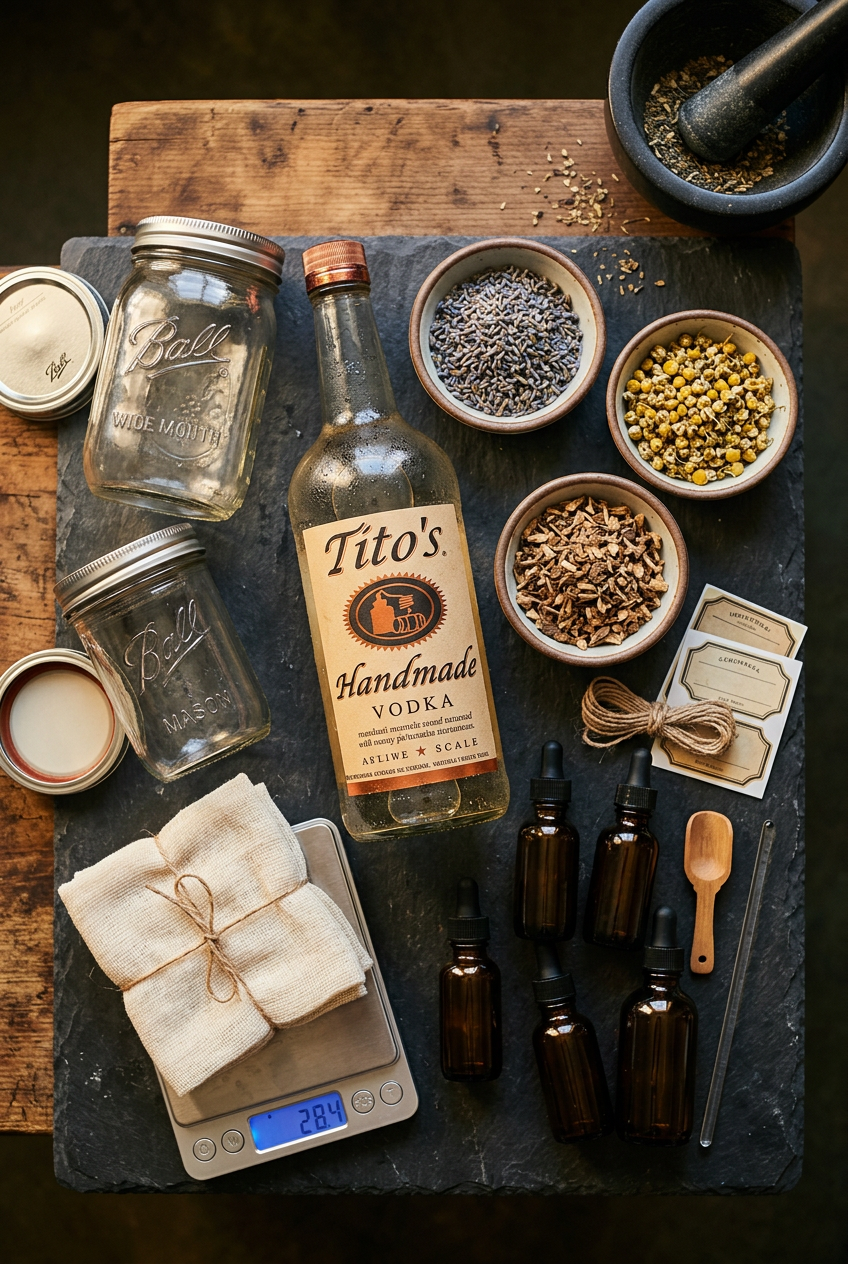
- A clean glass jar with a tight lid (pint or quart canning jars work well)
- Dried or fresh herbs
- Vodka or brandy, 80 to 100 proof for most dried herbs
- A kitchen scale, if you want to use a ratio
- Cheesecloth, muslin, a coffee filter or a fine mesh strainer
- A funnel
- Amber glass bottles
- Labels and a pen
The Folk Method
The folk method skips the scale. You fill the jar by eye and cover the herbs with alcohol. It’s how most home tinctures are made, including our calming herbal tincture recipe .
- Prepare the herbs. Chop dried or fresh herbs small, so more surface touches the alcohol.
- Fill the jar. For dried herbs, fill the jar about one-third full. For fresh herbs, fill it about three-quarters full and pack them in firmly, since fresh plants hold water.
- Cover with alcohol. Pour alcohol over the herbs until they sit 1 to 2 inches under the surface and can still move when you shake the jar. With fresh herbs, fill right to the top.
- Seal and label. Write the herb, the alcohol and its proof, and the date.
- Steep. Keep the jar in a cool, dark cupboard for at least a month. Shake it daily or a few times a week. Check the next day and top up with alcohol if the herbs have soaked it up and poked above the surface.
- Strain. Pour through cheesecloth or a fine strainer and squeeze the herbs to get every drop. Pick out every bit of plant material.
- Bottle. Funnel the tincture into amber bottles and label each one.
Folk-method tinctures vary from batch to batch, because a third of a jar of one herb weighs very differently from a third of a jar of another. If you want the same strength every time, use a ratio.
The Weight-to-Volume Method
A ratio tincture weighs the herb and measures the liquid. The ratio is herb weight to liquid volume, so 1:5 means 1 ounce of herb by weight to 5 ounces of liquid by volume (or 100 grams to 500 milliliters).
| Herb form | Ratio (herb : liquid) | Example | Alcohol |
|---|---|---|---|
| Dried herb | 1:5 | 1 oz herb to 5 oz alcohol | 40 to 60 percent (80 to 120 proof) |
| Fresh herb | 1:2 | 1 oz herb to 2 oz alcohol | High proof, ideally 95 percent (190 proof); 75 or 50 percent also works |
Fresh herbs get the stronger alcohol and the tighter ratio because the water in the plant dilutes the alcohol as it steeps.
To make one, weigh the herb, multiply by five (dried) or two (fresh) to get the alcohol volume, combine them in a jar, and follow the folk method from step 4.
Which Alcohol to Use
Proof is twice the alcohol percentage, so 100 proof vodka is 50 percent alcohol.
| Proof | Alcohol | Typical use |
|---|---|---|
| 190 | 95% | Fresh herbs and resins |
| 151 | 75% | Fresh herbs and resins |
| 100 | 50% | Dried herbs; also works for fresh |
| 80 | 40% | Dried herbs; also works for fresh |
Plain vodka is the usual choice because it has no flavor of its own. Brandy works too and adds a little warmth. For dried herbs, don’t use 190 proof grain alcohol straight. Dilute it with distilled water first, or just buy 80 or 100 proof vodka.
How Long to Steep a Tincture
At least a month, and longer is fine. Our calming blend steeps for 4 to 6 weeks, and our single-herb passionflower and holy basil tinctures steep for 6 to 8 weeks. Shake the jar daily if you can, or at least a few times a week, and keep the herbs under the alcohol.
Straining and Bottling
- Line a fine strainer with cheesecloth or muslin, or use a coffee filter for a very clear tincture.
- Pour in the whole jar and let it drip, then gather the cloth and squeeze.
- Remove every bit of plant material. Leftover bits make a tincture go off sooner.
- Funnel into amber glass bottles, filled nearly to the top.
- Label each bottle with the herb, the alcohol and proof, and the date you strained it.
- Store the bottles in a cool, dark cupboard away from heat and sunlight.
- Compost the spent herbs.
Some sediment can settle in the bottle over time. Swirl before using.
Alcohol-Free Options: Glycerite and Vinegar
Glycerite. Food-grade vegetable glycerin replaces the alcohol. It’s sweet and thick, and glycerites are generally milder and don’t keep as long as alcohol tinctures. Use dried herbs and very clean equipment, since dried herbs are less likely to spoil than fresh.
Vinegar extract. Apple cider vinegar pulls flavor from herbs too. Like glycerites, vinegar extracts are milder and keep for a shorter time. Fire cider is the best-known example.
Oxymel. Vinegar and honey together. Our oxymel recipe uses ginger and orange peel.
Herbs to Start With
Start with one dried herb you already know from tea, so you can tell what the finished tincture should taste like.
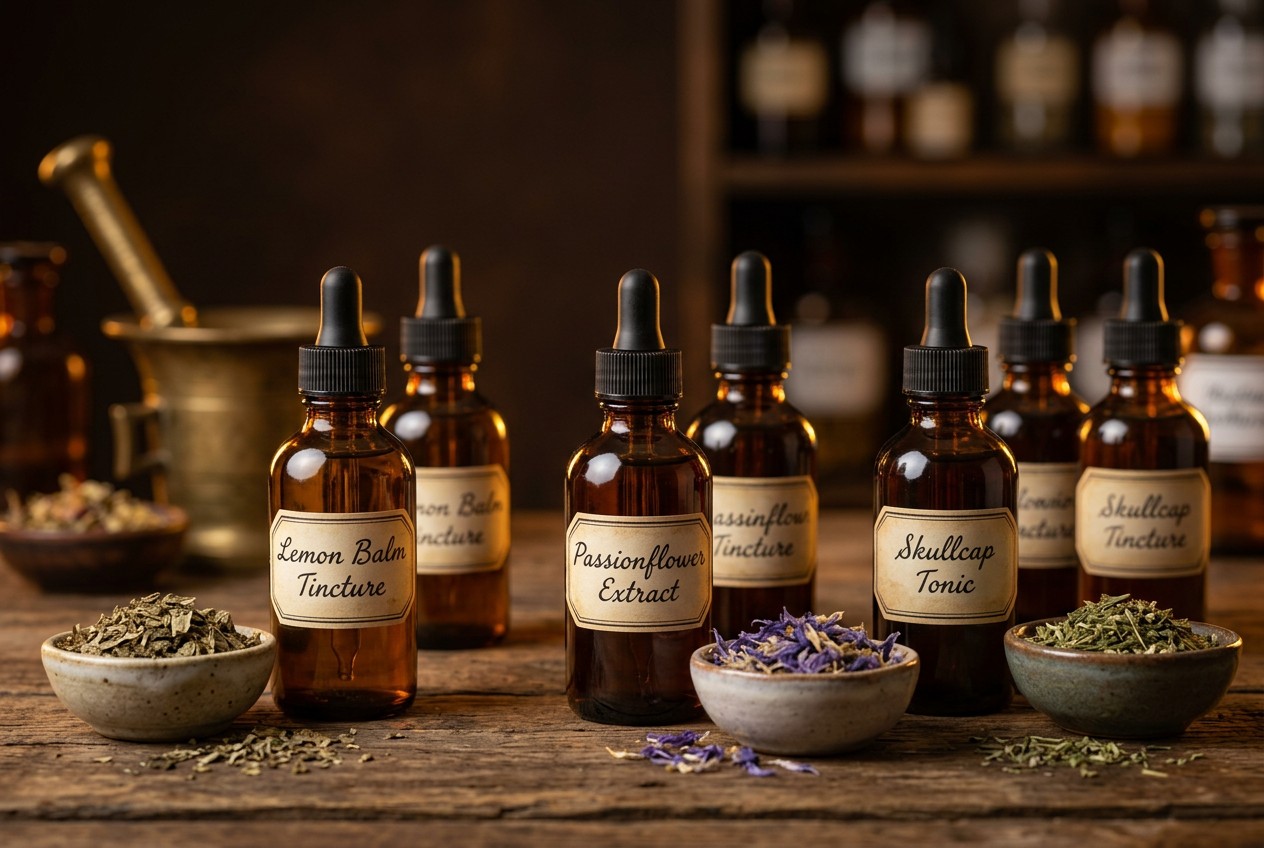
- Lemon balm: bright and lemony. Read more about lemon balm .
- Chamomile: floral and apple-like. See our chamomile guide .
- Passionflower: mild and grassy, sold dried as leaves, vine and flowers.
- Holy basil (tulsi): warm and clove-like.
The passionflower, holy basil and evening blends all have full recipes on the herbal tincture recipe page .
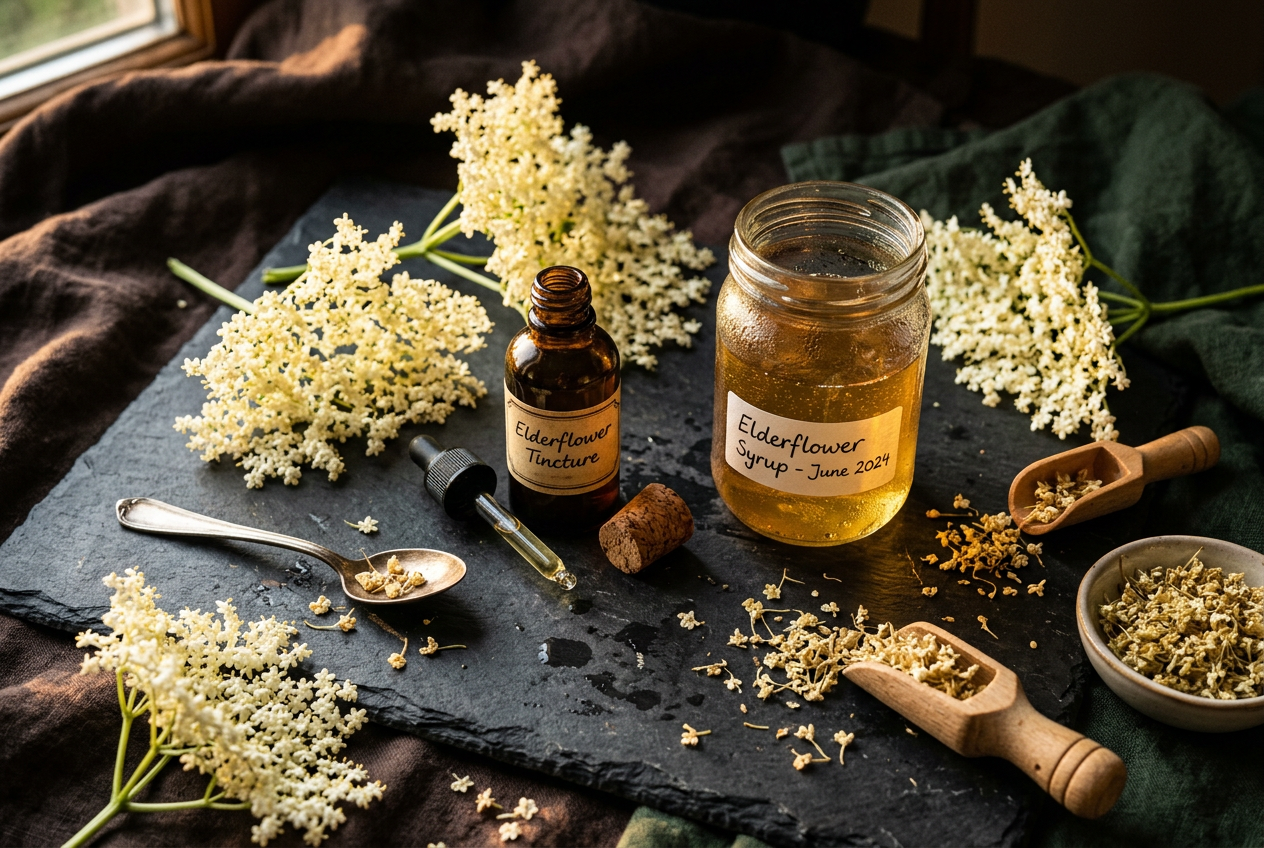
Skip raw elderberries. They need cooking first, which is why our elderberry recipe is a simmered syrup. More on that in are elderberries poisonous raw .
If you grow your own herbs, dry them well before using them in a 1:5 tincture. Here’s how to dry and store herbs . For a sense of what to keep on an apothecary shelf alongside your tinctures, start with the beginner list. Every preparation on the site is gathered in our apothecary recipes .
Common Questions
What alcohol is best for herbal tinctures?
Plain vodka at 80 or 100 proof works for most dried herbs. Fresh herbs do better with higher-proof alcohol, ideally 190 proof, because their water dilutes it.
What is the tincture ratio for dried herbs?
1:5, meaning 1 ounce of dried herb by weight to 5 ounces of alcohol by volume. Fresh herbs use 1:2.
How long should a tincture sit before straining?
At least a month. Four to six weeks is common, and some recipes go to eight.
Can I use fresh herbs for a tincture?
Yes. Fill the jar about three-quarters full with chopped fresh herbs, pack them in, and fill to the top with high-proof alcohol. Top it up the next day.
Do I need a tincture press?
No. Cheesecloth or muslin squeezed firmly by hand works fine for home batches.
What’s the difference between a tincture and a glycerite?
A tincture uses alcohol. A glycerite uses food-grade glycerin, so it’s sweet and alcohol-free, but milder and shorter-keeping.
How long do homemade tinctures last?
It depends on the base. Alcohol tinctures keep the longest, especially at 50 percent alcohol or stronger. Glycerin and vinegar versions don’t keep as long. Store every bottle in a cool, dark cupboard, label it with the date, and throw out anything that smells off or shows mold.