

The side effect most people notice from mullein tea is a scratchy, tickly throat, and it usually comes from tiny leaf hairs that slipped through the strainer, not from the tea itself. Straining through a paper coffee filter fixes most of it. Less often, the dry leaf makes skin itch or someone reacts to the plant, and the answer then is to stop drinking it.
Mullein Tea Side Effects at a Glance
| What you notice | Likely cause | What to do |
|---|---|---|
| Scratchy or tickly throat, or coughing right after a cup | Fine leaf hairs left in the tea | Strain through a paper coffee filter. Stop if it keeps happening. |
| Itchy hands or skin after handling the dry leaf | Leaf hairs on the skin | Wash your hands. Wear gloves if it keeps happening. |
| Itching, rash, hives or swelling after drinking | A possible allergy | Stop drinking it. Get medical help right away for swelling or trouble breathing. |
| Upset stomach or loose stools | Not well understood | Stop drinking it and see if it settles |
| Drowsiness | Usually another herb in a blend | Check the label for other ingredients |
Why Mullein Leaf Hairs Irritate Your Throat
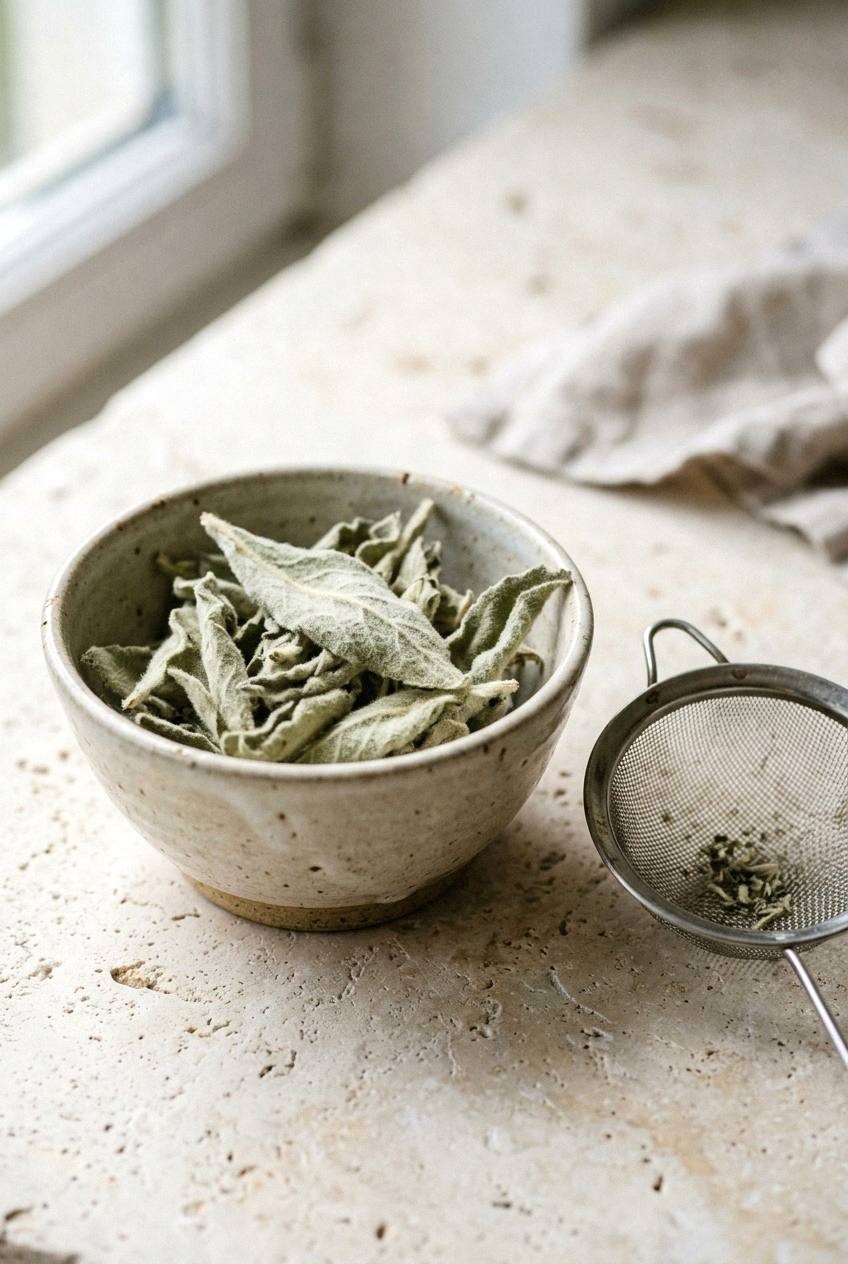
The scratchy feeling comes from the plant material, not the liquid. Dried mullein leaf is covered in tiny hairs, which is what gives it a soft, felt-like feel. When small leaf pieces or hairs slip through a loose tea ball, they sit at the back of your throat and feel like dust or a dry tickle. That tickle can set off a cough.
Straining fixes it. Use a paper coffee filter, a tight-weave cloth tea filter, or a very fine mesh strainer, and let the tea drip through rather than squeezing it. Our mullein tea recipe walks through each straining method.
If your throat still feels worse after a properly strained cup, stop drinking it.
Does Mullein Tea Make You Sleepy?
Mullein tea isn’t known to make people sleepy. It has no caffeine, so it won’t keep you awake the way coffee or black tea can, which is why it’s an easy evening drink.
If a mullein tea does make you drowsy, read the box. Blends often add chamomile, lemon balm, valerian or other herbs that people drink at bedtime. A dry throat that’s been keeping you up can also be part of why a warm drink feels calming.
How Many Cups a Day, and How Often?
There’s no established serving guideline for mullein tea, so we don’t give a daily number or a schedule. Our recipe makes one 8 oz cup.
Before drinking it regularly, ask a pharmacist or doctor if you take any medication, are pregnant or breastfeeding, or want to give it to a child. Stop if a cup irritates your throat, skin or stomach.
Gordolobo Tea
Gordolobo is a Spanish common name used for more than one plant. Sometimes it means mullein (Verbascum). Sometimes it means Gnaphalium, an unrelated plant often called everlasting or cudweed, and there have been harmful mix-ups with toxic Senecio species sold under the same name.
Because the name is unreliable, check the botanical name and plant part on the package before you buy or brew. Side effects for one gordolobo plant don’t carry over to another.
Who Should Ask First
Check with a doctor or pharmacist before drinking mullein tea if you:
- Are pregnant, trying to get pregnant, or breastfeeding. There isn’t good safety information for mullein tea during pregnancy or nursing.
- Want to give it to a child. Don’t give it to babies, and ask a pediatrician before giving it to an older child.
- Take any medication.
- Have asthma, COPD or another lung condition.
Skip mullein if you know you react to plants in the figwort family (Scrophulariaceae), or if you notice itching, swelling, a rash or breathing changes after a cup.

When to Get Medical Care Instead
Mullein tea isn’t a treatment for a breathing problem. Get medical care for trouble breathing, wheezing, chest pain, a high fever, coughing up blood, blue lips, or a cough that keeps getting worse or won’t go away.
If Mullein Doesn’t Agree With You
If the leaf hairs bother you no matter how you strain them, try mallow tea, a gentler alternative . It’s made from cut marshmallow root, so there’s no fuzzy leaf to filter out. For a sharper cup with ginger and thyme, there’s our herbal tea for sore throat . Both are on our apothecary recipes page.

Common Questions
Can mullein tea irritate your throat?
Yes, mostly when it isn’t strained well. The leaves have tiny hairs that feel scratchy if they end up in the cup.
Does mullein make you cough?
It can, if leaf hairs get into the tea and tickle your throat. A paper coffee filter usually solves it. If you still cough after a well-strained cup, stop drinking it.
Why does mullein tea make my throat scratchy?
The usual source is tiny leaf hairs or small leaf pieces in the finished tea. Strain it through a paper coffee filter or very fine mesh.
Can mullein tea cause diarrhea?
Some people report an upset stomach or loose stools. If that happens, stop drinking it.
Is mullein tea safe every day?
There’s no established guideline for daily use. Ask a pharmacist or doctor before drinking it regularly if you take medication, are pregnant or breastfeeding, or have a lung condition.
Who should not drink mullein tea?
Anyone allergic to figwort-family plants, and anyone who gets itching, swelling or breathing changes after a cup. People who are pregnant or breastfeeding, giving it to a child, taking medication, or managing a lung condition should ask first.
Is gordolobo tea the same as mullein tea?
Not reliably. The name can mean mullein or an unrelated plant, so check the botanical name before using it.
Can I drink mullein tea for asthma or COPD?
Don’t use it as a treatment for asthma, COPD, pneumonia or other breathing problems. If you have a lung condition, ask your doctor before adding it to your routine.