The Short Answer
A thin white film on tepache is often kahm yeast. It looks flat, dusty, or wrinkled and usually smells yeasty rather than rotten. Fuzzy patches, colored spots, cottony growth, slime, or a bad smell are different. Toss that batch.
Do not taste tepache to test whether mold is safe. Use your eyes and nose first. If the answer still feels unclear, the safest answer is the boring one: discard it and start again.
For the base method, use the main tepache recipe . For timing, use the guide to how long to ferment tepache .
Quick Visual Guide
| Surface Sign | Usually Means | Keep or Toss |
|---|---|---|
| Thin white film | Kahm yeast | Usually skim and continue |
| Flat, dry-looking wrinkles | Kahm yeast | Usually skim and continue |
| Fuzzy white patch | Mold | Toss |
| Green, black, blue, or pink spots | Mold | Toss |
| Slimy texture | Spoilage | Toss |
| Rotten smell | Spoilage | Toss |
| Nail-polish smell | Overactive/off ferment | Toss if strong |
What Kahm Yeast Looks Like
Kahm yeast is usually a flat film. It may look like a pale skin on the surface, sometimes with wrinkles or tiny islands. It is not pretty, and it can make the drink taste dull or bready, but it is common in home ferments.
If the jar otherwise smells like pineapple, yeast, and light tang, you can skim the film, keep the fruit submerged, and continue. Many people still choose to restart because kahm can leave a flavor they do not like. That is a quality decision, not a failure.
What Mold Looks Like
Mold has height and texture. It looks fuzzy, raised, cottony, powdery, or furry. It may be white at first, then turn green, black, blue, gray, or pink.
The National Center for Home Food Preservation warns that cotton-like mold growth and unnatural odors are signs of spoilage in preserved foods. Tepache is not canned food, but the practical rule still holds for the home kitchen: fuzzy growth is not something to taste around. Discard it.
Why Mold Happens
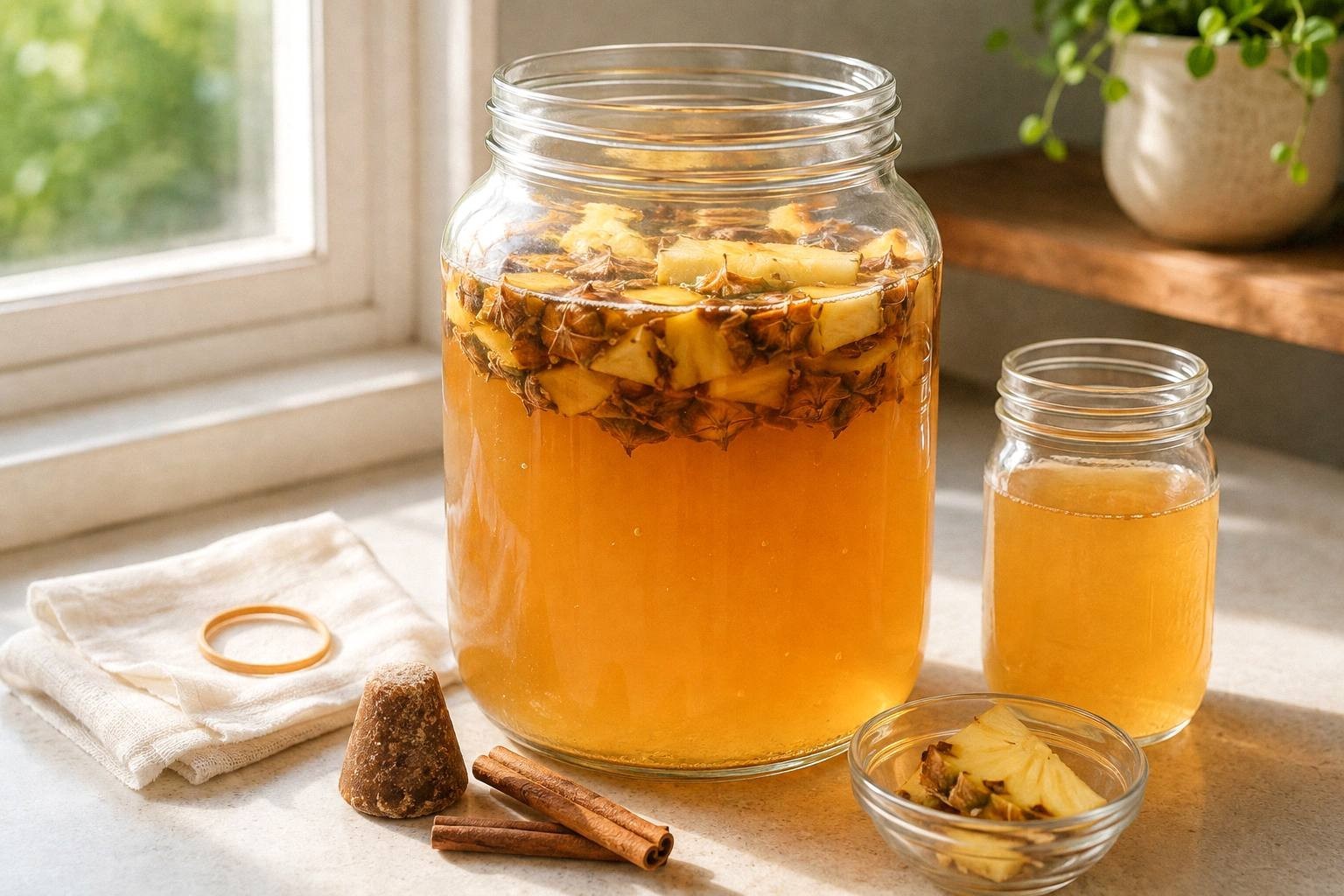
Mold usually shows up when fruit sits above the liquid, tools are dirty, the jar is too warm, or the ferment is left too long.
These fixes prevent most problems:
- Keep pineapple pieces under the liquid.
- Stir once daily with a clean spoon.
- Cover with cloth, not a sealed lid, during the first ferment.
- Use a clean jar.
- Ferment for 2 to 4 days, not a week on the counter.
- Strain and refrigerate when the flavor is balanced.
If you keep getting surface growth, reduce the amount of floating fruit in the jar. Big pineapple pieces bob up and dry out faster.
What to Do With a White Film
If the film is thin, flat, and white, and the jar smells clean, skim it off with a clean spoon. Stir the fruit down. Taste only after the film is removed and the batch still smells right.
If the white patch is fuzzy or puffy, treat it as mold and discard the batch. White mold can look innocent at first.
What to Do With Mold
Throw out the whole batch. Do not scoop off the top and drink what is underneath. Tepache is cheap to restart. A pineapple rind, sugar, and water are not worth gambling over.
Wash the jar with hot soapy water. Rinse well. Let it dry completely before the next batch.
When the Smell Is the Problem
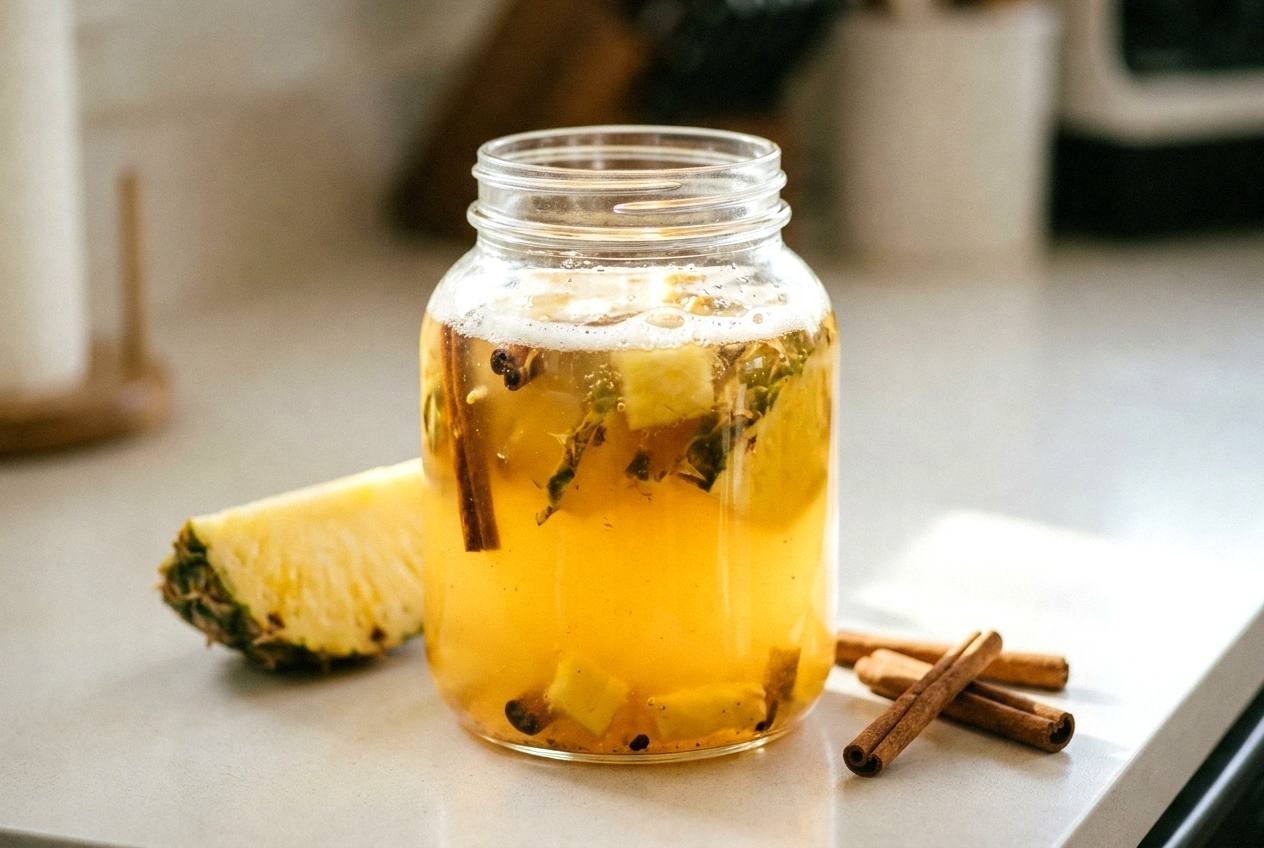
Tepache should smell like pineapple, warm spice, light yeast, and tang. A little sour is normal. Vinegar means it went long but may still be usable if there is no mold.
Throw it out if it smells rotten, putrid, musty, or like solvent. A sharp nail-polish smell can happen when the ferment is stressed, too warm, or neglected. If it is strong enough to make you pull back from the jar, restart.
Common Questions
Is kahm yeast dangerous?
Kahm yeast is usually treated as a quality problem, not a safety emergency. It can make tepache taste flat or bready. Skim it if the batch smells clean.
Can tepache mold be white?
Yes. White growth can be mold if it is fuzzy, raised, or cottony. Color alone is not enough.
Should I refrigerate tepache after kahm yeast appears?
If the batch tastes good after skimming, strain it and refrigerate it. Cold slows the ferment and helps prevent the film from coming back quickly.
How do I avoid kahm yeast next time?
Use a clean jar, keep fruit submerged, stir daily, ferment in the normal 2 to 4 day window, and refrigerate as soon as the flavor is where you want it.