The Short Answer
Tepache does not always bubble on day one. A quiet jar can still be alive, especially if your kitchen is cool. Give it 48 hours before you decide it failed.
The first things to check are temperature, water, sugar, and pineapple ripeness. A good tepache recipe needs ripe pineapple skin, enough sugar for the microbes to eat, filtered water, and a room that stays warm without sitting in direct sun.
If the jar smells fruity and lightly yeasty, wait. If it smells rotten, slimy, or moldy, toss it and restart.
Quick Troubleshooting Table
| What You See | Likely Cause | What to Do |
|---|---|---|
| No bubbles at 24 hours | Normal slow start | Wait until 48 hours |
| No bubbles at 48 hours, sweet smell | Cool room | Move to a warmer counter |
| No bubbles and flat taste | Too little sugar | Stir in 1 to 2 tablespoons brown sugar |
| Chlorine smell or dull taste | Tap water issue | Use filtered water next batch |
| Pineapple smell but no fizz | Needs more time | Stir and check again in 12 hours |
| Rotten smell or slime | Spoilage | Discard the batch |
| Fuzzy growth on top | Mold | Discard the batch |
1. Your Kitchen Is Too Cool
Tepache moves fastest around a comfortable room temperature. If the room is closer to 62 F than 72 F, the jar may need another day before you see bubbles.
Do not put the jar in direct sunlight or on a hot stove. Heat can make the ferment harsh. A better fix is a steady warm spot: the top of the fridge, a pantry shelf away from a draft, or a counter near the kitchen’s warmest wall.
Use the full tepache fermentation timeline if you need day-by-day signals.
2. The Pineapple Was Not Ripe Enough
The rind is doing a lot of work. A ripe pineapple brings natural sugars, aroma, and wild yeast on the skin. If the fruit was pale, hard, and barely smelled like pineapple, the ferment may start slowly.
For the next batch, choose fruit that smells sweet at the base and has some golden color. You do not need a pineapple that is soft or leaking. You just want ripe enough that the rind has life on it.
3. The Water Had Chlorine
Chlorinated tap water can slow or weaken small ferments. Sometimes it does not stop tepache completely. Sometimes it makes the jar seem asleep.
Filtered water is the easier choice. If you only have tap water, let it sit uncovered overnight before using it. That helps some chlorine dissipate, though it will not remove every water-treatment issue.
4. There Was Not Enough Sugar
Sugar is not only sweetness in tepache. It feeds the fermentation.
If you cut the sugar hard because you wanted a lighter drink, the jar may not have enough fuel. For a less-sweet glass, ferment with enough sugar first, then dilute the finished drink with sparkling water and lime. The lower-sugar guide explains the safer route: can you make tepache without sugar? .
If the jar smells clean but tastes flat after 48 hours, stir in 1 to 2 tablespoons of brown sugar, cover it again, and wait 12 to 24 hours.
5. The Pineapple Was Scrubbed Too Hard
You should wash the pineapple. You should not scrub it like a cutting board after raw chicken.
The goal is to remove dirt and wax, not strip the rind until it is sterile. Rinse well under cool water, rub the skin with your hands or a clean brush, and move on.
6. The Jar Was Sealed Too Tight
The first ferment needs airflow. Cover the jar with cloth, a towel, or a coffee filter secured with a rubber band. Do not seal it with an airtight lid during the first ferment.
If the jar was sealed tight from the start, open it carefully, switch to cloth, stir, and let it continue if it still smells clean.
7. You Expected Kombucha-Level Foam
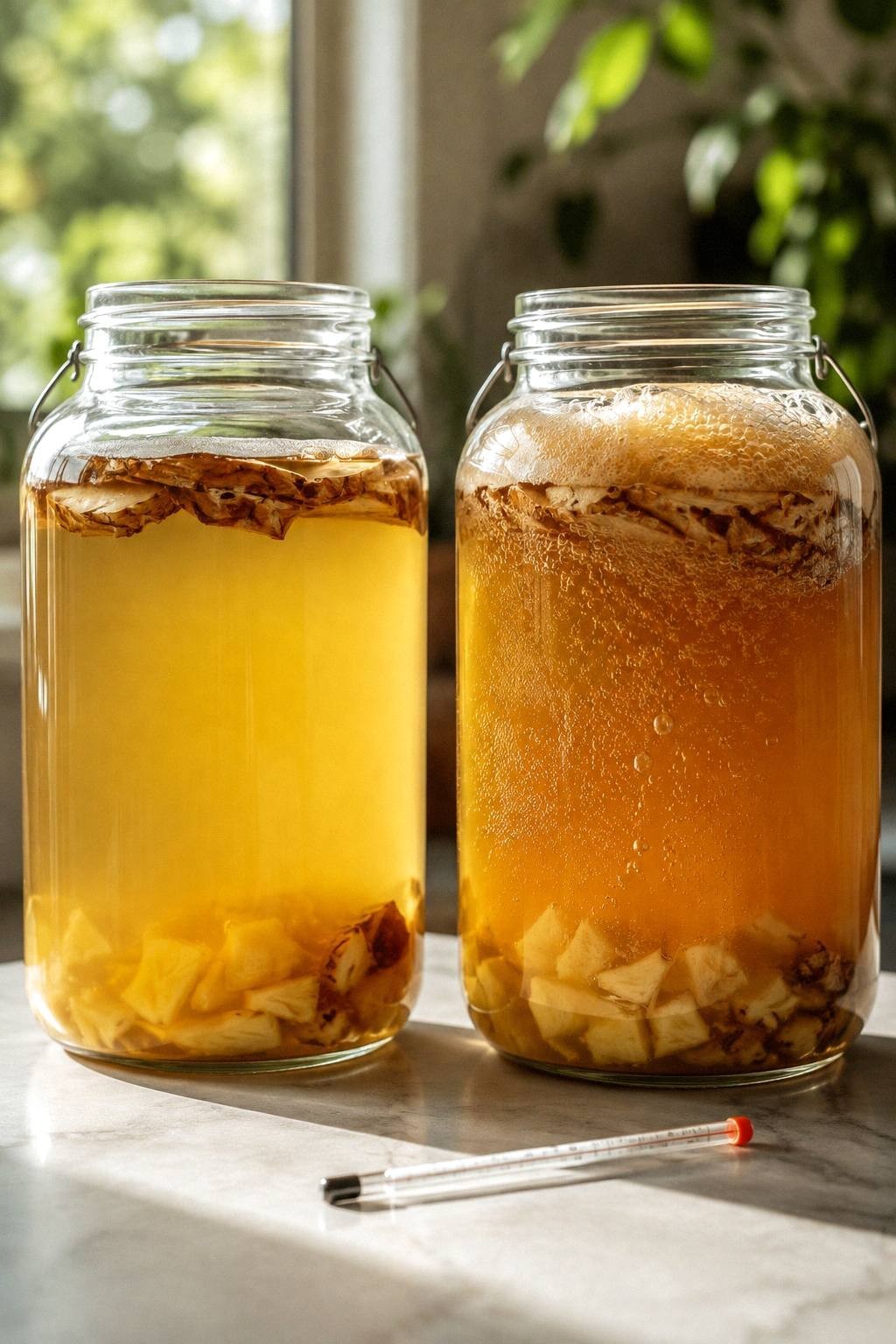
Tepache is often gentler than people expect. Some batches make obvious foam. Others show only tiny bubbles clinging to pineapple pieces or rising when you stir.
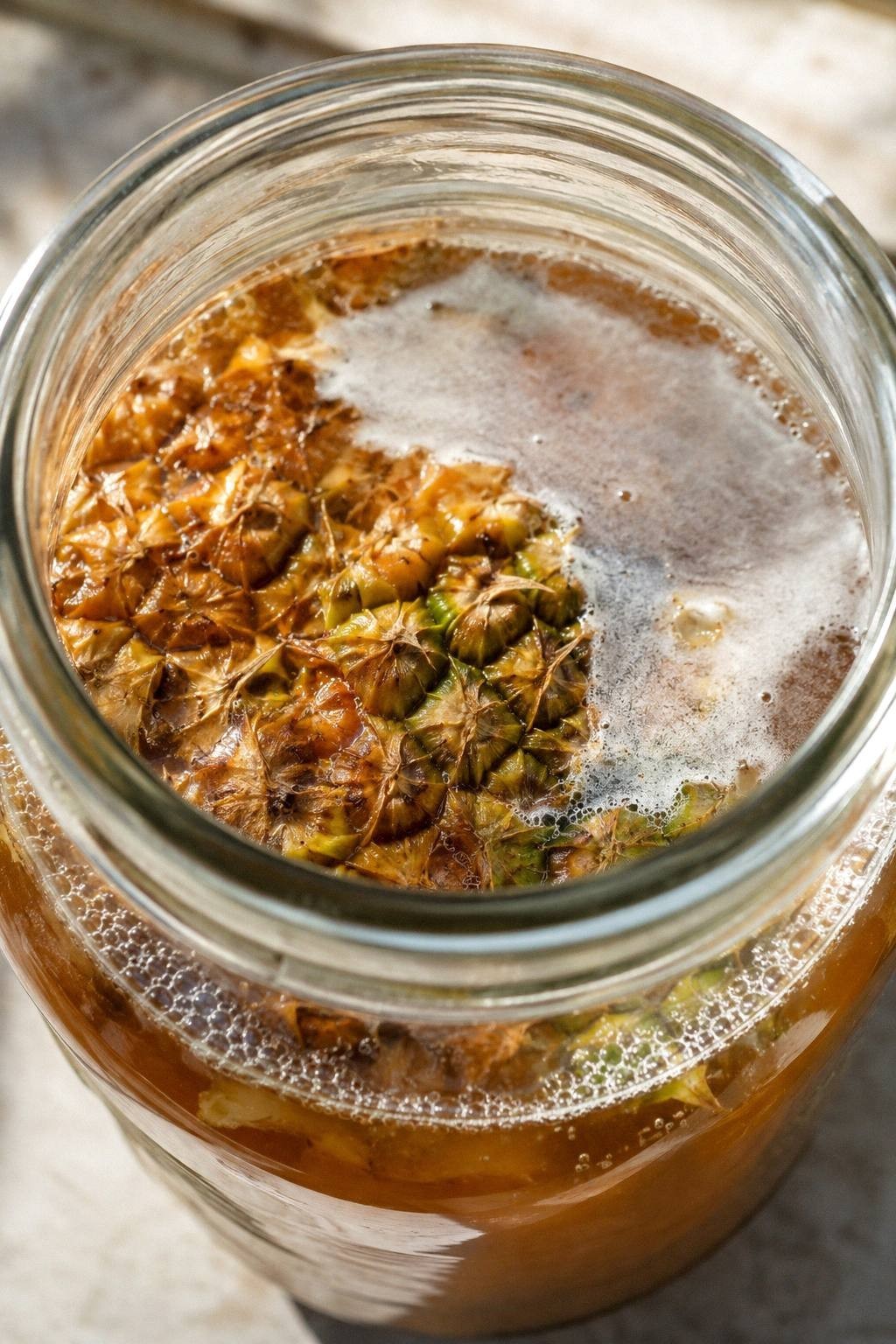
Taste tells you more than the foam does. If it smells like pineapple and tastes a little less sweet than yesterday, fermentation is happening.
If It Turned Slimy or Ropy Instead
Sometimes the problem is not that nothing happened, it is that the wrong thing did. A batch that pours thick, stringy or faintly slimy has been taken over by the kind of bacteria that thrive when a ferment is warm, low in acid and left alone too long at the start.
You cannot stir this one back. Slimy tepache goes down the drain. What prevents it next time is a faster, more acidic start: use enough sugar so the yeast gets going quickly, keep the rind fully submerged so the surface is not sitting in air, and do not leave the jar somewhere warm for the first day and then forget it. A ferment that gets moving in the first twenty-four hours rarely goes ropy.
Slime is different from the white film on top, which is usually kahm yeast and is harmless. If you are unsure which you are looking at, our guide on telling mold from kahm yeast walks through both.
When to Restart
Restart the batch if you see fuzzy mold, black or green patches, slime, or a rotten smell. A thin white film can be confusing, so use the visual guide to tepache mold vs kahm yeast before you guess.
If the jar is simply quiet, sweet, and clean-smelling, give it time. Tepache rewards patience for about a day, then starts punishing neglect.
Common Questions
Should I stir tepache if it is not bubbling?
Yes. Stir once a day with a clean spoon. This wets the fruit, moves sugar through the jar, and lets you smell the batch.
Can I add yeast to flat tepache?
You can, but it becomes a different drink. Tepache is usually a wild ferment. If you want the traditional flavor, fix temperature, sugar, water, and pineapple quality before adding packaged yeast.
Is tepache ruined if it does not bubble after one day?
No. One quiet day is normal. Judge the batch after 48 hours, and use smell and taste along with bubbles.
What should tepache smell like while fermenting?
It should smell fruity, sweet, lightly tangy, and a little yeasty. It should not smell rotten, musty, or like nail polish remover.