Not reliably. Pineapple brings some natural sugar, but every published tepache recipe we checked, from Rick Bayless to Bon Appétit to Allrecipes, adds sugar to the jar. That sugar is food for the wild yeasts on the pineapple skin. We haven’t found a reputable no-added-sugar method, so we don’t publish one.
What you can change is how sweet the finished glass tastes. Ferment it a little longer, or pour less and top it with sparkling water.
Why Tepache Needs Added Sugar
Tepache ferments on its own, with no starter. Food & Wine explains that the skins carry wild yeast and bacteria that turn sugar into alcohol, and that riper fruit, with more natural sugar, helps fermentation along.
Every recipe still counts on added sugar to keep the yeasts busy for the 2 to 4 days the drink needs. Cut it back and the jar has less to work with, which is one of the first things to check when tepache isn’t bubbling .
“No added sugar” and “sugar-free” also mean different things. Even a pineapple-only jar starts with the fruit’s own sugar, and fermentation never uses up all of it in a drink you stop while it still tastes sweet.

How Much Sugar Tepache Recipes Use
| Recipe | Sugar | Water |
|---|---|---|
| Our tepache recipe | 1 cup chopped piloncillo, or 3/4 cup brown sugar | 8 cups |
| Rick Bayless | 8 ounces piloncillo or dark brown sugar | 2 quarts |
| Allrecipes | 1 cup brown sugar | 8 cups |
| Bon Appétit | 1 cup turbinado sugar plus 1 cup chopped palm sugar | 8 cups |
Two quarts is the same 8 cups of water, so all four recipes are working at a similar scale. None of them gives a lower-sugar version, which is why we don’t suggest cutting the amount.
Which Sugar to Use
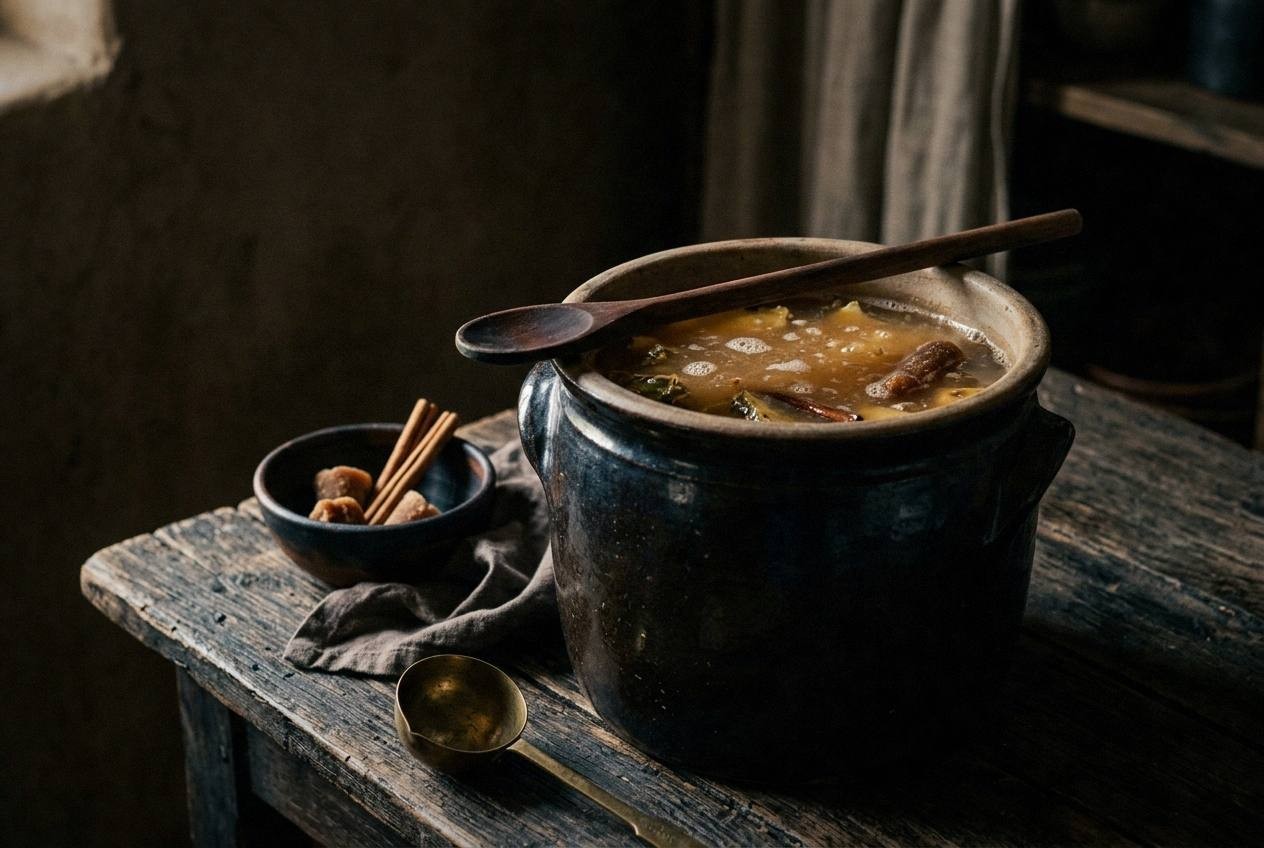
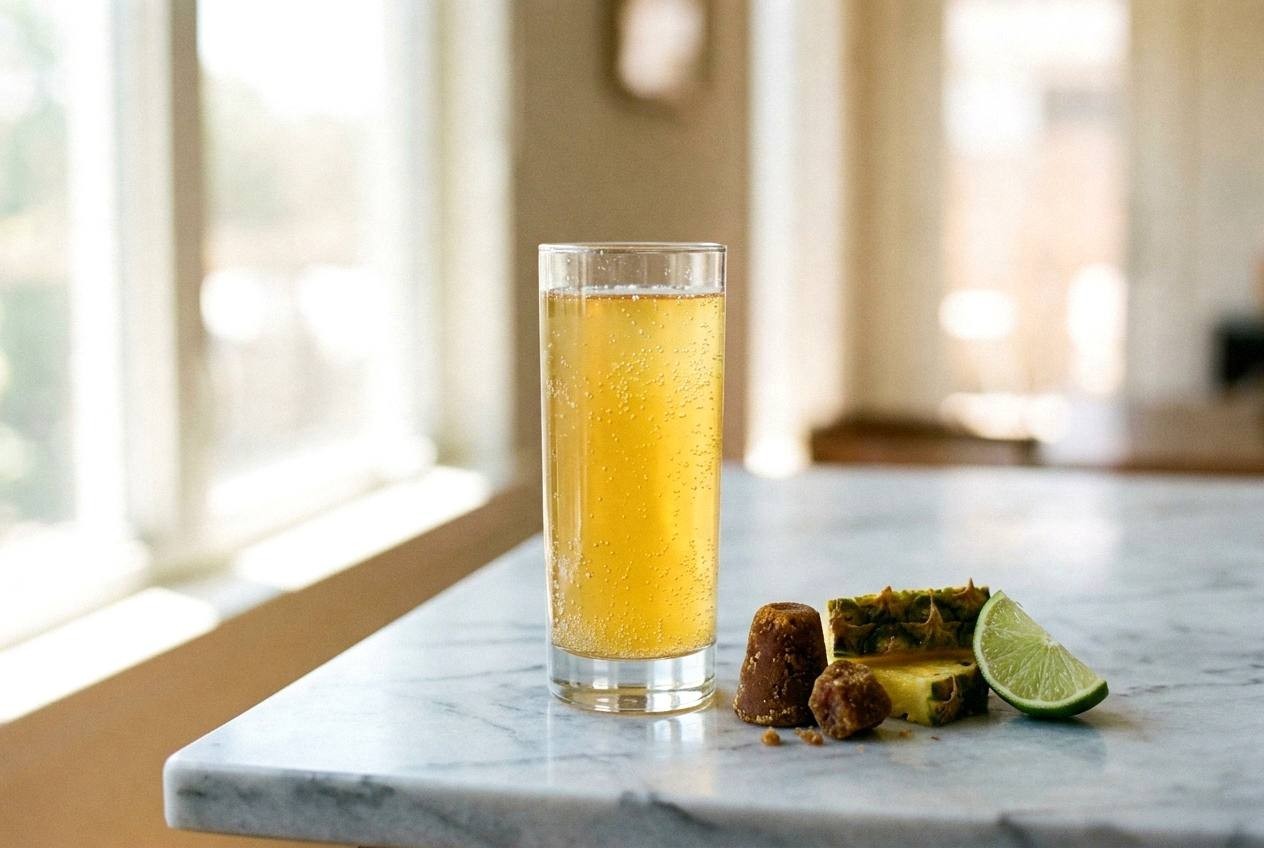
- Piloncillo is the traditional choice. It’s unrefined whole cane sugar, usually sold in cones at Latin markets. Food & Wine describes its flavor as running from smoky caramel and molasses to rum and coffee.
- Brown sugar is the easy swap. Our recipe and Allrecipes both use it, and Rick Bayless lists dark brown sugar as his alternative.
- Turbinado and palm sugar are what Bon Appétit uses.
- Stevia, monk fruit and other zero-calorie sweeteners sweeten the drink, but they aren’t the kind of sugar yeast can ferment. They won’t stand in for piloncillo.
- Honey and maple syrup don’t appear in any of the recipes we checked, so we can’t point you to a tested amount.
How to Make Tepache Less Sweet
- Let it ferment a little longer. Food & Wine quotes a tepache brewer who says to keep going if it’s too sweet and stop once it starts to sour. Rick Bayless gives his batch a day or two more if the flavor isn’t strong enough. The trade-off is that it gets tangier, and the alcohol depends partly on how long it ferments.
- Strain and chill it once it tastes right. Cold slows the ferment, so the sweetness drops much more slowly instead of racing toward vinegar.
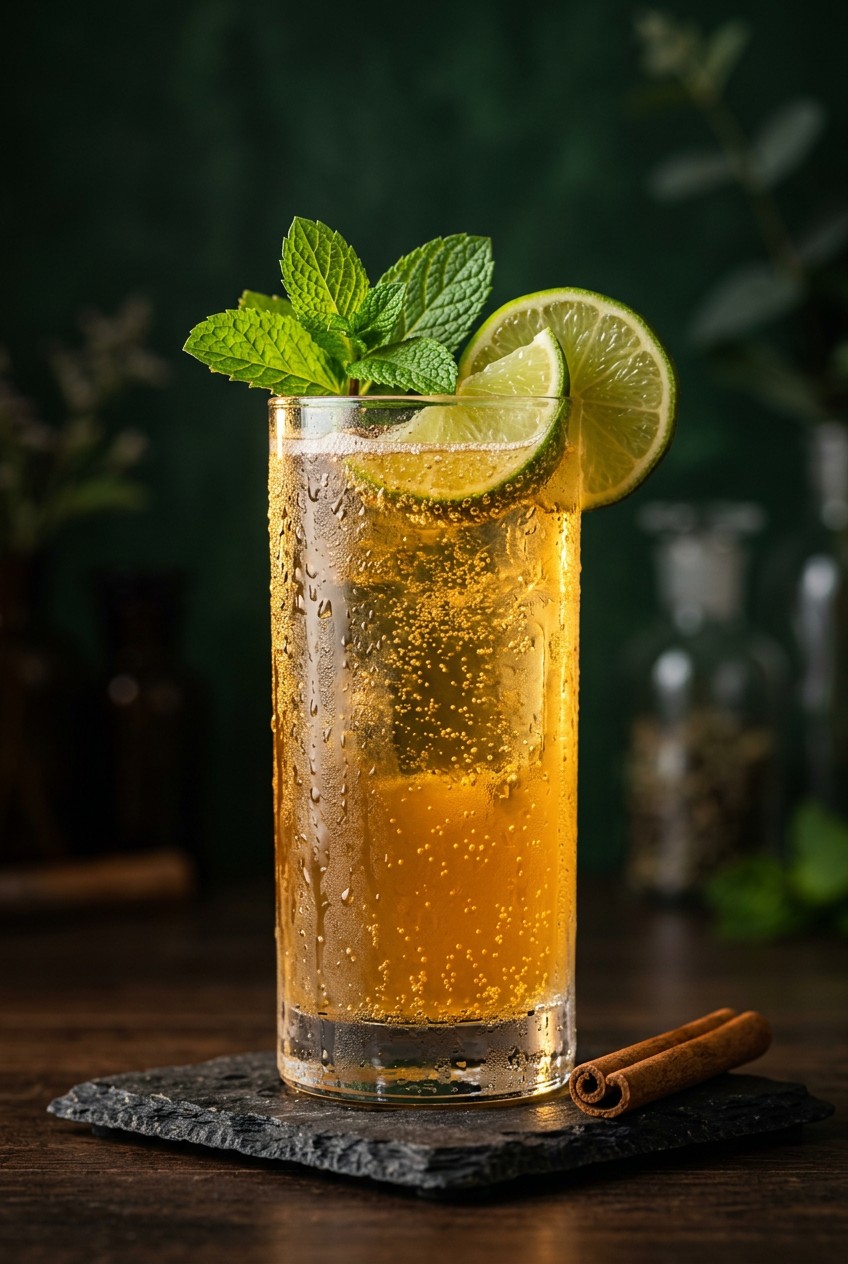
- Pour less and top it with sparkling water. You choose the strength glass by glass, and the batch itself stays the same.
- Add ice and a squeeze of lime. Lime sharpens the flavor so it reads less sugary.
Stop before it turns harsh. Food & Wine notes that tepache left too long becomes vinegar. That still makes a good salad dressing, but it’s no longer a drink you sip.

Does Tepache Still Have Sugar After Fermenting?
Yes. The yeasts eat some of it, but you stop tepache while it still tastes sweet and tangy, so sugar is left. If it tastes sweet, there’s sugar in it.
The longer it ferments, the less sweet it gets. Our fermentation timing guide shows how the flavor changes from day to day, and the storage guide explains why it keeps drying out slowly in the fridge.

Common Questions
Can tepache be sugar-free?
No. Pineapple itself contains sugar, and a fermenting drink you stop while it still tastes good has sugar left in it. You can make the glass less sweet, but not sugar-free.
Can I make tepache with pineapple and water only?
We don’t know of a reputable published recipe that does. Every one we checked adds sugar, so we can’t tell you how a pineapple-only batch will behave.
Can I use white sugar instead of piloncillo?
None of the recipes we checked uses plain white sugar. The closest is Bon Appétit’s turbinado. Brown sugar is the swap our recipe uses.
Can I make tepache without the pineapple skin?
The skin is where the wild yeast lives, according to Food & Wine, so leaving it out takes away what starts the ferment. Our recipe uses the rinds and core with a little fruit still attached.
Is tepache alcoholic?
Some, yes. Food & Wine puts typical tepache at around 2 to 3 percent alcohol, sometimes more or less, depending on fermentation time and how much sugar was in the fruit. Home batches aren’t measured.
Is fermented pineapple drink healthy?
We don’t make health claims for tepache. It’s a sweetened fermented drink with some alcohol in it. Our tepache benefits page covers why people enjoy making it. If a film shows up on your jar while it ferments, check tepache mold vs kahm yeast .