The Short Answer
Three to four weeks, and then taste it.
Oregon State University Extension’s guidance on flavored vinegars is the closest published standard to what a fire cider jar is doing. It has the vinegar conditioning in a cool dark place for 3 to 4 weeks to develop flavor, and it is specific about the shape of that curve: at least 10 days for most flavors to develop, about 3 to 4 weeks for optimum flavor.
That matches the window on the fire cider recipe exactly. Shake the jar when you remember, and start tasting near the three week mark.
The Three to Four Week Window
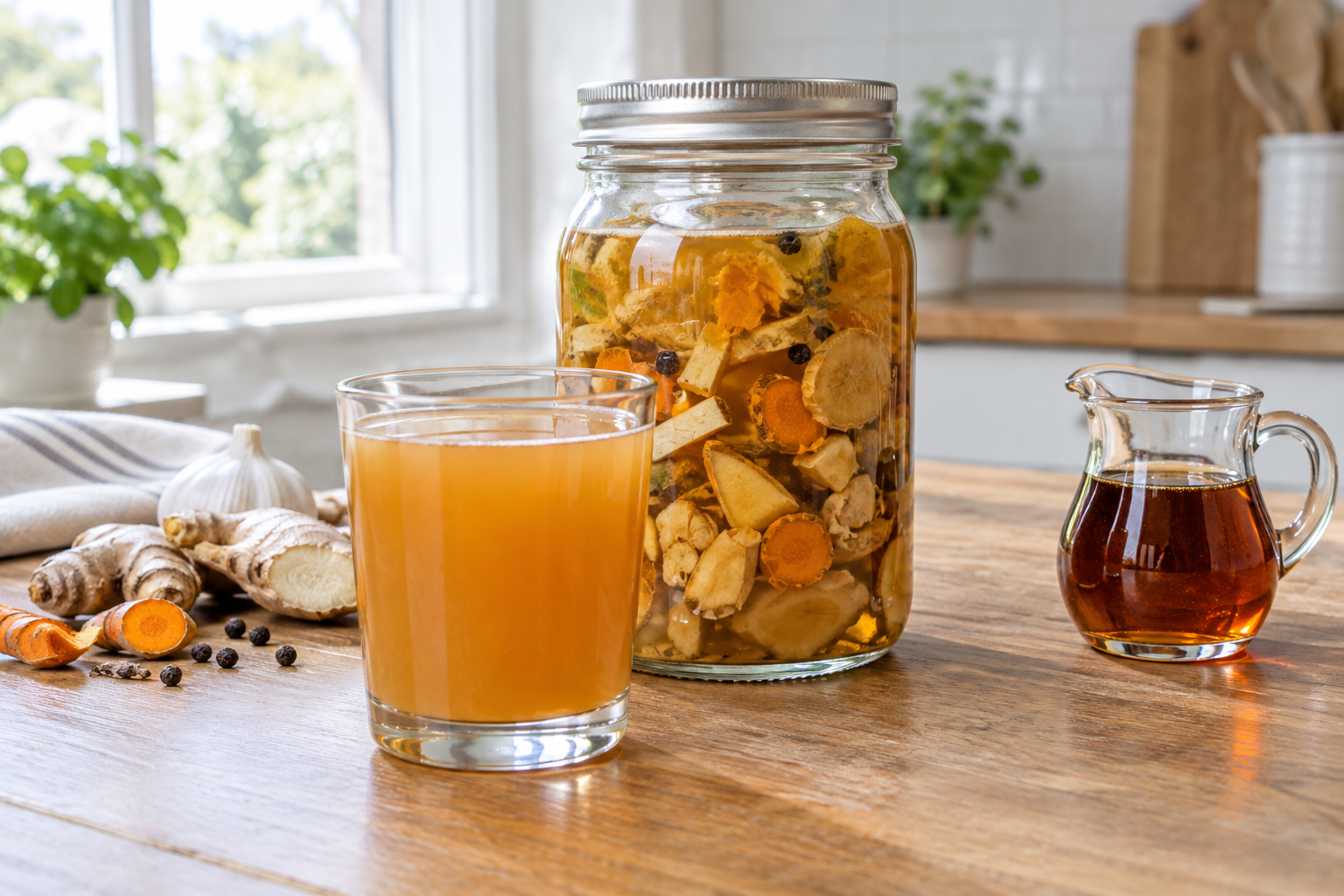
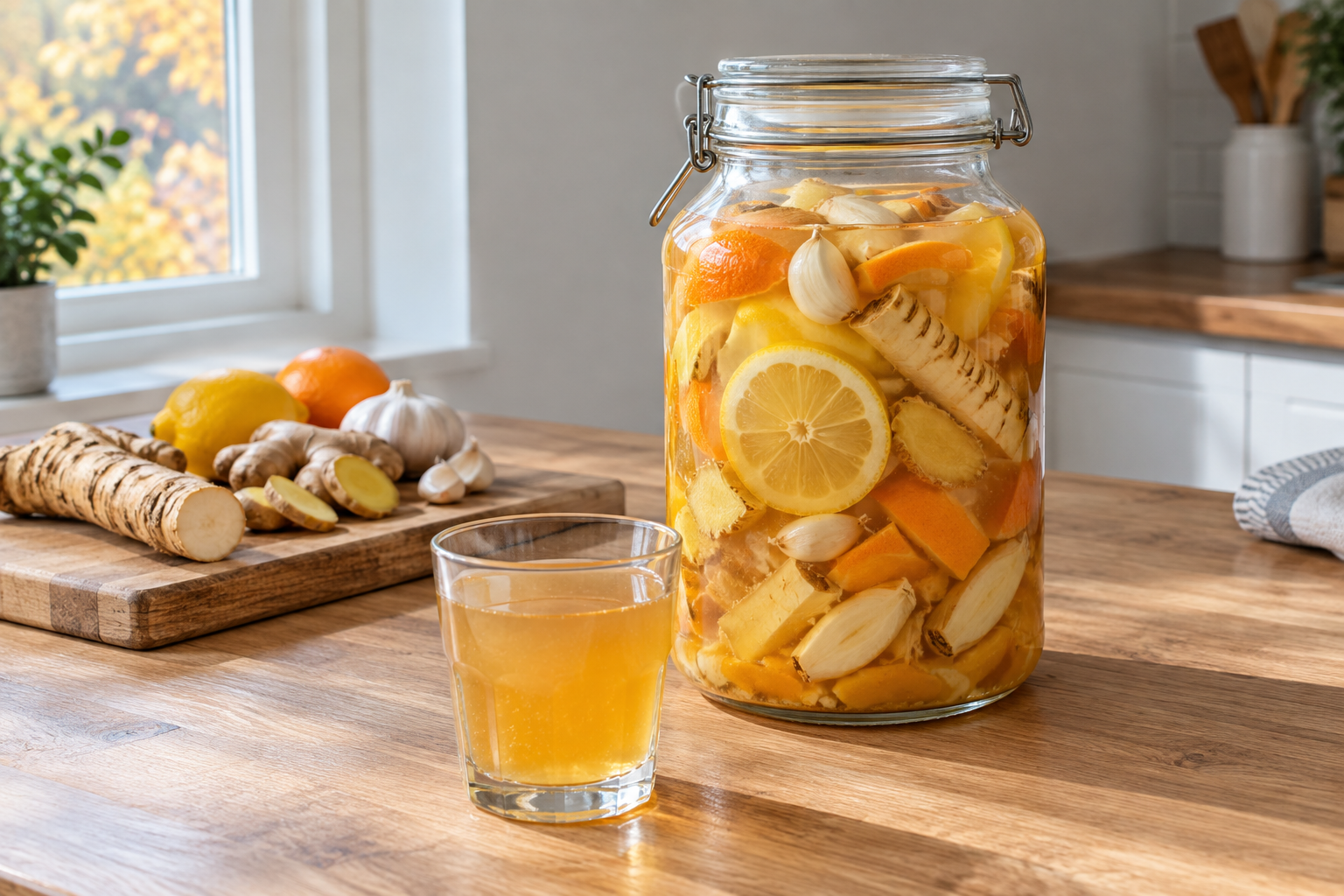
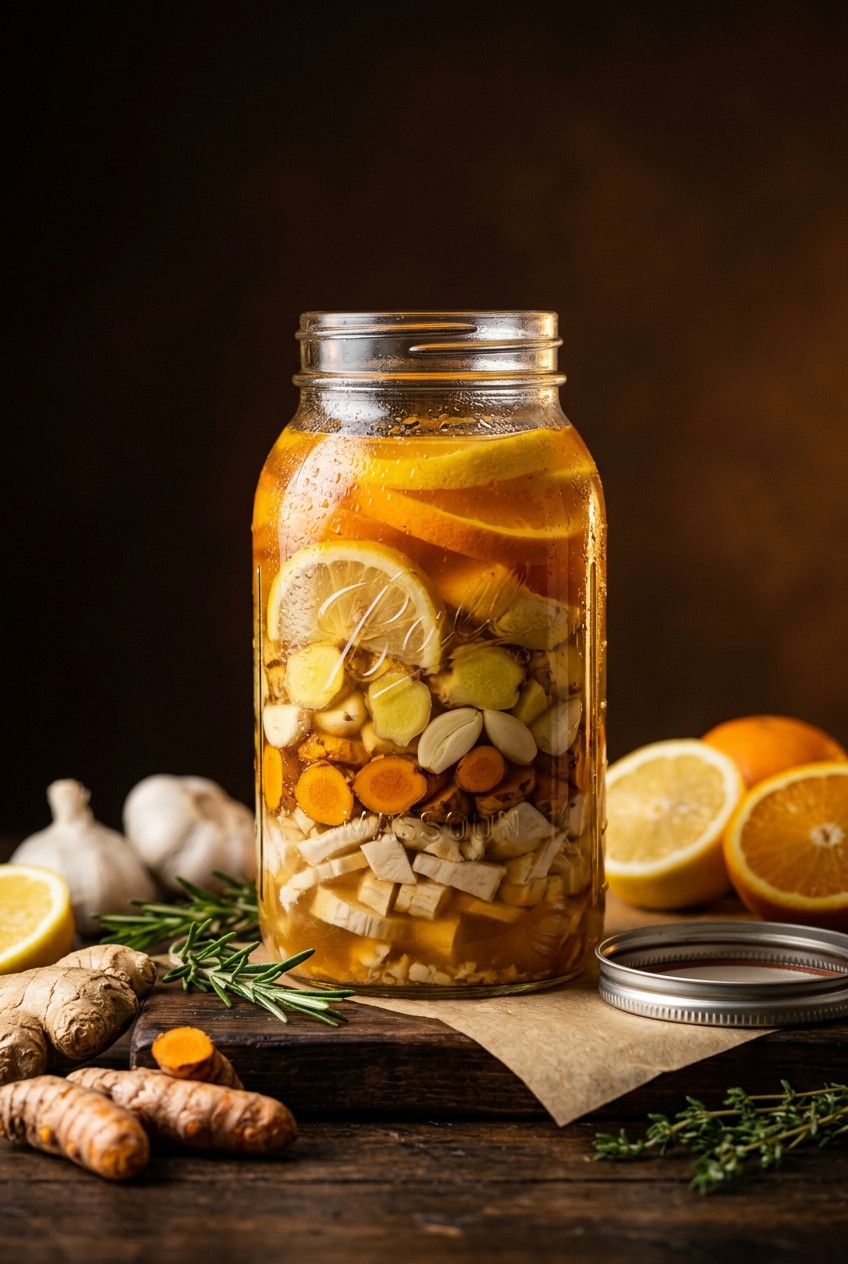
Fire cider is a slow extraction, not a fast one. Vinegar has to work its way into dense root tissue, and horseradish, ginger, turmeric, and garlic are all dense.
Here is what the jar tends to be doing:
| Week | What You See | What It Tastes Like |
|---|---|---|
| Day 1 | Label the start date; check that solids are submerged | Too early to judge flavor |
| Day 10 or later | Taste a few drops using bread or a sugar cube | Most flavors have begun to develop, per OSU Extension |
| Week 3 | Taste again and decide whether you like the balance | Often ready to strain |
| Week 4 | Strain if the flavor is where you want it | OSU’s typical optimum flavor window |
Nothing about that table is a deadline. It is a set of checkpoints.
How to Taste a Vinegar Without Wrecking Your Palate
Straight fire cider off a spoon at week three will tell you almost nothing, because the acid arrives before the flavor does and your mouth shuts down.
Oregon State suggests putting a few drops of vinegar onto plain white bread or a sugar cube to judge flavor without taking a large acidic sip. Use a clean spoon to transfer the sample; do not dip food into the storage jar.
Both tricks buffer the acid just enough that you can actually read what is underneath it: how much garlic, how much horseradish, whether the citrus survived, whether the turmeric came through as earth or as nothing.
What Ready Tastes Like
You are listening for layers rather than intensity.
An unfinished batch tastes like vinegar with heat behind it. A finished one tastes like several things at once: the sweetness of the onion, the citrus peel, the round warmth of ginger, the sinus edge of horseradish, and the vinegar underneath all of it rather than on top.
Strain when you like the balance of vinegar, root heat and aromatics. Color alone is not a reliable readiness test.
Can You Strain It Early?
Yes, provided the jar has stayed clean and the ingredients submerged. If mold, bubbling, unexpected cloudiness or slime develops, discard it rather than straining and saving it.
If you like the flavor at two weeks, you can strain then. Oregon State’s 10-day observation describes flavor development, not a validated safety threshold.
The one time I would push past your instinct is a cold kitchen. A jar in a cool winter cupboard extracts more slowly than one in a warm pantry, so give it the extra week.
Can You Leave It Longer?
Also yes, within reason. Oregon State’s own instruction if the flavor seems weak is simply to let it steep longer.
What you get from a long infusion is more of everything, including the parts that were already loud. Garlic in particular keeps pushing. A six week jar can come out with a real garlic dominance that a four week jar would not have had, and horseradish keeps grinding away at your sinuses.
If that has already happened to you, the fix is in fire cider too spicy .
Keep Everything Under the Liquid
This is the only rule during infusion that is not about taste. Anything sticking up above the vinegar is exposed, and exposed is where fuzzy growth starts.
Check the jar each time you shake it. If the roots have settled and something is poking out, push it down or top up with more vinegar. A weight or a small clean jar dropped in as a follower works too.
Oregon State and Penn State both treat mold, bubbling, cloudiness, or sliminess in a flavored vinegar as a discard signal, not something to skim around. Penn State’s page on flavored vinegars is direct about it: throw it away without using or tasting.
The Straining Method
Straining day is quick if you set up first.
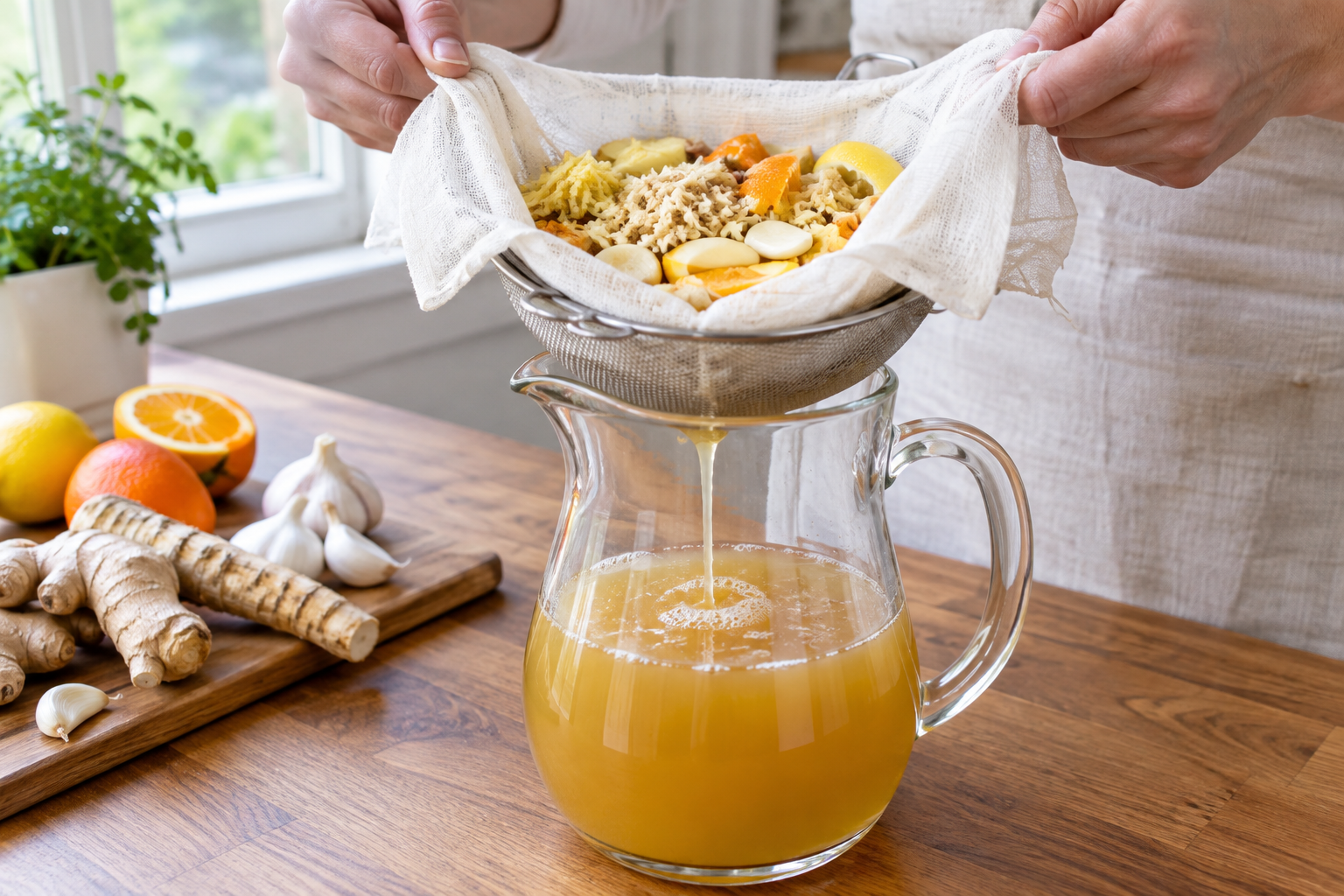
- Set a fine mesh strainer over a large bowl and line it with damp cheesecloth, a jelly bag, or a coffee filter.
- Pour the whole jar through, roots and all.
- Let it drip on its own for a few minutes before you touch it.
- Let the vinegar drain, then press the solids gently if you want more yield; pressing can add sediment.
- Look at the bowl. Oregon State’s standard is to strain one or more times until the vinegar shows no sign of cloudiness, so if it is murky, run it through a fresh filter again.
- Pour into clean sterilized bottles and cap tightly.
Dampening the cloth first matters more than it sounds like it should. A dry cheesecloth drinks a surprising amount of your batch.
When the Sweetener Goes In
After straining, not before. The recipe stirs it into the strained liquid so it dissolves evenly and you can taste as you go.
Doing it before you strain means sweetening a jar full of solids you are about to throw away. If you are using something other than honey, the swaps are in fire cider without honey .
What to Do With the Strained Solids
Discard or compost the spent solids. After several weeks of room-temperature infusion, this recipe does not establish a separate safe storage method for the pulp. Keep the strained vinegar, not a second jar of wet solids.
After You Strain
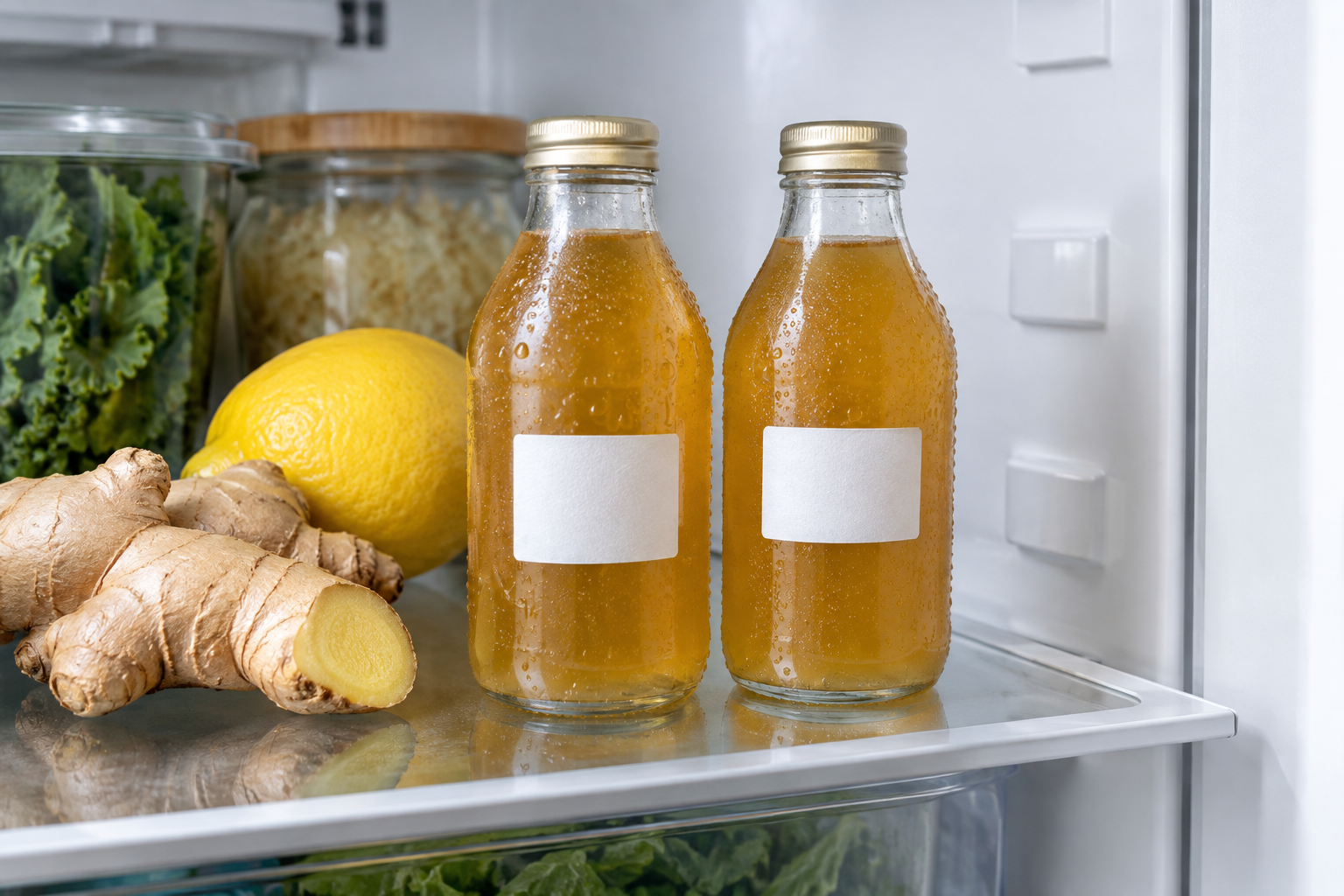
The bottle goes in the fridge and a different clock starts. Storage timing and the signs a bottle has turned are in how long does fire cider last .
Write the strain date on the bottle before it goes in the door. You will not remember.
Common Questions
How long should fire cider infuse?
Three to four weeks is the standard window and the one the recipe uses. Oregon State Extension puts most flavor development at ten days minimum and optimum flavor at 3 to 4 weeks.
Do I have to shake the jar every day?
Daily is ideal but not critical. Shaking moves vinegar through the packed roots and gives you a reason to check that nothing has floated above the liquid line.
Can I leave the ingredients in and just pour from the jar?
You can, but the flavor keeps shifting and the exposed solids near the top become a problem as the level drops. Straining into a bottle gives you a stable product and a storage window you can actually track.
Should I strain fire cider hot?
No. This is a cold infusion from start to finish. Heating it would drive off the aromatics you spent a month extracting.
My vinegar came out cloudy after straining. Did I ruin it?
Fine sediment immediately after pressing can cause haze; filter again. If cloudiness develops unexpectedly later, or accompanies bubbling, slime or mold, follow Penn State Extension’s discard advice and do not taste it.
Can fire cider sit too long before straining?
The 3 to 4 week range is a flavor target, not permission to leave solids in indefinitely. If you miss the date, inspect the jar for spoilage before handling it, then strain once the flavor is satisfactory. Do not use a jar with mold, bubbling, new cloudiness or slime.