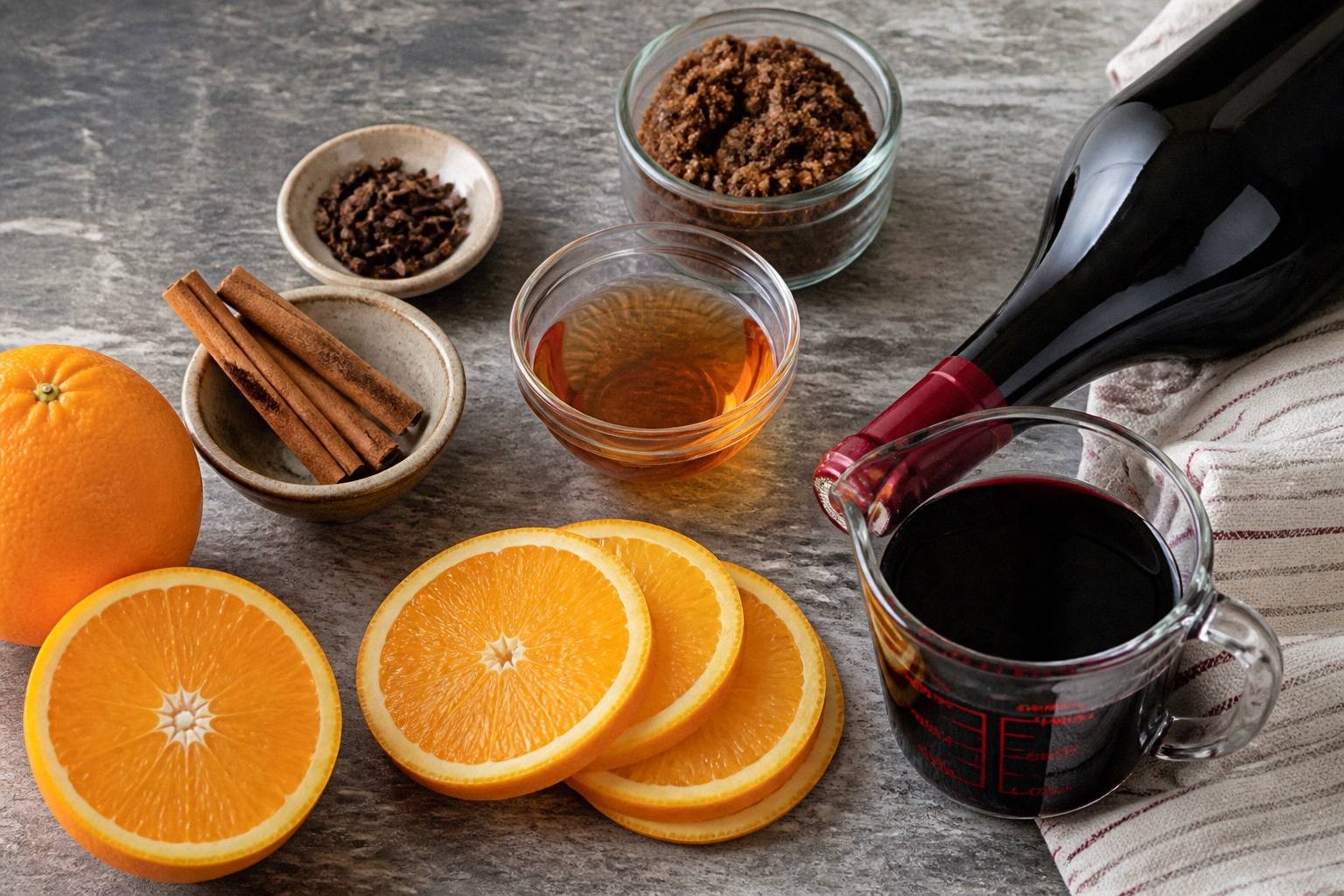
The Short Answer
Four causes account for nearly every bitter batch. You let it boil. The whole spices sat in the pot too long. Orange pith went in with the fruit. Or the wine was tannic and oaky before it ever met heat.
The good news is that the first three are fixable in the moment, and the fourth is fixable next time at the shop.
The base method is in the mulled wine recipe for Christmas , which keeps the pot below a simmer and takes only the colored zest from the oranges for exactly these reasons.
Find Your Cause
| What You Taste | Likely Cause | Fix |
|---|---|---|
| Sharp, thin, hot-tasting | You boiled it | Add sweetener, dilute with fresh wine |
| Medicinal, numbing | Cloves steeped too long | Strain now, dilute, add citrus |
| Dry, puckering, drying finish | Tannic or oaky wine | Sweeten, add juice, change wine next time |
| Sour bitter with a rind edge | Orange pith in the pot | Strain, sweeten, remove fruit |
| Dusty, gritty, muddy | Ground spices instead of whole | Strain through cloth, next time use whole |
| Bitter on day two | Spices left in during storage | Strain before storing |
| Bitter after reheating | Second extraction on the same spices | Strain before every reheat |
1. You Let It Boil
This is the most common cause by a wide margin. A rolling boil drives off the aromatic compounds that make the drink taste warm and fruity, and what stays behind is acid and tannin with nothing to balance them.
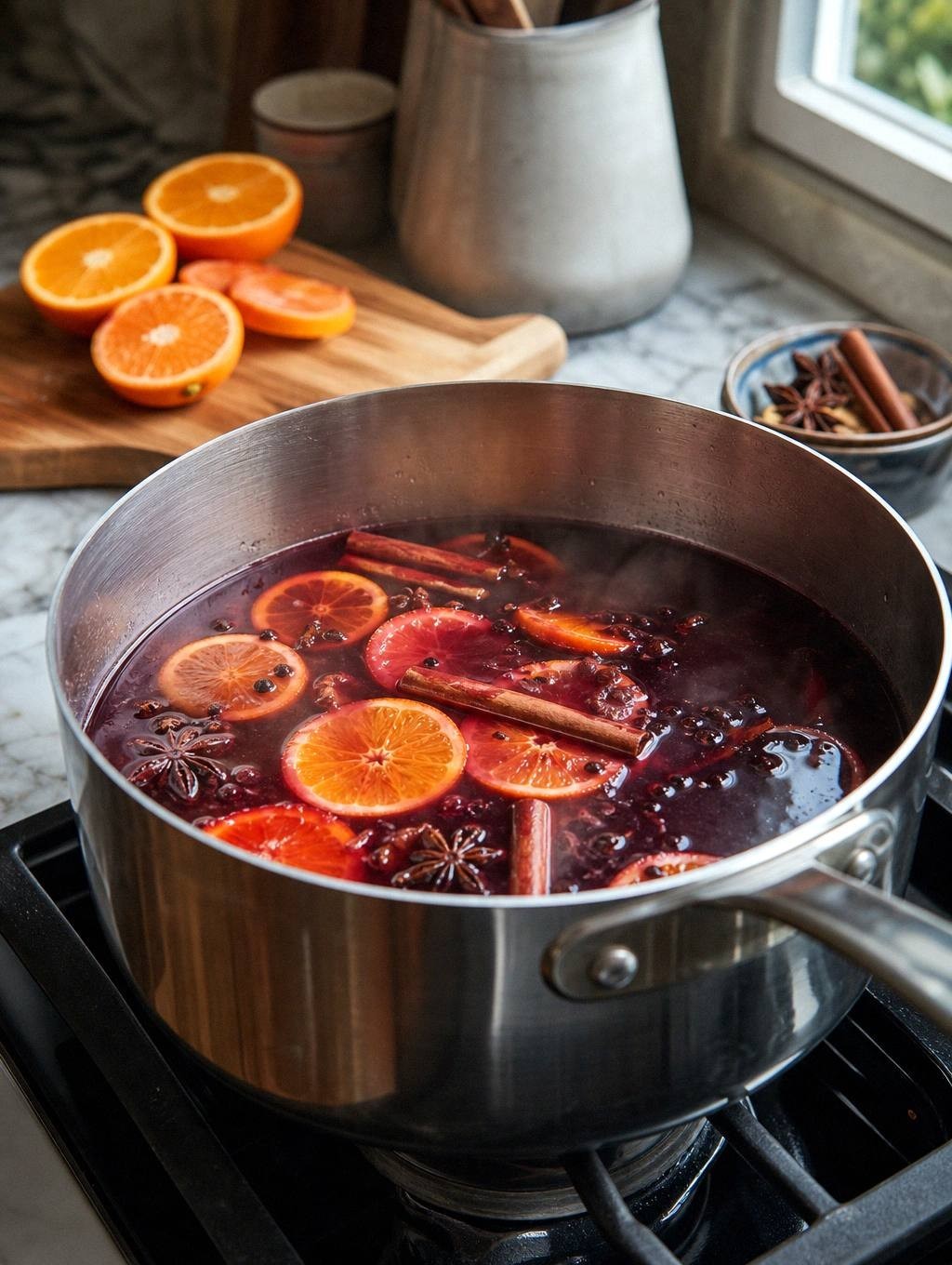
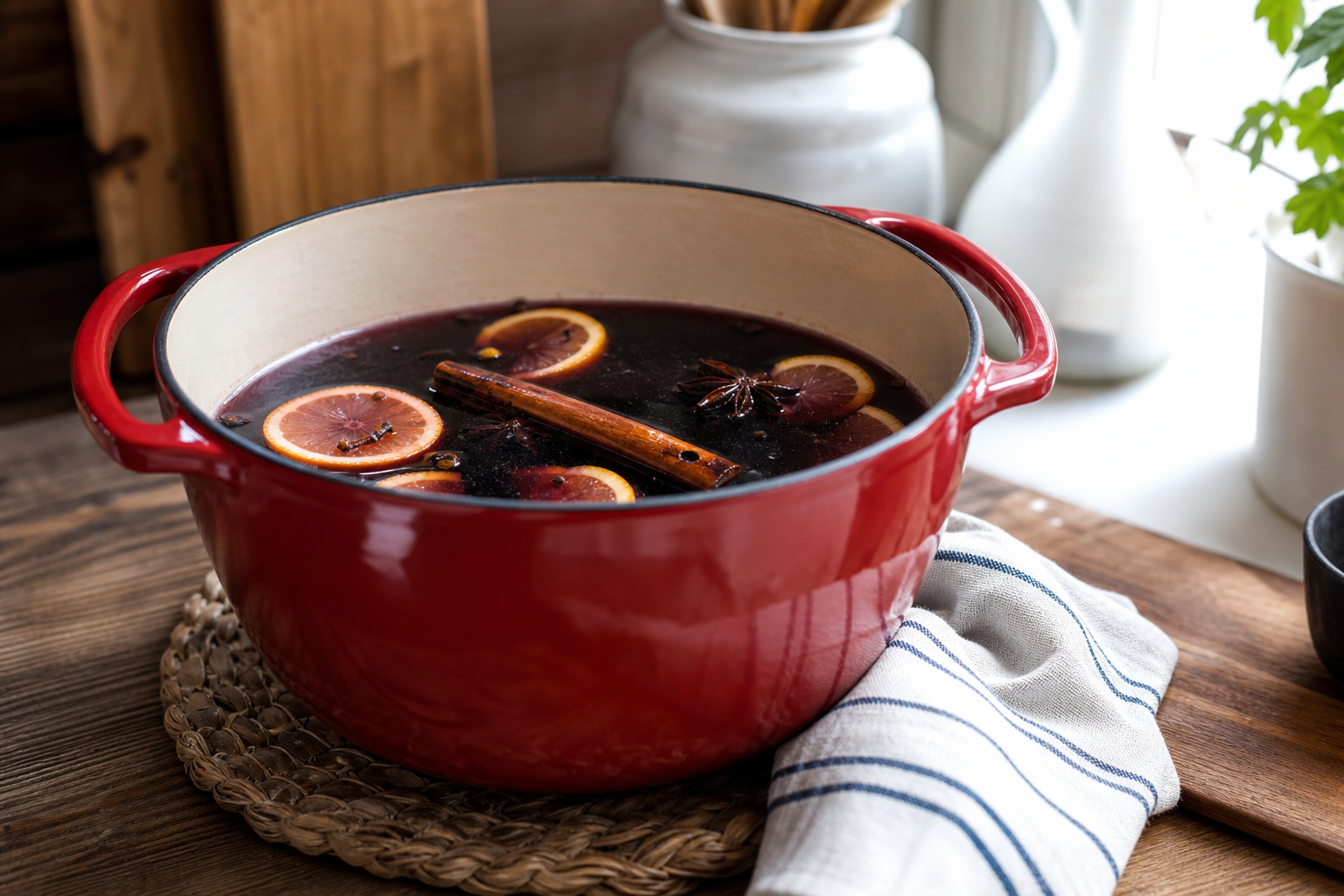
The visual cue is small. You want steam and the first faint bubbles at the edge of the pan, and nothing more. The moment a stream of bubbles climbs from the middle, you have gone past it.
The rescue: pull it off the heat, stir in more sweetener a little at a time, and if you have another bottle open, add some fresh unheated wine to bring back the fruit.
2. The Cloves Steeped Too Long
Clove is the loudest spice in the pot and it does not know when to stop. Left in for an hour, it turns the drink medicinal and slightly numbing, and that numbing quality reads to most people as bitterness.
Star anise behaves the same way at a lower volume, and both get worse in storage because they carry on extracting cold.
The rescue: strain immediately, then dilute with fresh wine or juice and add a squeeze of citrus to pull the flavor forward again.
3. Orange Pith Went In
The white layer under the peel is bitter, and heat pulls that bitterness straight into the wine. Sliced orange rounds carry a lot of pith. Peeled zest strips carry almost none.
The hub recipe handles this by taking the peel off in strips and juicing that orange, keeping the sliced rounds back as a garnish rather than an ingredient.
The rescue: fish out every piece of fruit right now. The longer it sits, the more it gives up. Then sweeten to cover what is already in there.
4. The Wine Was Wrong to Start
Tannin is what makes red wine feel drying. Heat makes it more noticeable, and sugar is the only thing pushing back. Start with a firm, tannic, or heavily oaked bottle and you are behind before the spices go in.
Oak is the other half of this. Vanilla and toasted wood taste odd next to clove and cinnamon, and that oddness gets described as bitter even when the tannin is fine.
The rescue for the current pot is sugar and juice. The rescue for next time is at the shelf, and the best wine for mulled wine covers which grapes stay soft under heat.
5. You Reheated It With the Spices In
Leaving the spices in through storage and then reheating gives them a second full extraction on top of the first. A batch that tasted balanced on day one comes back sharp on day two, and people blame the reheating rather than the passengers.
Strain before you store, and strain again before you reheat if anything slipped through. Method in can you reheat mulled wine .
6. There Is Not Enough Sweetener
Sugar is not only there for sweetness. It balances acid and softens tannin, which is why an undersweetened batch reads as harsh rather than simply dry.
Add sweetener in stages and taste after each addition, because you cannot take it back out. If you already went too far the other way, more wine is the only real fix.
7. You Used Ground Spices
Ground cinnamon and ground clove release everything at once and leave a fine sediment that never settles. The result tastes dusty and muddy, and that muddiness sits on the palate like bitterness.
Whole spices give you a slower, cleaner extraction and they come out with a strainer. If you have already used ground spice, pour the batch through a coffee filter or a cloth-lined sieve and accept that it will be quieter than intended.
Rescuing a Bitter Batch, in Order
- Strain everything out. Spices, peel, fruit, all of it.
- Taste. Decide whether it is sharp, medicinal, or drying.
- Add sweetener in small amounts, tasting after each.
- Add fresh unheated wine or juice to dilute and bring back fruit.
- Add a squeeze of fresh orange, and only the juice.
- Reheat gently, only back to steaming.
- Garnish with fresh citrus, because the aroma does real work.
If it is still harsh after that, the wine was the problem and no amount of sugar will hide it.
The Versions That Do Not Go Bitter This Way
Non-alcoholic mulled wine has no tannin to sharpen, so pith and long clove steeps are the only bitterness routes left. Mulled apple cider is the same, with the extra advantage that cider carries more natural sweetness to push back with.
If you keep landing on bitter red batches, running a juice pot alongside is a reasonable way to keep everyone happy while you work it out.
Preventing It Next Time
Buy fruity and unoaked. Use whole spices. Take only the colored zest. Keep the pot below a simmer. Taste at fifteen minutes and strain when it is right rather than when the clock says so.
And strain before storing, which is the single habit that saves the most batches. Details in how long does mulled wine last .
Common Questions
Why does my mulled wine taste bitter?
Usually boiling, an over-long clove steep, orange pith in the pot, or a tannic and oaky wine. Taste for sharp, medicinal, or drying to work out which one you hit.
How do you fix bitter mulled wine?
Strain everything out, sweeten in stages, dilute with fresh wine or juice, add a squeeze of orange juice, and reheat only to steaming.
Does boiling mulled wine make it bitter?
Yes. Boiling drives off the aromatics that balance the drink and leaves acid and tannin behind, which tastes sharp and thin.
Can too many cloves make mulled wine bitter?
Yes. Clove is the strongest spice in the pot and turns medicinal and numbing when it steeps too long. Strain it out as soon as the flavor is right.
Should I use orange slices or orange peel?
Peel, taken as strips of the colored zest only. Sliced rounds bring the white pith with them, and pith is bitter once heated.
Why is my mulled wine bitter the next day?
Because the spices stayed in. They keep extracting in the fridge. Strain before storing and day two tastes rounder than day one.