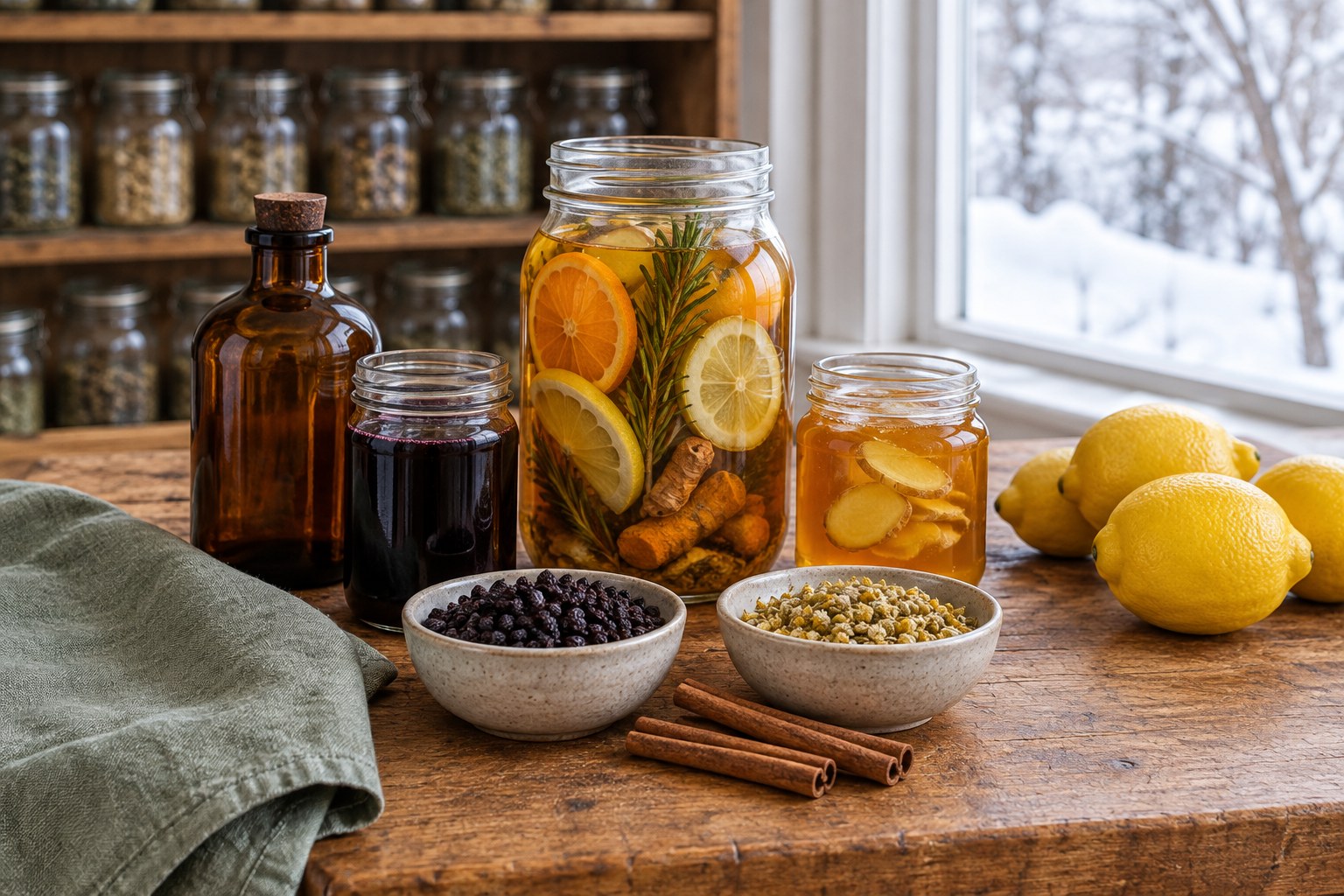
A real winter home apothecary isn’t forty dusty jars of obscure roots you never touch. It’s a tight, practical shelf of ten kitchen preparations you’ll actually reach for between November and March: tart vinegar tonics, spiced elderberry syrup, soothing evening teas, rich salve for cracked knuckles, and a stovetop pot that freshens stale winter air.
If you’re building your shelf from scratch, pair this recipe hub with our beginner apothecary shelf checklist so you only buy jars, herbs, and tools you’ll use all winter.
Kitchen safety note: These are traditional food, tea, and body-care preparations, not medical treatments. Never give honey to children under 1 year old (per CDC guidance ), and check with a pharmacist or clinician before combining concentrated herbs with prescription medications.
Affiliate note: The apothecary jars, strainers, and tea tools below contain Amazon affiliate links. If you buy through them, we may earn a small commission at no extra cost to you.
Winter Home Apothecary Comparison & Storage Guide
| Recipe | Prep / Steep Time | Base Ingredients | Where to Store | Typical Fridge / Shelf Window |
|---|---|---|---|---|
| 1. Fire Cider Vinegar | 10 to 30 days steep | 5% apple cider vinegar, roots, citrus | Cool dark pantry or fridge | Check recipe-specific acidity rules |
| 2. Elderberry Syrup | 45 min simmer | Dried elderberries, water, spices, honey | Refrigerate (or freeze cubes) | Refrigerate promptly; freeze extra |
| 3. Citrus Ginger Oxymel | 2 to 4 weeks steep | Raw ACV, raw honey, orange peel, ginger | Cool dark spot, then fridge | Strain into clean glass bottle |
| 4. Ginger Lemon Honey Tea | 15 min steep | Fresh ginger, lemons, tea bags, honey | Sealed pitcher in fridge | Up to 3 days refrigerated |
| 5. Mallow Root Tea | 15 min hot or overnight cold | Marshmallow root, chamomile, fennel | Brew fresh (or chill 24 hrs) | Best within 24 hours chilled |
| 6. Golden Milk | 10 min simmer | Coconut/almond milk, turmeric, ginger, pepper | Covered jar in fridge | Reheat gently within 2 to 3 days |
| 7. Elderberry Thyme Tea | 20 min simmer + steep | Dried elderberries, ginger, thyme, rosemary | Brew fresh by the mug | Drink warm the same day |
| 8. Calendula Hand Salve | 1-5 hr warm or 2-3 wk slow oil | Dried calendula, carrier oil, beeswax | Tightly capped tins away from heat | Keep water out for longest life |
| 9. Lavender Bath Salts | 5 min mix | Epsom salt, dried lavender blossoms | Airtight glass jar out of humidity | Keep sealed to hold scent |
| 10. Christmas Simmer Pot | 2 min prep, slow simmer | Cinnamon sticks, cloves, dried orange, rosemary | Refrigerate solids between uses | Reuse solids 2 to 3 days |
Part 1: Vinegar Tonics & Kitchen Syrups (Make Ahead)
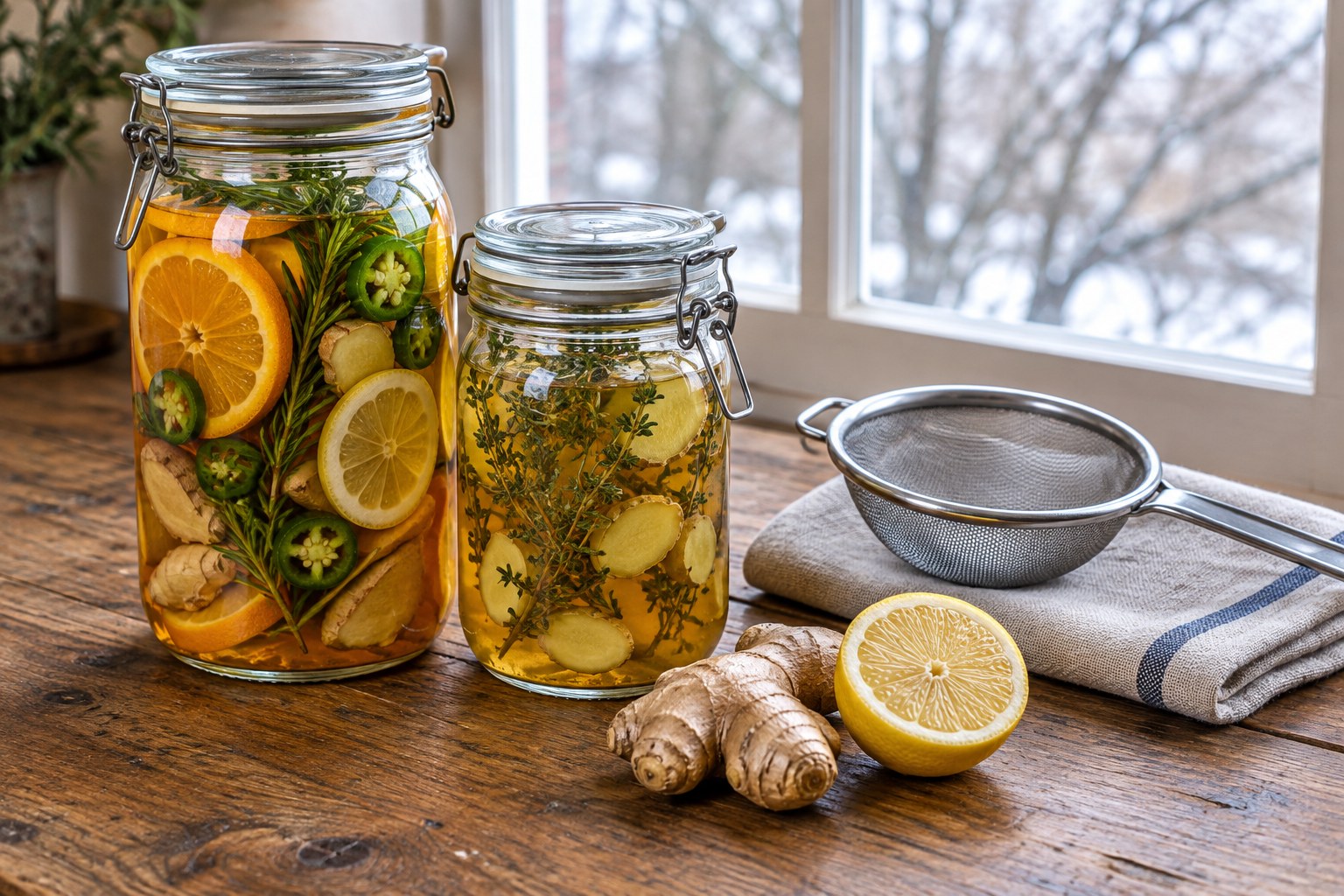
1. Fire Cider (Spiced Flavored Vinegar)
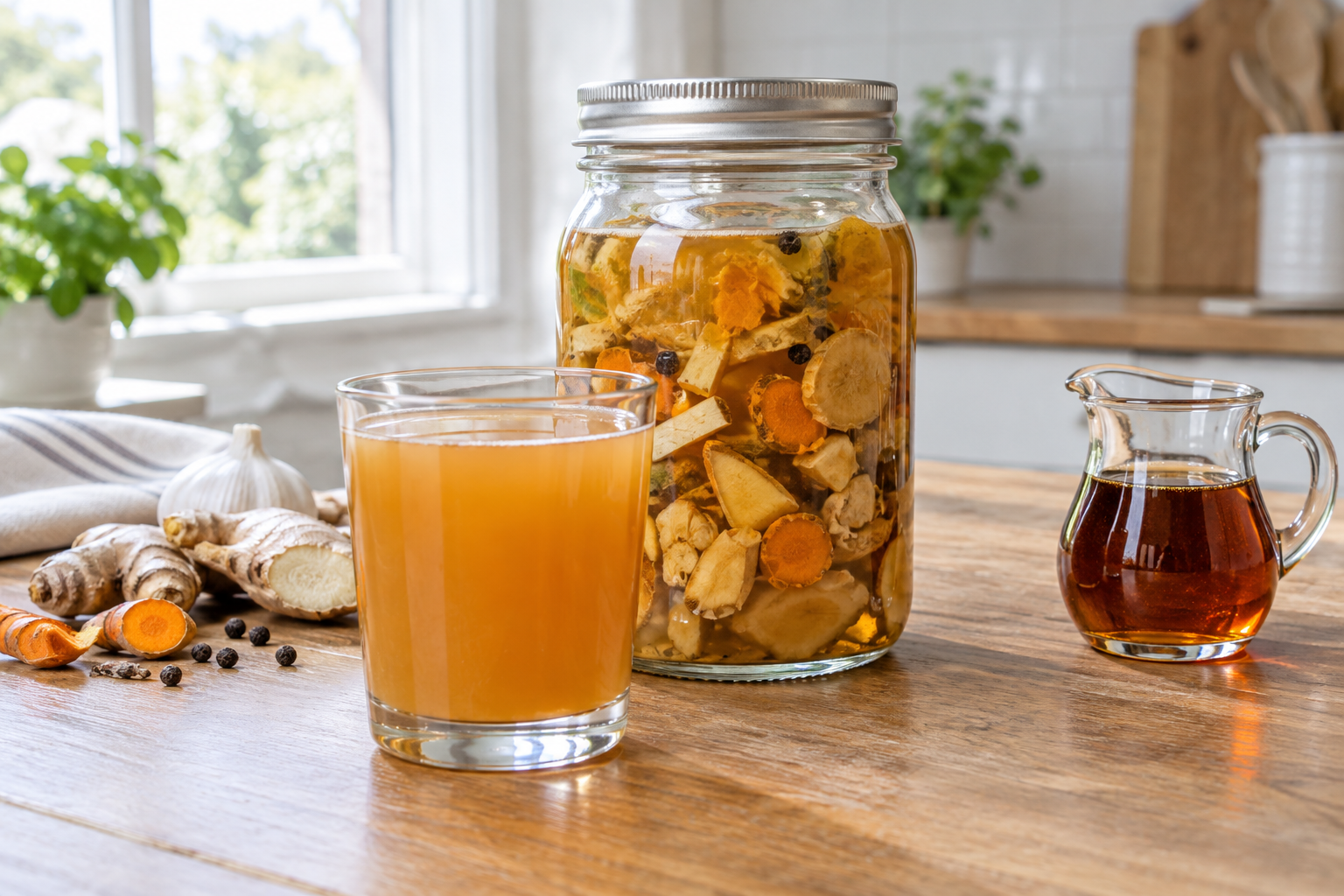
Fire cider is the bright, punchy vinegar infusion at the heart of nearly every winter pantry. Thinly sliced roots, aromatics, and citrus steep in standard 5% acidity apple cider vinegar for 10 to 30 days before straining cleanly through fine mesh.
- Core ratio: 1 cup washed, thinly sliced fruit and vegetables (such as onion, garlic, ginger, or citrus) to 2 cups 5% apple cider vinegar.
- Key storage habit: Never dilute the storage bottle with water, and stir honey into your individual serving glass rather than the main bottle if following extension-style flavored vinegar rules. Use a rust-free lid so vinegar never corrodes metal.
- Full step-by-step guides: Fire Cider: A Flavored Vinegar Guide , When to Strain Fire Cider , and How Long Does Fire Cider Last? .
2. Citrus & Ginger Winter Oxymel
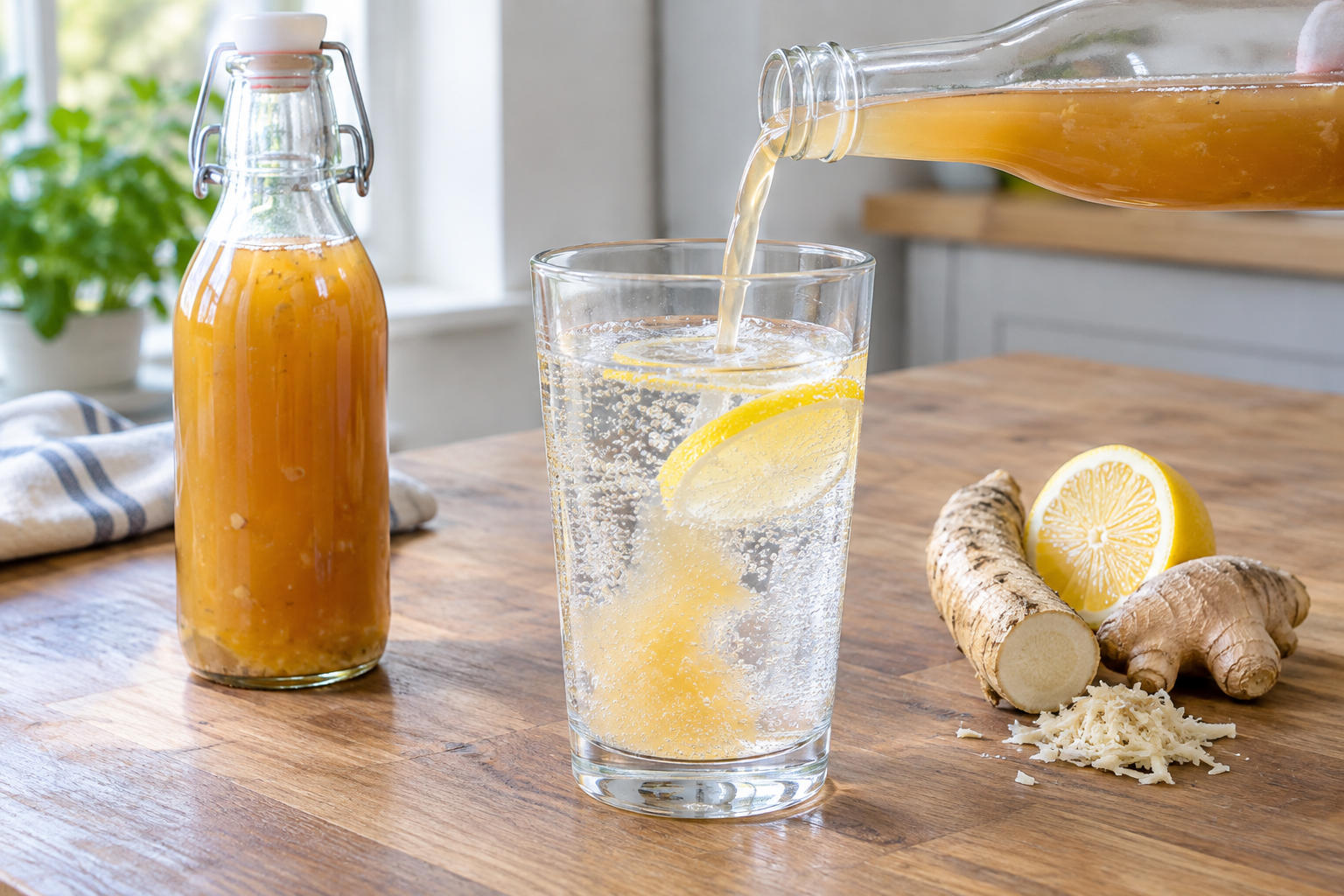
An oxymel blends raw apple cider vinegar and raw honey in the same jar before steeping over aromatics, giving you a tangy-sweet spoonful you can stir into warm water or sparkling club soda.
- Core ratio: 1 cup dried organic orange peel, 1/2 cup sliced fresh ginger, 1 cup raw apple cider vinegar, and 1/2 cup raw honey.
- Why make it alongside fire cider: It skips onion and garlic completely, so guests who dislike savory fire cider still enjoy taking a spoonful in hot tea.
- Full recipe: Oxymel Recipe: Honey Vinegar Tonic for Winter .
3. Homemade Elderberry Syrup with Honey and Spices
Simmering dried elderberries with ginger, cinnamon, and cloves until reduced, straining, and stirring in honey once cooled to warm gives you a rich, spiced winter kitchen syrup for tea, oatmeal, or spoonfuls. Always cook dried elderberries thoroughly rather than eating them raw.
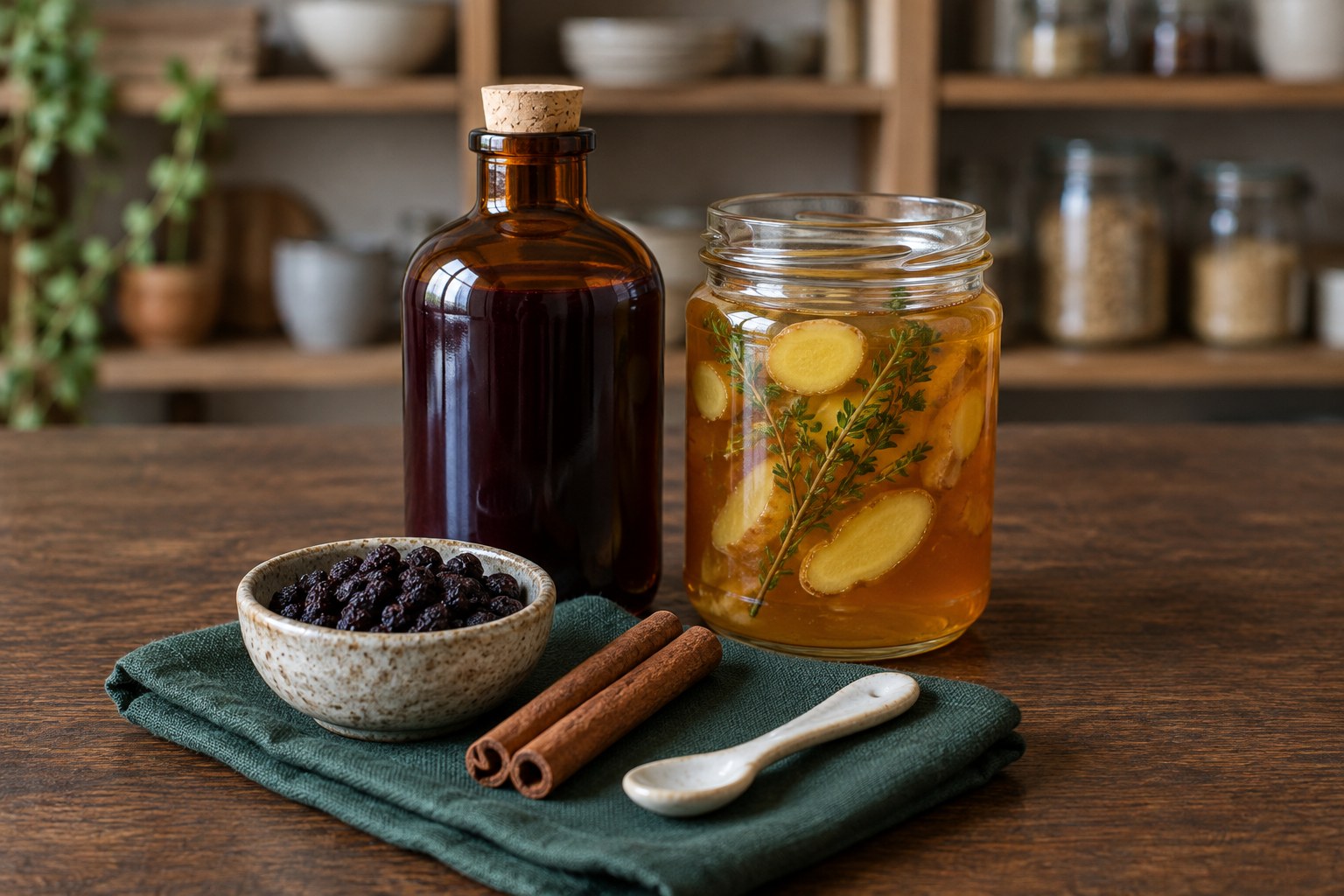
- Core ratio: 1 cup dried elderberries, 3 cups water, 1 tablespoon ground ginger, 1 tablespoon ground cinnamon, 1 tablespoon ground cloves, and 1 cup honey (stirred in off the heat once warm).
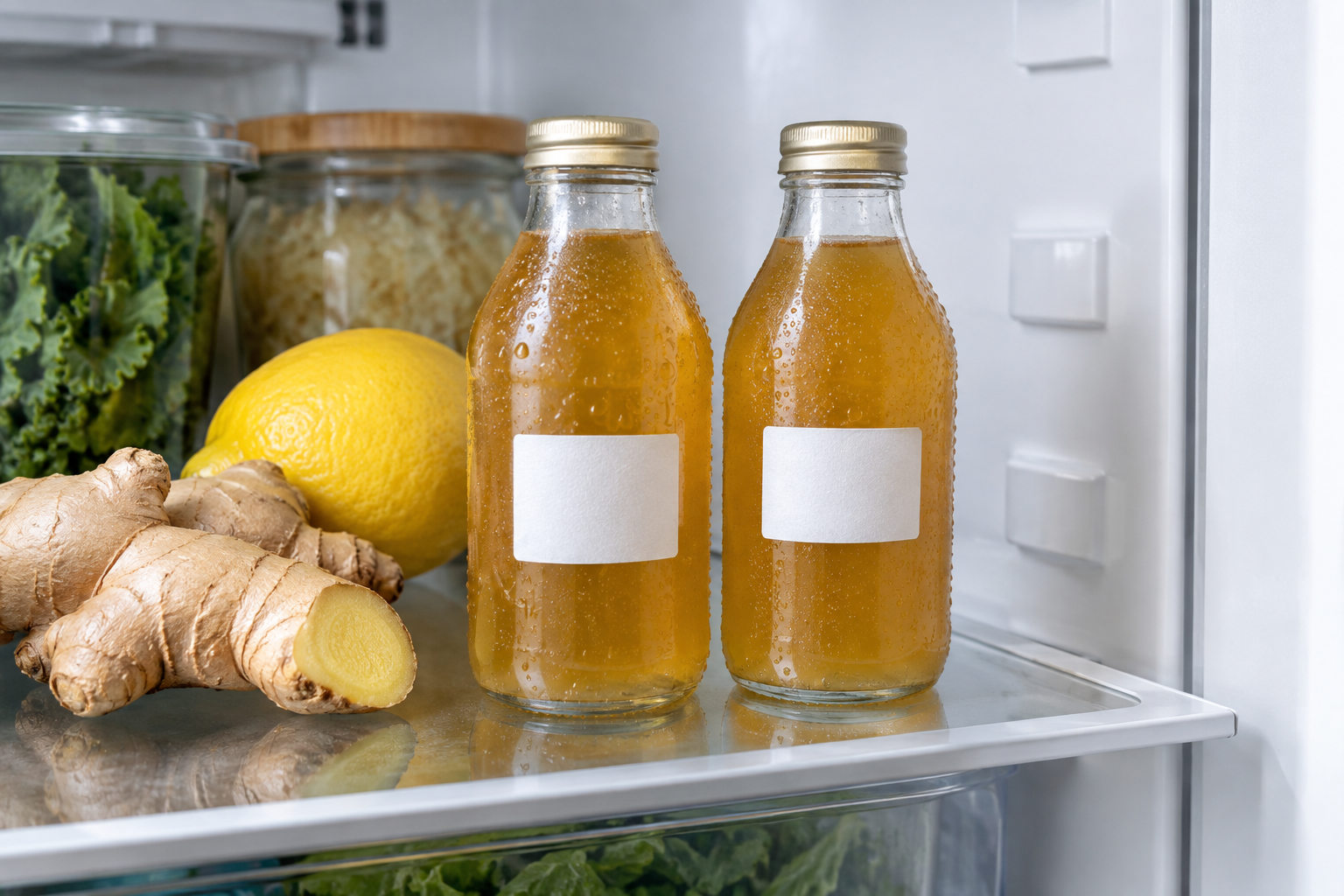
- Make-ahead tip: Pour extra syrup into an ice cube tray and freeze portions so your jar stays fresh all winter without waste.
- Full guides: Homemade Elderberry Syrup Recipe with Honey and Spices , How Long Does Elderberry Syrup Last? , and Can You Freeze Elderberry Syrup? .
Part 2: Soothing Winter Teas & Spiced Drinks
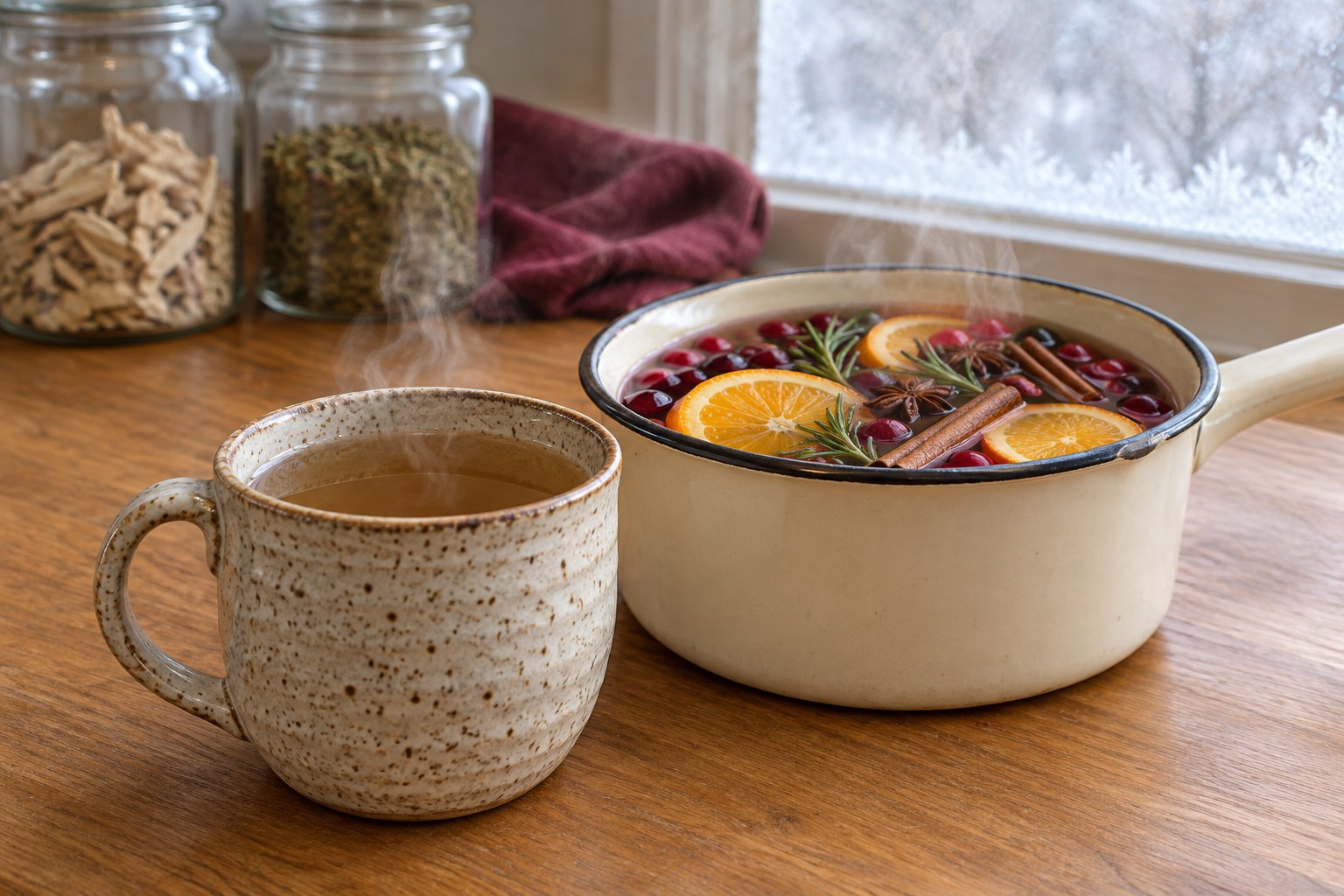
4. Ginger Lemon Honey Tea for Cold Nights
When the house feels drafty, grating fresh ginger root directly into simmering water gives you clean warmth that tea bags alone never match. You can brew a whole pitcher and refrigerate extra for up to three days.
- Core ratio: 4 cups water, 3/4 cup brown sugar, 1/4 cup grated fresh ginger root, 3 tea bags, 2 juiced lemons, and 3 tablespoons honey.
- Full recipe: Ginger Lemon Honey Tea for Cold Nights .
5. Mallow Tea (Marshmallow Root, Chamomile & Fennel)
Dry indoor winter heating leaves throats scratchy long before you ever catch a bug. Marshmallow root releases gentle natural mucilage that gives this blend a silky, coating mouthfeel, especially when cold-infused overnight or steeped hot with chamomile and fennel.
- Core ratio (hot blend): 1 tablespoon cut-and-sifted dried marshmallow root, 1 tablespoon dried chamomile flowers, 1/2 tablespoon dried meadowsweet, 1 teaspoon whole fennel seed, and 3 cups boiling water, plus honey to taste.
- Full recipe: Mallow Tea Recipe: Marshmallow Root, Chamomile and Fennel .
6. Golden Milk with Turmeric, Ginger, and Honey
Warm spiced plant milk simmered with sliced fresh turmeric, fresh ginger, cinnamon stick, coconut oil, and a pinch of whole black peppercorns makes a caffeine-free evening mug that feels like a cozy ritual before bed.
- Core ratio: 1 cup unsweetened coconut or almond milk, 1 cup water, 1 cinnamon stick, 1-inch sliced fresh turmeric (or 1/2 tsp dried), 1/2-inch sliced fresh ginger, 1 tablespoon honey, 1 tablespoon virgin coconut oil, and 1/4 teaspoon whole black peppercorns.
- Full recipe: Golden Milk with Turmeric, Ginger and Honey .
7. Elderberry, Ginger & Thyme Winter Herbal Tea
This savory-tart kitchen tea simmers dried elderberries, dried ginger pieces, and cracked black peppercorn first (because hard berries and roots need heat), then turns off the burner to steep aromatic rosemary and thyme covered for maximum fragrance.
- Core ratio: 1/4 cup dried elderberries, 1/2 teaspoon dried ginger pieces, 1/4 teaspoon coarsely ground black peppercorns, 14 ounces water, 1 teaspoon dried rosemary, 1 teaspoon dried thyme, and honey if desired.
- Full recipes: Herbal Tea Recipe for Cold and Flu Season and Herbal Tea Recipe for Sore Throat . (If you also steep mullein leaf in winter, always double-strain through a coffee filter and read how to make mullein tea and strain the leaves plus mullein tea side effects .)
Part 3: Winter Skin Care, Bath Soaks & Stovetop Air Care
8. Calendula Hand Salve for Dry Winter Skin
Cold wind and constant handwashing tear up knuckles by December. A simple two-step infused oil and beeswax salve sets up firm enough to toss in a coat pocket without leaking.
- Core ratio: 1/2 cup dried calendula flowers steeped in olive, sweet almond, or jojoba oil (yielding 1/2 cup strained oil) melted gently with 1/2 ounce (14 g) beeswax by weight.
- Key habit: Use completely dried flowers, never fresh petals, because trapped moisture spoils oil-based salves quickly.
- Full recipe: Calendula Hand Salve: A Beginner Tin for Dry Garden Hands .
9. Lavender Epsom Bath Salts
Steeping dried lavender blossoms with plain Epsom salt gives you an uncomplicated warm soak at the end of freezing days, and doubles cleanly as a last-minute homemade holiday gift when packed in an airtight jar.
- Core ratio: 2 cups Epsom salt to 1/4 cup dried lavender blossoms.
- Keep the scent strong: Store in a tight glass jar away from steamy bathroom shelves. See Lavender Bath Salts Recipe and How to Keep Lavender Bath Salts Smelling Good .
10. Christmas Citrus & Rosemary Stovetop Simmer Pot
When windows stay shut for weeks, a low stovetop pot of dried orange slices, rosemary sprigs, whole cloves, and cinnamon sticks puts gentle moisture and natural kitchen fragrance back into dry winter rooms.
- Core ratio: 3 cinnamon sticks, 3 sprigs fresh rosemary, 1 tablespoon whole cloves, 3 slices dehydrated oranges, and 12 cups water.
- Safety & reuse: Keep water topped up so the pan never boils dry, and refrigerate the cooled solids in a jar to reuse for 2 to 3 days.
- Full guide: Christmas Simmer Pot That Makes the House Smell Festive .
How to Organize Your Winter Apothecary Shelf
Keep your kitchen apothecary neat enough that you reach for it daily rather than shoving jars to the back of a cupboard:
- Label every jar the minute you seal it. Write the recipe name, start date, and planned strain date on masking tape so you never guess how long a vinegar or oil has been steeping.
- Use plastic or rust-proof lids for vinegars. Standard two-piece metal canning lids corrode when exposed to apple cider vinegar fumes in fire cider and oxymels.
- Keep dried herbs in light-blocking tins or dark cabinets. Direct sunlight fades color and aromatic oils within weeks, especially in chamomile, thyme, and calendula.
- Gift your extras. Homemade tea blends, honey jars, and bath salts pack neatly into our 10 DIY tea gift basket ideas for Christmas and 12 drink gift basket ideas for Christmas .
Frequently Asked Questions
Which winter home apothecary recipes should a beginner make first?
Start with Ginger Lemon Honey Tea, a Citrus Rosemary Simmer Pot, and Homemade Elderberry Syrup. All three finish in under an hour with standard kitchen cookware and give you immediate use while a jar of fire cider or herbal oxymel steeps in the cupboard for two to four weeks.
Do I need alcohol tinctures to have a useful winter home apothecary?
No. Vinegars (fire cider, oxymels), kitchen syrups, herbal teas, infused oils, and bath salts cover almost every everyday winter comfort need without alcohol. If you want to learn traditional alcohol extractions later, see our guide on how to make herbal tinctures .
Can I use fresh herbs instead of dried herbs in winter apothecary jars?
Fresh roots and citrus work great in vinegar infusions like fire cider and fresh hot teas. However, always use fully dried flowers and leaves for oil infusions and salves (like calendula hand salve) and for long-term dry tea storage so moisture cannot trigger mold.
How can I tell when a homemade winter syrup or tonic should be tossed?
Discard any syrup, tea, or tonic immediately if you spot fuzzy surface growth, an off sour or yeasty smell, unexpected fizzing, or bulging lids. Always use clean utensils rather than dipping used spoons directly into your storage jar.