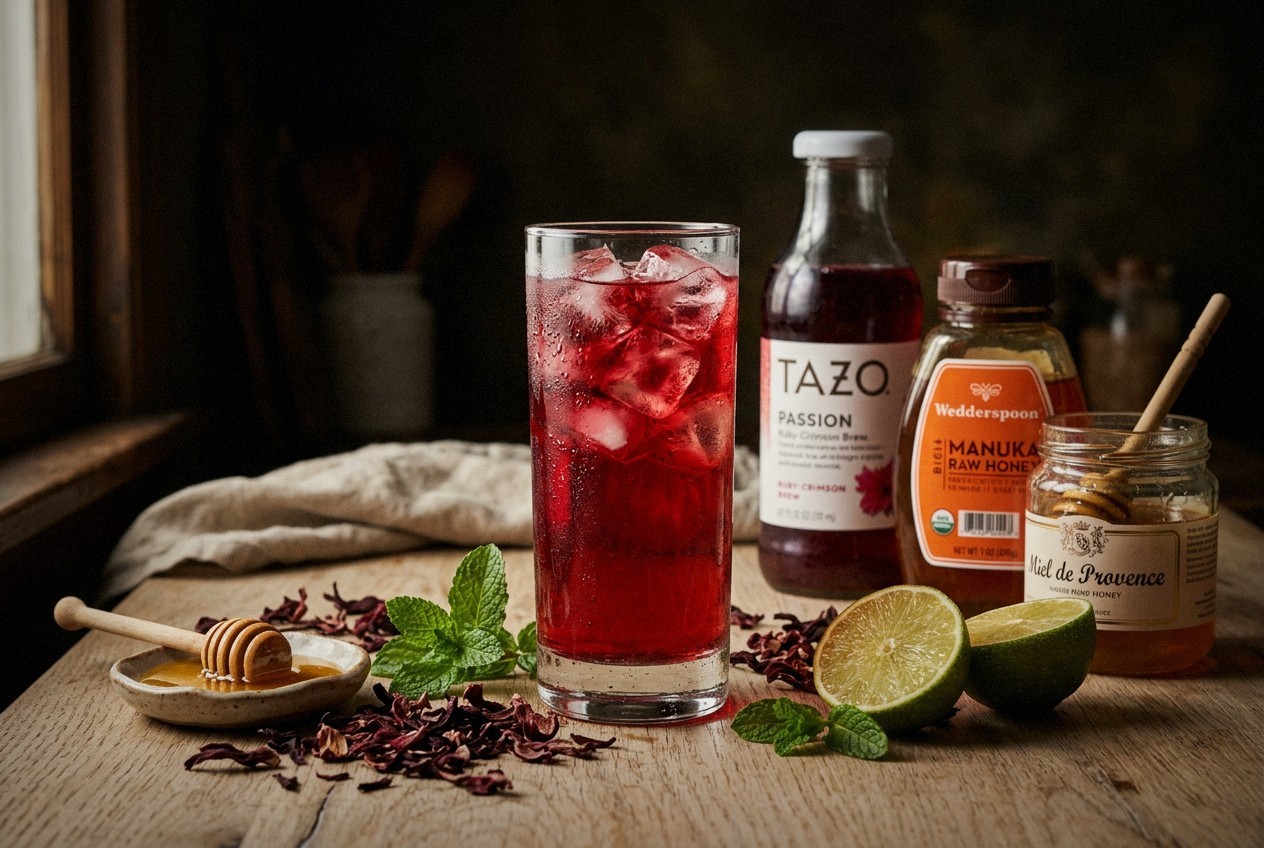
Seven refreshing herbal iced tea recipes with hibiscus, mint, and butterfly pea. Cold brew methods, zero caffeine. Get the recipes.
Why You Will Love These
Cold brewing transforms dried botanicals into something clearer and sweeter than hot steeping ever could. No bitterness. No tannin bite. Just pure plant flavor that tastes like the first warm afternoon of the year. These seven recipes cover every mood from tart hibiscus punch to creamy rose-lavender calm, all caffeine-free and ready after a night in the fridge.
The Story Behind It
I started cold brewing herbal teas by accident in 2019. Left a jar of mint and water on the counter overnight, forgot about it, tasted it the next morning out of curiosity. It was better than any hot mint tea I had made. The chlorophyll stayed bright green. The menthol came through without any vegetal funk. I have been cold brewing herbs ever since, tweaking ratios through four summers of farmer’s market tastings and backyard experiments. These seven recipes are the ones people asked for most.
What You Will Need
Recipe 1: Hibiscus Lime Cooler
- 1/4 cup dried hibiscus flowers (Hibiscus sabdariffa)
- 4 cups cold filtered water
- 2 tablespoons raw honey
- 1 lime, juiced
- Fresh mint for garnish
Recipe 2: Mint Limeade Tea
- 1/2 cup fresh mint leaves (or 3 tablespoons dried)
- 4 cups cold water
- 1 tablespoon maple syrup
- 1 lime, juiced
- Lime wheels for serving
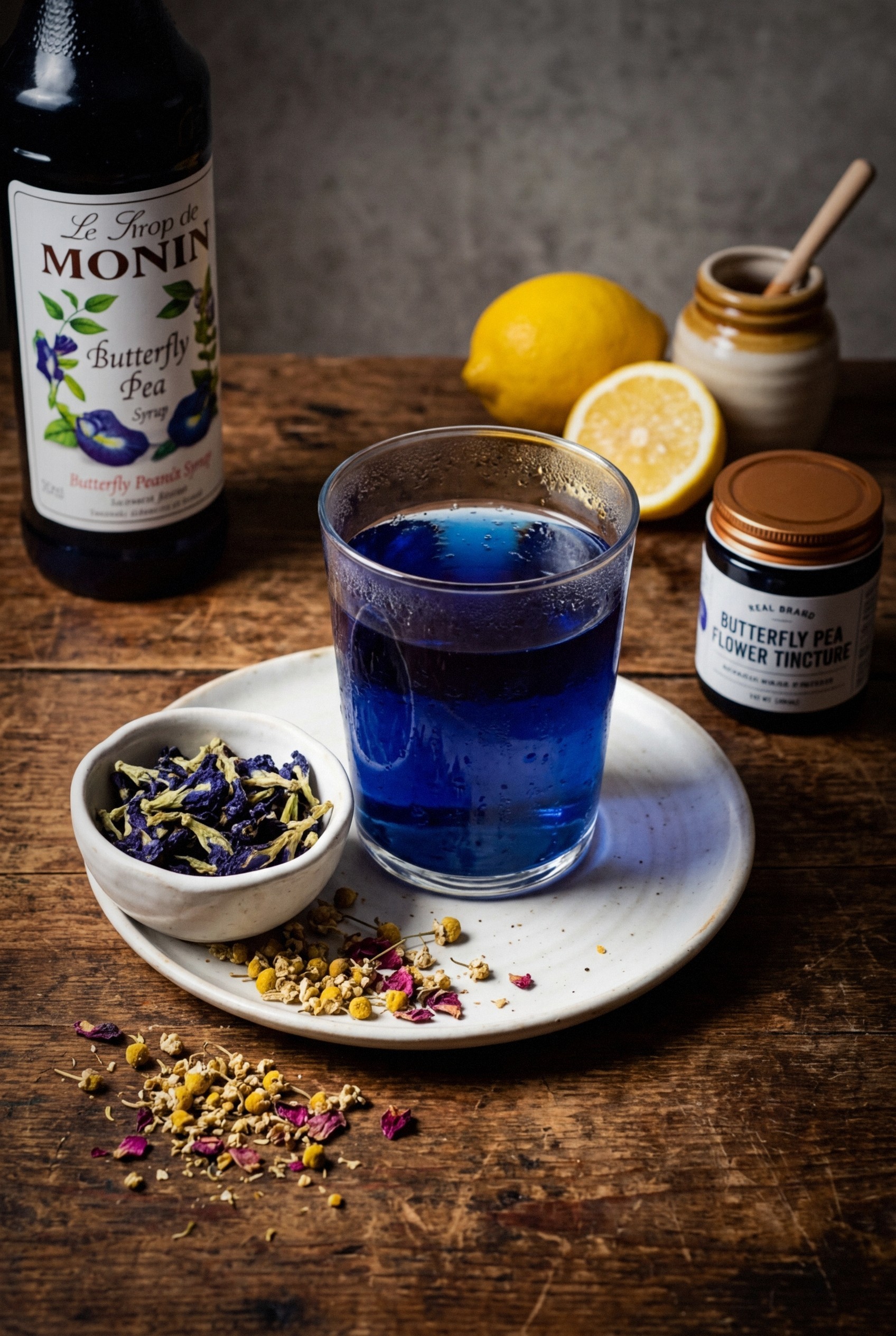
Recipe 3: Butterfly Pea Lemonade
- 2 tablespoons dried butterfly pea flowers (Clitoria ternatea)
- 4 cups cold water
- 2 teaspoons agave nectar
- 1 lemon, juiced (adds acidity and turns tea from blue to purple)
- Lemon slices for garnish
Recipe 4: Chamomile Peach Fizz
- 3 tablespoons dried chamomile flowers (Matricaria chamomilla)
- 4 cups cold water
- 1/4 cup fresh peach juice or 1 ripe peach, muddled
- 1 tablespoon honey
- Sparkling water to top (optional)
Recipe 5: Rose Lavender Dream
- 2 tablespoons dried rose petals (Rosa damascena)
- 1 tablespoon dried lavender buds (Lavandula angustifolia)
- 4 cups cold water
- 2 tablespoons honey
- Fresh lavender sprig for garnish
Recipe 6: Nettle Mint Refresher
- 1/4 cup dried nettle leaf (Urtica dioica)
- 2 tablespoons dried spearmint
- 4 cups cold water
- 1 tablespoon fresh lemon juice
- Cucumber slices for serving
Recipe 7: Rooibos Orange Ginger
- 3 tablespoons rooibos (Aspalathus linearis)
- 1 tablespoon dried ginger root, sliced thin
- 4 cups cold water
- 2 tablespoons honey
- 1 orange, sliced into wheels
How to Make Them
Select your recipe based on what you are craving. Tart and energizing? Go hibiscus. Calming and floral? Rose lavender.
Combine your dried herbs or fresh leaves with cold filtered water in a glass pitcher or wide-mouth quart jar. Glass matters. Plastic can leach weird flavors during long steeps.
Cover and place in the refrigerator. Steep times vary. Hibiscus and butterfly pea reach full color and flavor in 4 hours. Chamomile and mint need 6. Woody herbs like rooibos and ginger want the full 8 hours to release their deeper notes.
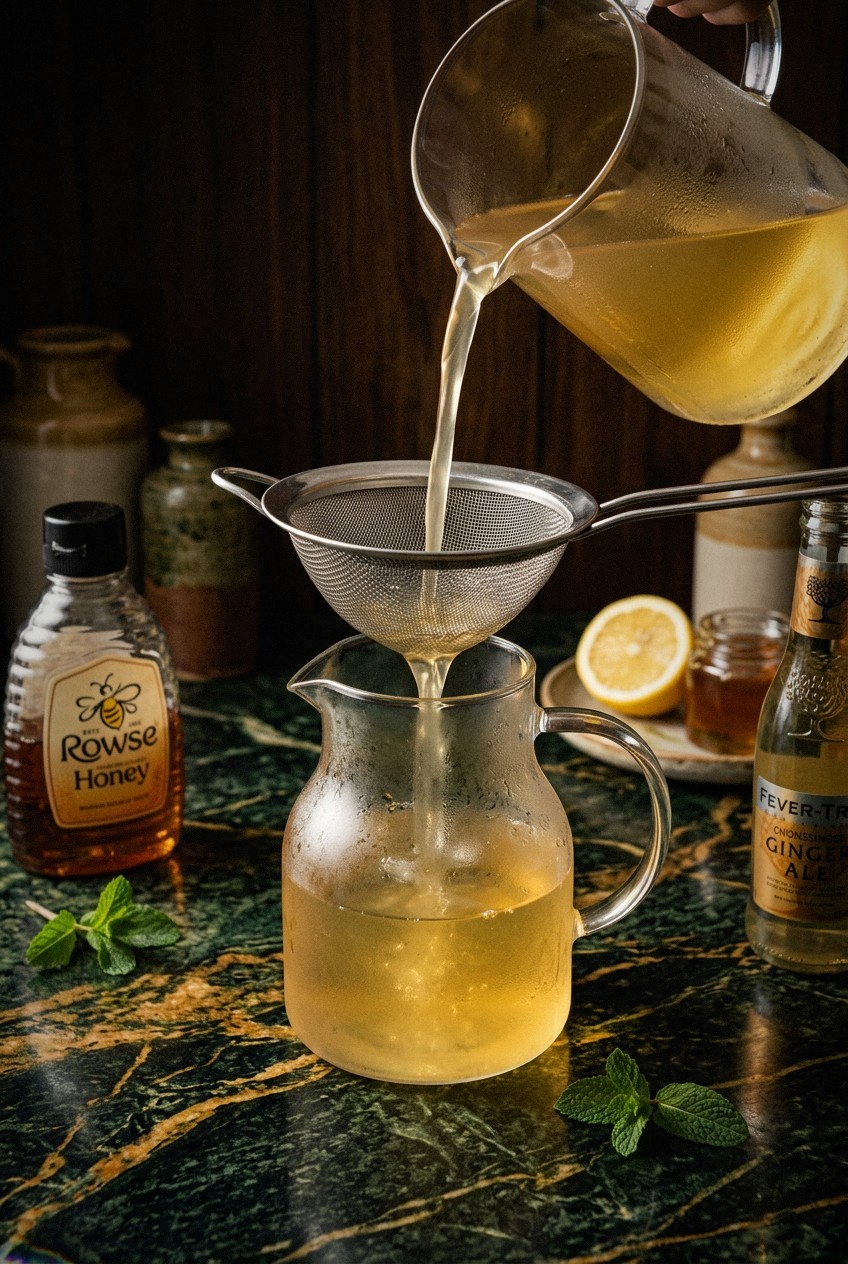
Strain through a fine-mesh sieve or double layer of cheesecloth into a clean pitcher. Press gently on the solids to extract the last bit of flavor without forcing through sediment.
Stir in your sweetener and citrus juice while the tea is cold. Honey dissolves slower in cold liquid, so stir for 30 seconds. Taste and adjust. Some batches of hibiscus are more tart than others.
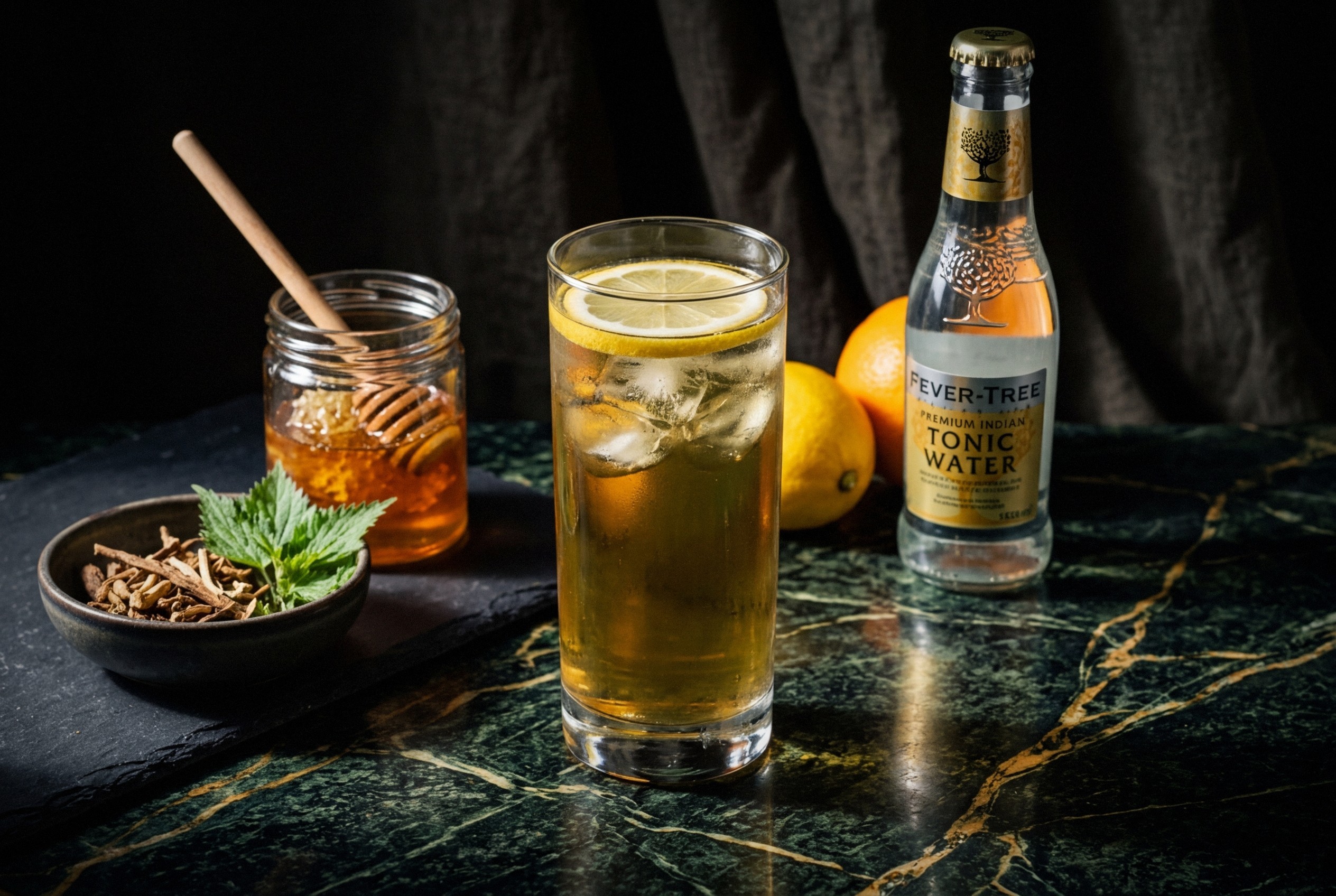
Serve over ice in tall glasses. Add your garnishes. Mint sprigs for the mint tea. Citrus wheels for anything with lemon or lime. Edible flowers if you are feeling fancy.
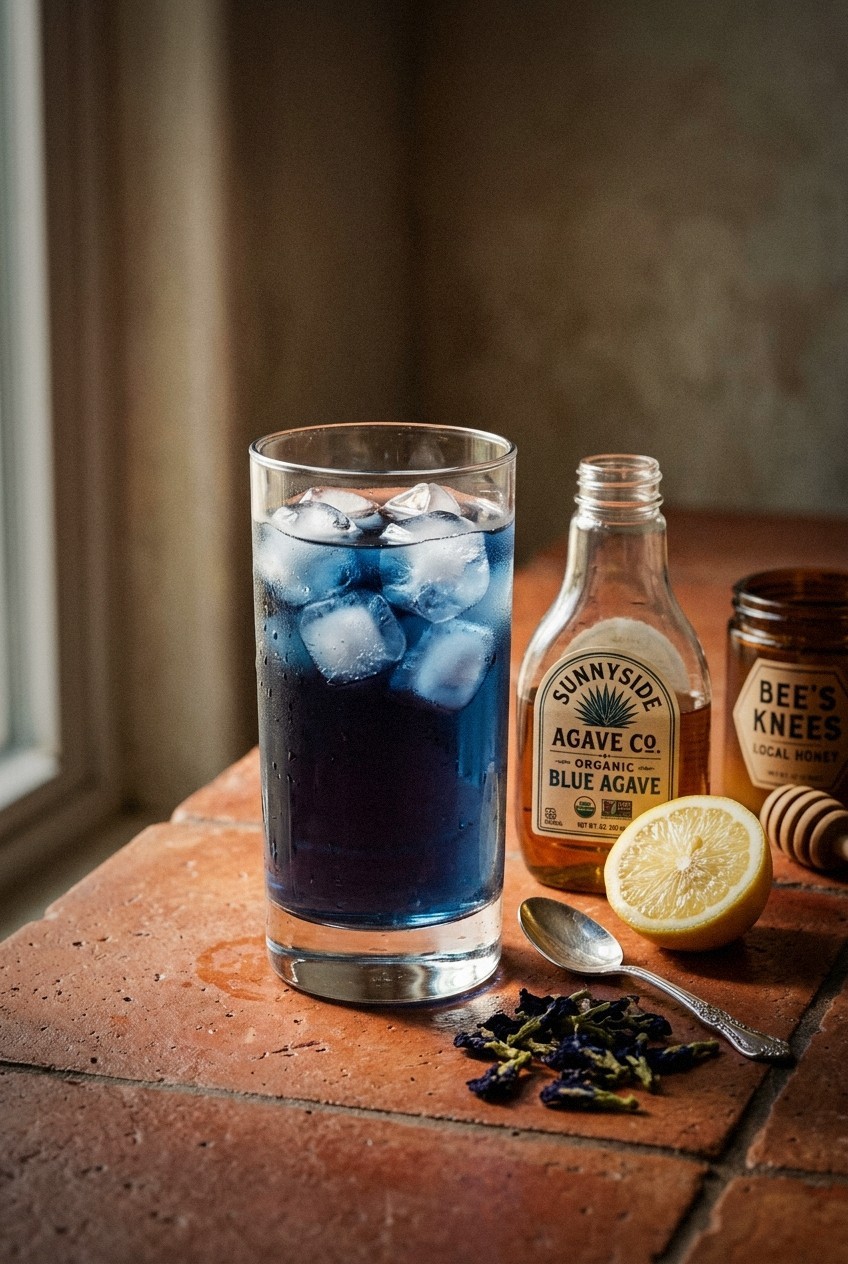
Store any leftovers in the fridge in a sealed glass container. These teas hold their flavor for 3 days, though the color may fade slightly after 48 hours, especially the butterfly pea.
Herbalist Notes
Hibiscus contains 15-30% organic acids by dry weight, mostly citric and malic acid, which gives it that mouth-puckering tartness. In traditional Mexican agua de jamaica, it is steeped hot then chilled. Cold brewing produces a cleaner, less astringent cup with the same anthocyanin antioxidants (up to 51 mg per 100 ml in concentrated brews). Studies from 2020 show hibiscus tea lowered systolic blood pressure by 7-10 mmHg in adults drinking 2 cups daily for 6 weeks.
Butterfly pea flowers are pH-sensitive. The anthocyanins that make them blue (delphinidin-3,5-diglucoside) turn purple-pink when exposed to acid. Lemon juice drops the pH from 7 to around 3, triggering the color shift. Traditional Thai herbalists used butterfly pea as a memory enhancer. Modern studies show the flavonoids cross the blood-brain barrier and increased acetylcholine levels in rat models by 18% compared to controls.
Nettle leaf cold brew extracts minerals without the grassiness hot water pulls. A 2018 analysis found cold-steeped nettle retained 94% of its iron content (1.2 mg per cup) and 89% of its calcium (42 mg per cup), with significantly lower levels of the oxalates that can interfere with mineral absorption. Traditional European herbalism used nettle as a spring tonic to “clean the blood” after winter. What they were likely observing was mild diuretic action from the potassium salts, which help flush excess sodium.
Make It Your Own
Sweeten to taste. I prefer raw honey for floral teas and maple syrup for anything with mint. Agave works best with citrus-forward recipes because its neutral sweetness does not compete. If you want zero sweetener, try adding 1/4 cup of fresh fruit juice (peach, mango, or white grape) for natural sugar and body.
Mix and match herbs from different recipes. Hibiscus plus mint is a classic combination. Chamomile and lavender together make a bedtime sipper. Rooibos takes on almost any flavor, try it with rose petals and a cinnamon stick for a caffeine-free chai vibe. For a party punch, double any recipe, add sparkling water just before serving, and freeze some of the tea in ice cube trays so the punch does not get watered down.
Serve these at different temperatures. The chamomile peach is perfect barely chilled, almost room temperature on a breezy spring evening. The mint limeade wants to be ice-cold with crushed ice. The rose lavender sits somewhere in between, best served in a wine glass with one large ice cube and a sprig of fresh lavender across the rim.
Common Questions
How long can I store cold brew herbal tea in the fridge?
Three days maximum in a sealed glass container. After 72 hours, the flavor starts to flatten and some herbs (especially mint and chamomile) develop a stale, hay-like note. The butterfly pea tea loses its vibrant color fastest, fading to a murky gray-blue by day four. If you want to prep ahead for a party, brew the tea and strain it, but wait to add sweetener and citrus until a few hours before serving.
Can I use tea bags instead of loose herbs?
Yes, but the quality will drop. Most bagged herbal teas use cut-and-sifted herbs (smaller pieces) that release flavor faster but lack the complexity of whole flowers and leaves. For cold brewing, you need about 50% more tea bags than loose herb by volume to get the same strength. So if a recipe calls for 1/4 cup loose hibiscus, use 6-8 hibiscus tea bags. Avoid bags with added “natural flavors” which taste artificial when cold brewed.
Which recipe has the most health benefits?
Nettle mint refresher wins on nutrient density. One 8 oz serving delivers approximately 1.2 mg iron (7% DV), 42 mg calcium (4% DV), 26 mg magnesium (6% DV), and 220 mg potassium (5% DV). Hibiscus lime cooler ranks second for cardiovascular support, the anthocyanins and organic acids have been shown in multiple studies to support healthy blood pressure when consumed regularly. But all seven recipes are caffeine-free, hydrating, and rich in plant polyphenols. Pick the one you will actually drink every day.
Do I need to use filtered water?
Yes, especially for delicate floral teas like rose lavender and butterfly pea. Chlorine and chloramine in tap water will dull the flavor and can react with some plant compounds to create off-tastes. If you do not have a filter, let tap water sit uncovered in the fridge for 2 hours before using it. The chlorine will off-gas. Chloramine will not, so if your city uses chloramine (call your water utility to check), spring for a carbon filter or use bottled spring water.
Can I cold brew these teas in the sun instead of the fridge?
No. Sun tea sounds romantic but it is a food safety risk. Water sitting at 70-100°F (21-38°C) for 4-8 hours is the ideal temperature range for bacterial growth, including some nasty ones like Alcaligenes viscolactis that thrive in plant matter. The USDA and CDC both recommend against sun tea. Cold brewing in the fridge (35-40°F / 2-4°C) keeps you in the safe zone while still extracting full flavor. If you want faster results, use room temperature water and steep for only 2 hours, then refrigerate immediately.