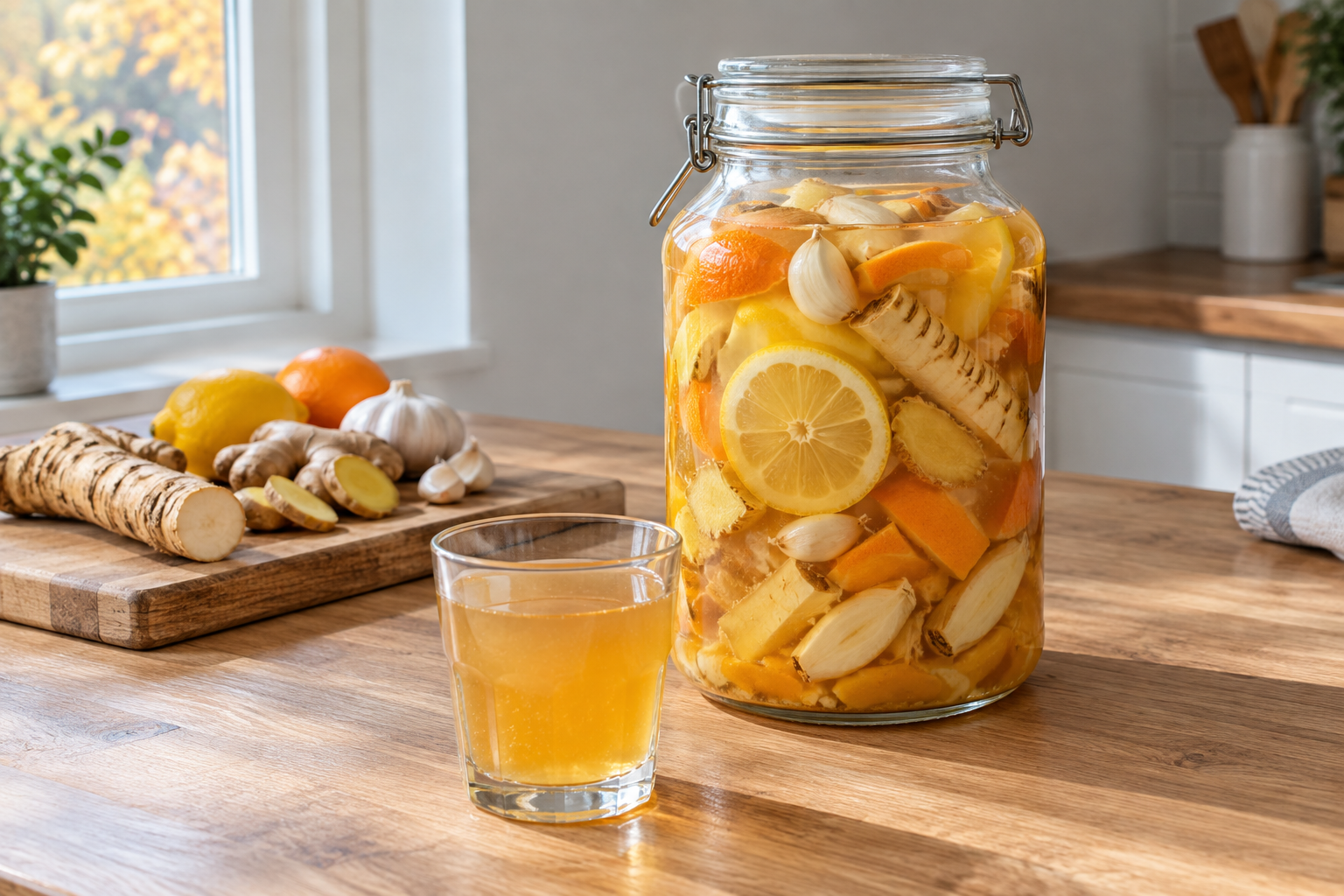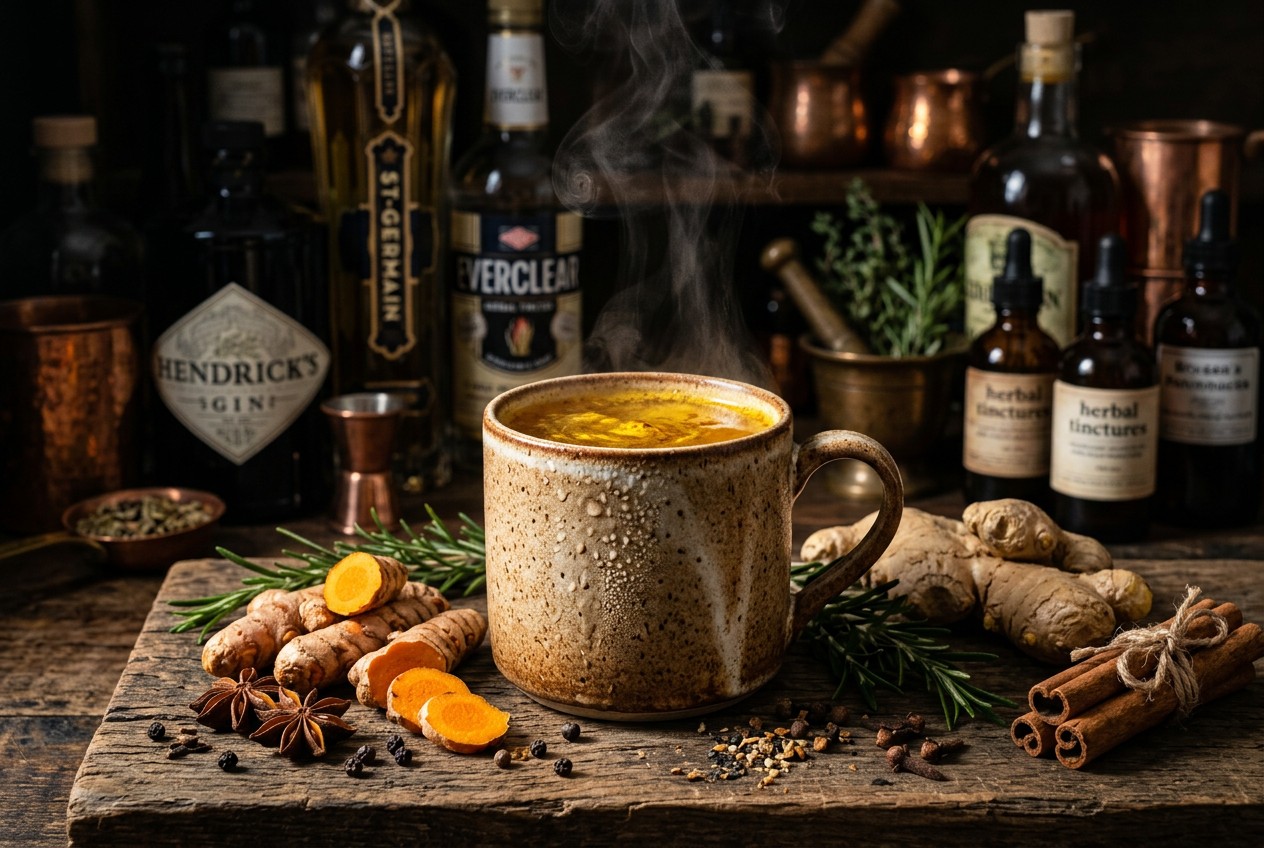
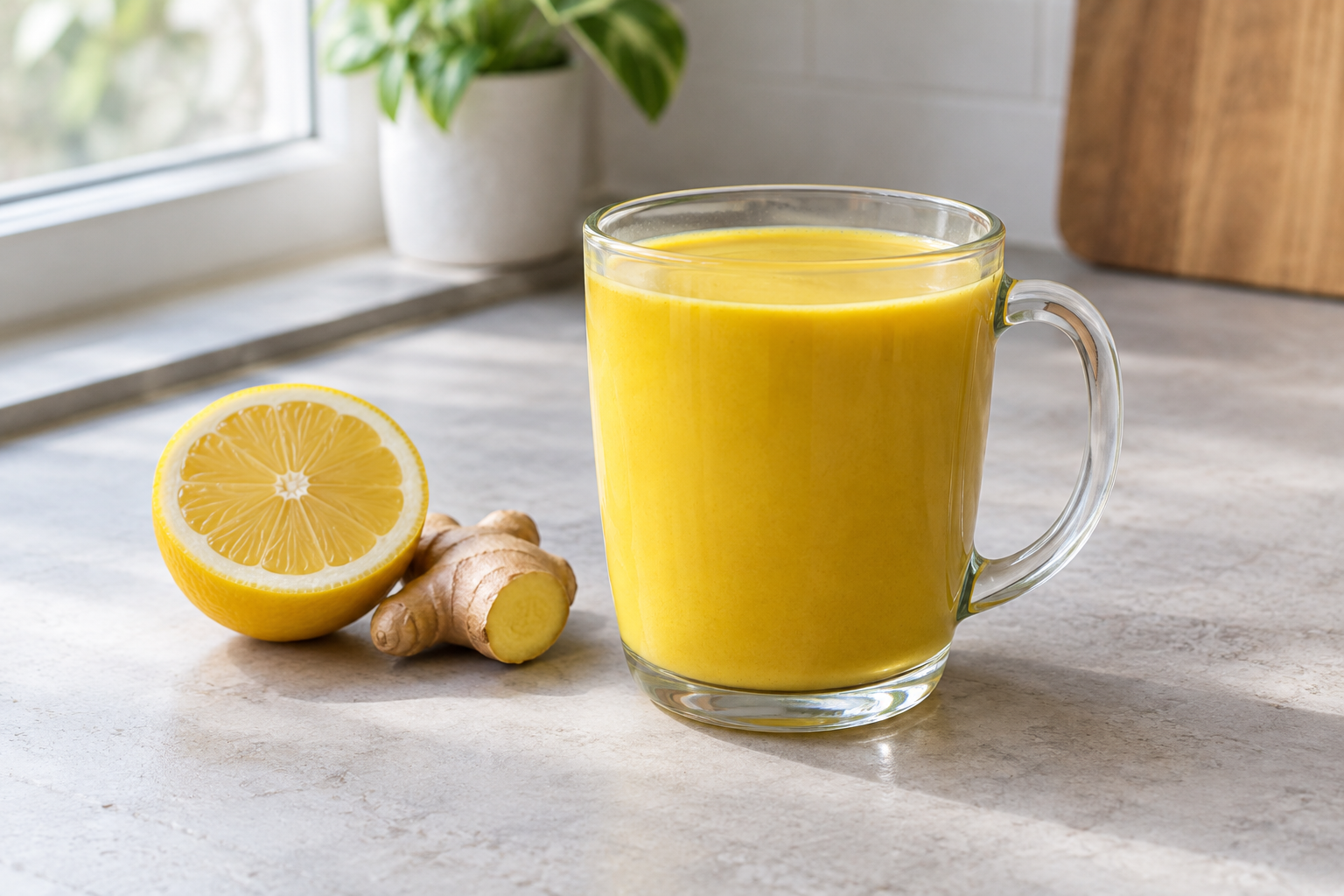
Wellness tonics are simple drinks made from whole-food ingredients like ginger, turmeric, lemon, and honey. They are drinks for flavor and routine, not medicine. Each numbered recipe below cites a published formula with measured ingredients.
What is in this collection
The nine drinks include brewed teas, golden milk, a blended concentrate and a switchel. Follow each published recipe’s stated directions for any variations. Brew teas fresh when practical and refrigerate any leftovers promptly.
1. Golden Milk
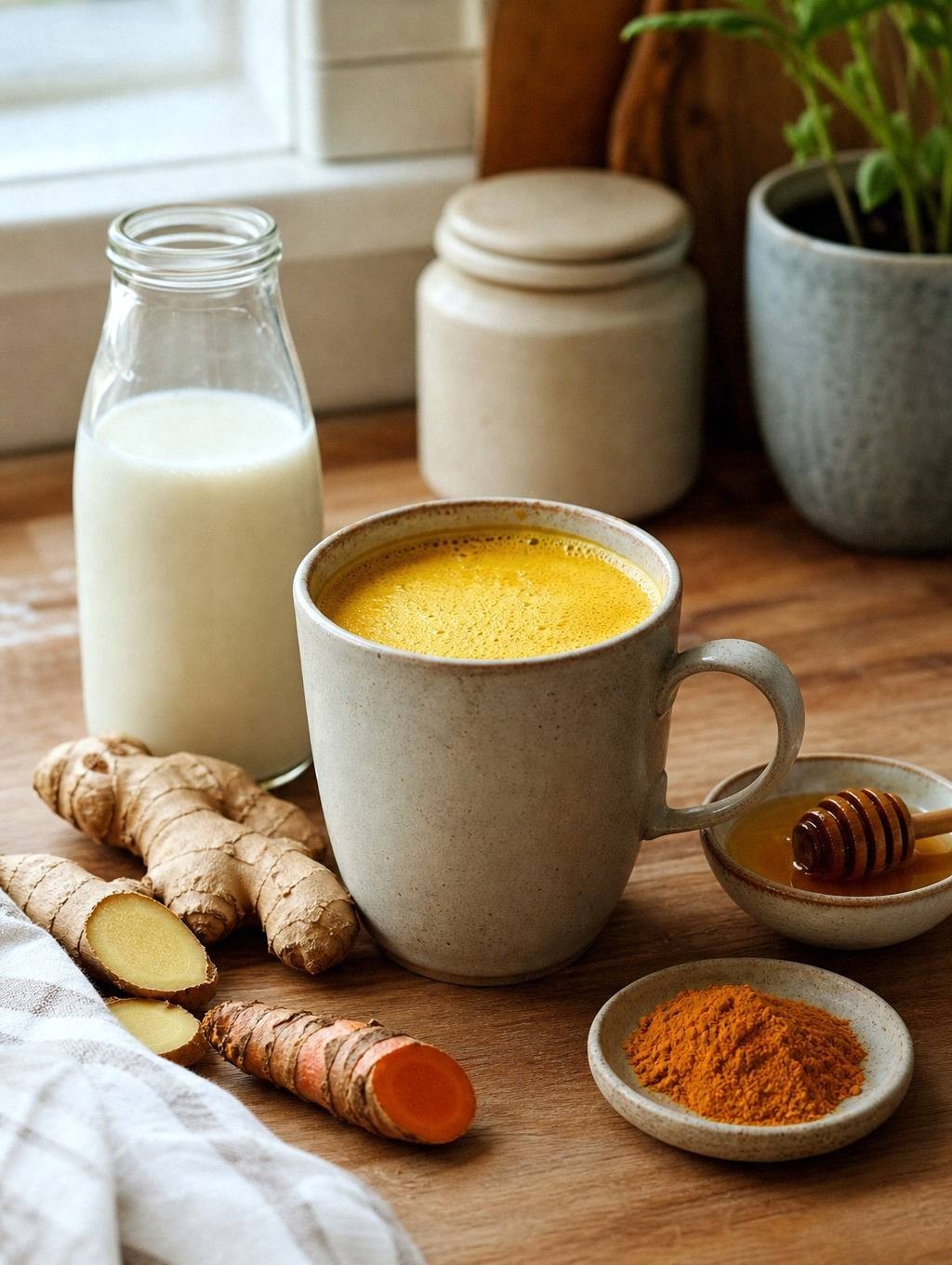
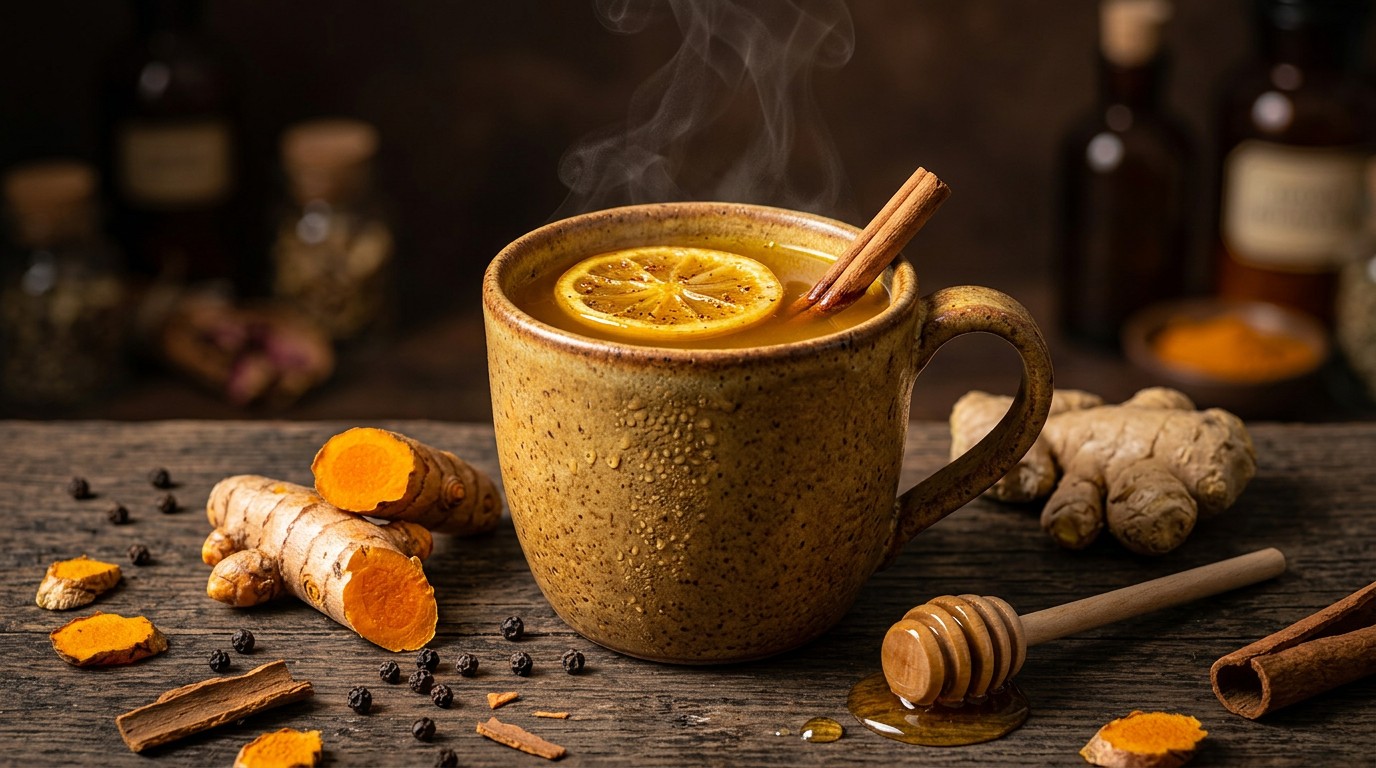
Golden milk is a warm, creamy drink made with fresh turmeric and ginger, sweetened with honey and poured over almond milk. It tastes earthy and slightly spicy, with a richness that makes it feel like a treat rather than a remedy. Drink it before bed when you want something soothing, or in the afternoon when you need to reset without caffeine.
The fresh turmeric stains everything it touches, so grate it over a cutting board you don’t mind discoloring. If you can’t find fresh turmeric root, a pinch of ground turmeric on top adds color but won’t give you the same depth of flavor in the drink itself.
Ingredients
- 35 g fresh turmeric root, peeled and grated
- 20 g fresh ginger root, peeled and grated
- 1 tablespoon honey
- 250 ml unsweetened almond milk
- 1/2 teaspoon ground turmeric
- 1/2 teaspoon ground cinnamon
Instructions
- Combine the grated turmeric root, grated ginger root, and honey in a small bowl, pressing the roots with the back of a spoon to release their juices.
- Pour the almond milk into a saucepan and warm it over medium-low heat until small bubbles appear around the edges, then lower the heat.
- Spoon about 2 tablespoons of the warm almond milk into the turmeric mixture and stir until the honey dissolves into a loose paste.
- Scrape the paste into the saucepan, raise the heat to medium-low, and stir constantly until everything is blended and smooth.
- Pour the golden milk into a mug and finish with the ground turmeric and cinnamon.
Serves 1. Ready in 15 minutes.
Recipe basis: The Turmeric Co.’s turmeric milk. Measurements follow its published one-serving recipe; the directions here are rewritten.
2. Ginger Turmeric Tea
This is the simplest version of a ginger-turmeric tonic, made by simmering the spices in water and straining out the solids. It’s sharp and warming, with a bite from the ginger and a woody note from the turmeric. The cinnamon softens the edges without making it sweet.
Drink it hot in the morning during cold season, or let it cool and pour it over ice when you want something bright and clean. The lemon wedge is optional, but squeezing it in at the end adds a citrus lift that balances the earthiness.
Ingredients
- 2 cups water
- 1/2 teaspoon ground turmeric
- 1/2 teaspoon chopped fresh ginger
- 1/2 teaspoon ground cinnamon
- 1 tablespoon honey
- 1 lemon wedge
Instructions
- Bring the water to a boil in a small saucepan, then add the turmeric, ginger, and cinnamon.
- Turn the heat down to medium-low and let it simmer for 10 minutes.
- Strain the liquid into a large glass.
- Stir in the honey and serve it with a lemon wedge.
Serves 2. Ready in 20 minutes.
Recipe basis: Working for a Healthier Tennessee’s ginger turmeric tea, which credits Allrecipes. The lemon and honey are optional there; they are included here as written choices.
3. Cayenne Lemon Tonic
This tonic combines fresh lemon juice with cayenne pepper and raw honey for a sharp, hot drink with no caffeine. The heat from the cayenne hits the back of your throat, while the citrus keeps it from tasting medicinal. Serve it as a small shot, or pour half a cup into a warmed mug.
The cayenne below is assertive. Warming the water before it meets the honey is the step people skip, and it is the difference between honey dissolving and honey sitting in a lump at the bottom. The measurements are built on fresh lemon juice.
Ingredients
- 3/4 cup fresh lemon juice
- 1/2 teaspoon cayenne pepper
- 1/4 cup raw honey, unfiltered
- 1 cup water
Instructions
- Mix everything together well.
- If you’re using raw honey, warm the water until it’s just about to boil before you mix it with the honey, which helps everything blend smoothly.
- Pour into shot glasses and serve as is, or pour half a cup into warmed mugs.
Makes 2 cups, 4 servings. Ready in 2 minutes.
Recipe basis: Food.com’s Cayenne Lemon Tonic. This is a strong, acidic drink; the source serves it in small portions and does not establish an energy or immunity benefit.
4. Peppermint Tea
Peppermint tea is a cooling cup for the end of a long day. Steep the tea bags in boiling water for five minutes, then drink it plain or with a spoonful of honey. It’s one of the few tonics that works better with dried herbs than fresh, because dried peppermint has a cleaner, more concentrated flavor.
Two teaspoons of loose peppermint per cup, or a single sachet, and five minutes makes a useful starting point. A longer steep is also fine; the source specifically says peppermint does not become overly bitter. Warming the pot helps keep the brewing water hot.
Drink it plain, or stir in honey once it has cooled below scalding. If you want it iced, steep it at double strength and pour it straight over ice so the melt brings it back to normal.
Ingredients
- 1 cup water (+ more to warm teapot)
- 2 teaspoons peppermint tea (1 tea sachet or tea bag)
Instructions
- Heat more water than you need to about 208°F.
- Swirl a little hot water around the teapot and discard it.
- Add the peppermint and 1 cup hot water. Cover and steep for 5 minutes.
- Strain into a cup.
Serves 1. Ready in 7 minutes.
Recipe basis: tea sommelier Jee Choe’s peppermint tea recipe.
5. Honey Lemon Tea
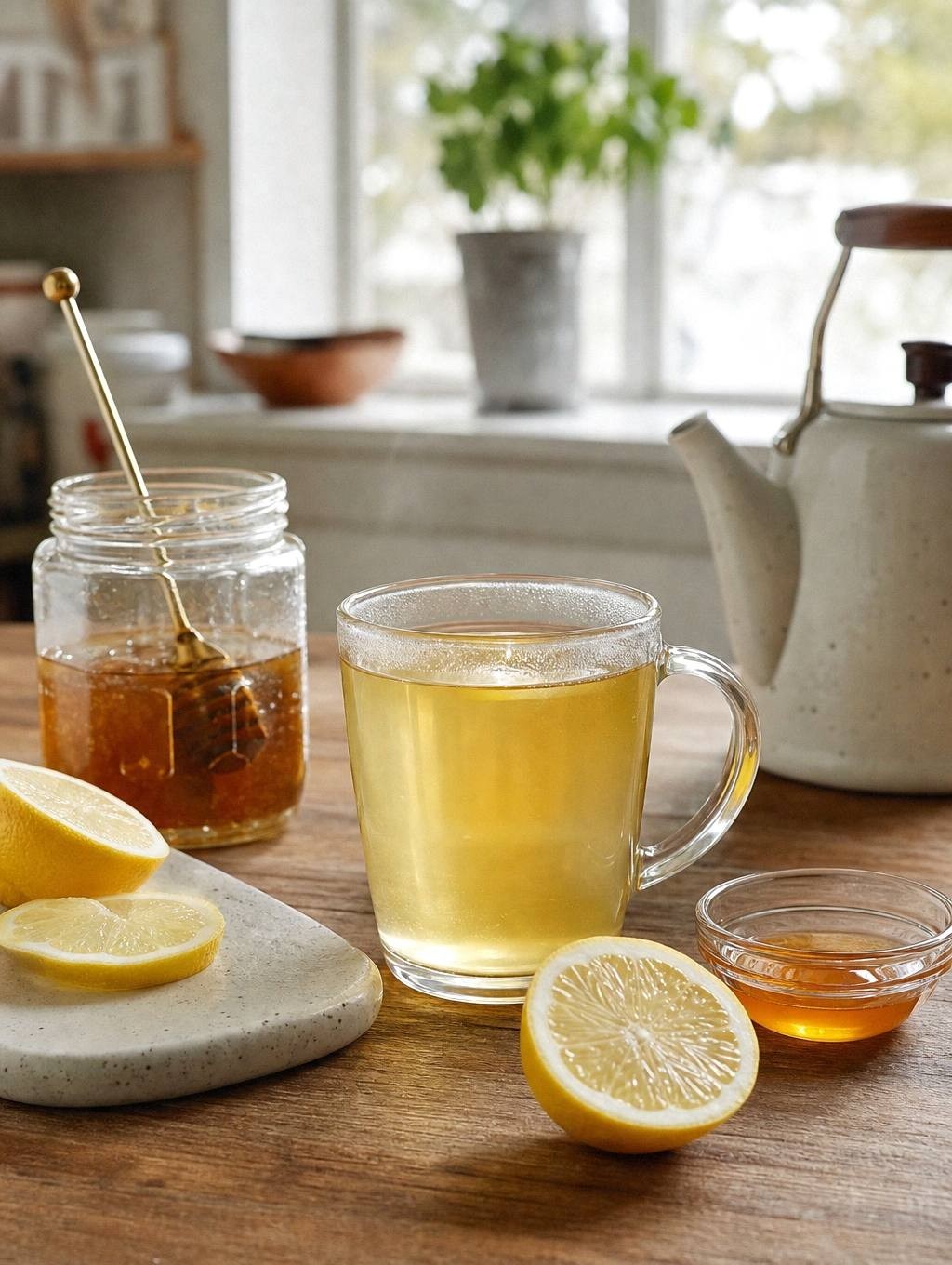
Honey lemon tea is the tonic you make when you’re too tired to grate ginger or measure spices. It’s just hot water, honey, lemon juice, and a pinch of sugar if you want it sweeter. The honey dissolves into the water and coats your throat, and the lemon keeps it from tasting cloying.
Make it in a mug in the microwave when you’re sick and don’t want to stand at the stove. The sugar is optional; if the honey is good, you won’t need it.
Ingredients
- 2 cups water
- 2 teaspoons honey
- Juice of 2 lemons
Instructions
- Heat the water until hot.
- Divide the honey and lemon juice between two mugs.
- Add 1 cup hot water to each mug and stir until the honey dissolves.
Serves 2. Ready in about 5 minutes.
Recipe basis: Tarrant County Public Health’s Lemon Honey Tea. No extra sugar is called for in that recipe.
6. Turmeric Tea
Turmeric tea without the ginger is the plainer cousin of the tonic in item 2, and it is worth knowing on its own because the two taste nothing alike. Ginger brings the heat and the bite. Take it out and what is left is earthy, faintly bitter, and much closer to the flavour people describe as medicinal.
This version is built on fresh root rather than the ground spice in item 2, which is most of why they taste so different. Slice it thin so the water can actually reach it, and there is no need to peel. Two things matter more than the ratio: keep it at a gentle simmer rather than a hard boil, because a hard boil pushes turmeric bitter, and strain it properly so you are not drinking grit. A pinch of black pepper is traditional, and a little fat, even a splash of milk, carries the flavour further than water alone.
If you want it to taste like something rather than like a supplement, this is the version that wants honey.
Ingredients
- One 2-inch nub of fresh turmeric (no need to peel)
- 1 cup water
- Optional: Lemon or orange round, honey or maple syrup
Instructions
- Wash the turmeric and cut it into thin slices.
- Put it in the water and bring to a gentle simmer. Cook for 5 minutes.
- Strain into a mug. Add citrus or a little sweetener if desired.
Serves 1. Ready in 10 minutes.
Recipe basis: Cookie and Kate’s Fresh Turmeric Tea.
7. Switchel
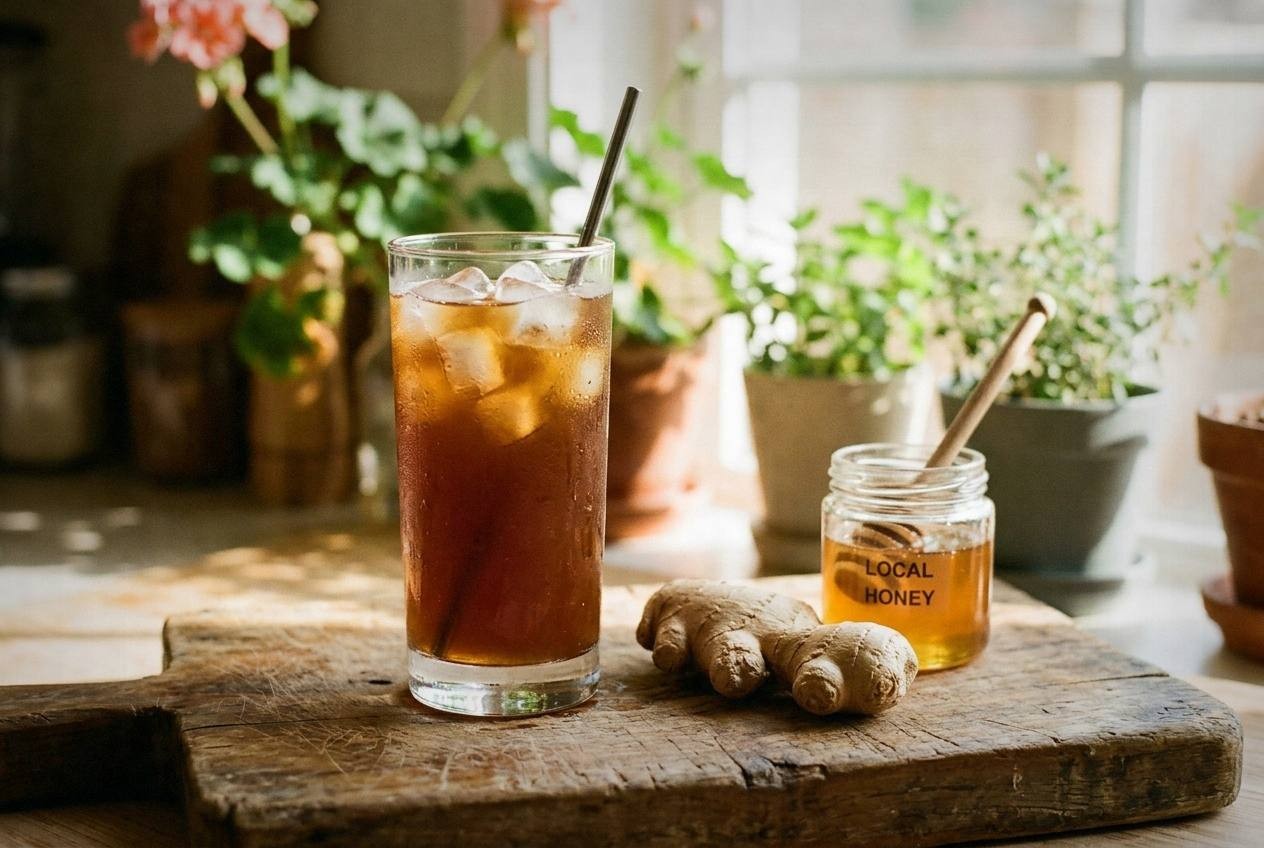
Switchel is a tangy, slightly sweet drink made with apple cider vinegar, lemon juice, honey, and fresh ginger . It tastes sharp and bright, with a vinegar bite that’s softened by the honey. Farmers used to drink it in the fields during haying season and swore the vinegar quenched thirst better than plain water.
The pinch of cayenne adds warmth. Shake or stir the drink before serving because the ginger settles. Make a fresh serving when you want it; the source does not specify a one-week storage period.
Ingredients
- 1 1/4 cups water
- 2 tablespoons unfiltered apple cider vinegar
- 1 tablespoon fresh lemon juice
- 4 teaspoons honey
- 1 teaspoon grated fresh ginger
- 1 pinch ground cayenne pepper
Instructions
- Combine the water, apple cider vinegar, lemon juice, honey, ginger, and cayenne pepper in a glass jar.
- Stir or shake vigorously until the honey dissolves and everything is well mixed.
Serves 1. Ready in 10 minutes.
Recipe basis: Allrecipes’ Spicy Lemon-Ginger Switchel in its Summer 2024 issue. This edition specifies 1 1/4 cups water; the method is paraphrased.
8. Maple Ginger Tea
Fresh ginger tea can be sweetened with maple syrup instead of honey. The ginger gives it a warm bite and the maple softens it. This is caffeine-free, though the drink itself is not a sleep treatment.
Ingredients
- 1-inch piece fresh ginger, thinly sliced
- 1 cup water
- Up to 1 teaspoon maple syrup, to taste
Instructions
- Simmer the ginger in the water for 5 minutes, or up to 10 minutes for a stronger cup.
- Strain into a mug and stir in maple syrup to taste.
Serves 1. Ready in about 10 minutes. Recipe basis: Cookie and Kate’s Fresh Ginger Tea, which explicitly offers maple syrup as a sweetener.
9. Golden Turmeric Tonic
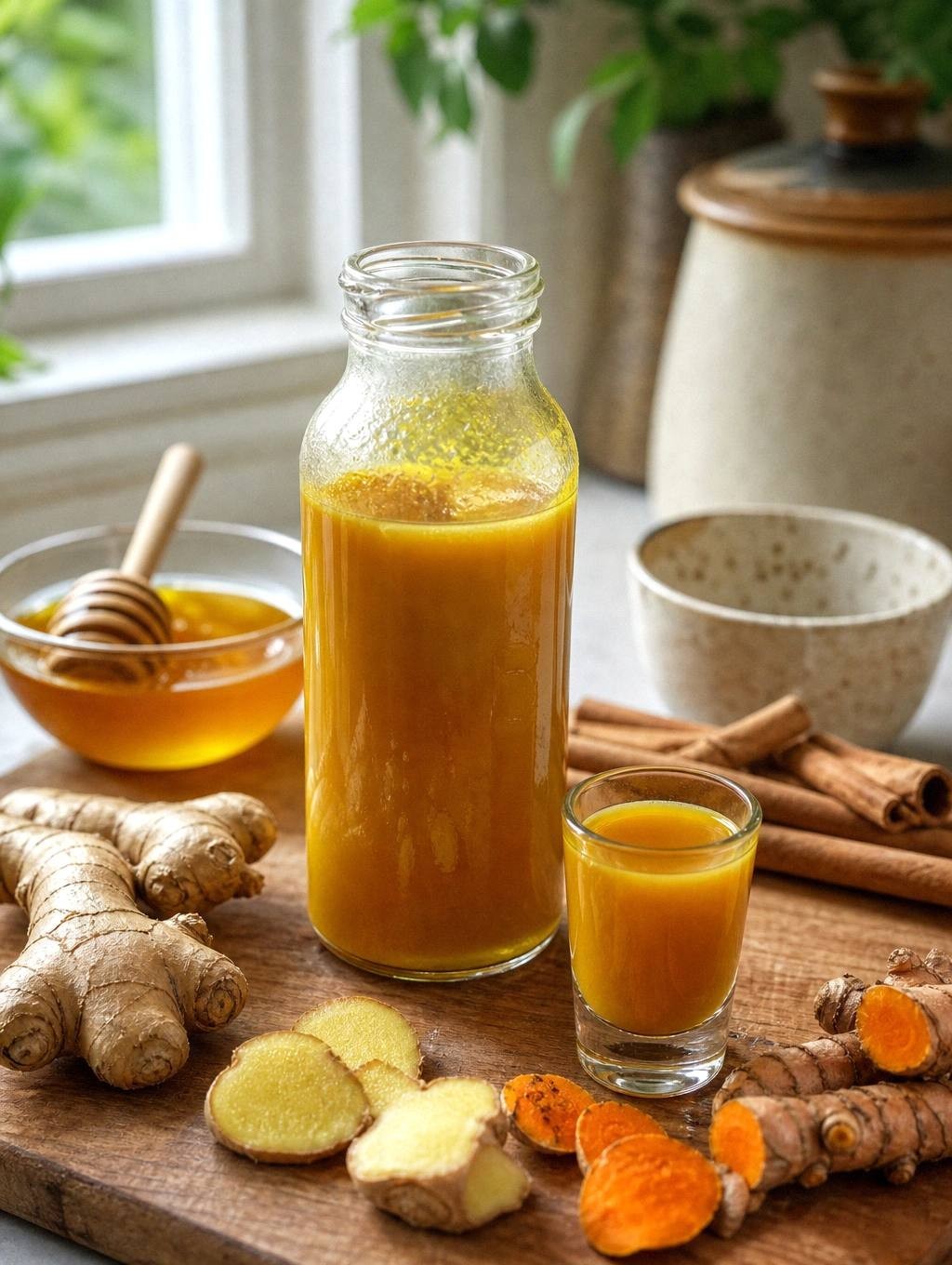
This is a blender-made ginger and turmeric concentrate, rather than a cooked syrup. The small serving is sharp and strong; you can dilute it with hot or sparkling water.
Ingredients
- 3-inch piece fresh ginger, peeled
- 1/4 cup honey or maple syrup
- 1/4 cup fresh lemon juice
- 1/4 cup water
- 1 tablespoon ground turmeric
Instructions
- Blend all five ingredients until the ginger is finely broken down, about 45 seconds.
- Strain through a fine sieve or nut-milk bag if you prefer a smooth drink.
- Serve 1/4 cup as a small shot or dilute it with water. Refrigerate the rest in a clean sealed jar and stir before serving.
Makes about 1 cup. Recipe basis: registered dietitian Desiree Nielsen’s ginger turmeric wellness tonic.
Using these recipes
Keep the ingredient form and amount stated in each published formula when making it for the first time. A substitution is a variation and can change taste or texture; check the original source for its tested options.
Store prepared drinks according to the original source’s directions. No common one-week storage period applies to all nine. Refrigerate promptly and discard anything showing spoilage. Drinks containing citrus or vinegar are not automatically shelf-stable.
These recipes are refreshments. None has been established as a treatment for low energy, sleep problems, illness or immune deficiency.