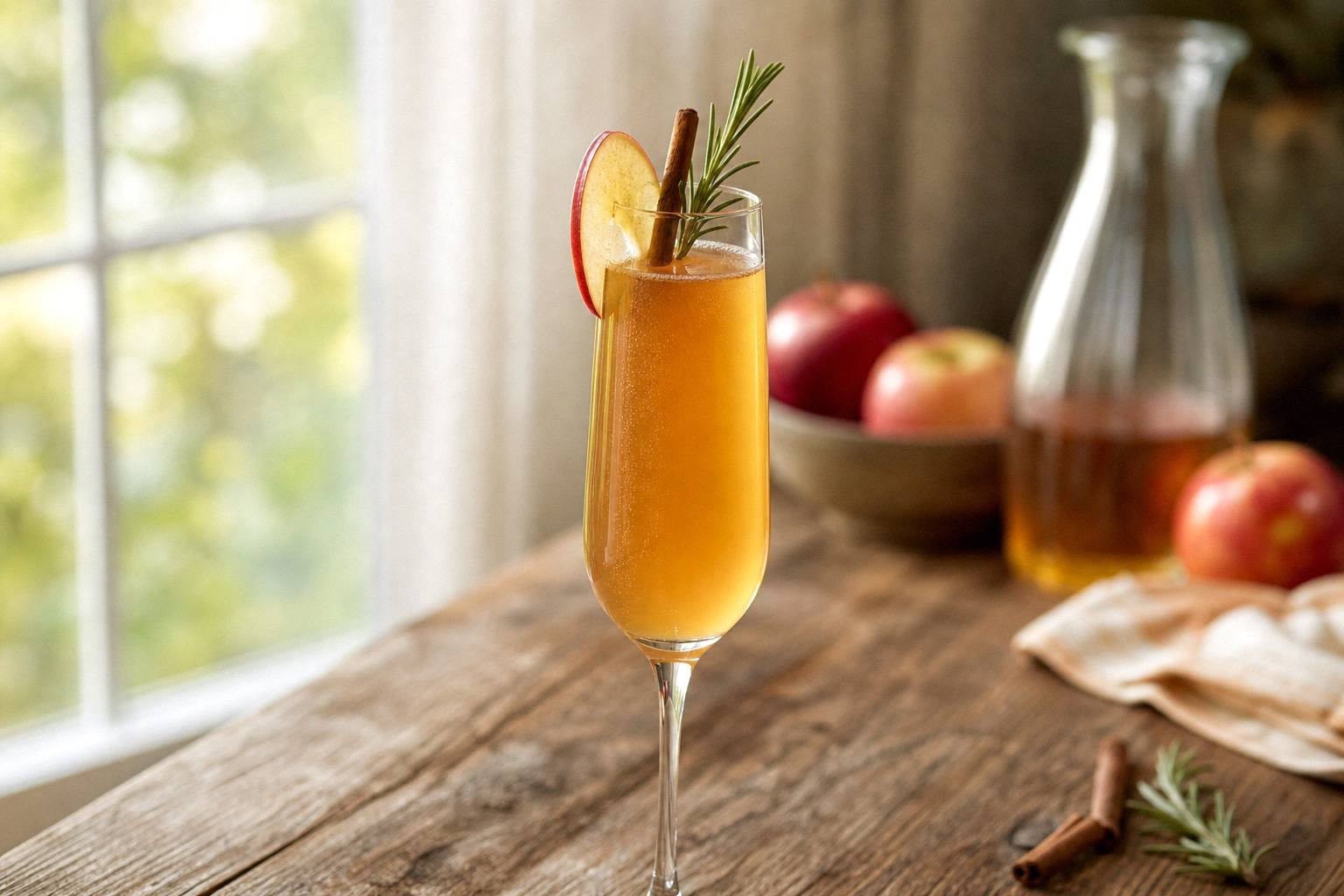
Use cold pasteurized cider and sparkling wine for this fall drink. Orchard cider is not safer or more flavorful simply because it is untreated; FDA juice safety explains the risk of untreated juice. Refrigeration and added alcohol do not substitute for pathogen treatment.
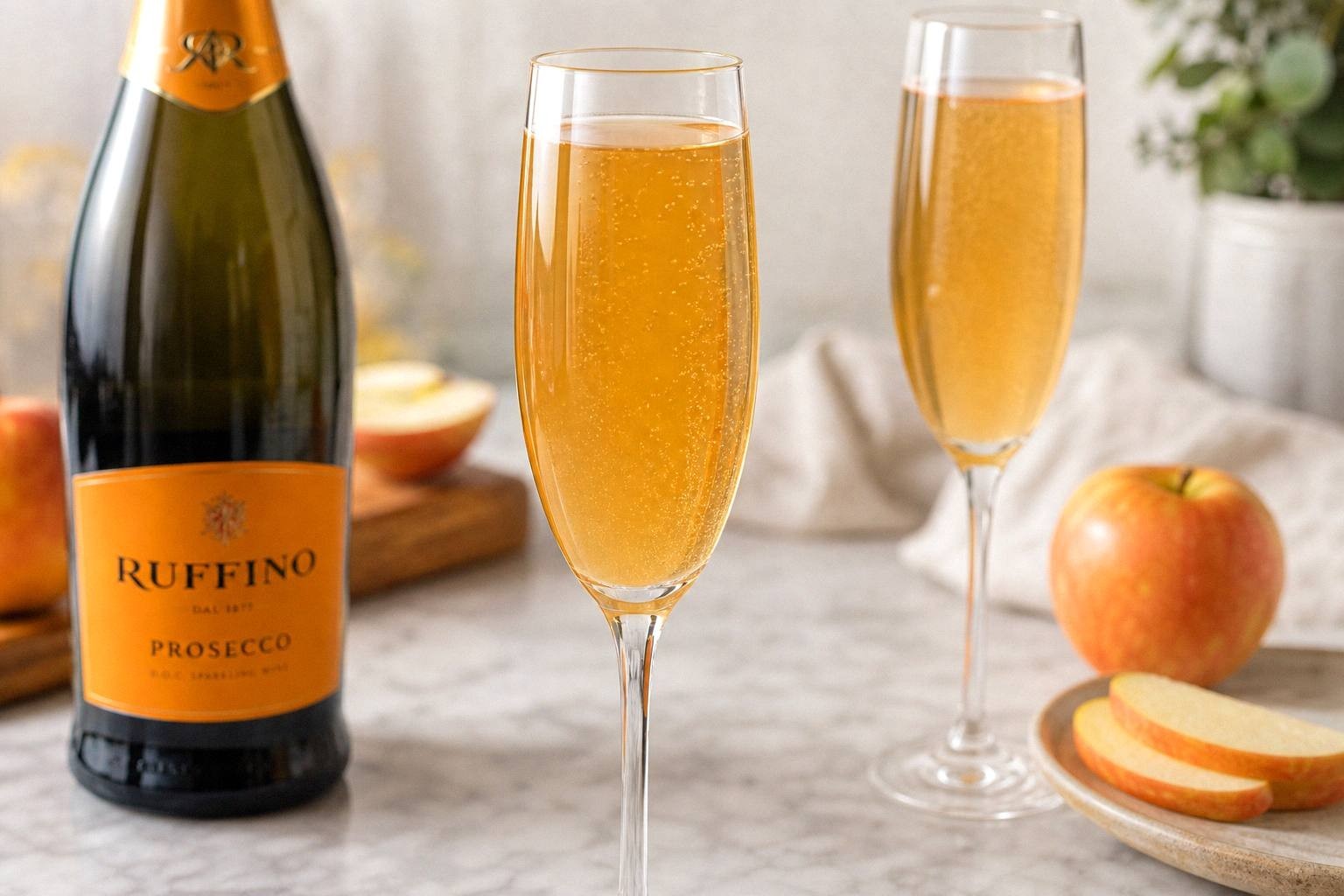
Apple Cider Mimosa
- 2 fluid ounces brandy or dark rum
- 4 fluid ounces chilled pasteurized non-alcoholic apple cider
- 8 fluid ounces chilled dry sparkling wine
- 2 tablespoons granulated sugar for rims
- 1/2 teaspoon ground cinnamon for rims
- 2 tablespoons pasteurized cider to wet rims
- 2 washed thin apple slices, optional garnish
- Mix sugar and cinnamon on a small plate; put the 2 tablespoons rimming cider in a separate bowl. Moisten only the outside rims of two 10-ounce flutes or wine glasses and dip in sugar. Discard used rimming mixtures.
- Pour 1 fluid ounce brandy and 2 fluid ounces cider into each glass. Slowly add 4 fluid ounces sparkling wine; garnish with an apple slice if desired and serve immediately.
Yield: 2 cocktails; 7 fluid ounces each. Time: 5 minutes with chilled ingredients.
Ratio and garnish options
This is a house brandy version with 2 parts cider and 4 parts sparkling wine per glass. Vindulge apple cider mimosa uses 1 part cider to 3 parts wine without brandy. To make that version pour 2 fluid ounces cider and 6 fluid ounces wine in a 10-ounce glass; one 8 oz drink. For a fruitier brandy-free branch use 3 oz cider+5 oz wine, or 4 oz of each for 50:50.
If omitting brandy from the primary recipe, use just 2 oz cider+4 oz wine per glass; it still contains alcohol. Dark rum replaces brandy ounce for ounce. Pasteurized apple juice can replace cider at the same volume, optionally add 1 teaspoon lemon juice per glass. For a sweeter glass stir in 1 teaspoon maple or honey with the cider before adding wine; honey dissolves more easily if mixed with 1 teaspoon warm water first, and that water adds volume. Honey is not for infants under 12 months. Pumpkin pie spice can replace cinnamon at rimming amount 1/2 teaspoon for both glasses.
Wash and slice apples just before serving. For an anti-browning prep, coat the 2 slices in 1 tablespoon lemon juice, cover and refrigerate for up to 1 hour, then drain before garnishing. This is a flavor/prep choice, not preservation; prepare the garnish shortly before serving. A cinnamon stick or star-anise pod is on a separate saucer for decoration, not loose in the drink.
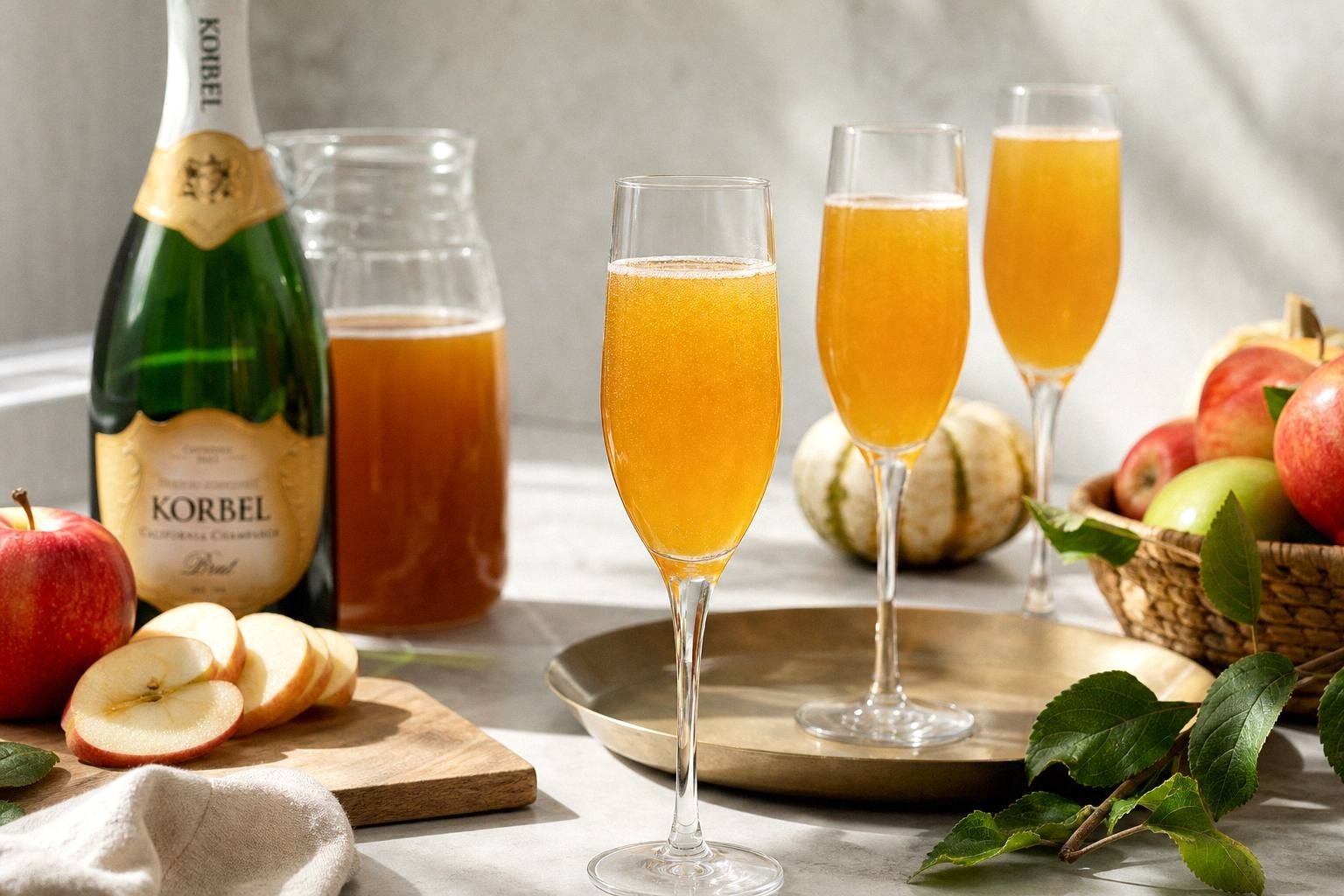
A pitcher with a 750 ml bottle
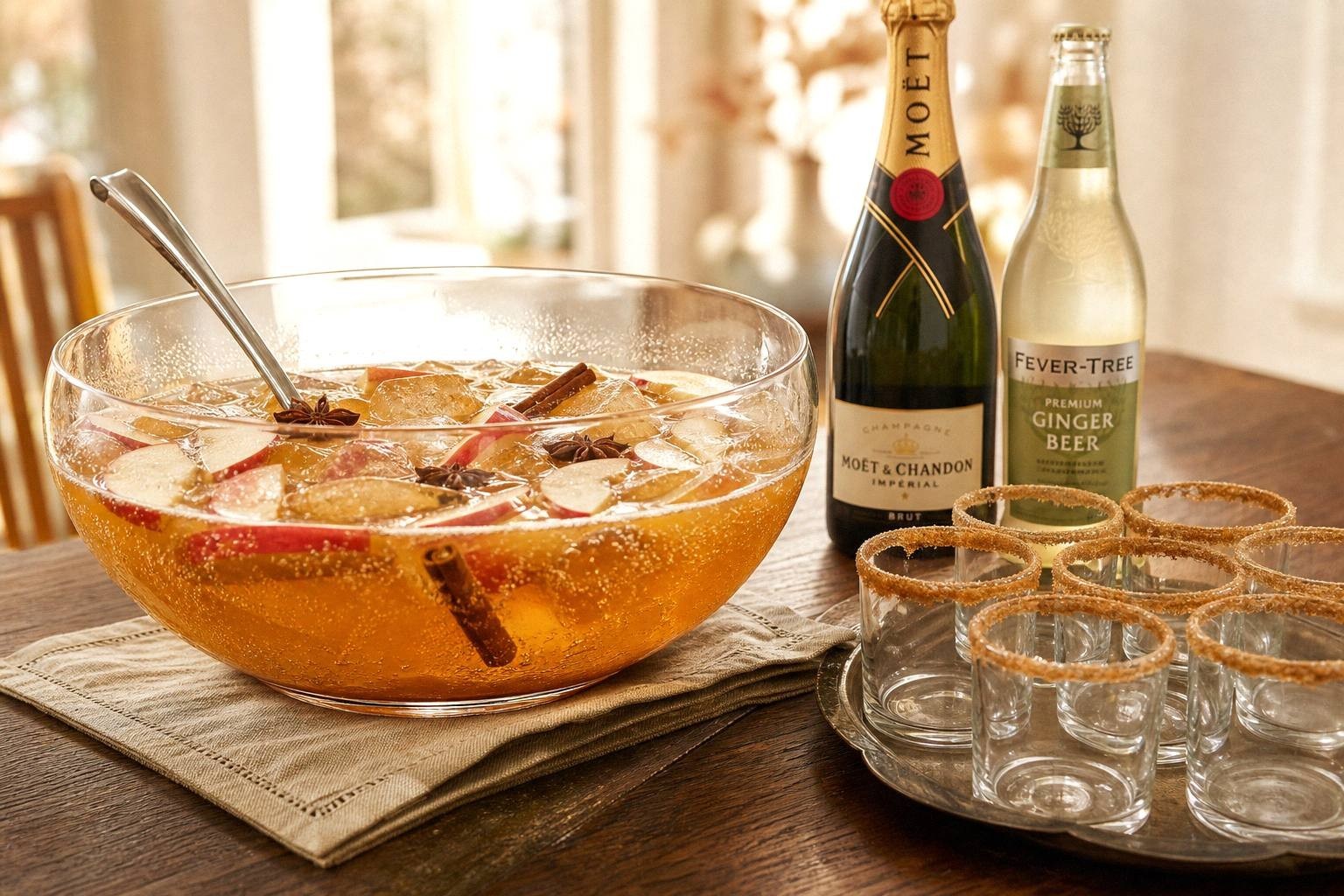
The precisely scaled primary batch makes 6 cocktails from 6 oz brandy, 12 oz cider and 24 oz sparkling wine: 42 oz divided into six 7 oz glasses. A 750 ml bottle contains about 25.36 US fluid ounces, some wine will remain after measuring 24 oz. Add wine just before serving.
The original bottle-plus-cider option uses 1 whole 750 ml wine bottle and 12 fluid ounces cider, with no brandy. That makes about 37.36 fluid ounces, which can be divided into 6 portions of about 6.23 oz. It is not the same recipe as the primary card. Double or triple both ingredients as needed and use a vessel larger than the finished volume. Keep juice and fruit cold; add bubbles at service.
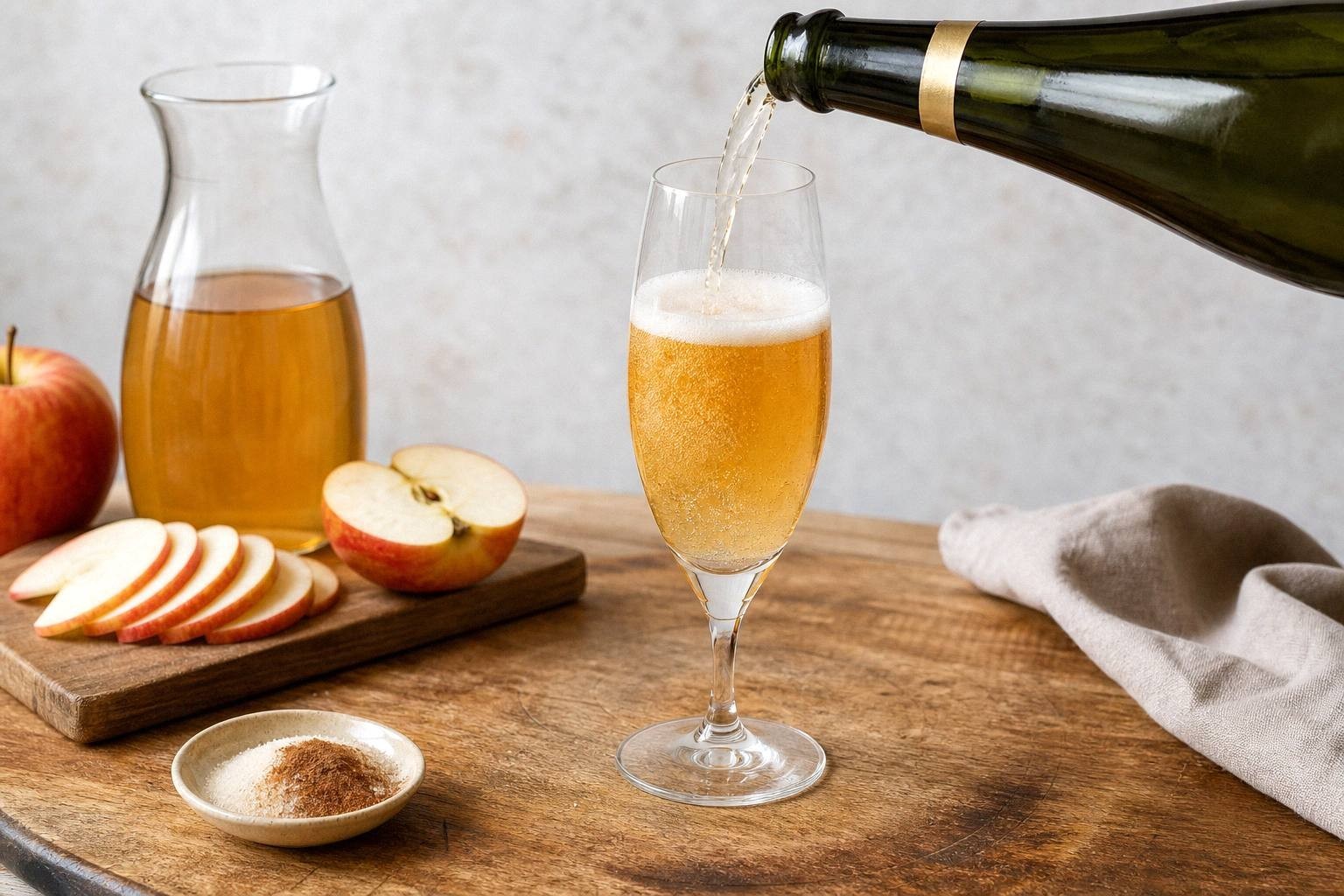
Alcohol-free cider spritz
Omit both the brandy and wine. Pour 3 fluid ounces pasteurized cider and 1 fluid ounce cold sparkling water per glass, following the cider-forward nonalcoholic ratio in Vindulge apple cider mimosa . Makes one 4 oz drink; build in 2 minutes. Alternatively use 2 oz cider+4 oz commercial 0.0% sparkling apple juice for a sweeter 6 oz drink. Check labels for actual alcohol, and do not substitute hard cider.
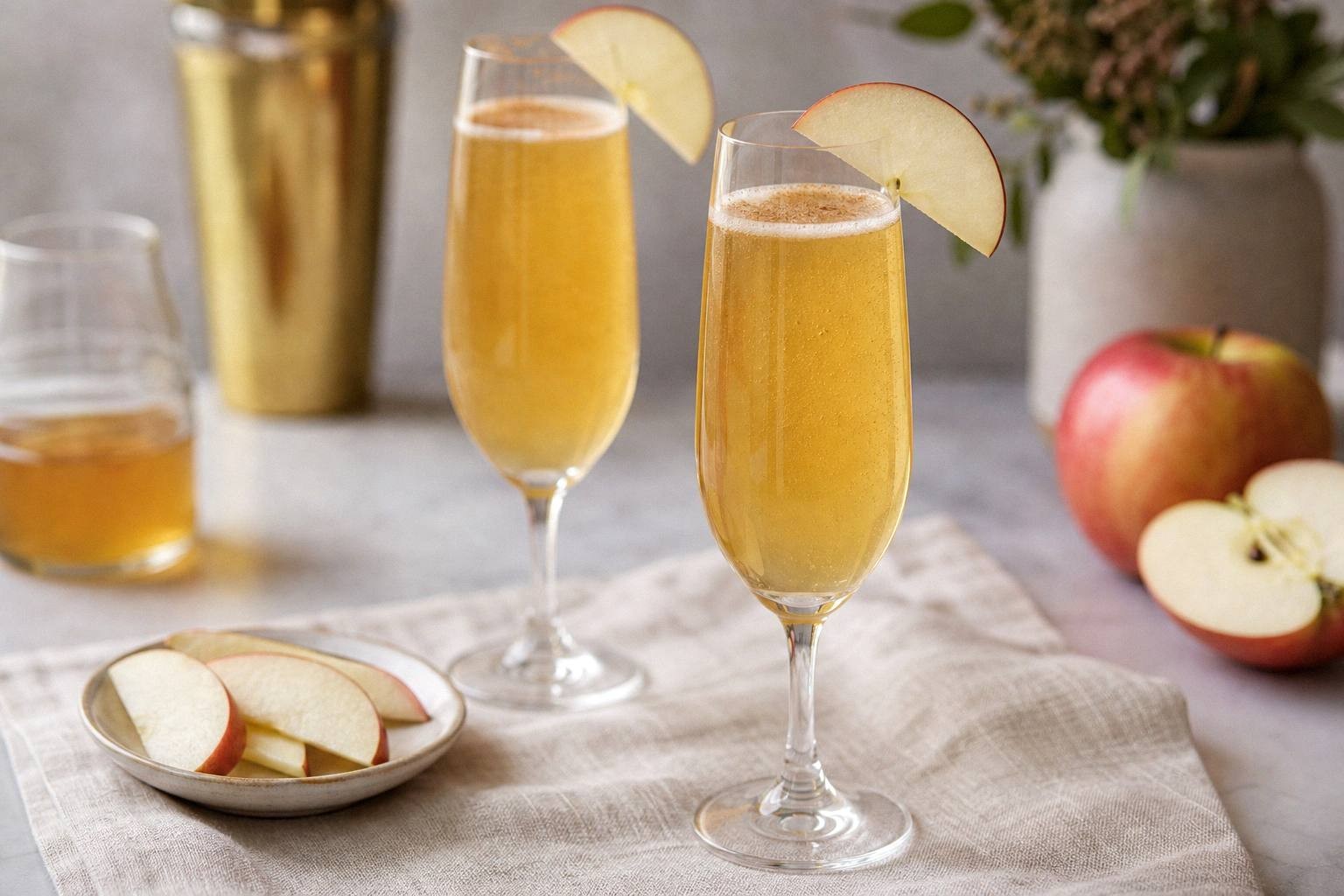
Cider and fruit sangria variation
Combine 12 fluid ounces pasteurized cider, 1 washed cored sliced apple, 1 washed cored sliced pear and 1/4 cup washed cranberries in a covered pitcher. Refrigerate 2 hours, within 24 hours total. Add 1 chilled 750 ml bottle sparkling wine just before serving; divide the entire liquid and fruit into 6 portions. This is a house fruit mimosa/sangria variation, about 37.36 oz liquid plus fruit; do not add the wine both before and after chilling. For a still-wine branch use 1 bottle 750 ml still white wine in the 2-hour fruit steep, then add 1 oz sparkling water to each of the 6 portions at service. This branch remains alcoholic.
Refrigerate fresh bases and cut fruit promptly at 40 F (4 C) or below and use within 24 hours, a conservative house limit rather than a tested shelf life. Cool hot bases in shallow heat-safe containers or an ice-water bath, then refrigerate; do not wait for a large pitcher to reach room temperature on the counter. Keep cold servings on ice. Discard perishables after 2 hours without temperature control, or 1 hour above 90 F (32 C). Keep purchased milk, juice and syrup according to their labels, using the shorter limit. Wash produce under running water before cutting; discard rotten fruit.
Recipe comparison: Vindulge apple cider mimosa . The primary brandy recipe and fruit variations are measured house adaptations; choose dry wine you enjoy and chill all mixers first. Chilling time depends on starting temperature and vessel size.
Preparation and handling references: FDA serving safe buffets , CDC foods and drinks to avoid or limit .