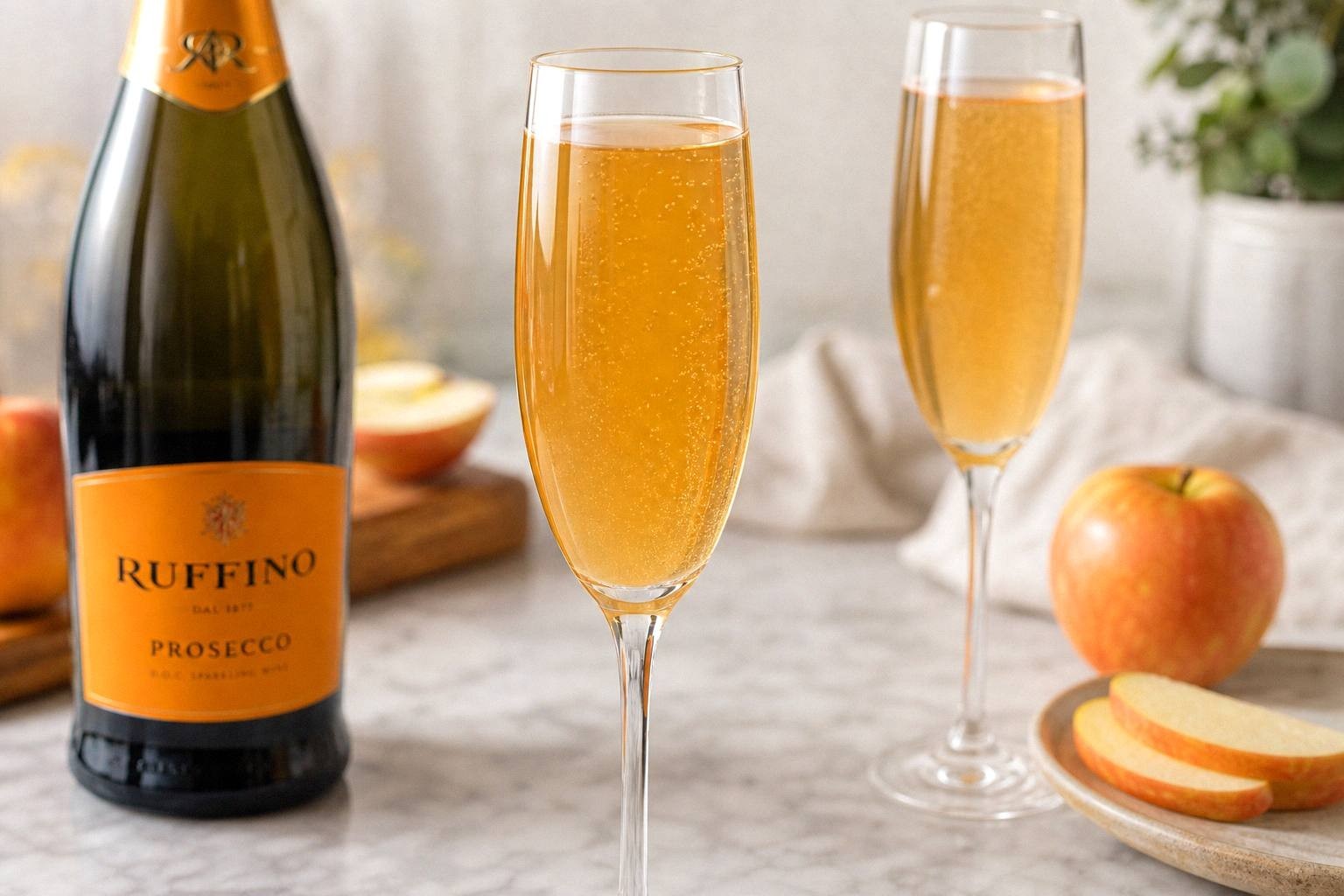
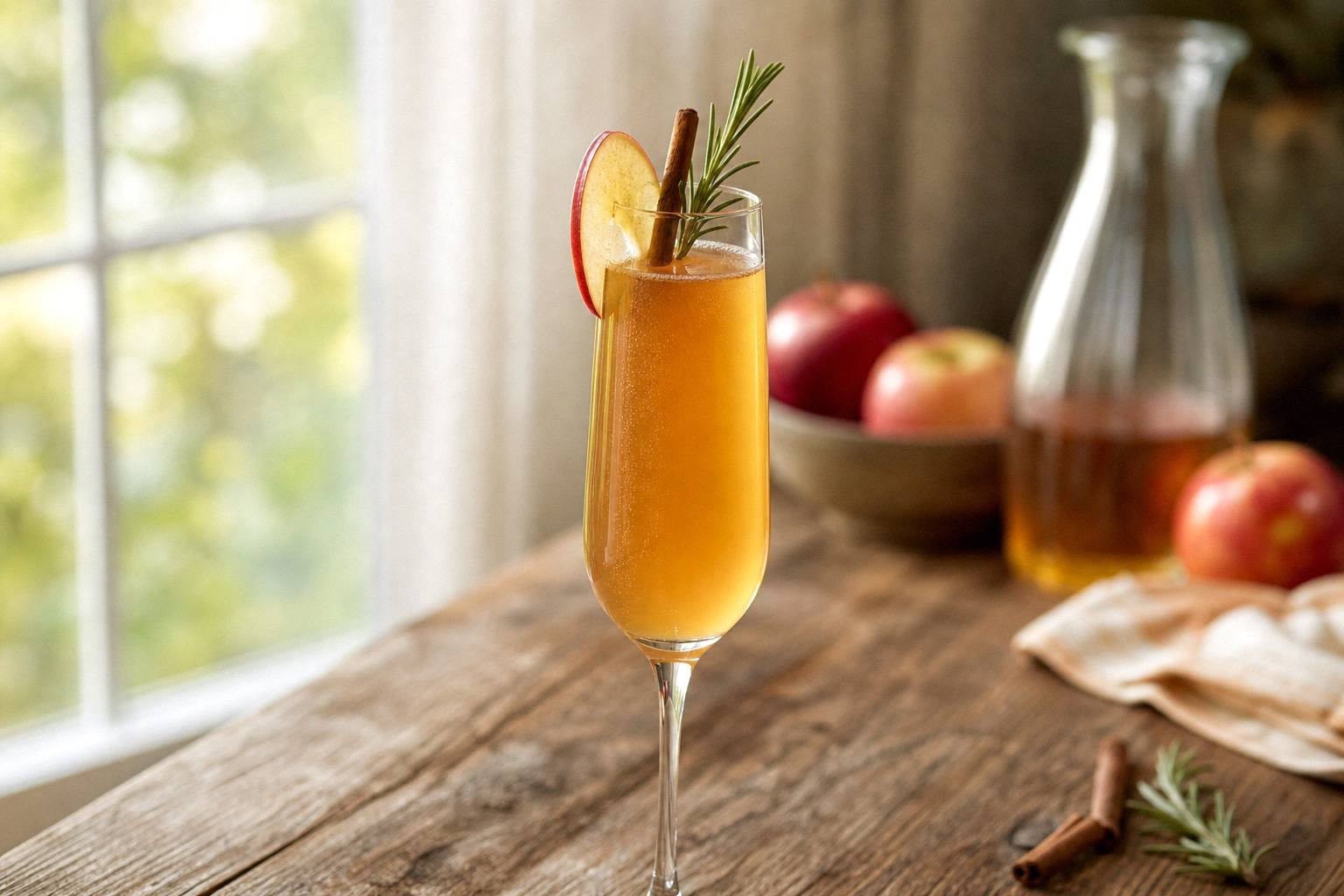
An apple cider mimosa swaps orange juice for fresh apple cider and turns the classic brunch cocktail into something that tastes like fall in a glass. The cider brings orchard sweetness and a little spice, the champagne keeps it bright and bubbly, and a cinnamon sugar rim makes every sip feel like a celebration. It takes two minutes to mix and works for everything from Thanksgiving morning to a weekend brunch with friends.
Why Apple Cider Works Better Than You’d Expect
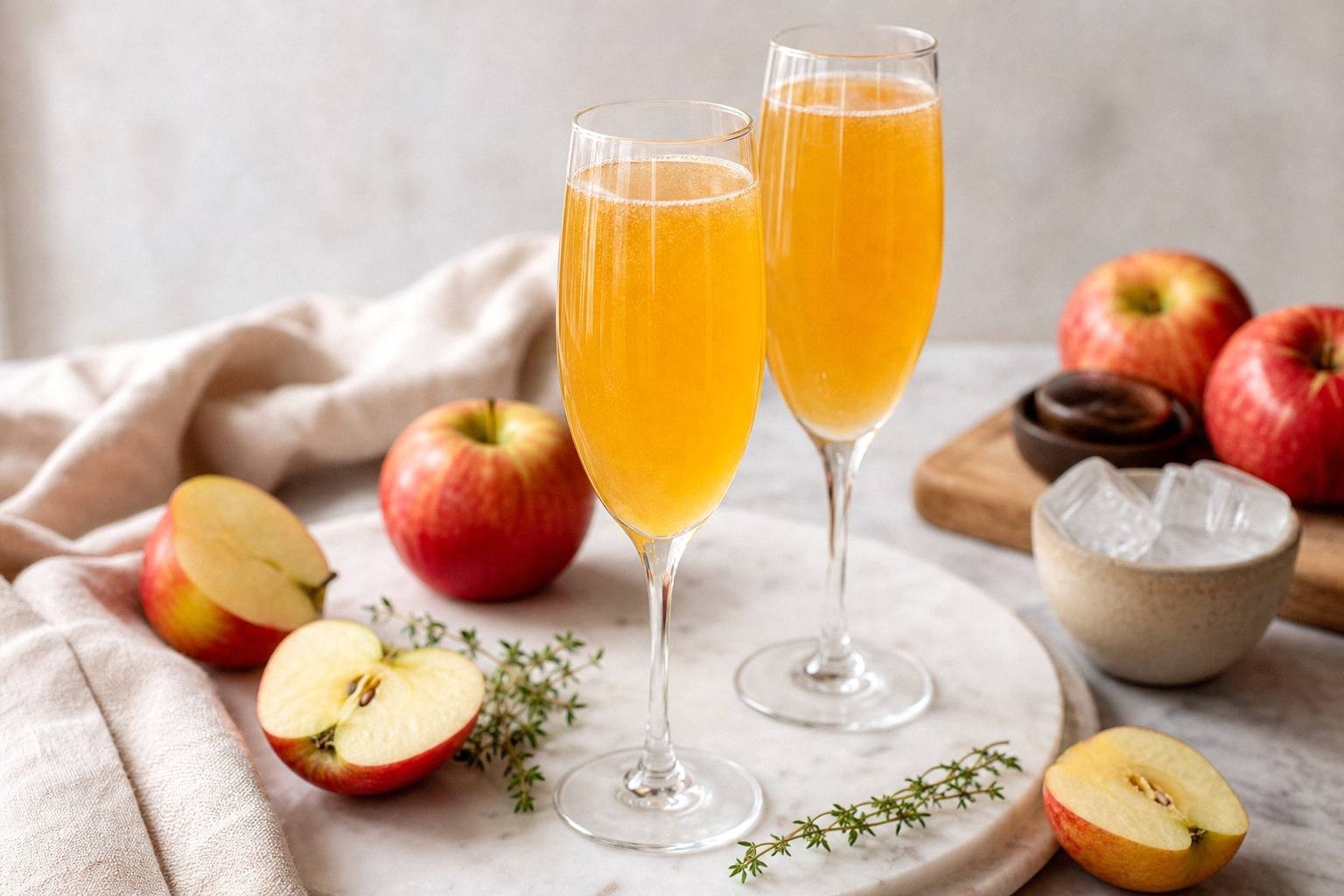
Apple cider has body that orange juice doesn’t. It’s thicker, cloudier, and carries tannins from the whole pressed apple, so it stands up to sparkling wine instead of disappearing under it. The natural sweetness varies depending on the apples used, but most fresh cider leans tart enough to balance champagne’s dryness without turning the drink into apple soda.
Sparkling wine needs acidity to stay interesting, and cider delivers. The malic acid in apples has a sharper, cleaner bite than citric acid, so the mimosa tastes crisp even when you pour it half-and-half. That balance is why this drink works as well at noon as it does at breakfast.
Cider also brings a faint spice note, especially if it’s fresh-pressed in the fall when orchards blend in varieties like Winesap or Jonathan. Those apples carry cinnamon and clove undertones naturally, so the drink tastes layered even before you add a cinnamon stick. Store-bought cider works fine, but fresh-pressed from a farm stand or orchard will give you a rounder, more complex flavor.
Ingredients
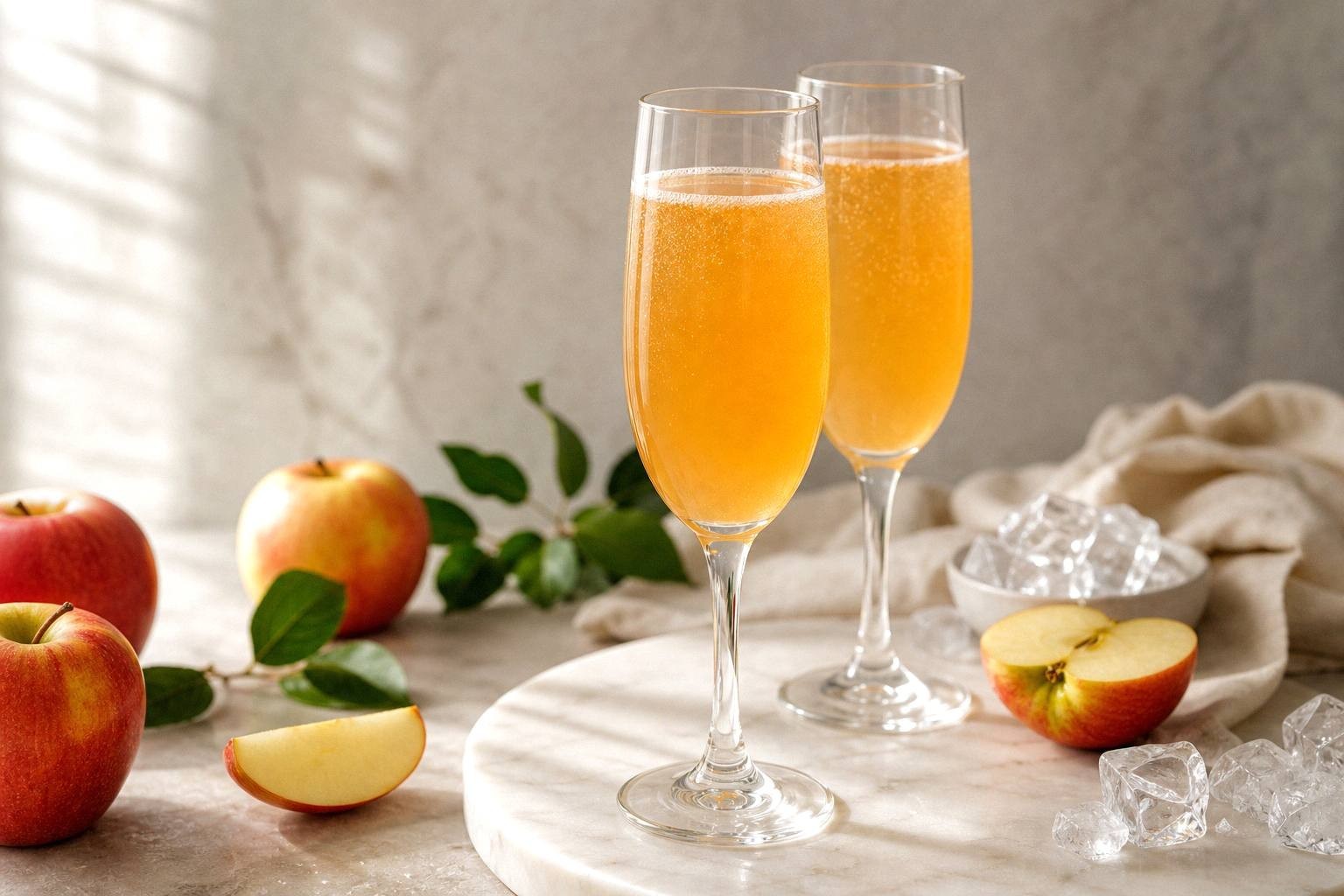
- 4 oz champagne
- 2 oz sparkling apple cider
- cinnamon stick (optional)
- rosemary spring (optional)
- apple slice (optional)
Instructions
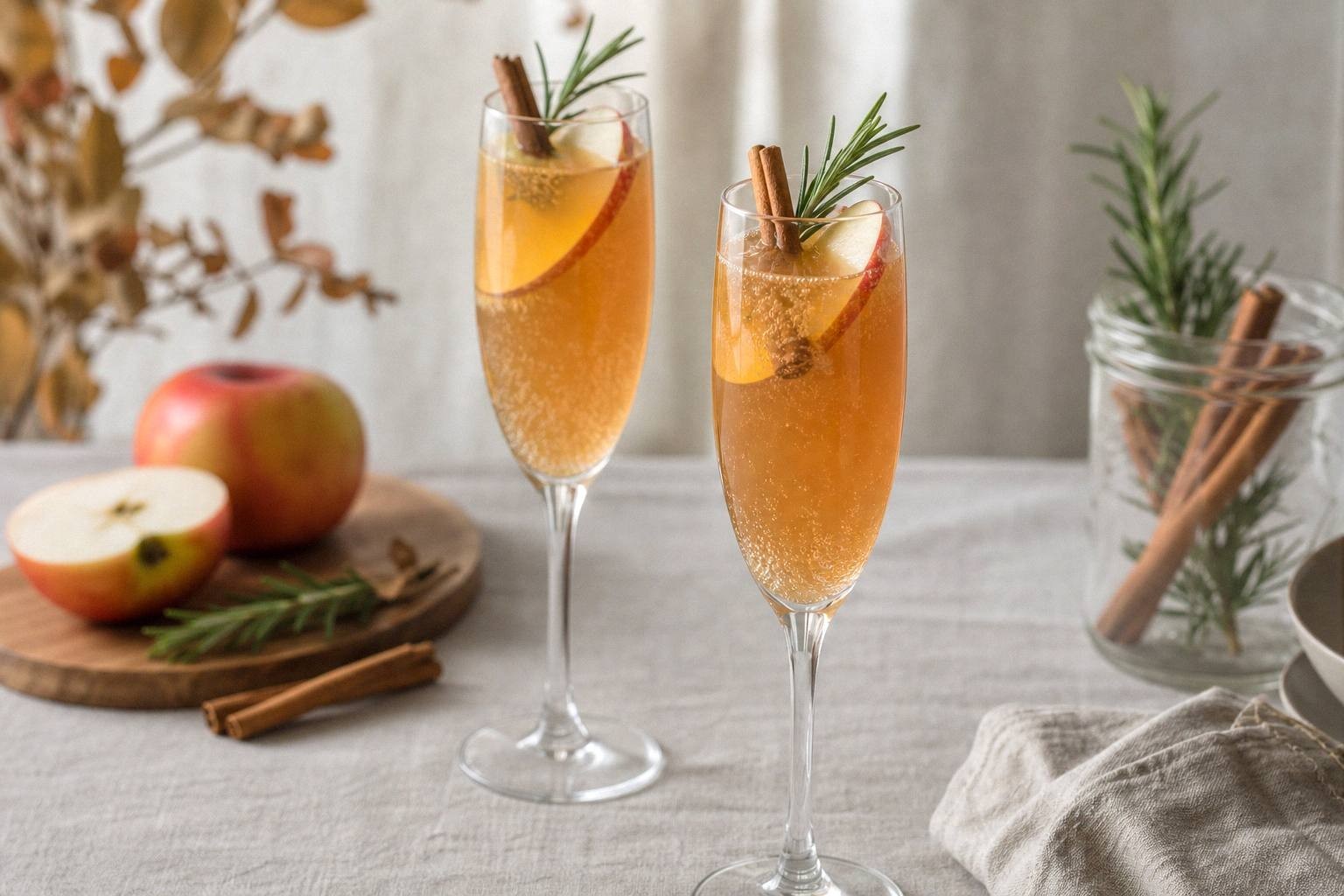
- Pour 4 oz of champagne into a champagne flute.
- Follow with 2 oz of regular or sparkling apple cider.
- Drop in a cinnamon stick, a rosemary sprig, and a slice of apple, then serve right away.
Choosing the Right Sparkling Wine
| Sparkling Wine | Characteristics | Best For |
|---|---|---|
| Brut Champagne | Dry enough to let cider’s sweetness come through without tasting like candy | Special occasions, pouring two glasses for a special breakfast |
| Prosecco | Softer bubble, costs less, works just as well as champagne | Making a pitcher for a crowd, everyday brunch |
| Cava | Drier than prosecco, less expensive than champagne, enough structure to hold up to cider’s weight | Splitting the difference between prosecco and champagne |
Avoid anything labeled “extra dry” or “dry” in sparkling wine, because those terms mean sweeter, not drier. A bottle marked brut, extra brut, or brut nature will keep the drink balanced.
Chill the bottle completely before you open it. Warm sparkling wine foams over when you pour it into cider, and you’ll lose half the bubbles before the drink even reaches the table. An hour in the fridge works, or fifteen minutes in an ice bath if you’re in a hurry.
The Cinnamon Sugar Rim
The rim is what makes this drink look like fall instead of just tasting like it. Mix three parts sugar to one part cinnamon on a small plate, then use apple cider to wet the glass edge. Water works, but cider tastes better if any drips into the drink, and it dries faster so the sugar sticks without sliding off.
Dip only the outer edge of the rim, not the inside. If sugar coats the inside of the glass, it dissolves into the first sip and makes the drink too sweet. Roll the glass at an angle through the cinnamon sugar so you get an even coating about a quarter inch wide, then let it sit for a minute before you pour. The sugar will set enough that it won’t wash off when the champagne hits it.
If you don’t have ground cinnamon, pumpkin pie spice works and adds a little nutmeg and clove. Brown sugar makes a darker, stickier rim that tastes like caramel, but it clumps more than white sugar, so you’ll need to press the glass into it rather than rolling it.
Ratio and Strength Options
- Standard ratio (1 part cider to 2 parts champagne): Keeps the drink light and bubbly with enough apple flavor to know what you’re drinking
- Cider-forward ratio (2 parts cider to 1 part champagne): Tastes more like spiced cider and less like a cocktail, but still balanced with brut sparkling wine
- With brandy (add 1 oz per glass): Adds warmth without covering up the apple or bubbles; fruit-forward sweetness blends into the cider
- With dark rum (add 1 oz per glass): Brings molasses and spice that make the drink taste richer; strong enough that two glasses is probably your limit
- Non-alcoholic version: Replace champagne with sparkling apple cider or sparkling white grape juice; cut regular cider by half and add a squeeze of lemon juice to balance sweetness
- Non-alcoholic with club soda: Use club soda for less sweetness, but add a splash of apple juice so the drink doesn’t taste thin
Batch Preparation for a Crowd
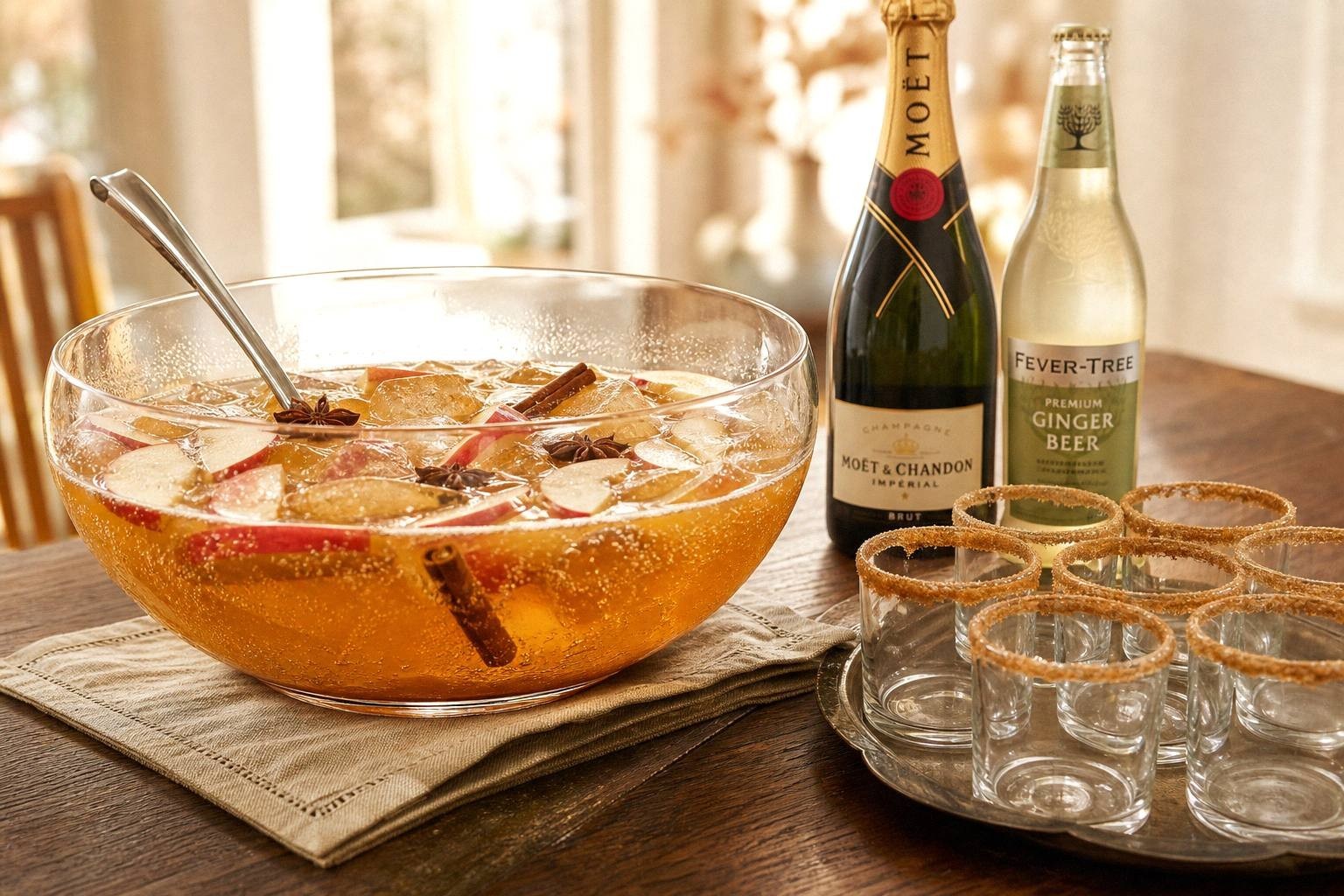
You can scale this recipe up to serve a pitcher, but you have to mix it right before you serve it or the champagne goes flat. Measure out the cider and brandy into a pitcher and keep it chilled, then add the champagne just before guests arrive. One 750 ml bottle of sparkling wine plus 12 ounces of cider and 6 ounces of brandy will fill six glasses.
If you’re serving more than six people, prep the cinnamon sugar rim mixture ahead and store it in a sealed container. It stays good for weeks, and you can rim glasses in batches as people arrive. Set out a shallow dish of cider for dipping and let guests rim their own glasses if you’re pouring drinks over the course of an hour or more.
For a true crowd, double or triple the base ratio and keep the cider and brandy in the fridge in a large pitcher or drink dispenser. Pour champagne into each individual glass first, then top it with the cider mixture. Pouring champagne last makes the drink foam over, so always add the still ingredients first and the bubbles last.
What Goes Wrong and How to Fix It
- The drink foams over when you pour it. The champagne is too warm, or you’re pouring it too fast. Chill the bottle completely and pour slowly down the side of the glass, not straight into the center.
- The cinnamon sugar won’t stick to the rim. The glass edge is too dry. Dip it into the cider again and make sure the rim is visibly wet before you press it into the sugar.
- The mimosa tastes too sweet. You’re using a sparkling wine that’s labeled “dry” or “extra dry,” which actually means sweeter. Switch to brut, or add a squeeze of lemon juice to cut the sugar.
- The drink tastes flat even though the champagne was just opened. You’re using sparkling apple cider instead of regular cider, so you’re adding bubbles to bubbles and they’re canceling each other out. Use still cider and save the sparkling version for the non-alcoholic option.
- The apple flavor disappears under the champagne. You’re pouring too much sparkling wine. Flip the ratio to two parts cider and one part champagne, or add an extra ounce of cider to each glass.
Garnishes That Actually Add Something
An apple slice is the obvious garnish, and it works because it floats and looks pretty, but it also flavors the drink as it sits. Cut the apple into thin rounds so you can see the star-shaped seed pattern in the center, then make a small slit in one edge so it perches on the rim. Honeycrisp, Fuji, or Gala apples stay white longer than other varieties and won’t brown before the drink is gone.
A cinnamon stick is more than decoration. Drop it into the glass and use it to stir the drink, and it will release a little more spice as the mimosa sits. Fresh rosemary works the same way and adds a piney, herbal note that makes the drink smell like a holiday.
If you want to lean into caramel apple territory, drizzle a thin line of caramel sauce inside the glass before you pour the cider and champagne. It will streak down the side and sweeten the drink slightly without making it syrupy. Skip the rim sugar if you’re adding caramel, or the drink will be too sweet to finish.
FAQ
What is the ratio of apple cider to champagne in a mimosa?
The standard ratio is one part apple cider to two parts champagne, which gives you a light, bubbly drink with clear apple flavor. If you want the cider to be more prominent, use equal parts cider and champagne, or go as far as two parts cider to one part champagne for a drink that tastes more like spiced cider with bubbles.
Can I use prosecco instead of champagne?
Yes, and most people do. Prosecco costs less than champagne and has a softer, fruitier flavor that works well with apple cider. Just make sure it’s labeled brut so the drink doesn’t turn out too sweet. Cava is another good option and sits between prosecco and champagne in both price and dryness.
Should I use sparkling or regular apple cider?
Use regular still apple cider, not sparkling. Sparkling apple cider is already carbonated, so when you mix it with champagne the bubbles compete and the drink tastes flat and confused. Still cider lets the champagne provide all the effervescence, and the flavors stay clear.
Can I make apple cider mimosas ahead of time?
No. The champagne will go flat within minutes of mixing, so you have to pour these drinks right before you serve them. You can prep the cider and brandy in a pitcher and keep it chilled, then add the champagne just before guests arrive, but once the sparkling wine is in the glass the clock is ticking.
How do I make a non-alcoholic apple cider mimosa?
Replace the champagne with sparkling white grape juice or sparkling apple cider, and skip the brandy. The drink will be sweeter without the alcohol, so cut the amount of regular cider in half and add a squeeze of lemon juice to balance it. Club soda works too if you want less sweetness, but add a splash of apple juice so the drink doesn’t taste thin.
What is the difference between apple cider and apple juice?
Apple cider is pressed from whole apples and left unfiltered, so it’s cloudy, thicker, and tastes more complex. Apple juice is filtered and often pasteurized, which makes it clear, sweeter, and more shelf-stable. Cider has more body and tannins, so it holds up better in cocktails. For this mimosa, cider is the better choice because it won’t get lost under the champagne.
Conclusion
An apple cider mimosa is what happens when you take the brunch classic and give it a fall wardrobe. The cider brings orchard sweetness and enough body to stand up to champagne, the cinnamon sugar rim makes it look like you tried, and the whole thing comes together in less time than it takes to brew coffee. Make it for Thanksgiving breakfast, a weekend brunch, or any morning that deserves something better than orange juice and bubbles.