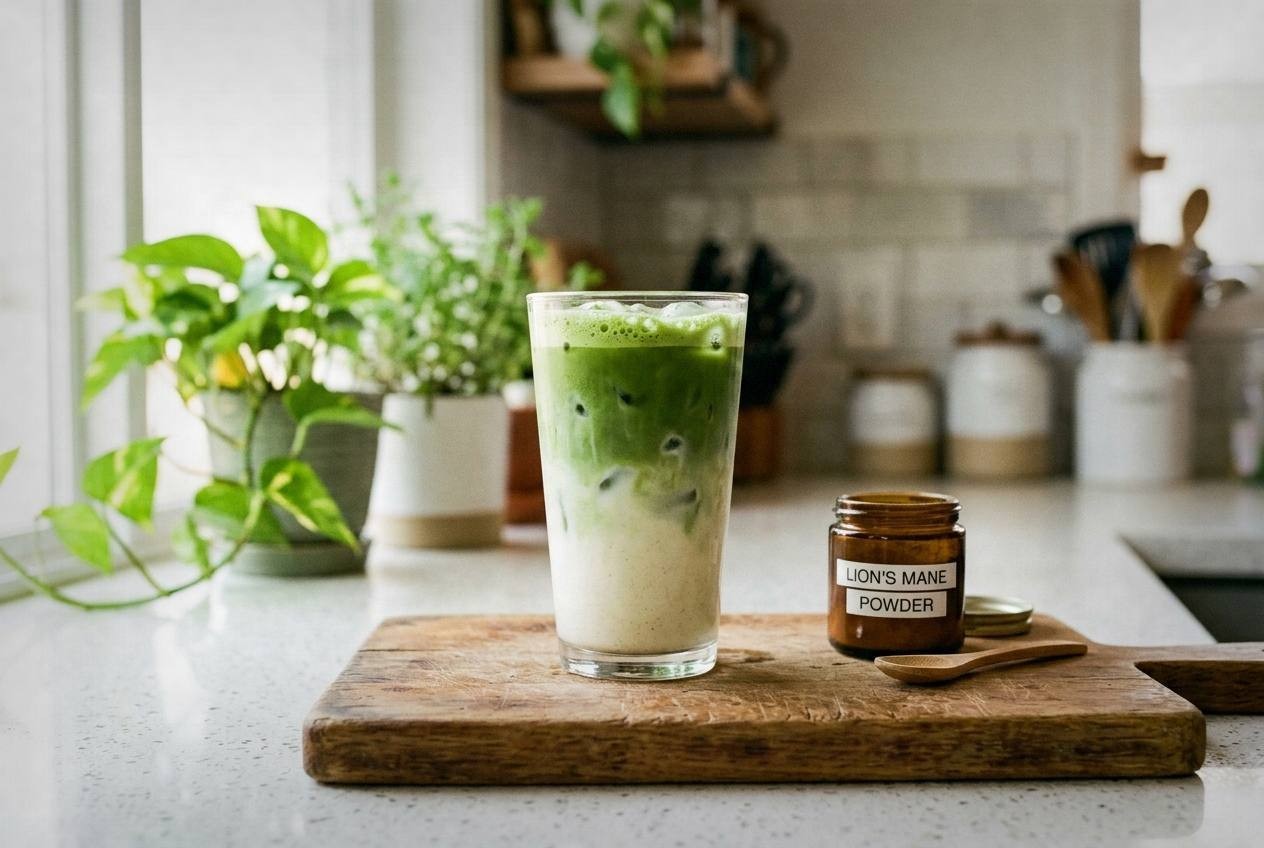
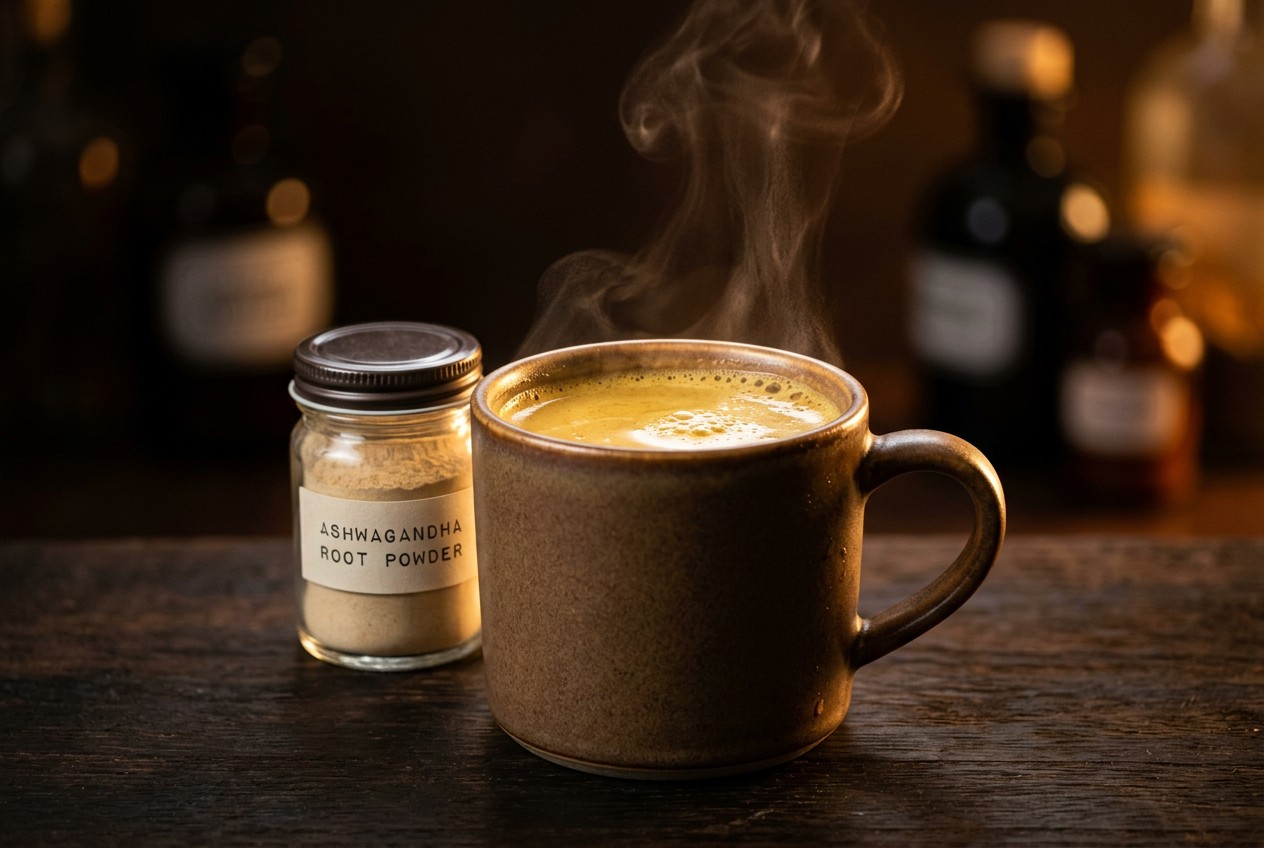
Ashwagandha drink recipe with warming spices and honey. The Ayurvedic adaptogen root whisked into warm milk for a calm, caffeine-free afternoon.
Why You Will Love This
This ashwagandha drink tastes like liquid calm with a backbone. The earthy root mellows into something almost sweet when paired with cinnamon and honey, while ginger adds a gentle heat that wakes you up without the crash. It delivers steady energy and genuine stress relief in under five minutes.
The Story Behind It
Ashwagandha has anchored Ayurvedic medicine for over 3,000 years, prescribed as a rasayana (rejuvenative tonic) to build resilience during periods of physical or mental strain. Spring brings its own kind of stress as we emerge from winter’s quiet, and this adaptogen drink helps your nervous system adjust without forcing anything. I make this most afternoons when the day starts to fray at the edges.
What You Will Need
- 1 cup warm milk (dairy or plant-based)
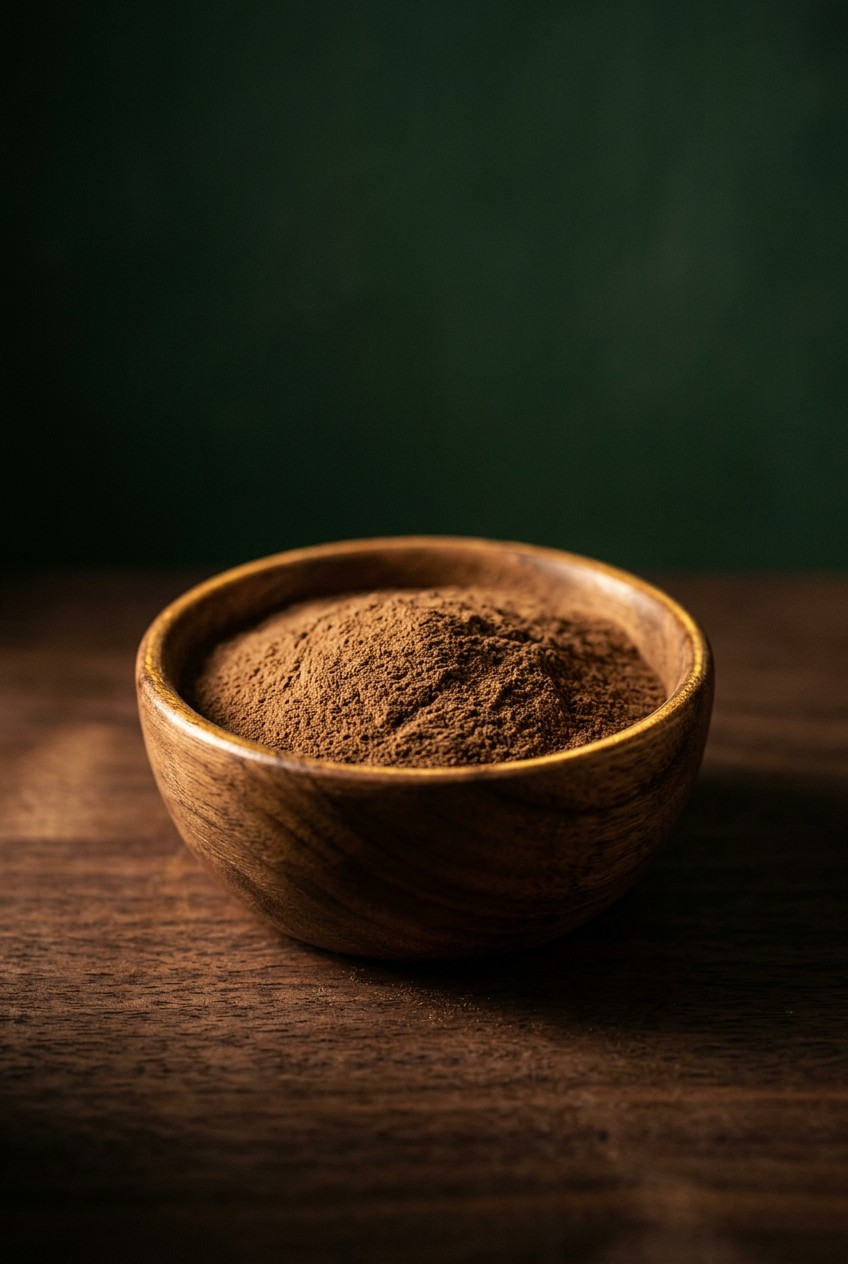
- 1/2 teaspoon ashwagandha powder
- 1/4 teaspoon ground cinnamon
- 1/8 teaspoon ground ginger
- 1 teaspoon raw honey
- Pinch of black pepper
How to Make It
- Warm the milk in a small saucepan over medium heat until steaming but not boiling.
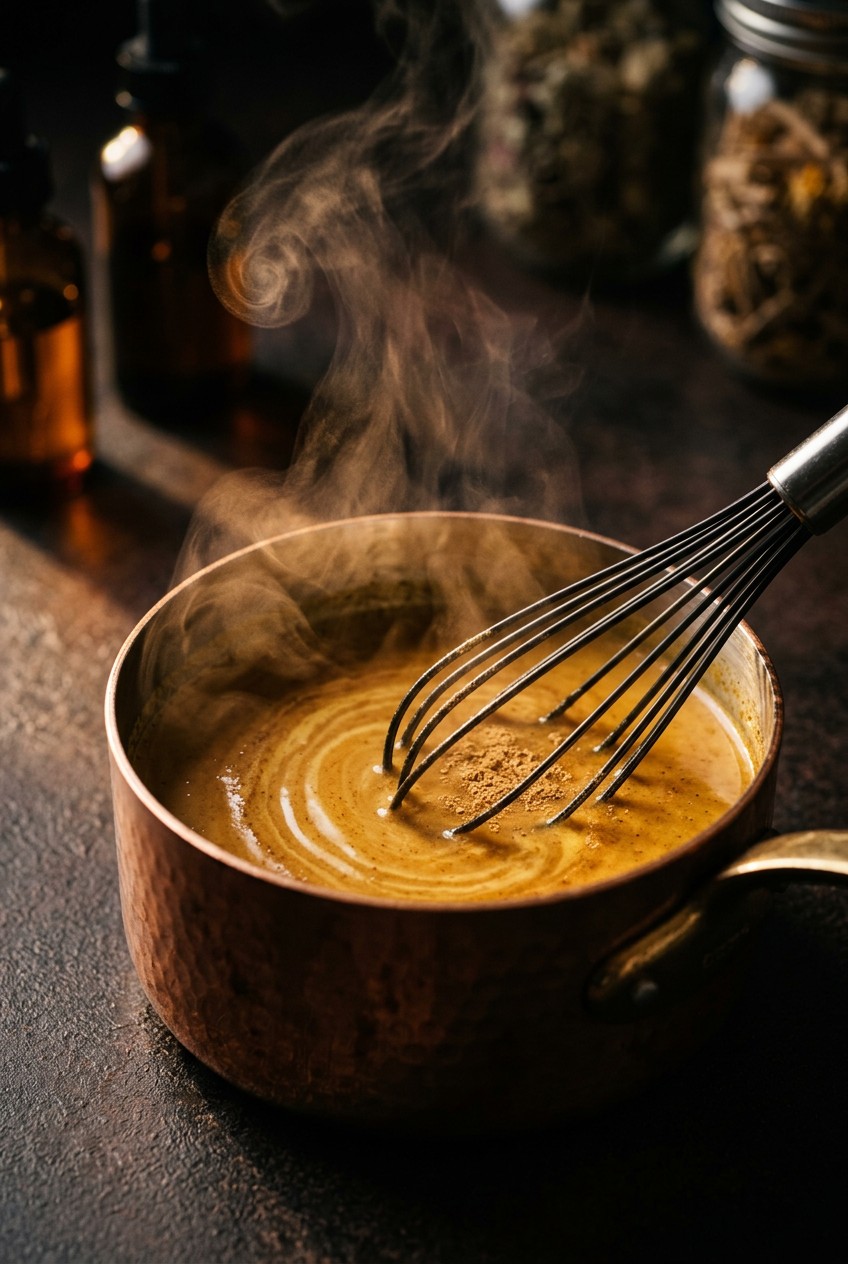
- Remove from heat and whisk in ashwagandha powder, cinnamon, and ginger until no clumps remain.
- Add honey and black pepper, stirring until honey dissolves completely.
- Pour into a mug and drink while warm.
Herbalist Notes
Ashwagandha is what herbalists call an adaptogen, a herb the tradition treats as something that helps you meet stress rather than something that switches you off. It has held that place in Ayurvedic practice for a very long time, which is a different sort of evidence from a trial, and I am not going to dress it up as one. What I can tell you is what a half teaspoon does in a mug: it goes earthy, faintly bitter, a little like the smell of a root cellar, and the cinnamon and honey round that off into something you will actually finish.
Black pepper is the classic companion to root powders in Ayurvedic preparations, which is why the pinch is here rather than as an accident of the spice rack. It earns its place on taste alone too, a faint heat at the back of the sip that keeps warm milk from going flat.
Most people take daily ashwagandha without trouble, but Ayurvedic practitioners traditionally recommend cycling it (5 days on, 2 days off) rather than drinking it every day forever. Start with this recipe once daily in the afternoon, in that stretch when energy naturally dips and many people reach for coffee or sugar.
Make It Your Own
Swap the milk for warm water and add a tablespoon of tahini if you want a lighter, slightly nutty version. The fat in tahini still helps absorption without the heaviness of dairy.
For a cold adaptogen drink, blend all ingredients with ice and a frozen banana. The texture turns creamy and almost milkshake-like, which makes ashwagandha’s earthiness more approachable if you’re new to it.
Add 1/4 teaspoon of turmeric to turn this into a more anti-inflammatory drink recipe. The combination supports joint health and works especially well after physical activity.

Common Questions
How long does ashwagandha take to work?
Longer than one mug, and that is the most honest answer I have. Ashwagandha is not a herb with a first-sip effect, and anyone handing you a week number is guessing. In Ayurvedic practice it belongs to a routine rather than to a moment: you take it steadily, over a stretch of weeks, alongside the sleep and food that are doing most of the work. Some people say they feel steadier fairly quickly. Some feel nothing at all and stop, which is also a completely normal outcome and not a sign they did it wrong. If you want to know whether it does anything for you, give it consistent daily use for a while and pay attention to how your afternoons go, not to a number on a page.
What is the best time to take ashwagandha?
The afternoon is a practical starting point, specifically the window between 2 and 5 pm when energy naturally dips and many people reach for caffeine or sugar. A warm mug at that hour is a gentler habit than a third coffee. Some people prefer it at night because it can support deeper sleep. Morning on an empty stomach is the least ideal option since it can cause mild nausea in some people without food. Try it at the same time each day for two weeks before switching to find what your body responds to best.
Can you mix ashwagandha with coffee?
You can, but the two are pulling in opposite directions. Coffee is a stimulant and ashwagandha is the herb people reach for when they want to come down a notch, so putting them in the same cup rather cancels the point of the exercise. A better approach is to have coffee in the morning and take your ashwagandha drink separately in the afternoon or evening. If you want something that genuinely combines the two, look into adaptogenic coffee blends where the ashwagandha ratio is calibrated for that pairing.
Does ashwagandha make you sleepy?
It can, especially in the evening or if you are generous with the spoon. Ashwagandha is classed as an adaptogen rather than a sedative, and in practice how it lands seems to depend a lot on where you are starting from. People who are wired tend to describe it as settling. People who are already calm sometimes just get sleepy. The half teaspoon here is a modest kitchen amount. If you find it makes you too sleepy during the day, move it to the evening or drop to a quarter teaspoon and build up gradually.
What is the recommended daily dosage of ashwagandha?
There is no dosage I can responsibly hand you from a recipe page, and the reason is specific rather than squeamish. What you buy in capsules is a concentrated root extract. What goes into this mug is plain ground root. Those are not the same material, and any page that converts one into the other in teaspoons is inventing the number, usually by an order of magnitude. This recipe uses 1/2 teaspoon of powder because that is what tastes right in a cup of warm milk, not because a spoon is a dose. If you are working from a supplement, follow the label on the jar you actually bought. Most herbalists do suggest cycling rather than taking it every day forever: five days on and two days off, or a week off each month. Anything past that is a conversation with a practitioner who knows your history, not with me.
Printable recipe
Ashwagandha Drink Recipe for Stress Relief and Energy
Ashwagandha drink recipe with warming spices and honey. The Ayurvedic adaptogen root whisked into warm milk for a calm, caffeine-free afternoon.
Ingredients
- 1 cup warm milk (dairy or plant-based)
- 1/2 teaspoon ashwagandha powder
- 1/4 teaspoon ground cinnamon
- 1/8 teaspoon ground ginger
- 1 teaspoon raw honey
- Pinch of black pepper
Instructions
- Warm the milk in a small saucepan over medium heat until steaming but not boiling.
- Remove from heat and whisk in ashwagandha powder, cinnamon, and ginger until no clumps remain.
- Add honey and black pepper, stirring until honey dissolves completely.
- Pour into a mug and drink while warm.
Keep browsing
Turn this into the next thing you make

Camille writes about botanical drinks, herbal cocktails, and the old plant wisdom that makes them work. Most days you'll find her in the garden or the kitchen, turning herbs into something worth sipping.