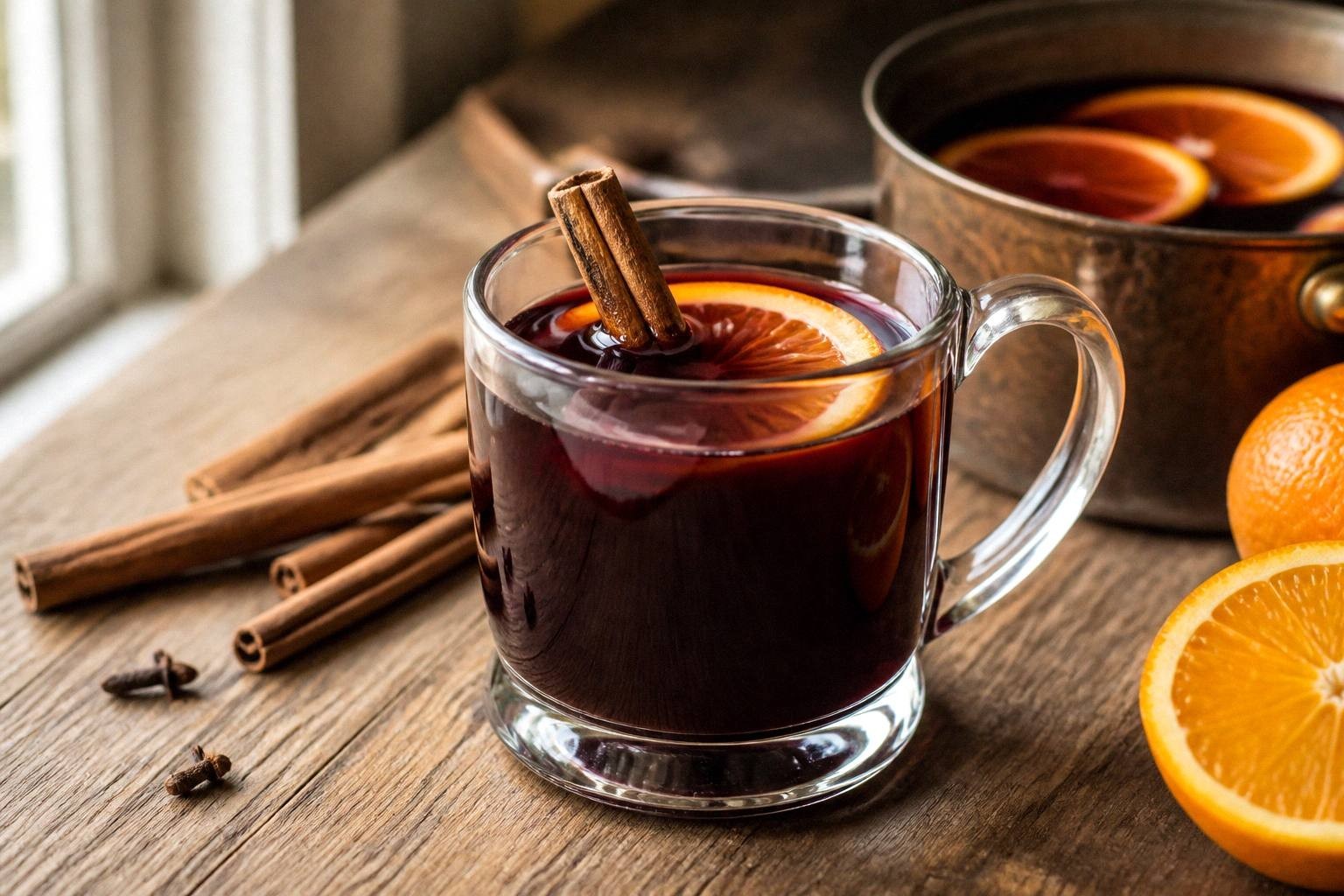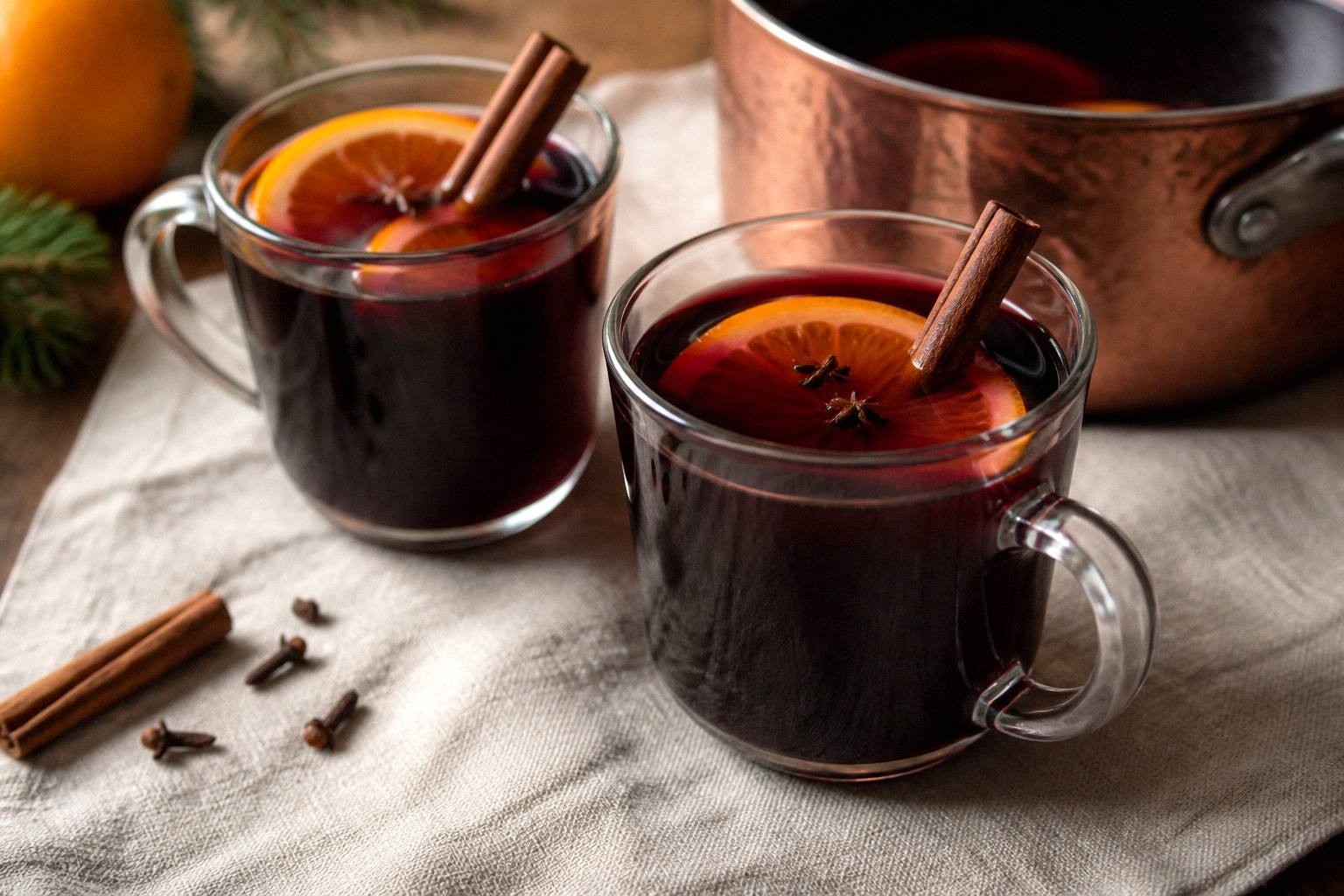
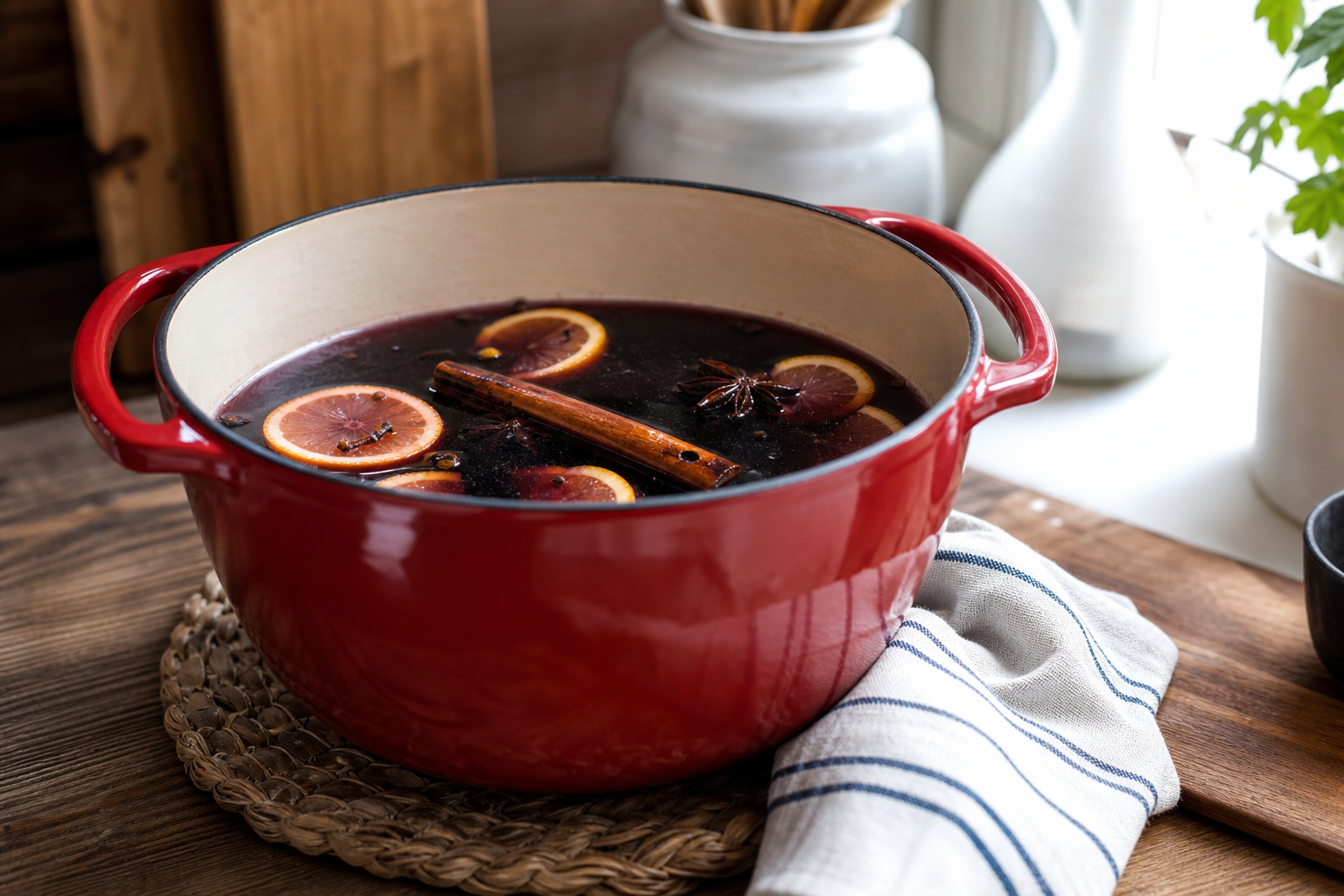
Gluhwein is Germany’s answer to cold winter nights, a spiced red wine that fills Christmas markets with its cinnamon-orange scent and warms you from the inside out. The name translates to “glow wine,” and after your first sip you’ll understand why. This recipe uses whole spices the traditional way, simmered low and slow so the flavors bloom without boiling off the alcohol.
What Makes Gluhwein Different from Other Mulled Wines
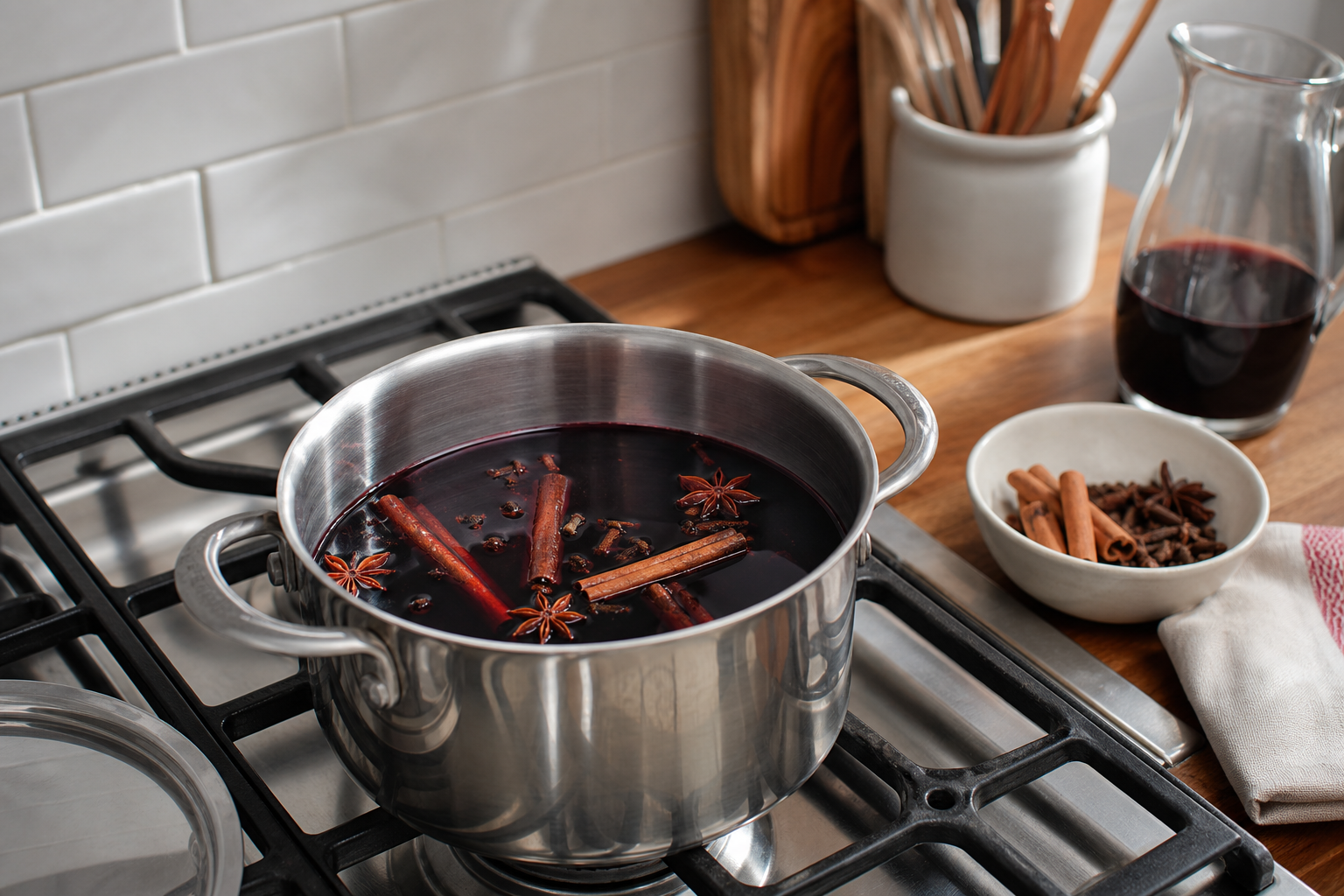
Gluhwein stands apart because it relies on whole spices rather than ground powders, which means the wine stays clear and the flavors stay bright instead of muddy. You’ll simmer cinnamon sticks, star anise, and cloves directly in the wine, then strain them out before serving. The result tastes cleaner and looks more elegant than versions made with pre-ground spice blends.
German Christmas markets serve gluhwein in small ceramic mugs, often with a deposit system so you can return the mug or keep it as a souvenir. The small size isn’t just tradition; it keeps the wine hot while you drink it, since gluhwein cools fast once it’s poured. At home, any heatproof glass or mug works, but keep the servings modest for the same reason.
Choosing the Right Wine for Gluhwein
- Body and tannins: Pick a dry red wine with enough body to stand up to the spices but not so much tannin that it turns bitter when heated.
- Good options: Merlot, Pinot Noir, and Cabernet Sauvignon all work well.
- Price point: You don’t need to spend much. A bottle in the eight to twelve dollar range performs just as well as something pricier, since the spices and citrus will reshape the flavor anyway.
- Avoid sweet wines: Skip port or dessert reds. You’re adding sugar to the pot, and a wine that’s already sweet will tip the balance into cloying.
- Dry or semi-dry: Stick with something labeled dry or semi-dry, and if you’re choosing between two bottles, go with the one that tastes pleasant on its own.
- Quality matters: Gluhwein improves a decent wine; it can’t rescue a bad one.
The Whole Spices That Build the Flavor
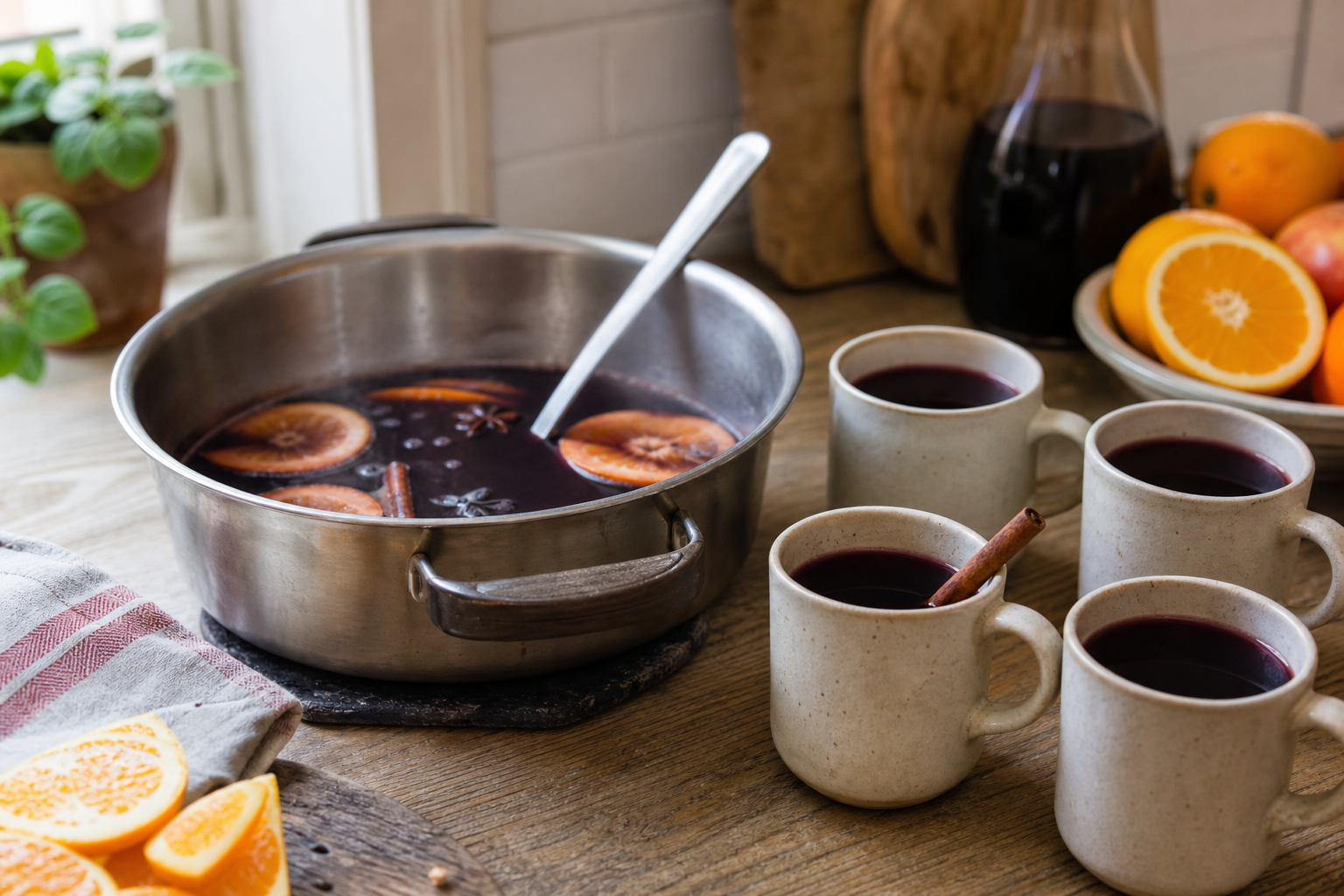
Whole spices release their oils slowly as they simmer, which gives you control over how strong the flavor gets. Cinnamon sticks are the backbone, star anise adds a subtle licorice note, and cloves bring warmth without overwhelming the wine. You’ll use more cloves than you might expect because whole cloves are gentler than ground, and the long simmer extracts just enough of their punch.
If you’ve only got ground spices, this recipe won’t work the same way. Ground cinnamon and cloves cloud the wine and turn gritty, and they release their flavor all at once instead of building gradually. It’s worth a trip to the store for whole spices if you want gluhwein that tastes like the German original.
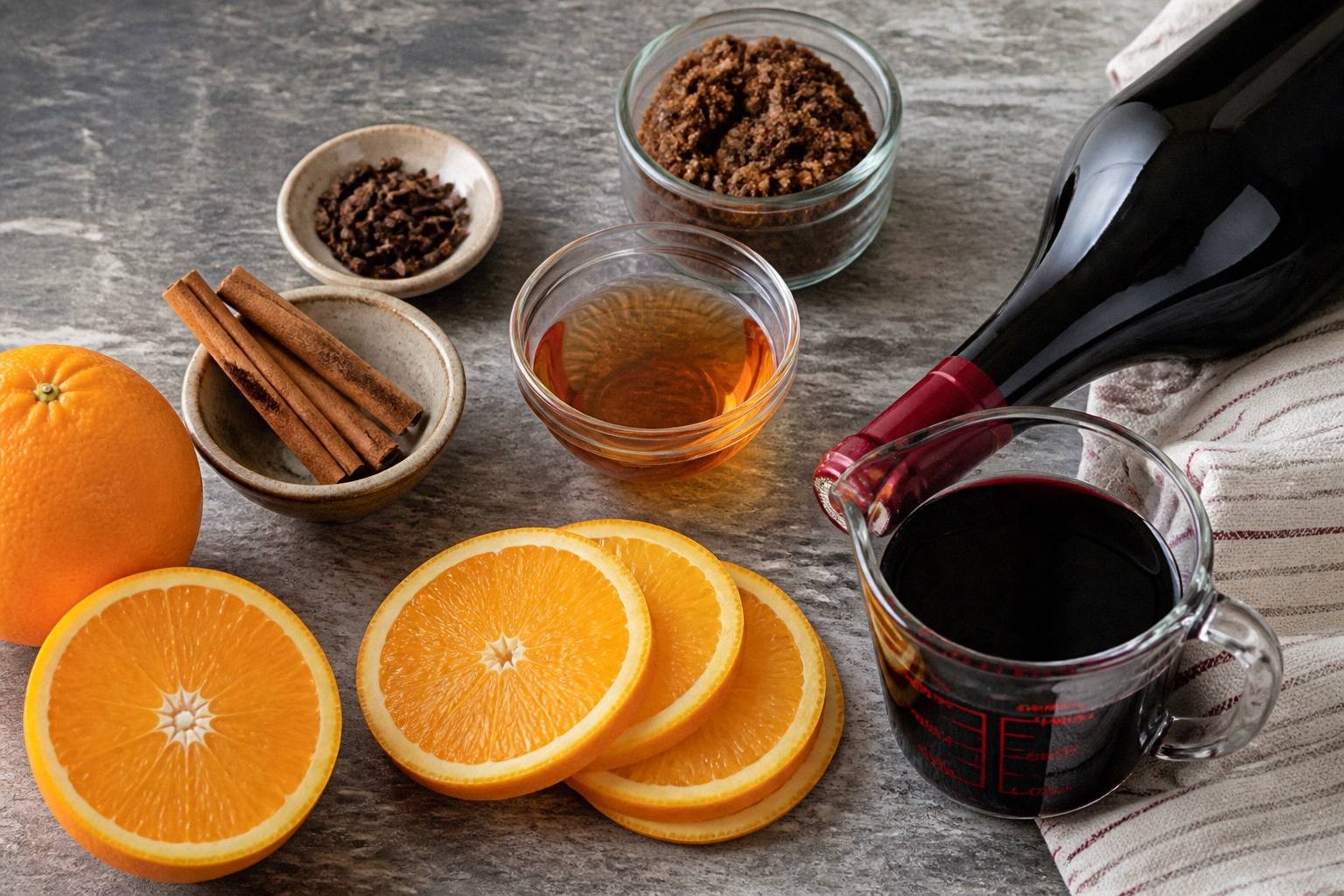
Ingredients
- 1 bottle red wine
- 1 orange, sliced
- 1 lemon, sliced (optional)
- 2-3 cinnamon sticks
- 15 whole cloves
- 5 whole star anise
- 4-6 teaspoons sugar (white or brown)
- vanilla sugar to taste or vanilla bean pod (optional)
Instructions
- Cut the orange and lemon (if you’re using one) into slices.
- Pour the wine into a saucepan, add the sugar, and stir until it dissolves.
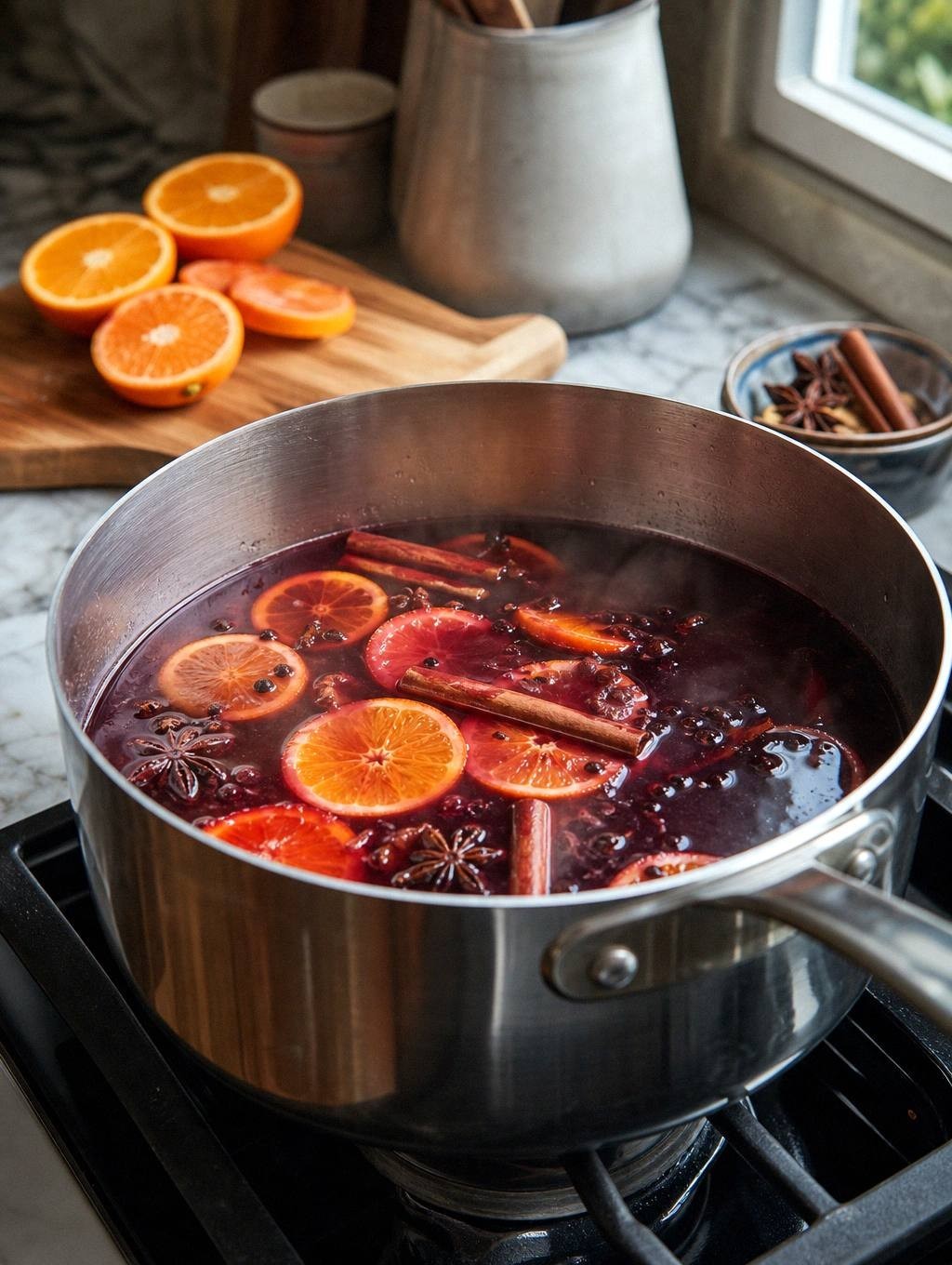
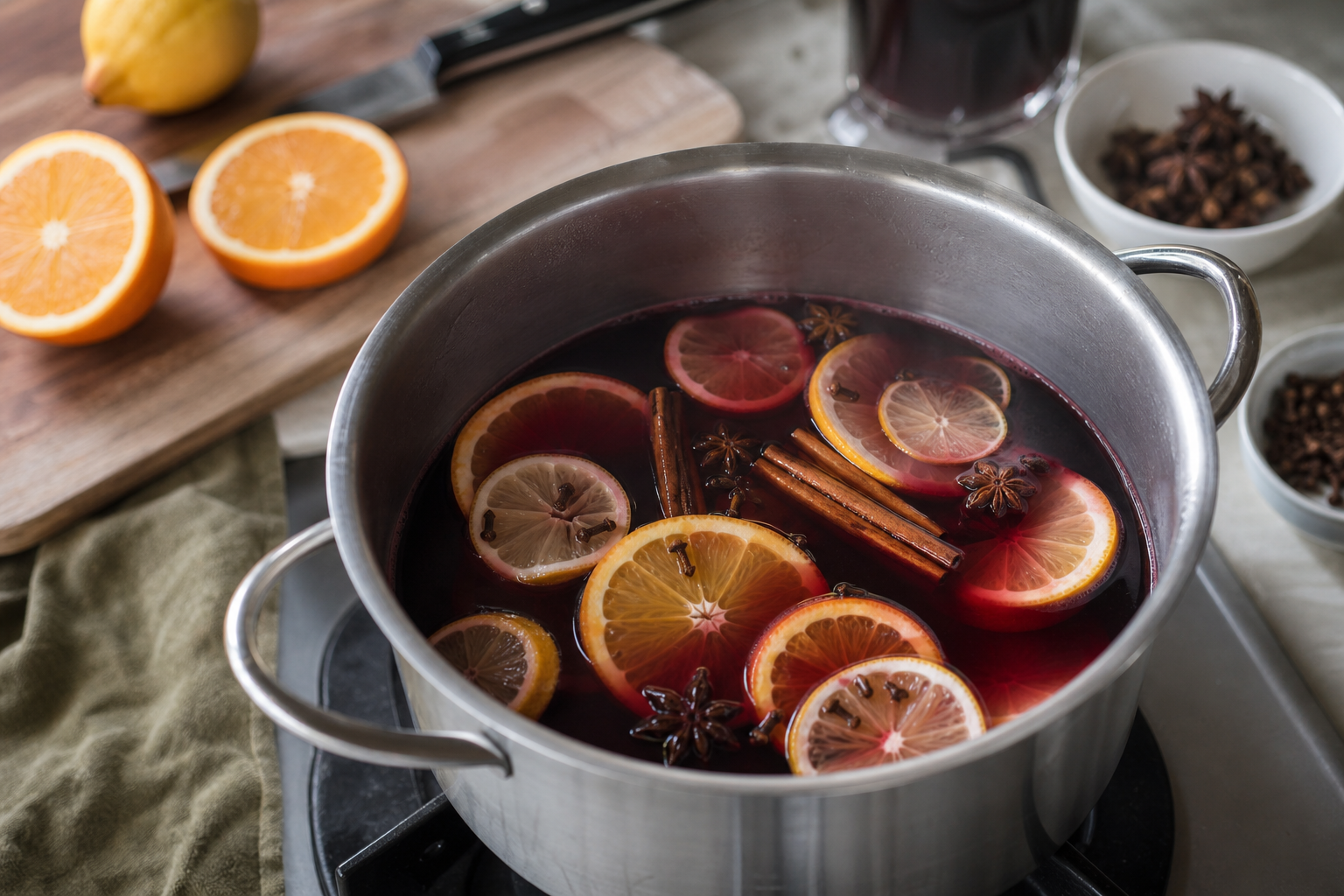
- Drop in the orange and lemon slices, cinnamon sticks, cloves, and star anise. Bring everything to a gentle simmer over low to medium heat and let it simmer for 1-2 hours. Don’t let it boil!
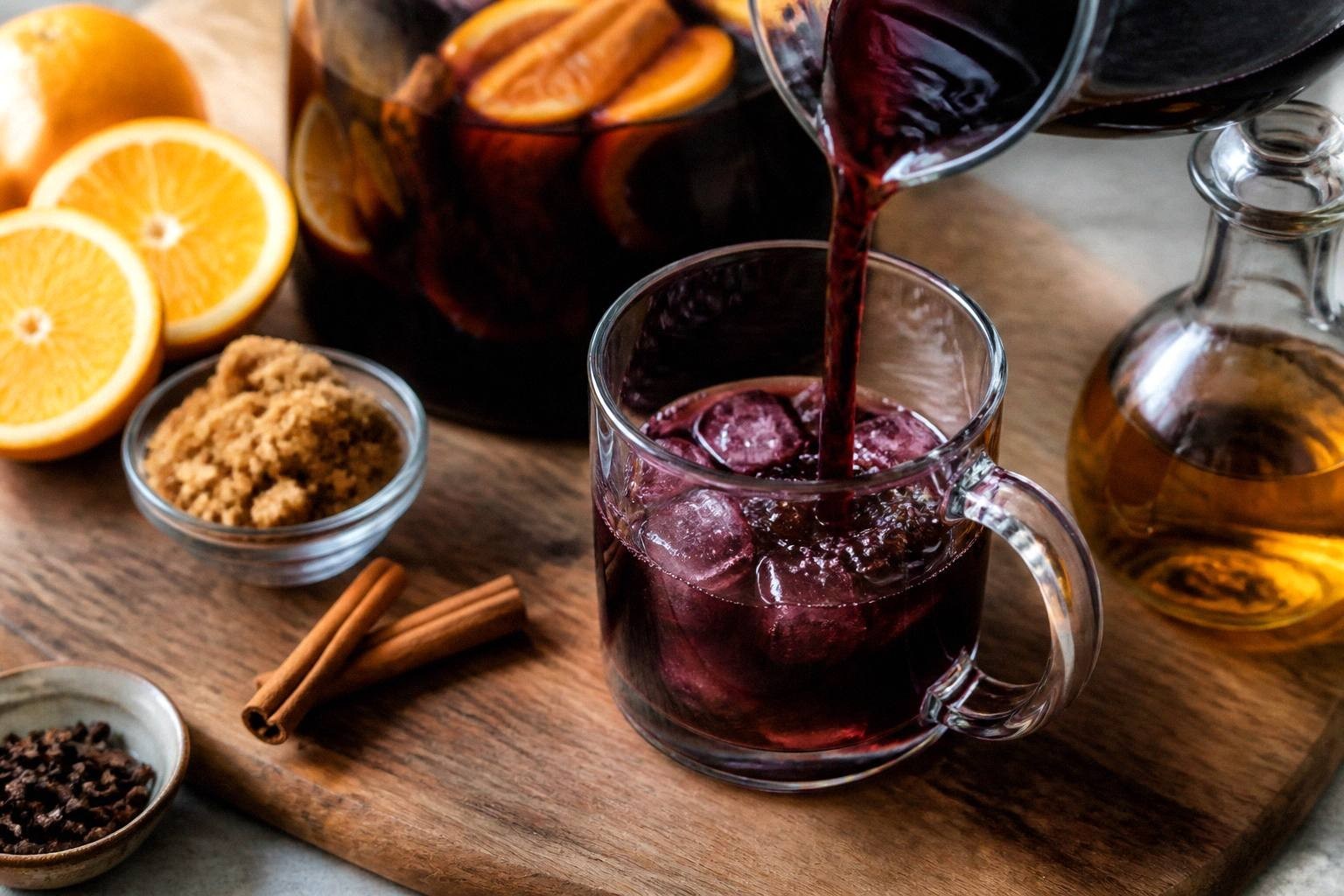
- When you’re ready to serve, pour the Glühwein through a small sieve.
Why Low Heat and Long Simmering Matter
Gluhwein needs to simmer, not boil. If the wine reaches a full boil, the alcohol evaporates and the spices turn harsh and medicinal. You want a bare simmer where you see a few lazy bubbles rising every few seconds, and the surface steams but doesn’t roil. This gentle heat pulls the oils out of the spices without breaking them down into bitter compounds.
The long simmer time isn’t just about extracting flavor. It also lets the citrus oils blend with the wine and the sugar mellow out the tannins. After an hour, the gluhwein will smell ready, but another hour deepens everything and rounds off any sharp edges. If you’re in a rush, you can serve it after thirty minutes, but the flavor won’t have the same complexity.
Common Problems and How to Fix Them
- Wine tastes thin or watery: You boiled it and evaporated the alcohol. Keep the heat lower next time and watch for that gentle simmer instead of a rolling boil.
- Spices taste harsh or medicinal: The wine got too hot or simmered too long at high heat. Reduce the temperature and taste after an hour to check the balance.
- Too sweet or not sweet enough: Start with 4 teaspoons of sugar and taste after the first hour. Add more sugar a teaspoon at a time if needed, stirring until it dissolves.
- Cloudy wine with gritty texture: You used ground spices instead of whole, or the wine boiled hard enough to break down the solids. Strain through a fine sieve or cheesecloth, and use whole spices next time.
- Bitter aftertaste: The white pith from the citrus got into the wine. Slice the fruit thicker next time so the pith stays attached to the flesh, or peel off strips of zest and leave the fruit out entirely.
Serving and Storing Gluhwein
Serve gluhwein hot in small mugs or heatproof glasses, and ladle it straight from the pot if you’re serving a group. You can garnish each mug with a fresh orange slice or a cinnamon stick, but it’s not required. The wine stays hot for about ten minutes in a mug, so pour small servings and refill as people finish.
Leftover gluhwein keeps in the fridge for up to three days. Let it cool to room temperature, then transfer it to a jar or pitcher with a lid. Reheat it gently on the stove over low heat, stirring occasionally, until it steams but doesn’t simmer. Don’t microwave it; the uneven heating can scorch the sugars and create hot spots that taste burnt.
Frequently Asked Questions
What does gluhwein mean in German?
Gluhwein translates directly to “glow wine.” The name likely refers to the warm, glowing feeling you get after drinking it on a cold night, though some sources suggest it comes from the hot irons once used to heat wine.
Can you make gluhwein in a slow cooker?
Yes. Combine all the ingredients in a slow cooker and set it to low. Let it heat for 2 to 3 hours, then switch to the warm setting for serving. The slow cooker keeps the wine at a steady temperature without any risk of boiling.
What is gluhwein mit schuss?
Gluhwein mit schuss means gluhwein with a shot. After pouring the spiced wine , you add a splash of rum, amaretto, or brandy to each mug. It boosts the alcohol content and adds another layer of flavor.
Can you use white wine for gluhwein?
White gluhwein exists and is popular in some German regions, but it’s a different drink with a lighter flavor. If you make it, use a dry white wine and reduce the spices slightly so they don’t overpower the more delicate base.
How long should gluhwein simmer?
One to two hours gives you the best flavor. You can serve it after thirty minutes if you’re short on time, but the spices won’t have fully opened up and the wine will taste less integrated.
Can you make non-alcoholic gluhwein?
Replace the wine with red grape juice or a mix of apple juice and cranberry juice . Use the same spices and citrus, and simmer it the same way. Germans call the non-alcoholic version Kinderpunsch, and it’s served to children at Christmas markets.
Conclusion
Gluhwein is one of those recipes that’s hard to mess up as long as you keep the heat low and give the spices time to work. The whole spices make all the difference, turning plain red wine into something that smells like Christmas and tastes like a warm blanket. Make a batch this winter and you’ll understand why every German Christmas market has a gluhwein stand.