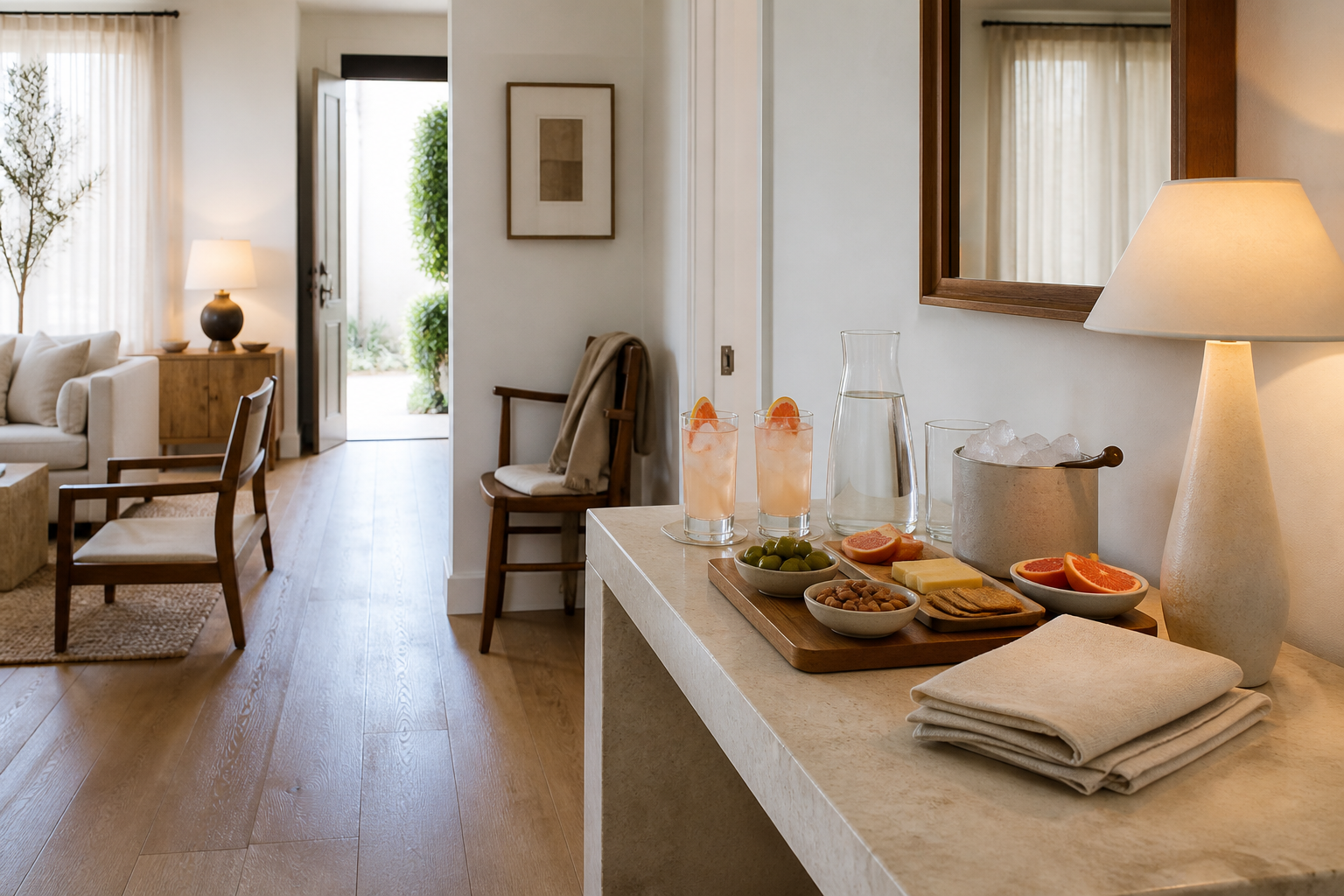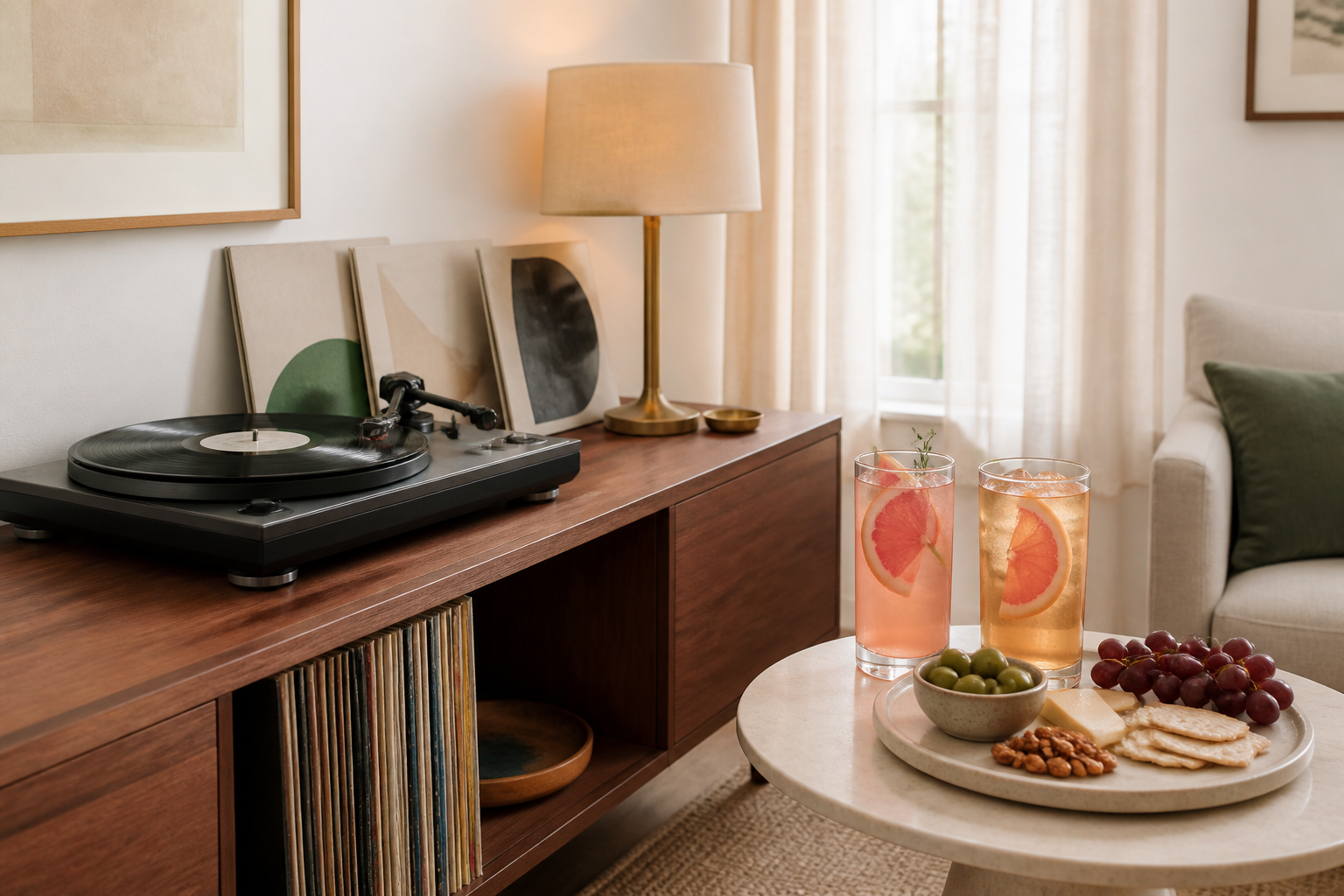
A useful bar cart reset starts by taking everything off. Wash the sticky pieces, move perishable mixers to the refrigerator, choose one drink plan, and rebuild only the things that support it. Keep the working pieces on top, backups and weight below, and at least one clear patch of shelf where a glass can be set down.
You don’t need a new cart. You probably need fewer open bottles, one tray, and ten honest minutes with the shelf you already have.
This reset is intentionally different from the bar cart styling guide and the eight bar cart essentials . Those guides help choose a setup and the tools that earn their space. This one is the edit you do when the cart has slowly turned back into storage.
What the “before” usually gets wrong
My bar cart trouble never starts with one dramatic mistake. It starts with a bottle I did not put away, then a second kind of glass, then a candle, then the mail. A month later there is no safe place to pour a drink.
The common signs are easy to spot:
- Bottles cover the entire top shelf
- Empty and unopened bottles are mixed together
- More than two glass shapes are out
- Open juice, syrup, wine, or garnish has been left at room temperature
- The ice bucket is being used as storage
- Tools are loose rather than contained
- Decor blocks handles, wheels, or the working tray
- Nothing on the cart explains what drink it is ready to make
- There is nowhere to set down an empty glass
The before photo is useful because it catches patterns your eye has stopped seeing. Take one straight-on picture before you move anything. Use the same angle again after the reset.
The reset in one pass
Set a timer for 20 minutes and bring over four containers or clear sections of a table:
- Keep on the cart
- Move to the kitchen or cabinet
- Wash before deciding
- Recycle or discard
Then remove every item. Do not try to organize around the bottles that are already standing there. Wipe the shelves, wheel handles, tray rim, and any sticky bottle bases while the cart is empty.
If a perishable mixer or cut garnish has been sitting out, do not put it back for appearances. FDA guidance says foods that require refrigeration should not sit at room temperature for more than two hours, or one hour when the air temperature is above 90°F. When timing is uncertain, the safest after picture leaves it out.
Use the one-party test
Ask one question of every item: Would I use this at the next small gathering?
If yes, it can compete for cart space. If no, it belongs in a cabinet, pantry, refrigerator, donation box, or recycling bin.
This doesn’t mean you must own only one kind of glass or one bottle. It means the cart is a working surface, not the full inventory of your home bar.
Use this decision table:
| Item | Keep on cart when | Move elsewhere when |
|---|---|---|
| Glassware | One sturdy shape serves the planned drinks | It is delicate, specialized, dusty, or a duplicate |
| Spirits | It is part of the next drink plan | It is unopened backup or unrelated to the menu |
| Mixers | It is shelf-stable and active | It needs refrigeration or is nearly empty |
| Tools | It will be used for the planned build | It came in a kit and has no current job |
| Decor | It fits behind the work zone | It takes the only open place for a glass |
| Books | One is actively used as a recipe reference | They are acting as a permanent riser or dust shelf |
Rebuild the top shelf as a working route
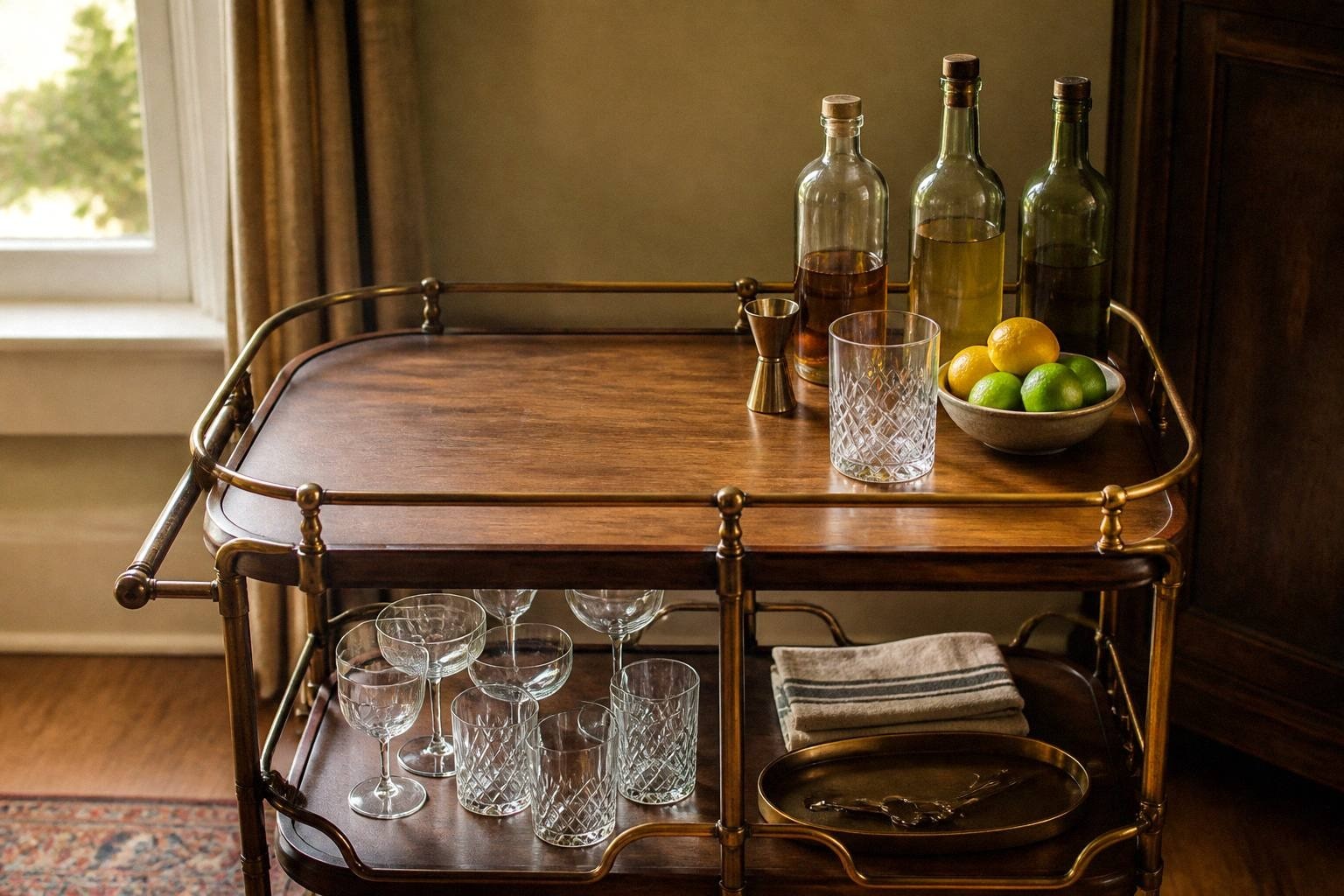
The top shelf should answer one drink moment, not display every possibility.
Build from left to right:
- Four to six clean glasses
- One rimmed working tray
- One pitcher, shaker, or mixing glass
- One active spirit or a complete zero-proof base
- One or two shelf-stable mixers
- A jigger and spoon in a small cup
- One folded towel or stack of napkins
Leave one hand-width of empty surface beside the tray. That is the landing space for an empty glass, a bottle cap, or the jigger between pours.
If you want a mocktail and cocktail route on the same cart, make the pitcher base alcohol-free and keep the optional spirit to one side. The cart still has one clear plan, and every guest can start from it.
Put weight and backup on the lower shelf
The lower shelf can carry the items that are useful but do not need to be at eye level:
- Sealed sparkling water
- Extra napkins
- Backup glasses
- A clean empty ice bucket
- One closed refill bottle
- A small bin for bottle stoppers and openers
- A refill pitcher that will be chilled before use
Keep heavier items low and centered so the cart feels steadier when it moves. Do not pile bottles against the wheel side or hang towels where they can catch in casters.
A lower shelf is still part of the edit. If it turns into a place to hide everything removed from the top, the after will last until the first time you need something from the bottom.
The before-and-after scorecard
The after should solve visible problems. “Prettier” is too vague to maintain.
| Check | Before | After target |
|---|---|---|
| Open landing space | No room for a glass | One hand-width beside the tray |
| Glass shapes | Three or more mixed sets | One active shape, backups below |
| Bottles on top | Every bottle owned | Only the next drink plan |
| Small tools | Loose across the shelf | Contained in one cup or tray |
| Perishable mixers | Left out | Refrigerated and added when serving |
| Refill plan | Unclear | One sealed refill below or chilled nearby |
| Decor | Scattered between tools | One quiet piece behind the work zone |
| Cleanup | No towel | One folded towel at the wet edge |
Take the second photo from the same place as the first. If the cart looks different only because the camera moved closer or the room got darker, the reset is not doing the visual work.
Three reset versions
The everyday cart
Keep glasses, a tray, jigger, opener, napkins, and shelf-stable bottles. Refrigerate everything perishable. Leave the pitcher and ice bucket empty and clean.
The party-ready cart
Add one batched base, the active spirit or zero-proof option, one mixer, a small garnish dish, and working ice shortly before guests arrive. If you need a fuller party plan, use the summer bar cart setup after the reset rather than trying to store the party setup year-round.
The small-space cart
Use the top as the drink station and the bottom as disciplined backup. If the cart is too narrow for a stable pitcher and six glasses, skip the furniture fantasy and use the small-space drink station without a bar cart .
What not to buy during a reset
A reset is not a shopping list wearing an organization label.
Do not buy:
- A second tray before measuring the shelf
- A full tool kit to replace two useful loose tools
- More glassware because the current sets do not match
- Decorative bottles to fill the empty space you just created
- Tiny bins that hide clutter without reducing it
- A new cart when a side table already holds the working route
If one problem remains after the reset, name it precisely. Maybe the tray slides, the ice bucket sweats, or the glasses are too tall for the lower shelf. Solve that one problem later. The bar cart accessories guide can help after the cart proves what it lacks.
The 10-minute weekly reset
The after picture lasts when the maintenance is smaller than the original cleanup.
Once a week or the morning after a gathering:
- Return perishable mixers and opened wine to proper storage.
- Wash the used glasses, tools, tray, and ice bucket.
- Wipe bottle bases and the shelf.
- Recycle empties.
- Put unrelated bottles back in the cabinet.
- Refill napkins and return one clean towel.
- Leave the landing space empty.
Stop there. You do not need to restyle the cart every Sunday.
How to make a seasonal change without starting over
Change one useful thing and one quiet visual thing.
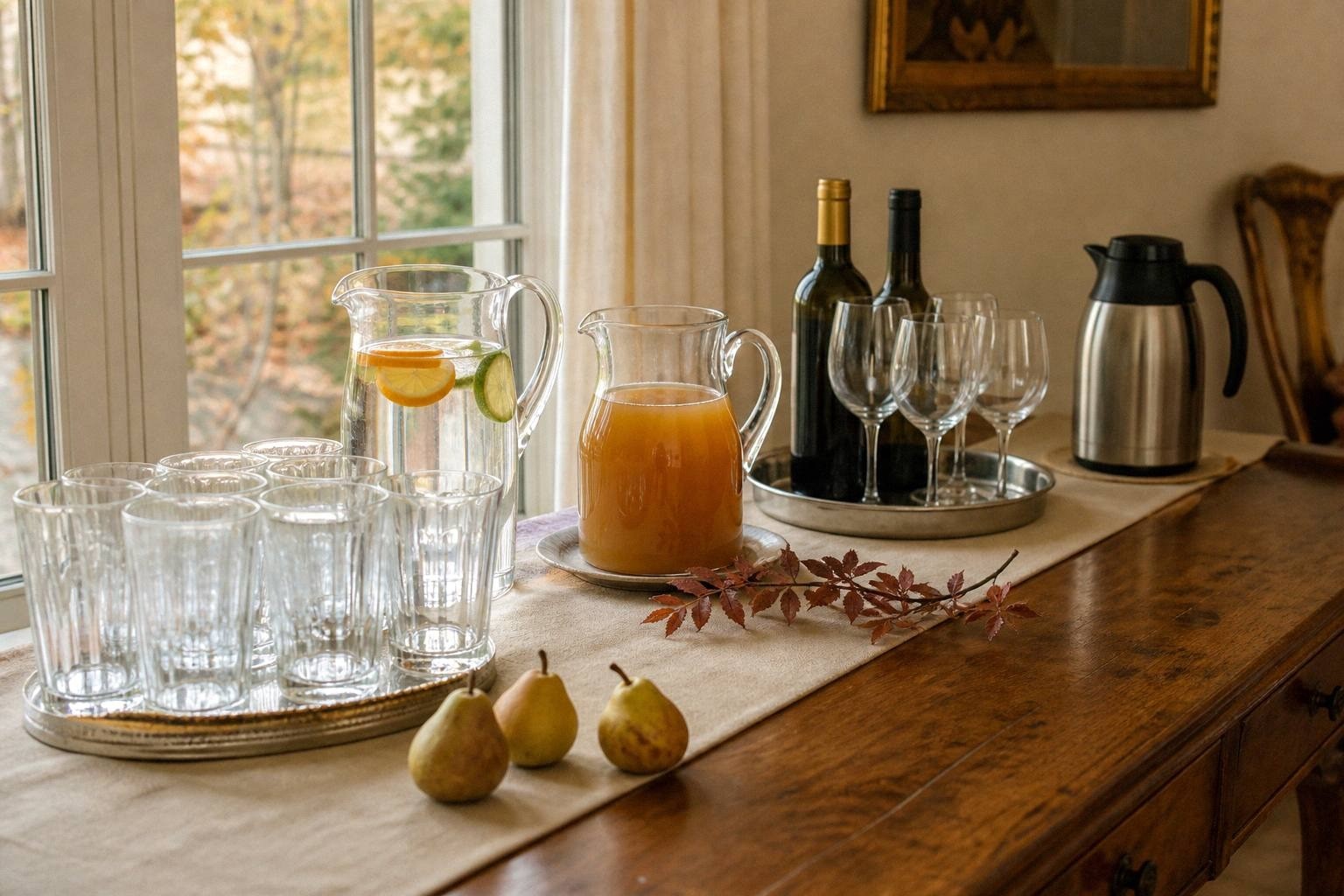
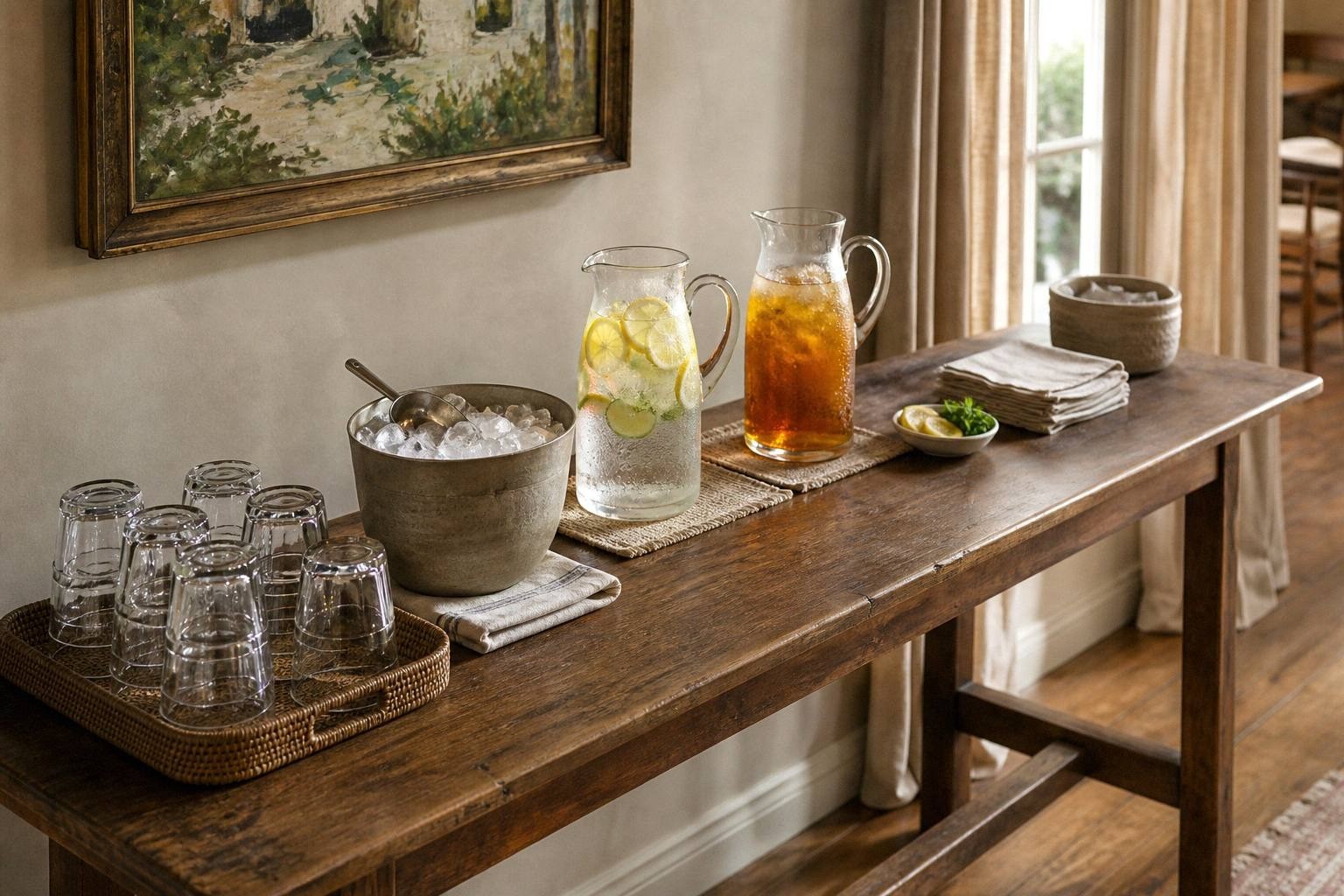
For fall, that might be an apple-cider base and a small bowl of whole pears. For winter, it might be a cranberry syrup and one evergreen clipping in a narrow bottle. For spring, a chilled tea base and a pot of mint nearby can do the work.
The tool positions stay the same. The glasses stay the same. The tray stays. That repetition is what makes the cart easier to use, while one seasonal drink makes it feel new.
Frequently asked questions
What should stay on a bar cart all the time?
Keep clean glasses, a rimmed tray, a jigger, opener, napkins, and shelf-stable active bottles. Refrigerate juice, dairy, syrups that require chilling, opened wine, and cut garnish.
How many bottles should be on the top shelf?
Keep only the bottles used by the next drink plan. One or two active bottles are often enough. Store unopened backup and unrelated bottles elsewhere.
How do I make a crowded bar cart look better without buying anything?
Remove every item, clean the shelves, choose one drink plan, contain the working tools on one tray, move backup below, and leave a hand-width of open surface.
What belongs on the bottom shelf?
Use it for weight and backup: sealed mixers, extra glasses, napkins, a clean ice bucket, and one closed refill. Keep it edited rather than using it as hidden storage.
How often should I reset a bar cart?
Do a quick reset after every gathering and a fuller empty-and-wipe reset when the landing space disappears or the cart no longer supports one clear drink plan.
The short version
The before is a shelf full of possibilities. The after is a cart ready to make one good round of drinks.
Empty it. Clean it. Keep one working route on top, weight and backup below, perishables in the refrigerator, and a clear place for the next glass. The empty space is not missing decor. It is proof the cart can work again.