If your homemade iced latte tastes like milk with a hint of coffee, a new machine may help, but the grinder and the way you build the drink matter just as much. I looked for machines that make sense in an actual morning routine, from a small starter setup to one that handles coffee, espresso, and cold foam. Here are four choices, plus the costs and compromises to check before you buy.
Affiliate note: If you buy through the Amazon links below, we may earn a commission at no extra cost to you.
These are researched recommendations, not hands-on tests. Check the exact model, seller, included parts and current terms on Amazon before ordering. When comparing machines, account for a separate grinder and the counter space it needs.
Quick picks: which machine fits you
| Machine | Grinder built in? | Steam wand or froth | Best for | Shop |
|---|---|---|---|---|
| CASABREWS 3700 Essential | No | Steam wand | A first espresso setup on a firm budget | Check price on AmazonPaid Amazon links: we may earn a commission if you buy through links in this article. Disclosure details. |
| Breville Bambino BES450 | No | Steam wand | Small counters, building the setup in stages | Check price on Amazon |
| Breville Barista Express BES870XL | Yes, 16 settings | Steam wand | Hands-on espresso without buying a separate grinder | Check price on Amazon |
| Ninja Luxe Café Premier ES601GM | Yes, with guidance | Hot and cold froth | Homes that also drink drip coffee and cold brew | Check price on Amazon |
Short answer: Pick the Bambino if counter space is tight, the Barista Express if you want to learn espresso, the Ninja if the house drinks several kinds of coffee, and the CASABREWS if you want the cheapest way to find out whether you like making lattes at home.
What makes an iced latte taste strong enough?
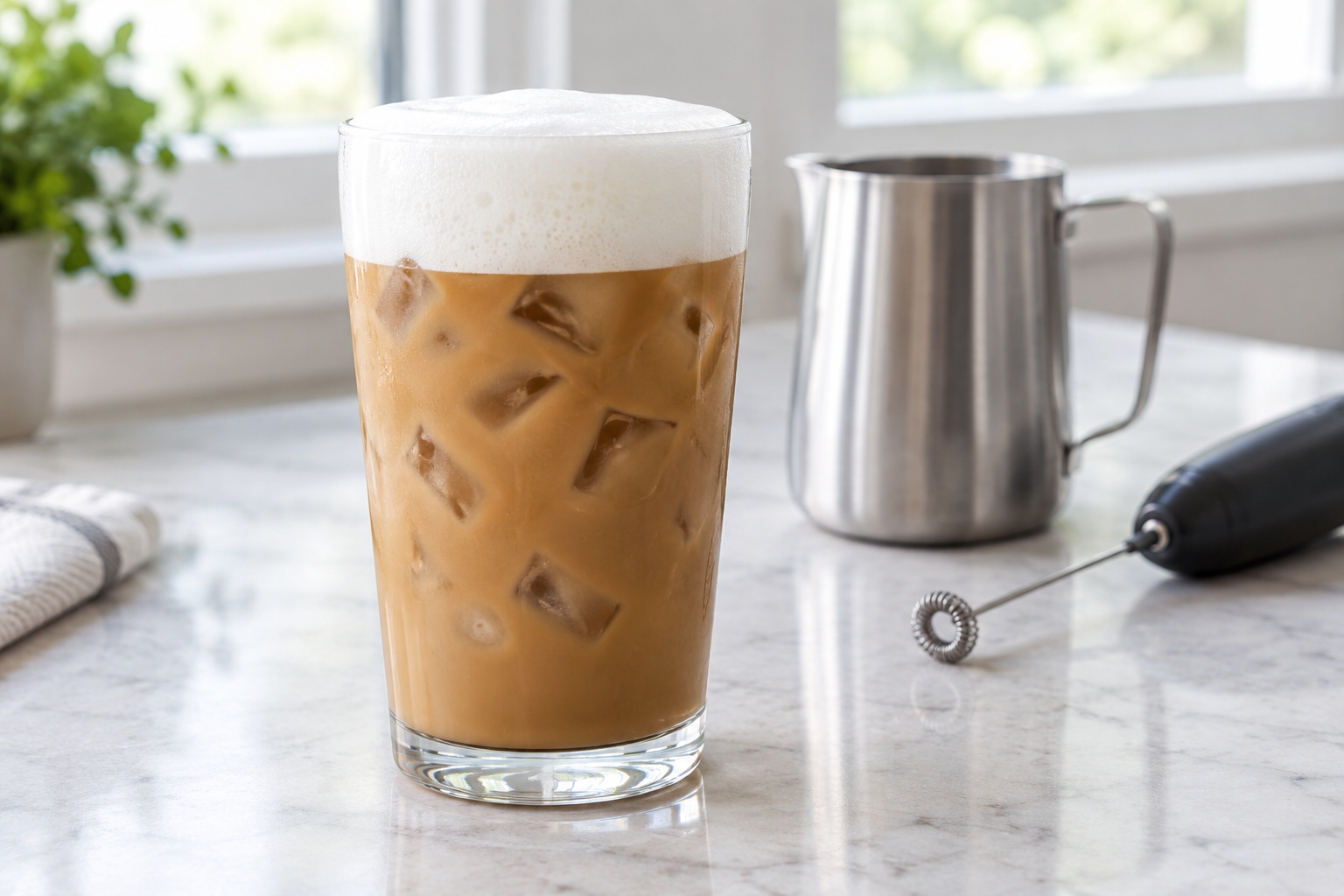
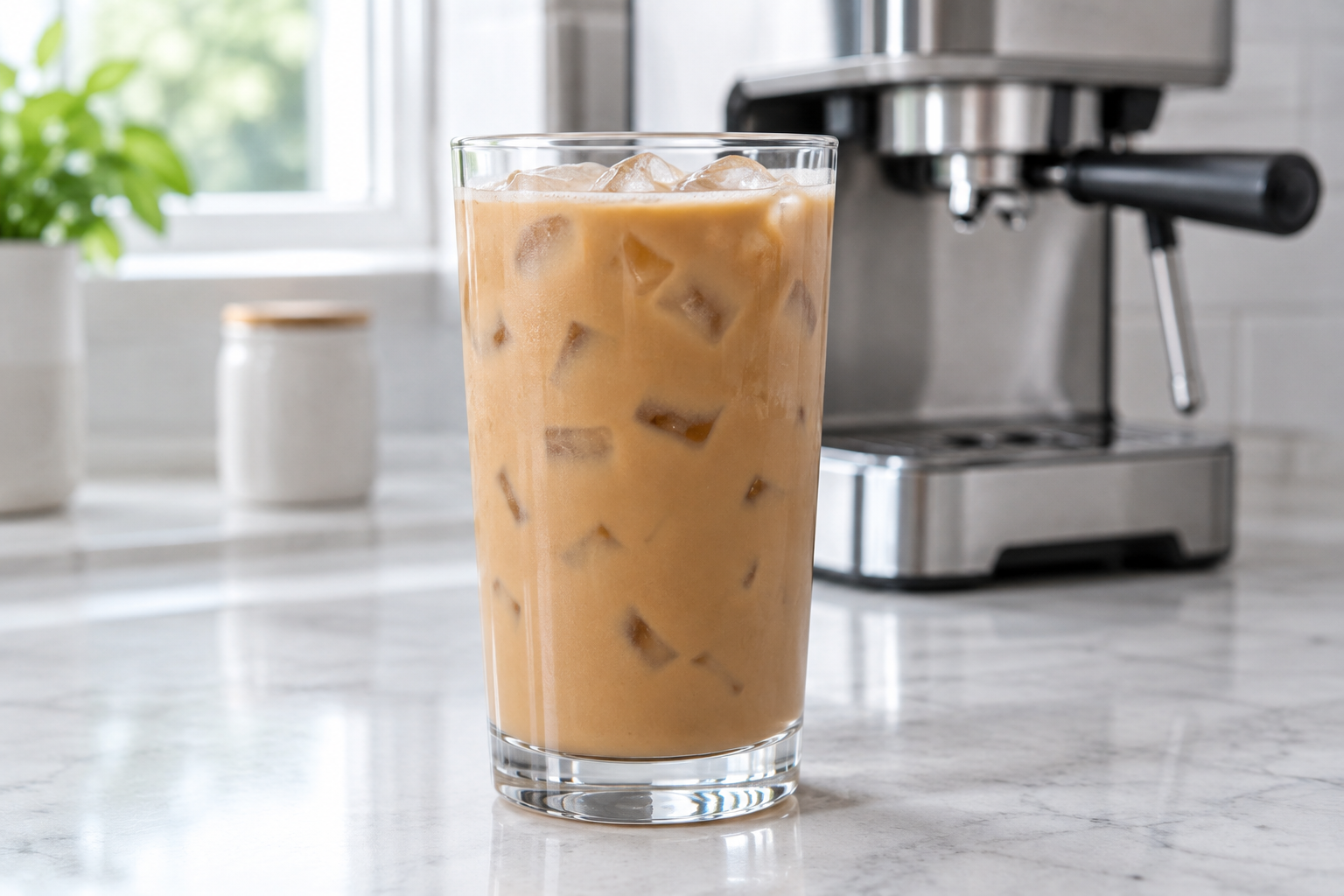
The machine must give you a concentrated espresso base. A large mug of regular coffee poured over a full glass of ice and milk can taste thin even if the coffee maker is good. Start with a double shot, add cold milk to taste, then add ice or pour the shot into a glass with milk before it sits on ice for long. If you want a taller drink, adjust the espresso or milk rather than adding water. The iced coffee guide has more ways to manage dilution.
Your grinder is the easy expense to miss. The CASABREWS and Bambino do not grind beans. You can start with coffee ground for the supplied filter baskets, but fresh beans and an espresso-capable grinder give you more control over a weak or fast-running shot. The Barista Express and Ninja include grinders. Compare the whole setup, not only the machine price.
You do not need a steam wand for a plain iced latte with cold milk. It matters if you also make hot cappuccinos or want to practice textured milk. For cold foam, choose a machine with a cold-foam program or use a separate frother.
1. CASABREWS 3700 Essential: an entry-level machine
See the CASABREWS 3700 Essential on Amazon
The 3700 Essential gives you an espresso machine and steam wand without a built-in grinder. Its removable 43.9-ounce tank is useful if you make drinks for more than one person. It is a reasonable entry point for someone curious about homemade iced lattes who is willing to learn the basics before spending more.
Pros: Compact body, removable tank, and a steam wand for occasional hot drinks. Cons: No grinder, and the included accessories are basic. Best for: A first try at espresso when the whole coffee setup has a firm budget. If you mainly want sweet iced coffee and already enjoy what you make, keep your current brewer.
Budget check: The machine is only one part of the cost. If you plan to buy whole beans, price a suitable grinder before choosing this over a machine with one built in. Do not mistake the advertised pump-bar number for a promise that every shot will taste better.
2. Breville Bambino BES450: best for a small counter
See the Breville Bambino on Amazon
The Bambino leaves more counter space than the two machines with built-in grinders. Breville points to its compact footprint, a quick-heating system, and both single- and dual-wall filter baskets. That gives a beginner a way to start with ground coffee and later work toward more control with a separate grinder.
Pros: Small machine footprint, quick startup, and a path from beginner baskets to a more adjustable setup. Cons: A grinder is a separate purchase and takes its own space; the steam wand requires manual milk texturing. Best for: Someone who wants a compact espresso machine and is comfortable building the setup in stages.
Small-kitchen reality: Measure the room for the grinder, cups, and a place to tamp, not just the machine. If those additions erase the space advantage, an all-in-one option may be simpler.
3. Breville Barista Express BES870XL: best hands-on all-in-one
See the Breville Barista Express on Amazon
The Barista Express includes a conical burr grinder with 16 settings, a 54 mm portafilter, and a pressure gauge. It suits someone who wants to learn how grind size and dose change the shot without buying a separate grinder first. That control can be useful when an iced latte tastes weak, but it asks you to practice and clean the grinder as part of the routine.
Pros: Grinder included, hands-on adjustments, and a steam wand for hot drinks. Cons: More counter space and more steps than the Bambino; the built-in grinder ties two pieces of equipment to one machine. Best for: A regular espresso drinker who enjoys making and adjusting the shot. If you want the machine to guide the process, look at the Ninja instead.
Why it earns the space: You can change the grind and shot before adding milk and ice. That is a more useful fix for a thin latte than adding another pump-bar claim to your shopping list.
4. Ninja Luxe Café Premier ES601GM: best for a mixed coffee household
See the Ninja Luxe Café Premier on Amazon
The Ninja makes espresso, drip coffee, and rapid cold brew from whole beans. Its built-in grinder, weight-based dosing, grind guidance, and hot or cold froth settings make it the most flexible choice here for a household that switches between iced lattes and other coffee drinks. Cold-pressed espresso is an additional option, not a requirement for a good iced latte.
Pros: One machine covers several coffee styles, includes a grinder, and offers guided adjustments and cold foam. Cons: It needs counter space, has more components to wash, and gives you less of the traditional hands-on espresso process. Best for: People making different coffee drinks often who will use those extra settings. If all you want is one double espresso over milk, you may pay for features that sit unused.
Before you choose it: Check the counter depth and height as well as width. Its convenience comes from several integrated parts, and those parts still need cleaning.
Questions to settle before buying
Can I make hot lattes with these machines too?
Yes. All four can make hot drinks. The CASABREWS, Bambino and Barista Express have steam wands for textured hot milk, and the Ninja has a hot froth setting. That matters once the weather turns cold and an iced latte is less appealing. Start with a homemade gingerbread latte , an easy peppermint mocha , a homemade eggnog latte or a chestnut praline latte .
Do I need a machine with a cold espresso setting for iced lattes?
No. Regular espresso works well in an iced latte. A cold setting may make a drink you prefer, but it does not solve an under-dosed shot or too much milk and ice. Make the drink you already like with a measured double shot before paying for a special cold program.
Can I make iced lattes with pre-ground coffee?
You can start with a basket intended for ground coffee if the maker supplies one. Fresh beans plus an espresso-capable grinder offer more room to adjust extraction. Check which baskets come with the exact listing, since bundles can differ.
Which is the better value: Bambino plus a grinder or a machine with a built-in grinder?
Add the cost and space of the separate grinder before deciding. The Bambino lets you upgrade either piece later. The Barista Express or Ninja keeps the equipment together. The better choice depends on whether you want a compact machine you can build around or a single purchase with a grinder included.
Should I buy a blender or a frother too?
For a plain iced latte, no. A blender is for a blended or frappé-style drink. A milk frother is optional for cold foam, and the Ninja already has a cold-froth setting. For flavor, three fall coffee syrups work in iced and hot lattes, and coffee ice cubes keep an iced latte from going watery.
Still deciding?
- Tight counter, willing to add a grinder later: Breville Bambino
- Want a grinder in the same machine and like adjusting shots: Breville Barista Express
- Several coffee drinkers with different habits: Ninja Luxe Café Premier
- Lowest starting cost, testing the habit: CASABREWS 3700 Essential