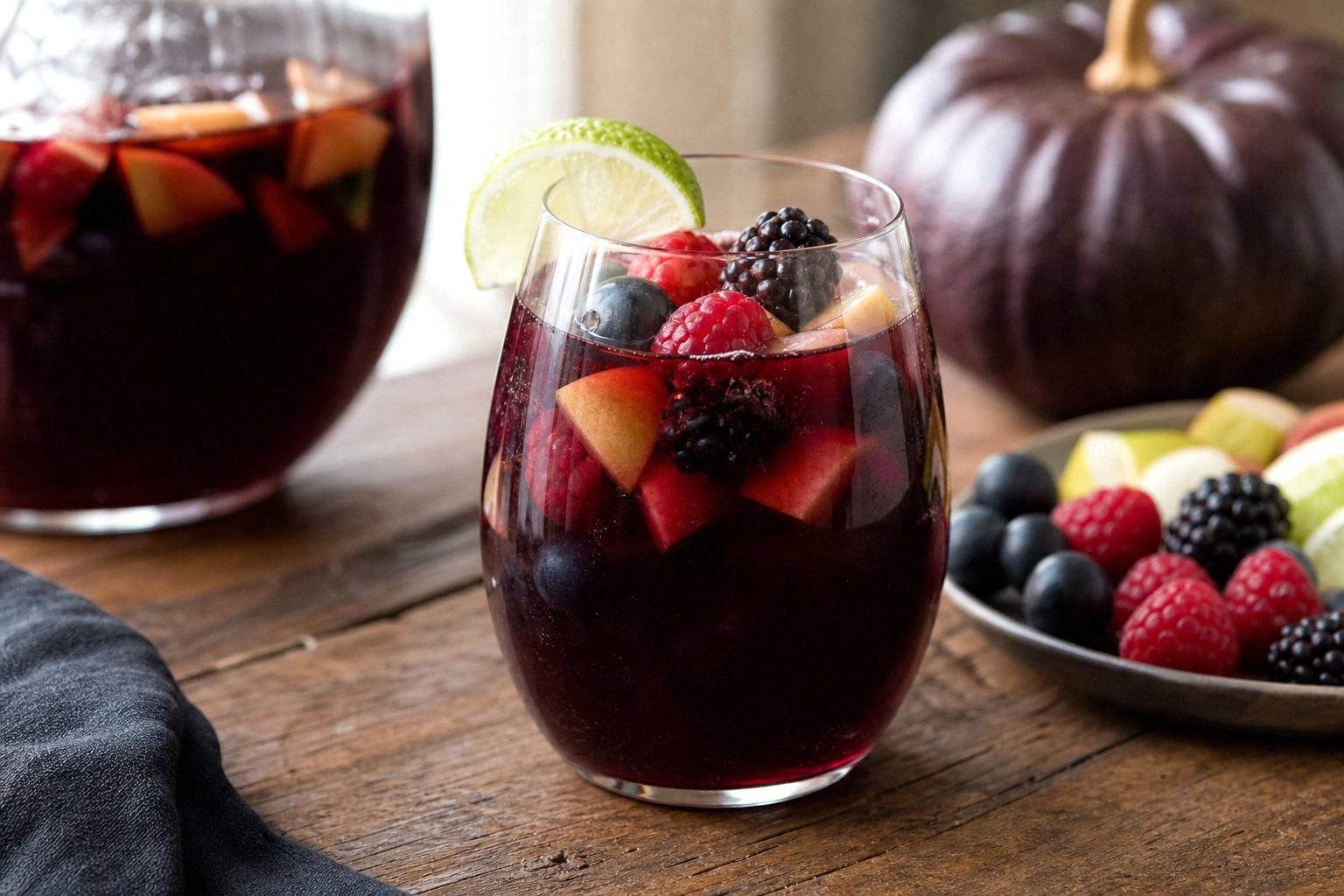
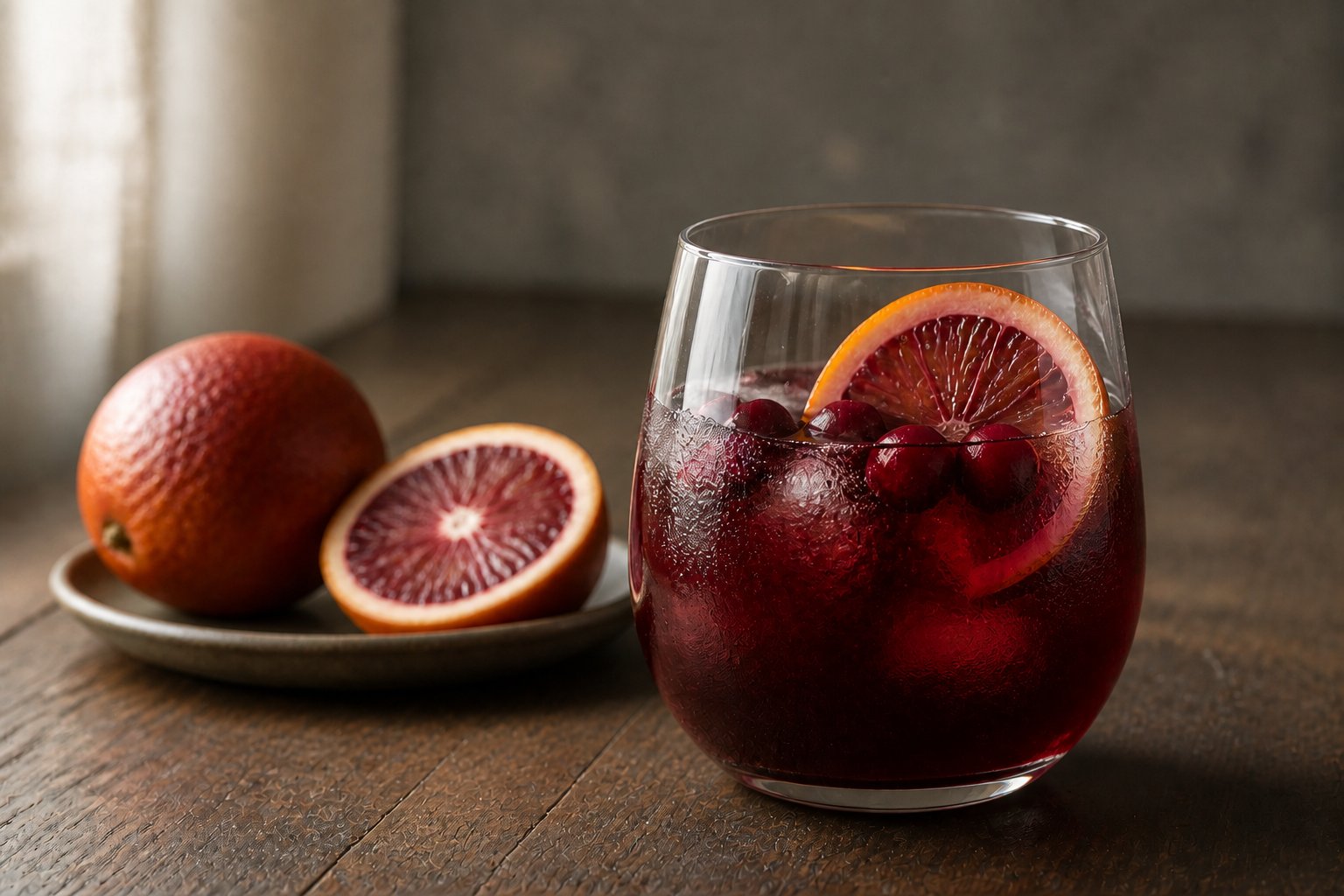
Blood orange cranberry sangria turns a pitcher of wine into a jewel-toned centerpiece that tastes as striking as it looks. The deep crimson flesh of blood oranges bleeds into the wine, while fresh cranberries bob like garnets in the glass. This is the sangria you make when you want guests to ask for the recipe before they’ve finished their first pour.
The technique is simple: simmer cranberries into a quick reduction, add sliced blood oranges and juice, then pour wine and spirits over the fruit and let the pitcher chill overnight. The cranberry reduction thickens as it cools and sweetens the sangria without granulated sugar’s gritty dissolve, while the overnight rest lets the fruit soften and the flavors marry. You can serve this over ice straight from the fridge, or rim the glasses with cinnamon sugar if the occasion calls for it.
Why Blood Oranges and Cranberries Work Together
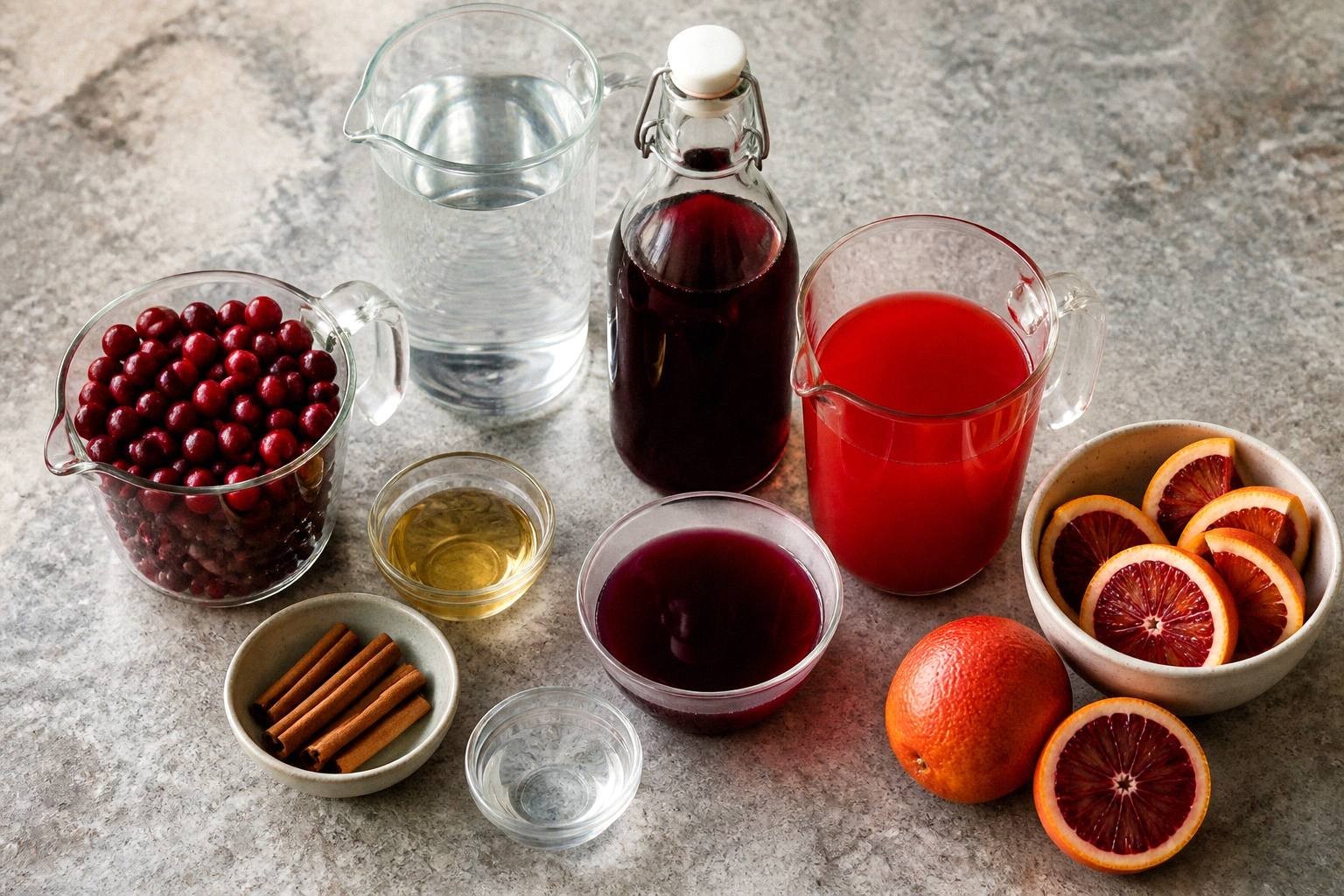
Blood oranges carry a flavor that regular navels don’t: a berry-like tartness with hints of raspberry that makes them taste less one-dimensionally sweet. Their season runs from December through March, which overlaps neatly with fresh cranberry availability and holiday gatherings. The anthocyanins that stain the flesh deep red also tint the sangria a color you can’t get from regular oranges, even if you add food dye.
Cranberries bring acidity and astringency that balance the wine’s fruit and the orange’s sweetness. Raw cranberries are too tart to eat out of hand, but simmered briefly with a sweetener and water, they burst and release pectin that thickens the mixture into a pourable reduction. This technique concentrates the cranberry flavor without adding straight cranberry juice, which can make sangria taste like a wine cooler from a can.
The combination also holds up to an overnight rest better than softer fruits. Strawberries and peaches turn mushy and leach color after a few hours in wine, but cranberries and citrus slices stay intact and continue to infuse flavor without falling apart. You can make this sangria a full day ahead and it improves in the pitcher.
What Wine to Buy
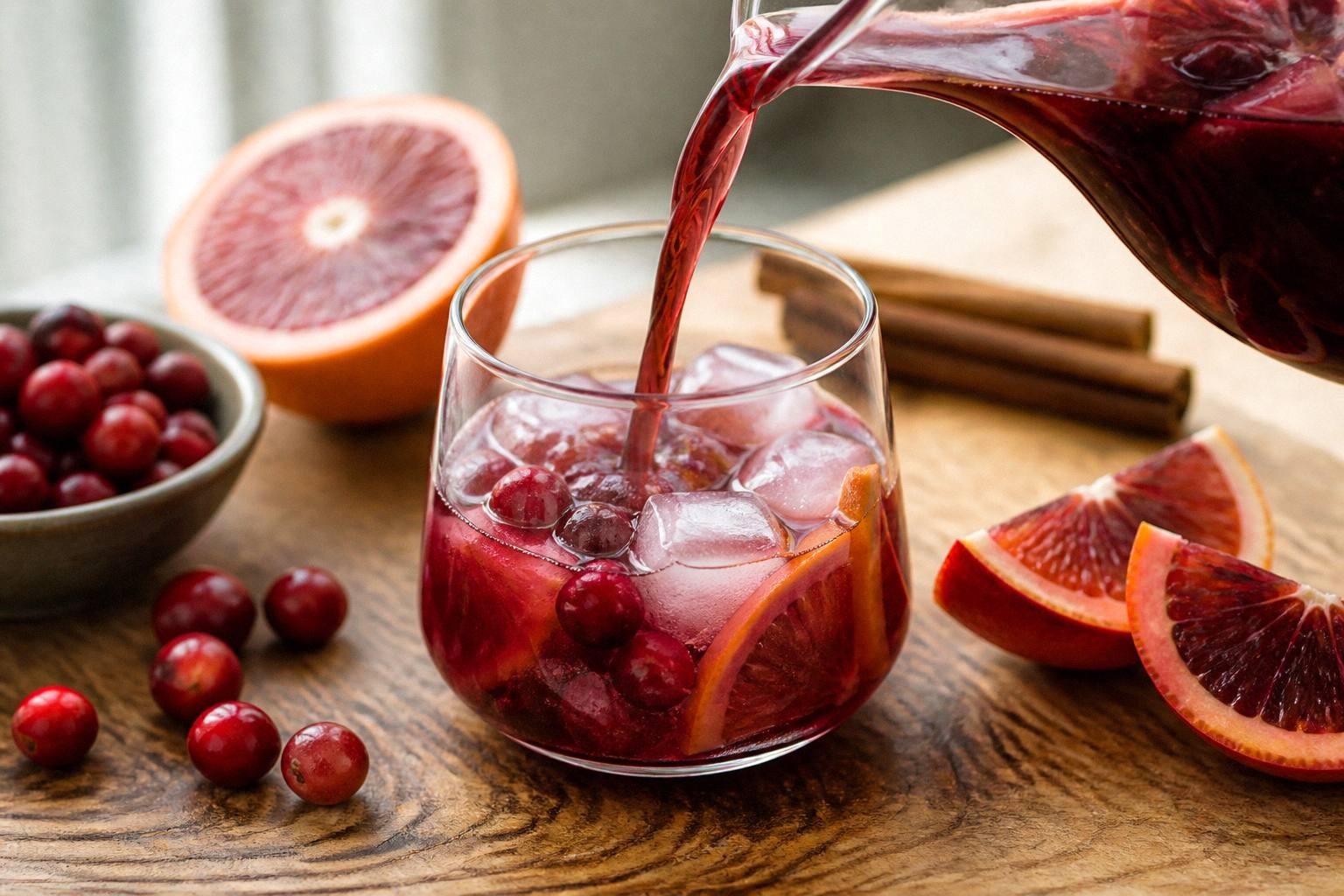
White wine works better than red in this recipe because it lets the blood orange color show through. A dry white like Pinot Grigio, Sauvignon Blanc, or unoaked Chardonnay gives you a clean base that won’t fight the fruit. Avoid sweet whites like Moscato or Riesling; the cranberry reduction and any added liqueur already bring sweetness, and a sweet wine on top of that tips the pitcher into cloying territory.
You need one 750 ml bottle for a six-serving pitcher. Buy something you’d drink on its own but not something you’d save for a special dinner. Sangria is a mixer, and the fruit and reduction will mask the wine’s finer points.
Red wine is a variation, not the standard. If you use red, choose a fruit-forward option like Zinfandel or a Spanish Garnacha, and expect the finished sangria to taste darker and less bright. The blood orange color will be hidden, so you lose the visual payoff that makes this version striking.
Ingredients
- 2 cups cranberries
- 3 Tbsp agave syrup (sub. maple syrup, honey, or granulated sugar)
- 1/2 cup water
- 2/3 cup blood orange juice (approx. 2 large oranges)
- 3 blood oranges (to slice)
- 2 cups cranberries (for sangria)
- 3 cinnamon sticks
- fresh rosemary
- 1 bottle white wine (Pinot Grigio, Chardonnay, Sauvignon Blanc, etc.)
- 2 cups ginger beer
- 3 shots brandy (I used cognac)
- 3 Tbsp coconut sugar
- 2 tsp cinnamon
- cinnamon sticks
- fresh rosemary
- star anise
Instructions
- Add the cranberries, agave syrup, and water to a small pot and bring to a simmer over medium heat. The cranberries will start popping open and turning soft.
- Let the mixture simmer for 2 minutes, then take it off the heat to cool. It’ll thicken as it sits.
- While the reduction cools, juice the oranges and slice what’s left into small pieces.
- Once it’s cooled, spoon the reduction into the bottom of a large pitcher. Add the orange juice, orange slices, cranberries, cinnamon sticks, and rosemary on top.
- Pour the wine over everything, then add the ginger beer and brandy. Stir with a long cocktail stirrer to work in the cranberry reduction from the bottom. The color should turn a darker red. Let the sangria sit in the fridge for at least 2 hours so the flavors can soak in.
- When you’re ready to serve, prepare the cinnamon sugar rim mixture on a small plate. Take an extra orange rind and run it along the rim of a cocktail glass, holding the glass upside down so the juice doesn’t drip down the sides. Dip the rim into the cinnamon mixture to coat it.
- Use a ladle to serve the sangria into cocktail glasses, making sure to scoop up some of the fruit. Garnish with extra cinnamon sticks, rosemary, or star anise if you like.
- The sangria will keep in the fridge for up to 3 days and actually gets better with time.
Put It on the Winter Table
This six-serving pitcher fits a winter dinner when you want the fruit and wine ready before guests sit down. Let the sangria rest in the fridge as directed, then stir the pitcher before each round so the cranberry reduction and fruit reach every glass.
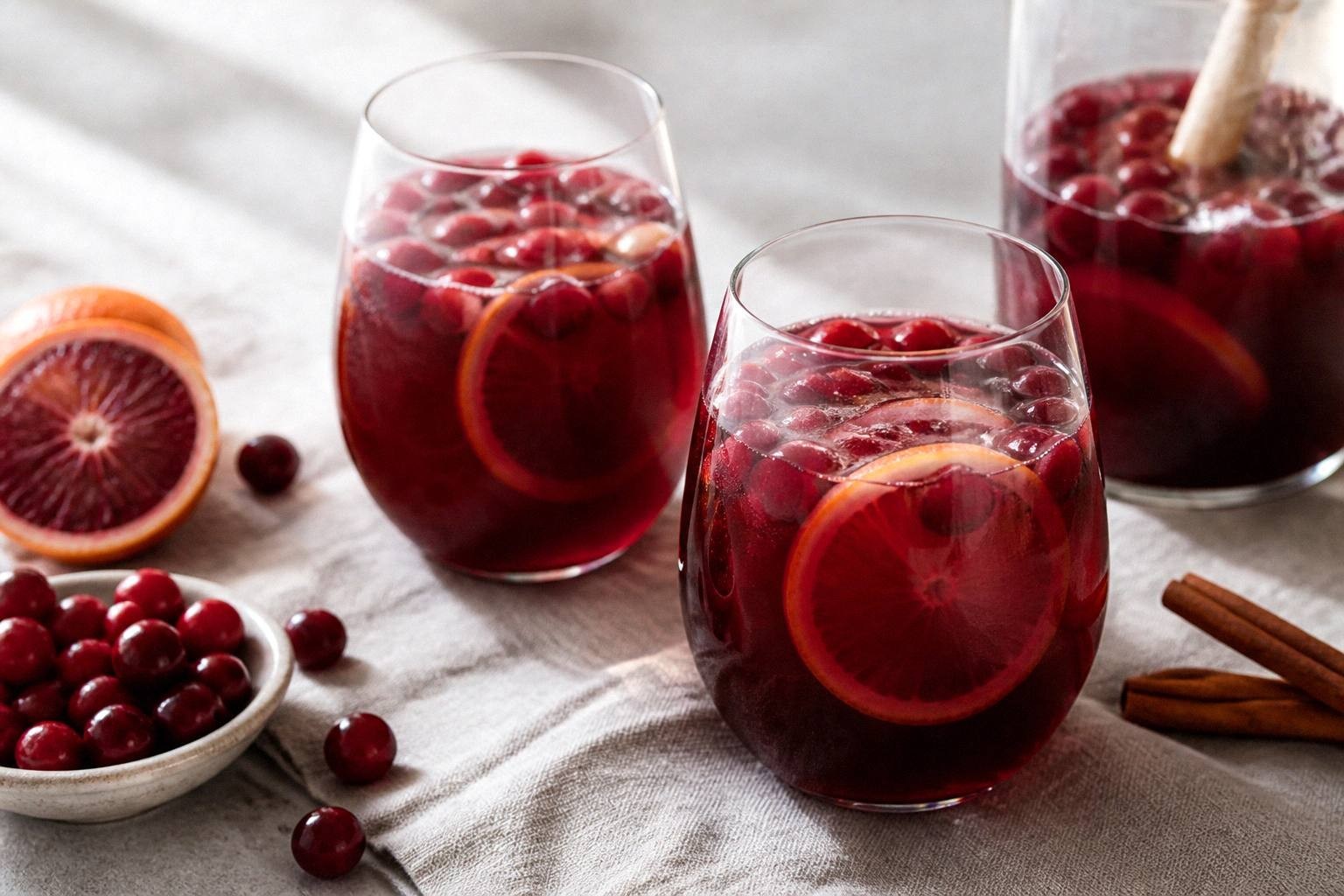
A 12 to 14 ounce stemless wine glass gives the orange pieces, cranberries, and a little fresh ice room. A wide tumbler works just as well. Keep ice in the individual glasses rather than the pitcher, and use the cinnamon-sugar rim only if guests want the extra sweetness.
Make-Ahead and Batch Scaling
This sangria needs at least three hours in the fridge for the fruit to soften and the flavors to blend, but it’s better after a full overnight rest. The cranberries and blood orange slices will continue to release flavor and color into the wine, and the reduction will fully dissolve and distribute through the pitcher. You can make it up to two days ahead; after that, the fruit starts to break down and the sangria loses its fresh brightness.
To double the recipe for a larger gathering, use two bottles of wine, 4 cups cranberries for the reduction, 6 blood oranges, 4 cups ginger beer ecipes/ginger -honey-syrup-recipe/) beer, and 6 shots of brandy. Make the cranberry reduction in a larger pot or in two batches, since a crowded pot won’t simmer evenly. Use a punch bowl or a large beverage dispenser instead of a pitcher, and add ice directly to the bowl rather than to individual glasses if you want to keep it cold for a long party.
If you’re scaling up, make the reduction the day before and store it in the fridge. Cold reduction pours more easily into the pitcher and won’t warm the wine when you assemble everything. The cinnamon sticks and rosemary can go straight into the large batch; their flavor is subtle enough that doubling them won’t overpower the drink.
Common Problems and How to Fix Them
- Sangria tastes too tart: Add another tablespoon of agave syrup or honey to the pitcher and stir well. Taste after fifteen minutes to let it dissolve and distribute.
- Sangria tastes too sweet: Squeeze in the juice of half a blood orange or add a splash of plain cranberry juice (not cranberry juice cocktail, which is already sweetened). The extra acidity will balance the sweetness without thinning the flavor.
- Cranberry reduction is too thick: Thin it with a tablespoon of water before adding it to the pitcher. A reduction that’s too thick won’t incorporate evenly and will settle as a syrup at the bottom.
- Fruit is floating and won’t stay submerged: This is normal. Stir the pitcher before serving each glass so everyone gets fruit, or use a slotted spoon to add fruit to the glasses after pouring.
- Sangria is watery after sitting on ice: Serve it over fresh ice in each glass rather than adding ice to the pitcher. If you need to keep a large batch cold, freeze some of the cranberries and use them as ice cubes that won’t dilute the drink.
- Blood oranges are out of season: Use regular navel or Cara Cara oranges and add a handful of fresh raspberries to the pitcher for a similar berry note. The color won’t be as dramatic, but the flavor will still work.
Substitutions and Variations
- Ginger beer: Replace with sparkling water, club soda, or prosecco for a less ginger-forward drink. Add the sparkling element just before serving rather than letting it sit overnight, or it will go flat. If you skip the ginger beer entirely, increase the wine or add an extra cup of blood orange juice to keep the pitcher full.
- Brandy or cognac: Substitute orange liqueur like Grand Marnier or triple sec to emphasize the citrus. For a lower-alcohol version, cut the brandy in half or leave it out entirely; the sangria will taste lighter and more fruit-forward.
- Fresh cranberries: Replace with frozen cranberries in the reduction. Don’t thaw them first; add them frozen to the pot and they’ll release their juice as they heat. Frozen cranberries may take an extra minute to burst, but the finished reduction will taste the same. For the whole cranberries that go into the pitcher, fresh is better because frozen ones can turn mushy after thawing in the wine overnight.
Frequently Asked Questions
Can I use regular oranges instead of blood oranges?
Yes, but you’ll lose the deep red color and the slight berry flavor that blood oranges bring. Navel or Cara Cara oranges will make a perfectly good sangria that tastes more straightforwardly citrus. If you want to keep some of the color, add a handful of raspberries or pomegranate arils to the pitcher.
How long does this sangria last in the refrigerator?
It will stay good for up to three days covered in the fridge. After that, the fruit starts to break down and the flavors dull. The alcohol and acidity keep it safe to drink, but the texture and taste won’t be as bright.
Can I make a non-alcoholic version?
Replace the wine with white grape juice or a mix of sparkling water and white cranberry juice. Skip the brandy or replace it with a tablespoon of vanilla extract for depth. The cranberry reduction and fruit will still give you the flavor and color, but the drink will taste sweeter and less complex without the wine’s tannins.
What if I can’t find ginger beer?
Use ginger ale, sparkling water, or club soda. Ginger beer has a stronger ginger flavor and less sweetness than ginger ale, so if you substitute ginger ale, you may want to cut back slightly on the agave syrup in the cranberry reduction. Sparkling water keeps the fizz without adding any flavor.
Do I have to make the cranberry reduction, or can I just add whole cranberries?
You can skip the reduction and add whole raw cranberries to the pitcher, but they’ll stay hard and tart even after soaking overnight. The reduction sweetens the cranberries, thickens them into a syrup that distributes through the sangria, and gives you more control over the sweetness level.
Can I serve this without the cinnamon sugar rim?
Absolutely. The cinnamon sugar rim is optional and adds a dessert-like touch that works for holiday parties but isn’t necessary for the drink itself. If you skip it, the sangria is less sweet and lets the fruit flavors come through more clearly.