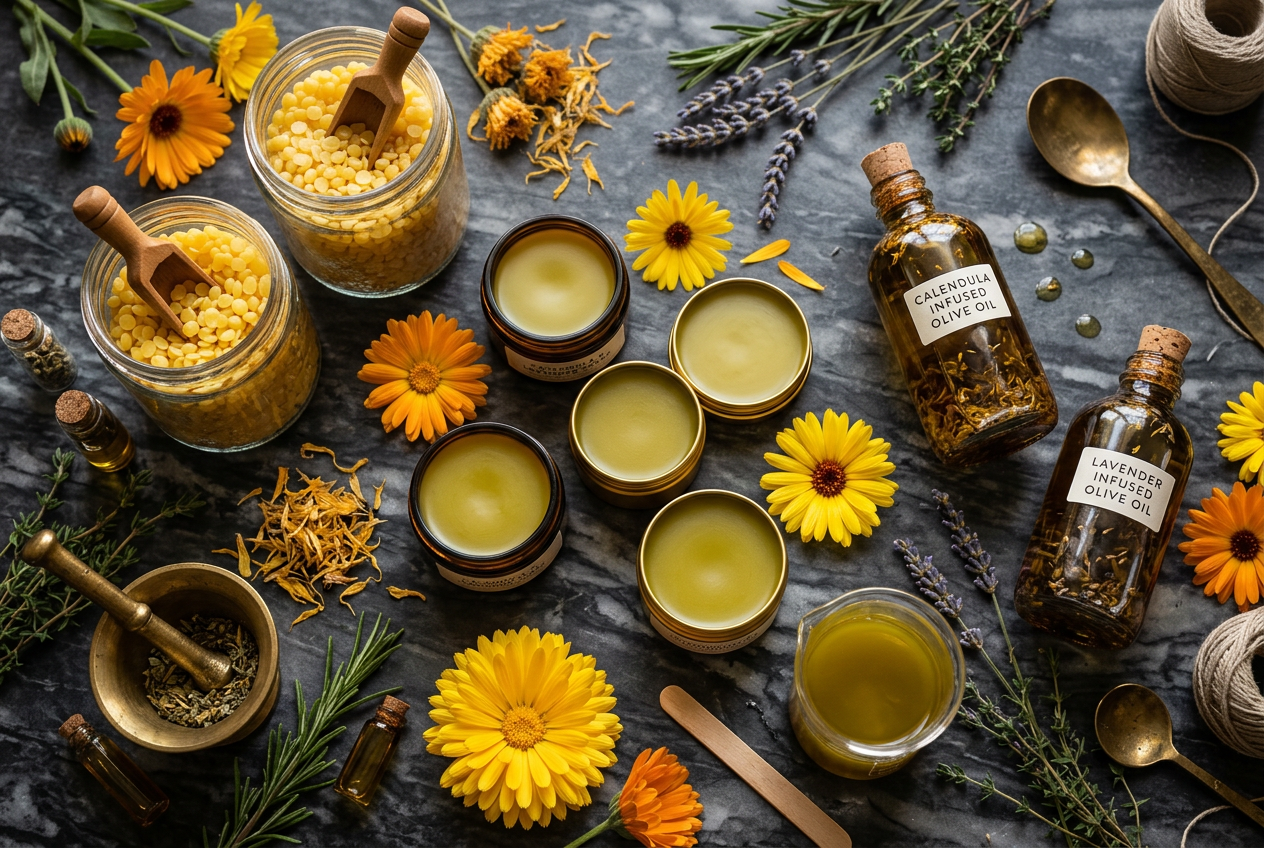
An oil-and-wax balm is a topical preparation for intact skin, not a beverage or a first-aid treatment. A clear formula separates the oil-infusion batch from the measured strained oil used to make the balm. This guide uses a published calendula preparation and omits fresh-herb, essential-oil and wound-treatment shortcuts.
A published calendula route
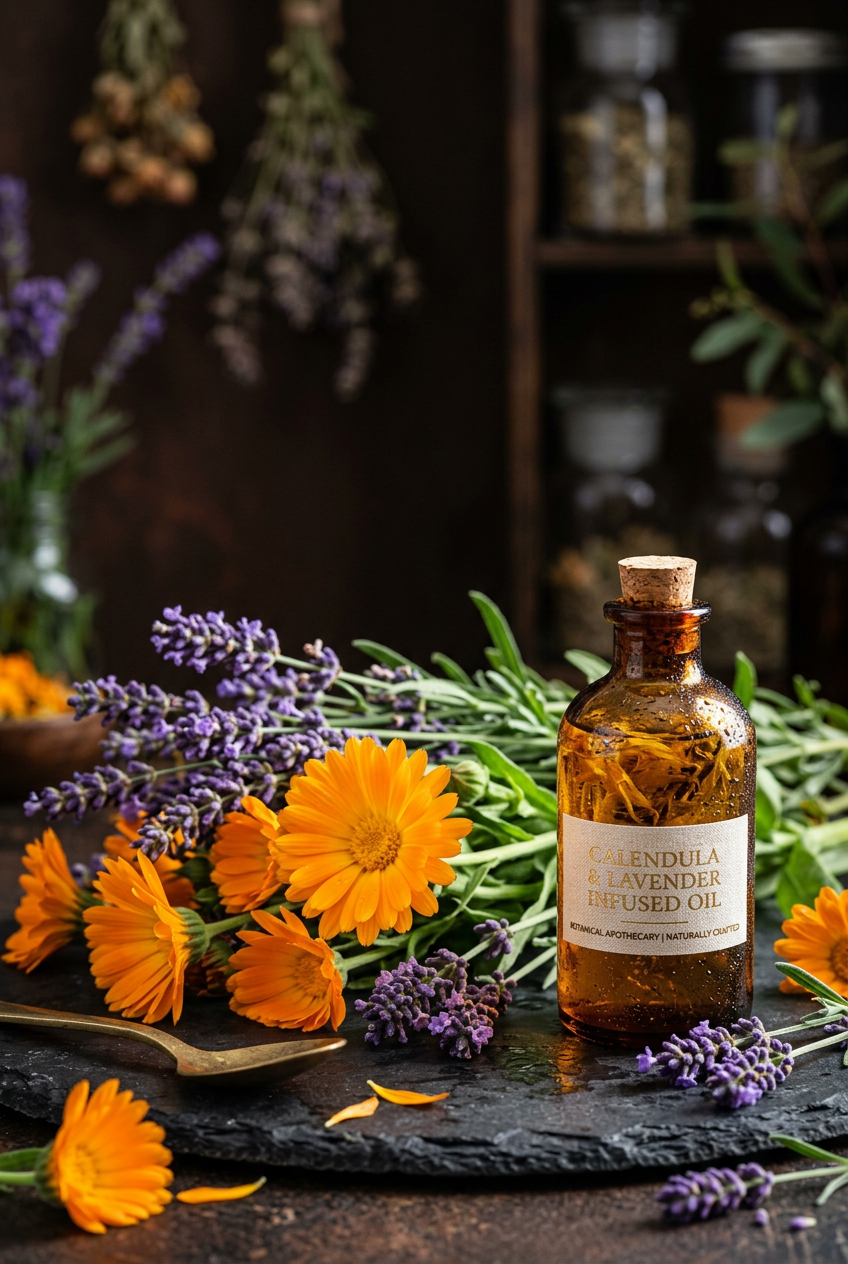
Colleen at Grow Forage Cook Ferment publishes an infusion with 1 cup dried calendula flowers and 1.5 cups carrier oil, followed by a balm using 1 cup strained calendula-infused oil and 1 ounce beeswax. The optional shea butter is omitted here; the oil/wax ratio is retained. The source supplies a craft method, not clinical proof of wound, eczema or burn treatment.
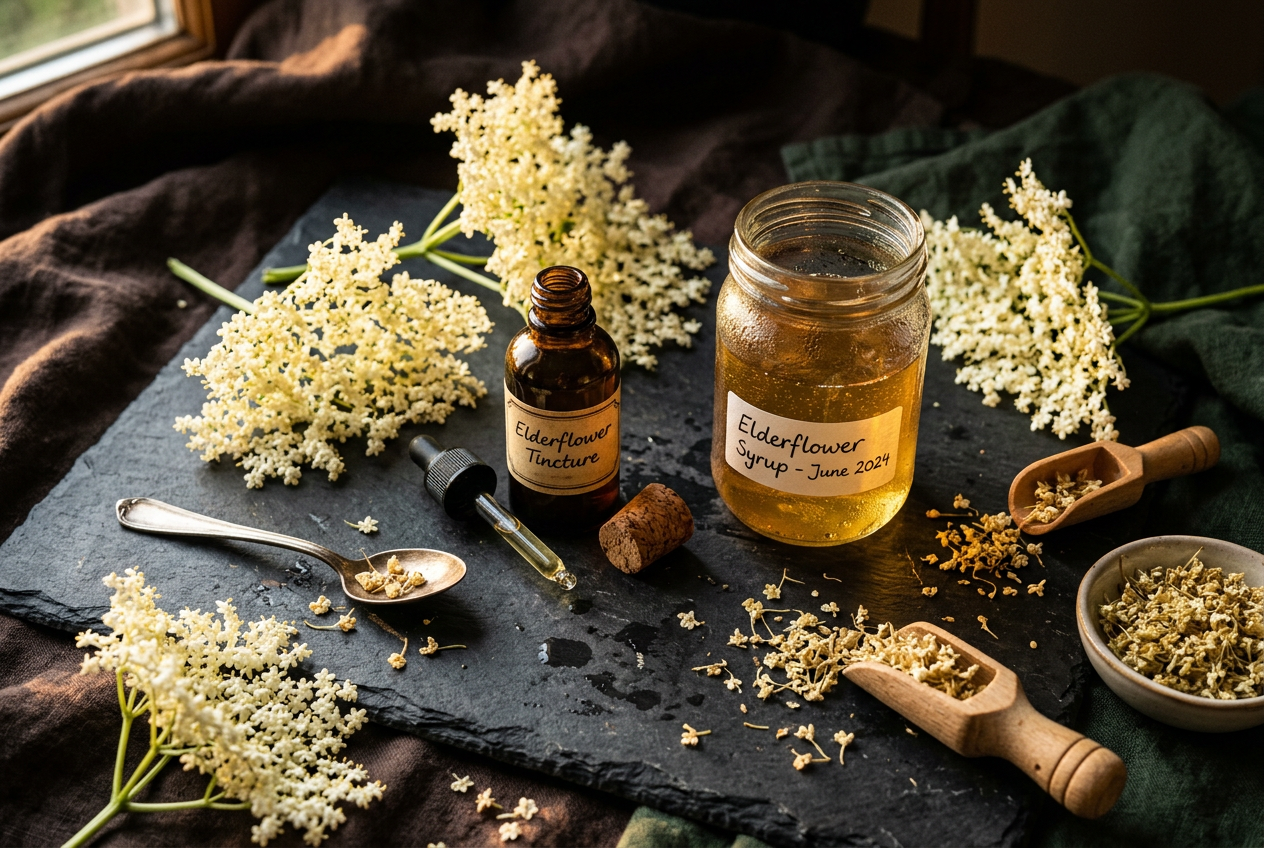
For the infusion, use the dried flowers , cover them with the listed oil in a clean dry jar, and follow the source’s four-to-six-week cool, out-of-sunlight method. Strain before measuring the one cup for the balm; absorption by flowers and cloth means starting oil volume is not finished yield. Alternatively, start with labeled calendula-infused cosmetic oil and follow its handling directions.
Keep batch and balm measurements separate
| Stage | Listed quantities | What to measure |
|---|---|---|
| Oil infusion | 1 cup dried calendula + 1.5 cups carrier oil | Recovered oil after straining |
| Balm | 1 cup strained infused oil + 1 oz beeswax | Wax by weight; oil by cup volume |
| Containers | Clean, dry, heat-suitable tins or jars | Actual cooled yield; no fixed eight servings |
One ounce by weight is about 28.35 g; it is not one fluid ounce. There is no gram conversion for the oil without its density. Other waxes are not one-for-one replacements, and this draft does not supply the former unsupported candelilla conversion.
Melt, combine and cool
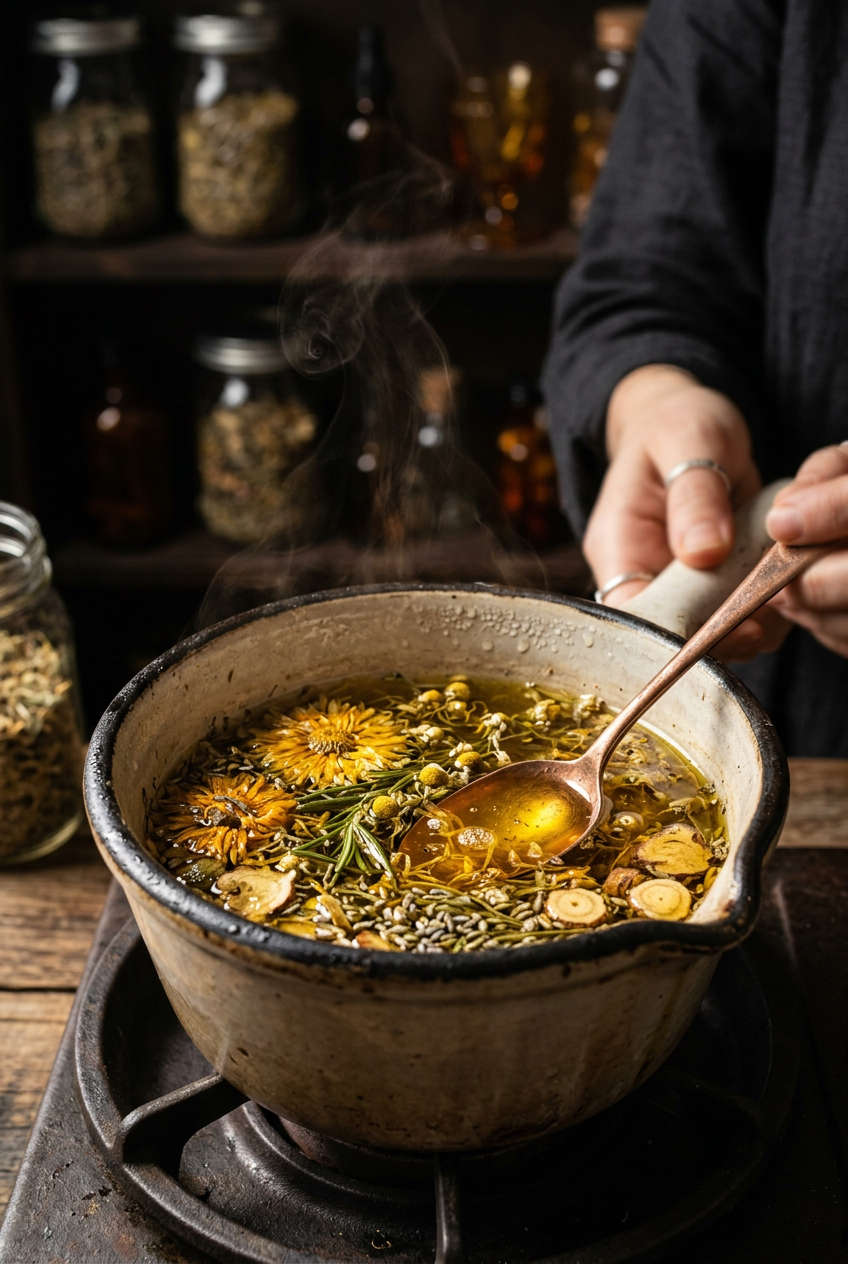
With dry containers ready, gently heat the measured strained oil and beeswax in a double boiler. Stir until the wax melts; remove from heat. Pour carefully into suitable containers and leave until fully cool and set before handling or closing. Record the actual ingredients, date and measured yield. Hot oil and wax require care; color or aroma is not a safety endpoint.
Ingredients that need a separate formula
The Mountain Rose Herbs salve tutorial recommends dried herbs for oil infusion. Fresh herbs add moisture, and letting water settle overnight does not establish a safe preserved product. Essential-oil drops do not establish a controlled concentration, so they are not added to this version.
FDA cosmetic microbiological guidance explains contamination routes and inadequate preservation. Vitamin E is not treated as an antimicrobial preservation system here. No one-to-two-year shelf life, sterile status or readiness by smell is established for a home batch. Follow labeled ingredient directions and do not add water, tea or wet herbs to this oil/wax preparation.
Intact skin only; no first-aid substitute
This balm is not offered for cuts, burns, infection, nerve pain, sprains or an eczema flare. The former plantain/comfrey/arnica treatment list is removed rather than assigned a new dose. Choose ingredients you can tolerate; plants, carrier oils and beeswax can cause reactions. AAD product testing guidance may help detect a reaction, but cannot validate a homemade formula or its preservation.
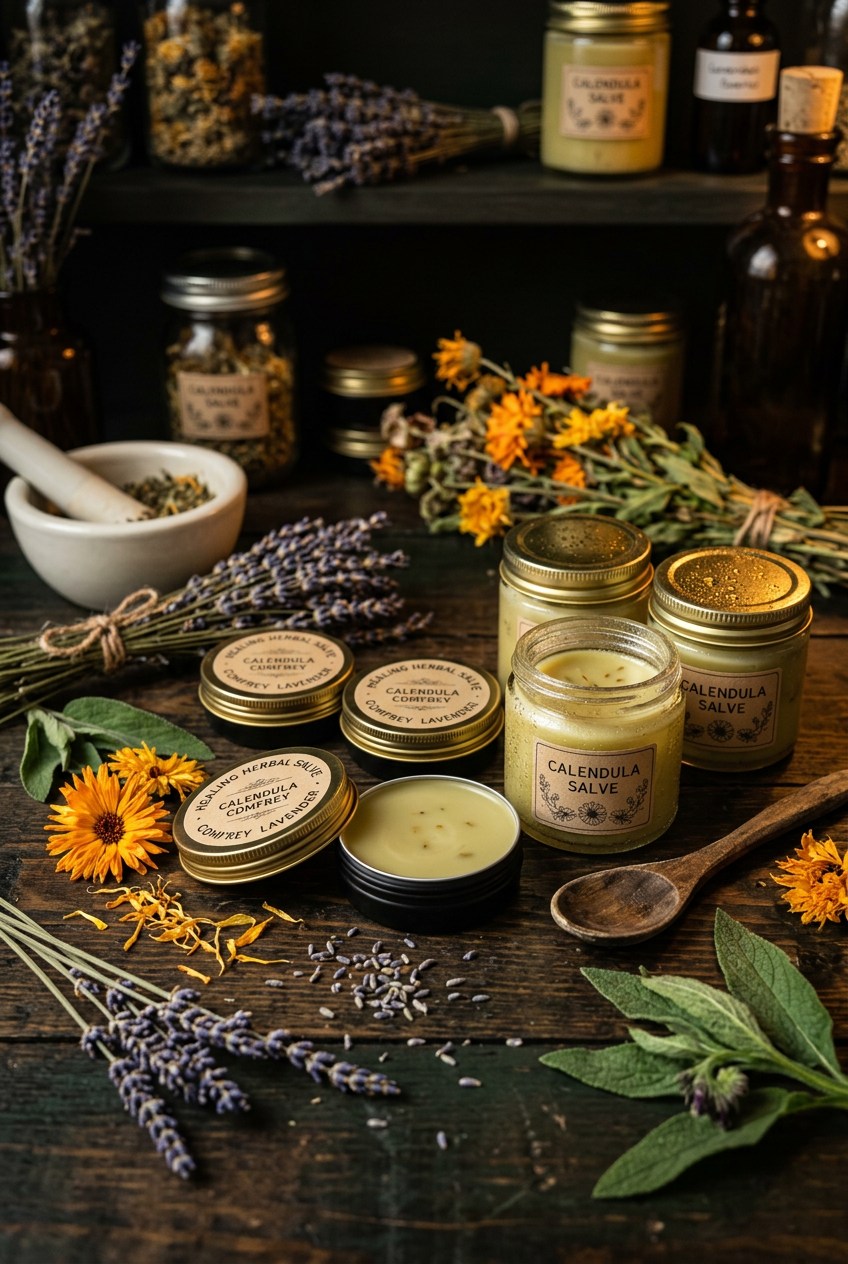
The calendula hand-salve page is a separate craft preparation whose full formula should be followed on its own. The herbal face-mask guide explains why a water-rich mixture presents different handling questions.