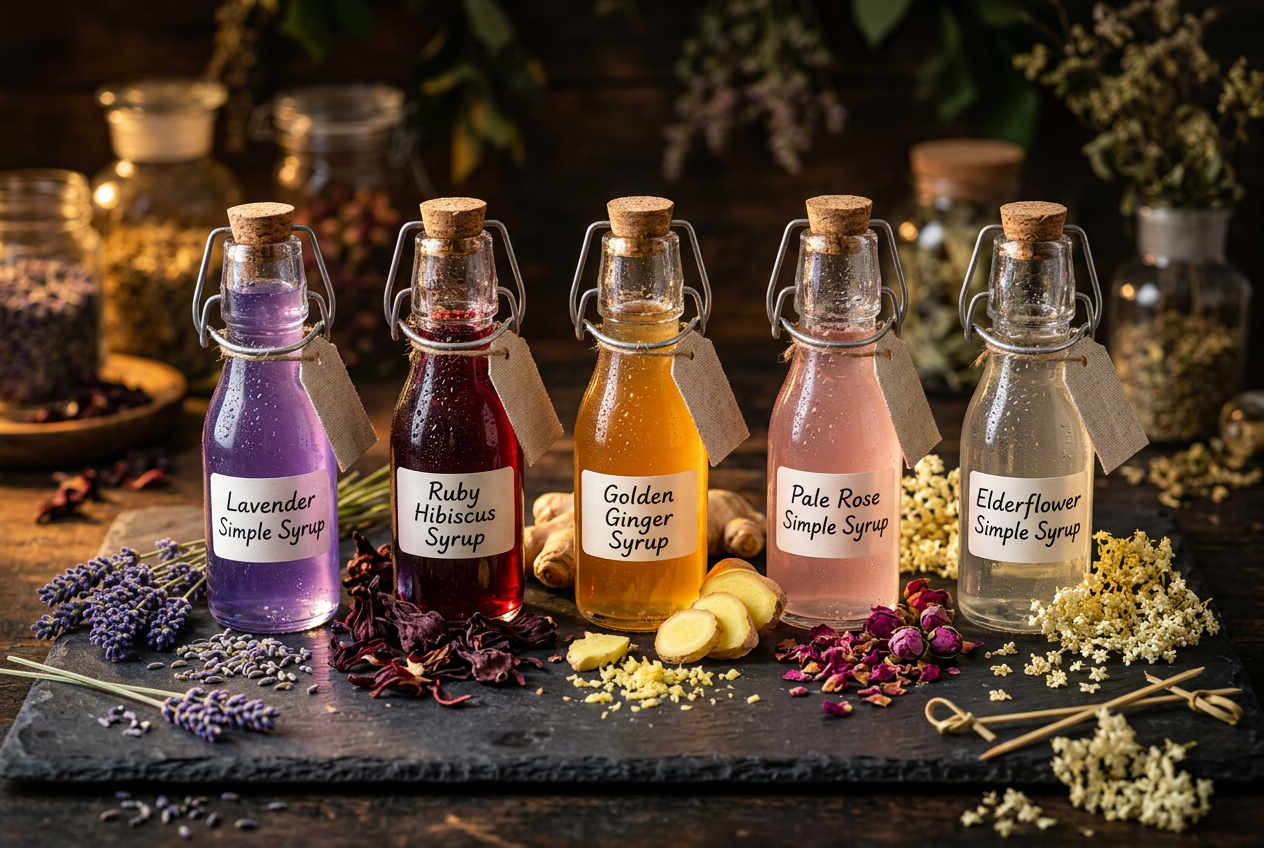
Learn how to make 8 botanical simple syrups including lavender, rose, ginger, and more. Complete recipes with steeping times and cocktail pairing ideas.
Simple syrups are one of the most versatile ingredients in any home bar or kitchen. These sweetened infusions add depth, complexity, and a professional touch to everything from morning coffee to evening cocktails. When you infuse simple syrups with botanical ingredients like lavender, rose petals, or fresh ginger, you transform a basic sweetener into a flavor powerhouse that can elevate any beverage.
Making botanical simple syrups at home is surprisingly easy, requires minimal equipment, and allows you to control the quality of ingredients while avoiding the preservatives and artificial flavors found in commercial versions. Whether you are crafting sophisticated cocktails, refreshing mocktails, or simply want to enhance your iced tea, homemade botanical syrups offer endless creative possibilities.
In this guide, you will learn the fundamentals of simple syrup making, discover eight botanical flavors with detailed recipes, and get practical tips on storage and usage that will have you mixing like a professional bartender.
What Are Simple Syrups?
Simple syrup is exactly what the name suggests: a simple combination of sugar and water heated until the sugar dissolves completely. This liquid sweetener blends seamlessly into cold beverages, unlike granulated sugar which tends to settle at the bottom of your glass.
The standard ratio for simple syrup is 1:1, meaning equal parts sugar to water by volume. This creates a moderately sweet syrup that works well in most applications. Some bartenders prefer a rich simple syrup with a 2:1 sugar-to-water ratio for a thicker consistency and longer shelf life, but the 1:1 ratio is more versatile for botanical infusions.
When you add botanical ingredients to simple syrup, you create an infused syrup that carries the essential oils, flavors, and sometimes colors of herbs, flowers, spices, or roots. The gentle heating process extracts these flavors while the sugar acts as a preservative and flavor carrier.
Why Make Simple Syrups at Home?
There are several compelling reasons to make your own botanical simple syrups rather than purchasing them:
Quality control: You choose organic ingredients, avoid artificial flavors, and know exactly what goes into each batch.
Cost effectiveness: A homemade batch costs a fraction of premium store-bought versions, especially for expensive flavors like rose or elderflower.
Customization: You can adjust the sweetness level, intensity of botanical flavor, and even combine multiple ingredients to create signature blends.
Freshness: Homemade syrups have a brighter, more authentic flavor than shelf-stable commercial products that may have been sitting in warehouses for months.
Creative expression: Making your own syrups allows you to experiment with seasonal ingredients and develop unique flavor combinations.
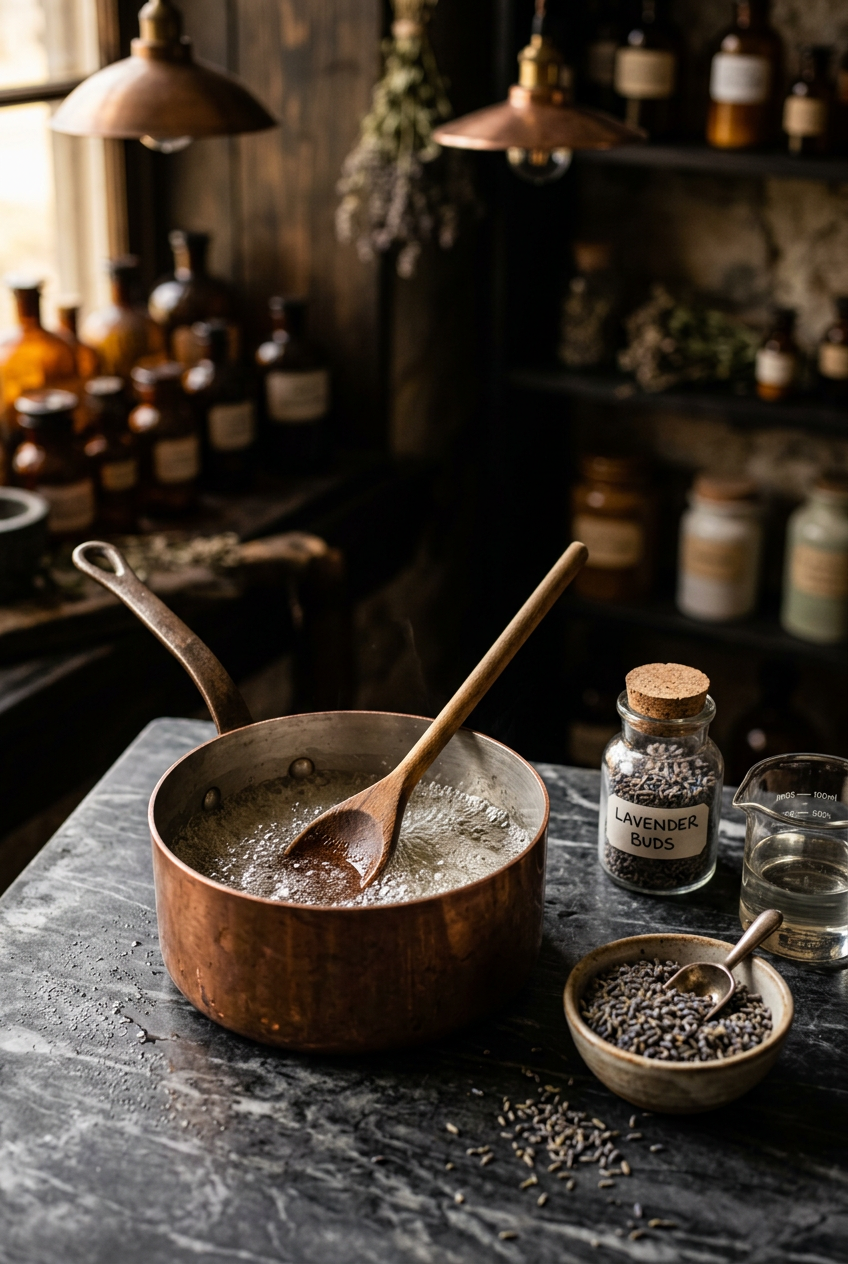
Making botanical simple syrups at home requires just sugar, water, and your chosen botanicals
The Base Simple Syrup Recipe
Before diving into specific botanical flavors, master this basic technique that applies to all variations:
Ingredients:
- 1 cup granulated sugar (organic cane sugar recommended)
- 1 cup filtered water
Equipment:
- Small saucepan
- Wooden spoon or whisk
- Fine mesh strainer
- Glass jar or bottle for storage
- Funnel (optional but helpful)
Basic Method:
Combine sugar and water in a small saucepan over medium heat.
Stir occasionally until the sugar completely dissolves and the liquid becomes clear. This typically takes 3 to 5 minutes.
Once the sugar has dissolved, you can proceed with adding your botanical ingredients. Do not let the syrup boil vigorously, as this can change the consistency and reduce the volume.
After infusing with botanicals (see specific recipes below), remove from heat and let cool slightly.
Strain through a fine mesh strainer into your storage container, pressing gently on any solids to extract maximum flavor.
Allow to cool completely before sealing and refrigerating.
This base recipe yields approximately 1.5 cups of syrup and can be easily doubled or tripled for larger batches.
8 Botanical Simple Syrup Recipes
1. Lavender Simple Syrup
Lavender syrup brings floral, slightly herbaceous notes with a calming aroma. It pairs beautifully with lemon, gin, and champagne.
Ingredients:
- 1 cup sugar
- 1 cup water
- 2 tablespoons dried culinary lavender buds (or 3 tablespoons fresh)
Method:
- Make the base simple syrup as directed above.
- Once sugar dissolves, remove from heat and add lavender buds.
- Steep for 30 minutes, covered.
- Strain thoroughly, pressing gently on the buds.
Steeping time: 30 minutes
Flavor notes: Floral, perfumed, slightly sweet with herbal undertones. Use sparingly as lavender can become soapy if too concentrated.
Best uses: Lavender lemonade, gin cocktails, champagne cocktails, iced tea
2. Rose Simple Syrup
Rose syrup offers delicate floral sweetness reminiscent of Middle Eastern and Indian desserts. It adds elegance to any drink.
Ingredients:
- 1 cup sugar
- 1 cup water
- 3 tablespoons dried rose petals (culinary grade) or 1/4 cup fresh organic rose petals
Method:
- Prepare base simple syrup.
- Remove from heat and add rose petals.
- Steep for 20 to 30 minutes, covered.
- Strain through fine mesh, discarding petals.
Steeping time: 20 to 30 minutes
Flavor notes: Delicate, floral, romantic, with subtle sweetness. The flavor should be noticeable but not overwhelming.
Best uses: Rose lemonade, champagne cocktails, Turkish coffee, iced chai
3. Ginger Simple Syrup
Ginger syrup delivers warming spice with a slight kick. It is one of the most versatile botanical syrups for both sweet and savory applications.
Ingredients:
- 1 cup sugar
- 1 cup water
- 1/4 cup fresh ginger, peeled and thinly sliced (about a 3-inch piece)
Method:
- Combine sugar, water, and ginger slices in saucepan.
- Bring to a gentle simmer over medium heat, stirring until sugar dissolves.
- Reduce heat to low and simmer gently for 10 minutes.
- Remove from heat and let steep for an additional 20 minutes.
- Strain, pressing on ginger slices to extract all flavor.
Steeping time: 10 minutes simmering plus 20 minutes steeping
Flavor notes: Spicy, warming, slightly peppery with natural sweetness. The longer you simmer, the more intense the ginger flavor.
Best uses: Moscow mules, dark and stormy, ginger lemonade, hot toddies, Asian-inspired mocktails
4. Hibiscus Simple Syrup
Hibiscus syrup is tart, fruity, and brilliantly ruby-red. It adds both flavor and stunning color to drinks.
Ingredients:
- 1 cup sugar
- 1 cup water
- 1/4 cup dried hibiscus flowers
Method:
- Make base simple syrup.
- Once sugar dissolves, add hibiscus flowers.
- Simmer gently for 5 minutes (this helps extract the color and tartness).
- Remove from heat and steep for 15 minutes.
- Strain thoroughly.
Steeping time: 5 minutes simmering plus 15 minutes steeping
Flavor notes: Tart, cranberry-like, slightly citrusy with floral undertones. Naturally adds a gorgeous pink-red color.
Best uses: Margaritas, spritzers, iced tea, agua fresca, tequila cocktails
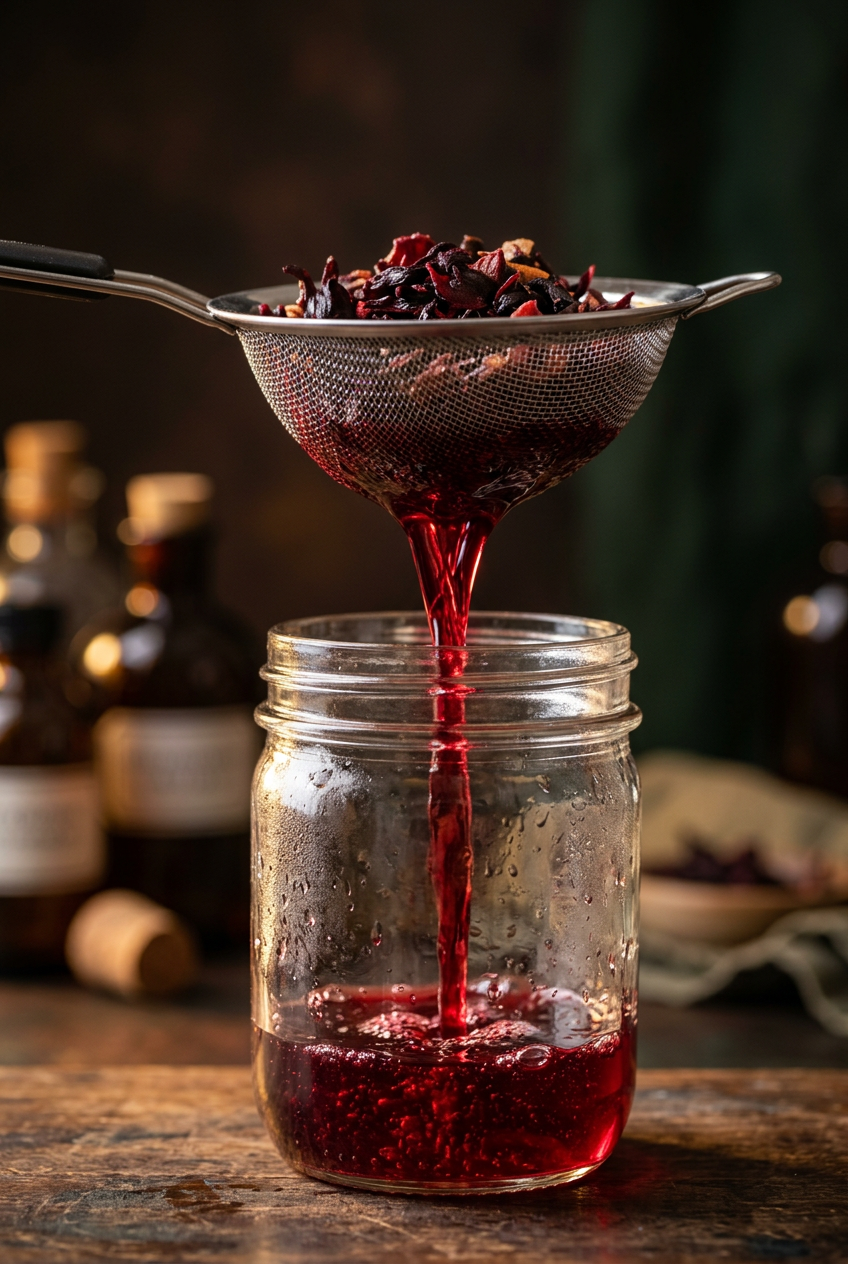
A collection of botanical simple syrups offers endless possibilities for creative beverages
5. Chamomile Simple Syrup
Chamomile syrup is gentle, apple-like, and soothing. It brings a subtle complexity that works in both alcoholic and non-alcoholic drinks.
Ingredients:
- 1 cup sugar
- 1 cup water
- 3 tablespoons dried chamomile flowers (or 4 chamomile tea bags)
Method:
- Prepare base simple syrup.
- Remove from heat and add chamomile.
- Steep for 15 to 20 minutes, covered.
- Strain, squeezing tea bags if using.
Steeping time: 15 to 20 minutes
Flavor notes: Mild, apple-like, honey-sweet, calming. Very subtle flavor that complements rather than dominates.
Best uses: Whiskey cocktails, hot toddies, bedtime mocktails, apple cider
6. Mint Simple Syrup
Mint syrup is bright, refreshing, and cooling. It is a classic for good reason and works across countless drink recipes.
Ingredients:
- 1 cup sugar
- 1 cup water
- 1 cup fresh mint leaves, loosely packed (about 1 large bunch)
Method:
- Make base simple syrup.
- Remove from heat and add mint leaves.
- Muddle the mint gently in the hot syrup with a wooden spoon.
- Steep for 30 minutes, covered.
- Strain, pressing on mint leaves.
Steeping time: 30 minutes
Flavor notes: Fresh, cooling, bright green flavor. Peppermint is more intense, while spearmint is gentler and sweeter.
Best uses: Mojitos, mint juleps, lemonade, iced tea, chocolate drinks
7. Cardamom Simple Syrup
Cardamom syrup is exotic, warming, and complex. This Scandinavian and Middle Eastern spice adds sophisticated depth to drinks.
Ingredients:
- 1 cup sugar
- 1 cup water
- 2 tablespoons green cardamom pods, lightly crushed
Method:
- Combine sugar, water, and crushed cardamom pods in saucepan.
- Bring to a gentle simmer, stirring until sugar dissolves.
- Simmer gently for 5 minutes.
- Remove from heat and steep for 20 minutes.
- Strain, discarding pods.
Steeping time: 5 minutes simmering plus 20 minutes steeping
Flavor notes: Warm, slightly citrusy, eucalyptus-like, sweet and spicy. Complex flavor with notes of lemon, mint, and pepper.
Best uses: Coffee drinks, chai lattes, whiskey cocktails, Scandinavian-inspired drinks
8. Elderflower Simple Syrup
Elderflower syrup is delicate, fruity-floral, and sophisticated. It tastes like spring in a bottle.
Ingredients:
- 1 cup sugar
- 1 cup water
- 1/4 cup dried elderflowers (or 1/2 cup fresh elderflower heads)
- 1 lemon slice (optional, adds brightness)
Method:
- Prepare base simple syrup.
- Remove from heat and add elderflowers and lemon slice if using.
- Steep for 30 minutes, covered.
- Strain thoroughly through fine mesh.
Steeping time: 30 minutes
Flavor notes: Floral, lychee-like, slightly fruity with hints of pear and honey. Delicate and sophisticated.
Best uses: Elderflower spritz, gin cocktails, champagne cocktails, sparkling water
Storage and Shelf Life
Proper storage is essential for maintaining the quality and safety of your botanical simple syrups.
Storage containers: Use clean, sterilized glass bottles or jars with tight-fitting lids. Glass is preferable to plastic as it does not absorb flavors or odors. Swing-top bottles or mason jars work perfectly.
Refrigeration: All botanical simple syrups must be stored in the refrigerator. The presence of plant materials makes them more susceptible to spoilage than plain simple syrup.
Shelf life: Most botanical simple syrups will keep for 2 to 4 weeks when properly refrigerated. Syrups with fresh ingredients like ginger or mint may have a slightly shorter shelf life (2 to 3 weeks), while those made with dried botanicals can last up to 4 weeks.
Signs of spoilage: Discard your syrup if you notice any cloudiness, mold growth, off odors, or fermentation (bubbling). When in doubt, throw it out.
Extending shelf life: For longer storage, you can add 1 ounce of vodka per cup of finished syrup, which acts as a preservative and can extend shelf life to 4 to 6 weeks. Alternatively, freeze syrups in ice cube trays, then transfer the cubes to freezer bags for storage up to 6 months.
Labeling: Always label your syrups with the flavor and date made. This helps you track freshness and avoid confusion when you have multiple varieties.
How to Use Botanical Simple Syrups
The versatility of botanical simple syrups extends far beyond cocktails. Here are numerous ways to incorporate them into your daily routine:
Cocktails and mocktails: This is the most obvious use. Replace plain simple syrup in any cocktail recipe with a botanical version to add complexity. Start with 1/2 to 3/4 ounce per drink and adjust to taste.
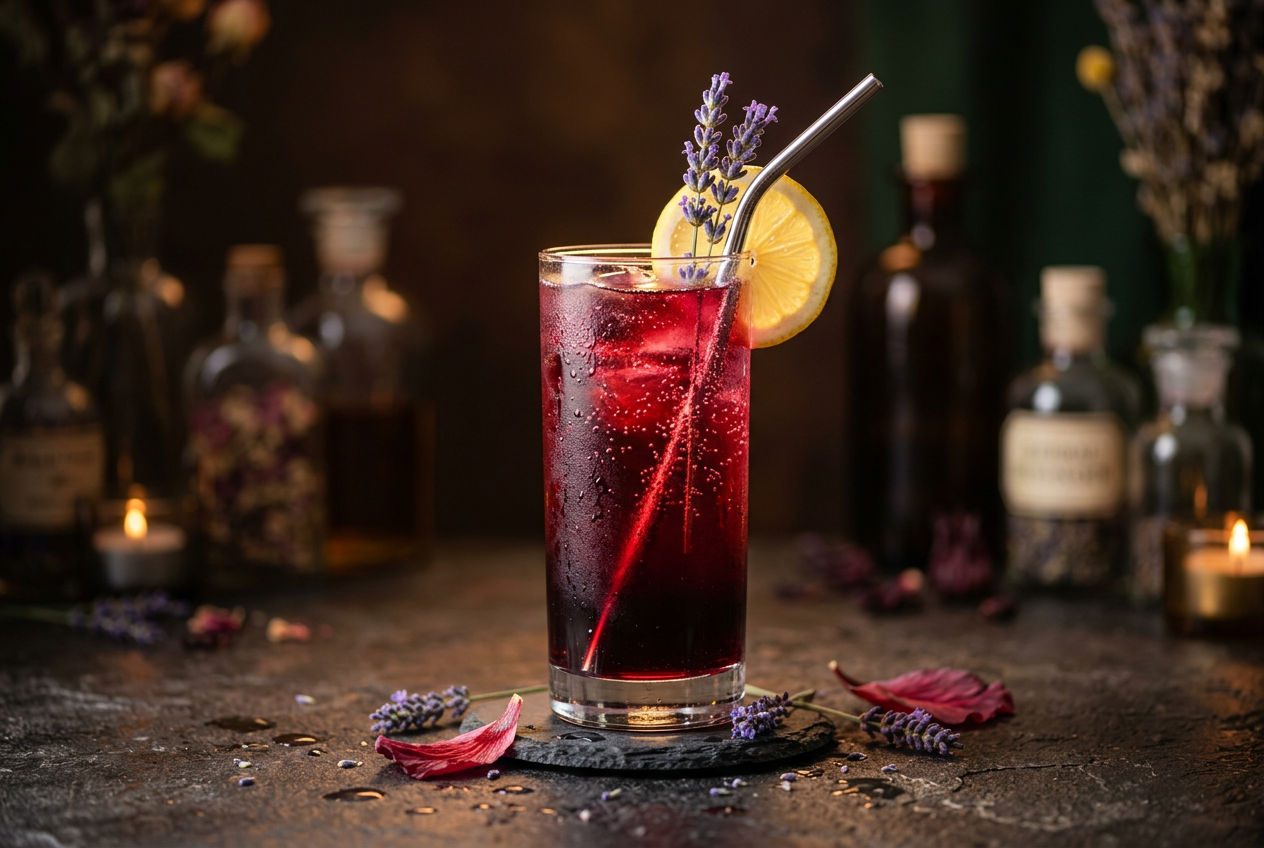
Sparkling water: Add 1 to 2 tablespoons of botanical syrup to plain or flavored sparkling water for an instant sophisticated soda. Lavender, hibiscus, and elderflower are especially lovely this way.
Coffee and tea: Stir a tablespoon of cardamom, mint, or rose syrup into hot or iced coffee. Chamomile and lavender syrups transform a simple cup of tea into a spa-worthy treat.
Salad dressings: Whisk a teaspoon of ginger or hibiscus syrup into vinaigrettes for a subtle botanical note that complements bitter greens beautifully.
Baking and desserts: Drizzle botanical syrups over pound cake, pancakes, or yogurt. They work beautifully in frosting, glazes, and homemade ice cream.
Lemonade: Replace plain simple syrup in any lemonade recipe with a botanical version. Lavender lemonade, hibiscus lemonade, and elderflower lemonade are crowd favorites that look as stunning as they taste.
Gifting: Decant syrups into small swing-top bottles and attach a handwritten label. A set of three or four botanical syrups makes a thoughtful, handmade gift for cocktail enthusiasts.
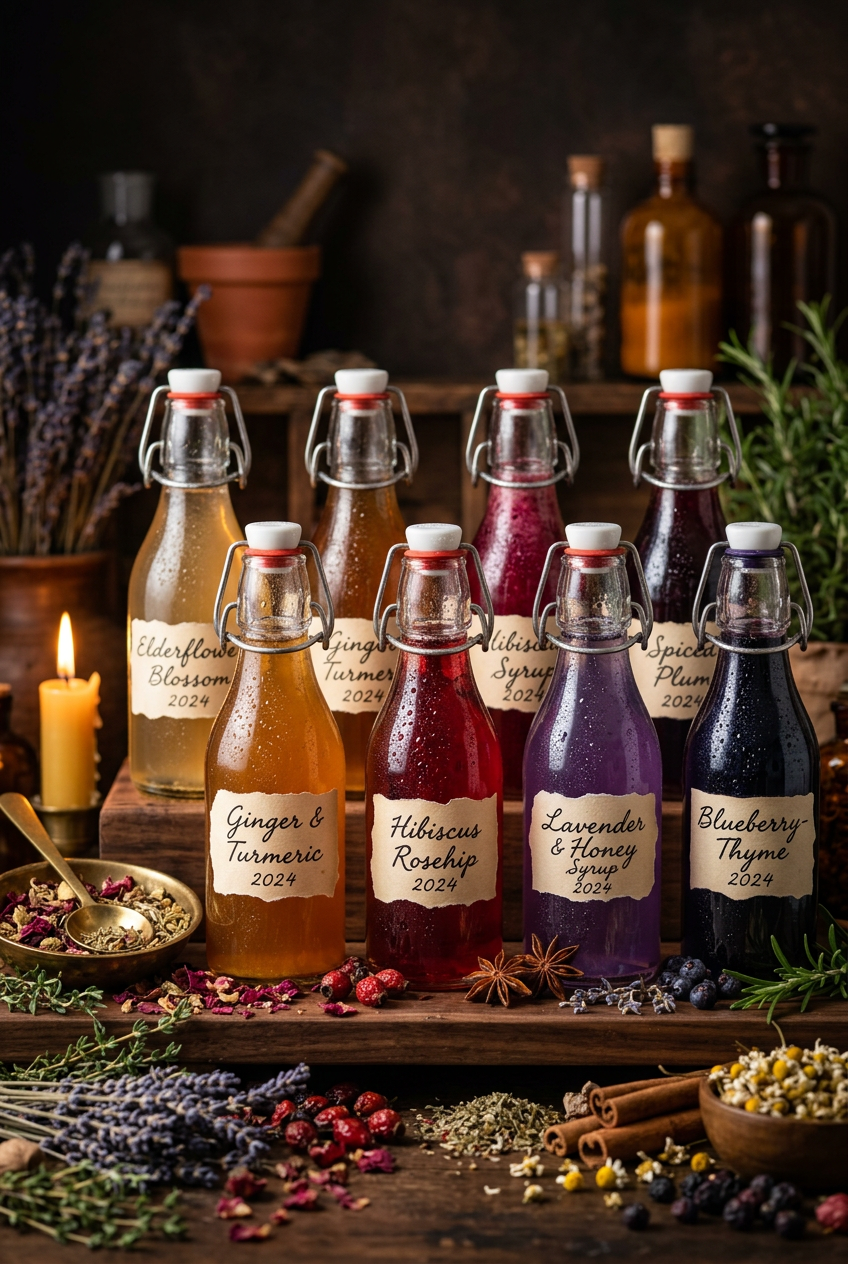
Botanical simple syrups make beautiful handmade gifts for any occasion
Quick Pairing Guide
Use this table as a quick reference for matching syrups to drinks:
| Syrup | Best Spirits | Best Mixers | Mocktail Use |
|---|---|---|---|
| Lavender | Gin, Vodka | Lemon juice, Champagne | Lemonade, sparkling water |
| Rose | Vodka, Tequila | Lime juice, Rosewater | Iced chai, agua fresca |
| Ginger | Bourbon, Dark rum | Lime juice, Ginger beer | Hot lemon water, kombucha |
| Hibiscus | Tequila, Mezcal | Citrus juice, Soda | Iced tea, agua fresca |
| Chamomile | Whiskey, Cognac | Apple cider, Honey water | Hot tea, warm apple juice |
| Mint | Rum, Bourbon | Lime juice, Soda | Lemonade, iced tea |
| Cardamom | Whiskey, Gin | Coffee, Cream | Chai latte, iced coffee |
| Elderflower | Gin, Prosecco | Lemon, Cucumber water | Sparkling water, lemonade |
Start Your Syrup Collection Today
Building a collection of botanical simple syrups is one of the most rewarding things you can do for your home bar. Start with one or two flavors that excite you — lavender and ginger are excellent entry points — then expand from there as you discover how each syrup transforms different drinks.
The beauty of botanical simple syrups is their immediacy. Unlike bitters that require weeks of steeping, a lavender syrup can be ready in under an hour and will transform your next drink the same evening. Keep a few bottles in your refrigerator and you will find yourself reaching for them constantly, in ways you never anticipated.
Experimentation is the heart of the alchemist’s practice. Do not be afraid to combine syrups, adjust steeping times, or try unexpected pairings. The most memorable drinks often come from happy accidents in the kitchen.