Color-changing butterfly pea flower lemonade goes from blue to purple with lemon. Get the easy recipe with dried flowers and fresh citrus.
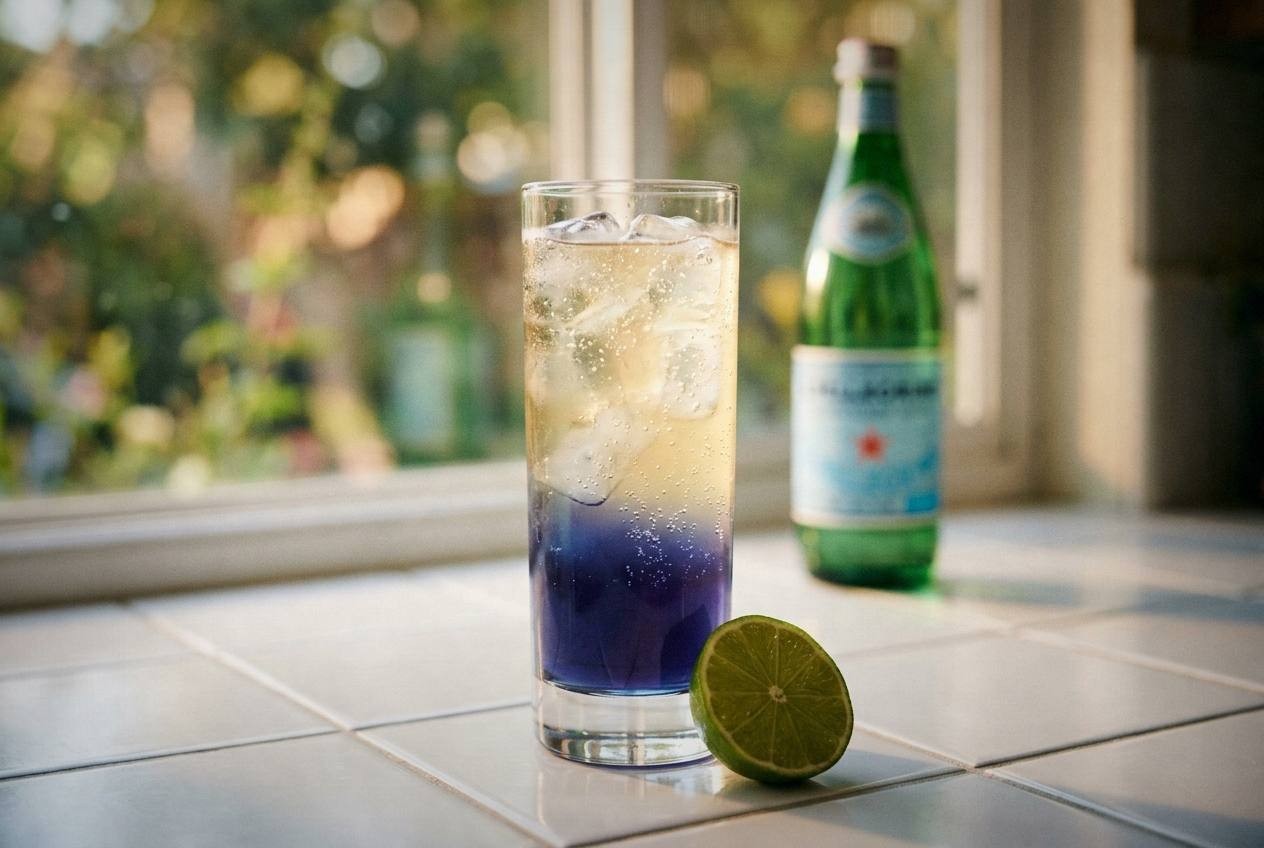
Butterfly pea flower lemonade starts as a deep blue drink and turns purple the moment you squeeze lemon into it. The color change comes from anthocyanin pigments in dried Clitoria ternatea flowers reacting to citric acid. Steep a half cup of flowers in sugar syrup, chill it, add fresh lemon juice, and you have 6 servings of something that looks impossible in about 25 minutes.
At a Glance
| Detail | Info |
|---|---|
| Prep time | 10 minutes |
| Total time | 25 minutes |
| Servings | 6 |
| Difficulty | Easy |
| Key ingredient | Dried butterfly pea flowers |
| Best for | Summer gatherings, garden parties, brunch |
| Flavor profile | Mildly floral, tart, citrusy |
| Caffeine | Naturally caffeine-free |
What Makes This Different
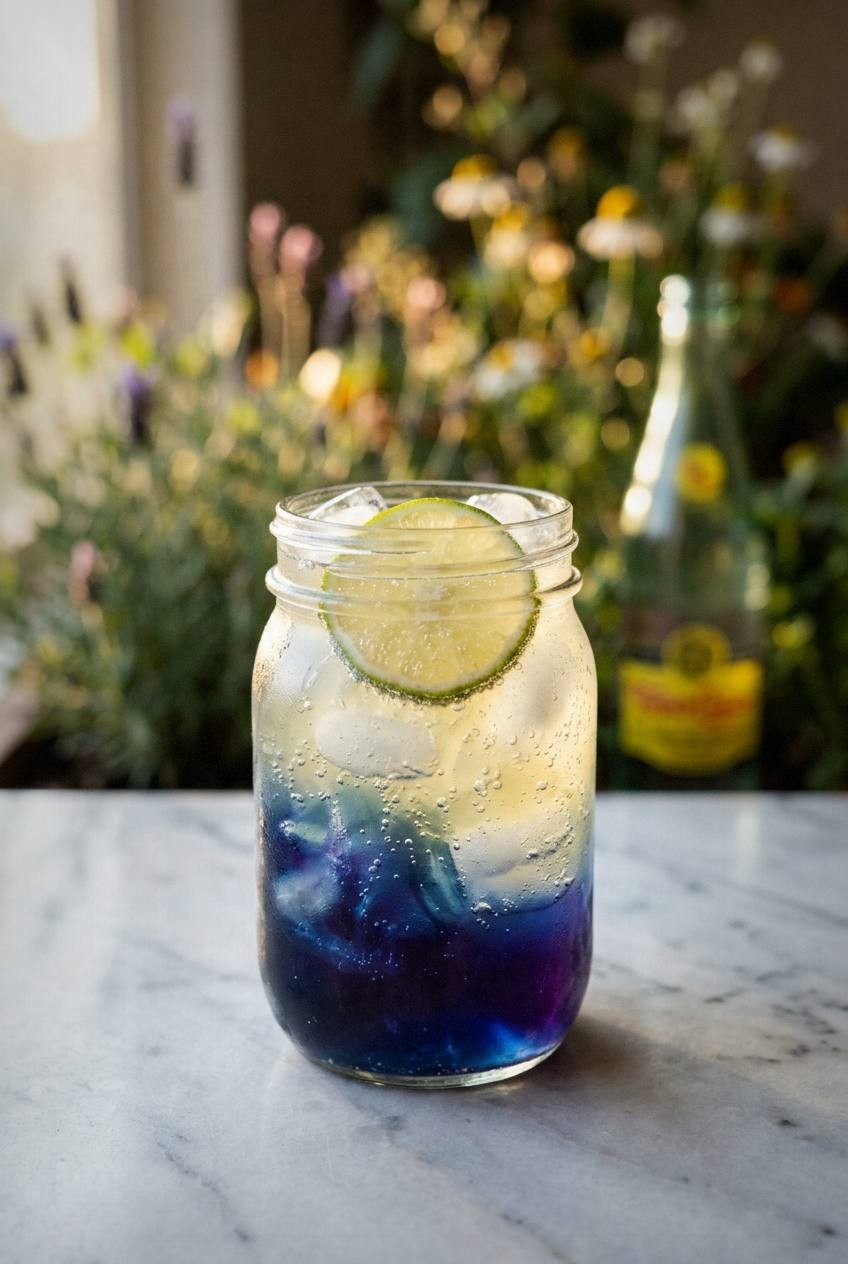
The color change happens right in the glass. You pour what looks like blueberry Kool-Aid, add lemon, and it turns violet in about two seconds. Guests will pick up their phones before they pick up a straw. But it is not just a party trick. The flavor is clean and tart, closer to a good homemade lemonade than you would expect from something that blue.
The Story Behind It
In Thailand they call it nam doc anchan, and street vendors have been selling it over crushed ice for generations. The flowers grow wild across Southeast Asia, climbing fences and trellises with those unmistakable blue petals. Western food blogs picked it up around 2017, and it spread fast because the color change photographs so well. Lindsay Ostrom at Love and Olive Oil published one of the first widely shared English recipes. Since then, herbalist bloggers like Heather Dessinger and Thai food specialist Rachel at Rachel Cooks Thai have each put their own spin on it. The recipe below draws from all three, using the measurements and steeping times that showed up consistently across their tested versions.
What You Will Need
- 1/2 cup dried butterfly pea flowers (available online or at Asian grocery stores)
- 3 cups filtered water
- 1 cup granulated sugar
- 1 cup fresh lemon juice (about 8 to 10 lemons, depending on size)
- 2 cups cold water
- Ice cubes
Honey variation: Replace the sugar with 2/3 cup light honey. Stir it into the hot water after steeping and straining the flowers, since honey can turn bitter if simmered.
Sparkling variation: Use only 1 cup of water for the blue tea (making it concentrated), then top each glass with 4 oz of sparkling water or club soda instead of still water.
How to Make It
Combine 3 cups filtered water and 1 cup sugar in a medium saucepan over medium heat. Stir until the sugar dissolves completely, about 2 minutes.
Add 1/2 cup dried butterfly pea flowers to the sugar water. Bring to a gentle simmer, then immediately remove from heat.
Cover the saucepan and steep for 15 minutes. The liquid will turn a deep, almost electric blue. If you want an even darker shade, steep for up to 20 minutes, but going longer than that can introduce a slightly vegetal taste.
Strain through a fine mesh sieve into a heat-safe pitcher. Press the flowers gently with a spoon to get the last of the color out. Discard the spent flowers. Let the blue syrup cool to room temperature, then refrigerate until cold.
In a separate pitcher, combine 1 cup fresh lemon juice with 2 cups cold water. Stir and set aside.
Fill tall glasses with ice cubes. Pour the blue butterfly pea syrup until the glass is about half full.
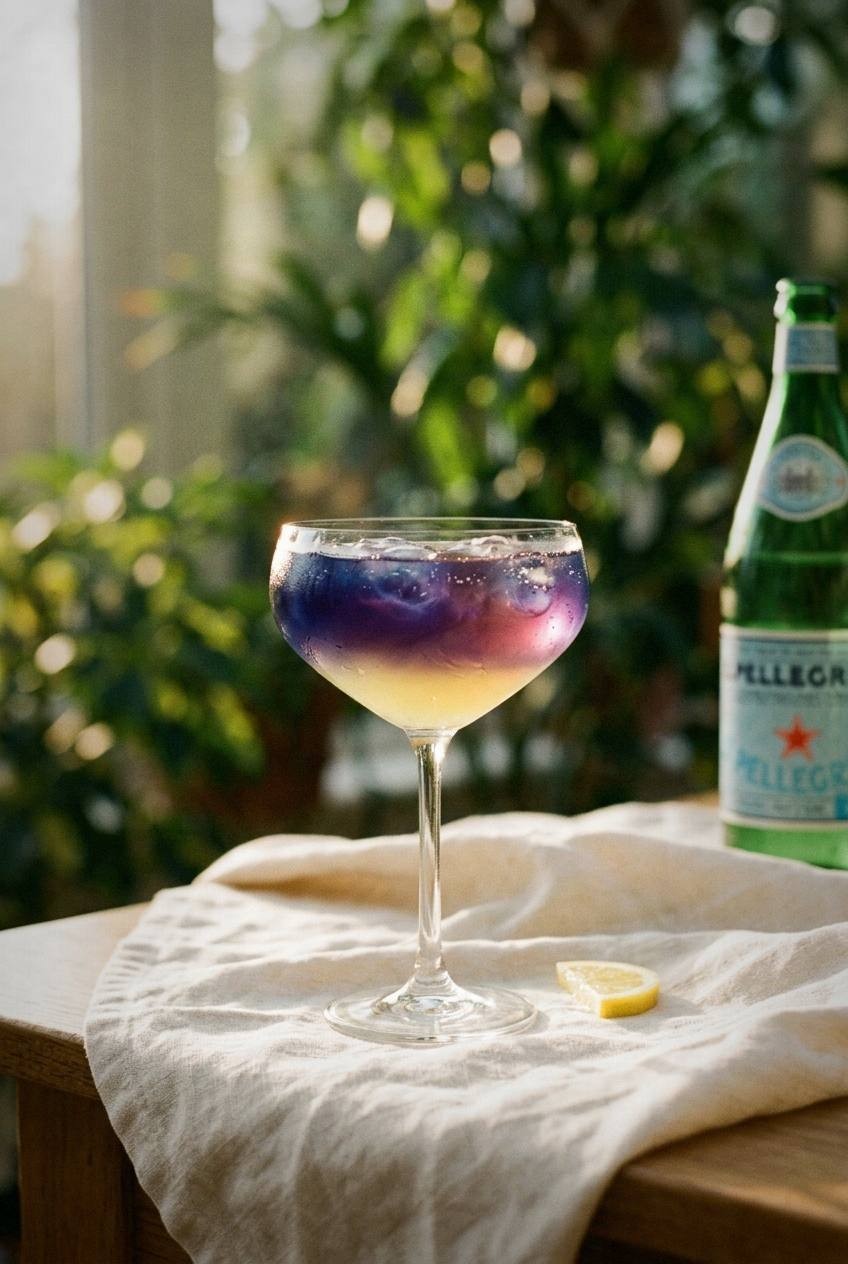
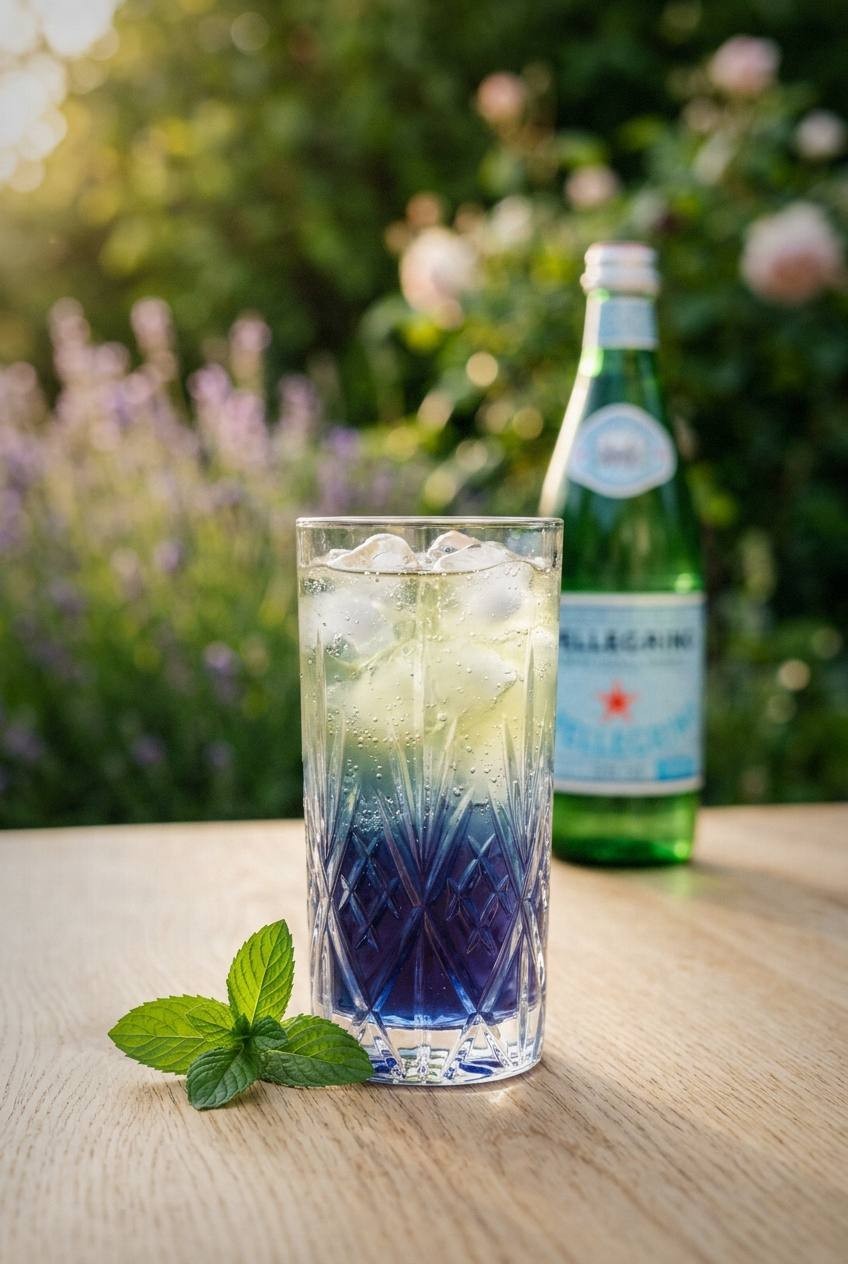
Slowly pour the lemon water over the back of a spoon so it layers on top of the blue. You will see the color start to shift where the two liquids meet. Stir once to watch the whole glass transform from blue through violet to magenta.
Herbalist Notes
Butterfly pea flower (Clitoria ternatea) has been part of Ayurvedic medicine and Thai herbalism for a long time. Ayurvedic practitioners classify it as a medhya rasayana, a category of herbs tied to cognitive function and memory. The science behind the color trick is straightforward: the pigment ternatin is a natural pH indicator. At neutral pH it reflects blue light. Add lemon juice at pH 2 and the molecular structure flips, reflecting purple to pink instead.
The flowers are caffeine-free. They taste like almost nothing, maybe a faint earthiness that reminds you of green peas. That actually tracks, since Clitoria ternatea is a legume in the Fabaceae family, same as peanuts and soybeans. Worth knowing if you have a legume allergy.
Dried flowers keep for two to three years in an airtight container away from light and heat.
Variations
Add 2 tablespoons of lavender syrup to the lemon water for a butterfly pea lavender lemonade. The floral notes work together and the lavender pushes the final color more toward pink.
For a tropical version, swap half the lemon juice for passion fruit pulp. You get a slightly less dramatic color change but a much more complex flavor.
And if you want the most visual impact at a party, freeze the blue tea in ice cube trays. Drop the blue cubes into regular lemonade and the color changes gradually as they melt. Pastry chef Dini at The Flavor Bender popularized this method, and it is the most dramatic way to serve this at a table.
If you want the cocktail version with gin, we have a butterfly pea flower cocktail recipe that uses the same color-changing trick.
Before You Start
Sourcing the flowers: You will find dried butterfly pea flowers at most Asian grocery stores, often in the tea section. Online, Amazon and specialty tea shops stock them. Look for whole dried flowers, not powder. The powder works but it is harder to strain cleanly, and you get a slightly murkier result.
Lemon juice must be fresh. Bottled lemon juice will change the color since it still has citric acid, but it tastes flat and cooked. Fresh lemons give you that sharp acidity that actually balances the sugar syrup. This is not the place to cut corners.
Make the blue syrup ahead. It keeps in the refrigerator for up to 5 days. This means you can prep a batch on Sunday and pour color-changing lemonade all week.
Common Questions
Does butterfly pea flower lemonade taste like regular lemonade?
Very close. The butterfly pea flowers add a subtle floral note, but it is mild enough that most people cannot identify it blind. The dominant flavor is still lemon and sugar. If you have ever had a good homemade lemonade with a hint of something floral in the background, that is exactly what this tastes like.
Is butterfly pea flower safe for kids?
People across Southeast Asia have been drinking butterfly pea flower tea for generations. The lemonade is just dried flowers, sugar, and lemon juice. No caffeine, nothing unusual. Kids tend to love the color change more than anyone at the table.
Can I make this ahead for a party?
Make the blue syrup and the lemon water separately up to 2 days ahead. Store both in the refrigerator. Do not combine them until serving, or you lose the color-changing effect. At the party, set up two pitchers side by side and let guests pour their own. The interactive element makes it a conversation starter.
How do I get the brightest blue color?
Use 1/2 cup of flowers per 3 cups of water and steep for the full 15 to 20 minutes. The water should look almost opaque blue. Filtered water helps since minerals in tap water can shift the pH slightly and mute the color. Also, use the syrup within a day or two for peak vibrancy. The anthocyanins degrade slowly with time, light, and heat.
Camille writes about botanical drinks, herbal cocktails, and the old plant wisdom that makes them work. Most days you'll find her in the garden or the kitchen, turning herbs into something worth sipping.