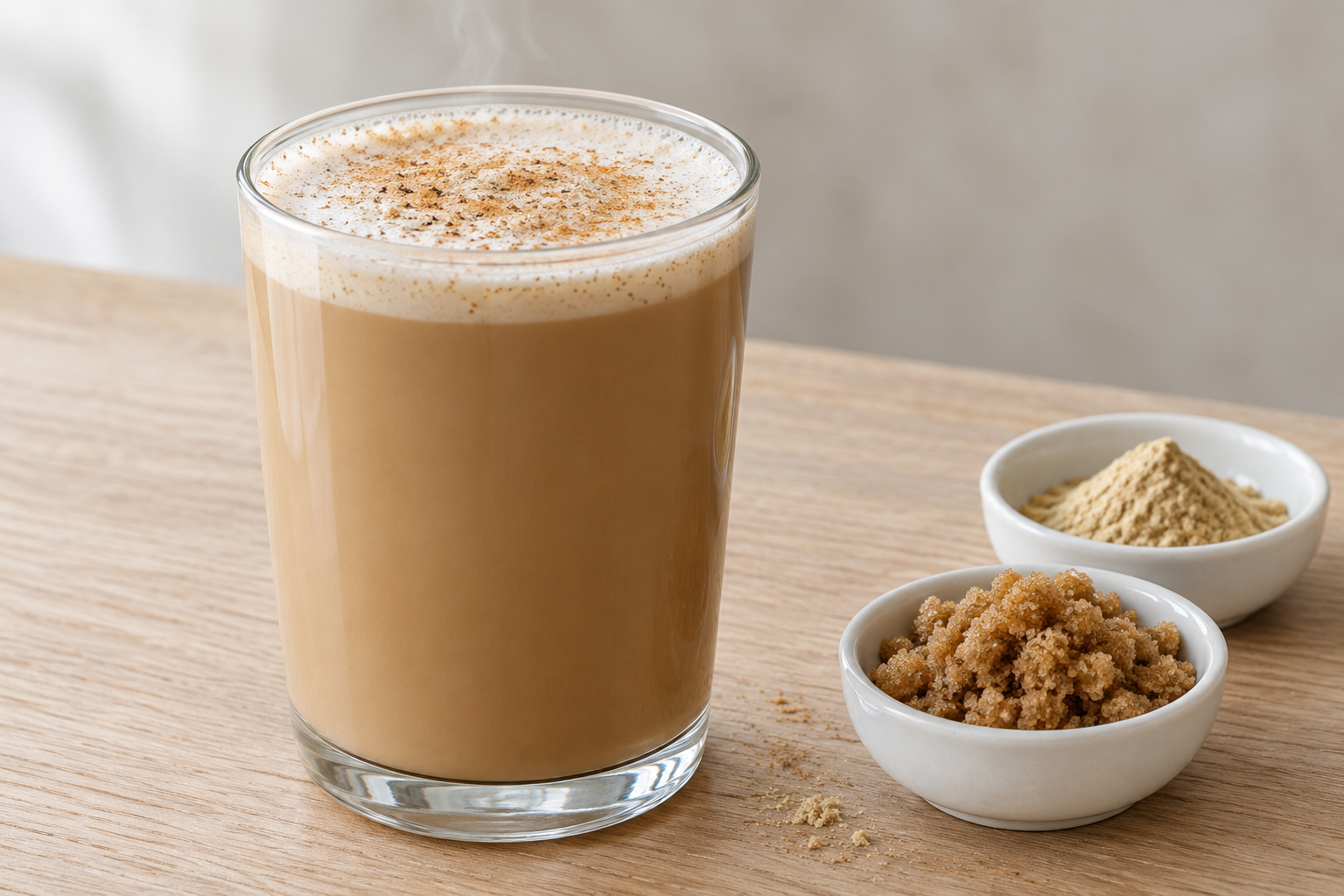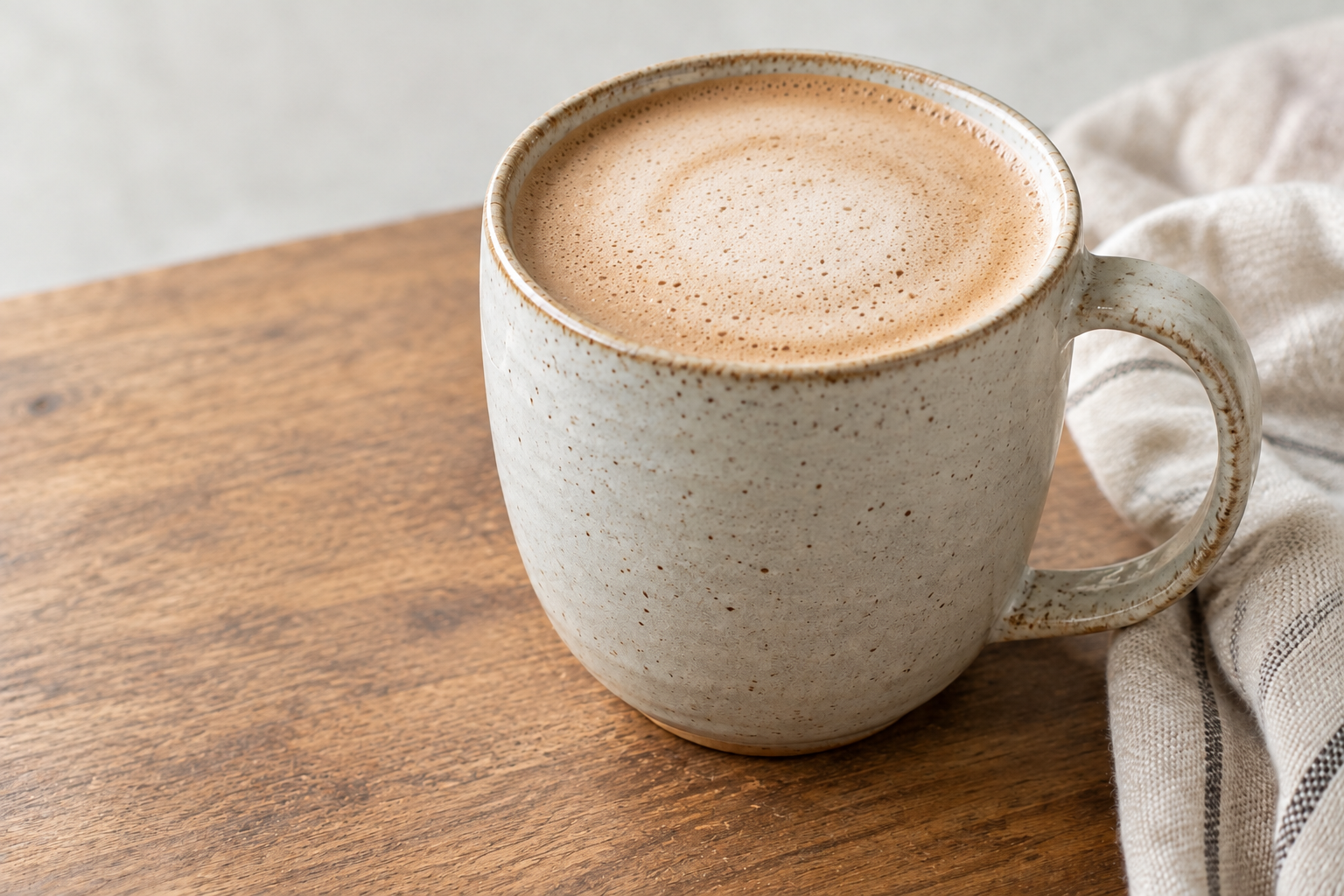

Cafe cubano is Cuban espresso sweetened with sugar whipped into a thick foam called espuma. The foam forms when you beat the first drops of hot espresso with granulated sugar until the mixture turns pale and creamy, then pour the rest of the coffee over it. The result is a small, intensely sweet shot with a layer of caramel-colored froth that tastes like liquid brown sugar cut with strong coffee.
What Makes Cafe Cubano Different

Regular espresso gets sugar stirred in after brewing. Cafe cubano whips the sugar with the first tablespoon of coffee while it is still scalding hot, creating a foam that floats on top of the finished drink. The technique changes the texture and makes the sweetness hit differently: you taste foam first, then coffee, instead of uniform sweetness all the way through.
Cuban coffee uses a stovetop moka pot, not an espresso machine. The moka pot brews at lower pressure than a pump-driven machine, so the coffee comes out stronger and less acidic. Most Cuban households use a 3-cup or 6-cup aluminum Bialetti-style pot and brew cafe cubano multiple times a day.
The coffee itself is dark roast ground fine for espresso. Cafe La Llave, Bustelo, and Pilon are the brands sold in Cuban markets, but any dark roast espresso grind works if it is fresh. Stale coffee will not produce enough crema to support the espuma.
Equipment You Need

A stovetop moka pot is the traditional tool. The 3-cup size makes enough for three demitasse servings, which is the standard batch. You also need a small glass or metal container to whip the espuma, a spoon for beating, and demitasse cups for serving.
An espresso machine works but changes the method. You pull a single shot, whip the first tablespoon with sugar, then pull the rest of the shot over the foam. The espuma will be thinner because machine espresso is less concentrated than moka pot coffee, but the flavor is close.
The grind size matters. Moka pot coffee needs espresso grind, which is fine but not as powdery as Turkish coffee. If the grind is too coarse, the coffee will be weak and the espuma will not hold. If it is too fine, the pot will sputter and the coffee will taste burnt.
Ingredients

- high-grade espresso ground coffee
- granulated sugar
Instructions
- Pour water into the bottom part of your moka pot until it just reaches below the pressure valve. Fill the basket with coffee grounds and level it off with a spoon, then set it into the bottom chamber and wipe the rim clean. Screw the top on. Put it on the stove over medium heat and leave the lid up so you can watch for the coffee to start coming through.
- While the pot heats, spoon 3 spoonfuls of sugar into your serving cup if you’re using a 3-cup pot. The moment you see coffee start to come up, take the pot off the heat and pour just a few drops into the sugar, no more than a teaspoon. You want this first dark coffee, the strongest part, because it makes the best foam. Put the pot back on the heat and close the lid.
- Now whisk that sugar and coffee together with a spoon until it turns into a light, creamy paste. Beat it hard, you really can’t overdo this part.
- When you hear the coffee gurgling up again, turn off the heat and let it finish on its own. Once it’s done, pour the rest of the coffee into your cup with the sugar paste and stir everything together until it’s completely mixed. You’ll see thick foam on top. Divide it into small espresso cups, using a spoon to make sure everyone gets foam.
How to Make Espuma That Actually Holds
The espuma fails when the sugar does not dissolve completely or when the coffee is not hot enough. You need the first tablespoon of coffee straight from the pot, still above 180°F, to melt the sugar crystals. If you wait too long and the coffee cools, the sugar will stay grainy and the foam will collapse.
Beat the mixture hard. The goal is to incorporate air while the sugar dissolves, which creates the foam structure. Lazy stirring will not work. You should see the color lighten from dark brown to tan as you beat, and the texture should go from liquid to thick paste.
Use granulated white sugar, not brown sugar or substitutes. Brown sugar has molasses that interferes with foam formation. Artificial sweeteners do not dissolve the same way and will not create espuma at all. Raw sugar works but takes longer to dissolve.
Troubleshooting Common Problems
- Espuma will not foam: The coffee was not hot enough when you added it to the sugar, or you did not beat it long enough. Pull the pot off the heat the instant coffee appears and beat the mixture for at least 2 minutes.
- Foam collapses immediately: You used too much coffee in the first pour. One tablespoon is enough to dissolve the sugar; more than that dilutes the mixture and prevents foam from forming.
- Coffee tastes burnt: The heat was too high or the grind was too fine. Use medium heat and check that your grind is espresso texture, not powder.
- Coffee is weak: The grind was too coarse or you did not fill the basket level. Espresso grind should feel like fine sand, and the basket should be full but not packed.
- Pot sputters and spits: The grind is too fine or you packed the grounds. Level the coffee without tamping it, and make sure the grind is not as fine as Turkish coffee.
Making Cafe Cubano with an Espresso Machine
An espresso machine works but requires a different sequence. Pull a single shot into a small container, stop the machine after 1 tablespoon of espresso comes through, and whip that tablespoon with the sugar. Once the espuma forms, pull the rest of the shot directly over the foam.
The foam will be thinner because machine espresso is less concentrated than moka pot coffee. You can compensate by using a ristretto shot, which is shorter and stronger, or by increasing the sugar slightly to 1 1/2 spoonfuls per serving.
Grind size for the machine should be standard espresso, the same as you would use for a regular shot. If your machine has a pressurized portafilter, the espuma will still form but the texture will be lighter.
Serving and Storing
Cafe cubano is served immediately in demitasse cups, which hold about 2 to 3 ounces. The drink is meant to be consumed hot in one or two sips, usually standing at the counter. Letting it cool ruins the flavor because the sugar settles and the espuma deflates.
You cannot make cafe cubano ahead. The espuma only lasts a few minutes, and reheating the coffee will not bring it back. If you are serving a group, brew multiple pots back to back rather than trying to scale up a single batch.
Leftover brewed coffee can be refrigerated and used for iced coffee , but it will not have espuma. The foam is a hot-coffee technique and does not survive chilling or reheating.
Frequently Asked Questions
What is cafe cubano?
Cafe cubano is Cuban espresso sweetened with sugar whipped into a foam called espuma. The sugar is beaten with the first drops of hot coffee until it forms a pale, creamy paste, then the rest of the coffee is poured over it. The result is a small, very sweet shot with a layer of caramel-colored froth on top.
What equipment do I need to make Cuban coffee?
You need a stovetop moka pot, a small container for whipping the espuma, a spoon, and demitasse cups. The 3-cup moka pot is the standard size and makes three servings. An espresso machine works but changes the method slightly.
How much sugar goes in cafe cubano?
Use 1 spoonful of granulated sugar per demitasse cup. For a 3-cup moka pot, that is 3 spoonfuls total. The sugar is whipped with the first tablespoon of coffee to create the espuma, not stirred in after brewing.
Can I use brown sugar or a substitute?
No. Brown sugar has molasses that prevents foam formation, and artificial sweeteners do not dissolve the same way as granulated sugar. Raw sugar works but takes longer to dissolve. Granulated white sugar is the only option that reliably produces espuma.
Why did my espuma fail?
The coffee was not hot enough when you added it to the sugar, you did not beat it long enough, or you used too much coffee in the first pour. Pull the pot off the heat the instant coffee appears, use only 1 tablespoon of coffee, and beat the mixture for at least 2 minutes.
How do you serve cafe cubano?
Serve immediately in demitasse cups while the coffee is still hot. The drink is meant to be consumed in one or two sips, usually standing. Letting it cool ruins the flavor because the sugar settles and the espuma deflates.
Conclusion
Cafe cubano is a technique, not just a recipe. The espuma forms when you whip the first scalding drops of coffee with sugar until the mixture turns pale and thick, then pour the rest of the pot over it. The result is a small, intensely sweet shot with a layer of foam that tastes like caramelized sugar cut with strong coffee. Use a moka pot, granulated sugar, and dark roast espresso grind, and beat the espuma hard for at least 2 minutes.