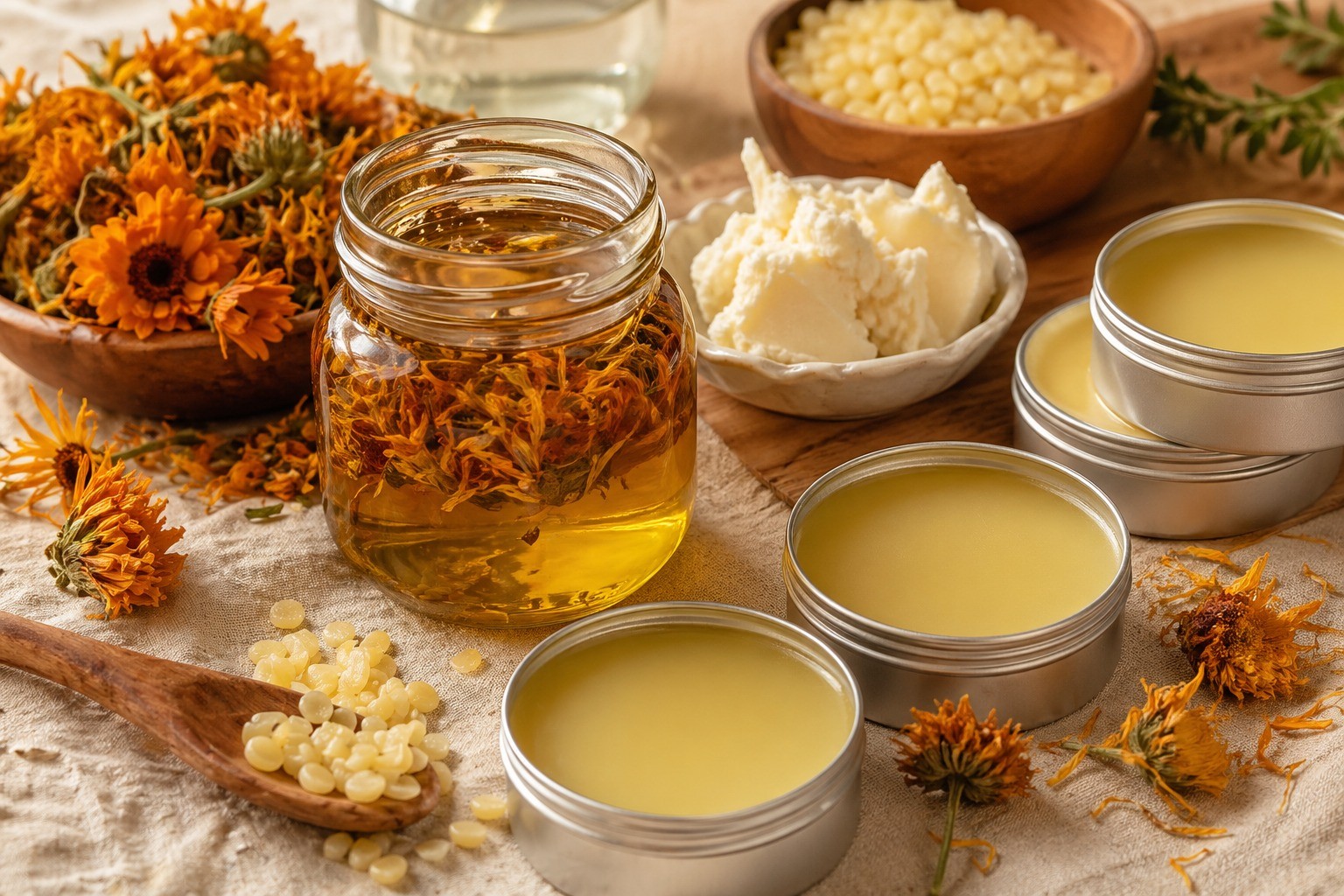
A calendula hand salve is calendula-infused oil melted with beeswax and poured into small tins: a rich, water-free balm for dry hands. For this batch, 4 oz of calendula oil and 1/2 oz of beeswax make about 5 ounces, enough for four or five tins. It’s a good one to make in fall, when garden work, cold air and frequent washing start to dry out your knuckles.
Calendula is the herb I’d hand to anyone who wants to make one useful thing for their skin. It’s bright, forgiving, easy to find dried, and gentle enough for an everyday hand salve. There’s no fancy formula and no ten-step routine.
Keep a tin by the sink, in a garden basket, or beside the bed in winter when your knuckles feel tight. It’s rich, so you only need a little.
Quick answer
A beginner calendula hand salve uses calendula-infused oil and beeswax in a water-free tin. Make this before buying complicated apothecary supplies because it teaches the core skill: infuse oil, strain well, melt with wax, and label the tin.
Calendula salve supplies
- Dried calendula
- Carrier oil
- Beeswax
- Small tins
- Heat-safe jar
- Labels
Related helpful guides
- Beginner Apothecary Shelf Checklist
- Herbs to Grow for Mocktails, Tea, and Bath Soaks
- Chamomile Oat Lotion Bars
- Rose Lavender Lip Balm Recipe
What to save from this guide
- The supplies list above for your next shopping pass
- The two-step idea: infuse oil, then set it with wax
At a Glance
| Detail | Info |
|---|---|
| Prep time | 20 minutes |
| Infusion time | 1 to 5 hours quick method, or 2 to 3 weeks slow method |
| Yield | About 5 ounces, four to five 1-ounce tins |
| Difficulty | Beginner |
| Texture | Firm balm that melts on contact |
| Best for | Dry hands, rough cuticles, garden hands |
| Water-free | Yes |
| Preservative needed | No, if you keep water out |
Why Calendula Belongs in a Hand Salve
Calendula has a long history as a skin-care herb, and the bright petals are easy to find dried and easy to work with, which is why I’d start a beginner here.
For this salve, calendula is infused into oil because the finished product goes on skin. A cup of tea pulls water-soluble compounds from herbs. Oil pulls a different set of plant compounds and carries them into a balm.
The recipe stays water-free for the same reason. Moisture, wet fingers and time are what shorten a balm’s life, so a salve of just oil and wax is much easier to manage at home than a lotion made with water.
Ingredients
- 1/2 cup dried calendula flowers
- About 1 cup olive oil, sweet almond oil, or jojoba oil, to cover the flowers (you need 4 oz / 1/2 cup of strained oil)
- 1/2 oz beeswax, coarsely chopped, or beeswax pastilles
- 20 drops lavender essential oil, optional
- 4 to 5 clean 1-ounce tins or small jars with lids
Use dried calendula. Fresh flowers carry water into the oil, and water is what shortens the life of a salve. If you grow calendula, dry the petals fully before infusing them.
Choose the oil by feel. Olive oil makes a heavier, old-school salve. Sweet almond oil feels lighter. Jojoba costs more but keeps well and has a silky finish.
The essential oil is optional. Calendula has a faint honeyed smell on its own, so the first batch is lovely without it. If you add lavender, stir it in at the very end.
Make the Calendula Oil
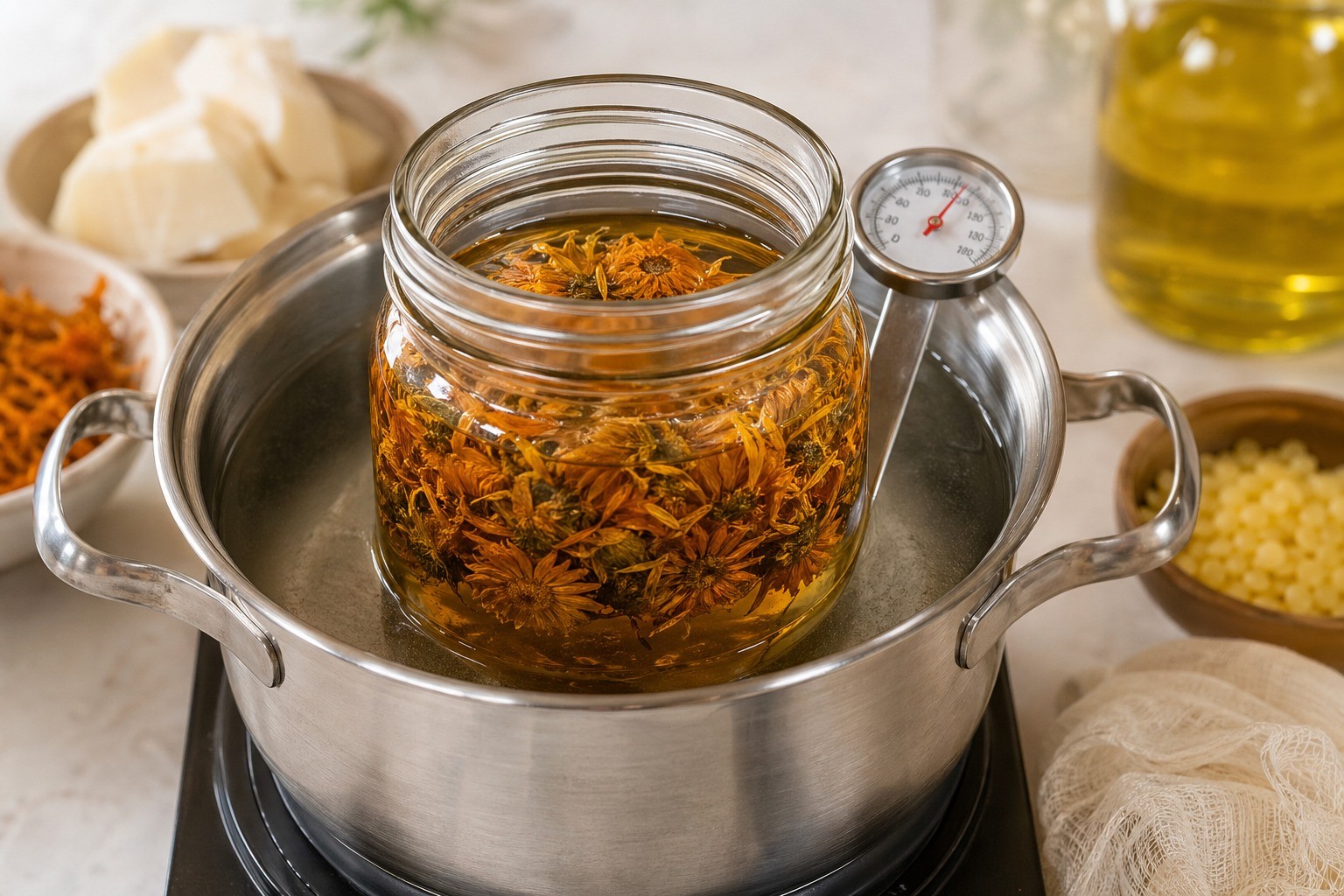
Put the dried calendula in a heat-safe jar or the top of a double boiler and pour in enough oil to cover the flowers by at least an inch. The flowers soak up some oil, so start with about 1 cup to end up with the 4 oz (1/2 cup) you need after straining. Set it over a pot of barely simmering water. The oil should feel warm, not hot, around 100 to 140 F. If it bubbles, the heat is too high.
Let the herbs infuse for 1 to 5 hours, until the oil takes on the flowers’ color and scent and turns a deeper yellow. Let it cool, then strain through cheesecloth and press the flowers gently to get the oil out.
If you’re not in a hurry, use the slow method instead. Put dried calendula and oil in a clean jar, cover the flowers by an inch of oil, and let it sit in a warm, sunny spot for 2 to 3 weeks. Shake it once a day. Strain before making the salve.
Make the Hand Salve
- Measure 4 oz (1/2 cup) of calendula oil into a clean double boiler.
- Add the 1/2 oz beeswax.
- Warm on low until the wax has dissolved and the mixture is blended.
- Remove from heat and quickly stir in the lavender essential oil if using.
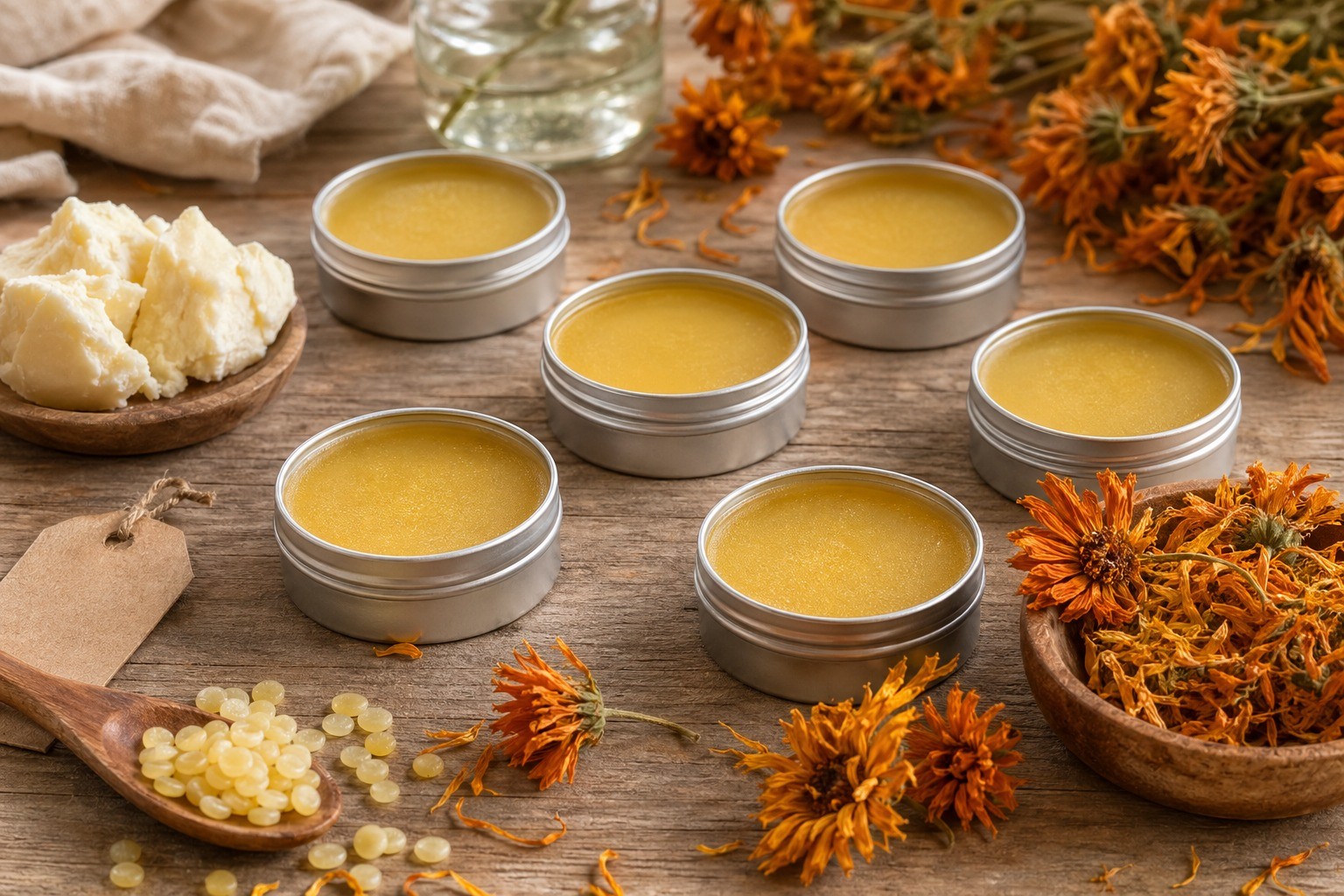
- Pour into clean, dry tins.
- Let the tins cool completely before putting on the lids, then label them.
To check the texture first, drop a little salve onto a chilled plate. If it’s too soft, melt it again with a few more chopped bits of beeswax. If it’s too firm, add a little more oil.
How to Use It
Rub a pea-sized amount into clean hands, cuticles, elbows, or rough heels. It will feel oily for a few minutes because it’s an oil-based balm, not a water-based lotion.
I like it best at night or after garden work. If you use it during the day, give it a minute before touching paper, fabric, or your phone.
Patch test first, especially if you react to ragweed, chamomile , daisies, or other plants in the daisy family.
Storage and Shelf Life
Store the tins in a cool, dry place away from heat and sunlight. Use clean, dry fingers or a small spatula. If the salve smells like old oil, changes texture, or grows anything fuzzy, throw it out.
Most small home batches are best used within 6 to 12 months, depending on the oil you choose and how cleanly you work. Jojoba and olive oil tend to last longer than more delicate oils.
Easy Variations
Lavender calendula hand salve: Stir in the optional lavender essential oil at the end, or swap a little of the dried calendula for dried lavender in the infusion. Keep it subtle. Lavender can take over fast.
Rose calendula balm: Swap a small handful of the calendula for dried rose petals in the infusion for a softer floral scent.
Extra-firm garden tin: Use a little more beeswax so the salve holds up better in a warm bag or shed.
Fragrance-free version: Use calendula, jojoba, and beeswax. Nothing else.
Why This Is a Good First Beauty DIY
It teaches the core apothecary skill: infuse an herb into oil, strain it well, and set the oil with wax. Once you understand that, lip balm, body balm, lotion bars , and massage bars all make more sense.
It’s a plain recipe: a jar of bright calendula oil, a little wax, a few tins on the counter, and something useful by the end of the afternoon.