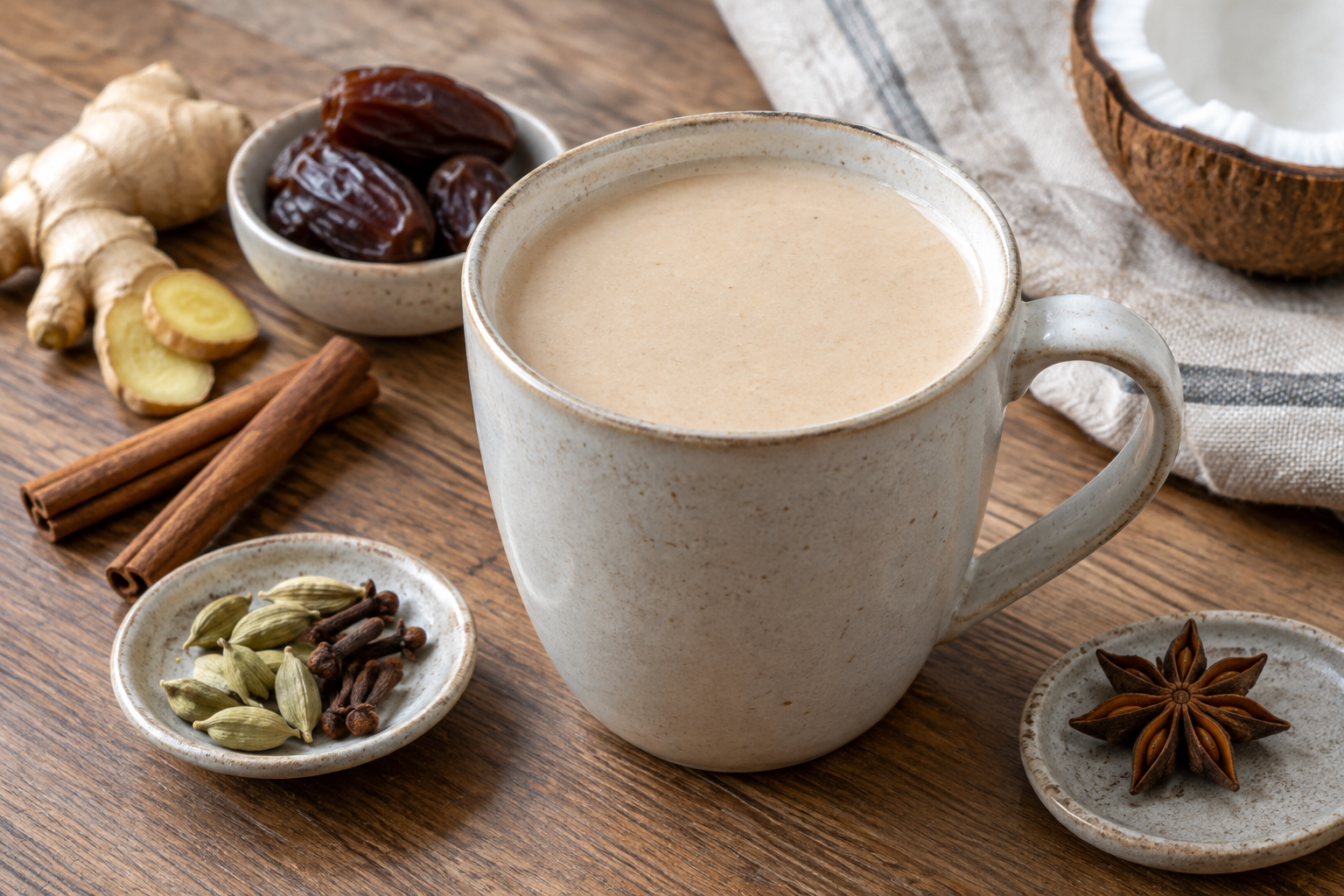
When you want the ginger and cinnamon of chai without making tea, start with coconut milk. This drink has no tea bags and no coffee. Dates sweeten the mixture, and blending brings the softened dates and ginger into the drink rather than leaving them in the pan.
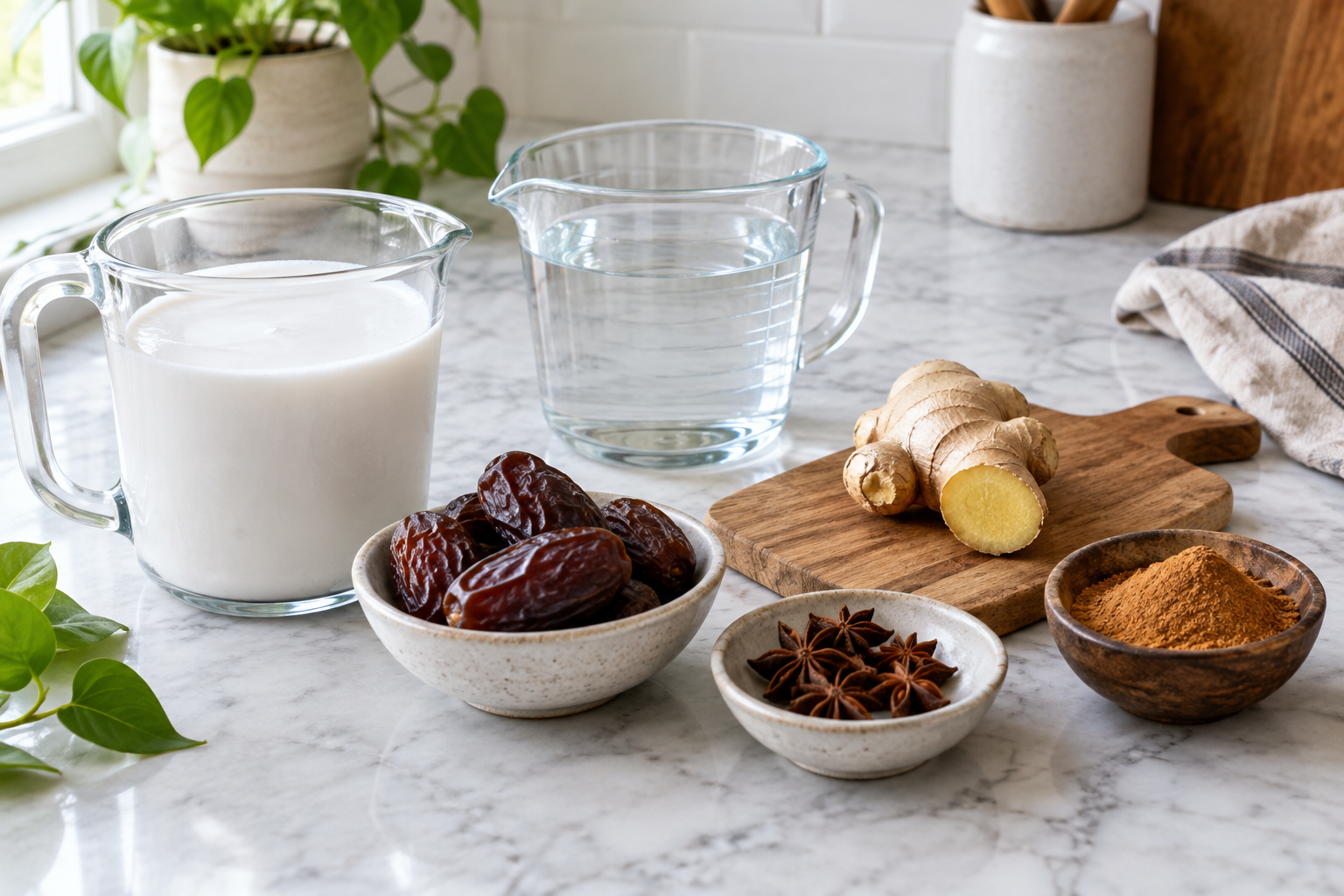
The measured recipe follows Lisa Bryan’s chai-spiced coconut milk . It makes two servings with a can of coconut milk, water, dates, fresh ginger, and a small collection of spices. Its recipe card lists fifteen minutes, with a covered simmer before blending.
Chai Spices Without Black Tea
The name describes the spice combination here. Cinnamon, cardamom, cloves, star anise, and ginger give the coconut drink its character. Black tea is not an ingredient in this particular formula, even though it appears in many chai-latte recipes.
That distinction is useful when you are choosing a winter drink. If you want a tea-based latte instead, our maple chai latte answers a different request. Adding tea to this saucepan would change the recipe and its caffeine content; it is not a step you need to make this version.
The dates are part of the method as well as the sweetness. They soften in the saucepan and are blended with the liquid at the end. That is different from stirring a spoonful of sugar into a finished drink. Remove the pits before they reach the pan, even when the package says the dates are pitted.
What to Buy
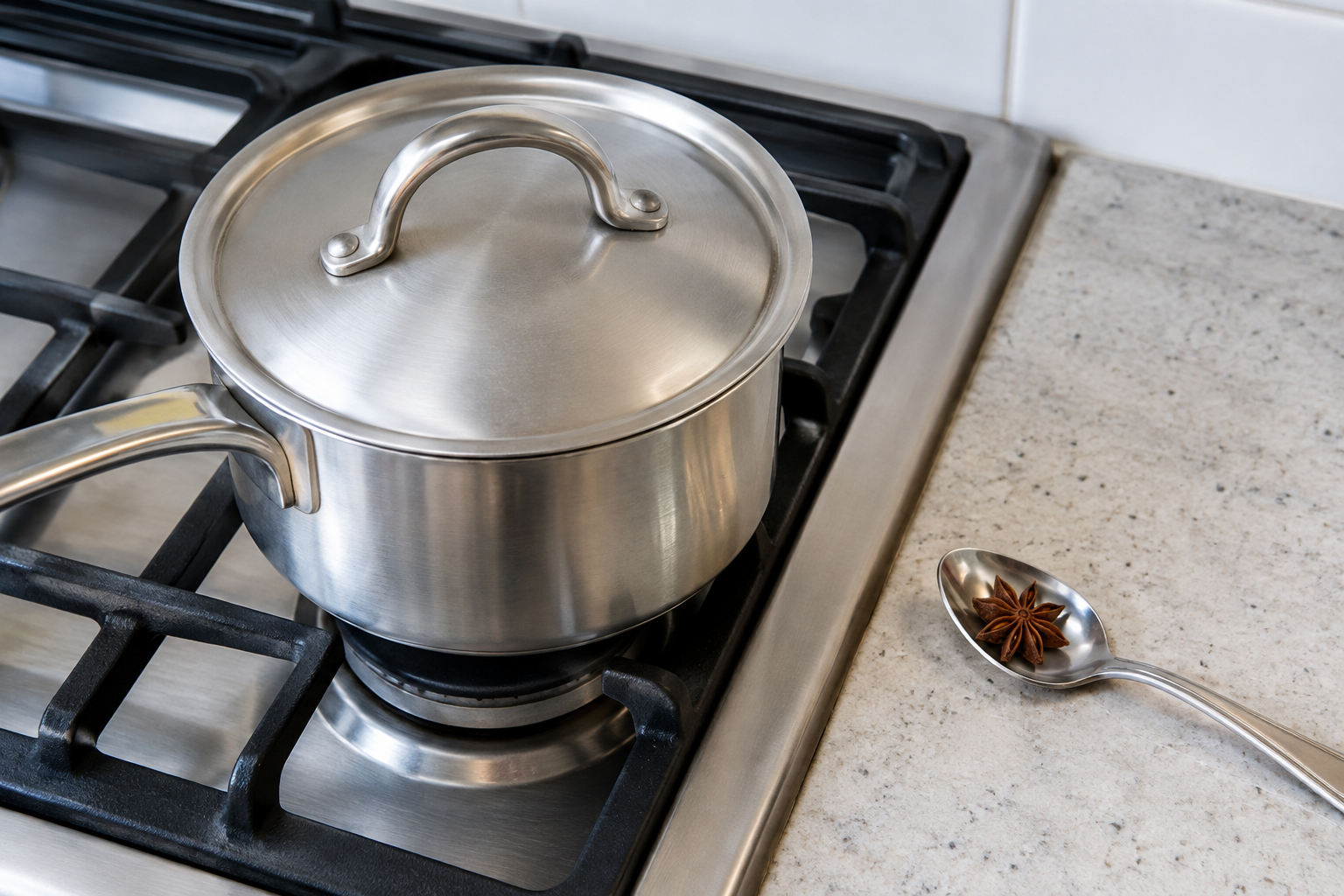
- Canned coconut milk: Use the 13.5-ounce can from the ingredient list. Coconut cream and refrigerated coconut drinks are different products. Shake the can before opening, since the cream can separate during storage.
- Medjool dates: You need four. Slice each one open and check for a pit before adding it to the saucepan, even if the package says pitted.
- Fresh ginger: Peel a one- to two-inch piece and chop it roughly. A spoon edge can help peel around its awkward corners. The final blending step breaks down the pieces.
- Ground spices: Check the labels before measuring. The recipe calls for ground cinnamon, cardamom, and cloves, plus one whole star anise that you remove later.
Ingredients
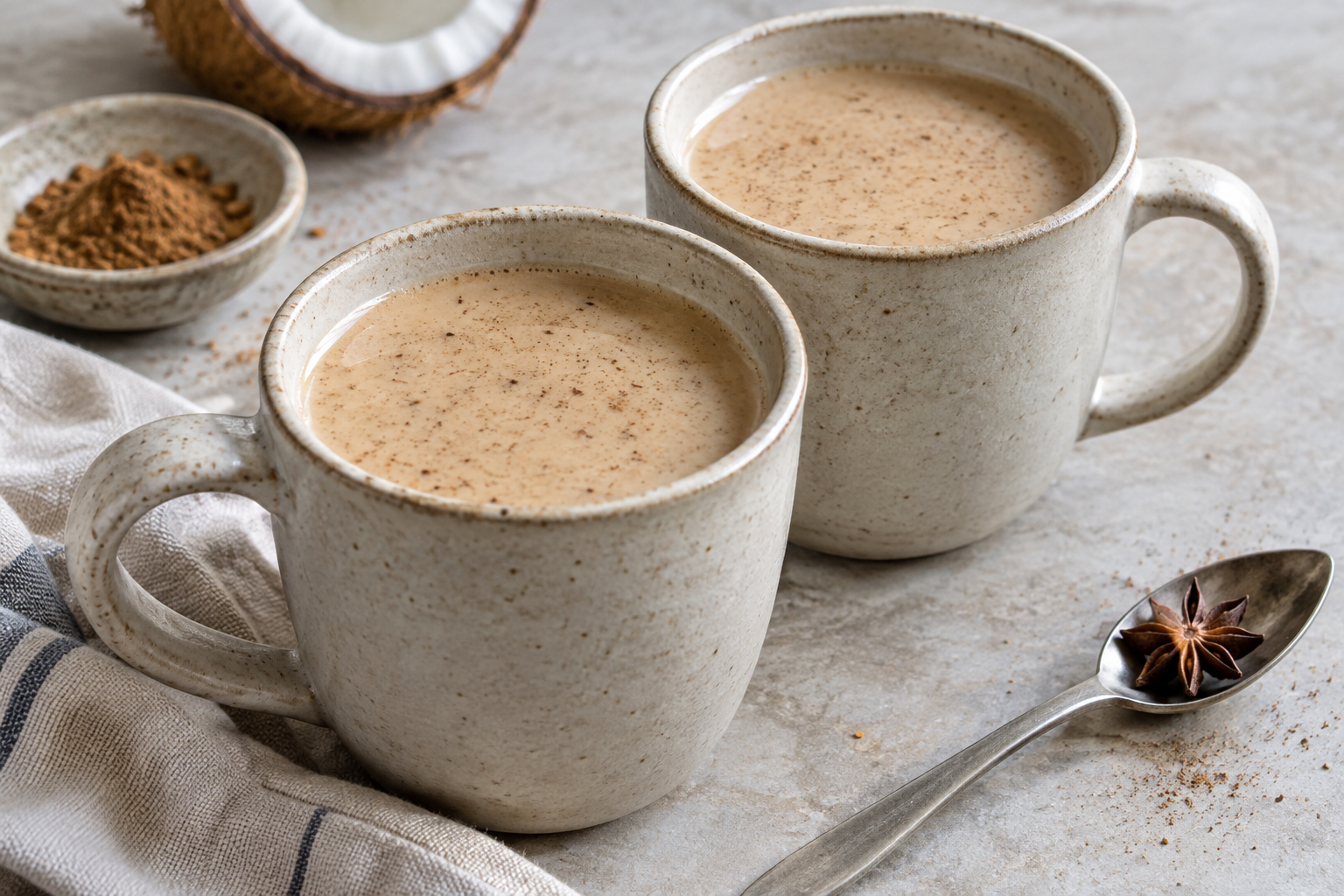
- 13 1/2 ounces coconut milk
- 1 cup water
- 1-2 inch piece fresh ginger, peeled and roughly chopped
- 4 Medjool dates, pitted
- 1 whole star anise
- 1/2 teaspoon ground cinnamon
- 1/2 teaspoon vanilla extract
- 1-2 pinches ground cardamom
- 1 pinch ground cloves
Before You Blend
Read your blender’s instructions before heating the pan. The source method uses a high-powered blender, but a vented countertop pitcher and a sealed personal cup have different rules for hot liquids.
- Use an appliance rated for the mixture’s temperature.
- Follow your model’s fill, lid, venting, and speed directions.
- Never seal hot liquid in a personal blender cup.
- If your blender requires cool ingredients, cool the mixture to its permitted temperature before blending and reheat afterward for serving.
A fixed waiting time cannot tell you whether the liquid is cool enough for your appliance. Vitamix’s product FAQs , for example, distinguish between its vented containers and cups that cannot process hot ingredients. Your own manufacturer’s instructions decide which method fits your blender.
Before transferring the mixture, remove the whole star anise with a spoon. Clear a space beside the saucepan for the spoon and pitcher so you can pour without working around other dishes.
Instructions
- Pour the coconut milk and water into a saucepan, then add the ginger, dates, star anise, cinnamon, vanilla, cardamom and cloves. Set it over medium heat.
- Bring it to a boil, then turn the heat down to low, cover the pan and let it simmer for 5-10 minutes.
- Fish out the whole star anise with a spoon.
- Blend what’s left until it’s smooth, about 1 minute, using a blender made for hot liquids and following how it says to vent and fill it. Let the liquid cool as much as the appliance instructions say. Never seal hot liquid in a personal blender cup.
- Pour into two mugs and serve.
Common Problems and How to Fix Them
- Pieces of date or ginger remain: Check that the dates softened during simmering and that you followed the blending step. If pieces remain, stop and check the appliance instructions before continuing.
- Spices settle in the mug: Stir before drinking. The original author also recommends stirring when reheating.
- The texture differs from what you expected: Check the can label and water measurement. Coconut cream, carton drinks, and canned coconut milk are not interchangeable ingredients.
- One spice dominates: Recheck the small measurements before the next batch. Cardamom and cloves are measured in pinches here, not teaspoons.
Planning a Winter Serving
Set out two mugs before you start. Pit the dates, peel the ginger, and measure the small spice amounts into a dish. That leaves fewer things to remember once the liquid is hot.
The recipe’s two-serving yield divides the finished drink. It does not call for two cans of coconut milk. With a larger can, measure the listed amount instead of emptying the whole container into the saucepan.
- Keep the star anise easy to spot for removal.
- Check the cloves and cardamom against the ingredient list.
- Have the blender’s instructions and pitcher ready.
- Choose mugs you can comfortably handle when warm.
The source author says the drink can be reheated, with a stir to mix the settled spices. For guests, making the measured batch close to serving keeps the process simple.
If you scale up, check the capacity of both the saucepan and blender. A larger recipe may need separate blending batches; follow the appliance’s fill limit rather than trying to fit everything into one pitcher.
Keep the First Batch Simple
The source drink uses coconut milk, water, dates, ginger, the listed spices, and vanilla. Start there. Cocoa, black tea, syrup, and extra coconut cream each change the formula, and a convincing flavor idea is not the same thing as a checked recipe.
If you want a chocolate drink, our Mexican hot chocolate has its own measured ingredients. If you want a winter coffee, the eggnog latte is a different drink. Choosing the recipe that matches what you want is easier than making several substitutions in one saucepan.
Frequently Asked Questions
Can you make this without dates? The original author permits other sweeteners, but this article does not supply a measured substitution. The dates also become part of the blended texture. For the sourced formula here, use the four pitted Medjool dates.
Do you have to strain the spices out? Remove the whole star anise before blending. The original method blends the remaining ginger and ground spices with the dates and liquid. Check the ingredient forms before you start: whole cloves or cardamom pods would differ from the ground spices in this recipe.
Can you use ground ginger instead of fresh? The source author says dried ginger is possible but prefers fresh. We have not assigned a spoon-for-inch conversion here. Follow the fresh ginger quantity for this version and save a different substitution for a separately checked recipe.
Is this drink caffeine-free? Yes, as long as you do not add black tea. The recipe contains no tea, coffee, or other sources of caffeine.
What is the difference between this and a coconut chai latte? A coconut chai latte starts with brewed black tea and adds steamed coconut milk, so it contains caffeine and has a stronger tea flavor. This drink has no tea at all.
Can you make it less sweet? The source formula uses four dates for two servings. Taste that version first. A different date amount changes both sweetness and blended texture, so an adjustment would be your variation rather than a tested result claimed by this article.