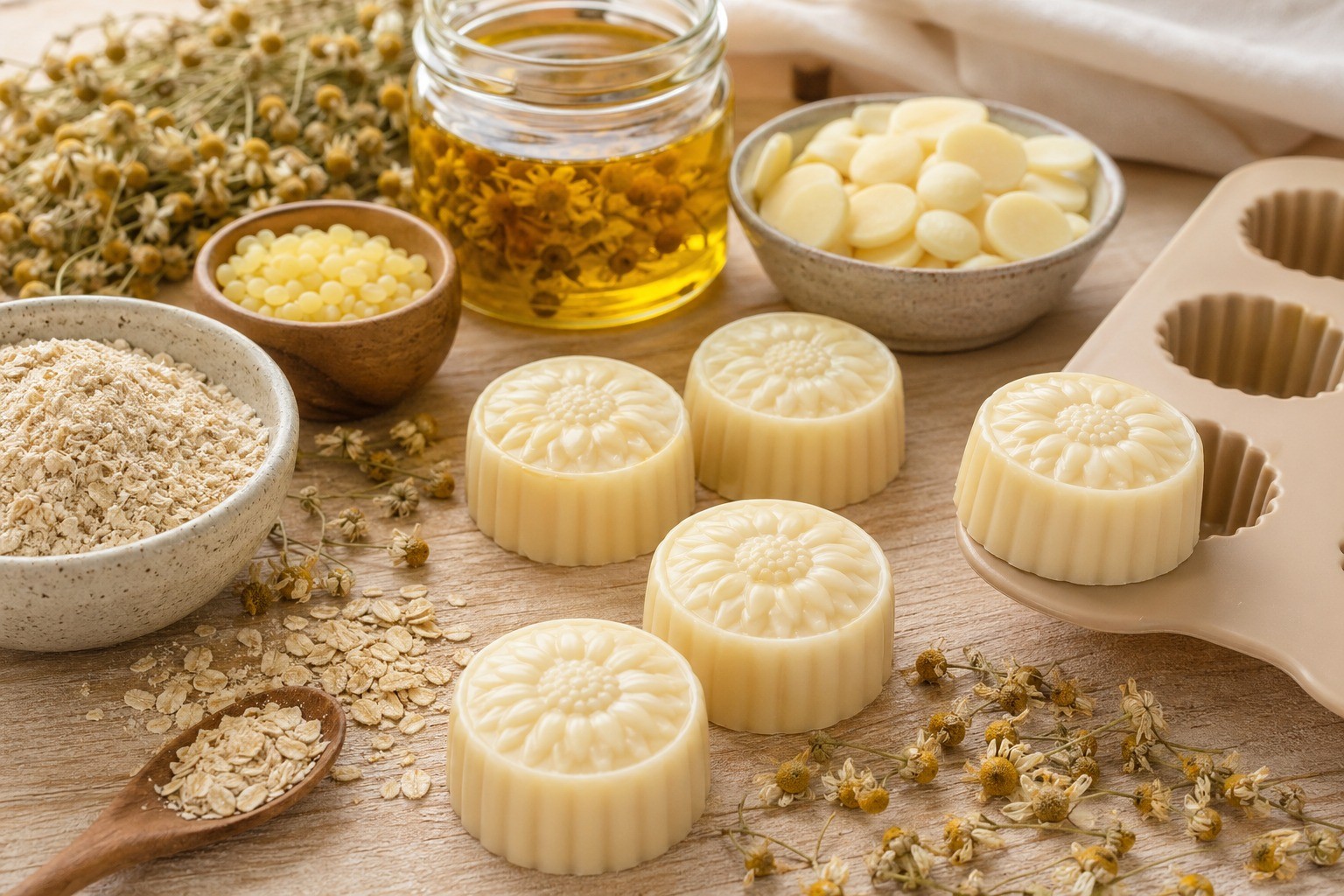
This is the safer way to make something lotion-like at home: skip the water.
A true lotion contains water and oil, which means it needs an emulsifier, a real preservative system, clean manufacturing habits, and more testing than most kitchen projects deserve. A lotion bar gives you the soft, glide-on feel people want from body lotion, but it stays in the beginner-friendly world of oil, butter, and wax.
Chamomile and oats make it feel gentle. Cocoa butter makes it smell faintly warm and sweet. Beeswax keeps the bar solid enough to hold in your hand.
At a Glance
| Detail | Info |
|---|---|
| Prep time | 20 minutes |
| Infusion time | 1 to 2 hours |
| Yield | Six small bars |
| Difficulty | Beginner |
| Texture | Solid bar that melts on warm skin |
| Best for | Dry arms, legs, elbows, heels |
| Water-free | Yes |
| Preservative needed | No, if kept dry |
Why Lotion Bars Make Sense for Beginners
Water is where homemade body products get complicated. The FDA notes that cosmetics can break down over time and that moisture, heat, and contaminated containers can make microbial growth more likely. A water-based lotion can be made safely, but it is not the first project I would hand to someone.
These bars avoid that problem. They are anhydrous, which means they do not contain water. You rub the bar over warm skin after a bath or shower, and your body heat melts a thin layer of oil and butter.
They are richer than pump lotion. Use less than you think.
Ingredients
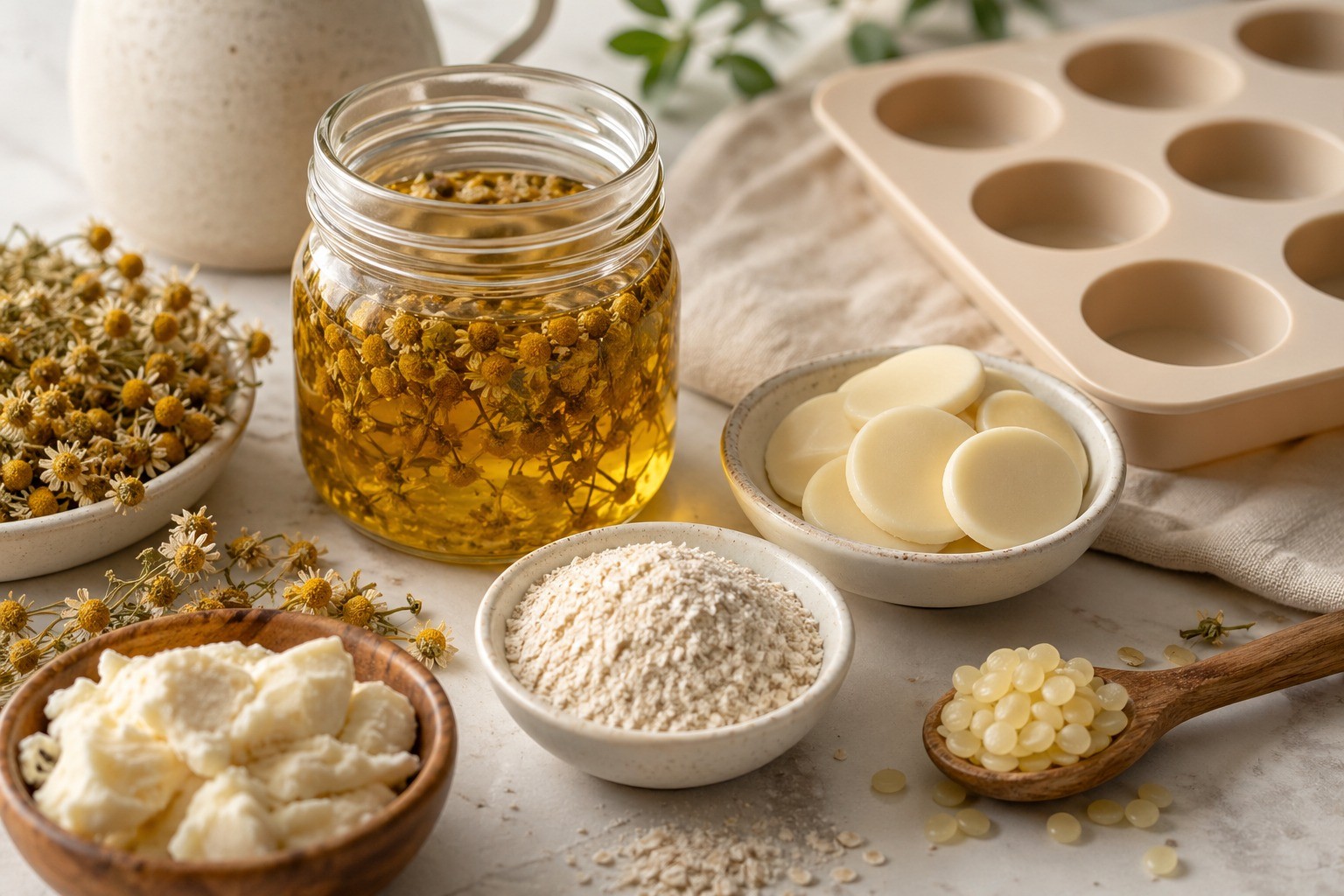
- 1/2 cup dried chamomile flowers
- 3/4 cup jojoba oil, olive oil, or sweet almond oil
- 1/4 cup cocoa butter
- 1/4 cup beeswax pastilles
- 1 tablespoon finely ground colloidal oats
- 1/2 teaspoon vitamin E oil, optional
- Silicone molds
Chamomile: Use dried flowers. German chamomile and Roman chamomile both work for a gentle infused oil.
Oats: Use colloidal oats or grind rolled oats very fine in a clean spice grinder. Big oat flakes feel scratchy in a bar.
Cocoa butter: This gives the bar firmness and a soft chocolate scent. Mango butter works if you want less scent.
Beeswax: Holds everything together. If the bar drags on skin, use a little less wax next time.
Make the Chamomile Oil
Add dried chamomile and carrier oil to a heat-safe jar or double boiler insert. Warm it over barely simmering water for 1 to 2 hours. Keep the heat low. Chamomile turns bitter and dusty when overheated.
Strain through cheesecloth or a fine mesh strainer. Let the oil sit for a few minutes so tiny particles settle, then pour the clear oil into a measuring cup.
For this recipe, you need 1/2 cup infused oil. Save any extra for cuticles or a future balm.
Make the Lotion Bars
- Add 1/2 cup chamomile oil, cocoa butter, and beeswax to a clean double boiler.
- Warm gently until fully melted.
- Remove from heat.
- Whisk in finely ground oats and vitamin E oil if using.
- Pour into silicone molds.
- Stir the pot between pours if the oats start settling.
- Let the bars cool until firm, then unmold.
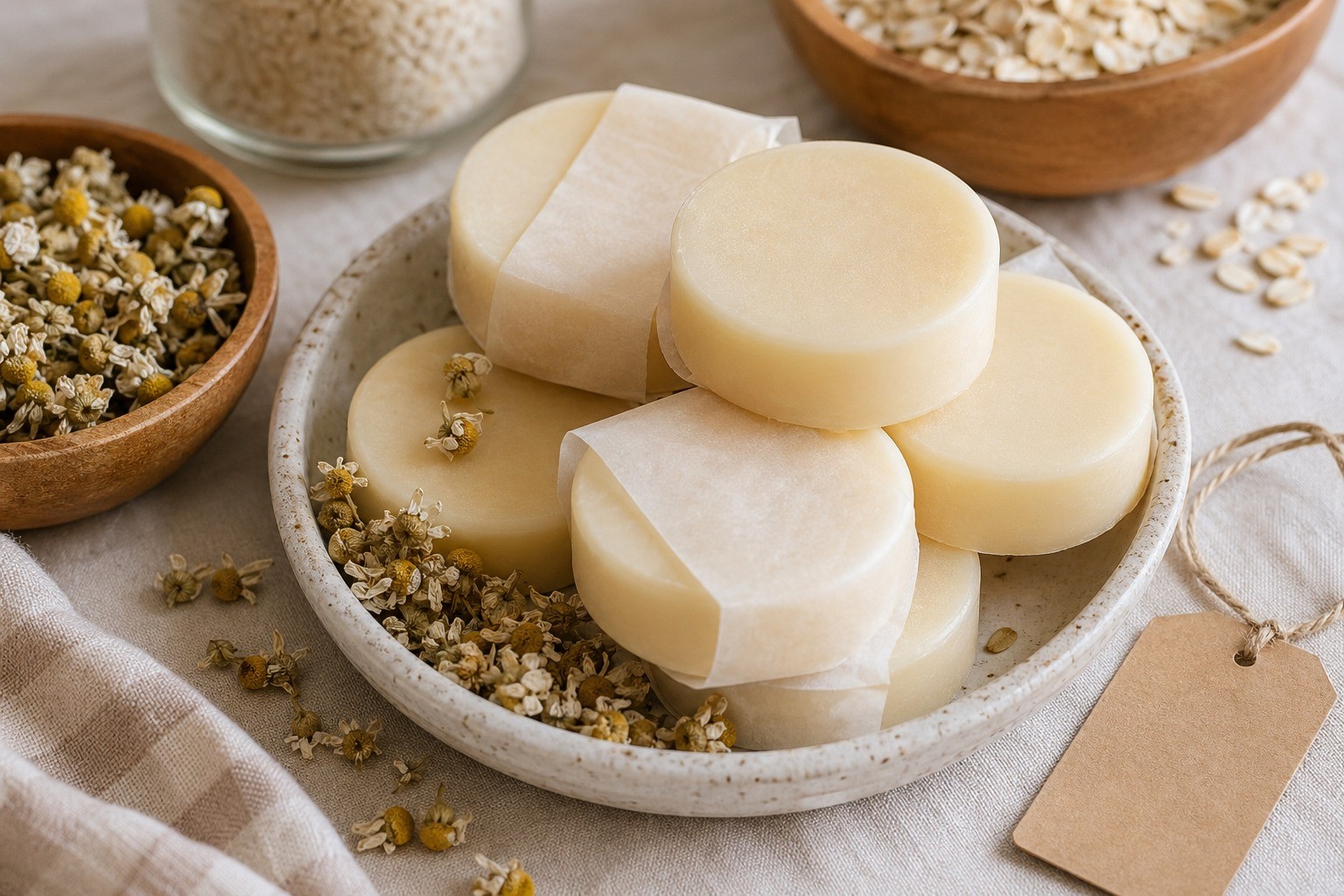
- Store each bar in a tin, jar, or parchment wrap.
How to Use a Lotion Bar
Use it after a warm shower, when your skin is slightly damp. Hold the bar against your arm or leg for a second, then glide it over the skin. Rub in the thin layer that melts off.
For hands, use it like a cuticle balm. For feet, apply before socks at night. Do not use it in the shower. Water makes the bar slippery and shortens its life.
Avoid broken or irritated skin unless you know the ingredients agree with you. Patch test first if your skin reacts easily.
Why Not Make a Real Lotion?
You can, but not casually. A lotion is an emulsion, usually water plus oil. Once water enters the formula, you need a preservative that works in that formula and at the right amount. A refrigerator is not a preservative system.
That does not mean natural lotion is bad. It just means it is a different skill level.
Lotion bars are the better first move. They feel luxurious, they store well, and they do not ask you to play cosmetic chemist on a Tuesday night.
Storage and Shelf Life
Keep bars cool, dry, and out of direct sun. A tin works better than leaving one loose on the bathroom counter.
Use within 6 to 12 months. If the bar smells stale, feels grainy in a new way, or changes color, make a fresh batch.
Easy Variations
Lavender chamomile bars: Add 1 tablespoon dried lavender to the chamomile infusion.
Unscented oat bars: Skip the chamomile and infuse nothing. Use jojoba, cocoa butter, beeswax, and oats.
Extra-soft winter bars: Replace 1 tablespoon beeswax with 1 tablespoon extra cocoa butter.
Travel bars: Pour into small silicone candy molds so each bar is single-use or weekend-sized.
Where This Fits in the Herbal Beauty Cabinet
These bars are not meant to solve every skin problem. They are for the ordinary dry-skin moments: shins after shaving, hands after dishes, elbows in winter, heels before socks.
That is enough. A good home apothecary earns its shelf space one useful little thing at a time.