A good party board is a purchasing problem more than a styling one. Buy by the guest, not by the size of the board, and you won’t run out or end up with a fridge full of cheese on Sunday.
This page gives you the amounts for 8, 12 and 20 guests, a shopping checklist you can screenshot, swaps that cut the bill without making the board look thin, and drinks to pour beside it. Every amount comes from a published rule, and we name the source as we go.
Hosts seem to want exactly this. Evite’s 2026 hosting report, as summarized by AOL, says nearly 70 percent of hosts are embracing DIY, and that DIY doesn’t mean cheap. It means thoughtful.
The 60-second plan
- Pick your tier. Is the board a starter before dinner, the main food at a cocktail-style party, or the whole meal? That one answer sets every amount below.
- Buy by the ounce per guest. Cheese and meat from the chart, crackers from the chart, then fill the rest.
- Buy 3 cheeses, 2 meats, 2 crackers. That’s plenty for any of these crowds. The UC Agriculture and Natural Resources guide suggests 3 to 5 cheeses.
- Spend on one cheese, save on the rest. More on that in the budget section.
- Keep half in the fridge. Put out half the food and refill from the cold half. It keeps the board fresh and it keeps leftovers small.
How much to buy, by guest count
The rules: Charcuterie Lab and McCormick both say about 2 ounces of cheese and 2 ounces of meat per guest when the board is a starter. Charcuterie Lab says about 3 ounces of each when the board is the party food, with 6 to 8 crackers per guest as a starter and 10 to 12 when the board is the food, and about 10 percent more from 20 guests up. For a meal, the UC Agriculture and Natural Resources guide says 4 to 6 ounces of cheese and 2 to 3 ounces of meat per person.
| Guests | Tier | Cheese | Meat | Crackers |
|---|---|---|---|---|
| 8 | Starter | 16 oz (1 lb) | 16 oz (1 lb) | 48 to 64 |
| 8 | Cocktail party food | 24 oz (1.5 lb) | 24 oz (1.5 lb) | 80 to 96 |
| 8 | The meal | 32 to 48 oz (2 to 3 lb) | 16 to 24 oz (1 to 1.5 lb) | 80 to 96 |
| 12 | Starter | 24 oz (1.5 lb) | 24 oz (1.5 lb) | 72 to 96 |
| 12 | Cocktail party food | 36 oz (2.25 lb) | 36 oz (2.25 lb) | 120 to 144 |
| 12 | The meal | 48 to 72 oz (3 to 4.5 lb) | 24 to 36 oz (1.5 to 2.25 lb) | 120 to 144 |
| 20 | Starter | 40 oz (2.5 lb), about 44 oz with the 10% extra | 40 oz (2.5 lb), about 44 oz with the 10% extra | 120 to 160 |
| 20 | Cocktail party food | 60 oz (3.75 lb), about 66 oz with the 10% extra | 60 oz (3.75 lb), about 66 oz with the 10% extra | 200 to 240 |
| 20 | The meal | 80 to 120 oz (5 to 7.5 lb) | 40 to 60 oz (2.5 to 3.75 lb) | 200 to 240 |
Totals are the per-guest rule multiplied by the guest count. Appetites and the rest of your menu still matter, so go to the low end if there’s a full dinner after and the high end for a long evening.
For fruit, nuts, pickles and spreads, we couldn’t find a published per-guest rule worth quoting. Fill each group to the size of your board and stop. Leftover grapes and nuts are easy to use up.
Free printable: Download the Party Charcuterie Shopping List (PDF) . It has the 8, 12 and 20 guest chart, a checklist by aisle with budget and splurge picks, a board map and labels for each group.
Waste-proof it: five rules
- Count your guests, then your menu. The BBC’s board guide says to get the numbers right to avoid waste. Use starter amounts when dinner follows and the bigger amounts when the board is the food.
- Buy crackers last and a little extra. They’re the cheapest thing to overbuy, and a bowl of crackers is the easiest thing to refill.
- Hold half back, cold. Set out about half, keep the rest covered in the fridge, and swap in after an hour or two. The FDA’s buffet guidance says to swap in fresh small dishes through the party.
- Don’t buy a seventh cheese. Charcuterie Lab’s boards for big crowds play it safe with familiar food. Three cheeses people recognize beat seven they won’t touch.
- Plan the leftovers. Hard cheese and cured meat that never left the fridge become sandwiches, omelets and the next night’s snack plate. Anything that sat out more than 2 hours goes in the trash, not the fridge.
Shopping checklist
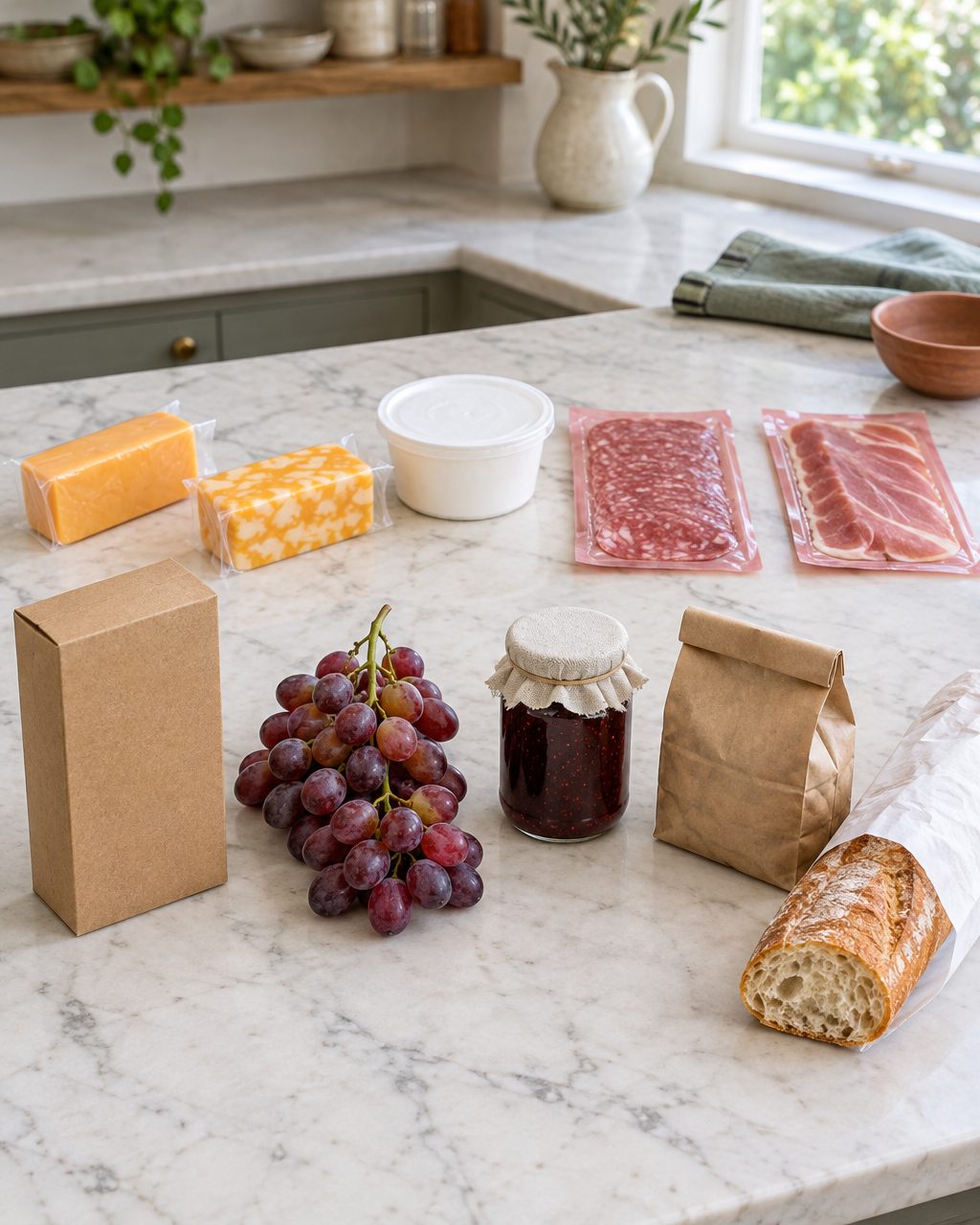
Copy this into your notes app. “Pantry check” means look in your cupboard before you buy.
| Aisle | Buy | How much | Pantry check | Budget pick | Splurge pick |
|---|---|---|---|---|---|
| Cheese | 1 firm | About one third of your cheese total | Cheddar or Colby Jack block | An aged cheddar or gouda wedge | |
| Cheese | 1 soft | About one third | Whipped cream cheese or a small brie | Triple cream brie or goat cheese | |
| Cheese | 1 stronger | About one third | Pepper jack or a small blue | Gorgonzola or aged parmesan | |
| Meat | 2 kinds | Half your meat total each | Salami, pepperoni, summer sausage | Prosciutto | |
| Crackers and bread | 2 crackers, optional baguette | From the cracker chart, plus a little extra | Yes | Store-brand butter crackers | A seeded or herbed cracker |
| Fruit | 1 fresh, 1 dried | Fill the groups | Yes | Grapes | Berries or figs |
| Crunch | 1 nut | One bowl | Yes | Bulk-bin almonds | Candied pecans |
| Briny | 1 pickle or olive | One bowl | Yes | Pickles from the fridge | Mixed olives |
| Sweet | 1 jam or honey | One bowl | Yes | Jam you already own, or honey | Fig jam |
| Serving | Spreaders, small knife, small plates, napkins, toothpicks | 1 spreader per soft cheese | Yes |
That is 3 cheeses, 2 meats, 2 crackers, 1 fruit pair and 3 small bowls, which is a full board for any crowd on the chart.
Make it affordable without making it look cheap
Good Housekeeping’s board advice is a high-low budget: splurge on one or two standout cheeses and quality charcuterie, then save on crackers, nuts, olives and dried fruit. Almost every swap below follows that idea.
| Instead of | Try | Why it works |
|---|---|---|
| Prosciutto and a fancy cured meat | Salami, pepperoni or summer sausage | Charcuterie Lab’s budget board uses pepperoni and summer sausage. Fold or roll the slices and they look generous. |
| Five specialty cheeses | Two supermarket blocks and one standout wedge | Three cheeses meets the UC guide’s 3 to 5 range, and the one special wedge is what people ask about. |
| Full-price deli wedges | End cuts of cheese | Good Housekeeping points to the end cuts many stores sell at a discount. |
| Pricey nut mixes | Bulk-bin nuts | Good Housekeeping says the bulk aisle lets you buy small amounts of different nuts. |
| A new jar of everything | Jam, honey, pickles or leftover cranberry sauce you already own | Check the pantry and fridge before you buy. |
| Specialty crackers | Store-brand crackers and half a baguette | Charcuterie Lab’s budget board is built this way. |
| Several soft cheeses | Whipped cream cheese as the soft one | It appears on Charcuterie Lab’s budget board and spreads easily. |
| A bigger board | The right-size board | A smaller board filled to the edge looks more generous than a large one with gaps. |
For a price anchor, Charcuterie Lab’s budget board feeds 6 to 8 guests and, by their estimate, costs about $20 to $25. It uses a sharp cheddar block, a Colby Jack block, whipped cream cheese, pepperoni, summer sausage, store-brand butter crackers, half a baguette and grapes. Your store and region will change the total.
Three ways to spend, same layout:
| Level | Cheese | Meat | Extras |
|---|---|---|---|
| Pantry-first | 2 store blocks, 1 soft | Salami, pepperoni | Grapes, crackers, whatever jam and nuts you own |
| A step up | 2 blocks and 1 deli wedge | Salami and prosciutto | Dried apricots, a seeded cracker |
| Splurge on one | 1 or 2 standout cheeses, 1 supermarket block | One cured meat worth paying for | Honeycomb or candied pecans |
Build it in six groups
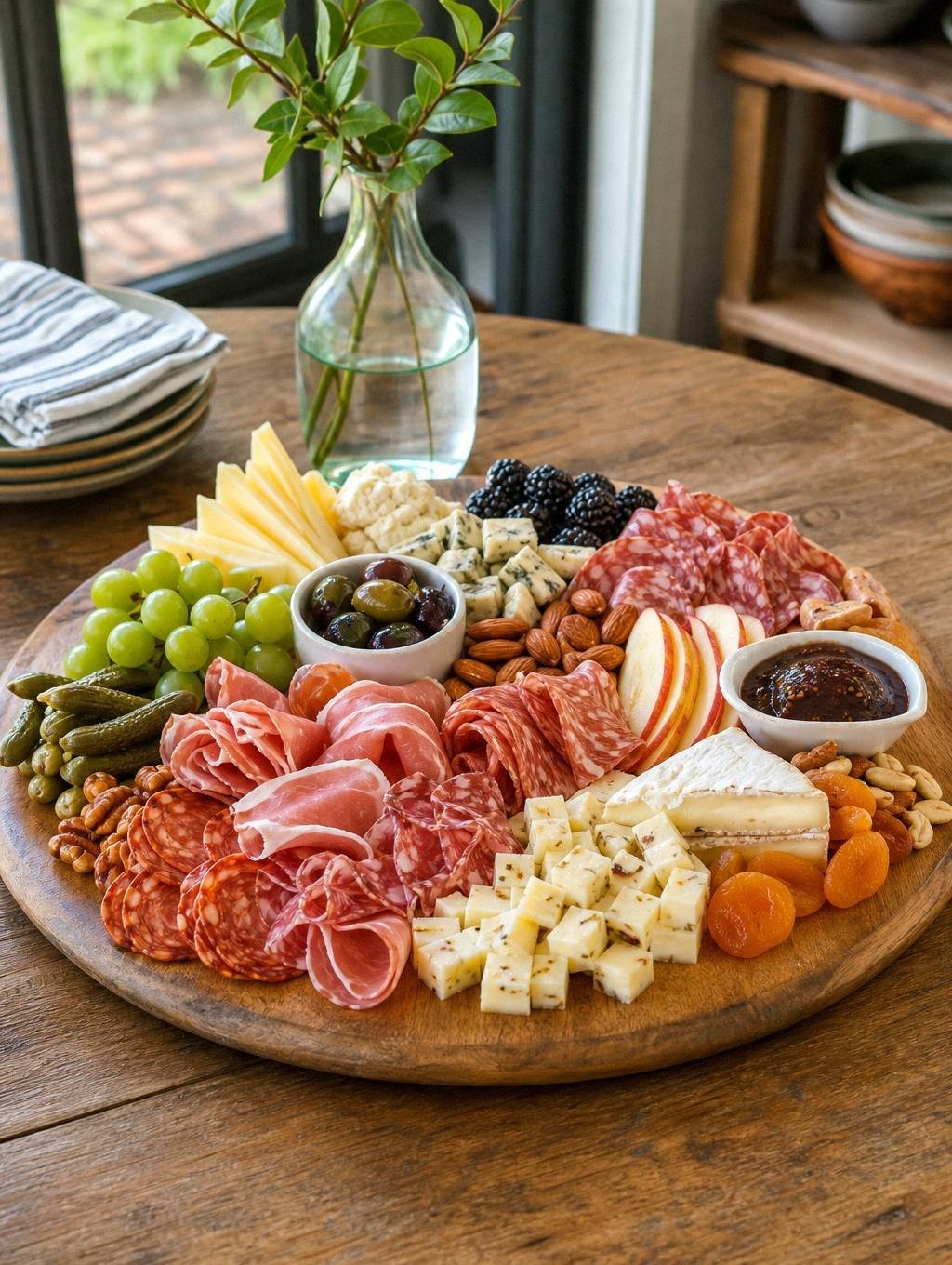
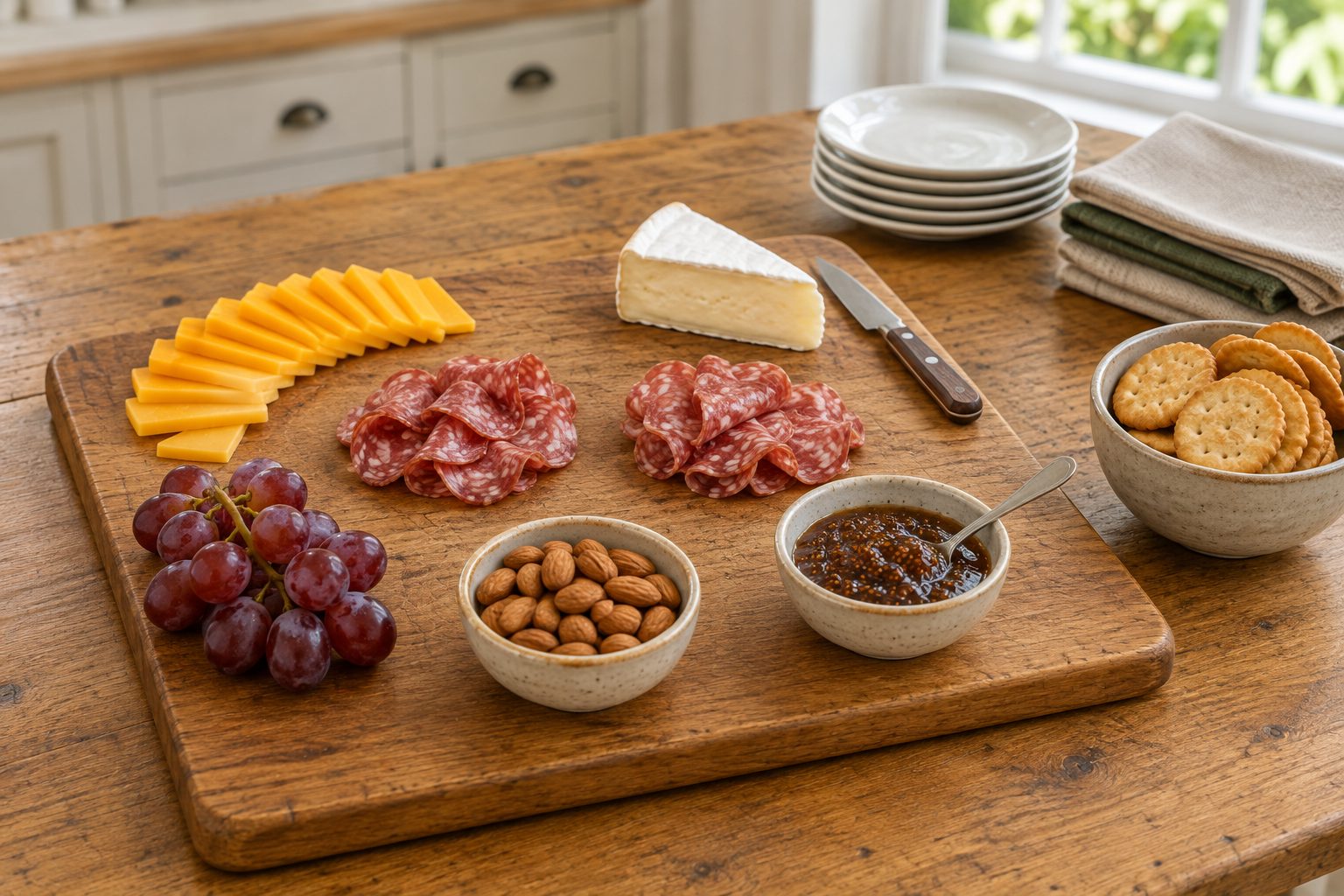
A board reads as intentional when each food has its own spot and some bare board shows between them. Aim for five to seven groups.
| Group | What goes there | Place it |
|---|---|---|
| 1. Firm cheese | Cheddar, gouda, manchego, cut into slices or cubes | One corner |
| 2. Soft cheese | Brie or goat cheese with its own knife | Opposite corner |
| 3. Meat | Folded or rolled slices in two loose piles | Center, between the cheeses |
| 4. Fresh and dried fruit | Grapes, apple slices, dried apricots | Along one edge |
| 5. Bowls | Nuts, pickles or olives, jam | Wedged between groups |
| 6. Crackers | In a separate bowl or plate beside the board | Off the board, so you can refill them |
Steps:
- Set the bowls down first.
- Add the cheeses, spaced apart.
- Fold or roll the meat into loose piles.
- Add fruit and fill gaps with nuts.
- Give each soft cheese its own spreader, and put out small plates and napkins.
- Label anything with nuts, pork or dairy so guests with allergies can scan the board. McCormick also suggests keeping gluten-free crackers or vegetables separate from wheat-based ones to reduce cross-contact.
Keep the board edible. The BBC’s board guide advises against non-food decoration such as flowers, since it takes space from food.
Countdown timeline
| When | What to do |
|---|---|
| 1 week before | Buy crackers, nuts, jams and drinks. Check the pantry first. |
| 2 days before | Buy cheese, meat and fruit. |
| Morning of | Cut the cheese, fold the meat, wash the fruit. Pack a second, half-size tray to hold in the fridge. |
| 60 minutes before | Take hard cheese out of the fridge. The UC guide says to let cheese sit out 30 to 60 minutes before serving for the best flavor. |
| 30 minutes before | Build the first board. Fill the cracker bowl. |
| 1 to 2 hours in | Swap in the cold tray. Replace nearly empty dishes with full ones. |
| 2 hours after it came out | Perishable food that has sat at room temperature for 2 hours is done. |
Keep cold food at 40 degrees F or colder, and follow the 2-hour rule from the FDA’s serving guidance.
The countdown, a spot to write down when the board went out and the drink pairings are in the free Party Charcuterie Shopping List PDF .
What to pour beside it
Pick drinks guests can serve themselves so you’re not stuck behind the board. Charcuterie Lab notes that bubbles and acidity cut the richness of cheese, and that a non-drinker should have something to toast with.
| On the board | Pour | No-alcohol twin |
|---|---|---|
| Cheddar, salami, apple slices | Apple cider old fashioned | Apple ginger fizz mocktail |
| Brie, grapes, crackers | Apple cider mimosa | Cranberry mocktail |
| Goat cheese, olives, cucumber | Cucumber elderflower spritz | The same spritz made without the alcohol |
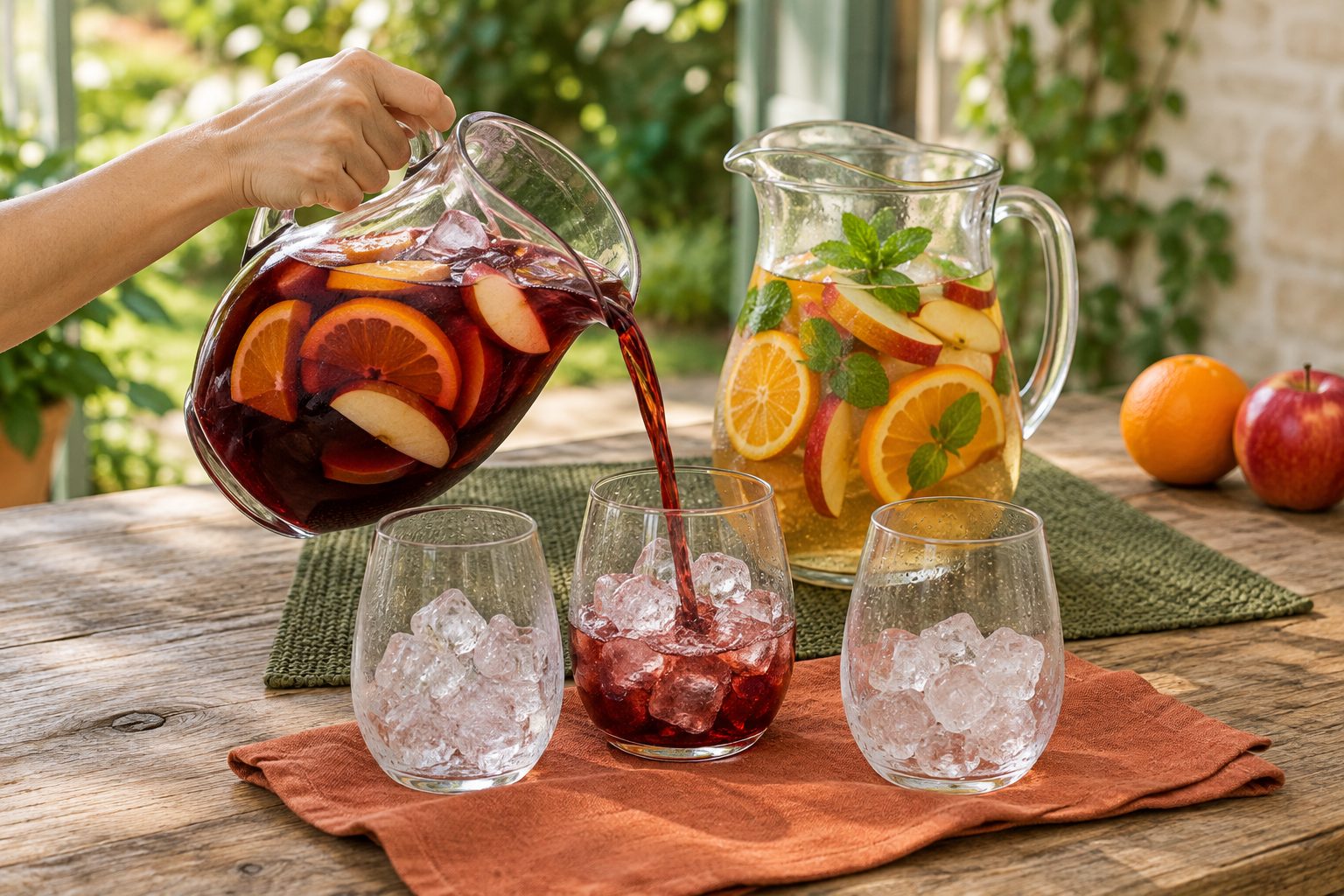
| Blue cheese, nuts, dried fruit | Apple cider sangria | Non-alcoholic mulled wine |
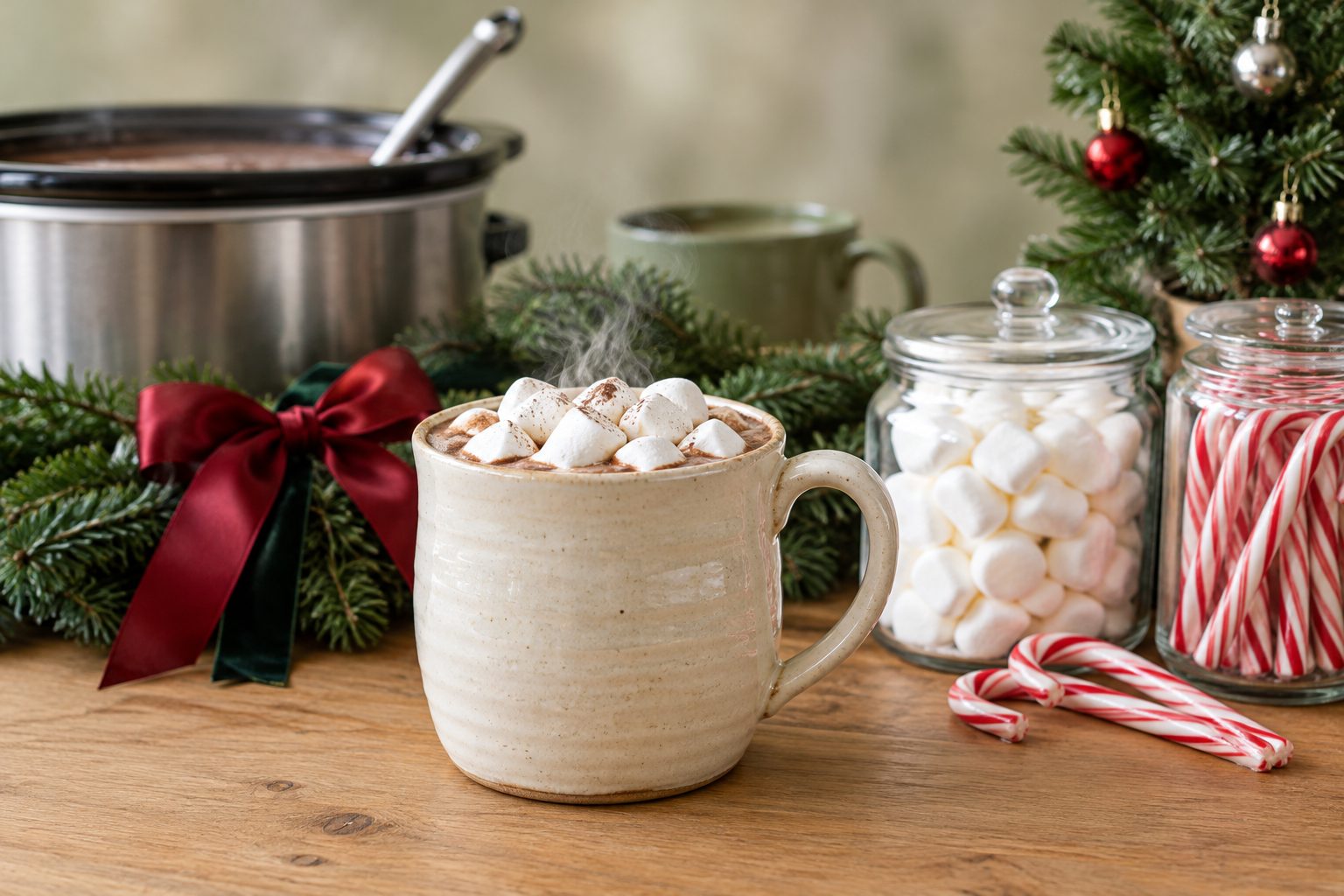
| A cold evening, a crowd | Hot apple cider bar | The same bar, no spirits |
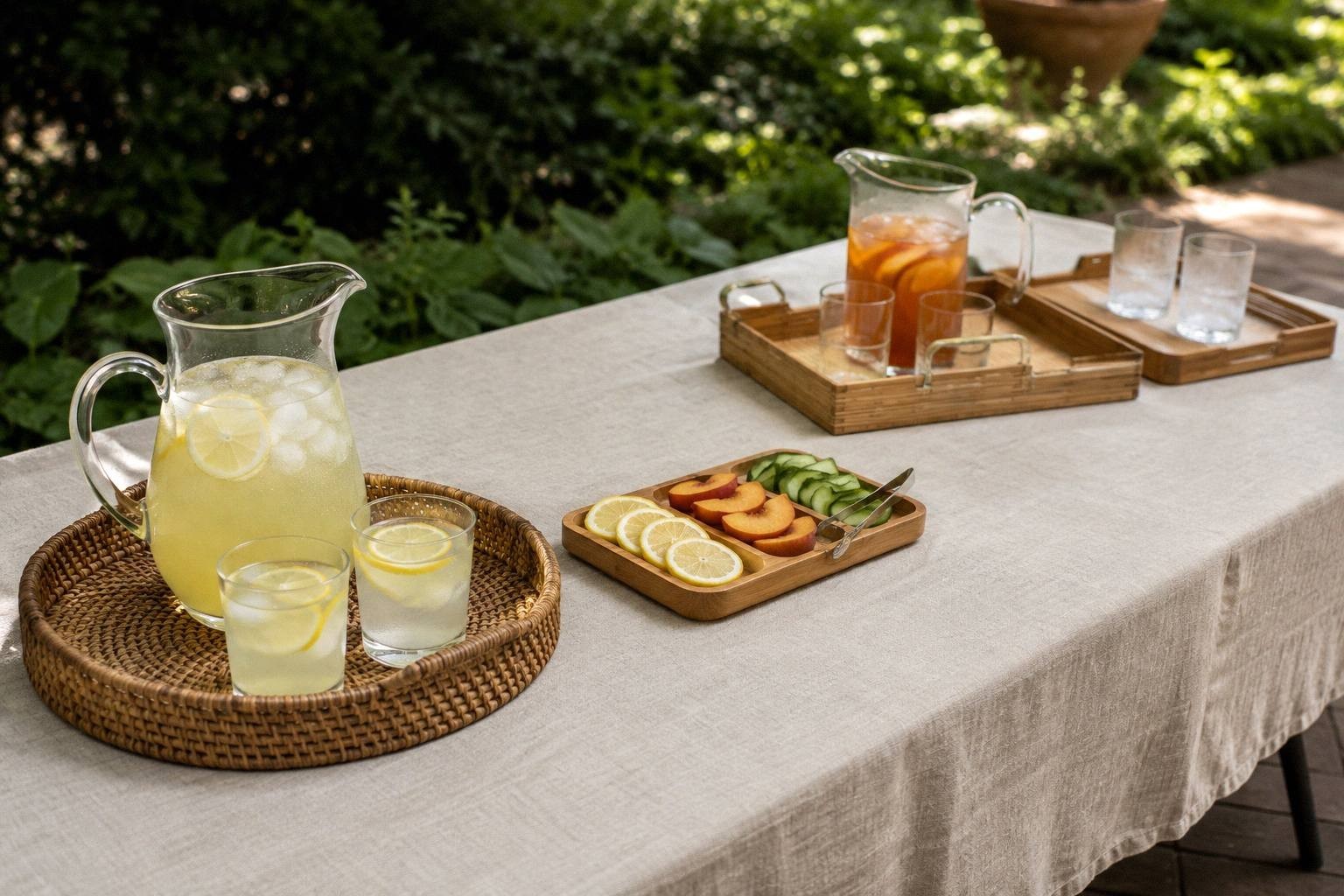
To feed 20 people without bartending, set up a drink station or make a batch mocktail guests pour themselves . The party mocktail pitchers guide covers what to pour from.
Problems and fixes
| Problem | Fix |
|---|---|
| Crackers ran out | Buy more than the chart says and keep them in a bowl, not on the board. |
| The board looks sparse | Cut cheese into different shapes, group foods together and fill gaps with grapes or nuts, as Good Housekeeping suggests. Or use a smaller board. |
| The cheese tastes flat | It’s too cold. Take it out 30 to 60 minutes before serving. |
| Everyone crowds one corner | For 20 or more, make two boards in two rooms, not one giant one. Charcuterie Lab recommends stations for crowds. |
| The board is picked over by hour three | Swap in the cold half-size tray. |
| Someone can’t eat what’s on it | Label foods, and keep gluten-free options separate from wheat-based ones. |
Frequently asked questions
How much charcuterie do I need per person?
For a starter, about 2 ounces of cheese and 2 ounces of meat. For a cocktail party where the board is the food, about 3 ounces of each. For a meal, the UC guide says 4 to 6 ounces of cheese and 2 to 3 ounces of meat. See the chart above for 8, 12 and 20 guests.
How many cheeses do I need?
Three is enough for most parties. The UC guide gives a range of 3 to 5 cheeses.
What is the cheapest way to make a charcuterie board for a party?
Buy cheese in blocks, choose salami or pepperoni, use pantry jams and nuts, keep crackers store-brand and spend on one standout cheese. Charcuterie Lab estimates about $20 to $25 for a board for six to eight guests built this way, though your prices will vary.
How long can a charcuterie board sit out?
Two hours at room temperature, then the perishables should be discarded. Hold cold food at 40 degrees F or colder until you serve it.
Can I make it ahead?
Buy and cut ahead, then build the first board close to serving time. Keep a second half-size tray covered in the fridge to swap in later.
What size board do I need?
Use the biggest cutting board you have for 8 to 12 guests. For 20, make two boards and put them in different rooms.
What should I serve with it?
A drink with acid or bubbles, plus a no-alcohol option next to it. See the pairing table above.
What are my other options?
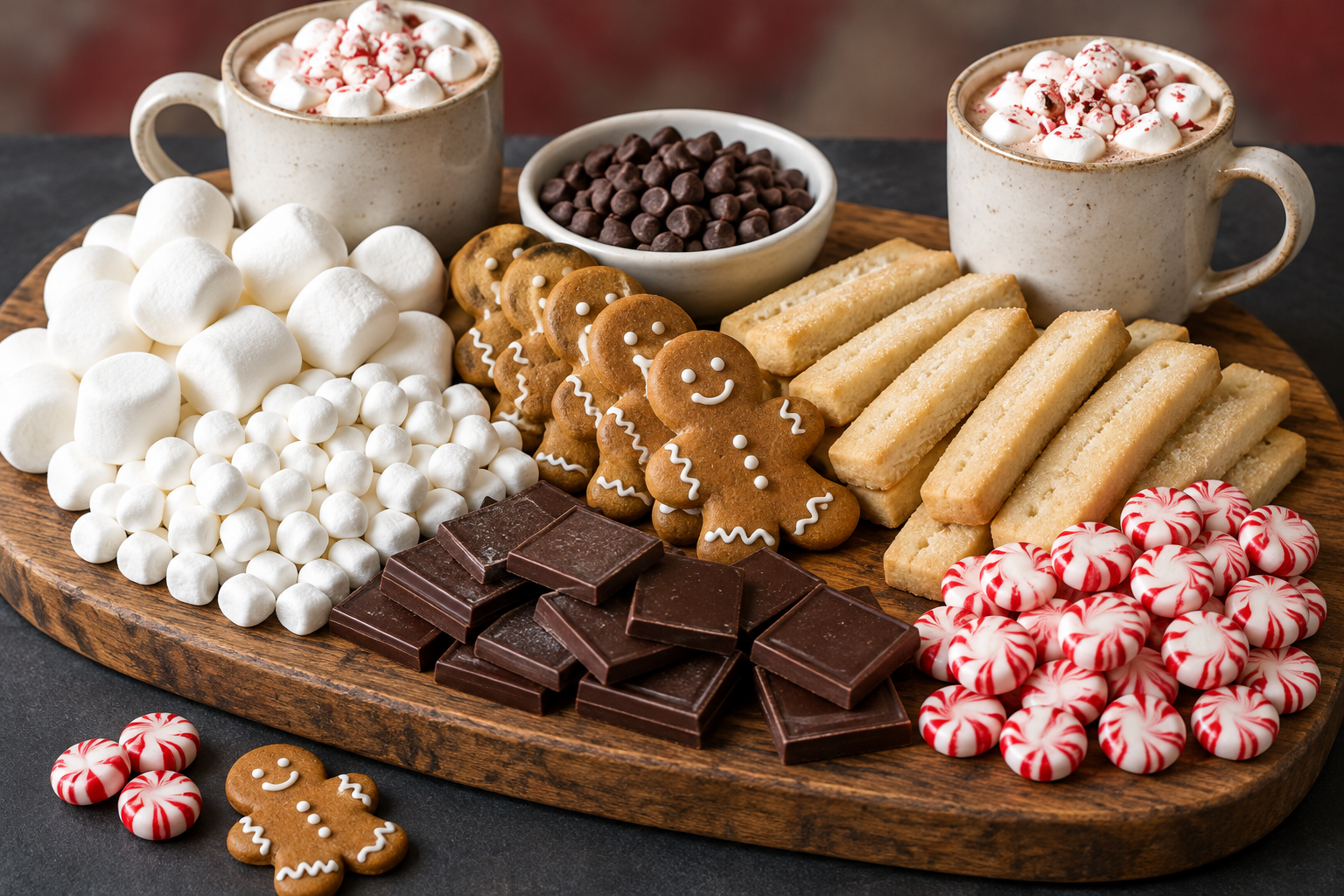
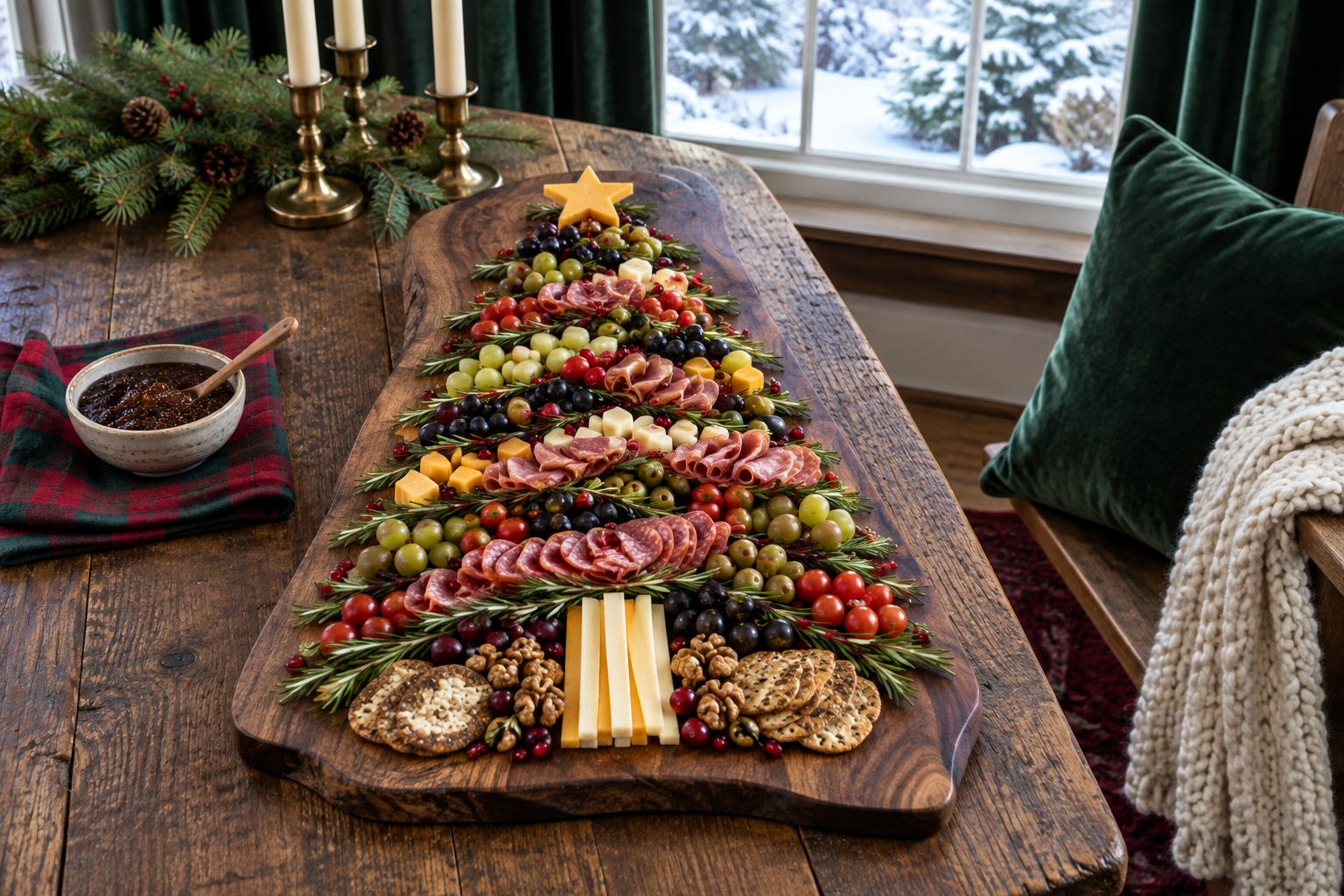
For occasions, see the Christmas charcuterie board , the New Year’s Eve board , the fall board on a budget and the dessert board . Planning a cocktail party? The cocktail party food guide covers the bites to serve beside it.
About these numbers
Amounts come from a university extension guide, a spice maker’s party guide and a cheese-board site, and food safety follows FDA serving guidance. This page is a hosting guide, not a tested recipe, and prices differ by store and region.