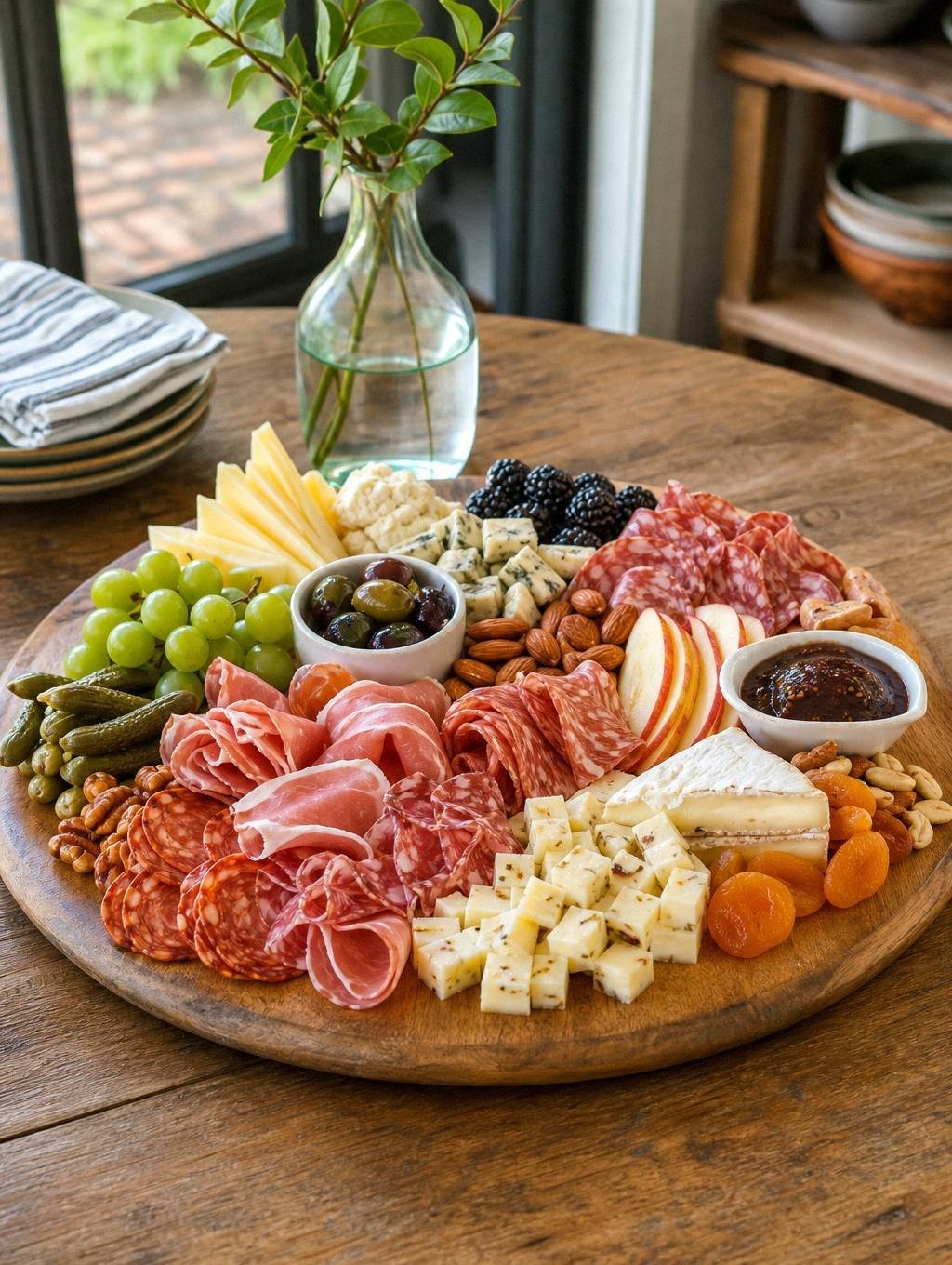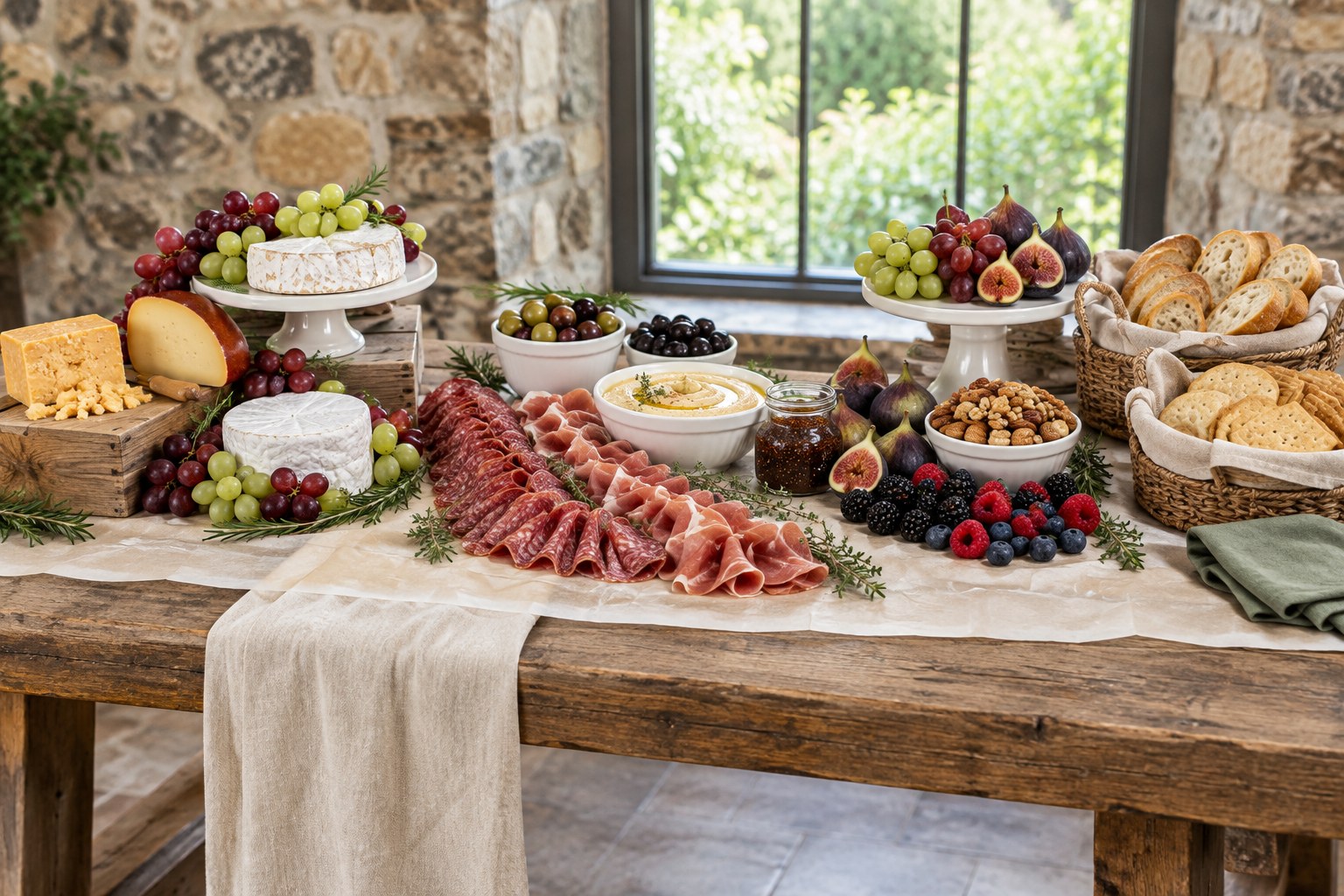
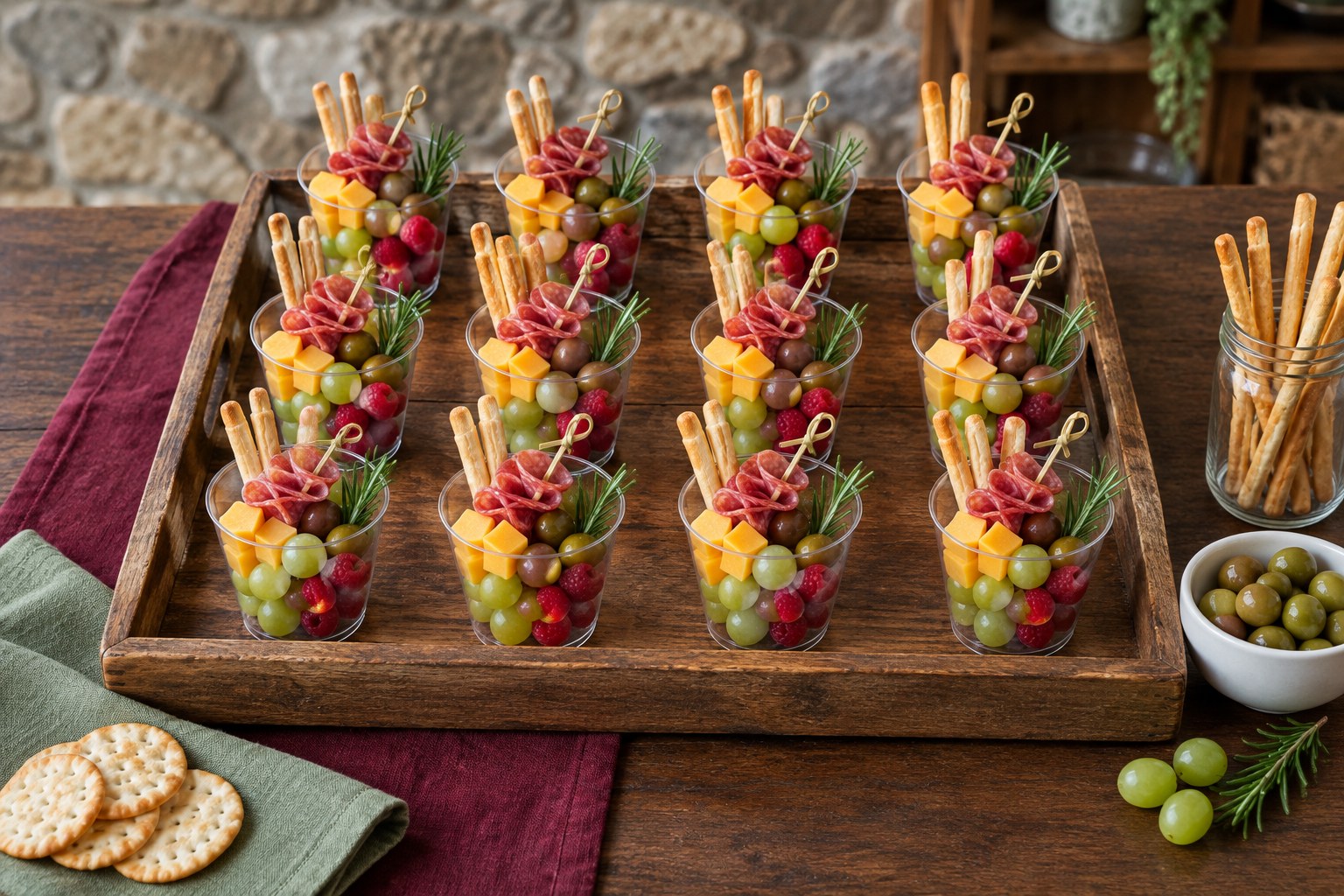
A shared grazing board works well when people stay near the dining table, but it slows down a backyard mingle, a bridal shower, or a wedding cocktail hour. Guests bunch up around one corner, juggle floppy napkins, and stop eating the moment they walk into the next room. Individual charcuterie cups and jarcuterie fix that bottleneck because every person grabs a self-contained portion and keeps moving.
This guide gives you the cup sizes that actually stand upright without tipping, the skewer-height trick that makes each cup look full instead of sunk, exact per-cup counts scaled for 12, 24, and 48 guests, and a prep schedule so crackers stay crisp until guests arrive. If you’d rather build a shared board instead of individual cups, check the party charcuterie board shopping guide for platter sizing and group layouts.
Choosing the Right Cup or Jar Size
Cup height matters more than cup width. If a cup is too wide, breadsticks slide sideways and meat skewers flop flat across the rim. If it’s too narrow, you can’t fit a cheese cube beside an olive skewer without crushing the berries.
| Container type | Best capacity | Ideal height | Best occasion | Watch out for |
|---|---|---|---|---|
| Clear rigid plastic tumbler | 9 oz | 3.5 to 4 inches | Casual parties, graduation open houses, backyard birthdays | Avoid flimsy thin-wall cups that crack when packed tight |
| Kraft paper fry scoop or snack cup | 12 to 14 oz | 4.5 inches (angled rim) | Weddings, baby showers, rustic themes, outdoor picnics | Line the bottom with a folded wax paper square so oil doesn’t stain the paper |
| Wide-mouth glass mason jar (jarcuterie) | 8 oz half-pint | 3.75 inches | Seated showers, small dinner starters, lidded transport | Heavier to carry on a tray; count on washing or sending jars home |
| Clear PET parfait cup with dome lid | 9 to 12 oz | 4 inches (plus dome) | Picnics, office parties, travel-ready drop-offs | Dome lids crush breadsticks taller than 5.5 inches |
For almost every party, a 9-ounce sturdy clear cup or a 12-ounce angled kraft snack cup is the easiest format to pack and hand out. Both hold roughly 1.5 to 2 ounces of cheese, 1 to 1.5 ounces of cured meat, a handful of fruit, a couple of crunchy dippers, and one briny bite. That matches a standard pre-dinner appetizer serving without leaving people hunting for a plate.
The Skewer Height Trick That Makes Cups Look Full
The most common reason homemade charcuterie cups look sparse is that everything sinks to the bottom. Once cheese cubes, grapes, and olives pile up at the base, guests only see the top inch of crackers sticking out.
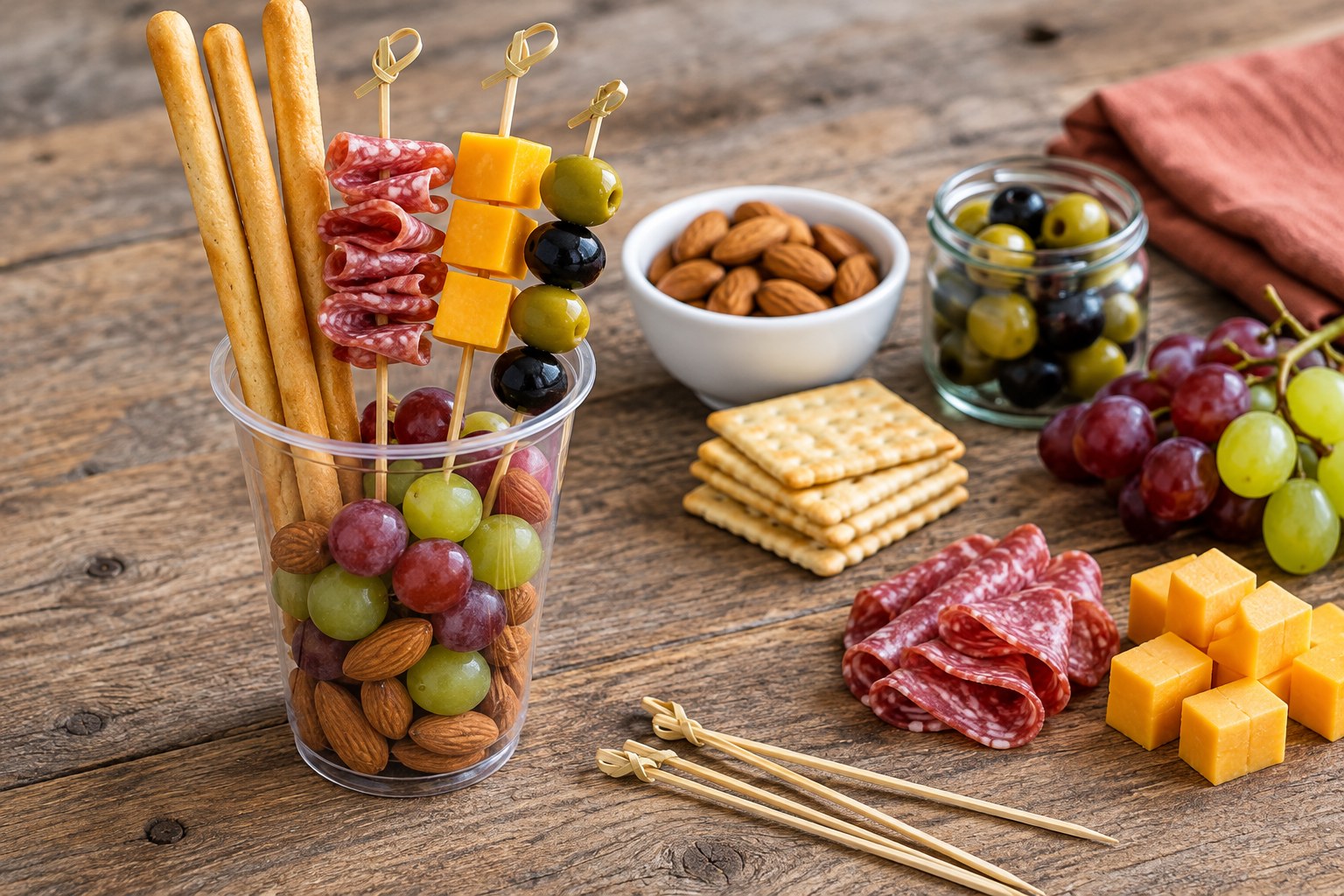
Use a three-tier build inside every cup:
- Lay down a dry structural base. Drop 6 to 8 almonds, pistachios, or pretzel nuggets into the bottom of the cup first. Dry items take up the narrow bottom inch, lift the rest of the food up toward the rim, and give bamboo skewers something to grip so they don’t spin.
- Stand tall crackers in the back. Tuck 2 thin breadsticks (grissini), 2 flatbread crisps, or 2 pretzel rods vertically against the back wall of the cup. They create a tall backdrop that frames everything in front of them.
- Stagger two skewer heights. Thread your meat and cheese onto 6-inch bamboo paddle skewers rather than short 3.5-inch cocktail picks. Put one skewer at full height with a folded salami ribbon, a cheese cube, and a green olive near the top. Cut or seat the second skewer an inch lower with mozzarella, a cherry tomato, or a second cheese cube.
- Tuck fruit into the front gap. Drop 3 to 4 grapes or 2 berries into the front pocket where the clear plastic or angled kraft opening shows them off.
- Finish with one herb stem or dip packet. Slide a single sturdy rosemary sprig down one side if the cup is savory, or rest a single-serve honey stick vertically beside the breadsticks.
Keep skewers between 5.5 and 6.5 inches long for a 4-inch cup. Anything shorter disappears below the rim, and anything longer makes the cup top-heavy on a serving tray.
Exact Per-Cup Counts for 12, 24, or 48 Guests
Plan on 1 cup per guest as a pre-dinner appetizer, or 1.5 cups per guest if the cups are the main food during a two-hour cocktail mingle. Buying by individual piece count instead of guessing by the package keeps you from running short on skewers halfway through assembly.
| Component | Per cup | 12 cups | 24 cups | 48 cups |
|---|---|---|---|---|
| Firm cheese cubes (cheddar, gouda, or manchego, 3/4-inch) | 2 cubes (~1 oz) | 24 cubes (12 oz) | 48 cubes (1.5 lb) | 96 cubes (3 lb) |
| Second cheese (mozzarella pearl, brie wedge, or pepper jack) | 1 to 2 pieces (~0.75 oz) | 12 to 24 pieces (9 oz) | 24 to 48 pieces (1.1 lb) | 48 to 96 pieces (2.25 lb) |
| Cured meat slices (salami, prosciutto, or soppressata) | 2 to 3 slices (~1.25 oz) | 24 to 36 slices (15 oz) | 48 to 72 slices (1.9 lb) | 96 to 144 slices (3.75 lb) |
| Breadsticks or tall flatbread crackers | 2 pieces | 24 pieces (2 packs) | 48 pieces (3 to 4 packs) | 96 pieces (6 to 8 packs) |
| Round or square sturdy crackers | 2 to 3 crackers | 30 crackers | 60 crackers | 120 crackers |
| Fresh grapes or berries | 4 grapes or 3 berries | 1 lb grapes or 1.5 pints berries | 2 lb grapes or 3 pints berries | 4 lb grapes or 6 pints berries |
| Olives or cornichons | 2 pieces | 24 pieces (1 small jar) | 48 pieces (1 to 2 jars) | 96 pieces (2 to 3 jars) |
| Roasted nuts or pretzel nuggets (base layer) | 6 to 8 pieces | 1 cup | 2 cups | 4 cups |
| Dried fruit (apricot halves or figs) | 1 to 2 pieces | 18 pieces | 36 pieces | 72 pieces |
| Bamboo skewers (6-inch) | 2 skewers | 24 skewers | 48 skewers | 96 skewers |
If you want to keep meat prep fast for 48 cups, skip fussy salami roses and fold each round slice in half, then in half again into a fan before threading it onto the skewer. Folded fans take a quarter of the time to build and still give the cup ruffles and volume. You can also borrow assembly order ideas from make-ahead charcuterie skewers if you’re building skewers the night before.
Shopping and Prep Checklist
Use this list before you head to the store so nothing holds up the assembly line:
- Cups and transport: 9 oz rigid tumblers or 12 oz kraft snack cups, rimmed sheet pans or flat cardboard catering trays for moving cups, and non-slip shelf liner to stop cups from sliding in transit.
- Skewers and extras: 6-inch bamboo skewers, cocktail napkins, a small trash bowl near the serving table for used sticks, and mini chalk tags or sticker labels for vegetarian, nut-free, or gluten-free cups.
- Two cheeses with contrast: One firm block you can cube cleanly (sharp cheddar, aged gouda, or manchego) plus one creamy or mild option (marinated mozzarella balls drained well, Havarti cubes, or firm mini brie wedges). Skip crumbly blue cheese or super-runny triple cream inside grab-and-go cups since they smear the walls.
- Two meats (or a meatless swap): Thin-sliced Genoa salami and folded prosciutto cover most tastes. For vegetarian cups, swap meat skewers for marinated artichoke hearts, roasted red pepper strips, or mini caprese skewers (cherry tomato, mozzarella pearl, basil leaf).
- Dry crunch: Thin Italian breadsticks, rosemary flatbread crisps, and whole roasted almonds.
- Fresh and briny: Seedless red or green grapes, blackberries or raspberries, pitted Castelvetrano olives, and baby dill cornichons patted completely dry with paper towels.
Five Party Themes You Can Swap Into the Same Cup Formula
Once you know the three-tier build, you can adapt the ingredients to fit almost any guest list without changing your cup size or skewer math.
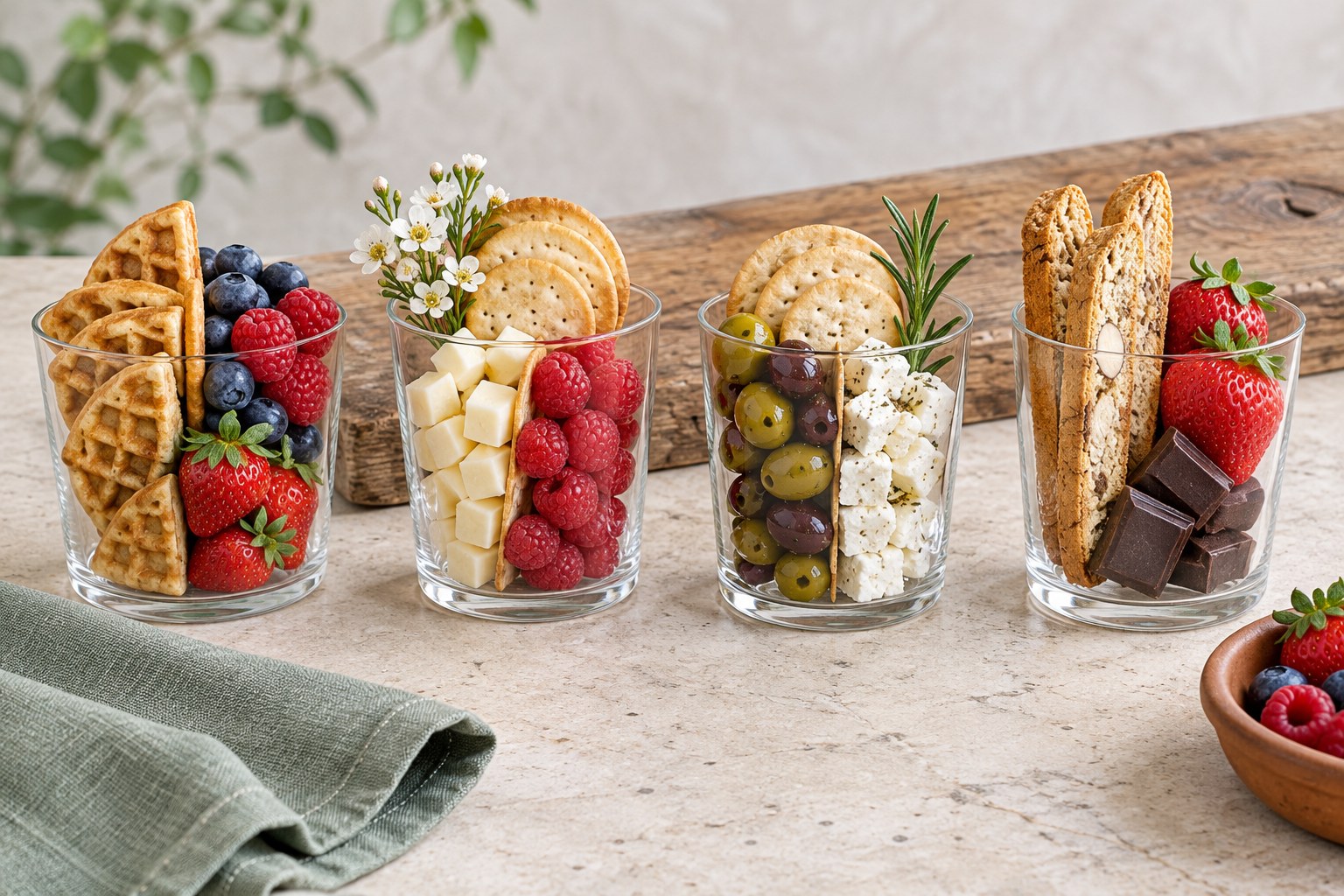
| Theme | Base layer | Skewers | Tall dippers | Fresh finish |
|---|---|---|---|---|
| Classic party | Roasted almonds | Folded salami + sharp cheddar; green olive + mozzarella pearl | Breadsticks + seeded flatbread | Red grapes + rosemary sprig |
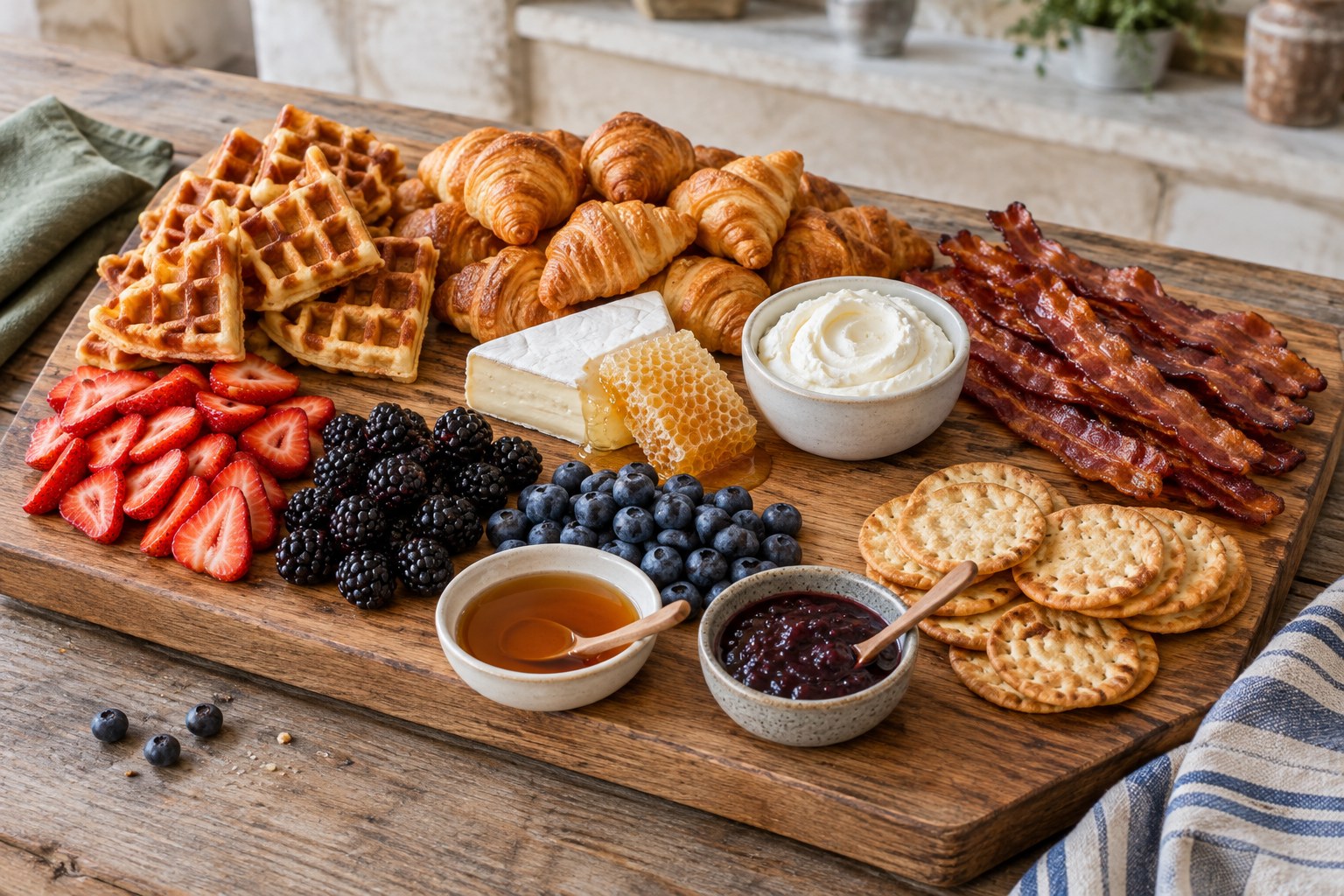
| Brunch cups | Granola clusters or glazed pecans | Mini waffle quarter + strawberry; cheddar cube + folded bacon or turkey sausage | Cinnamon biscuit sticks or mini pancake skewer | Blueberries + honey stick |
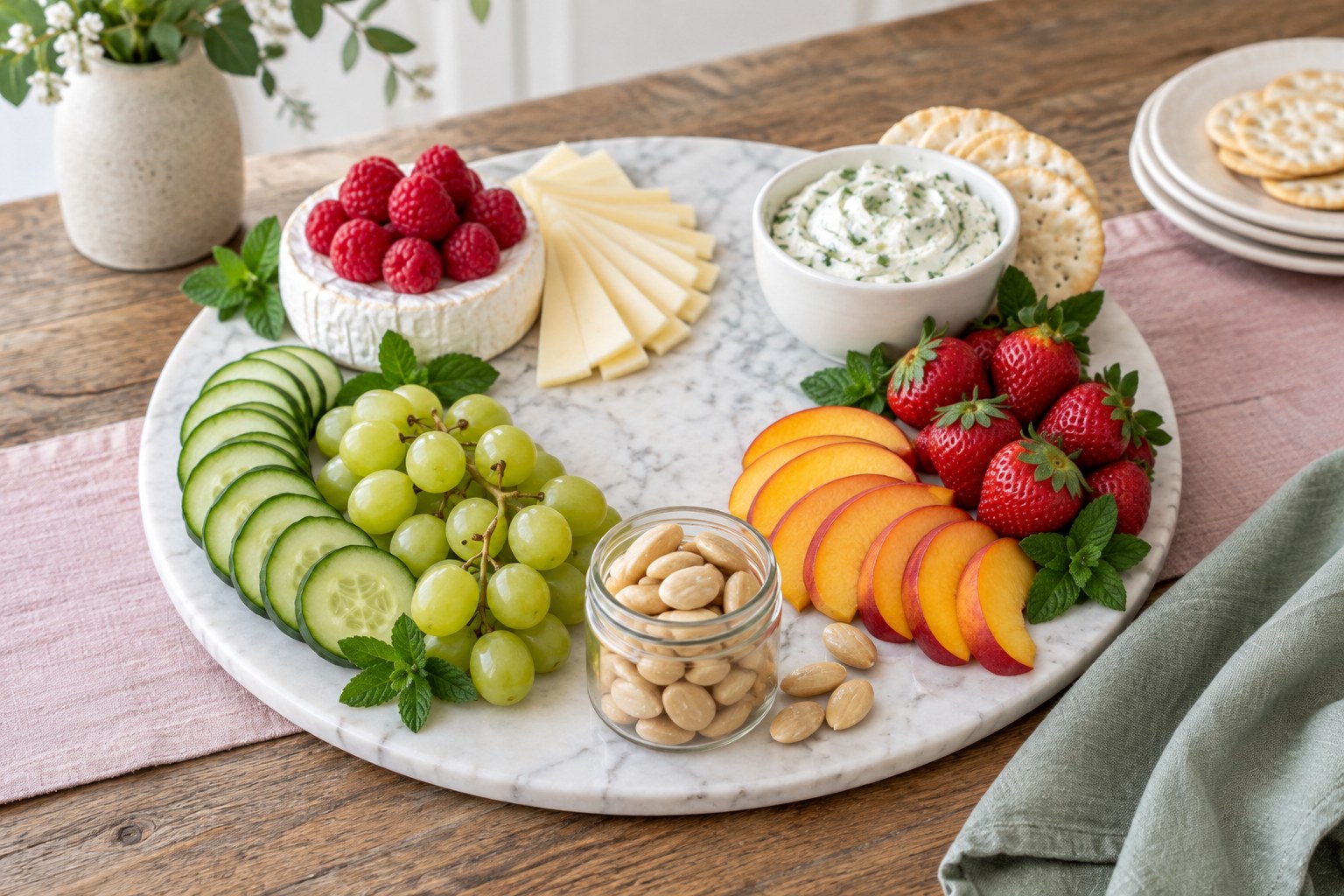
| Bridal or baby shower | Marcona almonds or white chocolate pretzels | Pasteurized white cheddar + green grape; cucumber ribbon + mozzarella ball (no raw-milk cheese or unheated deli meat if serving an expectant guest) | Plain water crackers + thin breadsticks | Raspberries + mint sprig |
| Vegetarian mezze | Roasted chickpeas or pistachios | Marinated artichoke + feta cube; cherry tomato + mozzarella pearl + kalamata olive | Pita chips + sesame breadsticks | Cucumber spears + dried fig half |
| Dessert cups | Chocolate-covered pretzels or mini marshmallows | Brownie bite + strawberry; cheesecake bite + raspberry | Biscotti + wafer cookie rolls | Mandarin segments + dark chocolate square |
If you’re planning a morning event or a shower, pair brunch cups with a Christmas morning mimosa bar or a non-alcoholic mimosa pitcher . For showers, see the full baby shower and bridal shower charcuterie board guide and serve baby shower mocktails beside the tray.
Make-Ahead Timeline and Storage
Crackers turn soft in the refrigerator within a couple of hours if they touch grapes, olives, or damp cheese. Splitting wet prep from dry assembly solves that completely.
| Time before party | What to do | Storage rule |
|---|---|---|
| 24 hours ahead | Cube firm cheeses, wash and thoroughly dry fruit, drain olives and cornichons on paper towels, and assemble all meat-and-cheese skewers. | Store skewers flat in airtight containers lined with dry paper towels at 40°F or colder. Keep fruit in a separate vented container. |
| 3 to 4 hours ahead | Line sheet pans with empty cups. Add the dry nut or pretzel base to every cup. Set up bowls of breadsticks and crackers next to the tray. | Leave cups covered lightly with clean tea towels at room temperature. |
| 45 to 60 minutes ahead | Drop chilled skewers and dry fruit into each cup. Hold off on crackers if the room is humid, or add crackers now if the room is cool and dry. | Keep filled trays in a cool room or chilled until 30 minutes before serving so cheese loses its fridge chill. |
| 15 minutes ahead | Tuck in tall breadsticks, flatbread crisps, and herb sprigs. Set out dietary labels for any vegetarian, nut-free, or gluten-free cups. | Display cups in two waves if the party lasts over two hours. |
| At the 2-hour mark | Per FDA buffet food safety guidance, discard any perishable meat or cheese cups that have sat at room temperature for more than 2 hours (or 1 hour if outdoors above 90°F). | Keep wave two sealed in the fridge until wave one clears out. |
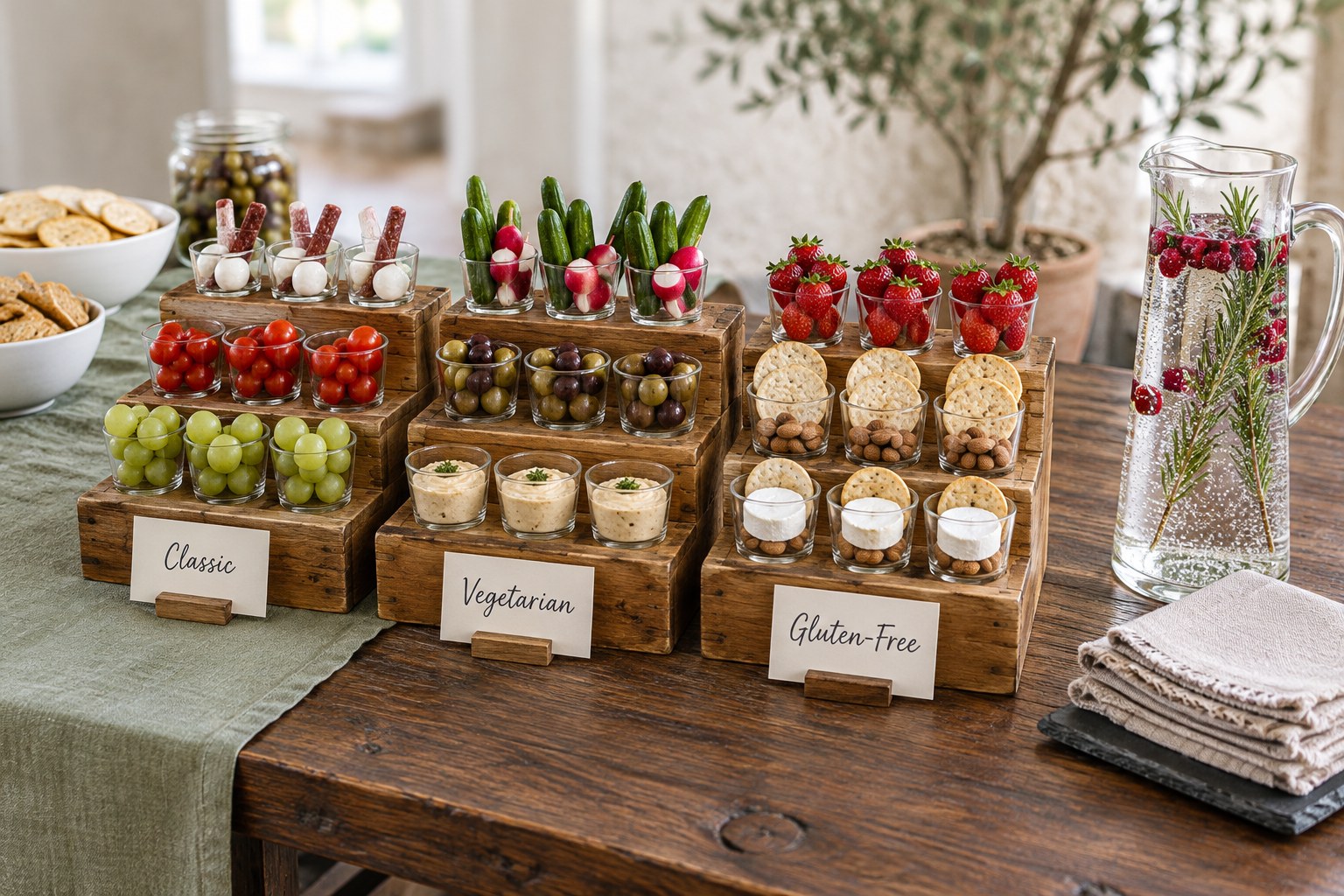
What to Pour Beside Charcuterie Cups
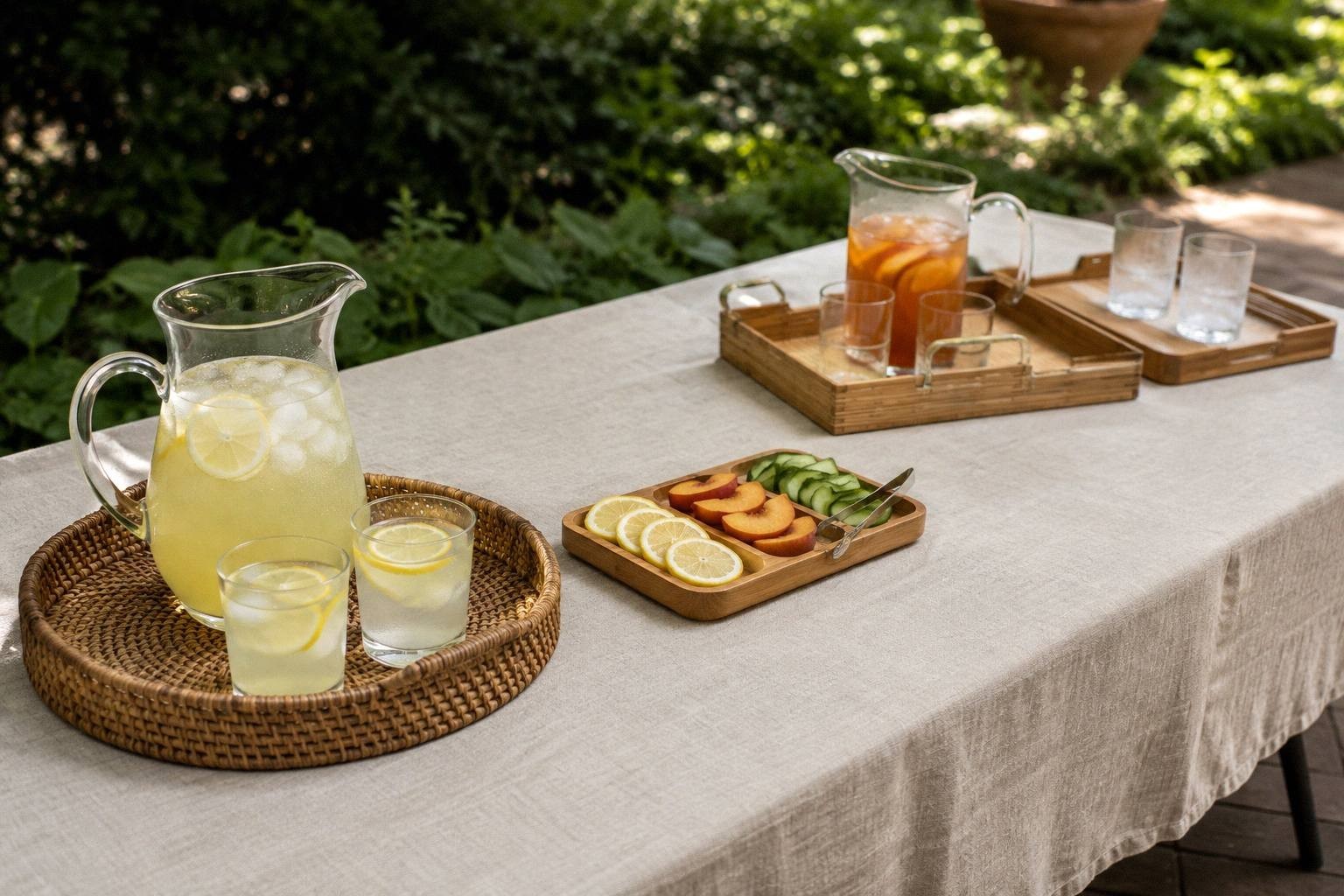
Since guests are already holding a cup in one hand, pick drinks that pour quickly from a pitcher or dispenser into stemless glasses or sturdy tumblers. Self-serve stations mean nobody gets stuck mixing drinks while handing out cups.
- Self-serve mocktails: Set up two pitchers from our batch mocktails guests can pour themselves right next to the cup tray.
- Outdoor summer gatherings: Pair cups with batch mocktails for summer BBQs and keep extra cups on an ice-lined sheet pan under shade.
- Large crowds: Follow the layout in our drink station ideas guide and place drinks at least six feet away from the charcuterie cups so traffic splits into two lines instead of one bottleneck.
Troubleshooting Common Cup Problems
- Cups keep tipping over on the tray: Your skewers are too heavy on one side, or your cups have narrow tapered bottoms. Switch to 9-ounce flat-bottomed tumblers, add a heavier nut base, and lean both skewers slightly toward opposite sides of the rim so the weight balances.
- Crackers went soggy before guests arrived: Moisture from olives, mozzarella, or rinsed grapes soaked into the breadsticks. Pat briny items bone-dry on paper towels before skewering, place a folded salami slice or cheese cube between wet items and crackers, and insert crackers last.
- Cheese cubes cracked when skewered: Aged cheddar and parmesan fracture if you push a thick skewer straight through cold cheese. Let firm blocks warm on the counter for 15 minutes before cubing, or poke a starter hole with a thinner toothpick first.
- Salami slices slip down the bamboo stick: Single flat slices slide easily. Fold each round salami slice into quarters and thread the skewer through the folded tip so four layers grip the bamboo.
- Guests with allergies can’t tell what’s inside: Don’t put nuts in the base of every cup if anyone has a tree nut allergy. Make a clearly labeled nut-free batch using pretzel nuggets or gluten-free crackers as the base, and place those cups on a separate tray away from the almond-base cups.
Frequently Asked Questions
How far in advance can you make charcuterie cups?
You can prep all skewers and wash fruit up to 24 hours ahead and keep them chilled in airtight containers. Assemble the full cups with crackers no more than 1 to 2 hours before guests arrive so breadsticks stay crisp and cheese isn’t dried out.
How do you transport charcuterie cups to another location?
Set the filled cups tightly inside a deep-sided cardboard catering box, a cupcake carrier with 3-inch cavities, or a rimmed sheet pan lined with rubber shelf grip mat. Leave crackers in a separate zip-top bag and slide them into each cup when you arrive. Keep the carrier in a cooler with ice packs if your drive is longer than 20 minutes.
Are charcuterie cups cheaper or more expensive than a charcuterie board?
The food cost per person is nearly identical because each cup holds roughly 2 ounces of cheese and 1 to 1.5 ounces of meat, the same as a starter board. Cups add a small packaging cost for containers and bamboo skewers, though they often cut down on food waste because you portion exact counts instead of overbuilding a giant platter.
How do you keep charcuterie cups cold at an outdoor party?
Fill a rimmed half-sheet pan with a thin layer of ice, cover the ice with a layer of aluminum foil or a fitted cooling tray so cups don’t get wet bottoms, and nestle the cups on top. Put out half the batch at a time and keep the remaining cups chilled in a cooler until you need a refill.
Can you make charcuterie cups without meat?
Yes. Replace cured meat skewers with marinated artichoke hearts, roasted red peppers, caprese skewers, stuffed peppadew peppers, or extra wedges of aged cheese. For a full meatless lineup, see our vegetarian charcuterie board ideas .