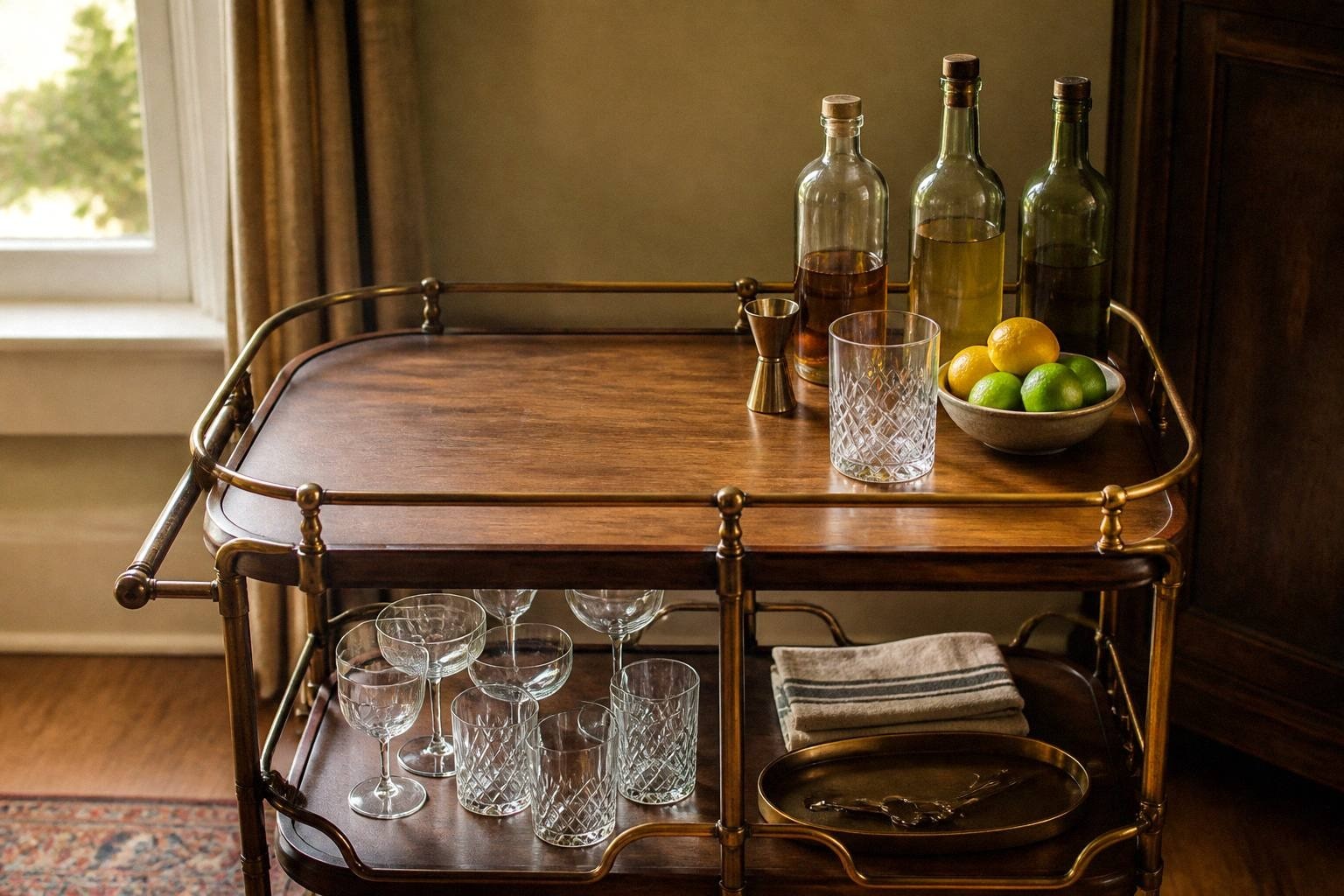
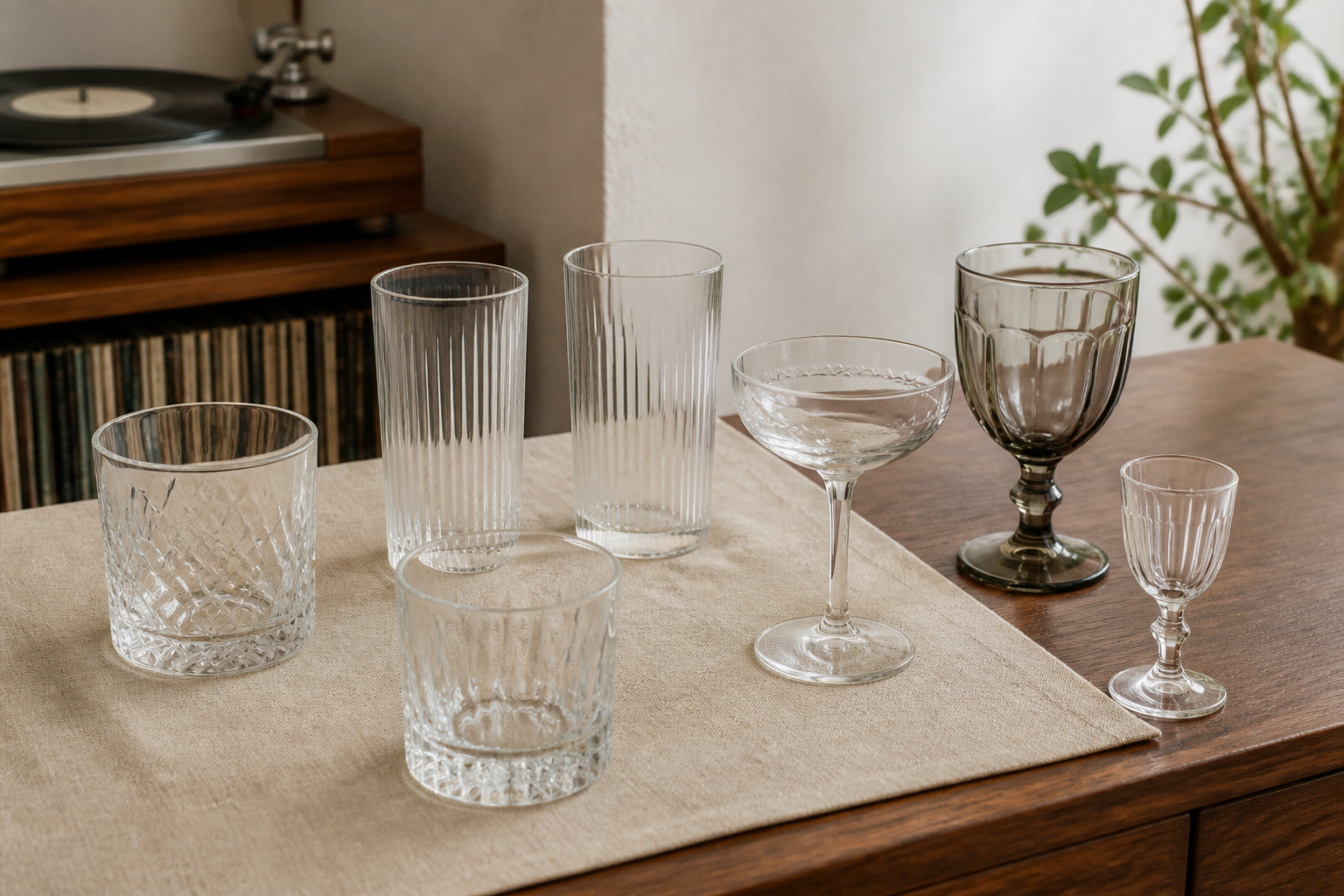
The best vintage glassware is safe enough for its intended use, comfortable in your hand, and suited to a drink you already make. At the thrift store, start with the rim, base, bowl, and capacity. Leave chipped, cracked, unstable, permanently cloudy, or mystery-painted pieces behind.
Character matters, but usefulness comes first. Four sturdy tumblers that hold ice will earn more space in a home bar than twelve tiny glasses bought only because the color caught the light.
Start with the drinks you actually serve
Before you shop, name your three most common pours. If they are an Old Fashioned , a sparkling zero-proof drink, and iced tea, you need rocks glasses and highballs before you need a set of tiny cordial stems.
Use this quick match:
| What you serve | Shape to look for | Useful capacity |
|---|---|---|
| Old Fashioneds, spirit-forward pours, short mocktails | Rocks or double Old Fashioned | 8 to 12 oz |
| Collinses, highballs, iced tea, tall zero-proof drinks | Highball or Collins | 10 to 14 oz |
| Sours, Daiquiris, small sparkling cocktails | Coupe | 5 to 7 oz |
| Wine, spritzes, botanical zero-proof drinks | Medium goblet | 8 to 12 oz |
| Aperitifs, dessert pours, tasting portions | Cordial or small stem | 2 to 4 oz |
Capacity estimates at a thrift store do not need to be perfect. Compare the glass with a bottle or measuring cup when you get home before deciding what drink belongs in it. A pretty highball that holds only six ounces cannot take a tall drink plus ice.
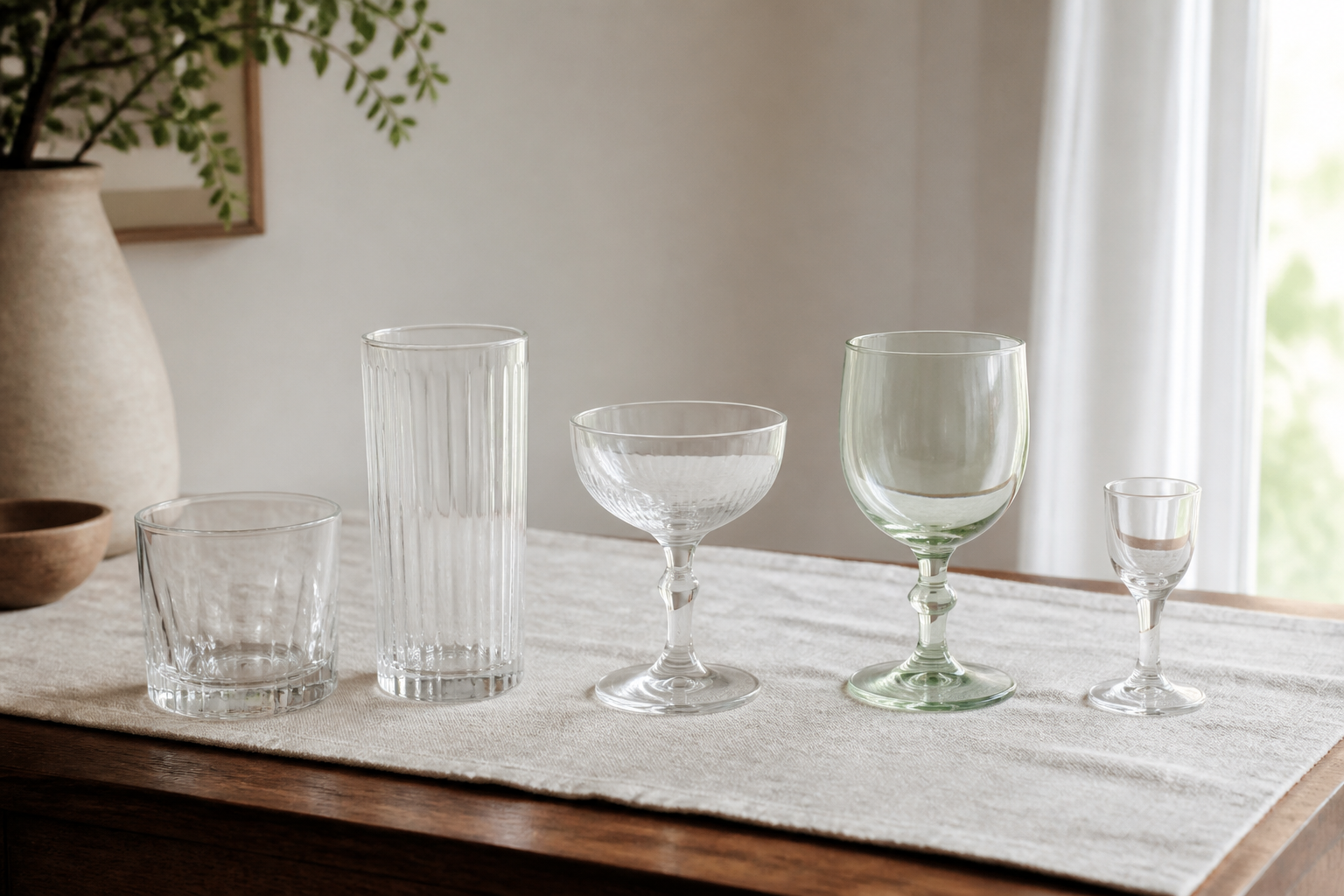
Best vintage glass shapes for cocktails and mocktails
1. Heavy rocks glasses
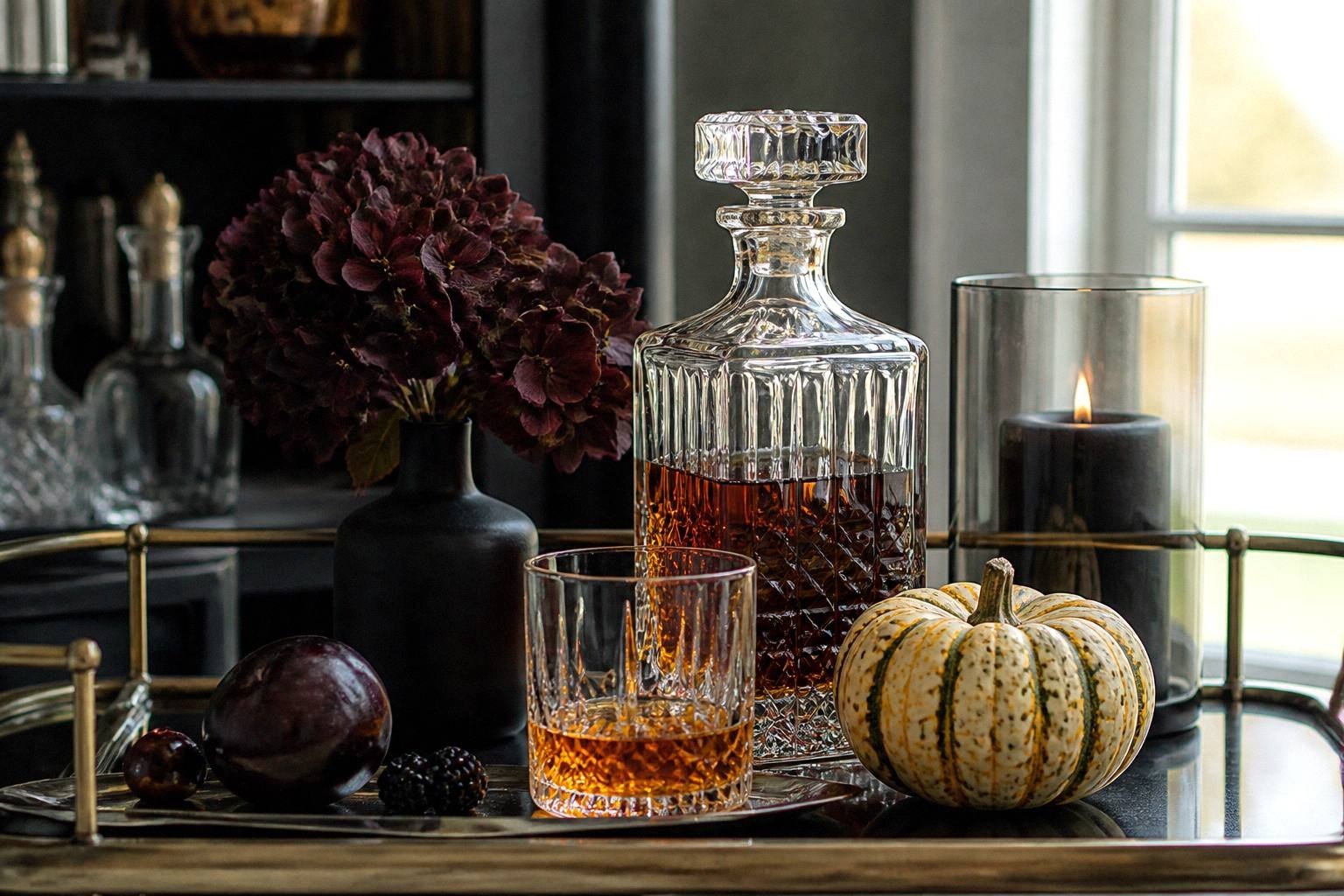
This is the most forgiving vintage shape. Look for a flat, stable base, a rim that feels smooth all the way around, and a bowl wide enough for a large cube. Pressed patterns and a little weight make a simple pour feel collected rather than precious.
Buy: clear or lightly tinted pairs with a stable base.
Skip: very shallow glasses, sharp molded seams at the rim, or pieces that rock on a flat shelf.
2. Straight highballs
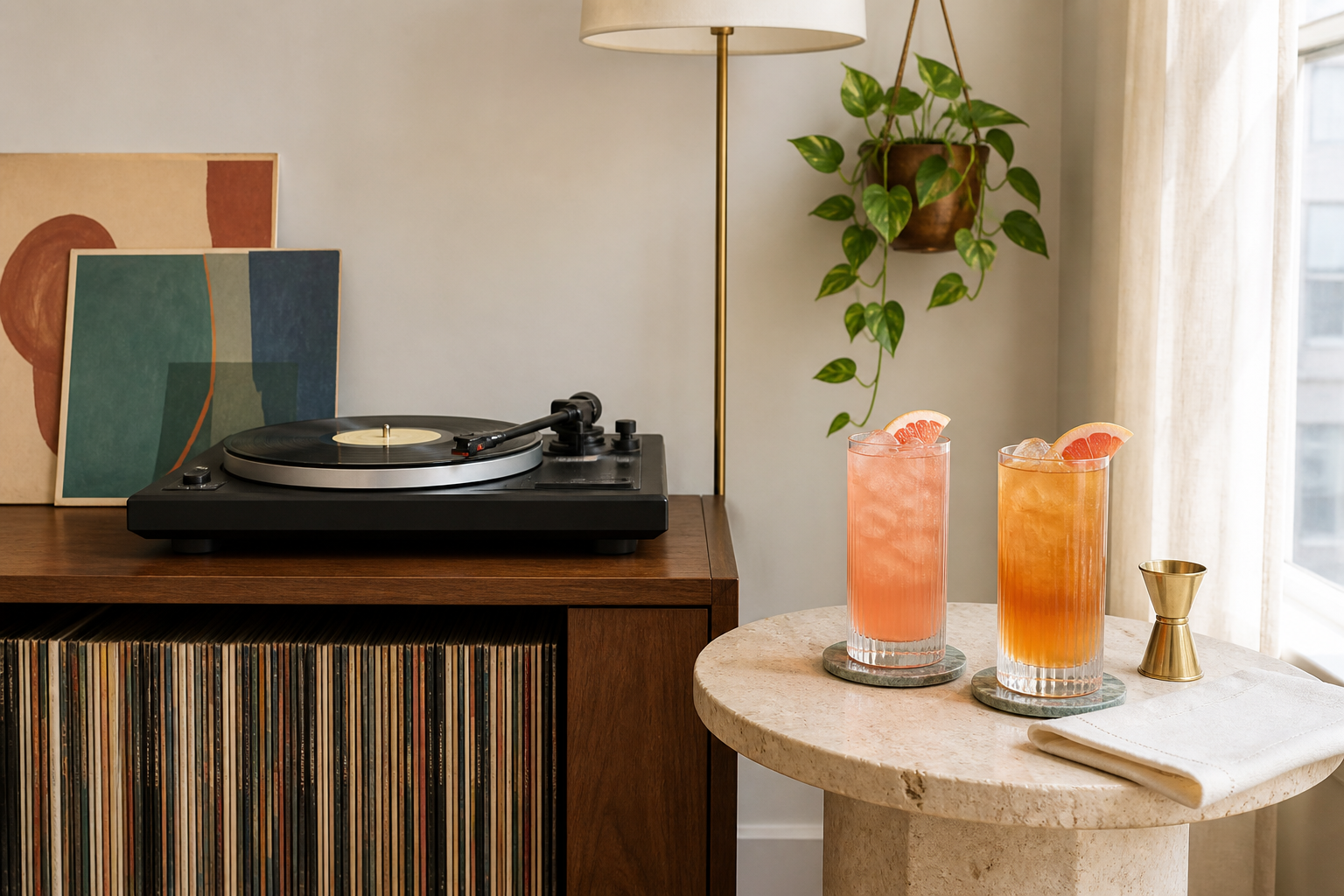
A useful highball handles a cocktail, a zero-proof spritz, iced tea, and sparkling water. Check that your hand can wrap around it comfortably. Extremely narrow glasses are hard to clean and awkward with standard ice.
Buy: sturdy sides, enough room for ice, and a shape that fits your cabinet.
Skip: hairline cracks at the base and glass so thin that normal handling feels risky.
3. Modest coupes
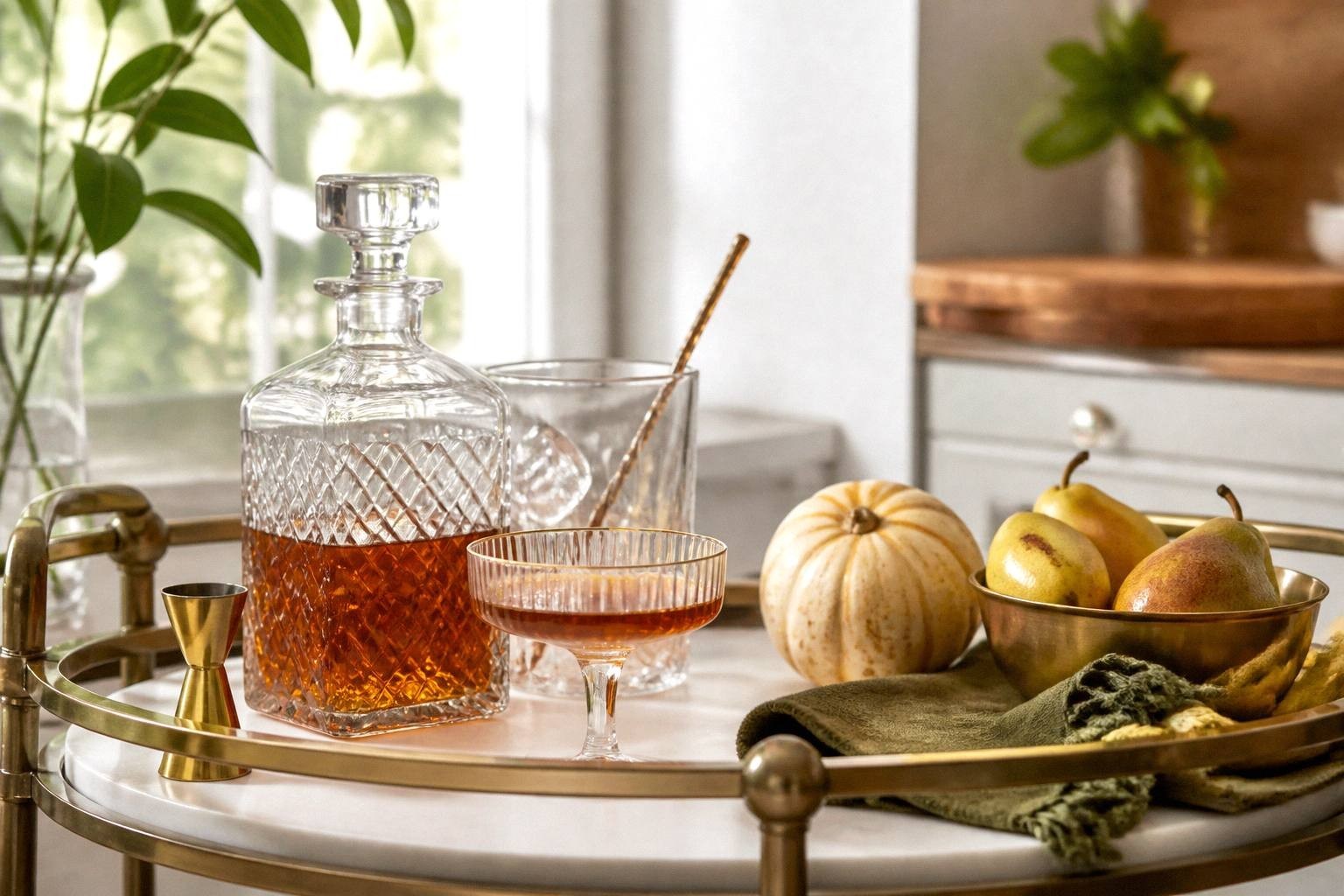
Old coupes can be lovely, but the bowl should not be so wide that every step sends the drink over the rim. A five- to seven-ounce coupe is more useful than an oversized modern version and more versatile than a tiny liqueur glass.
Buy: two or four stable coupes with even stems and comfortable rims.
Skip: bent stems, leaning bowls, flea bites on the rim, or a set with no safe way to wash it.
4. Medium goblets
A medium stemmed glass makes zero-proof drinks, spritzes, wine, and even water feel intentional. Pressed-glass versions are often sturdier than delicate stems, which makes them good for a mixed collection.
Buy: a bowl large enough for ice and a foot that sits flat.
Skip: top-heavy shapes that tip when lightly bumped.
5. Small cordial or aperitif glasses
These are worth buying only if you serve small pours. They can also hold a measured tasting portion or a tiny dessert, but that is a real job, not an excuse to collect twenty.
Buy: a pair you genuinely like and can store upright.
Skip: a full set bought for a hypothetical party.
How to inspect thrifted glassware before buying
Take each glass through the same order. Natural light helps, but a phone flashlight works.
- Rim: Slowly run a fingertip around the outside and inside. Put the glass down if you feel a chip, rough patch, or sharp spot.
- Bowl: Hold it toward light and rotate it. Look for hairline cracks, deep scratches, or an etched line that changes as you turn the glass.
- Base and stem: Set it on a flat shelf and tap the surface nearby. A glass that rocks or leans is not a bargain.
- Cloudiness: Wipe one small area with a clean cloth. Dust moves; permanent etching does not.
- Decoration: Inspect paint, metallic rims, decals, or unknown coatings, especially near the drinking edge.
- Smell and residue: Skip anything with stubborn film, an oily interior, or residue you cannot identify.
- Capacity and fit: Imagine the actual ice, garnish, and shelf height. Beautiful glassware that cannot hold or store the drink is decor.
Do not let a low price talk you past a damaged rim. A chip cannot be cleaned into safety.
Vintage glassware safety: lead and decorated glass
You cannot establish the composition or leaching behavior of a vintage glass by looking at it. Age, weight, sparkle, and color are clues to style, not a home chemistry test.
The FDA’s 2026 Food Code , a model for retail food service, sets lead limits for food-contact crystal and decorative utensils. Its laboratory method also covers lead and cadmium extracted from decorated glass and lead crystal. That test is a controlled laboratory procedure, not a quick visual inspection. See the FDA Elemental Analysis Manual method for the scope.
For everyday drinking, the cautious choice is modern food-safe glassware when a vintage piece has unknown decoration, a worn painted rim, an unclear maker, or a decorative-only label. Keep uncertain pieces for display, flowers, or other non-food use. Do not serve acidic drinks or store alcohol in an unknown vintage decanter while trying to decide.
Consumer swab kits have limitations and may not tell you how much material could migrate from a glass. If a piece matters enough to authenticate for food use, use a qualified laboratory or conservator. Otherwise, let it be beautiful on the shelf.
What to buy, skip, or display only
| Finding | Decision | Why |
|---|---|---|
| Smooth clear tumbler, stable base, known everyday maker | Buy | Useful and easy to inspect |
| Matching set with one chipped piece | Buy only the sound pieces | A set is not worth keeping intact at the expense of a safe rim |
| Permanent gray cloudiness | Skip | It rarely looks better at home and may hide surface wear |
| Worn metallic or painted rim | Display only | Decoration is at the drinking surface |
| Unknown crystal decanter | Display only | Storage creates prolonged contact |
| Tiny cordial glasses you never use | Skip | Collection without a job |
| Sturdy restaurant-supply highballs, bought new | Buy new | Better when you need consistency and quantity |
| Delicate stems for an outdoor party | Skip for that job | A practical nonbreakable option is smarter outdoors |
Our outdoor drinkware guide covers the places where new, nonbreakable pieces are a better decision.
When to buy new glassware instead
Thrifting is not automatically the economical choice. Buy new when you need eight or twelve matching glasses by a deadline, want dishwasher-safe replacements, need a known food-contact material, or are serving outside.
Restaurant-supply rocks glasses and highballs often have the same clean lines that make vintage barware appealing. They also solve the practical problem of replacing one broken piece later.
Vintage is most useful when you want a small number of distinctive glasses. New is most useful when the set has to work hard.
Clean thrifted glassware gently
Start with warm water, mild dish soap, and a soft cloth or nonabrasive sponge. Wash one piece at a time with a folded towel in the sink so a slippery glass does not hit porcelain or another glass.
Avoid sudden temperature changes. Do not move a cold glass straight into very hot water. Skip abrasive powders, steel wool, and aggressive scrubbing on decoration. If residue remains after a gentle wash, the glass may not be worth using.
Hand-wash pieces with unknown age, applied decoration, metallic rims, thin stems, or repairs. A dishwasher can expose them to high heat, strong detergent, and contact with neighboring pieces.
Dry with a lint-free towel while supporting the bowl. Do not twist a stem by holding the foot in one hand and the bowl in the other.
Store a small collection so it gets used
Store glasses upright on a stable shelf. Hanging stemware can look like a bar, but it only helps when the rack fits the bases correctly and sits away from a busy path.
Group by job rather than color:
- Everyday tumblers and highballs at easy reach
- Coupes and goblets on a protected shelf
- Small stems together in one tray or divided shelf
- Display-only pieces somewhere they cannot be mistaken for service glassware
If the shelf is crowded, edit the collection before adding a new rack. A silver bar tray can gather four frequently used glasses, but it should not become another surface covered with unused pieces.
The vintage glassware thrift checklist
- I can name the drink this glass will hold
- The rim is smooth inside and out
- There are no chips or hairline cracks
- The base or stem is stable
- Cloudiness wipes away
- Decoration does not touch the drinking surface
- The piece is not marked decorative-only
- The capacity works with ice and garnish
- It fits my cabinet and cleaning routine
- I am buying a useful number, not rescuing a set
Frequently asked questions
Is vintage glassware safe to drink from?
Some vintage glassware may be suitable for use, but a visual inspection cannot establish its composition. Skip damaged pieces, and treat unknown decorated glass, worn painted rims, crystal decanters, and decorative-only items as display pieces unless their food-use safety is reliably established.
How can I tell whether a glass is lead crystal?
Weight, ringing sound, and cut patterns are not definitive tests. Look for a maker’s mark and documentation, then use professional testing if food-use authentication matters. Do not rely on appearance alone.
What vintage glassware should I buy first?
Buy the shape that fits the drink you make most. For many home bars , four rocks glasses and four highballs will work harder than a mixed set of specialty stems.
Can thrifted glasses go in the dishwasher?
Hand-washing is the safer default for unknown, decorated, metallic-rimmed, thin-stemmed, or repaired pieces. Use a dishwasher only when reliable manufacturer information says the glass is dishwasher-safe.
How do I make mismatched glassware look intentional?
Repeat one trait: shape, height, color family, or pattern weight. Four different pressed tumblers look collected; four unrelated sizes set at random look like the clean glasses ran out.
Buy character, not clutter
The best thrifted glass is the one you reach for on Friday night. It holds the drink properly, feels sound in your hand, and brings a little history to the table without asking you to ignore damage or uncertainty.
Buy slowly. Leave the questionable pieces behind. A home bar looks more collected when every glass has a reason to be there.