
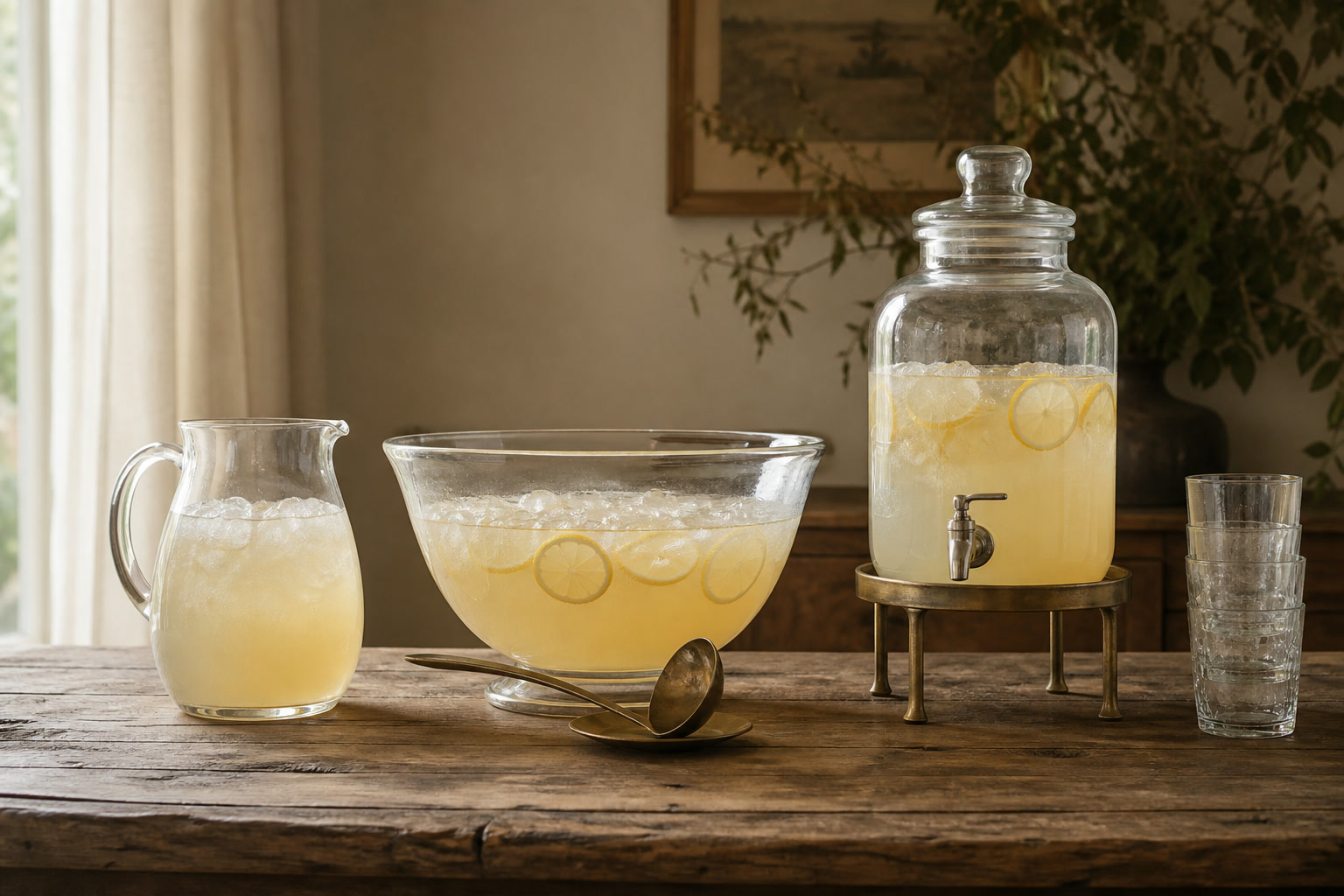
A pitcher, punch bowl, and drink dispenser can all hold a batch drink. They do not serve it the same way.
Choose a pitcher for six to ten tidy pours and quick refrigerator refills. Use a punch bowl when guests are meant to ladle a drink with large ice or fruit. Pick a dispenser for a larger self-serve crowd only when the drink is pulp-free, still, and unlikely to clog a spigot.
The number printed on the vessel is not the number you should pour into it. Start with 85 percent of nominal capacity for working room, then divide by the actual serving size.
The short decision chart
| Vessel | Best use | Example nominal capacity | Working capacity at 85% | 6-ounce servings | Main drawback |
|---|---|---|---|---|---|
| Pitcher | Small party, fridge refills, two drink choices | 64 oz | 54 oz | 9 | Needs refilling for a larger crowd |
| Punch bowl | Open, celebratory serve with a ladle | 96 oz | 81 oz | 13 | Open top, drips, and more guest handling |
| Drink dispenser | Larger self-serve group with a still, strained drink | 2 gal / 256 oz | 217 oz | 36 | Spigot can clog or leak; heavy when full |
The example sizes make the methods comparable; vessels vary. The arithmetic rounds down to full servings. NIST’s U.S. capacity table confirms that one U.S. gallon equals exactly 128 U.S. fluid ounces, so a two-gallon dispenser is 256 fluid ounces before headroom. See NIST’s unit table .
Why 85 percent is a useful planning number
The 85 percent figure is a practical house rule, not a manufacturer specification. It reserves 15 percent for stirring, ice displacement, fruit, carrying, and the small wave that happens when a guest bumps the table.
Use this formula:
nominal ounces × 0.85 = working ounces
Then:
working ounces ÷ serving ounces = full servings
For a 64-ounce pitcher and a 6-ounce pour:
64 × 0.85 = 54.4 ounces- Round down to 54 working ounces.
54 ÷ 6 = 9 servings
If the vessel needs a large ice block or a lot of fruit, use even less liquid. If it contains a cold, strained drink with no ice, you may use more. Measuring the vessel with water before the party is more reliable than trusting a listing photo.
Choose a pitcher when refilling is a feature
A pitcher is the easiest choice for most home gatherings because it fits into the refrigerator, can be lifted by one person, and lets you bring out a cold second batch instead of leaving the whole supply on the table.
It works especially well when:
- You have four to ten guests
- You want one cocktail and one zero-proof option
- The drink contains carbonation added just before serving
- Fruit or herbs would block a spigot
- The table is too narrow for a heavy dispenser
- You would rather wash two manageable vessels than one large one
Two matching pitchers are not required. In fact, different shapes help guests distinguish alcoholic from zero-proof drinks. Add a label with ingredients and serving size.
The existing best pitchers for batch mocktails guide covers pitcher shapes and buying details. This page is about choosing among service systems, not buying another pitcher.
The pitcher refill plan
Fill one pitcher to working capacity and keep the second batch cold in a covered container. When the first is nearly empty, swap rather than top it off. A clean swap keeps the new batch cold and gives you a chance to rinse away fruit pulp or melted ice.
For a sparkling drink, batch the still base ahead and add bubbles only to the pitcher that is going out. The backup stays flat on purpose until it is needed.
Choose a punch bowl when the ladle is part of the party
A punch bowl makes sense when serving is meant to feel communal. Guests can see the large ice block, ladle a modest portion, and return for another. It suits showers, holiday parties , and a table where the bowl itself is the centerpiece.
It works best when:
- The bowl sits on a broad, stable table
- A drip tray or washable cloth can sit underneath it
- One large ice ring or block keeps dilution slower than loose cubes
- The drink has pieces too large for a spigot but easy to avoid with a ladle
- Someone can refresh the ice and wipe the ladle area
A punch bowl is not automatically better for a crowd. A 96-ounce bowl at 85 percent working capacity holds about 81 ounces, or thirteen 6-ounce servings. That can be less than a two-pitcher plan, and the open vessel needs more attention.
Keep the ladle handle out of the drink, provide a clear place to rest it, and resist filling the bowl to the brim. The first enthusiastic scoop should not send punch across the table.
Choose a dispenser for a large, simple batch
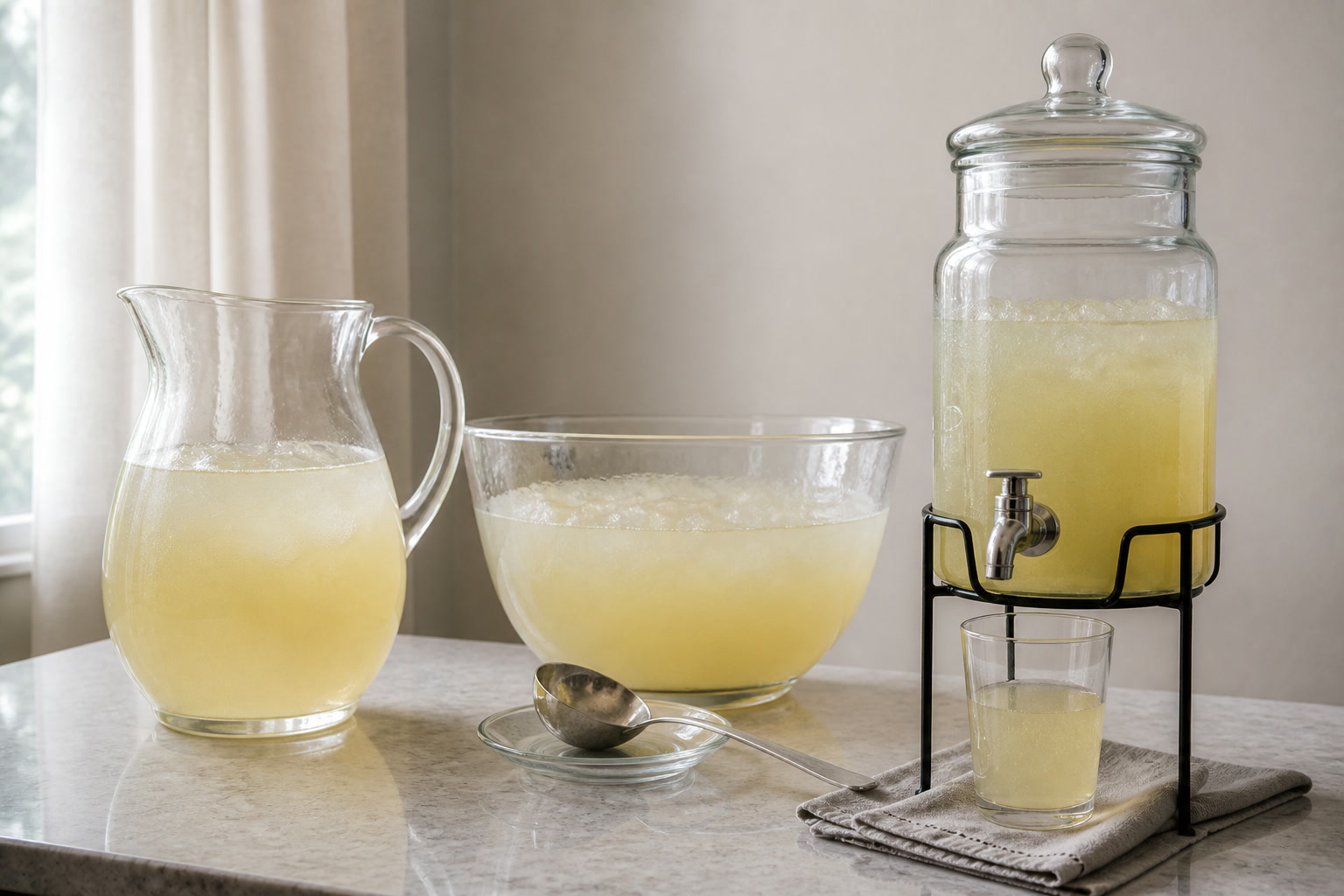
A dispenser earns its footprint when many guests need the same cold, still drink and the host wants a clear self-serve point. Lemonade, strained iced tea , citrus water, and pulp-free punch are good candidates.
It works best when:
- The guest count justifies more than one or two pitchers
- The drink is fully strained
- The vessel can sit with its spigot beyond the table edge
- The stand and table are rated for the filled weight
- A tray can catch drips under the spout
- The unit has been leak-tested with water
A two-gallon dispenser holds 256 nominal ounces. At 85 percent, that is 217.6 working ounces. Round down to 217, then divide by a 6-ounce serving for 36 full servings, with one ounce uncounted.
That much liquid is heavy. Two U.S. gallons of water alone are roughly sixteen and a half pounds, before the glass vessel, stand, ice, or fruit. Do not move a full glass dispenser through a crowd. Put the empty vessel in its final position, confirm the spigot hangs beyond the edge, then fill it.
What should never go through the spigot
- Citrus pulp
- Crushed berries
- Loose herbs
- Chia or basil seeds
- Thick puree
- Small ice chips
- Carbonated drinks you expect to stay lively for hours
Strain the drink and keep garnish in glasses. A beautiful dispenser that stops pouring after four guests is a centerpiece, not a service plan.
Carbonation changes the answer
Carbonation prefers a covered bottle and the shortest possible time between mixing and pouring. A wide punch bowl gives bubbles the most exposed surface. A dispenser encourages the full batch to sit. A smaller pitcher lets you add sparkling water in rounds.
For a fizzy cocktail or mocktail , choose a pitcher even when a dispenser would hold more. Batch the noncarbonated base in the refrigerator, then combine one round at a time. The party gets better bubbles and you avoid committing the entire batch at once.
Alcohol strength belongs on the label
Vessel size can make a drink look lighter than it is. A punch bowl or dispenser hides the per-serving measure unless the recipe is written down.
The NIAAA standard-drink guide defines one U.S. standard drink as 0.6 fluid ounces of pure alcohol. Its familiar example is 1.5 fluid ounces of 80-proof spirits. If a 6-ounce cocktail serving contains 1.5 ounces of 80-proof spirit and no other alcohol, it contains one standard drink. If it also includes wine, liqueur, or a higher-proof spirit, calculate those ingredients too.
Label the serving size and ingredients. Put cold water next to the alcoholic batch, and make the zero-proof option just as easy to find.
Cleanup is a real decision factor
Pitcher
Usually the easiest to refrigerate, refill, carry, and wash. A narrow neck can trap fruit, so check that your hand or bottle brush fits.
Punch bowl
Easy to reach inside, but the ladle, underplate, and tablecloth all collect drips. You also need somewhere safe to carry the remaining punch when the party ends.
Dispenser
The vessel is only half the cleanup. The spigot needs to be disassembled according to its instructions so sugary residue does not stay in the valve. If you dread that job, use pitchers. A vessel that is annoying to clean will not become more useful because it holds two gallons.
The buy-or-skip test
Before buying anything, answer five questions:
- How many measured servings does my recipe make?
- Does the drink contain pulp, fruit, herbs, or carbonation?
- Can the filled vessel stay cold and stable?
- Where will the spout or ladle drip?
- Can I clean every surface that touches the drink?
If you already own two pitchers, use them before buying a dispenser. Two 64-ounce pitchers provide about 108 working ounces together, or eighteen 6-ounce servings. They also give you two drink choices, two smaller items to chill, and a built-in refill plan.
Common questions
Is a punch bowl or drink dispenser better for a party?
Use a punch bowl for a visible, ladled serve with large ice or fruit. Use a dispenser for a larger amount of still, strained liquid. If the drink has pulp or carbonation, the punch bowl or a pitcher is usually the safer functional choice.
How many servings are in a two-gallon dispenser?
Two U.S. gallons equal 256 fluid ounces. At 85 percent working capacity, that is about 217 ounces. Divide by a 6-ounce serving for 36 full servings, or by an 8-ounce serving for 27 full servings.
Can I put sangria in a drink dispenser?
Only if the fruit and pulp cannot reach the spigot. A strained sangria base can work, with fruit served separately in glasses. A pitcher is easier when you want visible fruit in the vessel.
Which vessel keeps drinks cold longest?
The answer depends on material, starting temperature, ice, sun, and insulation. For most home parties, smaller cold refills from the refrigerator are more predictable than leaving one huge batch out for hours.
Do I need to buy a punch bowl?
No. A wide food-safe bowl with a stable base and a suitable ladle can serve the same function if it holds the batch with plenty of headroom. Measure it with water first and make sure the ladle has a clean resting place.
Pick the way guests will serve the drink first. Capacity comes next. The right vessel is the one that pours cleanly, keeps the recipe intact, and does not leave you kneeling under a table to fix a spigot halfway through the party.