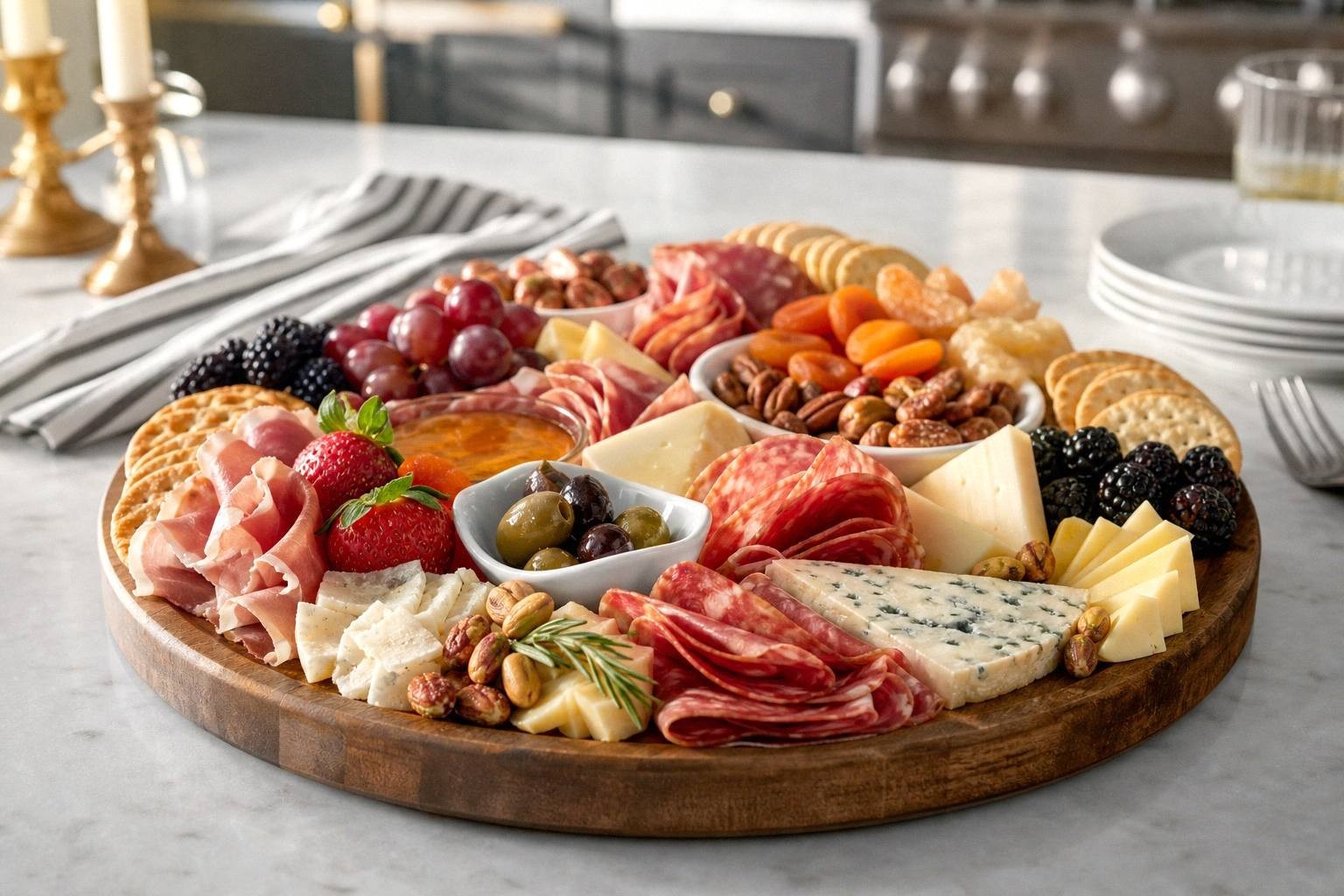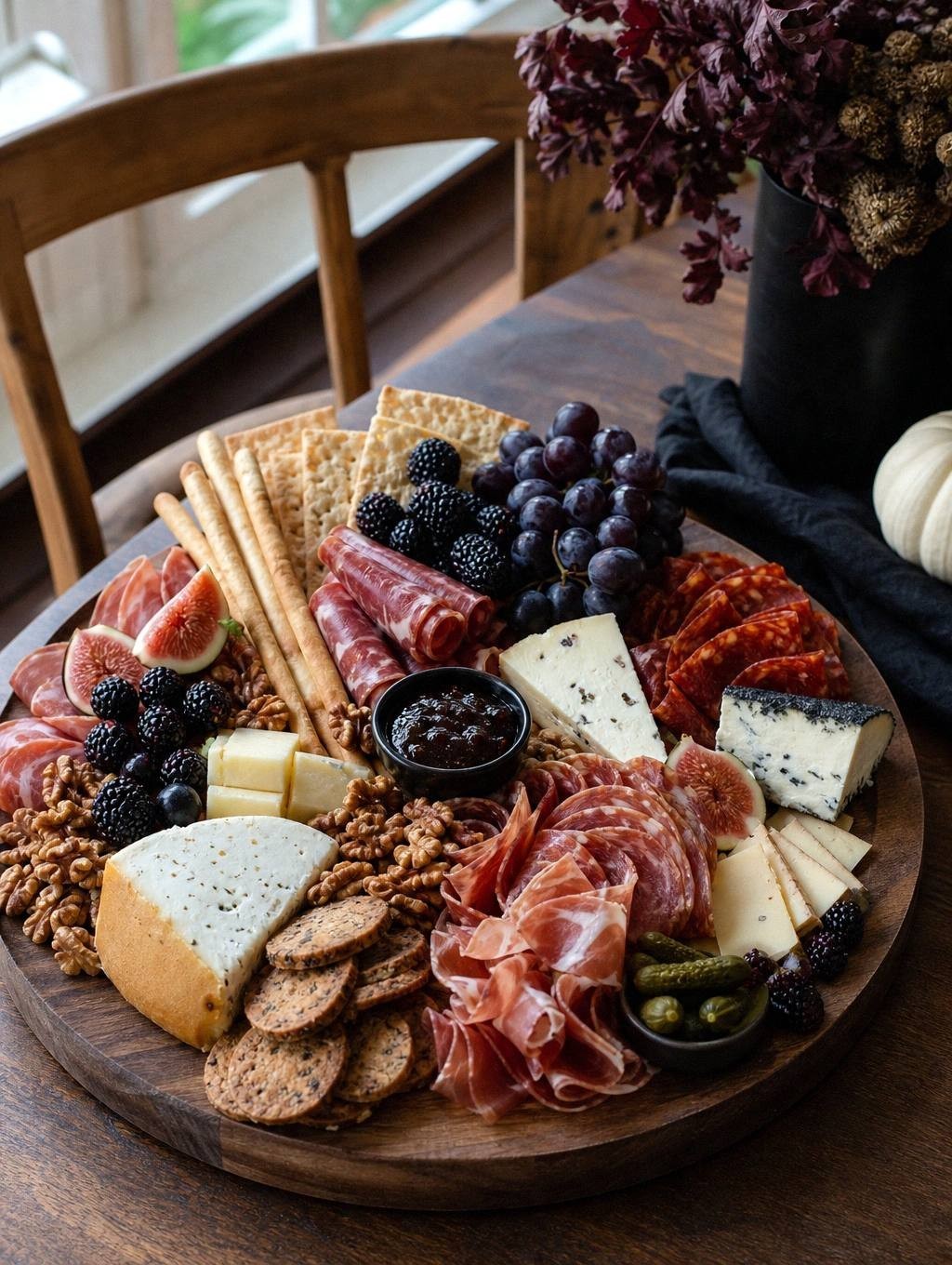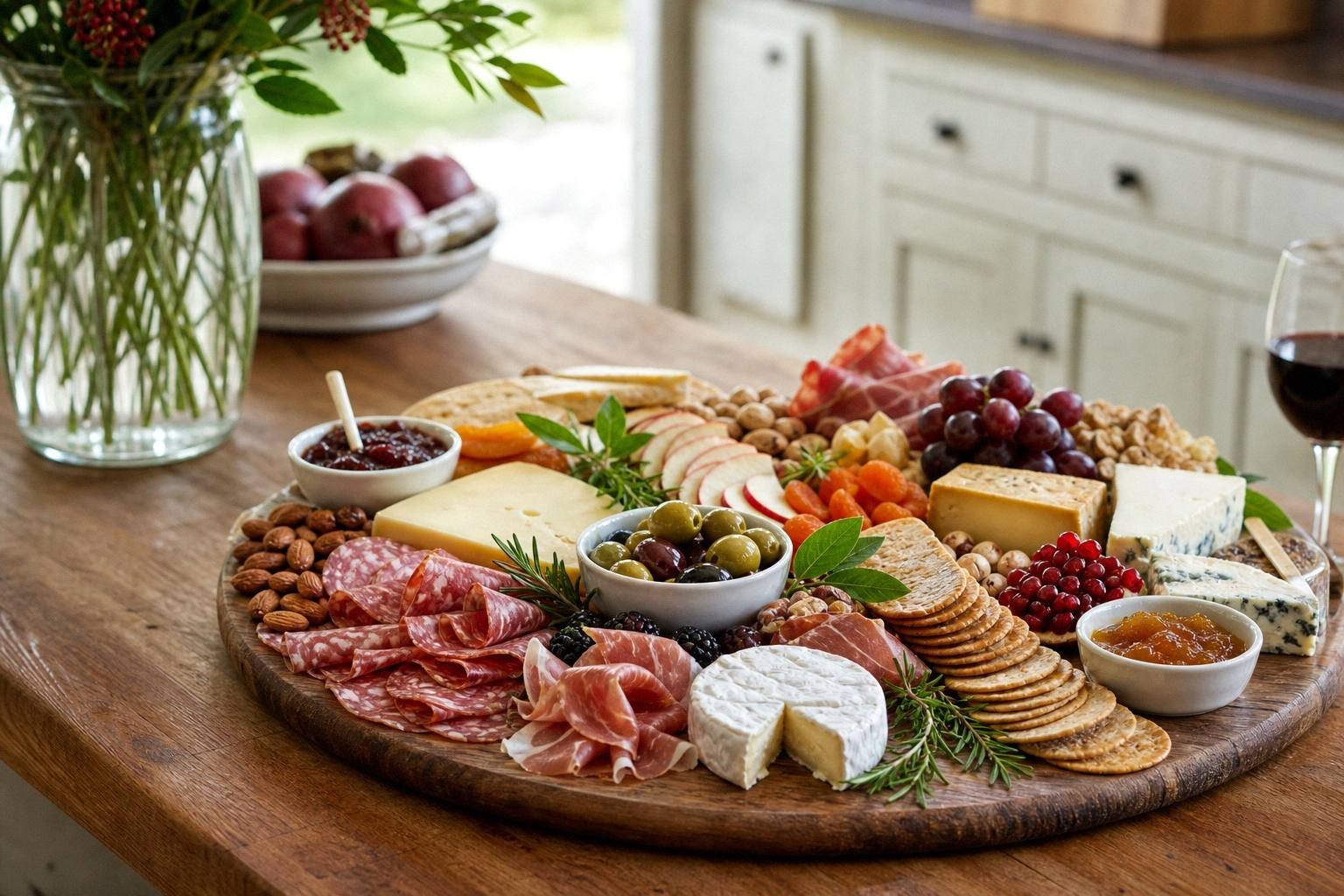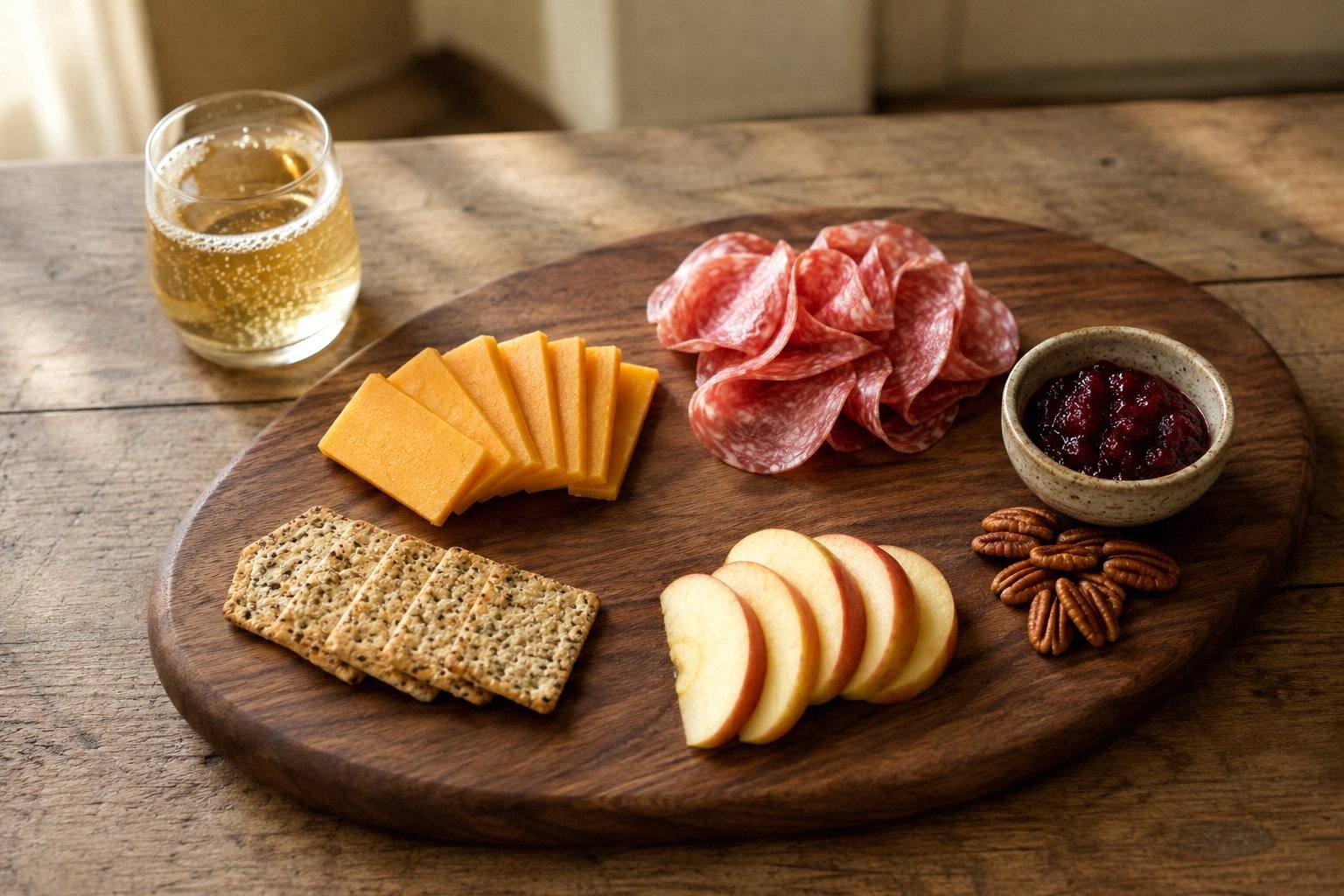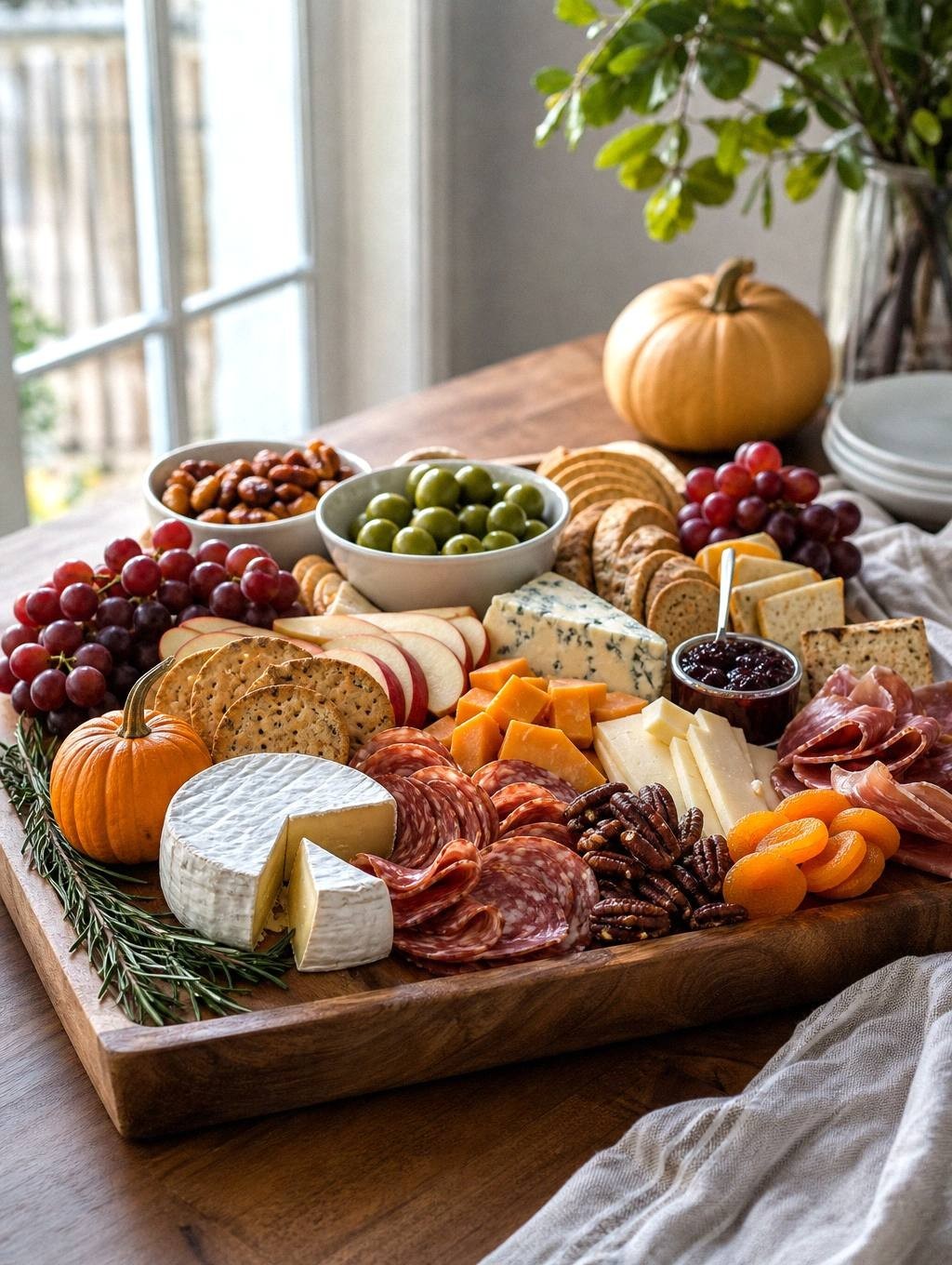
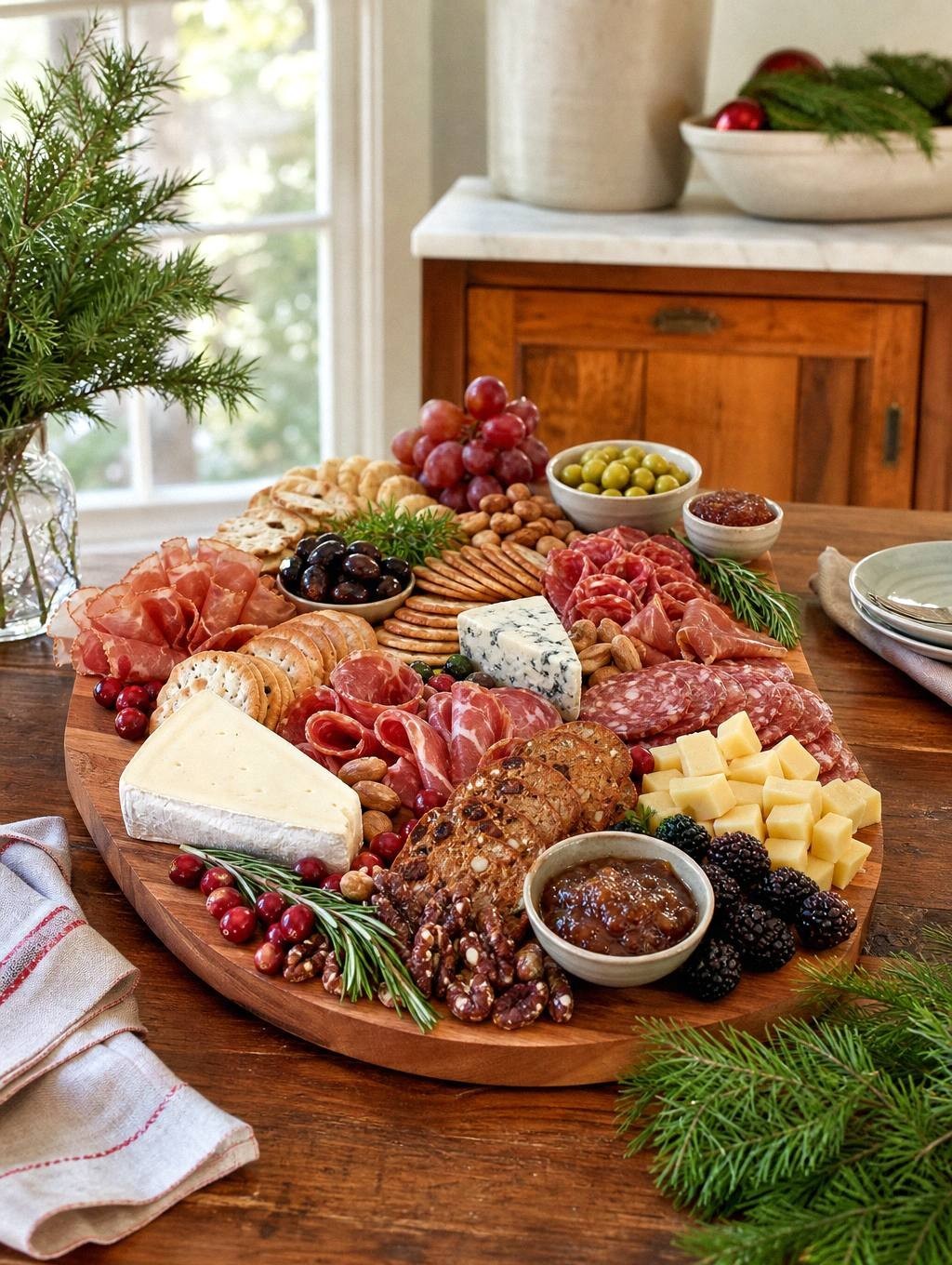
A Christmas charcuterie board turns snacking into a centerpiece. Whether you’re arranging meats and cheeses into a tree shape, building a wreath from salami roses and rosemary sprigs, or scattering red and green ingredients across a wooden plank, the goal is the same: give guests something beautiful to graze on while they talk.
This guide walks through ingredient selection, arrangement strategies, make-ahead logistics, and troubleshooting for boards that look festive without requiring culinary school. You’ll learn which shapes hold up during transport, how to keep cheese from sweating under the tree lights, and what to do when your salami roses flop.
Choosing Your Board Shape and Size
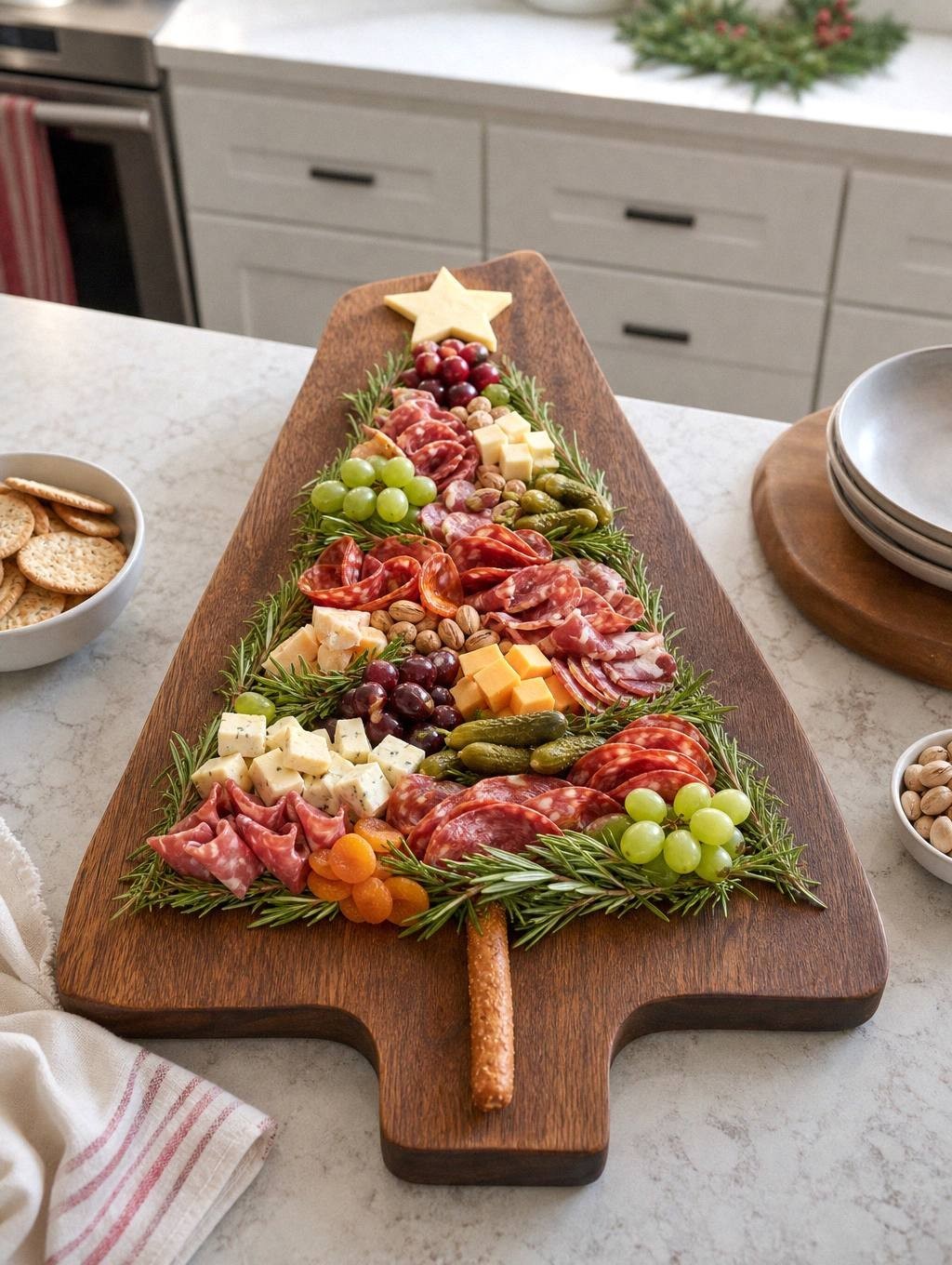
The shape you pick determines how you arrange everything else. Here’s how each option works:
- Christmas tree: Works on any rectangular board or cutting board at least 12 inches tall. Cluster ingredients into a triangle with a pretzel rod or breadstick forming the trunk.
- Wreath: Needs a round platter, ideally 14 to 16 inches across. Anchor a small bowl of dip in the center and circle ingredients outward.
- Character boards: Grinch faces or Santa hats require more planning. Use ingredients to build features: green grapes and kiwi for Grinch skin, white cheese cubes for Santa’s beard, a strawberry for Rudolph’s nose. These take longer to assemble and don’t hold up as well during transport.
For guest count, figure one ounce of cheese and one ounce of meat per person if the board is an appetizer before dinner, or two ounces of each if it’s the main snack at a cocktail party. A 12-by-18-inch board comfortably serves eight to ten people as a pre-dinner snack.
Building a Festive Color Palette
Red and green ingredients make a board look like Christmas without requiring any special arrangement. For red, use cherry tomatoes, strawberries, raspberries, pomegranate arils, red grapes, salami, prosciutto, red bell pepper strips, and dried cranberries. For green, reach for green grapes, kiwi slices, cucumber rounds, snap peas, green olives, pistachios, fresh rosemary , and thyme sprigs.
White and gold add contrast. White cheddar, brie, goat cheese, mozzarella balls, white chocolate, meringues, and marcona almonds fill the white role. Gold comes from crackers, breadsticks, honeycomb, dried apricots, and candied nuts.
Don’t force every ingredient into the color scheme. A few neutral items like salami, pretzels, or plain crackers give the eye a place to rest and make the red and green pop harder.
Savory Board Ingredients
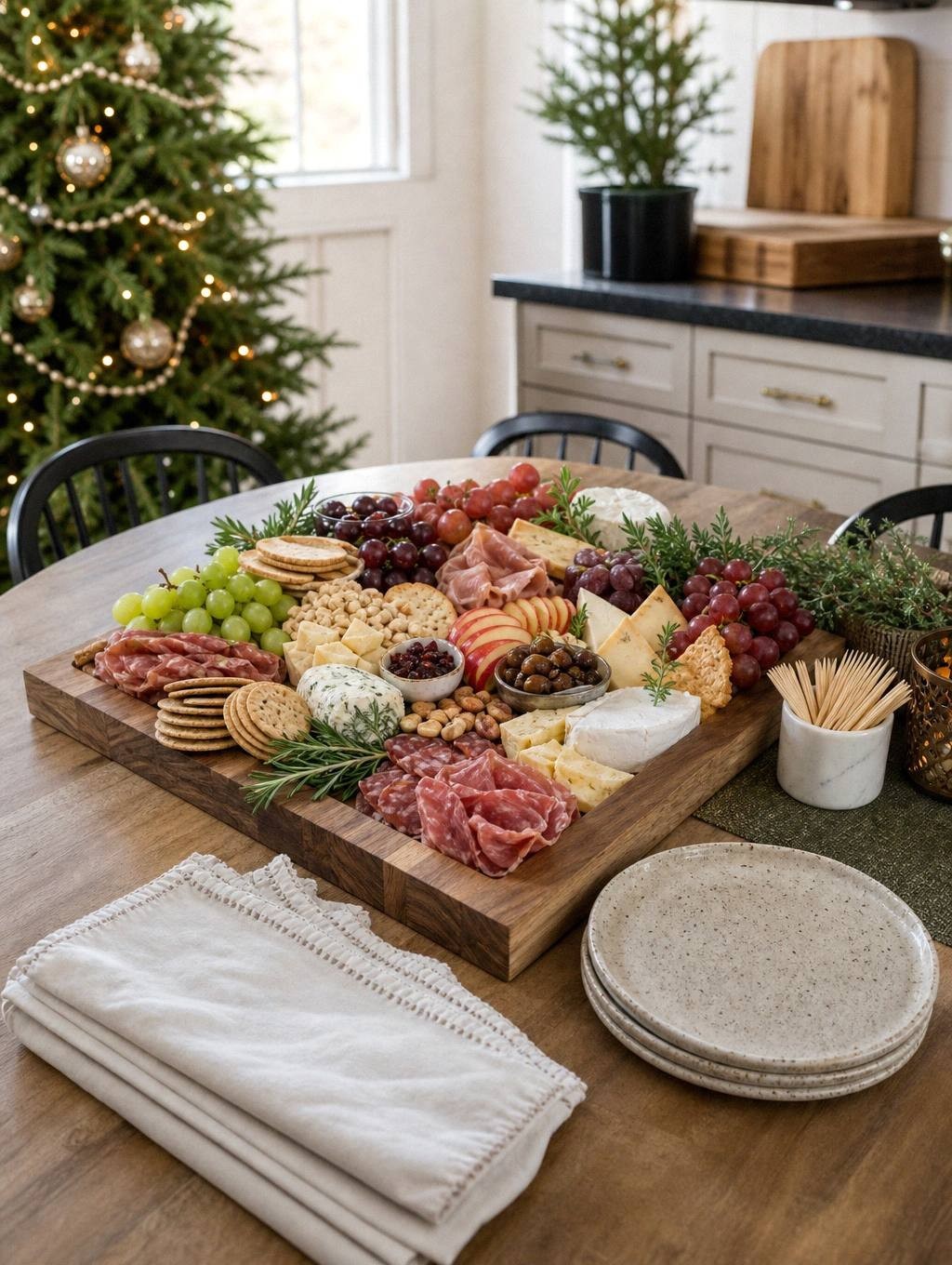
Start with three cheeses that vary in texture and flavor. A firm aged cheddar or manchego, a soft brie or camembert, and a crumbly blue or goat cheese cover the range. Cut firm cheeses into cubes or triangles, leave soft cheeses whole with a small knife nearby, and crumble blue cheese into bite-sized chunks.
Add two or three cured meats. Prosciutto, salami, and soppressata are the workhorses. Fold prosciutto into loose ribbons, roll salami slices into cones or roses, or leave soppressata flat and fanned.
Fill gaps with crackers, breadsticks, or toasted baguette slices. Include at least two types so guests with different preferences have options. Tuck in fresh and dried fruit: grapes, apple slices, figs, apricots, and cranberries all work. Add nuts for crunch, olives for salt, and a small bowl of honey , jam, or mustard for guests who want a condiment.
Dessert Board Ingredients
A dessert charcuterie board swaps meats and cheeses for cookies, candies, and chocolate. Include three or four types of cookies: gingerbread, shortbread, sugar cookies, and biscotti are all sturdy enough to sit out for hours.
Add chocolate in multiple forms: truffles, bark, peppermint patties, and chocolate-covered pretzels. Scatter in fresh fruit that pairs with chocolate like strawberries, raspberries, and clementine segments.
Dried fruit like apricots, figs, and dates add chew. Marshmallows, meringues, and candied nuts fill the remaining gaps. If you’re serving a dessert board alongside hot chocolate or coffee, include dippable items like biscotti, graham crackers, and pretzel rods.
Assembly Strategy for a Christmas Tree Board
Place your largest items first. If you’re using a bowl of dip, nuts, or olives, set it where the tree trunk will go. Lay down your cheeses next, spacing them evenly within the triangle outline.
Fill in with meats, folding or rolling them to add height. Tuck rosemary sprigs along the edges to mimic tree branches. Add crackers and breadsticks in small stacks or fans, angling them outward from the center.
Finish with the smallest items: grapes, berries, nuts, and dried fruit. These fill gaps and add pops of color. Use a pretzel rod, breadstick, or cinnamon stick as the trunk, pressing it into the board at the base of the triangle.
Make-Ahead and Storage
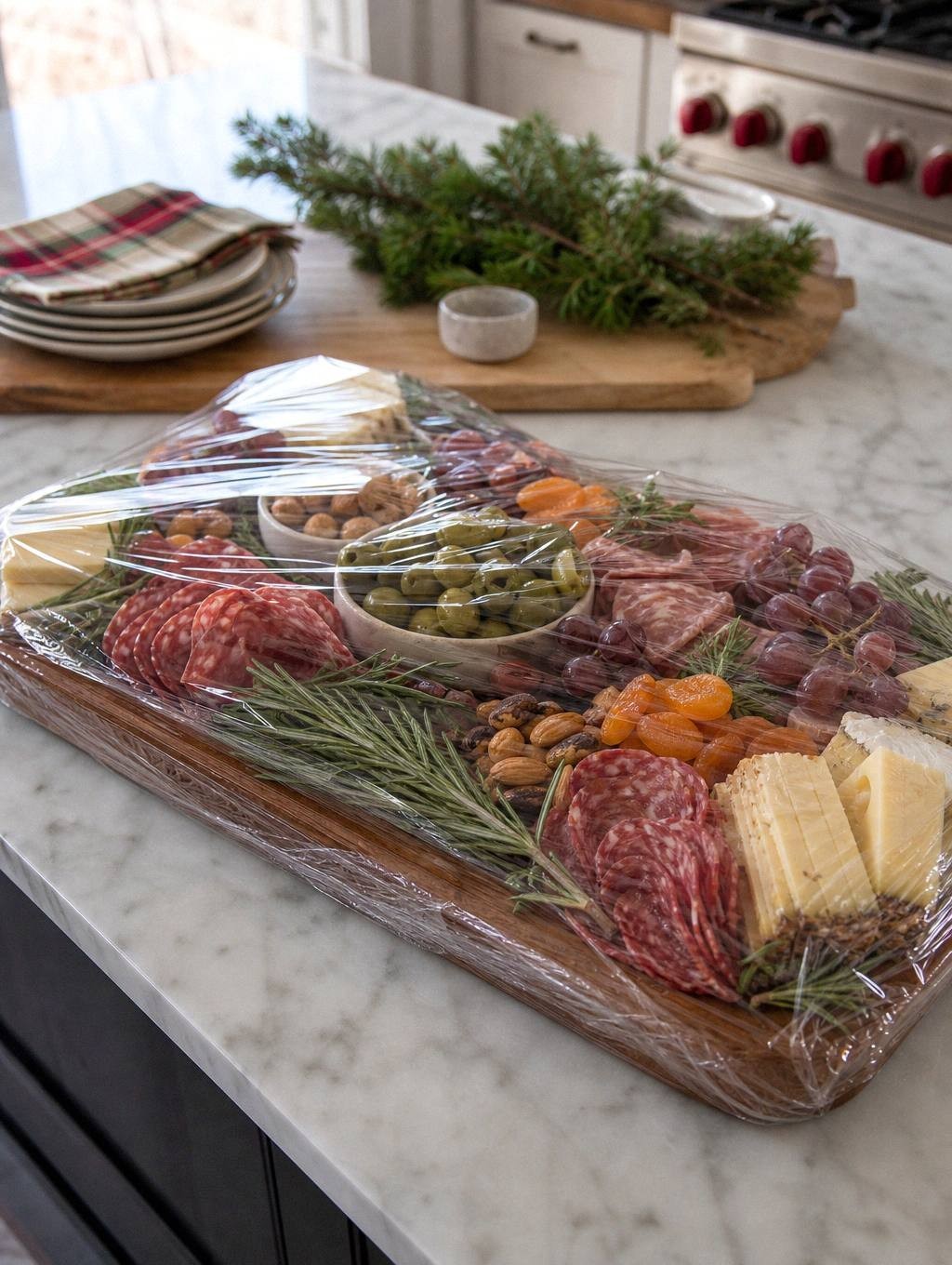
Assemble the board up to four hours before guests arrive, then cover it tightly with plastic wrap and refrigerate. Cheese and meat both taste better at room temperature, so pull the board out thirty to forty-five minutes before serving.
For longer make-ahead, prep ingredients separately. Cube cheese, fold meats, wash fruit, and portion nuts into containers the day before. Assemble the board the morning of the party and refrigerate until an hour before guests arrive.
Once the board is out, it’s safe at room temperature for up to two hours. After that, bacteria growth on cheese and meat accelerates.
Common Problems and How to Fix Them
- Cheese sweating or looking oily: You pulled it from the fridge too early or the room is too warm. Blot the surface with a paper towel and move the board to a cooler spot, away from heat vents or the fireplace.
- Ingredients sliding or falling off: The board is too crowded or tilted. Use toothpicks to anchor rolled meats and cheese cubes, and make sure the board sits flat on the table.
- Salami roses unrolling: The slices are too thick or too cold. Use thin-sliced salami and let it come to room temperature before rolling. Secure each rose with a toothpick through the base.
- Fruit turning brown: Apples and pears oxidize fast. Toss slices in lemon juice before adding them to the board, or skip them in favor of grapes and berries that don’t brown.
- Board looks flat or boring: Everything is the same height. Add stacks of crackers, small bowls for dips, and folded meats to create levels. Tuck in fresh herbs for texture.
- Colors bleeding together: Red ingredients like tomatoes or strawberries are touching white cheese. Leave a small gap or use a cracker or nut as a buffer between wet and dry ingredients.
Transporting an Assembled Board
If you’re bringing a board to a potluck or party, assemble it on a rimmed baking sheet or a board with a lip to catch anything that shifts. Wrap the whole thing tightly in plastic wrap, pressing it down onto the ingredients so nothing moves.
Place the board flat on the floor of your car, not on a seat where it can tip. Pack a small container of backup ingredients: a handful of grapes, a few crackers, some nuts. If something falls off during the drive, you can patch the gaps when you arrive.
Frequently Asked Questions
What’s the difference between a savory and a dessert Christmas charcuterie board?
A savory board features cheeses, cured meats, crackers, olives, nuts, and fresh fruit. A dessert board swaps those for cookies, chocolates, candies, marshmallows, and fruit that pairs with sweets.
Can I make a Christmas charcuterie board the night before?
You can prep all the ingredients the night before, but don’t assemble the full board until the morning of your party. Store prepped ingredients in separate containers in the fridge, then arrange them a few hours before guests arrive.
How do I keep a charcuterie board cold during an outdoor party?
Set the board on a larger tray filled with ice, or use a chilled marble or slate slab as your base. Refresh the ice every hour.
What board or platter should I use for a Christmas charcuterie board?
Wood cutting boards, slate slabs, and marble platters all work. Wood is traditional and photographs well. Slate and marble stay colder longer, which helps if your party runs long.
What are good Christmas charcuterie ideas for kids?
Skip strong cheeses and cured meats. Use mild cheddar, mozzarella sticks, turkey slices, and pepperoni instead. Add kid-friendly dippers like pretzels, graham crackers, and apple slices.
Serving Your Board
A Christmas charcuterie board is a centerpiece, so place it where guests naturally gather: the kitchen island, the dining table, or the coffee table in the living room. Set out small plates, napkins, and toothpicks within arm’s reach.
Refill empty sections as the party goes on rather than waiting until the board looks bare. Keep a small tray of extras nearby and top off gaps every thirty minutes or so.