A Christmas simmer pot fills your home with the scent of cinnamon, citrus, and pine without lighting a single candle. You drop fresh ingredients into a pot of water, bring it to a boil, then let it simmer on low heat for hours. The steam carries the fragrance through every room, and you control exactly what goes into the air your family breathes.
What a Simmer Pot Is and Why It Works
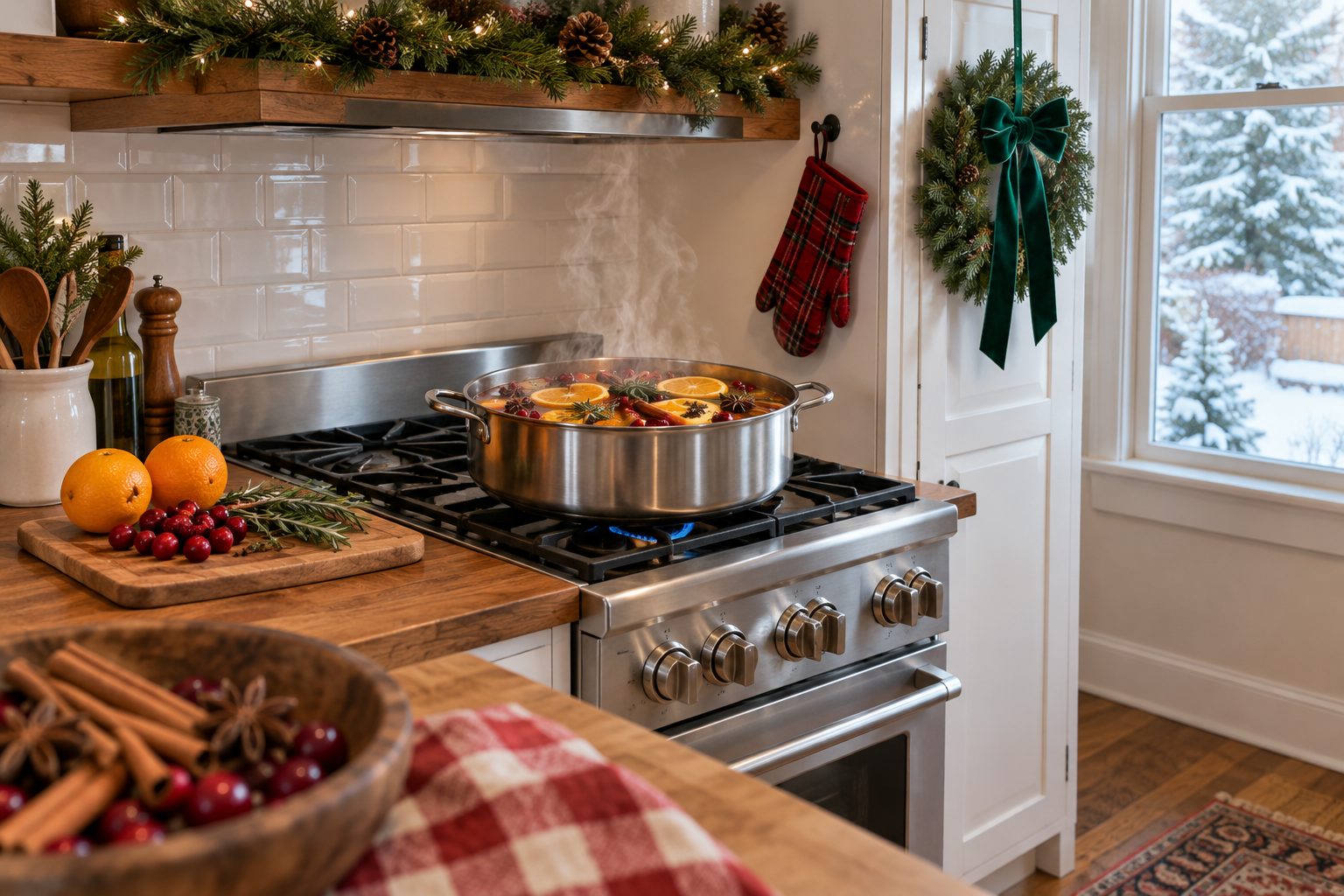
A simmer pot is a pot of water heated on the stovetop with aromatic ingredients like fruit peels, herbs, and spices. As the water simmers, steam lifts the essential oils from the ingredients and disperses them into the air. The result is a natural room scent that costs less than a candle and contains nothing synthetic.
The method works because heat releases volatile compounds from plant material. Cinnamon bark, citrus peel, and rosemary all contain oils that vaporize at the temperature of simmering water. Those oils are what you smell when you walk into a room where a simmer pot has been running for an hour.
Unlike candles, a simmer pot produces no soot, no fragrance chemicals, and no flame. You can leave it simmering as long as you’re home and awake to monitor the water level. The ingredients are edible plants, so if a child or pet gets near the pot, the worst outcome is a mess, not a poisoning.
Where to Find Everything for the Pot
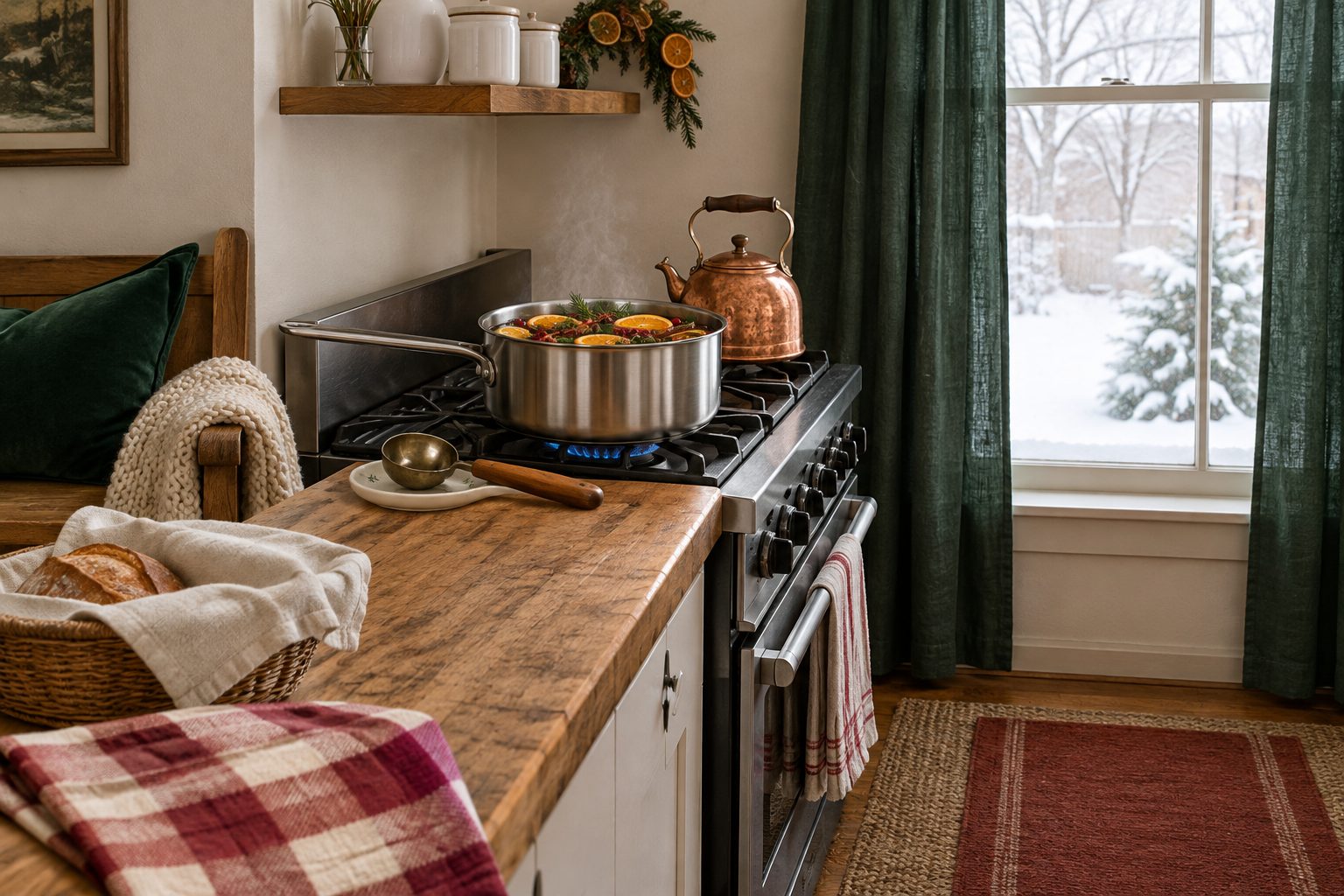
You need fresh or dried aromatics, not fragrance oils or extracts. Here’s what works and what to look for at the grocery store.
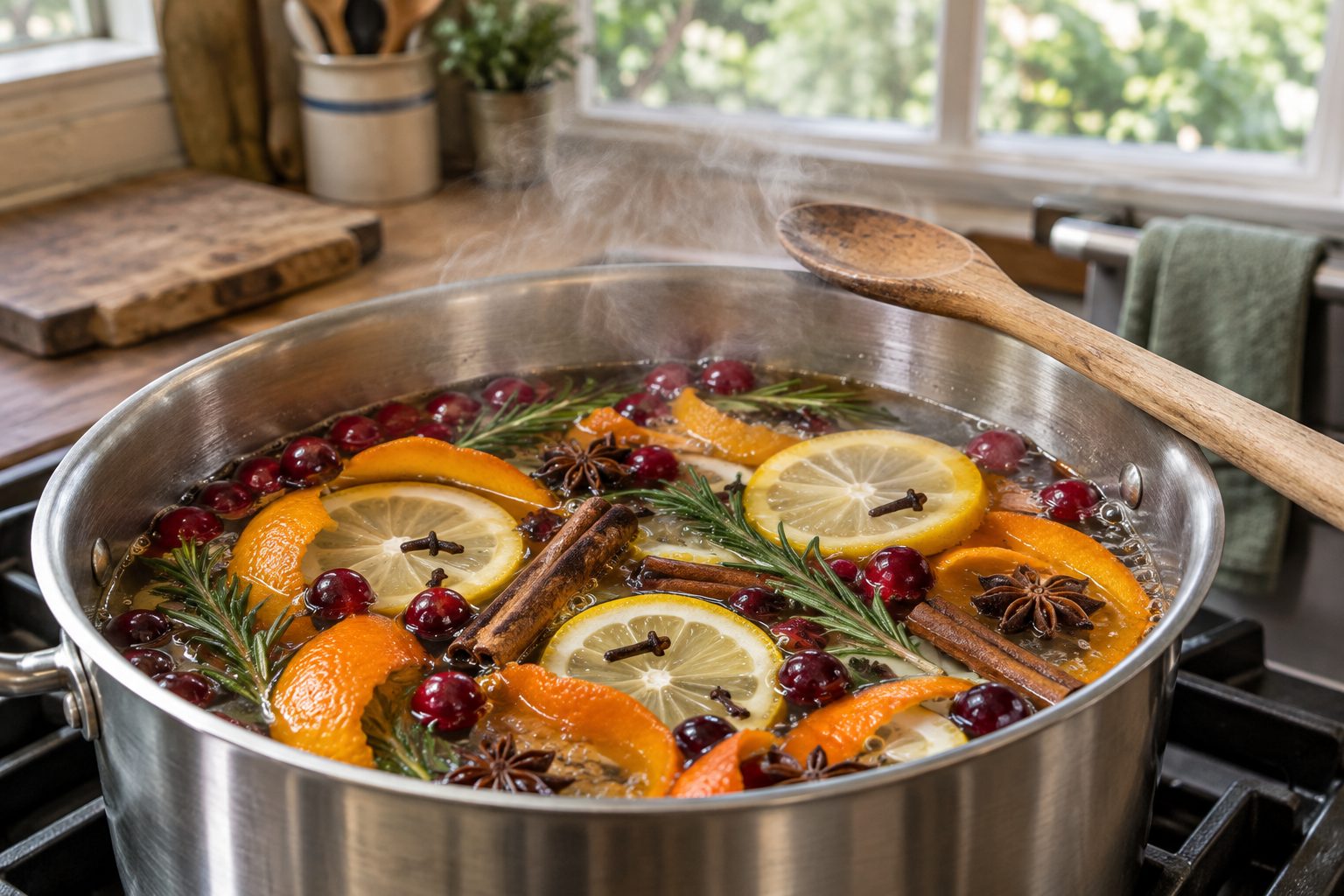
- Cinnamon sticks: Buy whole sticks, not ground cinnamon. Ground spice clouds the water and doesn’t release scent as steadily. Look for sticks at least three inches long in the baking aisle or bulk section.
- Citrus: Oranges, lemons, and grapefruits all work. You can use whole fruit sliced into rounds, or just the peel if you’re using the flesh for something else. Organic citrus has no wax coating, so the peel releases more oil.
- Fresh herbs: Rosemary and pine sprigs smell the most like Christmas. Thyme and sage work too. Buy them in the produce section or clip them from your yard if you grow them.
- Whole spices: Star anise, cloves, and cardamom pods add depth. Buy them whole, not ground, in the spice aisle or at an Indian or Middle Eastern grocery.
- Apples: Any variety works. Granny Smith peels add tartness, while sweeter apples like Fuji or Honeycrisp smell milder. You can use the whole apple sliced, just the peel, or the core and peel left over from baking.
- Cranberries: Fresh or frozen cranberries add color and a faint berry scent. They don’t contribute much fragrance on their own, but they look festive in the pot.
Dried ingredients work if that’s what you have. Dried orange slices, dried rosemary, and whole dried spices all release scent when simmered. They last longer than fresh ingredients but produce a lighter fragrance.
Ingredients
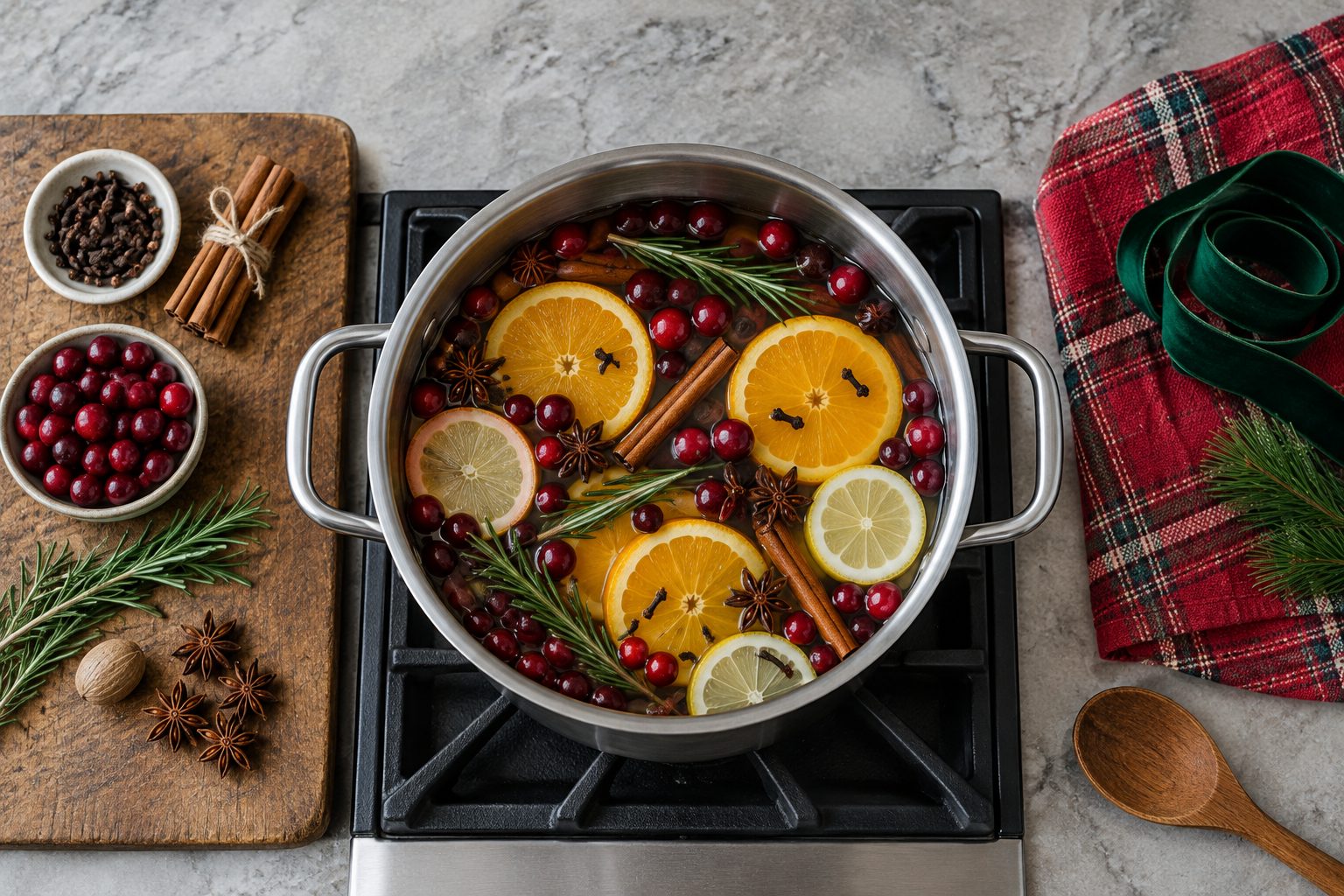
- 3 cinnamon sticks
- 3 sprigs fresh rosemary
- 1 tbsp cloves
- 3 slices dehydrated oranges
- 12 cups water
Instructions
- Drop the cinnamon sticks, rosemary sprigs, cloves, and dehydrated oranges into a large pot. Pour in the water and bring it to a boil over medium-high heat. Turn the heat down to a simmer and let it bubble gently on very low heat until the water level drops to less than 2 inches deep in the pot, 2 to 3 hours.
How Long to Simmer and When to Add Water
You can simmer a Christmas pot for 2 to 8 hours at a time. The scent is strongest in the first hour, then fades gradually as the oils evaporate. After 3 or 4 hours, you’ll still smell it if you walk into the room, but it won’t fill the whole house the way it did at the start.
Check the water level every 30 minutes. When the water drops to the level of the ingredients, add another cup or two of hot water from a kettle. If the water gets too low, the fruit and spices will scorch, and the smell changes from festive to burnt. A scorched pot is hard to clean and the smell lingers, so set a timer if you’re working in another room.
Never leave a simmer pot unattended. If you need to leave the house or go to bed, turn off the heat. You can restart it the next day with the same ingredients as long as they still smell good and haven’t been sitting in water for more than 24 hours.
How Long the Ingredients Last
Fresh ingredients stay good for 2 to 3 days if you store them in the fridge between simmer sessions. After each use, let the pot cool, then transfer the solids and a cup of the cooking water to a covered container. Refrigerate it overnight, then dump everything back into the pot the next day, add fresh water to cover, and bring it back to a simmer.
You’ll know the ingredients are spent when the scent weakens noticeably even after you’ve just brought the pot back to a boil. The fruit slices will look pale and waterlogged, and the herbs will be limp and gray. At that point, compost the solids and start a new batch.
Dried ingredients last longer than fresh, sometimes up to a week of daily simmering. They release scent more slowly, so the fragrance stays consistent across multiple sessions. If you’re using dried orange slices or dried rosemary, you can simmer them for several hours a day and refrigerate them at night for up to 5 days before they stop smelling like anything.
Slow Cooker Alternative
A slow cooker works if you don’t want to use the stovetop. Add the same ingredients and water to a 4-quart or larger slow cooker, set it to low, and let it run for up to 8 hours. The scent will be milder than stovetop simmering because the water doesn’t get as hot, but you don’t have to watch it as closely.
Check the water level every 2 hours instead of every 30 minutes. Slow cookers evaporate water more slowly than an open pot on the stove, so you’ll add water less often. The ingredients last just as long in a slow cooker as they do on the stovetop, about 2 to 3 days of use.
If you want a stronger scent from the slow cooker, set it to high for the first hour, then turn it down to low. That initial burst of heat releases more oil from the ingredients, and the low setting maintains the fragrance without boiling the water away too fast.
Weak Scent, Cloudy Water and Burnt Smells
- The scent is weak: You didn’t use enough ingredients, or the water isn’t hot enough. Add another cinnamon stick and a few more orange slices, and make sure the water is simmering with visible bubbles. A bare simmer produces almost no scent.
- The water turned brown and cloudy: That’s normal. The color comes from the cinnamon and fruit. It doesn’t affect the scent, and you don’t need to change the water unless it starts to smell sour.
- The pot smells burnt: The water level dropped too low and the ingredients scorched. Throw out the batch, scrub the pot with baking soda, and start over. Set a timer next time so you check the water every 30 minutes.
- The scent doesn’t reach the whole house: Steam rises, so a simmer pot on the stove scents the kitchen and any rooms directly above it first. If you want the scent in a bedroom or basement, move the pot to a burner in that area, or run a small fan near the pot to push the steam toward a doorway.
- The ingredients smell sour after a day in the fridge: They’ve started to ferment. Toss them and make a fresh batch. Ingredients stored in their cooking water in a sealed container should last 2 days in the fridge, but if your fridge is warmer than 40°F, they’ll spoil faster.
- The cinnamon sticks aren’t releasing much scent: They’re stale. Cinnamon sticks lose potency after a year in the pantry. Break one in half before adding it to the pot to expose fresh surface area, or buy a new jar.
Customizing the Recipe
You can swap or add ingredients based on what you have and what you want the house to smell like. The core of a Christmas simmer pot is cinnamon and citrus, but everything else is flexible.
For a spicier scent, add a tablespoon of whole allspice berries, a few cardamom pods, or a 2-inch piece of fresh ginger r](/recipes/ginger-honey-syrup-recipe/) sliced thin. For a sweeter smell, add a splash of vanilla extract or maple syrup. For a piney forest scent, add more fresh rosemary, a handful of juniper berries, or a few sprigs of cedar or fir clipped from your yard.
Cranberries, pomegranate seeds, and frozen berries add color but almost no scent. They’re worth including if the pot will be visible to guests, but they won’t change what the house smells like. Dried fruit like apricots, figs, or dates adds a faint sweetness, but fresh citrus and apples produce a much stronger fragrance.
Essential oils are optional. If you add them, use food-grade oils and no more than 3 to 5 drops per pot. Cinnamon, clove, orange, and pine oils are the safest choices. Add the oil after you reduce the heat to a simmer, not while the water is boiling, or it will evaporate too fast. Some essential oils irritate skin and mucous membranes at high concentrations, so if anyone in the house has asthma or allergies, skip the oils and rely on the whole ingredients.
Simmer Pot Questions
Can I leave a simmer pot on overnight?
No. Turn off the heat before you go to bed. A pot left simmering unattended can boil dry, scorch the ingredients, and fill the house with smoke. If you want the scent in the morning, refrigerate the ingredients overnight and restart the pot when you wake up.
Does a simmer pot humidify the air?
Yes, slightly. The steam adds moisture to the air, which can help if your home is dry in winter. It’s not as effective as a dedicated humidifier, but it’s enough to make a small room feel less arid after a few hours of simmering.
Can I use dried ingredients instead of fresh?
Yes. Dried orange slices, dried rosemary, and whole dried spices all work. They produce a lighter scent than fresh ingredients, but they last longer and you can store them in a jar between uses. If you’re using dried ingredients, add an extra cinnamon stick or a few more orange slices to compensate for the weaker fragrance.
How much does a batch cost?
One orange, one apple, a bunch of rosemary, and a jar of cinnamon sticks will make 3 or 4 batches. If you already have spices in the pantry and citrus in the fruit bowl, the cost is close to zero.
Can I compost the used ingredients?
Yes. Fruit peels, herbs, and spices are all compostable. Let them cool, then add them to your compost bin or yard waste. If you have pets, don’t scatter the used ingredients in the yard where they can reach them. Some dogs will eat anything, and a pile of simmered orange peels can cause an upset stomach.
What size pot do I need?
A 4-quart pot or larger works. You need enough room for 8 cups of water plus the ingredients, with a few inches of space at the top so the water doesn’t boil over. A smaller pot will work if you reduce the ingredient amounts, but you’ll have to add water more often because it evaporates faster in a shallow pot.