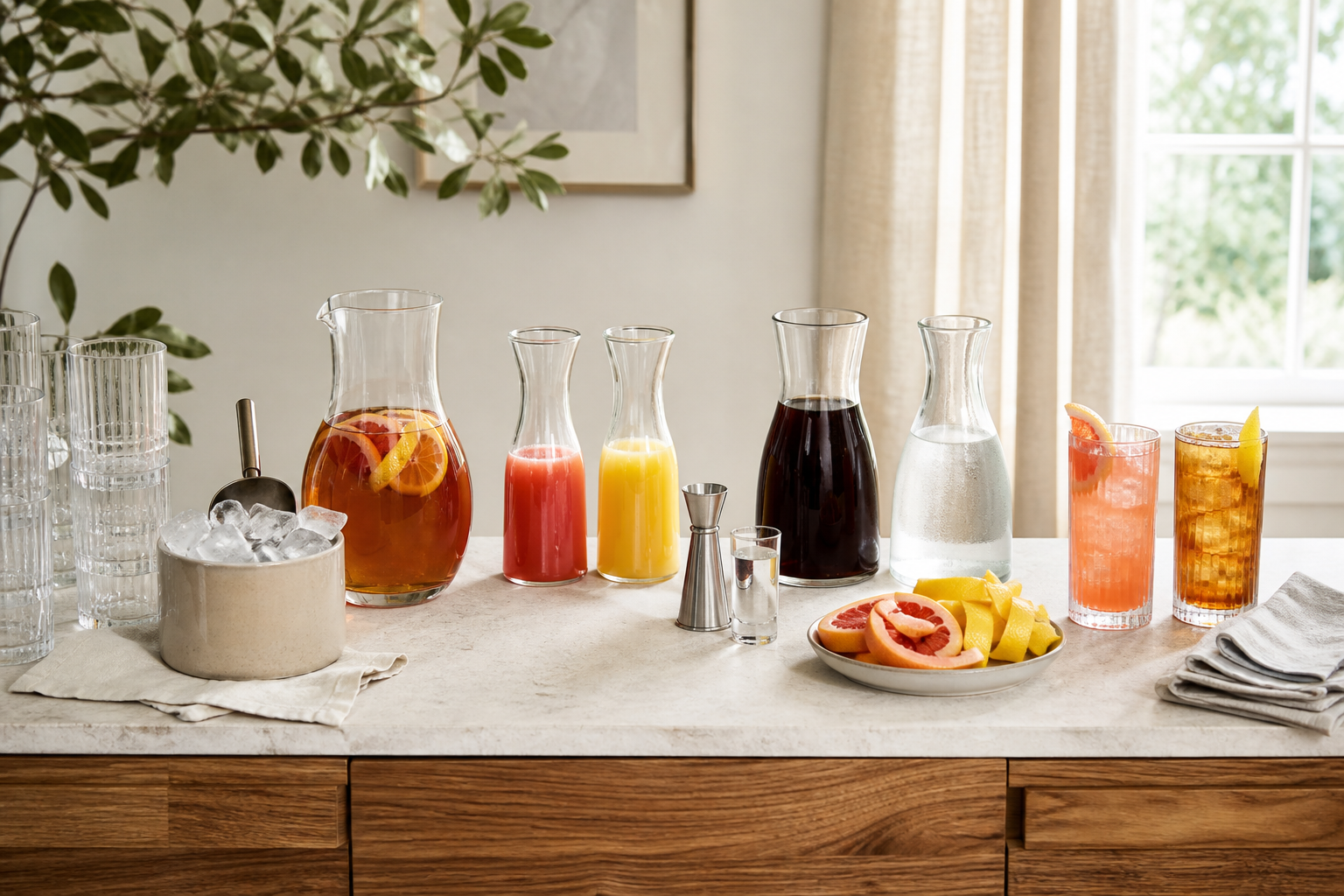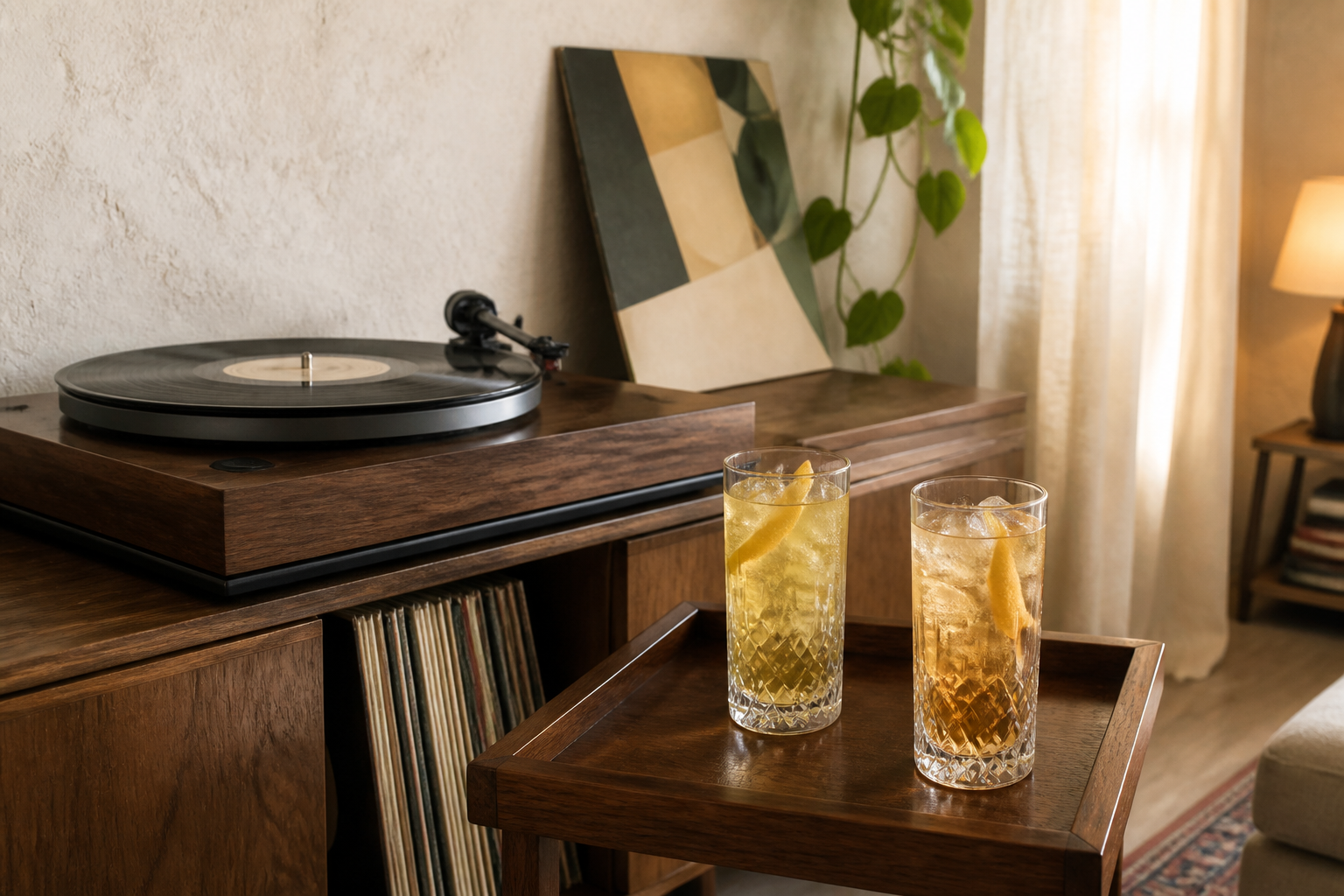
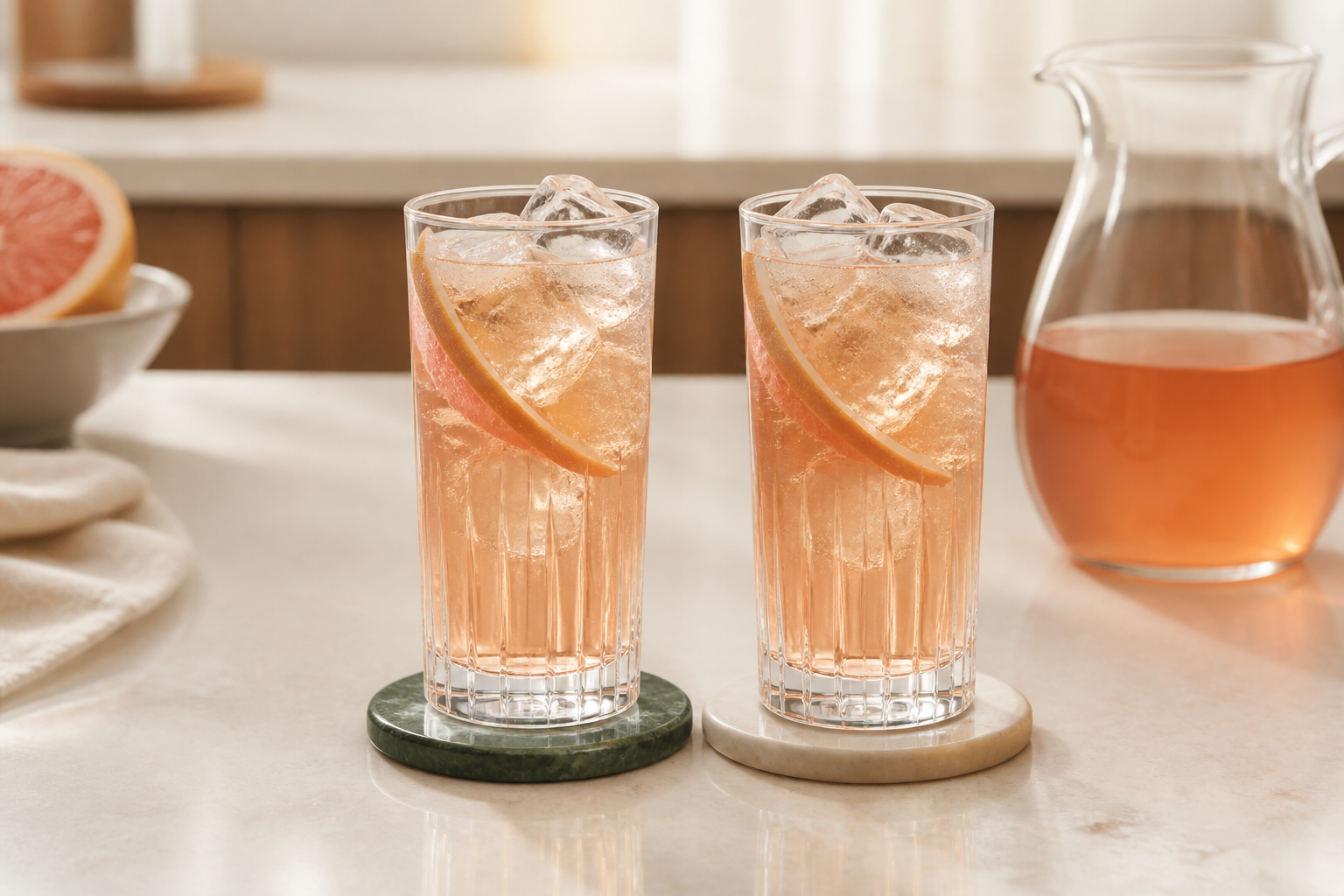
One fully flavored alcohol-free base can become a cocktail or a zero-proof drink at the glass. Make eight servings of grapefruit-tea base, then finish each 4-ounce pour with either gin and soda or extra tea and soda.
Both versions land in the same 7-ounce highball, over the same ice, with the same citrus peel. Nobody gets the consolation drink, and you don’t have to make two recipes before the doorbell rings.
Why the base stays alcohol-free
Batching the spirit into the pitcher looks efficient until one guest wants less alcohol, another wants none, and someone tops off a glass without knowing its strength. An alcohol-free base keeps the flavor consistent while the measured finish makes each choice clear.
This is different from putting bottles beside a pitcher and hoping guests invent something balanced. The base already contains the tea, citrus, sweetness, and dilution. The finish changes proof and texture, not whether the drink tastes complete.
It’s also easier to give both drinks equal treatment. Put the cocktail and zero-proof build cards side by side, use the same glassware, and garnish them the same way. A discreet stirrer color or coaster can distinguish them without making one look second-class.
Grapefruit tea base for eight drinks
This recipe makes 32 ounces of base, enough for eight 4-ounce portions.
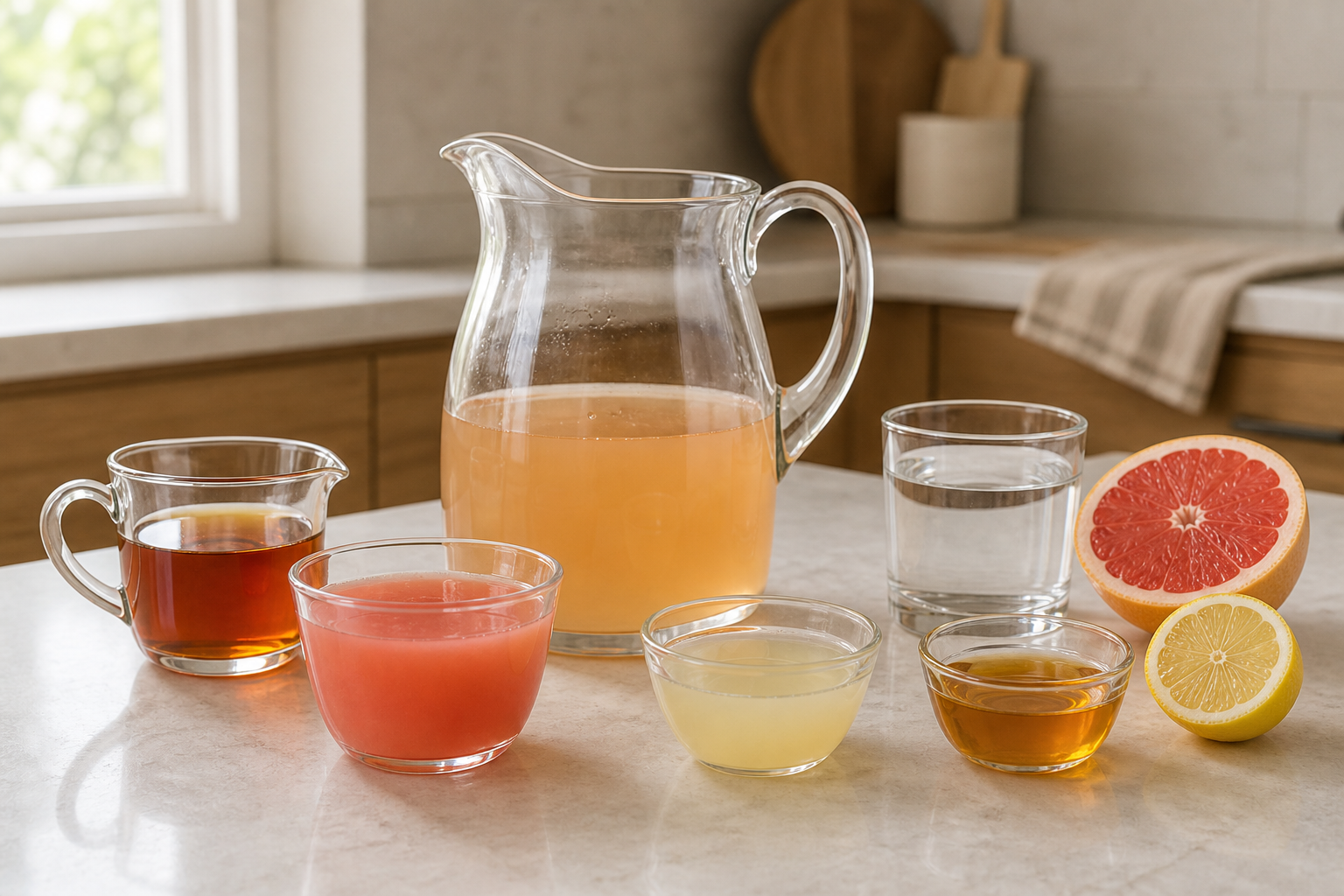
Ingredients
- 12 ounces strong brewed black tea, chilled
- 8 ounces pink or ruby red grapefruit juice
- 4 ounces fresh lemon juice
- 4 ounces 1:1 honey syrup
- 4 ounces cold water
- Grapefruit peels or thin half-moons, for garnish
- Ice, for serving
To make the honey syrup, stir equal volumes of honey and warm water until fully combined. Cool it, then measure 4 ounces for the batch.
Make the base
- Brew the tea at twice your usual strength so it keeps its flavor over ice. Let it cool, then chill it.
- Add the tea, grapefruit juice, lemon juice, honey syrup, and water to a 1-quart pitcher or bottle.
- Stir well and taste the base cold. It should taste a little more concentrated than a finished drink because each glass receives another 3 ounces of liquid.
- Cover and refrigerate until serving. Stir before the first pour because fresh juice can settle.
Don’t add ice to the pitcher. Ice belongs in the glass, where dilution stays predictable from one drink to the next.
Glass one: the cocktail finish
Grapefruit tea gin highball
- 4 ounces grapefruit tea base
- 1 1/2 ounces gin
- 1 1/2 ounces chilled club soda
- Ice
- Grapefruit peel
Fill a highball with ice. Add the base and gin, stir briefly, then add club soda. Express a grapefruit peel over the glass and drop it in.
This measured finish matters. The National Institute on Alcohol Abuse and Alcoholism explains that 1.5 fluid ounces of 80-proof distilled spirits contains one U.S. standard drink. Higher-proof gin or any extra alcoholic ingredient changes that total, so use the actual bottle proof and full recipe when you label the drink.
Glass two: the zero-proof finish
Grapefruit tea zero-proof highball
- 4 ounces grapefruit tea base
- 1 1/2 ounces strong chilled black tea
- 1 1/2 ounces chilled club soda
- Ice
- Grapefruit peel
Fill the same style of highball with ice. Add the base and tea, stir briefly, then add club soda and the same grapefruit peel.
The extra tea replaces some of the structure and tannin the gin brings without pretending to taste like gin. If you already enjoy a zero-proof botanical spirit, it can replace the 1 1/2 ounces of tea. It isn’t required for the drink to feel finished.
Keep cold water beside both options. A beautiful zero-proof drink is still not the same thing as water, and guests shouldn’t have to ask for either.
Three flavor variations from the same method
Each variation follows the same 32-ounce batch and 4-ounce-per-glass system. The cocktail finish remains 1 1/2 ounces spirit plus 1 1/2 ounces soda. The zero-proof finish remains 1 1/2 ounces matching tea plus 1 1/2 ounces soda.
Apple, thyme, and black tea
For the base, combine:
- 12 ounces strong black tea
- 8 ounces apple cider
- 4 ounces fresh lemon juice
- 4 ounces thyme honey syrup
- 4 ounces cold water
Use bourbon for the cocktail finish and extra black tea for the zero-proof finish. Garnish both with a thin apple slice and a small thyme sprig.
For thyme honey syrup, warm the honey and water with four thyme sprigs, remove it from the heat, steep for ten minutes, then strain and cool.
Cranberry, orange, and hibiscus
For the base, combine:
- 12 ounces strong hibiscus tea
- 8 ounces unsweetened cranberry juice
- 4 ounces fresh orange juice
- 4 ounces honey syrup
- 4 ounces cold water
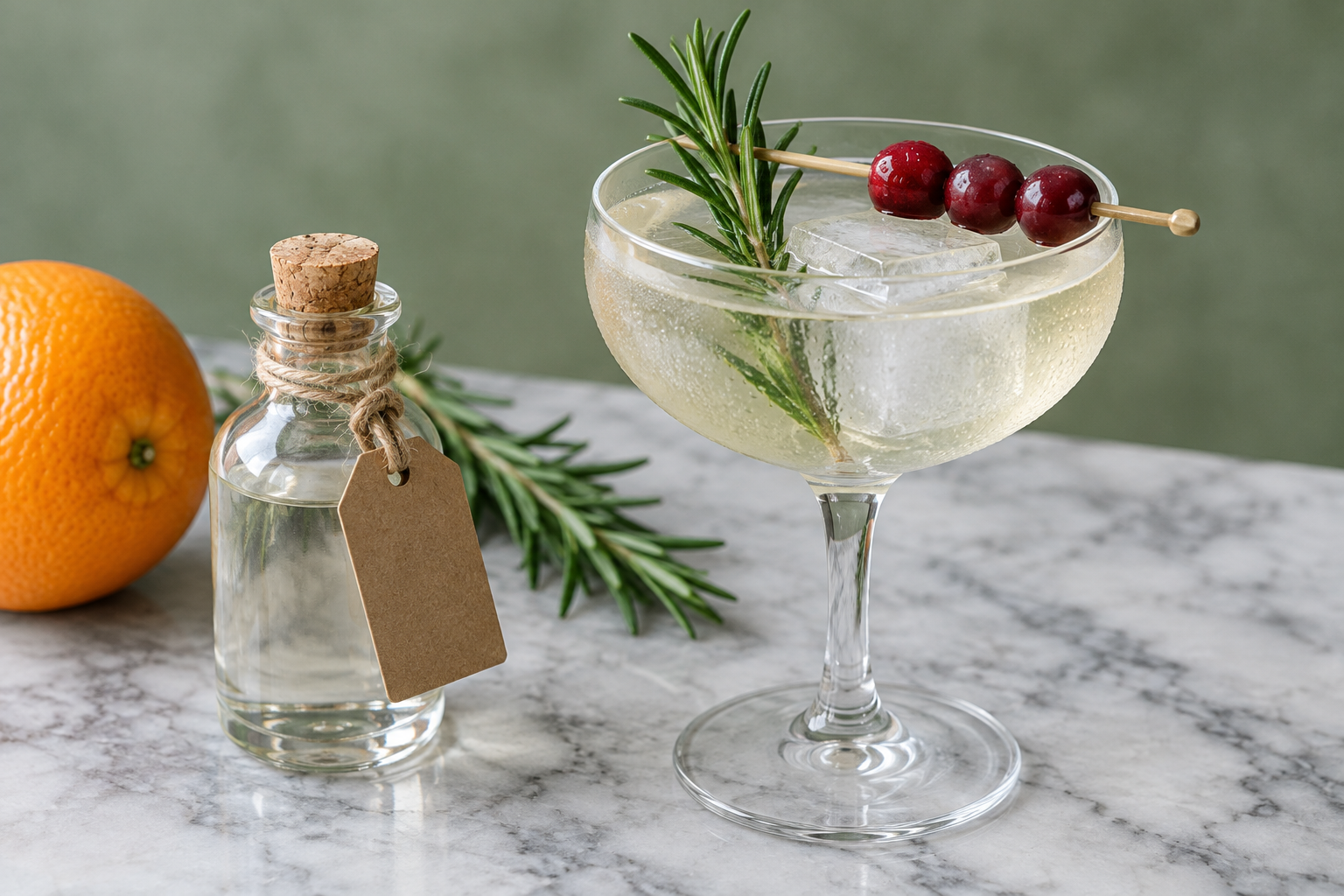
Use vodka for the cocktail finish and extra iced hibiscus tea for the zero-proof finish. Garnish both with an orange peel. Unsweetened cranberry juice is very tart, so taste the cold base before serving; if your juice is a sweetened cranberry cocktail, reduce the honey syrup and replace the difference with water.
Pineapple, ginger, and green tea
For the base, combine:
- 12 ounces strong green tea
- 8 ounces pineapple juice
- 4 ounces fresh lime juice
- 4 ounces ginger honey syrup
- 4 ounces cold water
Use white rum for the cocktail finish and extra green tea for the zero-proof finish. Garnish both with a lime wheel. To make the syrup, steep eight thin ginger coins in the warm honey-and-water mixture for fifteen minutes, then strain and cool.
How to label and serve both versions
Write two simple build cards:
Cocktail 4 oz base + 1 1/2 oz spirit + 1 1/2 oz soda
Zero-proof 4 oz base + 1 1/2 oz tea + 1 1/2 oz soda
Put the spirit and extra tea in different-shaped bottles or carafes and label them by name. Don’t rely on bottle color or a tiny garnish difference that disappears in low light.
If guests are serving themselves, set the table in this order: glass, ice, base, finish, soda, garnish, napkin. The layout in choose a party drink vessel without guessing can help you decide whether one pitcher or two smaller bottles fit the group.
For a more styled setup, how to style a bar cart for mocktails and cocktails keeps alcohol and zero-proof choices visible without crowding the surface.
Batching for four, eight, or sixteen drinks
The base uses 4 ounces per serving:
| Drinks | Tea | Fruit juice | Lemon or lime | Honey syrup | Water | Total base |
|---|---|---|---|---|---|---|
| 4 | 6 oz | 4 oz | 2 oz | 2 oz | 2 oz | 16 oz |
| 8 | 12 oz | 8 oz | 4 oz | 4 oz | 4 oz | 32 oz |
| 16 | 24 oz | 16 oz | 8 oz | 8 oz | 8 oz | 64 oz |
For each expected cocktail, allow 1 1/2 ounces of spirit. For each expected zero-proof drink, allow 1 1/2 ounces of extra chilled tea. Every glass also needs 1 1/2 ounces of soda.
You don’t have to predict the split perfectly. Keep extra tea and soda cold, and leave the unopened spirit bottle off the table until the first one runs low. The base can serve either path.
Storage and make-ahead notes
Make the tea and syrup the day before. Mix the full base the morning of the gathering and keep it refrigerated in a covered container. Add fresh juice only to a clean, chilled batch and never top new base into a pitcher that has been sitting warm.
Bring the pitcher out in smaller rounds if the party is long or the room is warm. The USDA’s danger-zone guidance says perishable foods should not remain between 40°F and 140°F for more than two hours, or one hour when the temperature is above 90°F. Keep the backup in the refrigerator and discard a fresh-juice batch that exceeds that window.
Common questions
Can I add alcohol to half the pitcher?
You can, but finishing at the glass gives guests more control and keeps the zero-proof supply flexible. It also makes the spirit measure visible instead of hiding it in a pitcher.
Does the zero-proof version taste weaker?
No. The shared base carries the fruit, acid, sweetness, and tea. Extra strong tea replaces some of the body in the zero-proof finish, while soda lifts both versions.
Can I use bottled citrus juice?
Fresh citrus gives the brightest result in a simple highball. If bottled juice is what you have, choose 100 percent juice, taste the cold base, and adjust with water or syrup before guests arrive.
What if a guest wants less sweetness?
Offer a longer finish: 3 ounces base, 1 1/2 ounces spirit or tea, and 2 1/2 ounces soda. Keep the written standard build on the card so any variation is deliberate.
How do I avoid mixing up the glasses?
Use different coaster colors or place a small reusable marker on the cocktail glasses. Keep the glassware itself equally attractive so the marker communicates proof, not status.
Make the flavor once. Let each guest choose the finish, then sit down with everyone else.