The easiest cocktail party food plan is one restrained board plus two bites. Put six clearly separated groups on the board, add one warm bite and one room-temperature bite, and stop there. Guests get salty, rich, bright, crisp, and sweet choices, while you get a menu that can be mostly ready before the first knock.
This is food for a two-hour cocktail night, not a substitute for dinner. If the gathering crosses a mealtime or runs longer, say that you’re serving substantial appetizers and increase the quantities, or serve a real meal.
The simple board-and-bites menu
Here is the complete menu for six to eight people:
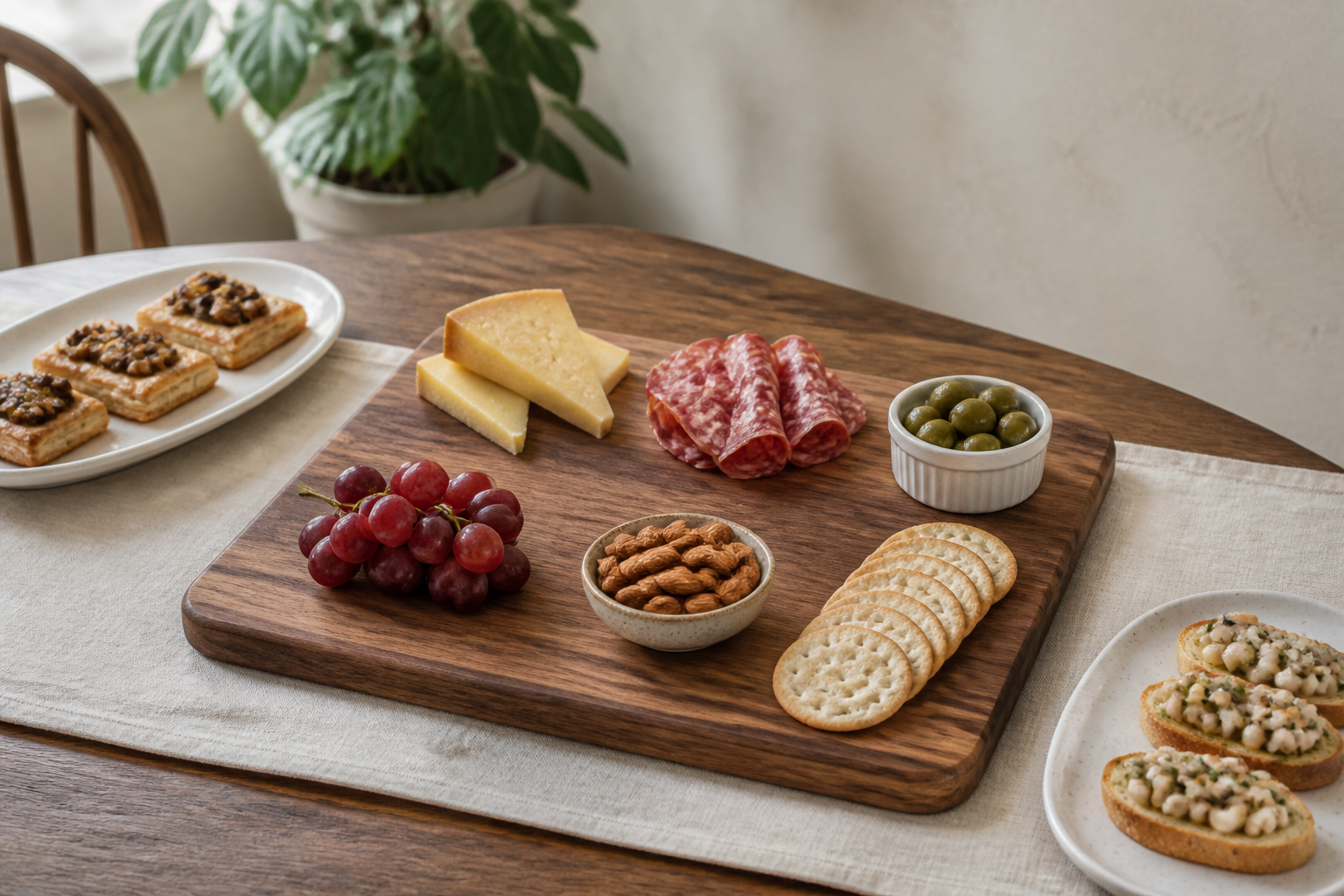
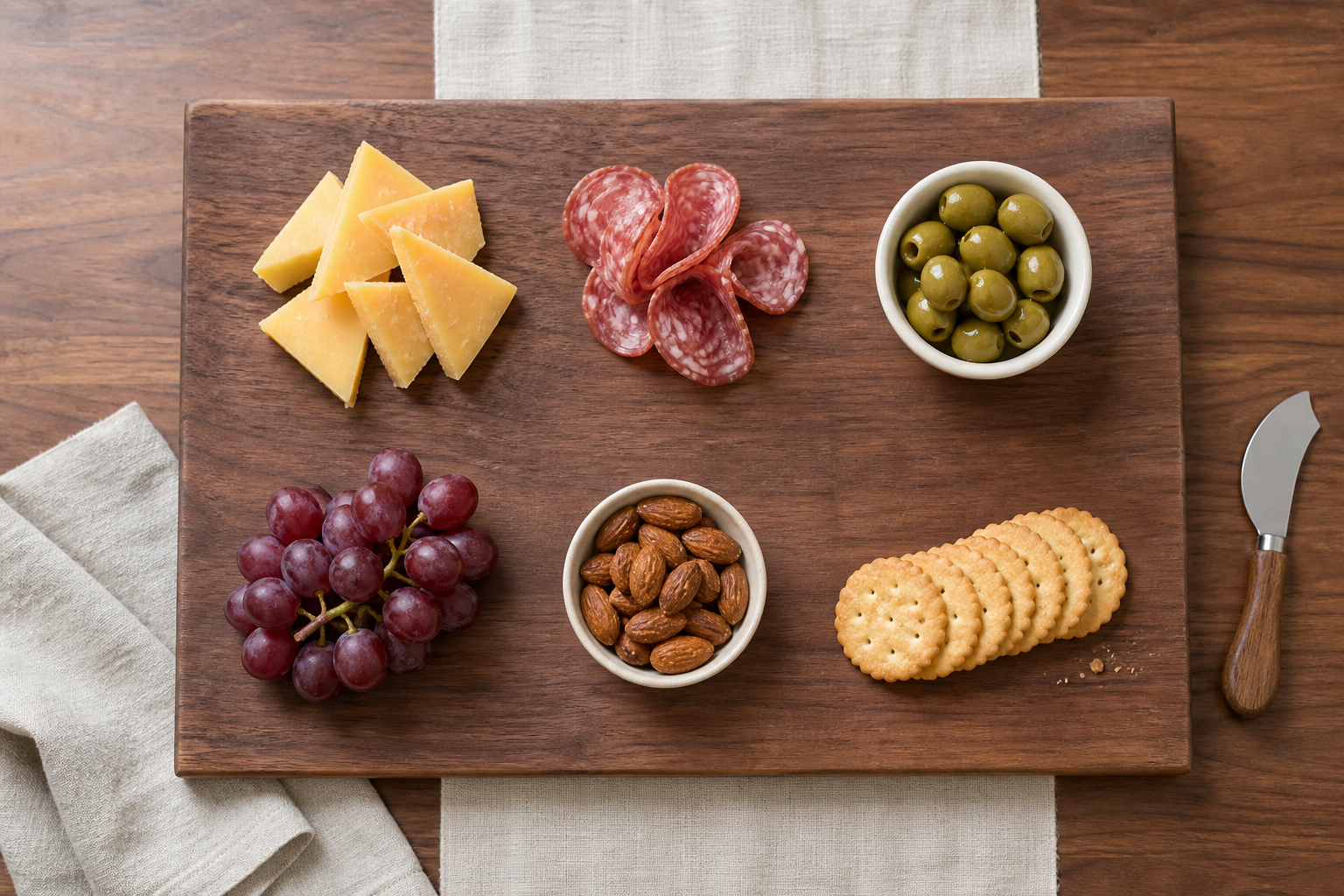
- A six-group board: aged cheddar, salami, olives, grapes, almonds, and plain crackers
- One warm bite: mushroom-and-Gruyere puff pastry squares
- One room-temperature bite: white bean crostini with lemon and parsley
That is enough variety to feel considered. It also leaves visible wood between the board groups, which makes the food easier to identify and reach. The goal isn’t to cover every inch.
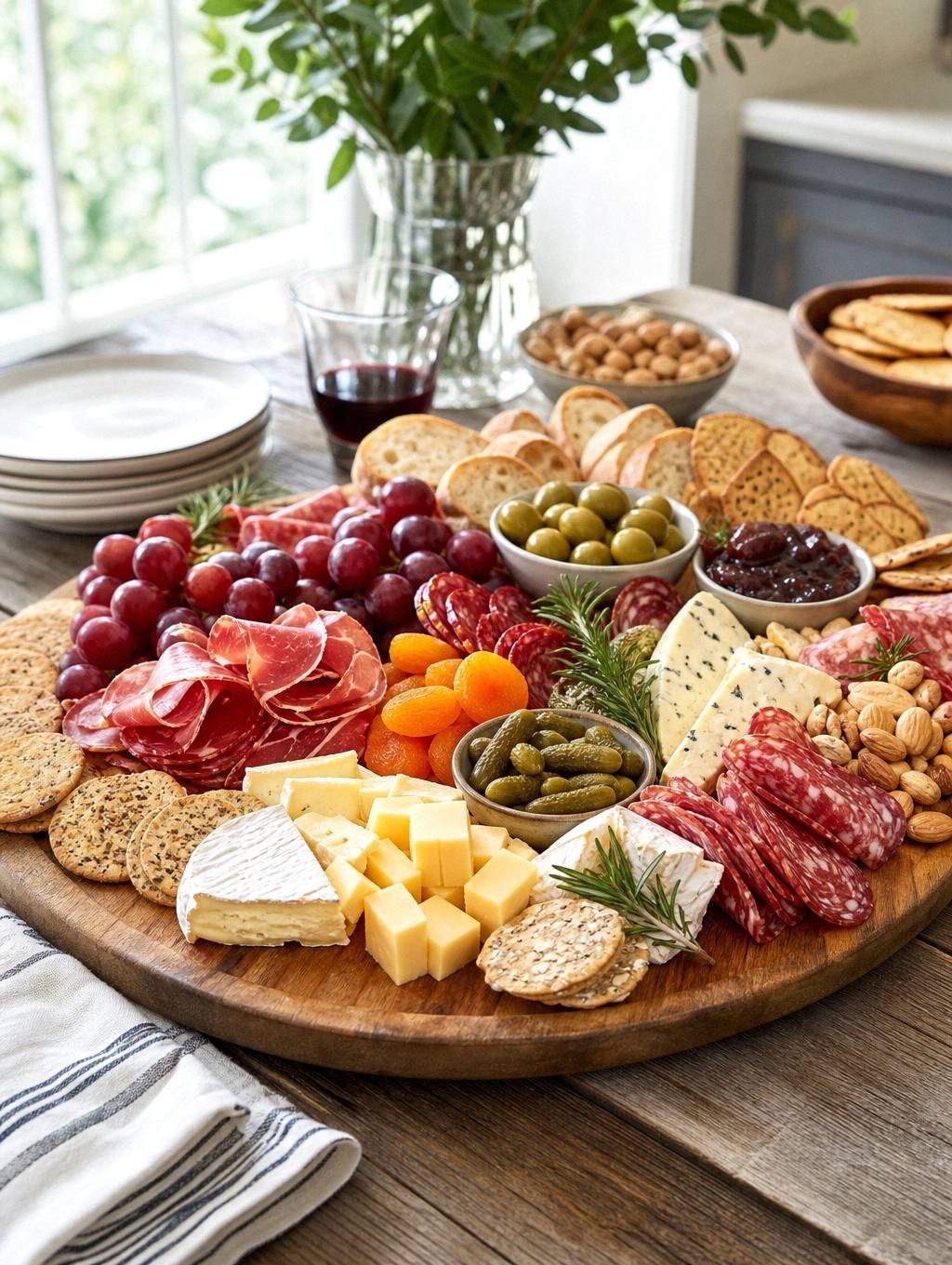
If you want a larger traditional spread, use our charcuterie board for a party guide. This menu is intentionally smaller because drinks and conversation are the main event.
Choose five to seven clearly separated board groups
Six groups are the sweet spot for this menu. Each group has a job, and nothing needs to be scattered around the edge to make the board look fuller.
| Group | What to put out | Why it earns the space |
|---|---|---|
| Firm cheese | Aged cheddar or Gouda | Familiar, easy to cut, and sturdy at a party |
| Cured meat | Salami or soppressata | Savory and substantial without utensils |
| Briny | Olives or cornichons in one small bowl | Brightens rich cheese and meat |
| Fresh | Grapes, pear slices, or apple slices | Adds crispness and a clean reset |
| Crunchy | Almonds or pecans | Gives the board texture without another recipe |
| Carrier | Plain crackers in a neat row | Makes the cheese easy to eat with one hand |
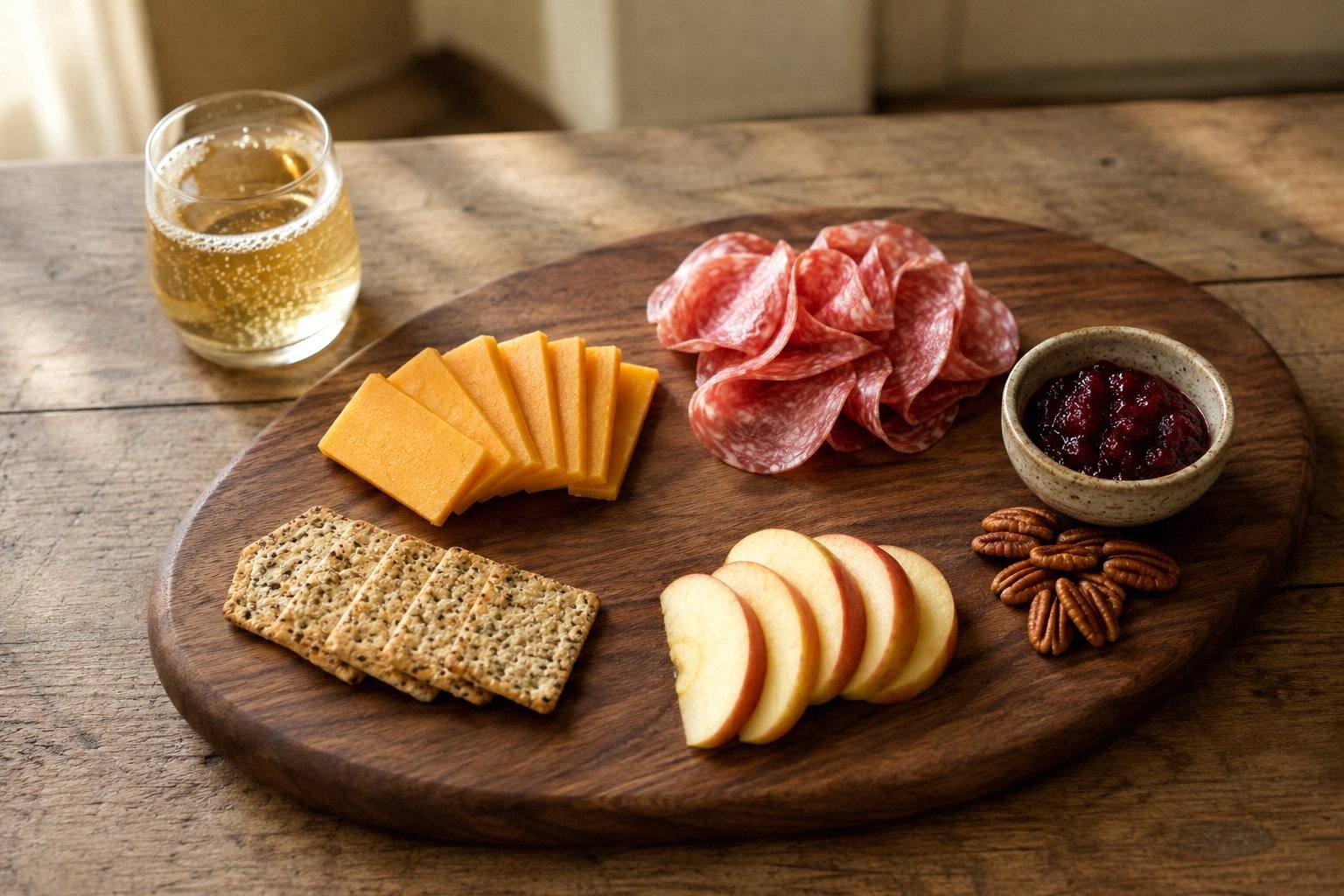
Keep the groups distinct. Put the olives in a bowl, cheese in two short rows, meat in one loose fold, and fruit in a single cluster. Nuts and crackers each get their own section. This is the restrained version of an easy charcuterie board , not an overflowing food collage.
Skip jams, honey, loose herbs, extra fruit, and three kinds of crackers unless one of them solves a real menu need. A guest holding a drink does not need six tiny serving tools.
Quantities for six, eight, or twelve guests
These amounts assume a two-hour gathering that does not replace dinner. The two additional bites matter, so the board does not need to carry the whole menu.
| Guests | Cheese | Cured meat | Olives | Fruit | Nuts | Crackers | Each prepared bite |
|---|---|---|---|---|---|---|---|
| 6 | 10 to 12 oz | 8 to 10 oz | 1 cup | 2 cups | 3/4 cup | 30 to 36 | 12 pieces |
| 8 | 14 to 16 oz | 12 oz | 1 1/2 cups | 3 cups | 1 cup | 40 to 48 | 16 pieces |
| 12 | 20 to 24 oz | 18 oz | 2 cups | 4 cups | 1 1/2 cups | 60 to 72 | 24 pieces |
For a longer party, hold a second small refill in the refrigerator instead of making one enormous board. The FDA’s buffet safety guidance recommends serving smaller portions and replacing platters with fresh ones during a party.
Two make-ahead bites that work with drinks
The board is cold and crisp, so the two bites should change the temperature and texture without demanding plates and forks.
Warm mushroom-and-Gruyere pastry squares
For sixteen pieces, sauté eight ounces of finely chopped mushrooms in one tablespoon of butter until their moisture cooks away. Cool them, then mix with one teaspoon of Dijon mustard, one teaspoon of thyme leaves, and three ounces of grated Gruyere.
Cut one thawed sheet of puff pastry into sixteen squares. Put a teaspoon of filling in the center of each and bake according to the pastry package directions until deeply golden. Assemble the squares earlier in the day, refrigerate them, and bake shortly before guests arrive.
Use mushrooms that have cooked dry. A wet filling makes the pastry soggy and much harder to hold with a drink.
Room-temperature white bean crostini
For sixteen pieces, blend one drained 15-ounce can of cannellini beans with two tablespoons of olive oil, one tablespoon of lemon juice, one small garlic clove, a quarter teaspoon of salt, and black pepper. Toast sixteen thin baguette slices. Keep the toast and spread separate, then assemble them up to thirty minutes before serving and finish with chopped parsley.
The lemon makes this bite useful beside richer drinks and cheese. It is also the menu’s meat-free option, so give it its own platter and serving tongs.
Match food to the drink, not the garnish
Good pairings work through contrast. Rich food likes acid or bubbles. Bitter drinks like a little fat and salt. Spirit-forward drinks need a bite with enough flavor to stay present.
| Drink style | Best board groups | Best bite | Why it works |
|---|---|---|---|
| Citrus highball or Collins | Cheddar, olives, almonds | White bean crostini | Acid and bubbles lift the richer food |
| Old Fashioned or Manhattan | Gouda, salami, pecans | Mushroom pastry | Toasted, savory flavors can stand beside whiskey |
| Dry martini or zero-proof aperitif | Olives, crackers, firm cheese | White bean crostini | Salty, clean flavors keep the pairing crisp |
| Fruity spritz | Cheddar, grapes, almonds | Mushroom pastry | A savory bite keeps the drink from reading too sweet |
| Ginger or citrus mocktail | Salami, olives, fruit | Either bite | Ginger and acid reset the palate between richer bites |
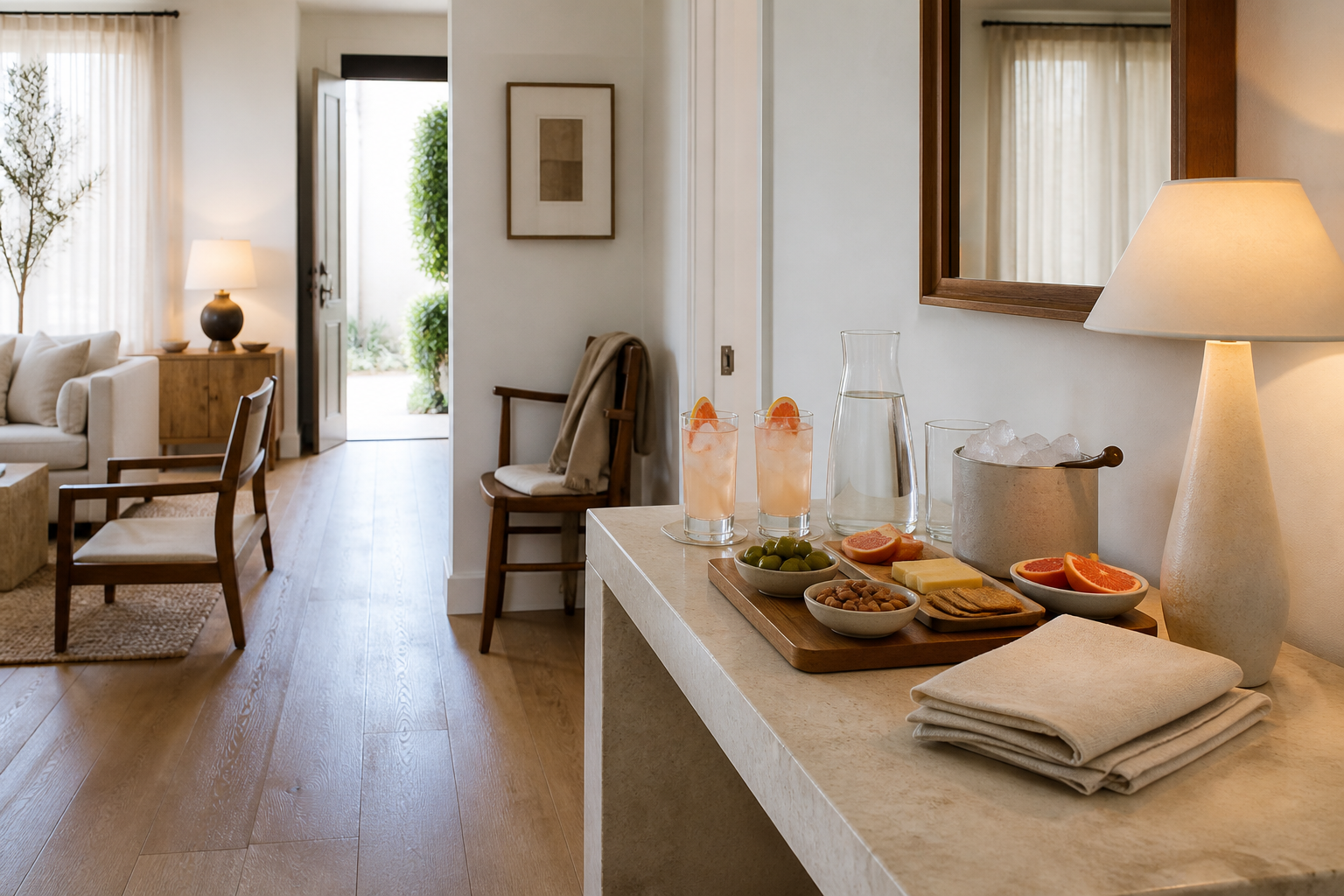
Do not change the whole menu for each drink. Choose one cocktail and an equally intentional zero-proof pour, then make sure both work with the same food. The party feels calmer when every guest is eating from the same table.
The two-hour prep timeline
The day before
- Shop and check dietary restrictions
- Make the white bean spread
- Cook the mushroom filling and refrigerate it
- Wash and thoroughly dry the fruit
- Set out the board, two platters, small olive bowl, knives, and tongs
Two hours before
- Cut the cheese and fold the salami
- Assemble the pastry squares and return them to the refrigerator
- Toast the baguette slices and let them cool completely
- Portion a backup tray of perishable food for the refrigerator
- Set the table using the traffic plan in our cocktail party table guide
Thirty minutes before
- Bake the mushroom pastries
- Build the six-group board without overfilling it
- Assemble the crostini
- Chill the cocktail and zero-proof bases
- Put napkins and small plates at the food, not across the room
Once guests arrive
- Put out only the first round
- Refill crackers from a bowl instead of stacking more on the board
- Replace a nearly empty perishable platter with a fresh one instead of topping it up
- Clear used picks and napkins before they take over the table
Food safety without hovering over the board
The simple rule is to keep hot food hot, cold food cold, and watch the clock. FDA guidance says hot foods on a buffet should stay at 140°F or warmer, cold foods at 40°F or colder, and perishables should not sit at room temperature for more than two hours. Above 90°F, that window drops to one hour. See the FDA’s Serving Up Safe Buffets guidance for the complete recommendations.
For this menu, set a quiet timer when the board comes out. Keep extra cheese, salami, white bean spread, and unbaked pastries refrigerated. If the party continues, swap in a small fresh plate rather than guessing how long the first one has been sitting.
Use separate utensils for foods that need them, and label the nuts, dairy, meat, and wheat. Ask about serious allergies before building the menu because moving a few crackers after the fact does not remove cross-contact.
Cocktail party food checklist
- One board, not several competing platters
- Five to seven separated groups
- One warm bite
- One room-temperature bite
- One vegetarian choice
- One cocktail and one equal zero-proof pour
- Small plates, napkins, knives, and tongs
- Labels for major allergens
- Refrigerated refills
- A timer for perishable food
Frequently asked questions
How much cocktail party food do I need per person?
For a two-hour party that does not replace dinner, plan about two pieces of each prepared bite per guest, plus a modest board portion. Increase the menu or state clearly that substantial food will be served if the party crosses dinner time.
Can I assemble the board the night before?
Prep the components the night before, but assemble the board shortly before the party. Crackers soften, cut cheese dries at the edges, and fruit can release moisture when it sits too long.
What are the best cocktail party food ideas for people holding drinks?
Choose food that takes one hand and no cutting: firm cheese, folded salami, olives with picks, crostini, and small pastry bites. Avoid tall stacks, drippy sauces, and anything that requires a knife and fork.
How do I make a small board look generous?
Use six distinct groups, repeat each in one confident cluster, and leave visible board between them. A properly sized board looks better than a large board covered with scattered filler.
What can I serve instead of charcuterie?
Build the same six-group plan with firm cheese, hummus, marinated beans, olives, fruit, nuts, and crackers. Keep each group separate and confirm any dietary or allergy needs with your guests.
A smaller menu makes a better evening
One clear board, two good bites, and two drink paths give people plenty to discover without turning you into a caterer. The food looks collected, the pairings make sense, and most of the work is finished before anyone arrives.
That is the whole point of cocktail night: pour something good, put the food within reach, and join the conversation.