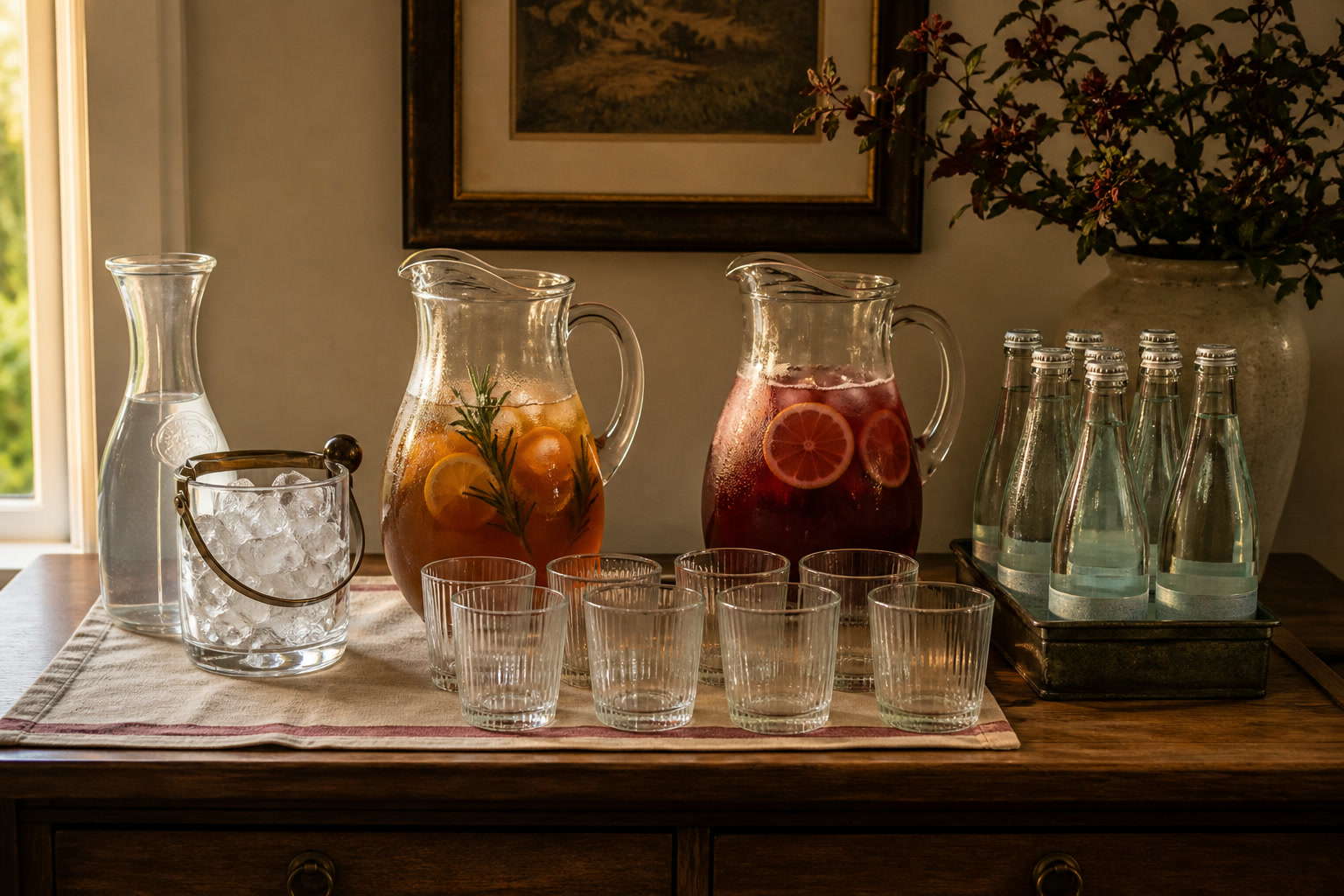
The easiest cocktail party menu has four lanes: one batched signature cocktail, one equally thoughtful zero-proof drink, cold water, and one backup guests can open or pour without you. That is enough choice to feel generous and little enough work to let the host leave the kitchen.
For eight first-round 6-ounce servings, plan 48 ounces of finished cocktail capacity. If each alcoholic serving contains 1.5 ounces of 80-proof spirit and no other alcohol, the eight-serving batch uses 12 ounces of spirit. Build the rest from the tested recipe, and write the ingredients and serving size beside the vessel.
The four-part menu
1. One signature cocktail
Choose a drink that can be made mostly ahead and poured over ice. Citrus-and-tea punches, sangria, spirit-and-juice highballs, and sturdy stirred drinks are easier than anything that needs muddling, egg white, crushed ice, or a blender.
The signature drink gets the party’s attention. It does not need to carry every flavor preference. Pick one clear profile, such as bright and citrusy, smoky and fruit-forward, or warm and spiced.
2. One equal zero-proof drink
Equal means it has a name, a proper glass, and a flavor idea of its own. It is not a jug of tap water hiding behind the cocktail.
The simplest approach is to share a base. Brew the same tea, make the same fruit puree, or squeeze the same citrus for both drinks. Divide the base before adding alcohol, then finish the two versions differently. A rosemary -grapefruit base might become a gin highball in one pitcher and a tonic-and-tea spritz in the other.
Use different vessel shapes or large labels so nobody has to guess. The self-serve mocktail bar guests actually use has a larger modular version; this menu stays intentionally smaller.
3. Cold water in plain sight
Water belongs beside the drinks, not in the kitchen where a guest has to ask. Add still or sparkling water, clean glasses, and ice. Do not decorate it until it becomes another recipe you must maintain.
4. One no-mixing backup
Choose wine, beer, canned sparkling water, or another single-step option. The backup covers the guest who does not want the signature drink without opening a second cocktail station.
Keep it cold in a small cooler or refrigerator. Put only a few bottles or cans out at a time so the table remains readable.
Start with service style, then choose the drinks
Ask one question before browsing recipes: What am I willing to do after the doorbell rings?
If the answer is pour from a pitcher, select a still batch base and keep ice in glasses. If the answer is open bottles, build the menu around wine, beer, and one batched welcome drink. If you genuinely enjoy shaking a special first drink for each guest, choose one recipe and stop taking custom orders after the arrival window.
Write that boundary into the menu:
Rosemary grapefruit cocktail, rosemary grapefruit zero-proof spritz, wine, beer, and sparkling water.
That sounds like a menu. “Full bar” sounds like an invitation to order anything in the cabinet.
The eight-guest batch math
Use capacity math first, then the tested recipe’s ratios.
For one 6-ounce first-round serving per guest:
8 guests × 6 ounces = 48 finished ounces
If the drink is designed around one 1.5-ounce pour of 80-proof spirit per serving and contains no other alcohol:
8 servings × 1.5 ounces = 12 ounces of spirit
The remaining 36 finished ounces come from the recipe’s nonalcoholic ingredients. Do not invent those ratios from the subtraction. A sour, highball, sangria, and punch need different balances, dilution, and carbonation. Scale a recipe you have tested, preserving every ingredient in the same proportion.
The NIAAA standard-drink reference explains that 1.5 fluid ounces of 80-proof distilled spirits contains one U.S. standard drink. If the recipe includes wine, liqueur, fortified wine, or higher-proof spirits, those add alcohol too. Calculate the whole recipe, not just the largest bottle.
For twelve guests at the same first-round serving size:
12 × 6 ounces = 72 finished ounces
For sixteen:
16 × 6 ounces = 96 finished ounces
These numbers size the first round. They are not a prediction or recommendation for total alcohol consumption. Your backup, zero-proof drink, water, party length, transportation plans, and individual guests all matter.
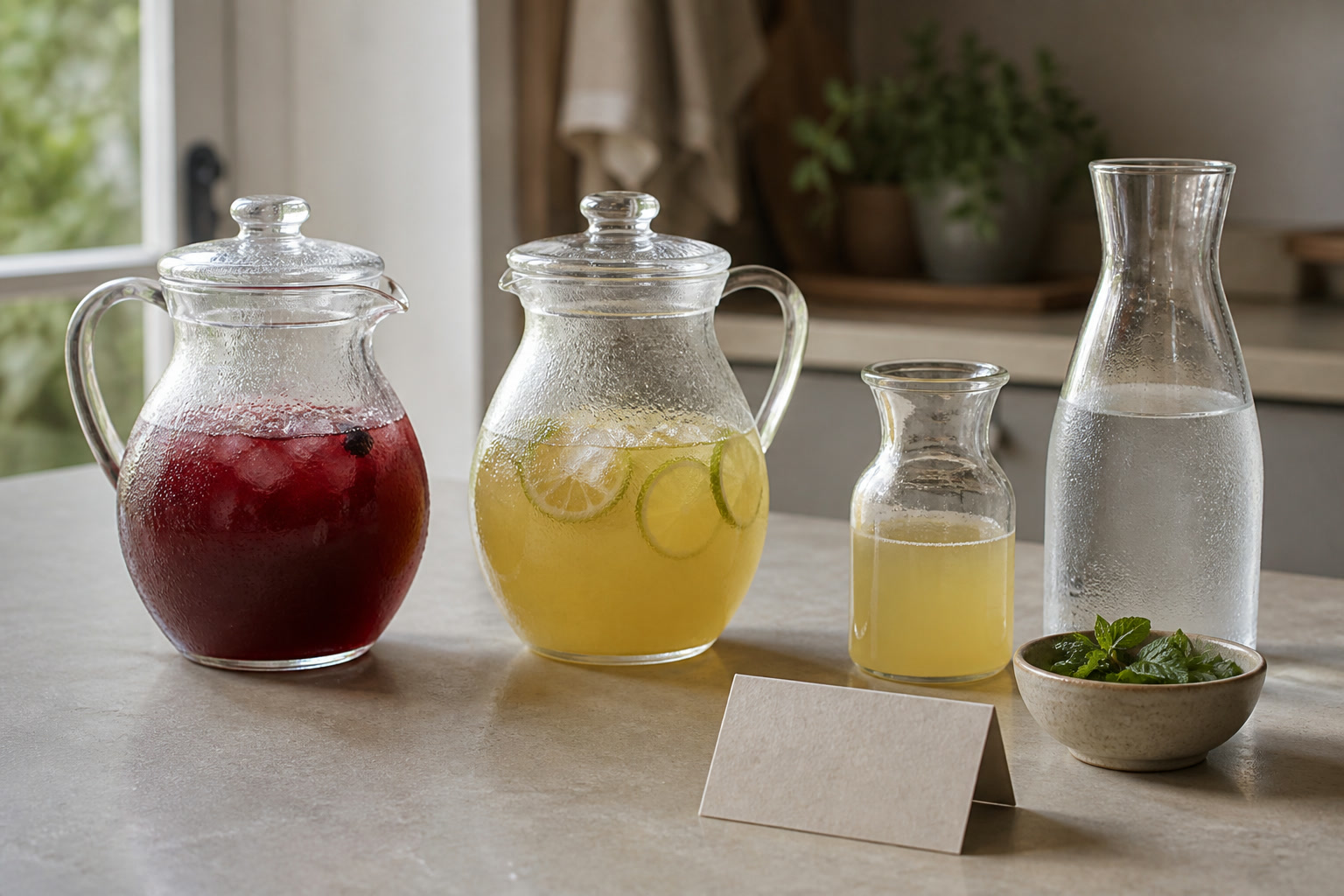
Batch what holds and finish what fades
Batch ahead
- Spirits measured from the tested recipe
- Tea, cooled completely
- Syrups and shrubs
- Strained fruit puree
- Stable juices used by the recipe
- Still water used for planned dilution
Finish near serving time
- Carbonated water, tonic, sparkling wine, or soda
- Fresh herbs that bruise or brown
- Ice
- Delicate citrus wheels
- Anything foamy
Put ice in glasses rather than the batch. Melting ice in a pitcher makes the last serving weaker than the first, and it makes the finished volume hard to calculate. Chill the ingredients and vessel so the ice in each glass has less work to do.
If the menu needs a vessel decision, choose a party drink vessel without guessing compares pitchers, punch bowls, and dispensers by working capacity and serving mechanics.
Give each drink one job
A menu becomes confusing when every option is sweet, fizzy, citrusy, and pink. Contrast the jobs instead.
| Menu role | Useful direction | Avoid |
|---|---|---|
| Signature cocktail | One clear flavor profile and a measured serving | Three cocktails with the same base and different garnishes |
| Zero-proof drink | Similar care, different finish | Soda presented as the consolation prize |
| Water | Cold and obvious | Hidden in the kitchen |
| Backup | Open or pour, no tools | A second recipe that quietly creates another bar |
If the signature cocktail is rich or spirit-forward, make the zero-proof drink crisp and long. If the cocktail is tart and sparkling, offer still water and a softer zero-proof tea. Guests get meaningful choice without a long list.
Build the menu around the food
The drinks do not need to pair with every bite. They need to avoid fighting the main flavor on the table.
- Salty snacks welcome citrus, bubbles, and bitterness.
- Spicy food usually needs a drink with less alcohol heat and enough dilution.
- Rich cheese and creamy dips benefit from acidity.
- Sweet desserts make already-sweet drinks taste flatter, so choose a drier finish.
Taste the signature cocktail with one bite from the actual menu before committing to the batch. A drink that feels balanced on its own may read much sweeter after dessert.
For grazing-board ideas that keep the drink central, charcuterie board for a party is the better next step than adding another cocktail.
Label the things guests should not have to ask
Write down:
- Drink name
- Alcoholic or zero-proof
- Main ingredients
- Major allergens
- Measured serving size for the alcoholic drink
The FDA currently recognizes nine major food allergens. Its food-allergy guide is a useful reference, but a handwritten card does not eliminate cross-contact or replace asking guests about their needs.
Keep labels literal. “Garden Fizz” sounds pleasant but tells nobody whether it contains gin, grapefruit, rosemary, or tonic. The smaller line should.
A two-day prep timeline
Two days before
- Choose the four-part menu
- Test the signature and zero-proof drinks at the planned serving size
- Write the scaled recipe rather than relying on mental multiplication
- Check the vessel’s working capacity with water
- Ask about allergies and alcohol-free needs
One day before
- Make syrup, tea, shrub, or other stable base
- Chill wine, beer, water, and the serving vessels
- Write ingredient labels
- Clear refrigerator space for the batch and backup
Four hours before
- Mix the still portion of each tested recipe
- Keep both batches covered and cold
- Cut only sturdy garnish; leave delicate herbs and wheels whole
- Set glasses, napkins, and tools without putting cold ingredients out
Fifteen minutes before
- Taste both drinks cold
- Add carbonation in the first serving round
- Fill the ice bucket
- Put out a small garnish portion
- Pour one example serving so guests can see the intended glass and amount
Three menus that use the formula
These are structures, not new recipes. Link the final menu to tested TFA recipes before publication or social production.
Porch citrus menu
- Batched citrus-tea cocktail
- Citrus-tea zero-proof spritz
- Cold still water
- Canned sparkling water and a dry white wine
Fall orchard menu
- Tested apple-and-spice batch cocktail
- Unsweetened spiced apple tea
- Cold water
- Beer and sparkling water
Garden brunch menu
- Tested herb-and-grapefruit pitcher cocktail
- Grapefruit tonic with tea
- Still and sparkling water
- Chilled wine
Each menu repeats ingredients on purpose. Shared citrus, tea, and garnish reduce shopping and prep, while the finished drinks still give guests a real choice.
What not to put on the menu
- “Anything you want” unless someone is actually tending bar
- Two drinks that both require shaking to order
- A blended option without a dedicated blender station and cleanup plan
- Six garnishes that fit only one recipe each
- A zero-proof option that is harder to assemble than the cocktail
- A mystery punch with no ingredients or serving size listed
- A full first batch of carbonation mixed hours early
Common questions
How many cocktail options should I have at a party?
One signature cocktail is enough when you also offer an equal zero-proof drink, water, and a no-mixing backup. Two cocktails can work if both are batched and clearly different, but the second one doubles recipe testing, labels, vessels, and refill work.
Can I batch a cocktail the day before?
Batch only the ingredients that hold well in your tested recipe. Keep carbonation, ice, delicate herbs, and foamy components out until serving. Fresh citrus quality changes over time, so taste the cold batch before guests arrive and follow the storage guidance for the specific ingredients used.
How do I stop guests from ordering custom drinks?
Display a short written menu and put the prepared options where guests can reach them. Do not display every bottle and bar tool you own. A visible full liquor cabinet communicates a different service promise than two labeled pitchers.
Should the mocktail match the cocktail?
It can share a base without pretending to be identical. Divide tea, fruit, citrus, or syrup before adding alcohol, then give the zero-proof version its own balanced finish and a distinct label.
How much batch cocktail do I need for eight guests?
Eight 6-ounce first-round servings require 48 finished ounces. That sizes one round only. Scale a tested recipe proportionally, identify all alcohol in the recipe, and provide water and zero-proof choices rather than treating capacity as a consumption goal.
A short menu is not stingy. It is a promise you can actually keep. Guests know what is available, every option tastes intentional, and the person who planned the party gets to be in it.