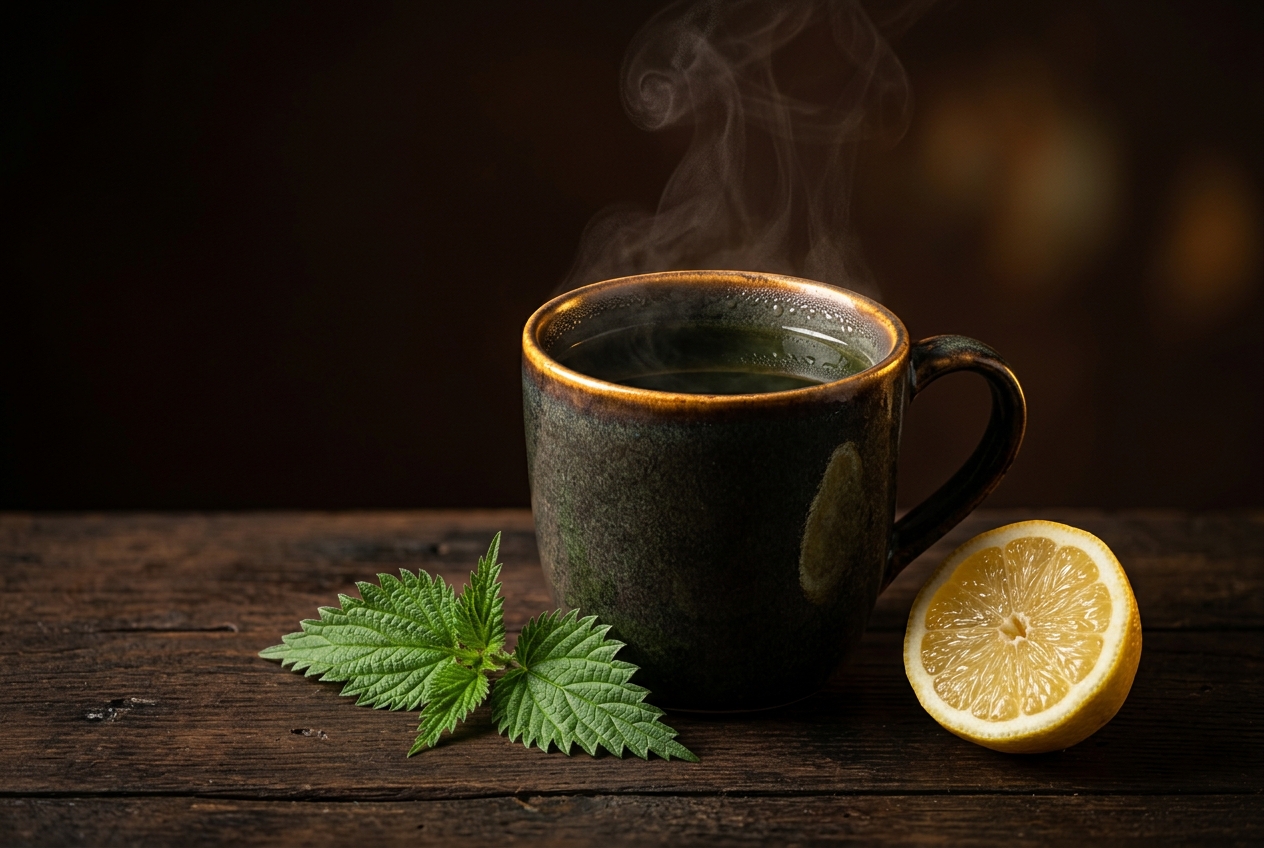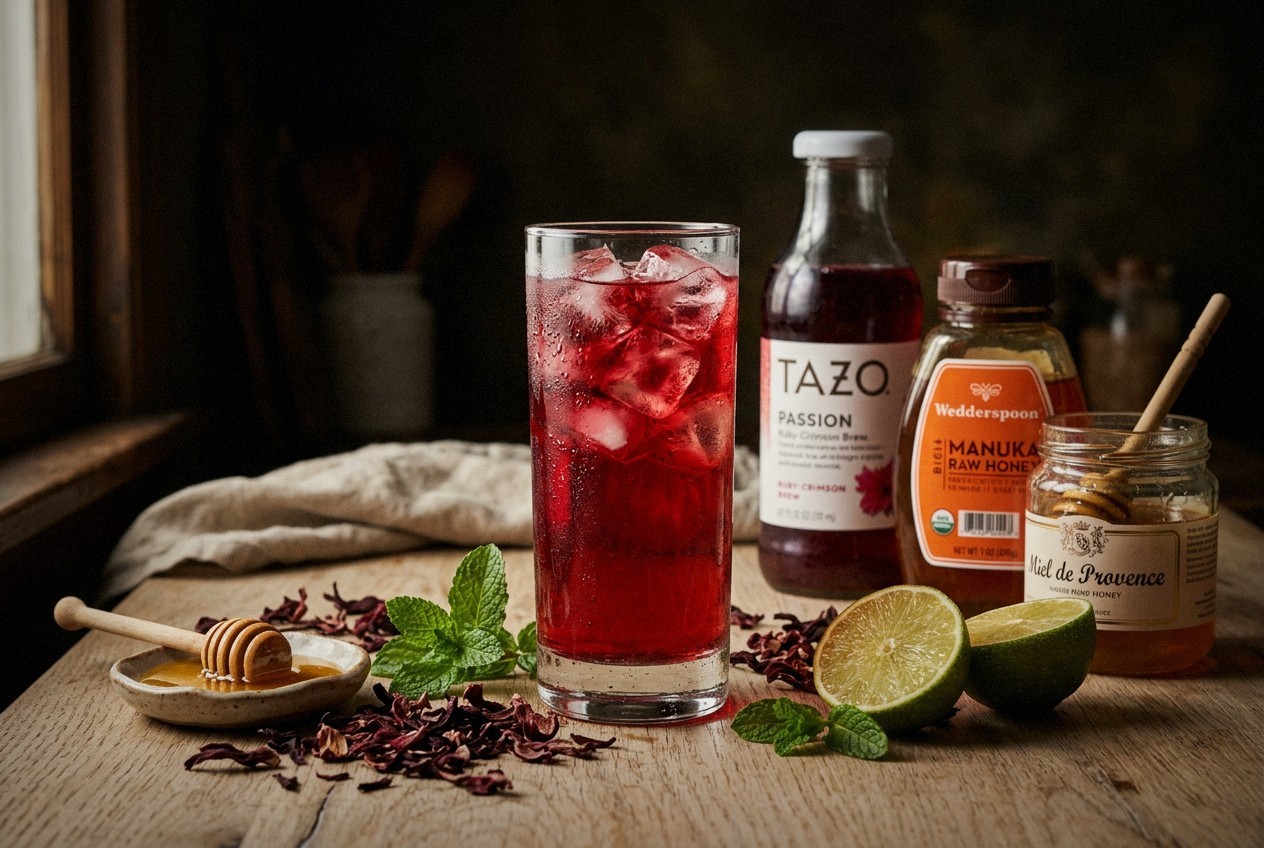

Dandelion and nettle cold brew tea for spring detox. Gentle, mineral-rich, naturally caffeine-free. Get the recipe.
Why You Will Love This
Cold water pulls sweetness from roasted dandelion without the bitterness of hot steeping. Nettle adds a green, mineral brightness. The result tastes like spring itself, chilled and ready to drink by mid-morning. No caffeine, no jitters, just a clean feeling that starts in your mouth and works its way through.
The Story Behind It
March is when dandelion greens push through thawed ground and nettle unfurls its first serrated leaves. Western herbalists have used this combination for centuries as a gentle spring tonic, supporting liver function after heavy winter eating. Cold brewing became my preferred method after a hot-steeped batch turned bitter and metallic. Eight hours in the fridge extracts the minerals and subtle sweetness while leaving harsh tannins behind.
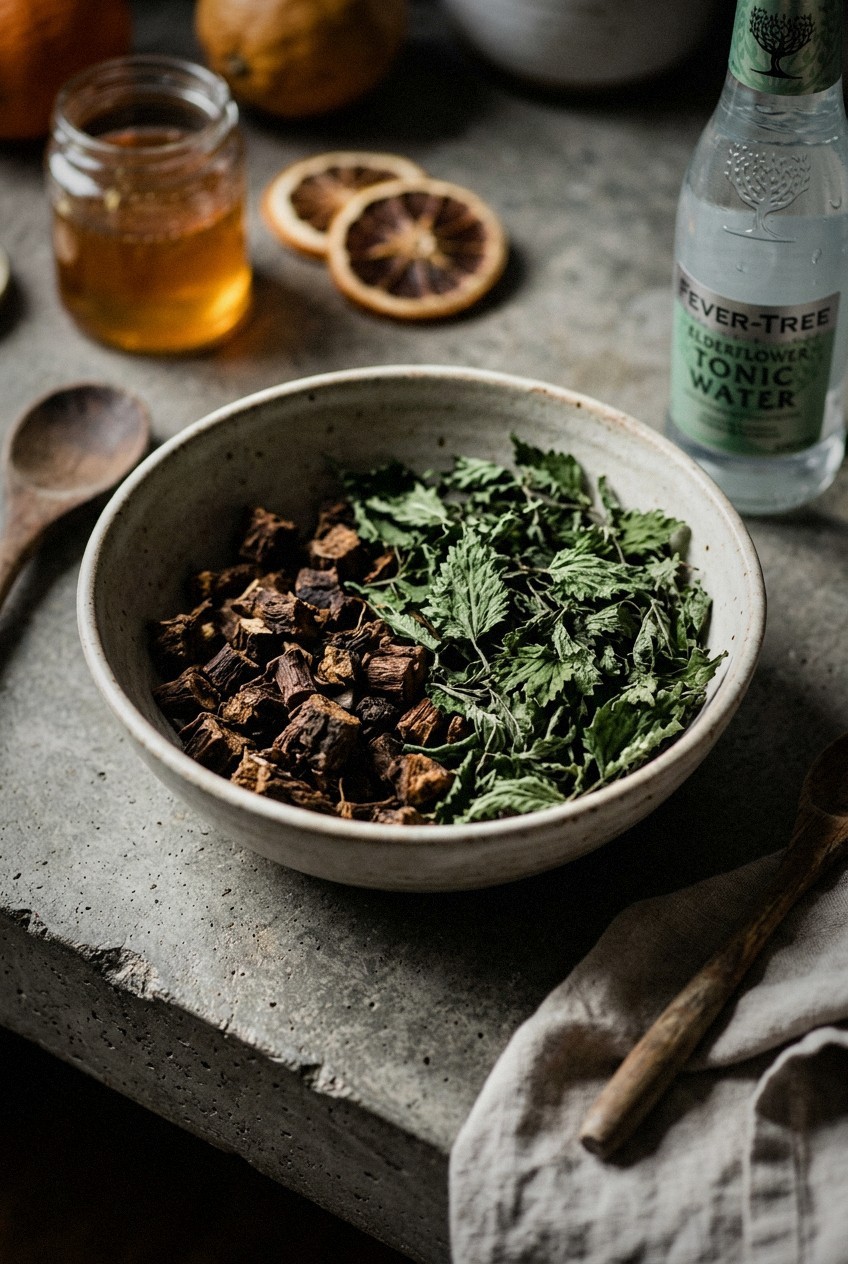
What You Will Need
- 2 tablespoons dried dandelion root, roasted
- 2 tablespoons dried nettle leaf
- 4 cups cold filtered water
- Fresh lemon slices for serving
- Ice cubes
Look for roasted dandelion root, not raw. The roasting process caramelizes natural sugars and creates a coffee-like depth without bitterness. Nettle leaf should be bright green and smell grassy, not dusty or brown. Frontier Co-op and Mountain Rose Herbs both sell quality dried versions.
How to Make It
- Combine dandelion root and nettle leaf in a large glass jar or pitcher.
- Pour cold filtered water over the herbs.
- Stir gently, cover, and refrigerate for 8-12 hours.
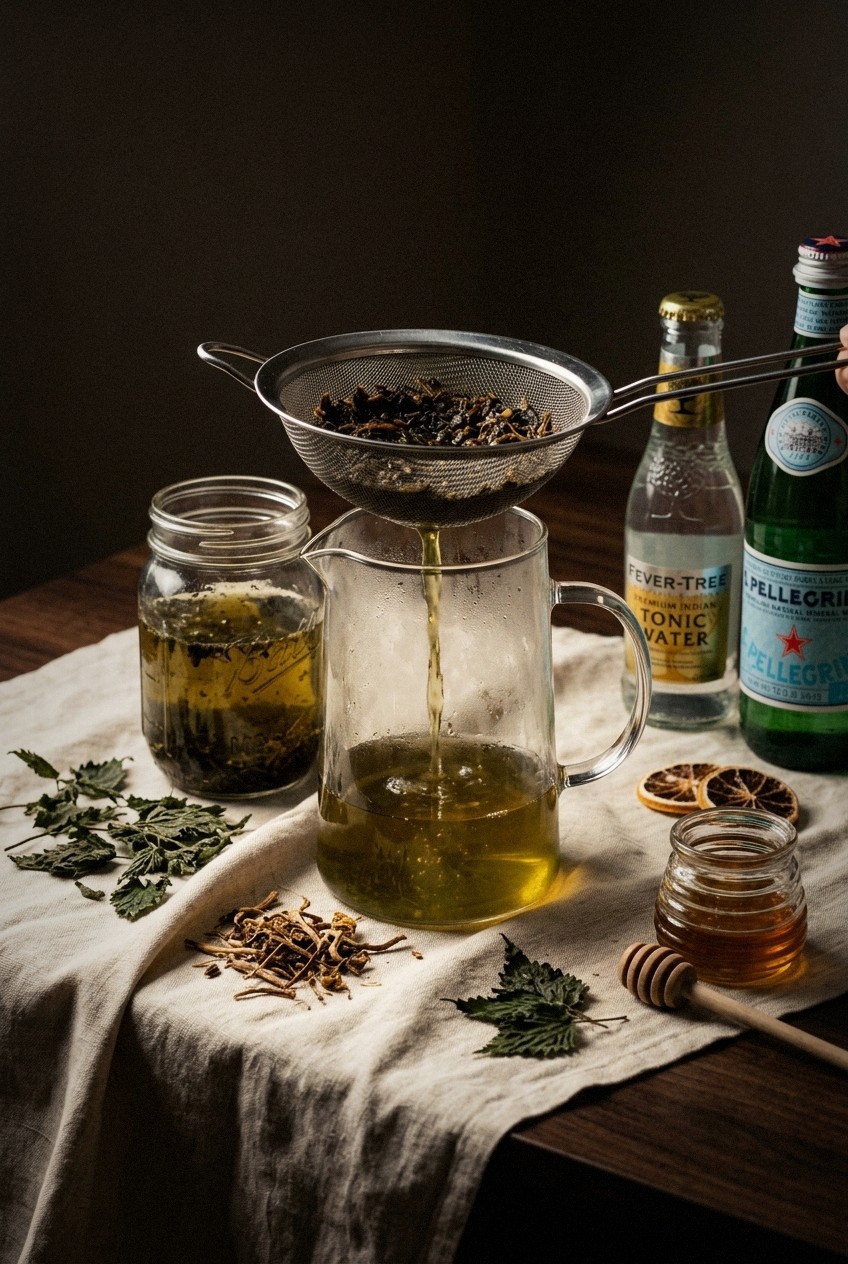
- Strain through a fine-mesh sieve or cheesecloth into a clean pitcher.
- Serve over ice with fresh lemon slices.
The longer steep time (compared to 3-5 minutes for hot tea) allows cold water to slowly extract water-soluble compounds. You’ll notice the liquid turns amber with green undertones. Don’t skip the straining step or you’ll get sediment in your glass.
Herbalist Notes
Dandelion root contains inulin (a prebiotic fiber), potassium (383 mg per 100g dried root), and sesquiterpene lactones that stimulate bile production. Traditional Western herbalism considers it a hepatic (liver tonic) and cholagogue (bile mover). Studies show dandelion extract increased bile secretion by 40% in animal models (Hepatology Research, 2013).
Nettle leaf provides iron (1.6 mg per cup of tea), calcium, magnesium, and vitamin K. It acts as a gentle diuretic without depleting potassium, unlike pharmaceutical diuretics. Ayurvedic practitioners use nettle for pitta imbalances and to cool excess heat in spring.
Cold brewing preserves heat-sensitive compounds. Water temperature above 180°F (82°C) can degrade certain polyphenols and volatile oils. Cold extraction takes longer but yields a smoother, less astringent tea with intact nutrients.
Make It Your Own
Double the dandelion for a deeper, earthier flavor. Add 1 tablespoon dried peppermint in the last 2 hours of steeping for a cooling finish. Sweeten with 1 teaspoon raw honey per glass if you prefer, though the roasted dandelion already brings natural sweetness. For a fizzy version, top each glass with 2 ounces of plain kombucha or sparkling water.

Common Questions
Can you cold brew herbal tea?
Yes. Cold brewing works for any dried herb, though woody roots and tough leaves (like dandelion and nettle) need 8-12 hours to fully extract. Delicate flowers (chamomile, hibiscus) cold brew faster, around 4-6 hours. Cold water prevents bitter tannins from releasing while still pulling water-soluble vitamins, minerals, and some polyphenols. The method originated in Japan for green tea (mizudashi) and translates perfectly to Western herbs.
How to cold brew herbal tea?
Use a 1:2 ratio of dried herbs to cups of water (2 tablespoons herbs per 4 cups water). Combine in a glass jar, stir, cover, and refrigerate 6-12 hours depending on herb density. Strain and serve over ice. Glass or stainless steel containers work best. Avoid plastic, which can leach chemicals during long steeps. Always use cold or room temperature filtered water, never warm, which triggers hot-brew extraction and changes the flavor profile.
Can you make herbal tea with cold water?
Cold water extracts different compounds than hot water. It pulls minerals, mucilage, and some alkaloids while leaving behind harsh tannins and volatile oils that require heat. This makes cold-brewed herbal tea smoother and naturally sweeter. Roots and barks need 8-12 hours. Leaves and flowers need 4-8 hours. Seeds and spices (like fennel or cardamom) don’t cold brew well because their essential oils require heat to release.
What are the benefits of dandelion tea for detox?
Dandelion root stimulates bile production (a 2013 study in Hepatology Research showed a 40% increase), which helps the liver process fats and eliminate waste. It contains taraxasterol and other sesquiterpene lactones that support phase 2 liver detoxification. The root also acts as a mild diuretic (increases urine output by 10-15% in clinical trials) without depleting potassium, unlike pharmaceutical diuretics. Traditional Western herbalism uses dandelion for spring cleansing because it supports the body’s natural elimination pathways rather than forcing a harsh purge.
How long does cold brew herbal tea last?
Strain and refrigerate cold brew herbal tea within 12 hours of starting the steep. Once strained, it keeps 3-4 days in a sealed glass container in the refrigerator. The flavor peaks within the first 48 hours. After 4 days, beneficial compounds begin to degrade and the tea can develop off flavors. Never leave herbs steeping longer than 24 hours, even in the fridge, as this can encourage bacterial growth in the sediment.