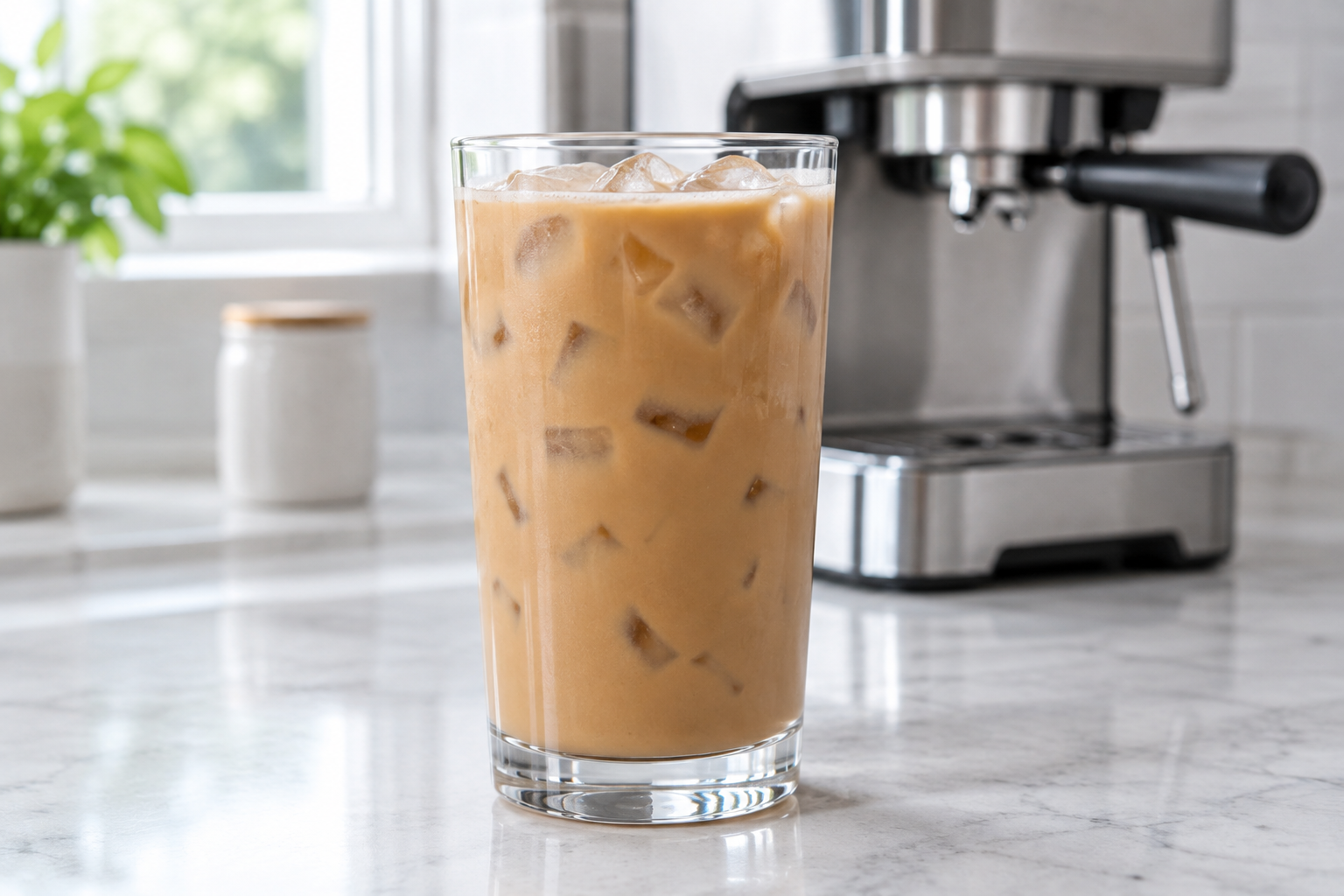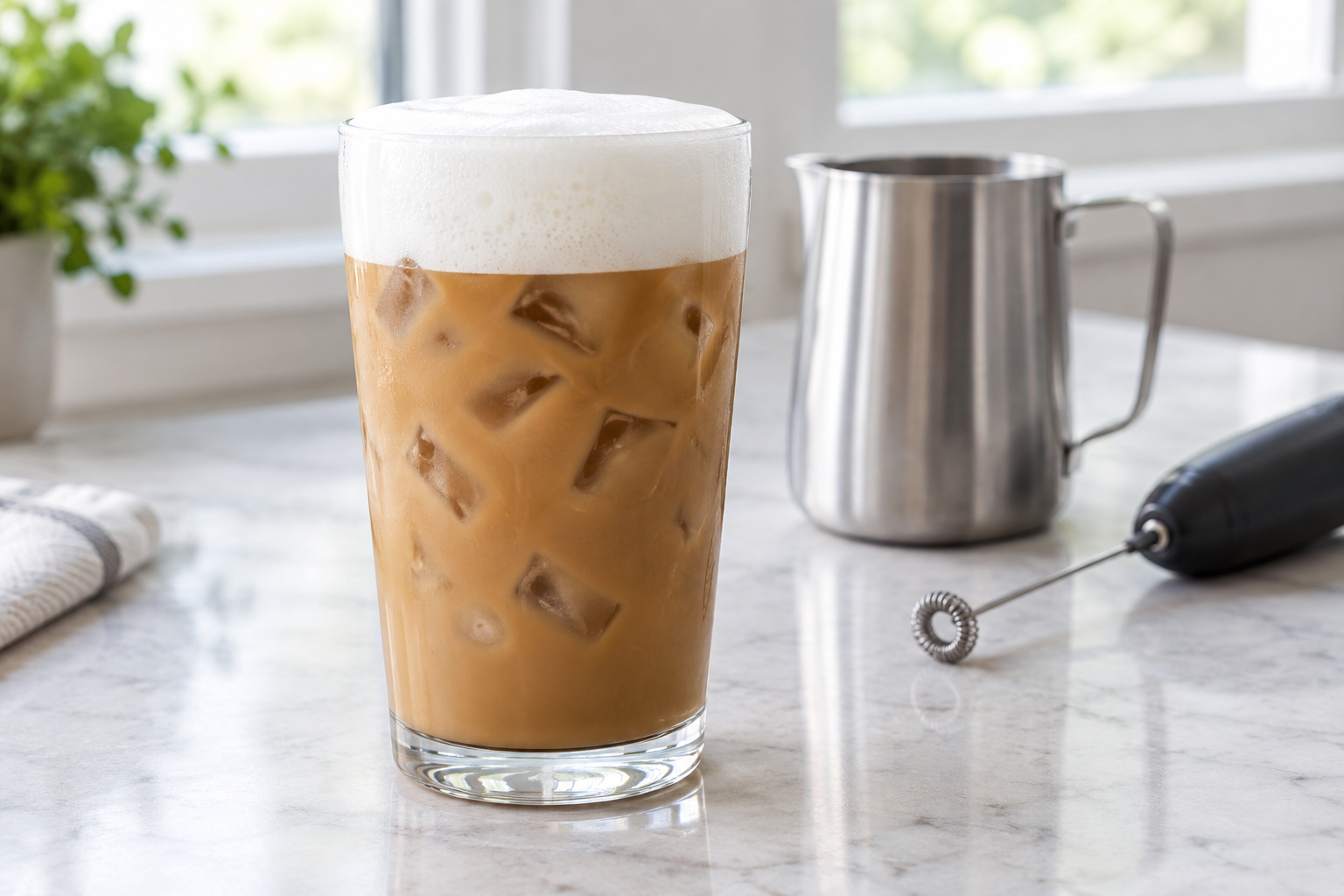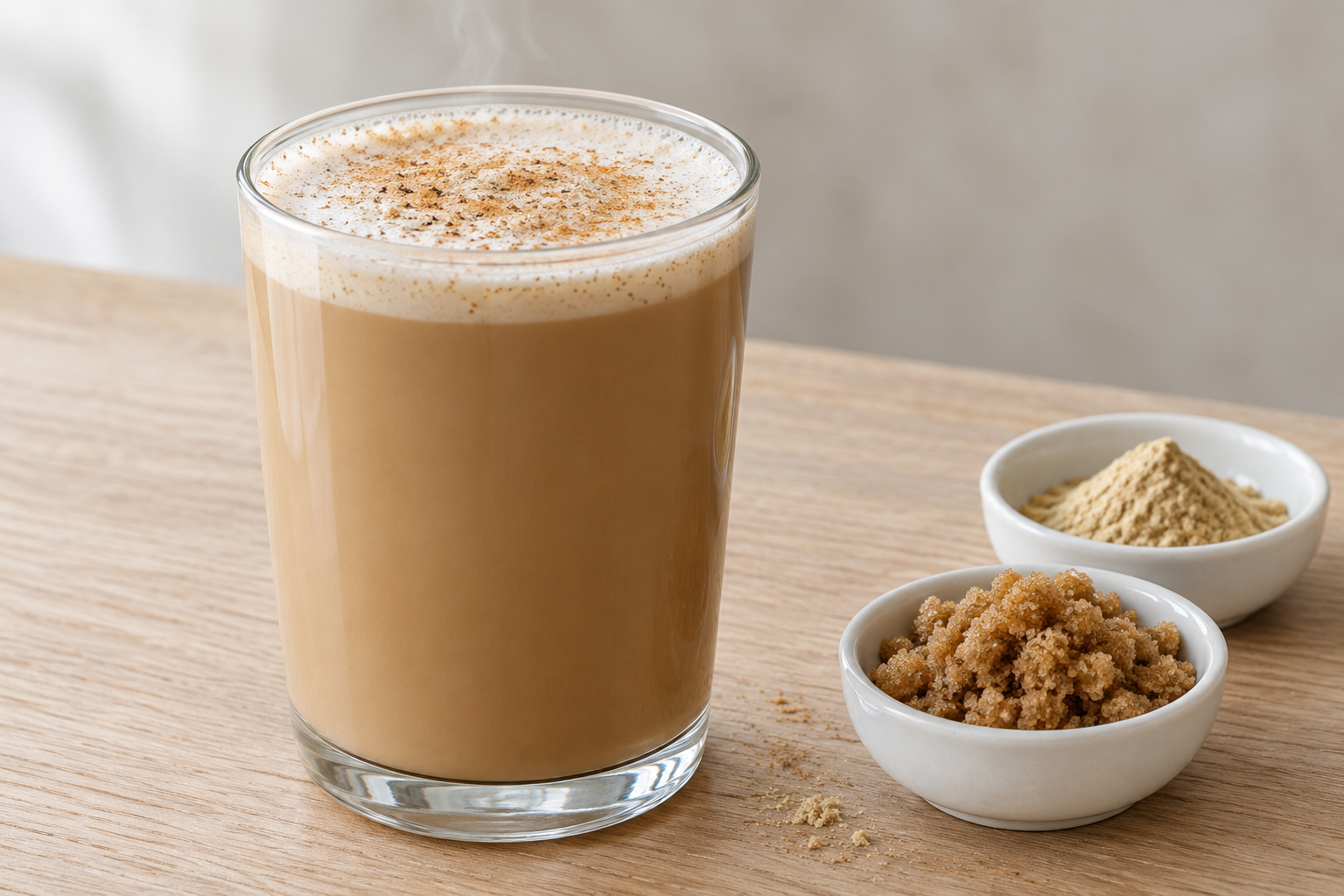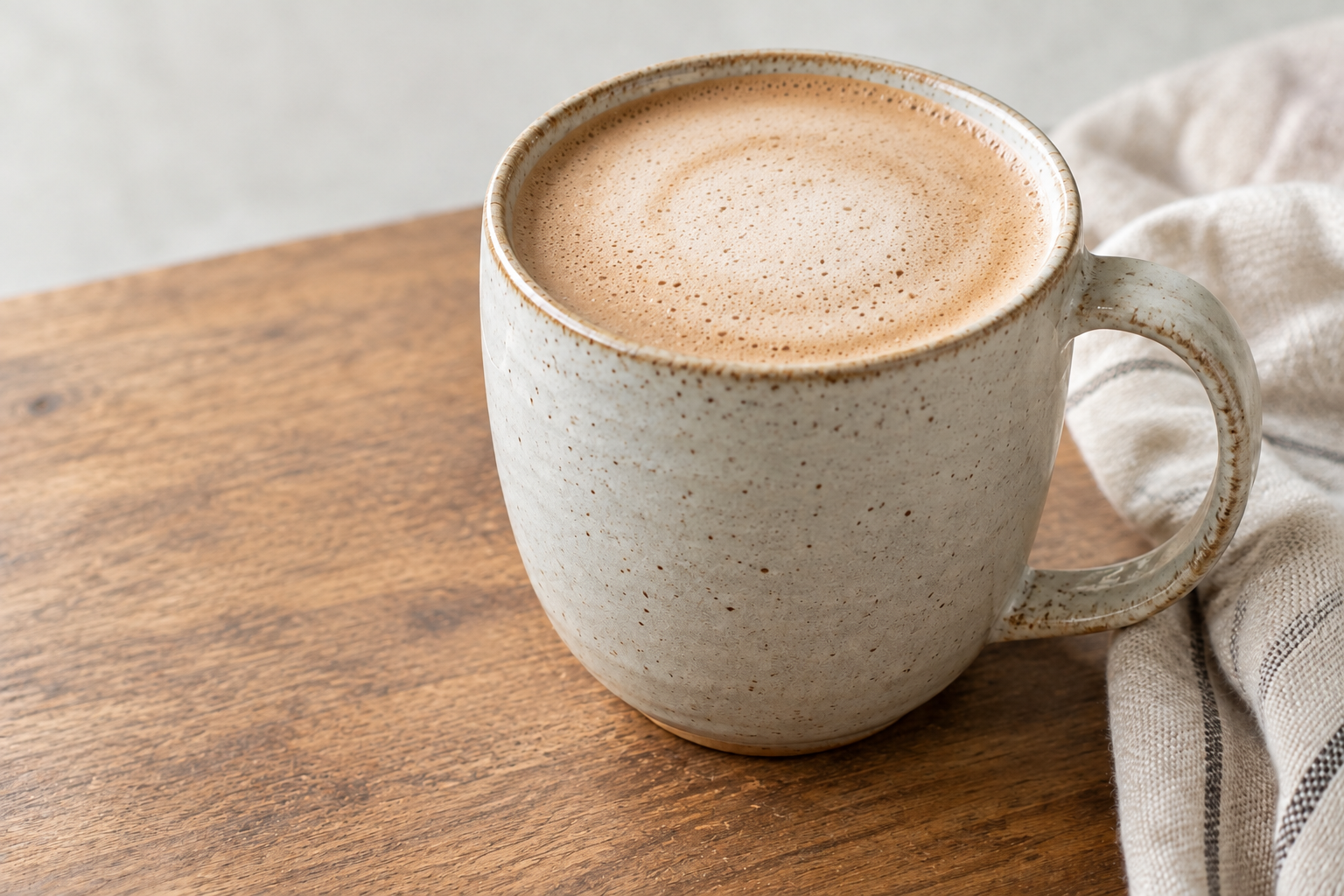

A cortado is a small espresso drink made with equal parts espresso and steamed milk: 2 ounces of each, a 1:1 ratio. The milk cuts the intensity without drowning the coffee. It takes about ten minutes to make and fits in a 4- to 5-ounce glass, which makes it a good small, warm drink for a cool fall morning.
The name comes from the Spanish verb cortar, meaning to cut. The milk cuts the espresso’s acidity and bitterness, but the drink stays coffee-forward. A latte buries espresso under three or four times as much milk. A cortado gives you equal parts, so every sip tastes like coffee first.
What Makes a Cortado Different

The 1:1 espresso to milk ratio is the defining feature. You pour the same amount of steamed milk as espresso, which keeps the coffee clear while the milk adds body and sweetness.
The milk texture matters as much as the ratio. Steam it to about 60°C (140°F), cooler than the milk in a latte. You want warm, silky milk with almost no foam, just a thin layer of microfoam on top. Too much air turns it into a cappuccino. Too little makes it flat.
A cortado sits between a macchiato and a flat white. A macchiato is mostly espresso with a spoonful of foam on top. A flat white uses more milk than a cortado and has a thicker layer of microfoam. A latte goes further, with a lot more milk and more volume overall.
Ingredients

- 2 ounces espresso (about 15 grams, or 1 tablespoon of ground espresso)
- 2 ounces whole milk (full-fat oat milk works as a plant-based swap)
Instructions

- Clean your machine, then measure, tamp, and brew 2 ounces of espresso into a 4.5-ounce glass.
- Steam and froth 2 ounces of milk in a separate container.
- Pour the milk into the espresso. Latte art is optional.
- Serve right away.
No steamer? Use a handheld frother on warm milk instead.
How to Steam Milk for a Cortado
Start with cold whole milk in a small pitcher. Put the steam wand just below the surface and turn on the steam. You’ll hear a tearing sound as air folds into the milk. Let it stretch for two or three seconds, then lower the wand deeper to stop adding air and heat the milk.
Keep the wand at an angle so the milk spins in the pitcher. That motion breaks up large bubbles and makes the milk smooth and glossy. When the pitcher feels warm to the touch, around 60°C, turn off the steam and wipe the wand clean.
Tap the pitcher on the counter once or twice to pop any leftover bubbles, then swirl the milk gently. Good cortado milk looks like wet paint: thick, shiny, and barely foamy. Stiff peaks or dry foam mean too much air. Thin, watery milk means you didn’t stretch it enough at the start.
Measuring the Ratio
The recipe measures by volume: 2 ounces of espresso and 2 ounces of milk. It’s fast and needs no scale. Crema and foam can throw off a volume reading a little, so pour the milk without the extra froth.
If your machine pulls a different amount of espresso than you expected, match the milk to what is actually in the cup. A smaller shot with the same amount of milk is still a cortado, just a smaller one.
Taste the espresso on its own before you add milk. Sour or weak means a finer grind, and bitter or harsh means a coarser one. Once the espresso tastes balanced, pour in the same amount of steamed milk.
Cortado Versus Other Espresso Drinks
| Drink | Espresso-to-Milk Ratio | Milk Texture |
|---|---|---|
| Cortado | 1:1 | Warm, silky, almost no foam |
| Macchiato | Mostly espresso with a spoonful of foam | Stiff foam on top |
| Flat White | More milk than a cortado | Microfoam throughout |
| Cappuccino | More milk and foam | Thick foam layer |
| Latte | Much more milk | Steamed milk with thin foam |
The cortado’s small size and equal ratio make it the most coffee-forward drink after a straight espresso or macchiato.
Cortado or Cortadito?
The names are close, but the drinks differ. Our Cuban cortadito recipe whips sugar with hot coffee to make espuma before adding milk. This cortado has no sugar, only espresso and milk.
Common Problems and How to Fix Them
| Problem | Cause | Fix |
|---|---|---|
| Drink tastes too strong or bitter | Espresso over-extracted or too little milk | Check your espresso yield and add milk to match, or coarsen the grind if the shot tastes harsh on its own |
| Drink tastes too milky or weak | Too much milk or espresso under-extracted | Measure the milk to match the espresso, or fine-tune the grind if the shot tastes sour or watery |
| Milk has stiff peaks or dry foam | Too much air during steaming | Stretch the milk for only two or three seconds, then lower the wand to heat without adding air |
| Milk looks thin and watery | Not enough air during steaming | Keep the wand just below the surface a few seconds longer before heating |
| Espresso and milk don’t mix smoothly | Milk too hot or poured too fast | Steam to about 60°C and pour slowly from a low height |
Frequently Asked Questions
What is a cortado?
A cortado is a small espresso drink made with equal parts espresso and steamed milk. The milk cuts the espresso’s intensity without covering the coffee flavor. It’s served in a 4- to 5-ounce glass and has almost no foam.
What is the correct cortado ratio?
The standard ratio is 1:1 espresso to steamed milk. This recipe uses 2 ounces of each.
How many shots go in a cortado?
Recipes and cafes differ, and shot size varies by machine, so measure instead of counting. Brew 2 ounces of espresso and pour the same amount of milk.
What temperature should I steam the milk to?
About 60°C (140°F). That’s cooler than latte milk and keeps the milk sweet and silky without adding too much foam.
How is a cortado different from a latte or flat white?
A cortado uses a 1:1 espresso to milk ratio and has almost no foam. A flat white has more milk and a thicker layer of microfoam. A latte has much more milk and more volume, so the coffee flavor is less pronounced.
Can I use oat milk?
Yes. Full-fat oat milk is the plant-based swap. Keep the same 2 ounces.
More Drinks
- Affogato Recipe with Espresso and Vanilla Gelato
- Best Espresso Machines for Iced Lattes at Home
- Iced Turmeric Latte Recipe (Golden Milk for Summer)
- 9 Iced Coffee Recipes Better Than the Drive-Thru
Conclusion
A cortado gives you the full flavor of espresso with just enough milk to smooth it out. Once you dial in your espresso and learn to steam milk without over-aerating it, you can make one in about ten minutes that tastes better than most coffee shops serve.